
Oklahoma
Oklahoma Phone Call Recording Laws: Consent Rules and Interstate Calls
Independently fact-checked against primary sources (last audited August 15, 2026). · Reviewed by the RecordingLaw editorial team. · Law checked current as of August 15, 2026. · 4 primary sources cited on this page. How we verify our legal content

Oklahoma follows one-party consent for phone call recording under Okla. Stat. tit. 13, Section 176.4, which means any participant in a call may record it without notifying or obtaining permission from the other parties. No announcement or beep tone is required to comply with Oklahoma law.
Overview of Oklahoma Phone Call Recording Laws
Oklahoma is a one-party consent state for phone call recording. Under Okla. Stat. tit. 13, Section 176.4, you can record any phone call you participate in without telling the other person on the line. Your participation in the call satisfies the consent requirement, and no announcement, beep tone, or verbal agreement from the other party is needed.
The Security of Communications Act (Okla. Stat. tit. 13, Sections 176.1 through 176.11) provides the complete legal framework. It defines "wire communications" to include voice transmissions over telephone lines, cellular networks, and internet-based calling platforms, meaning the one-party consent rule applies to every type of phone call technology.
Types of Phone Calls Covered
Landline Calls
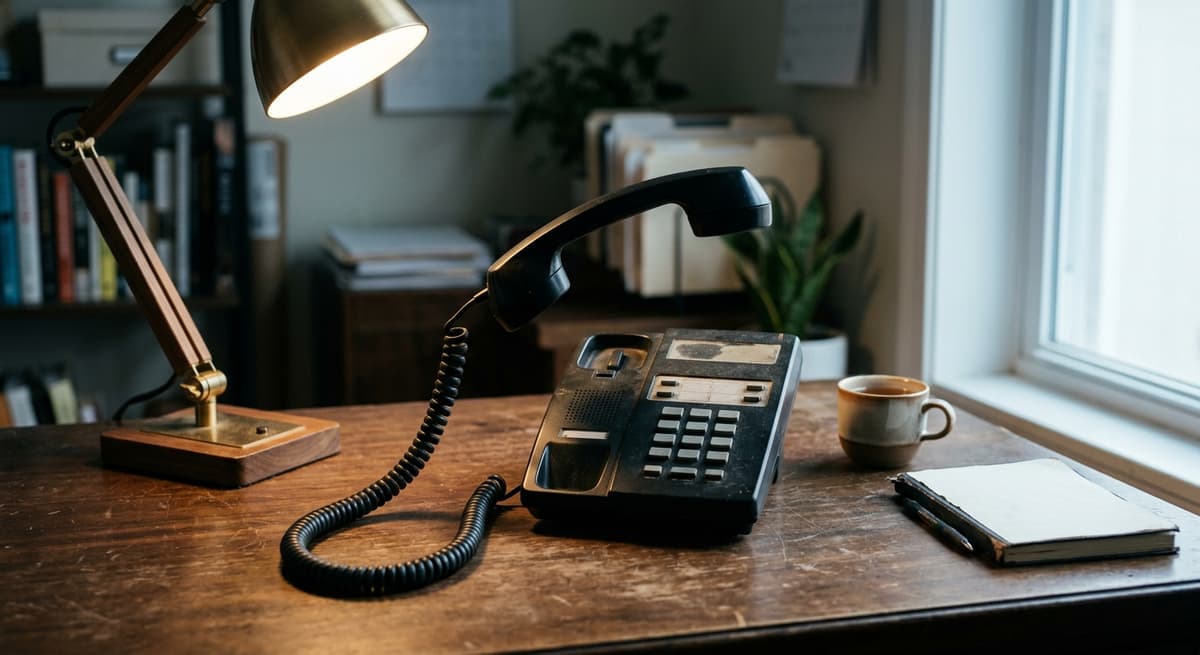
Traditional landline telephone calls are "wire communications" under Section 176.2. You can record any landline call you are on without informing the other caller. This applies to home phone lines, business phone systems, and any other wired telephone connection.
Cell Phone Calls
Cell phone calls fall under the same one-party consent framework. Whether you are making or receiving a call on your smartphone, you can record it without the other person's knowledge. The type of cellular network (4G, 5G, or any other standard) does not affect the legal analysis.
VoIP and Internet Calls
Voice over Internet Protocol (VoIP) calls are covered by the Security of Communications Act as wire or electronic communications. This includes calls made through:
- Zoom audio and video calls
- Microsoft Teams calls
- Google Meet
- Skype
- FaceTime
- WhatsApp voice and video calls
- Discord voice channels
- Any other internet-based calling platform
A participant in any of these calls can record without notifying others under Oklahoma law.
Conference Calls
When multiple people are on a conference call, any single participant can record the entire call under one-party consent. You do not need consent from every other person on the line. However, if you leave the conference call but keep your recording device running, you are no longer a party and the recording of subsequent conversation may violate the law.
Recording Your Own Phone Calls

Personal Calls
You can record personal phone calls in Oklahoma for any lawful purpose, including:
- Preserving important information discussed during the call
- Documenting verbal agreements or promises
- Creating a record of threatening or harassing communications
- Gathering evidence for potential legal proceedings
- Maintaining accurate notes from complex conversations
No special equipment is required. Smartphone apps, standalone recording devices connected to your phone, computer-based recording software, and dedicated call recording services all work.
How to Record Phone Calls
Common methods for recording phone calls in Oklahoma include:
Smartphone apps: Both iPhone and Android offer third-party call recording applications. Some Android devices include built-in call recording features. iPhone users typically need a third-party app or service.
Standalone recorders: Digital voice recorders can be connected to phone lines through adapters or placed near the phone speaker. Some devices connect directly to landline handsets.
Computer software: Programs that record VoIP calls on your computer, including the built-in recording features of Zoom, Teams, and other platforms. Note that platform-built recording often notifies all participants, while external recording software does not.
Call recording services: Third-party services that route calls through a recording system. These services are commonly used by businesses but are available to individuals as well.
Business Phone Call Recording in Oklahoma

Employer Recording of Business Calls
Oklahoma businesses can legally record phone calls when an employee participating in the call consents to (or initiates) the recording. The one-party consent rule applies to business calls the same way it applies to personal calls.
Common business reasons for recording phone calls include:
- Quality assurance and customer service training
- Compliance documentation for regulated industries
- Dispute resolution and order verification
- Legal protection and liability management
- Performance evaluation of customer-facing employees
Customer Notification Practices
While Oklahoma law does not require businesses to notify callers that a call is being recorded, many businesses choose to provide notice as a standard practice. Notification methods include:
- Pre-recorded announcements: "This call may be recorded for quality and training purposes"
- Verbal disclosure by the employee at the start of the call
- Written notice in service agreements, terms of use, or website disclosures
- Automated messaging system announcements before connecting to an agent
Providing notice is especially important for businesses that receive calls from customers in all-party consent states, where recording without the caller's knowledge may violate the other state's law.
Industry-Specific Requirements
Certain industries may have additional recording requirements beyond Oklahoma state law:
- Financial services firms regulated by FINRA must record certain communications under federal securities regulations
- Healthcare providers must consider HIPAA privacy implications when recording calls that include protected health information
- Insurance companies may be subject to Oklahoma Insurance Department guidelines on call recording
- Debt collectors must comply with the Fair Debt Collection Practices Act (FDCPA) provisions about call recording and disclosure
Interstate Phone Call Recording
The Cross-State Problem
The most common complication with phone call recording in Oklahoma involves calls to people in other states. While Oklahoma follows one-party consent, some states require all-party consent. When an Oklahoma resident records a call with someone in an all-party consent state, a conflict of laws arises.
All-Party Consent States
The following states generally require all parties to consent to phone call recording:
| State | Key Statute |
|---|---|
| California | Cal. Penal Code Section 632 |
| Connecticut | Conn. Gen. Stat. Section 52-570d |
| Florida | Fla. Stat. Section 934.03 |
| Illinois | 720 ILCS 5/14-2 |
| Maryland | Md. Code, Cts. & Jud. Proc. Section 10-402 |
| Massachusetts | Mass. Gen. Laws Ch. 272, Section 99 |
| Montana | Mont. Code Section 45-8-213 |
| New Hampshire | N.H. Rev. Stat. Section 570-A:2 |
| Pennsylvania | 18 Pa.C.S. Section 5703 |
| Washington | Wash. Rev. Code Section 9.73.030 |
Oklahoma's Neighboring States
Oklahoma shares borders with six states, all of which follow one-party consent:
- Texas (Tex. Penal Code Section 16.02)
- Kansas (K.S.A. Section 21-6101)
- Arkansas (Ark. Code Section 5-60-120)
- Missouri (Mo. Rev. Stat. Section 542.402)
- Colorado (C.R.S. Section 18-9-303)
- New Mexico (N.M. Stat. Section 30-12-1)
This means calls between Oklahoma and any neighboring state are straightforward: one-party consent applies on both sides.
Best Practice for Interstate Calls
When calling someone in an all-party consent state:
- Inform the other party that you are recording the call
- Get verbal acknowledgment that they understand and agree to continue
- Note the time of the disclosure in your recording
- If the other party objects, either stop recording or end the call
This approach ensures compliance with both Oklahoma law and the stricter state's requirements.
Federal Phone Recording Laws
18 U.S.C. Section 2511
The federal wiretap statute under 18 U.S.C. Section 2511 follows a one-party consent framework that aligns with Oklahoma law. Under the federal statute, it is not unlawful for a person who is a party to a wire communication to intercept it, as long as the interception is not done for criminal or tortious purposes.
Because Oklahoma and federal law both follow one-party consent, phone call recordings made in Oklahoma generally comply with both state and federal wiretapping statutes at the same time.
FCC Guidance
The Federal Communications Commission (FCC) has addressed phone call recording in the context of telecommunications regulation. While the FCC does not mandate that individuals provide notice before recording calls, it has historically encouraged notification as a best practice, particularly for businesses.
Criminal Penalties for Illegal Phone Recording
Felony Charges Under Section 176.3
Recording a phone call without being a party and without consent from any party is a Class D1 felony under Okla. Stat. tit. 13, Section 176.3 as of January 1, 2026:
| Offense | Classification | Maximum Prison | Fine |
|---|---|---|---|
| Illegal interception of wire communication | Class D1 felony | 5 years first offense, min. 20% served; 1 to 10 years for qualifying repeat offenders | Not less than $5,000 (no stated maximum) |
| Disclosure of illegally intercepted call | Class D1 felony | 5 years first offense, min. 20% served; 1 to 10 years for qualifying repeat offenders | Not less than $5,000 (no stated maximum) |
| Use of illegally obtained call recording | Class D1 felony | 5 years first offense, min. 20% served; 1 to 10 years for qualifying repeat offenders | Not less than $5,000 (no stated maximum) |
Examples of Illegal Phone Recording
Situations that would constitute illegal phone call recording in Oklahoma:
- Installing a wiretap on someone else's phone line without their knowledge
- Using spyware to record another person's phone calls remotely
- Recording a phone call between two other people when you are not a participant and no party has consented
- Using a recording for the purpose of blackmail, extortion, or other criminal activity
Using Phone Recordings as Evidence
Admissibility in Oklahoma Courts
Phone call recordings made lawfully under the one-party consent rule are generally admissible in Oklahoma courts. The recording must be authenticated under the Oklahoma Evidence Code (Okla. Stat. tit. 12, Section 2901) to show it is genuine and unaltered.
Common Uses in Legal Proceedings
Phone recordings are frequently used in Oklahoma courts for:
- Contract disputes where verbal agreements were made over the phone
- Harassment and stalking cases where threatening calls were documented
- Family law matters including custody disputes and divorce proceedings
- Employment claims involving workplace discrimination or wrongful termination
- Insurance disputes where claim conversations were recorded
- Consumer protection cases involving deceptive sales practices
Inadmissible Recordings
Under Okla. Stat. tit. 13, Section 176.6, phone recordings obtained in violation of the Security of Communications Act cannot be used as evidence in any Oklahoma court proceeding, grand jury, or government agency hearing.
Practical Tips for Recording Phone Calls
Before You Record
- Confirm you are a participant in the call (not a third party listening in)
- Verify the other party's location if possible, to assess interstate consent issues
- Choose a recording method that captures clear audio
- Ensure your device has sufficient storage space
During the Recording
- Note the date, time, and participants at the start of the recording
- Speak clearly and identify yourself naturally in the conversation
- Avoid interrupting or talking over the other person
- Allow natural pauses so the recording captures complete statements
- Do not prompt or manipulate the conversation unnaturally
After the Recording
- Save the original file without editing or trimming
- Create a backup copy on a separate device or cloud storage
- Note any relevant context that the recording does not capture
- Store recordings securely and limit who has access
- Consult an attorney before using the recording in legal proceedings
More Oklahoma Recording Laws
Audio Recording | Video Recording | Voyeurism & Hidden Cameras | Workplace Recording | Recording Police | Phone Call Recording | Security Cameras | Recording in Public | Landlord-Tenant | Dashcam Laws | Schools | Medical Recording
Back to Oklahoma Recording Laws
More Oklahoma Recording Topics
More Oklahoma Laws
Frequently Asked Questions
Can I record a phone call in Oklahoma without telling the other person?
Yes. Oklahoma is a one-party consent state under Okla. Stat. tit. 13, Section 176.4. You can record any phone call you participate in without informing the other party. This applies to landline calls, cell phone calls, VoIP calls, and video calls with audio.
Is it legal to record a business phone call in Oklahoma?
Yes. Businesses can record calls when an employee participating in the call consents to or initiates the recording. Oklahoma law does not require customer notification, though many businesses provide notice as a best practice, especially when dealing with callers from all-party consent states.
Can I record a phone call with someone in California from Oklahoma?
Recording is legal under Oklahoma law, but California requires all-party consent under Cal. Penal Code Section 632. Recording a call with a California resident without their knowledge could violate California law. The safest approach is to inform the California caller that you are recording and get their verbal agreement.
What happens if I illegally record a phone call in Oklahoma?
Illegal interception of phone communications is a Class D1 felony under Okla. Stat. tit. 13, Section 176.3 (eff. Jan. 1, 2026): up to 5 years in prison for a first offense, with at least 20 percent of the sentence served, and a fine of not less than $5,000, with repeat offenders facing 1 to 10 years under 21 O.S. section 20N. The illegally obtained recording is also inadmissible as evidence under Section 176.6.
Can I use a phone call recording as evidence in Oklahoma court?
Yes. Recordings made lawfully under the one-party consent rule are generally admissible in Oklahoma courts if properly authenticated under the Oklahoma Evidence Code. The recording must be shown to be genuine, unaltered, and relevant to the case. Illegally obtained recordings are excluded under Section 176.6.
Updates
Fixed a table that mislabeled the felony interception statute's mandatory minimum $5,000 fine as a maximum, and updated the felony penalty to reflect its January 1, 2026 Class D1 reclassification and recidivist range. All affected oscn.net citation links were replaced with law.justia.com sources.
Independently fact-checked against the cited primary sources; governing law re-checked for recent changes
Added UpdatesLog. Corrected penalty description in FAQ from fine up to $5,000 to fine of not less than $5,000 per 13 O.S. section 176.3 (minimum fine, not maximum).
Reviewed and approved by an editor
The Law Behind This Article
This article rests on the statutory provisions below, held in our own legal record and retrieved from the official source. Tap a section to read the operative text.
Oklahoma Statutes, Title 13: COMMON CARRIERS
§ 176.3Prohibited acts - Felonies – Penalties - VenueIn forcecited in 13 of our articles
Except as otherwise specifically provided in this act, any person is guilty of a Class D1 felony offense and upon conviction shall be punished by a fine of not less than Five Thousand Dollars ($5,000.00), or by imprisonment as provided for in subsections B through F of Section 20N of Title 21 of the Oklahoma Statutes, or by both who: 1. Willfully intercepts, endeavors to intercept or procures any other person to intercept or endeavor to intercept any wire, oral or electronic communication; 2. Willfully uses, endeavors to use or procures any other person to use or endeavor to use any electronic, mechanical or other device to intercept any oral communication; 3. Willfully discloses or endeavors to disclose to any other person the contents of any wire, oral or electronic communication, knowing or having reason to know that the information was obtained in violation of the provisions of the Security of Communications Act; 4. Willfully uses or endeavors to use the contents of any wire, oral or electronic communication, knowing or having reason to know that the information was obtained in violation of the provisions of the Security of Communications Act; 5.
Official text (excerpt) · last checked 2026-08-31 · Read the full text in our law library · Verify at oklegislature.gov
Also relied on in: Oklahoma Recording Laws (2026): One-Party Consent Rules, Oklahoma AI Meeting Recording Laws: One-Party Consent Rules (2026), Oklahoma Audio Recording Laws: One-Party Consent Rules and Penalties
Search our full record of US law — 2.1 million sections, every state + federal →
Sources and References
- Okla. Stat. tit. 13, Section 176.4 - One-Party Consent(law.justia.com)
- Oklahoma Security of Communications Act(oscn.net).gov
- Okla. Stat. tit. 13, Section 176.3 - Prohibited Acts(law.justia.com)
- 18 U.S.C. Section 2511 - Federal Wiretap Act(govinfo.gov).gov
- Federal Communications Commission(fcc.gov).gov
- Oklahoma Legislature - Oklahoma Statutes(oklegislature.gov).gov