
Indiana
Indiana Voyeurism and Hidden Camera Laws: Statutes and Penalties
Independently fact-checked against primary sources (last audited August 15, 2026). · Reviewed by the RecordingLaw editorial team. · Law checked current as of August 8, 2026. · 6 primary sources cited on this page. How we verify our legal content

Indiana prohibits voyeurism and hidden-camera recording under Ind. Code 35-45-4-5. Basic peeping is a Class B misdemeanor, but peeping by means of a camera, or a prior unrelated conviction, elevates the offense directly to a Level 6 felony. A separate public voyeurism offense, using a camera to record someone's private area, is a Class A misdemeanor that can also rise to a Level 6 felony if the images are shared or the offender has a prior conviction.
Indiana has multiple criminal statutes addressing voyeurism, hidden cameras, and nonconsensual intimate image distribution. These laws protect people from unauthorized visual surveillance in private settings, hidden recording devices on their property, and the sharing of intimate images without their consent. This guide breaks down each statute, the specific conduct it prohibits, the penalties for violations, and the defenses that may apply.
Indiana Voyeurism Law: IC 35-45-4-5
Overview
Indiana's primary voyeurism statute is IC 35-45-4-5, which addresses three distinct categories of voyeurism:
- Basic voyeurism (peeping into an occupied dwelling)
- Public voyeurism (recording private areas of a person using a camera)
- Aerial voyeurism (using drones to capture images of people in private settings)
Each category has different elements and penalty ranges.
Key Definitions
Understanding the statute requires knowing several defined terms:
- "Peep" means any looking of a clandestine, surreptitious, prying, or secretive nature.
- "Private area" means the naked or undergarment-clad genitals, pubic area, or buttocks of an individual.
- "Intimate image" means a photograph, digital image, or video that depicts sexual intercourse, other sexual conduct, or the exhibition of the uncovered buttocks, genitals, or female breast of the individual.
Basic Voyeurism (Peeping)
What the Law Prohibits
A person who peeps into an area where an occupant of a dwelling has a reasonable expectation of privacy, without the consent of the occupant, commits voyeurism.
This covers classic "peeping Tom" behavior such as:
- Looking through windows of a home or apartment
- Peering over or through fences into private yards where someone is undressing
- Peeping into bathroom or bedroom windows
- Spying through gaps, holes, or cracks in walls or doors
Penalties
| Offense Level | Classification | Penalty |
|---|---|---|
| Basic peeping | Class B misdemeanor | Up to 180 days in jail, $1,000 fine |
| Peeping by means of a camera, or a prior unrelated conviction | Level 6 felony | 6 months to 2.5 years in prison, up to $10,000 fine |
Enhanced Penalty Triggers
The offense escalates from a misdemeanor to a Level 6 felony when:
- The offender has a prior unrelated voyeurism conviction, or
- A camera or electronic recording device was used to capture the images
Dissemination of the images is not itself a trigger for this basic-voyeurism enhancement. Publishing, sharing, or otherwise disseminating images is instead an enhancement condition for the separate public voyeurism offense described below.
Public Voyeurism
What the Law Prohibits
Public voyeurism under IC 35-45-4-5 targets a specific type of conduct: using a camera or electronic device to record a "private area" of another person without that person's consent.
This applies in settings where the person may be in a public or semi-public area but still has a reasonable expectation that their private areas will not be photographed or recorded. Examples include:
- Using a hidden camera to photograph up someone's skirt or dress ("upskirting")
- Recording inside a changing room or fitting room
- Placing a camera in a public restroom stall
- Using a concealed camera to capture images in a locker room at a gym, pool, or recreation center
Penalties
Public voyeurism is a Class A misdemeanor punishable by:
- Up to 365 days in jail
- A fine of up to $5,000
The offense becomes a Level 6 felony (6 months to 2.5 years in prison, up to $10,000 fine) if:
- The offender has a prior unrelated conviction
- The images are published, shared online, or disseminated
Aerial Voyeurism (Drones)
What the Law Prohibits
IC 35-45-4-5 includes a specific provision addressing drone-based surveillance. A person who uses an unmanned aerial vehicle (drone) to capture images of another person who is:
- Inside their dwelling, or
- On the land immediately surrounding their dwelling (curtilage), and
- In a location not visible from a public area
commits aerial voyeurism.
This provision recognizes that drones can access vantage points that are not available from ground level, allowing operators to peer into backyards, through upper-story windows, and over privacy fences.
Penalties
| Offense Level | Classification | Penalty |
|---|---|---|
| First offense | Class A misdemeanor | Up to 365 days in jail, $5,000 fine |
| Prior conviction or sharing images | Level 6 felony | 6 months to 2.5 years in prison, up to $10,000 fine |
Interaction with Federal Drone Regulations
Even if you are flying a drone legally under Federal Aviation Administration (FAA) rules (proper registration, flying below 400 feet, maintaining visual line of sight), you can still violate Indiana's aerial voyeurism statute. FAA compliance covers airspace rules, not privacy laws. State criminal statutes like IC 35-45-4-5 govern the privacy dimension of drone operation separately.
Unlawful Surveillance on Private Property: IC 35-46-8.5-1

What the Law Prohibits
IC 35-46-8.5-1 makes it a crime to knowingly or intentionally place a camera or electronic surveillance equipment that records images or data while unattended on the private property of another person without the consent of the owner or tenant.
This statute targets hidden camera placement specifically. It covers:
- Hidden cameras planted in someone else's home or apartment
- Concealed recording devices placed in a neighbor's yard or garage
- Secret cameras installed in a rental property by a landlord
- Surveillance equipment placed on another person's vehicle (combined with tracking provisions)
The statute also prohibits placing a tracking device on an individual or on property owned or used by an individual without their knowledge or consent.
Penalties
| Offense Level | Classification | Penalty |
|---|---|---|
| First offense | Class A misdemeanor | Up to 365 days in jail, $5,000 fine |
| Prior unrelated conviction | Level 6 felony | 6 months to 2.5 years in prison, up to $10,000 fine |
Exceptions
The law provides specific exceptions for:
- Law enforcement with a valid search warrant or property owner consent
- Family member tracking (unless a protective order applies)
- Property owners tracking their own property (such as a leased vehicle), unless a protective order applies
Distribution of Intimate Images: IC 35-45-4-8
Indiana's Revenge Porn Law
IC 35-45-4-8 criminalizes the distribution of intimate images when the person depicted did not consent to the distribution and the distributor knew or reasonably should have known that consent was not given.
"Distribution" is defined broadly. It means transferring the image to another person through any medium, forum, telecommunications device, network, or website, including posting on a website or application.
What the Law Covers
The statute applies to:
- Sharing intimate photos or videos via text, email, or messaging apps
- Posting intimate images on social media platforms
- Uploading intimate content to websites or forums
- Sending intimate images to another person's employer, family, or friends
AI-Generated and Deepfake Images
Indiana's law explicitly covers AI-generated and computer-generated intimate images. HEA 1047 (Pub. L. 79-2024), effective July 1, 2024, expanded IC 35-45-4-8 to reach AI-generated and digitally altered intimate imagery. Creating and distributing a realistic but fabricated intimate image of someone using artificial intelligence tools falls under the criminal statute.
Federal Overlay: TAKE IT DOWN Act
The TAKE IT DOWN Act (Pub. L. 119-12, signed May 19, 2025) creates a federal civil cause of action and directs the FTC to require online platforms to remove nonconsensual intimate imagery, including AI-generated deepfakes, within 48 hours of notice. The federal remedy runs alongside Indiana's criminal and civil remedies under IC 35-45-4-8 and IC 35-33.5-5-4. Federal law does not preempt Indiana's statutes.
Penalties
| Offense Level | Classification | Penalty |
|---|---|---|
| First offense | Class A misdemeanor | Up to 365 days in jail, $5,000 fine |
| Prior conviction | Level 6 felony | 6 months to 2.5 years in prison, up to $10,000 fine |
Hidden Cameras in Specific Settings
Rental Properties
Landlords who install hidden cameras in rental units commit multiple offenses under Indiana law. Cameras placed in bathrooms, bedrooms, or other private areas of a tenant's unit violate both the voyeurism statute (IC 35-45-4-5) and the unlawful surveillance statute (IC 35-46-8.5-1). Tenants who discover hidden cameras should contact law enforcement immediately. For more, see Indiana landlord-tenant recording laws.
Hotels and Short-Term Rentals
Placing hidden cameras in hotel rooms, Airbnb properties, or other short-term rental accommodations violates Indiana's voyeurism and unlawful surveillance statutes. Guests who suspect hidden cameras in private areas should report it to law enforcement.
Workplaces
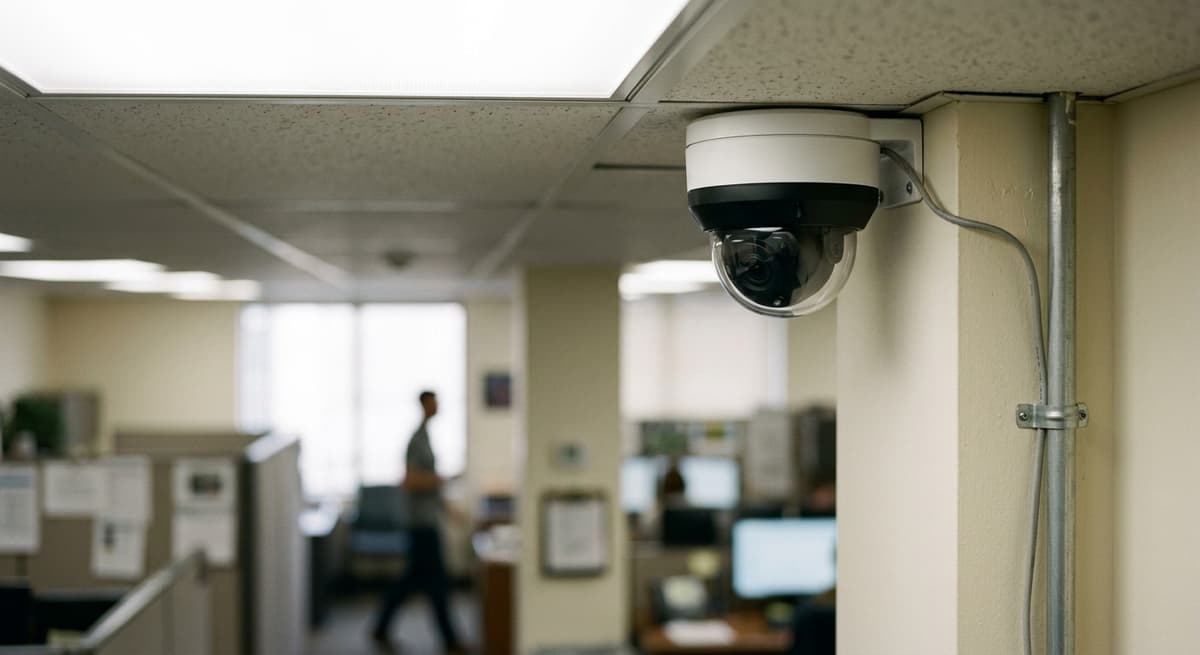
Employers who install cameras in bathrooms, locker rooms, or changing areas violate IC 35-45-4-5. Employees who discover hidden cameras in these areas should report the situation to both HR and law enforcement. For more on workplace rules, see Indiana workplace recording laws.
Schools
Cameras in student bathrooms, locker rooms, or changing areas at schools are criminal violations regardless of who placed them. School districts have a duty to prevent such surveillance and respond immediately to any reports. For more, see Indiana school recording laws.
Defenses to Voyeurism Charges
Consent
If the person depicted consented to the recording, voyeurism charges do not apply. However, consent to being recorded does not automatically include consent to distribution. A person who consented to intimate photos being taken can still be a victim under IC 35-45-4-8 if those images are shared without their consent.
No Reasonable Expectation of Privacy
If the person was in a location where there was no reasonable expectation of privacy (such as a public sidewalk), voyeurism charges may not apply. This defense depends on the specific circumstances and location.
Accidental Recording
The voyeurism statute requires intent. An accidental or inadvertent recording may not meet the statutory elements. However, this defense depends on the specific facts and whether the recording was truly unintentional.
Reporting Hidden Camera Violations
If you discover a hidden camera:
- Do not touch or move the device. It is evidence.
- Document its location with your own photos or video.
- Contact local law enforcement immediately.
- Preserve any related communications (texts, emails, messages from the suspected perpetrator).
- Consult an attorney about potential civil claims for damages.
Civil Remedies
Victims of voyeurism and hidden camera violations can pursue civil lawsuits in addition to criminal prosecution. Potential civil remedies include:
- Compensatory damages for emotional distress, therapy costs, and reputational harm
- Punitive damages to punish particularly egregious conduct
- Injunctive relief to prevent further distribution of images
- Attorney fees and court costs in some circumstances
The statute of limitations for civil claims varies depending on the specific cause of action. Consulting an attorney promptly after discovering a violation is important.
More Indiana Recording Laws
Audio Recording | Video Recording | Voyeurism & Hidden Cameras | Workplace Recording | Recording Police | Phone Call Recording | Security Cameras | Recording in Public | Landlord-Tenant | Dashcam Laws | Schools | Medical Recording
Back to Indiana Recording Laws
More Indiana Recording Topics
More Indiana Laws
Frequently Asked Questions
What is the penalty for voyeurism in Indiana?
Basic voyeurism (peeping) is a Class B misdemeanor with up to 180 days in jail. Peeping by means of a camera, or having a prior conviction, makes it a Level 6 felony with 6 months to 2.5 years in prison and up to $10,000 in fines. A separate offense, public voyeurism (recording someone's private area with a camera), is a Class A misdemeanor that also escalates to a Level 6 felony if images are shared or the offender has a prior conviction.
Is it illegal to put a hidden camera in someone's house in Indiana?
Yes. Placing an unattended camera on another person's private property without consent is unlawful surveillance under IC 35-46-8.5-1 (Class A misdemeanor). If the camera captures intimate images, voyeurism charges under IC 35-45-4-5 may also apply.
Is revenge porn illegal in Indiana?
Yes. Distributing intimate images without the depicted person's consent is a Class A misdemeanor under IC 35-45-4-8, escalating to a Level 6 felony for repeat offenders. The law covers real photos, videos, and AI-generated deepfake images.
Can I use a drone to film my neighbor in Indiana?
You cannot use a drone to capture images of a person inside their home or on their property in an area not visible from a public space. This constitutes aerial voyeurism under IC 35-45-4-5 and is a Class A misdemeanor, or a Level 6 felony if images are shared.
What should I do if I find a hidden camera?
Do not touch or move the device. Document its location with your own photos, contact local law enforcement immediately, and preserve any related communications. The hidden camera is evidence, and police will need to collect it properly. Consult an attorney about potential civil claims.
Are deepfake intimate images illegal in Indiana?
Yes. Indiana's intimate image distribution law (IC 35-45-4-8) explicitly covers AI-generated and computer-generated intimate images. Creating and distributing a fabricated intimate image of someone using AI tools carries the same penalties as distributing real images.
Updates
Corrected two statutory errors: the basic-voyeurism enhancement list wrongly included image dissemination as a trigger for camera-based peeping under IC 35-45-4-5(c) (that trigger applies only to the separate public voyeurism offense), and HEA 1047 of 2024 was mis-cited as Public Law 117-2024 instead of Public Law 79-2024.
Independently fact-checked against the cited primary sources
Corrected the voyeurism penalty structure: peeping by means of a camera (or a prior conviction) is a Level 6 felony directly under IC 35-45-4-5(c), not a Class A misdemeanor step; also removed an unsupported claim that merely threatening to distribute intimate images is itself a crime under IC 35-45-4-8, which criminalizes actual distribution.
Governing law re-checked for recent changes
Reviewed and approved by an editor
The Law Behind This Article
This article rests on the statutory provisions below, held in our own legal record and retrieved from the official source. Tap a section to read the operative text.
Indiana Code, TITLE 35. CRIMINAL LAW AND PROCEDURE
§ 35-45-4-5Voyeurism; public voyeurism; aerial voyeurismIn forcecited in 14 of our articles
Sec. 5. (a) The following definitions apply throughout this section: (1) "Camera" means a camera, a video camera, a device that captures a digital image, or any other type of video recording device. (2) "Peep" means: (A) any looking of a clandestine, surreptitious, prying, or secretive nature; or (B) using a concealed camera with the intent of capturing an intimate image (as defined by IC 34-21.5-2-1). (3) "Private area" means the naked or undergarment clad genitals, pubic area, or buttocks of an individual. (b) A person: (1) who knowingly or intentionally: (A) peeps; or (B) goes upon the land of another with the intent to peep; into an occupied dwelling of another person; or (2) who knowingly or intentionally peeps in or into an area where an occupant of the area reasonably can be expected to disrobe or is actually expected to disrobe, including: (A) restrooms; (B) baths; (C) showers; and (D) dressing rooms; without the consent of the other person, commits voyeurism, a Class B misdemeanor.
Official text (excerpt) · last checked 2026-07-29 · Read the full text in our law library · Verify at iga.in.gov
Cited in 19 court opinions in our collectionLatest citing opinion in our collection: 2026
In the courts (editorial summary, independently checked):Casady v. State (2010) held restrooms and showers are areas where occupants reasonably can be expected to disrobe under 35-45-4-5, whether or not they actually did. Steven M. Sandleben v. State of Indiana (2014) read the public voyeurism definition of private area disjunctively, covering undergarment-clad or naked areas.
Opinions citing this section in our collection:
- Casady v. State (Indiana Court of Appeals 2010, 934 N.E.2d 1181)✓A man videotaped men at urinals and in a shower while hiding in a stall and a doorway; the court affirmed his voyeurism convictions, holding the filming was a clandestine peep and that restrooms are listed places where occupants can reasonably be expected to disrobe.
- Steven M. Sandleben v. State of Indiana (Indiana Court of Appeals 2014, 22 N.E.3d 782)✓A man put a camera under a four-year-old's skort in a store and filmed two girls underwater at a pool; the court upheld his public voyeurism convictions, holding the statute reaches naked or undergarment clad areas and was not vague as applied to him.
- David Delagrange v. State of Indiana (Indiana Court of Appeals 2013, 981 N.E.2d 1227)“…e other person, commits voyeurism, a Class B misdemeanor. Ind.Code § 35-45-4-5(a) (2005). After Delagrange committed t…”
Identified automatically from the court opinions citing this section — not a ranking of which case controls.
Also relied on in: Indiana Surveillance Camera Laws (2026 Guide), Indiana Smart Glasses Recording Laws 2025, Indiana Audio Recording Laws: One-Party Consent Rules and Penalties
§ 35-45-4-8Distribution of an intimate imageIn forcecited in 6 of our articles
Sec. 8. (a) This section does not apply to: (1) a photograph, digital image, or video that is distributed: (A) to report a possible criminal act; (B) in connection with a criminal investigation; (C) under a court order; (D) to a location that is: (i) intended solely for the storage or backup of personal data, including photographs, digital images, and video; and (ii) password protected; or (E) by a news reporting or an entertainment medium (as defined in IC 32-36-1-4); (2) a newspaper or news service that publishes news related information through a website; (3) a cloud service provider; or (4) an Internet provider, an affiliate or subsidiary of an Internet provider, or a search engine that: (A) solely provides access or connection to a website or other Internet content that is not under the control of that Internet service provider, affiliate or subsidiary, or search engine; and (B) is not responsible for creating or publishing the content that constitutes material harmful to minors.
Official text (excerpt) · last checked 2026-07-29 · Read the full text in our law library · Verify at iga.in.gov
Also relied on in: Indiana Security Camera Laws: Residential, Business, and Rental Rules, Indiana Video Recording Laws: Surveillance Rules and Privacy Limits, Indiana Deepfake Laws: AI Images, Voice Cloning & Penalties (2026)
§ 35-46-8.5-1Unlawful photography, surveillance, and tracking on private propertyIn forcecited in 9 of our articles
Sec. 1. (a) This section does not apply to any of the following: (1) Electronic or video toll collection facilities or activities authorized under any of the following: (A) IC 8-15-2. (B) IC 8-15-3. (C) IC 8-15.5. (D) IC 8-15.7. (E) IC 8-16. (F) IC 9-21-3.5. (2) A law enforcement officer who has obtained: (A) a search warrant; or (B) the consent of the owner of private property; to place a camera, electronic surveillance equipment, or tracking device on the private property, with respect to the placement of a camera, electronic surveillance equipment, or tracking device. (3) A law enforcement officer who uses a law enforcement recording device in performance of the officer's duties, with respect to the use of the law enforcement recording device. (4) A person who uses a tracking device to determine the location of a family member (as defined in IC 35-44.1-3-1), unless the person is the subject of a protective order obtained by the family member.
Official text (excerpt) · last checked 2026-08-31 · Read the full text in our law library · Verify at iga.in.gov
Also relied on in: Indiana Landlord-Tenant Recording Laws: Rights for Renters and Property Owners, Indiana GPS Tracking Laws: Is It Legal to Put a Tracker on a Car? (2026), Indiana Employee Monitoring Laws (2026): Tracking, GPS & More
§ 35-50-2-7Class D felony; Level 6 felony; judgment of conviction entered as a misdemeanorIn force
Sec. 7. (a) A person who commits a Class D felony (for a crime committed before July 1, 2014) shall be imprisoned for a fixed term of between six (6) months and three (3) years, with the advisory sentence being one and one-half (1 1/2) years. In addition, the person may be fined not more than ten thousand dollars ($10,000). (b) A person who commits a Level 6 felony (for a crime committed after June 30, 2014) shall be imprisoned for a fixed term of between six (6) months and two and one-half (2 1/2) years, with the advisory sentence being one (1) year. In addition, the person may be fined not more than ten thousand dollars ($10,000). (c) Notwithstanding subsections (a) and (b), if a person has committed a Class D felony (for a crime committed before July 1, 2014) or a Level 6 felony (for a crime committed after June 30, 2014), the court may enter judgment of conviction of a Class A misdemeanor and sentence accordingly.
Official text (excerpt) · last checked 2026-07-29 · Read the full text in our law library · Verify at iga.in.gov
Cited in 635 court opinions in our collectionLatest citing opinion in our collection: 2026
Opinions citing this section in our collection:
- Collins v. State (Indiana Supreme Court 1981, 275 Ind. 86)“…ument is without merit. Defendant also contends that Ind.Code § 35-50-2-7 (Burns 1979 Repl.) violates article I,…”
- Conner v. State (Indiana Supreme Court 1993, 626 N.E.2d 803)“…upp. 1993), carrying a maximum prison term of three years. Ind. Code Ann. § 35-50-2-7 (West Supp. 1993). Since the State's c…”
- State v. Brunner (Indiana Supreme Court 2011, 947 N.E.2d 411)“…viction of a Class A misdemeanor and sentence accordingly.” I.C. § 35-50-2-7(b). This is a question of first impress…”
Identified automatically from the court opinions citing this section — not a ranking of which case controls.
Search our full record of US law — 2.1 million sections, every state + federal →
Sources and References
- Indiana Code IC 35-45-4-5 - Voyeurism(iga.in.gov).gov
- Indiana Code IC 35-46-8.5-1 - Unlawful Surveillance(law.justia.com)
- Indiana Code IC 35-45-4-8 - Distribution of Intimate Image(iga.in.gov).gov
- Indiana Code IC 35-50-2-7 - Level 6 Felony Sentencing(iga.in.gov).gov
- FAA - Drones(faa.gov).gov
- Indiana Code IC 35-46-8.5-1 - Unlawful Photography and Surveillance on Private Property(iga.in.gov).gov
- Indiana Code IC 35-33.5-5 - Interception of Communications(iga.in.gov).gov