
Indiana
Indiana Landlord-Tenant Recording Laws: Rights for Renters and Property Owners
Independently fact-checked against primary sources (last audited August 15, 2026). · Reviewed by the RecordingLaw editorial team. · Law checked current as of August 15, 2026. · 6 primary sources cited on this page. How we verify our legal content

Indiana follows one-party consent, so tenants can record conversations with landlords under IC 35-33.5-5 without notice. Landlords cannot place cameras inside a rental unit; doing so violates IC 35-46-8.5-1 and exposes them to criminal liability.
Indiana's recording laws give tenants significant rights when dealing with landlords, while also setting clear boundaries on surveillance within rental properties. Under IC 35-33.5-5, tenants can record their own conversations with landlords, property managers, and maintenance workers. Separate statutes restrict where cameras can be placed in and around rental properties. This guide covers both sides of the landlord-tenant recording relationship.
Tenant Recording Rights
Recording Conversations With Your Landlord
Indiana's one-party consent law allows you to record any conversation you participate in without telling the other person. As a tenant, you can record:
- Phone calls with your landlord or property manager. Discussions about repairs, rent payments, lease terms, or complaints.
- In-person conversations. Meetings about lease renewals, inspections, maintenance requests, or disputes.
- Interactions with maintenance workers. Conversations during repair visits or property inspections.
- Move-in and move-out inspections. Recording the condition of the property and any verbal agreements.
- Communications with property management companies. Calls or meetings with management staff.
Why Tenants Record
Common reasons tenants record interactions with landlords include:
- Documenting repair requests. A recording proves you reported a maintenance issue and when.
- Preserving verbal agreements. If your landlord verbally agrees to a repair, rent adjustment, or lease modification, a recording captures the commitment.
- Evidence of harassment or illegal entry. Recordings can document a landlord entering your unit without proper notice or engaging in harassment to force you out.
- Security deposit disputes. Recording the move-in and move-out condition of the unit provides evidence for security deposit claims.
- Eviction defense. Recordings of landlord statements may be relevant in eviction proceedings.
Recording Methods
You can use any recording device or method:
- Smartphone voice recorder apps
- Dedicated voice recorders
- Phone call recording apps
- Video recording during inspections or walk-throughs
- Doorbell cameras that capture conversations at your door
Landlord Recording Rights

What Landlords Can Record
Landlords and property managers also have recording rights under Indiana's one-party consent law. They can:
- Record their own phone calls with tenants
- Record in-person conversations they participate in
- Document property inspections by recording video and audio during the inspection
- Record interactions with contractors and vendors on the property
Limitations on Landlord Recording
Landlords cannot:
- Plant recording devices inside a tenant's unit to capture conversations the landlord is not part of
- Install hidden cameras in rental units
- Record tenant conversations from outside the unit using amplification or interception devices
- Access a tenant's own security camera footage without the tenant's consent
Security Cameras in Rental Properties
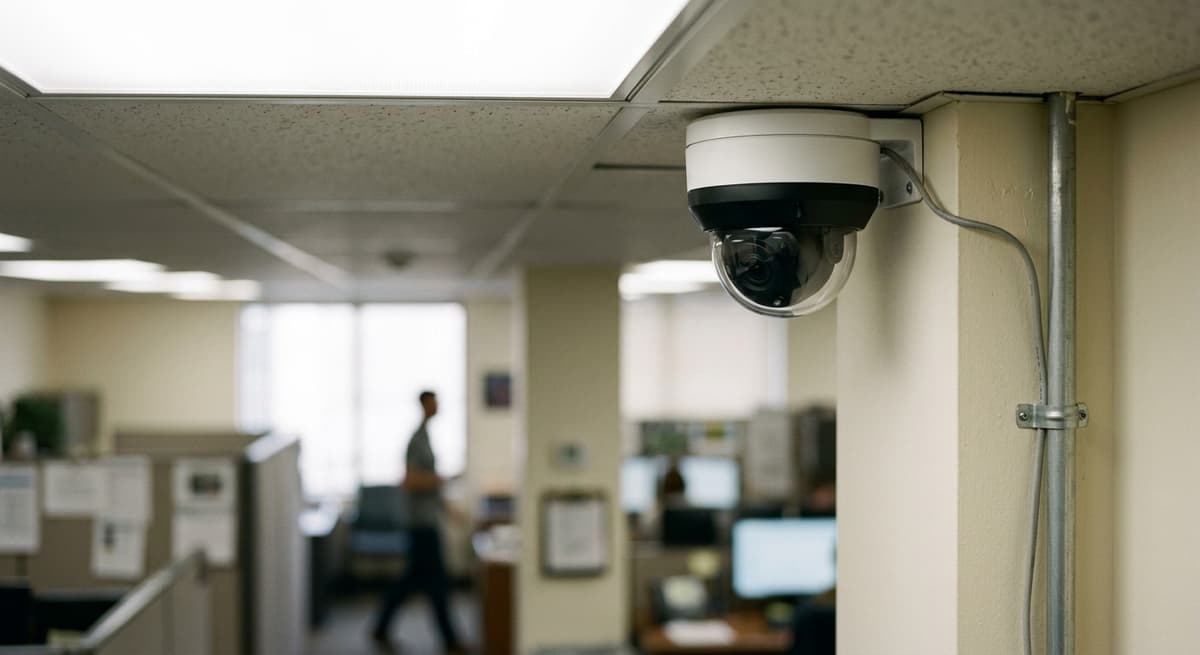
Common Area Cameras (Landlord Installed)
Landlords can install security cameras in common areas of apartment complexes and multi-unit properties:
- Building entrances and lobbies. Monitoring who enters and exits the building.
- Hallways and stairwells. Surveillance of common corridors.
- Parking lots and garages. Monitoring vehicle security and access.
- Laundry rooms. Surveillance of shared facilities.
- Exterior areas. Cameras covering walkways, landscaping, and building perimeters.
- Mail and package areas. Monitoring package delivery zones.
While Indiana does not require landlords to notify tenants of common area cameras, disclosure is recommended. Many landlords include a surveillance disclosure clause in the lease agreement.
Cameras Inside Tenant Units
Landlords cannot install cameras inside a tenant's rental unit without the tenant's written consent. Under IC 35-46-8.5-1, placing an unattended camera on the private property of another person (which includes a tenant's leased space) without consent is unlawful surveillance.
This prohibition applies to:
- Any room inside the tenant's unit
- Attached garages, storage areas, and private patios
- Any space that is part of the tenant's exclusive leased area
A landlord who installs hidden cameras in a tenant's unit may face:
| Offense | Classification | Penalty |
|---|---|---|
| Unlawful surveillance (IC 35-46-8.5-1) | Class A misdemeanor | Up to 365 days in jail, $5,000 fine |
| Voyeurism (IC 35-45-4-5) if private areas recorded | Class B misdemeanor to Level 6 felony | Up to 180 days in jail, $1,000 fine (misdemeanor), or 6 months to 2.5 years in prison, $10,000 fine (felony if a camera is used or there is a prior conviction) |
Tenant-Installed Cameras
Tenants can install their own security cameras inside their units. For exterior cameras or doorbell cameras:
- Check your lease. Many leases restrict exterior modifications. A doorbell camera that requires drilling may need landlord approval.
- Wireless options. Battery-powered doorbell cameras and magnetic-mount cameras may avoid lease modification issues.
- Point cameras appropriately. Aim your cameras at your own doorway and immediate area, not at neighboring units.
- Common area considerations. Cameras that capture common hallways may raise concerns, though recording in common areas is generally permissible.
Audio Recording Considerations

Security Cameras With Microphones
Many security cameras include audio recording capabilities. In rental properties:
- Tenant cameras with audio. Audio recording of conversations you participate in at your door is lawful under one-party consent.
- Landlord common area cameras with audio. Ambient audio recording in common areas through unattended cameras is a legal gray area. Landlords should consider disabling audio recording on common area cameras or posting clear signage.
- Doorbell cameras. Two-way audio communication through doorbell cameras creates a one-party consent scenario when you use the device to speak with visitors.
Recording Landlord Entry
Under Indiana landlord-tenant law (IC 32-31-5-6), landlords must provide reasonable notice before entering a tenant's unit (except in emergencies). If your landlord enters your unit:
- You can record the interaction if you are present
- You can use a security camera inside your unit that captures the entry
- If you are not home, a camera that captures the landlord's entry serves as documentation of whether proper notice was given and what the landlord did while inside
Using Recordings in Legal Disputes
Eviction Proceedings
Recordings made under one-party consent are generally admissible in Indiana eviction proceedings. They can document:
- Landlord statements about the reason for eviction
- Verbal agreements about rent payment arrangements
- Landlord failures to maintain the property
- Retaliatory behavior by the landlord
Security Deposit Claims
Indiana law (IC 32-31-3) governs security deposits. Recordings and video documentation can support:
- The condition of the unit at move-in and move-out
- Conversations about damages and deductions
- Agreements about what constitutes normal wear and tear
- Whether the landlord provided the required itemized list of damages
Habitability and Repair Claims
If your landlord fails to make necessary repairs, recordings can document:
- Your initial report of the problem and the landlord's response
- Follow-up requests and any excuses or delays
- The condition of the property over time (video documentation)
- Conversations with building inspectors or code enforcement officials
Harassment and Illegal Entry Claims
Recordings can provide evidence of:
- Repeated unauthorized entries without proper notice
- Verbal harassment, threats, or intimidation
- Discriminatory statements or practices
- Attempts to constructively evict you through harassment
Practical Guidance for Tenants
Before You Start Recording
- Understand the law. You can record conversations you participate in without informing the other party.
- Keep originals. Preserve original recordings without editing for potential evidentiary use.
- Note the details. Record the date, time, and participants for each recording.
- Back up files. Store recordings in multiple locations (phone, computer, cloud).
- Check your lease. Review your lease for any clauses about recording, surveillance devices, or exterior modifications.
When to Seek Legal Help
Consider consulting a tenant rights attorney if:
- You discover hidden cameras in your rental unit
- Your landlord threatens or retaliates after you record an interaction
- You need recordings admitted as evidence in court
- You believe your landlord is conducting illegal surveillance
- You have a dispute that may lead to eviction
More Indiana Recording Laws
Audio Recording | Video Recording | Voyeurism & Hidden Cameras | Workplace Recording | Recording Police | Phone Call Recording | Security Cameras | Recording in Public | Landlord-Tenant | Dashcam Laws | Schools | Medical Recording
Back to Indiana Recording Laws
More Indiana Recording Topics
More Indiana Laws
Frequently Asked Questions
Can I record my landlord in Indiana?
Yes. Indiana's one-party consent law (IC 35-33.5-5) allows you to record any conversation you participate in without informing the other party. This includes phone calls, in-person meetings, and inspections with your landlord or property manager.
Can my landlord put cameras inside my apartment in Indiana?
No. Under IC 35-46-8.5-1, placing an unattended camera inside a tenant's unit without consent is unlawful surveillance, a Class A misdemeanor. If the cameras capture intimate activities, voyeurism charges under IC 35-45-4-5 may also apply.
Can my landlord put cameras in the hallway of my apartment building?
Yes. Landlords can install security cameras in common areas like hallways, lobbies, stairwells, and parking lots. These are shared spaces where tenants have a reduced expectation of privacy. Notification of common area surveillance is recommended but not legally required.
Can I install a doorbell camera at my apartment in Indiana?
You can install cameras inside your unit freely. For doorbell cameras or exterior cameras, check your lease for provisions about exterior modifications. Battery-powered or magnetic-mount cameras may avoid lease restriction issues. Aim your camera at your own doorway rather than neighboring units.
Can I use a recording as evidence in an eviction case?
Yes. Recordings made legally under Indiana's one-party consent law are generally admissible in eviction proceedings. They can document landlord statements, verbal agreements, repair failures, and retaliatory behavior. Keep original, unedited files for the strongest evidentiary value.
What should I do if I find a hidden camera in my rental unit?
Do not touch the device. Document its location with your own photos or video. Contact local law enforcement immediately to file a report. The landlord may face criminal charges for unlawful surveillance (IC 35-46-8.5-1) and potentially voyeurism (IC 35-45-4-5). Consult a tenant rights attorney about civil remedies.
Updates
Independently fact-checked against the cited primary sources; governing law re-checked for recent changes
Corrected the voyeurism classification for a landlord's hidden camera capturing a private area: the base offense is a Class B misdemeanor that a camera automatically elevates to a Level 6 felony under IC 35-45-4-5(b)-(c), not a Class A misdemeanor.
Governing law re-checked for recent changes
Reviewed and approved by an editor
The Law Behind This Article
This article rests on the statutory provisions below, held in our own legal record and retrieved from the official source. Tap a section to read the operative text.
Indiana Code, TITLE 35. CRIMINAL LAW AND PROCEDURE
§ 35-33.5-5-5Nonapplicability to interceptions authorized under federal law; classification of offensesIn forcecited in 13 of our articles
Sec. 5. (a) This section does not apply to a person who makes an interception authorized under federal law. (b) A person who knowingly or intentionally intercepts a communication in violation of this article commits unlawful interception, a Level 5 felony. (c) A person who, by virtue of the person's employment or official capacity in the criminal justice system, knowingly or intentionally uses or discloses the contents of an interception in violation of this article commits unlawful use or disclosure of an interception, a Level 5 felony.
Official text (excerpt) · last checked 2026-08-28 · Read the full text in our law library · Verify at iga.in.gov
Cited in 2 court opinions in our collectionLatest citing opinion in our collection: 2007
Opinions citing this section in our collection:
- Edwards v. State (Indiana Court of Appeals 2007, 862 N.E.2d 1254)“…or disclosure of an interception, a Class C felony. I.C. § 35-33.5-5-5. The Indiana Wiretap Act defines interc…”
- State of Indiana v. John Lombardo (Indiana Supreme Court 2000)“…disclosure of an interception, a Class C felony. Ind. Code § 35-33.5-5-5 (1993) (emphases added). The statute…”
Identified automatically from the court opinions citing this section — not a ranking of which case controls.
Also relied on in: Indiana Recording Laws (2026): One-Party Consent Rules, Indiana Audio Recording Laws: One-Party Consent Rules and Penalties, Indiana Dashcam Laws: Mounting Rules, Audio Recording, and Legal Use
§ 35-45-4-5Voyeurism; public voyeurism; aerial voyeurismIn forcecited in 14 of our articles
Sec. 5. (a) The following definitions apply throughout this section: (1) "Camera" means a camera, a video camera, a device that captures a digital image, or any other type of video recording device. (2) "Peep" means: (A) any looking of a clandestine, surreptitious, prying, or secretive nature; or (B) using a concealed camera with the intent of capturing an intimate image (as defined by IC 34-21.5-2-1). (3) "Private area" means the naked or undergarment clad genitals, pubic area, or buttocks of an individual. (b) A person: (1) who knowingly or intentionally: (A) peeps; or (B) goes upon the land of another with the intent to peep; into an occupied dwelling of another person; or (2) who knowingly or intentionally peeps in or into an area where an occupant of the area reasonably can be expected to disrobe or is actually expected to disrobe, including: (A) restrooms; (B) baths; (C) showers; and (D) dressing rooms; without the consent of the other person, commits voyeurism, a Class B misdemeanor.
Official text (excerpt) · last checked 2026-07-29 · Read the full text in our law library · Verify at iga.in.gov
Cited in 19 court opinions in our collectionLatest citing opinion in our collection: 2026
In the courts (editorial summary, independently checked):Casady v. State (2010) held restrooms and showers are areas where occupants reasonably can be expected to disrobe under 35-45-4-5, whether or not they actually did. Steven M. Sandleben v. State of Indiana (2014) read the public voyeurism definition of private area disjunctively, covering undergarment-clad or naked areas.
Opinions citing this section in our collection:
- Casady v. State (Indiana Court of Appeals 2010, 934 N.E.2d 1181)✓A man videotaped men at urinals and in a shower while hiding in a stall and a doorway; the court affirmed his voyeurism convictions, holding the filming was a clandestine peep and that restrooms are listed places where occupants can reasonably be expected to disrobe.
- Steven M. Sandleben v. State of Indiana (Indiana Court of Appeals 2014, 22 N.E.3d 782)✓A man put a camera under a four-year-old's skort in a store and filmed two girls underwater at a pool; the court upheld his public voyeurism convictions, holding the statute reaches naked or undergarment clad areas and was not vague as applied to him.
- David Delagrange v. State of Indiana (Indiana Court of Appeals 2013, 981 N.E.2d 1227)“…e other person, commits voyeurism, a Class B misdemeanor. Ind.Code § 35-45-4-5(a) (2005). After Delagrange committed t…”
Identified automatically from the court opinions citing this section — not a ranking of which case controls.
Also relied on in: Indiana Surveillance Camera Laws (2026 Guide), Indiana Smart Glasses Recording Laws 2025, Indiana Medical Recording Laws: Patient Rights, HIPAA, and Provider Rules
§ 35-46-8.5-1Unlawful photography, surveillance, and tracking on private propertyIn forcecited in 9 of our articles
Sec. 1. (a) This section does not apply to any of the following: (1) Electronic or video toll collection facilities or activities authorized under any of the following: (A) IC 8-15-2. (B) IC 8-15-3. (C) IC 8-15.5. (D) IC 8-15.7. (E) IC 8-16. (F) IC 9-21-3.5. (2) A law enforcement officer who has obtained: (A) a search warrant; or (B) the consent of the owner of private property; to place a camera, electronic surveillance equipment, or tracking device on the private property, with respect to the placement of a camera, electronic surveillance equipment, or tracking device. (3) A law enforcement officer who uses a law enforcement recording device in performance of the officer's duties, with respect to the use of the law enforcement recording device. (4) A person who uses a tracking device to determine the location of a family member (as defined in IC 35-44.1-3-1), unless the person is the subject of a protective order obtained by the family member.
Official text (excerpt) · last checked 2026-08-31 · Read the full text in our law library · Verify at iga.in.gov
Also relied on in: Indiana Video Recording Laws: Surveillance Rules and Privacy Limits, Indiana Voyeurism and Hidden Camera Laws: Statutes and Penalties, Indiana Security Camera Laws: Residential, Business, and Rental Rules
Indiana Code, TITLE 32. PROPERTY
§ 32-31-5-6Landlord prohibited from interfering with access, possession, or essential services; unit entry by landlordIn force
Sec. 6. (a) This section does not apply if the dwelling unit has been abandoned. (b) For purposes of this section, a dwelling unit is considered abandoned if: (1) the tenants have failed to: (A) pay; or (B) offer to pay; rent due under the rental agreement; and (2) the circumstances are such that a reasonable person would conclude that the tenants have surrendered possession of the dwelling unit. An oral or written rental agreement may not define abandonment differently than is provided by this subsection. (c) Except as authorized by judicial order, a landlord may not deny or interfere with a tenant's access to or possession of the tenant's dwelling unit by commission of any act, including the following: (1) Changing the locks or adding a device to exclude the tenant from the dwelling unit. (2) Removing the doors, windows, fixtures, or appliances from the dwelling unit. (3) Interrupting, reducing, shutting off, or causing termination of any of the following to a tenant: (A) Electricity. (B) Gas. (C) Water. (D) Other essential services.
Official text (excerpt) · last checked 2026-07-29 · Read the full text in our law library · Verify at iga.in.gov
Cited in 3 court opinions in our collectionLatest citing opinion in our collection: 2025
Opinions citing this section in our collection:
- Romanowski v. Giordano Management Group, LLC (Indiana Court of Appeals 2008, 896 N.E.2d 558)“…484 N.E.2d 989, 991 (Ind.Ct.App.1985)). I. Ind.Code § 32-31-5-6 Violation The Romanowskis argue…”
- Kirsten Kemp v. Robert E. Lee and Dartina James (mem. dec.) (Indiana Court of Appeals 2019)“…apply if the dwelling unit has been abandoned.” See I.C. § 32-31-5-6(a). Abandonment is defined as t…”
- Bowes-Northern v. Patel (District Court, N.D. Indiana 2025)“…Plaintiff claims that Hotel Defendants violated I.C. § 32-31-5-6 by “interfering with unit entry, acces…”
Identified automatically from the court opinions citing this section — not a ranking of which case controls.
Search our full record of US law — 2.1 million sections, every state + federal →
Sources and References
- Indiana Code IC 35-33.5-5(iga.in.gov).gov
- Indiana Code IC 35-46-8.5-1(law.justia.com)
- Indiana Code IC 35-45-4-5(iga.in.gov).gov
- Indiana Code IC 32-31-3 - Security Deposits(iga.in.gov).gov
- Indiana Code IC 32-31-5-6 - Landlord Entry(iga.in.gov).gov
- Indiana Code IC 35-46-8.5-1 - Unlawful Surveillance on Private Property(iga.in.gov).gov
- Indiana Code IC 32-31 - Landlord-Tenant Relations(iga.in.gov).gov