
Indiana
Indiana Security Camera Laws: Residential, Business, and Rental Rules
Independently fact-checked against primary sources (last audited August 15, 2026). · Reviewed by the RecordingLaw editorial team. · Law checked current as of August 8, 2026. · 6 primary sources cited on this page. How we verify our legal content
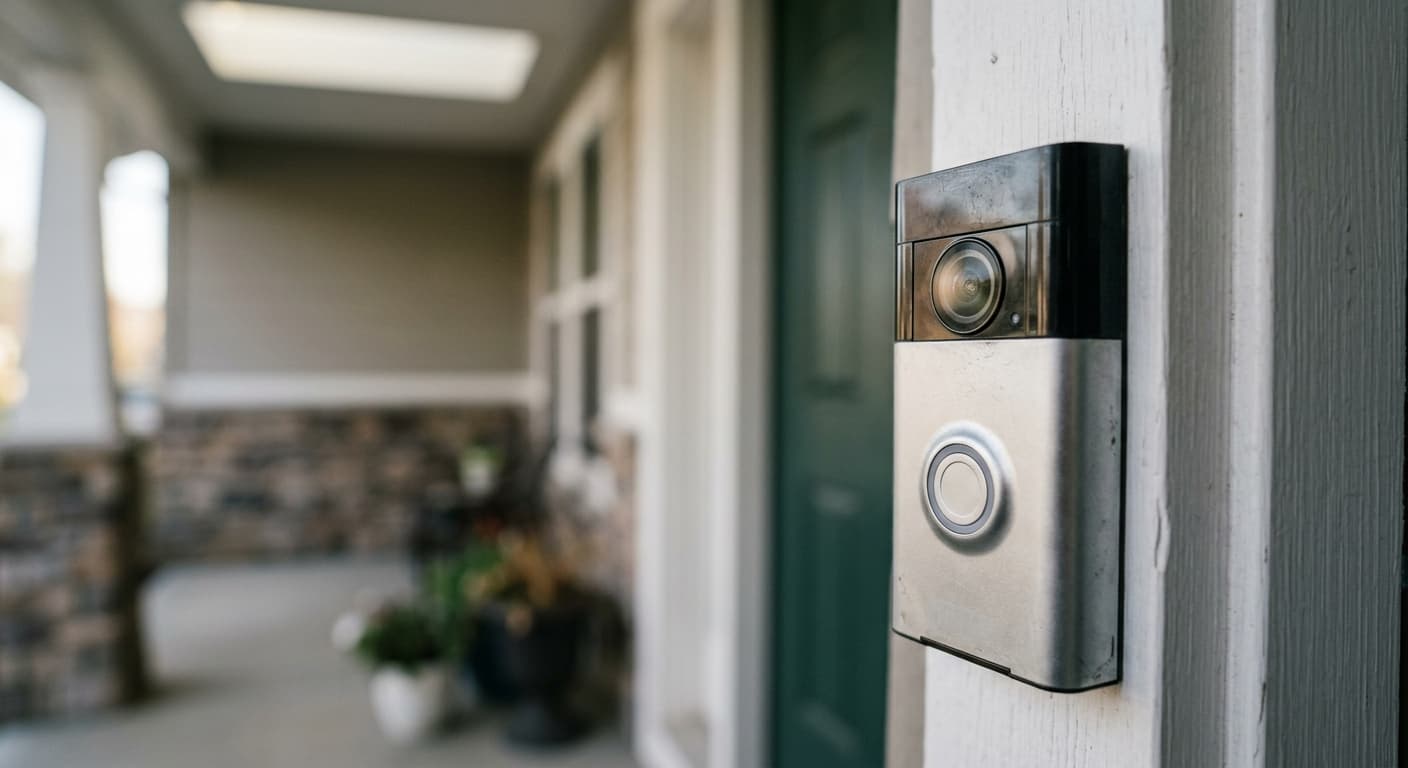
Indiana permits security camera installation on your own property for video surveillance. Audio recording through those cameras falls under the one-party consent rule of IC 35-33.5-5, so ambient audio capture without participation raises legal questions. Cameras may not be placed in bathrooms, bedrooms, or other private spaces under IC 35-45-4-5.
Indiana law allows broad use of security cameras on your own property but imposes strict limits on recording other people in private settings or placing cameras on property you do not own. This guide covers Indiana's security camera laws for homeowners, businesses, landlords, tenants, and HOA communities, including the statutes that apply, privacy boundaries, and penalties for violations.
Security Cameras on Your Own Property
Homeowner Rights
Indiana homeowners have broad rights to install security cameras on their own property. You can:
- Mount exterior cameras on your house, garage, or outbuildings
- Use doorbell cameras such as Ring, Nest Hello, or Eufy
- Install cameras covering your driveway, yard, and walkways
- Place cameras in common areas inside your home (living room, kitchen, hallways)
- Use wildlife or trail cameras on your own land
There is no Indiana statute requiring you to post signage notifying visitors that cameras are in use on your own residential property, though visible cameras and signs can serve as deterrents.
Restrictions on Home Cameras
Even on your own property, certain locations are off-limits:
- Guest bathrooms and bedrooms. Recording guests in areas where they have a reasonable expectation of privacy violates Indiana's voyeurism statute (IC 35-45-4-5).
- Areas capturing neighbors' private spaces. You cannot aim cameras to record inside a neighbor's home, through their windows, or into areas of their yard that are screened from public view.
- Nanny cams in private areas. While nanny cameras in common areas (living rooms, kitchens, play areas) are legal, placing them in a caregiver's private changing area or bathroom is not.
Capturing Your Neighbor's Property
Security cameras inevitably capture some portion of neighboring properties. Indiana law does not prohibit cameras that incidentally record a neighbor's yard, driveway, or exterior as long as:
- The camera is mounted on your own property
- The primary purpose is monitoring your own property
- The camera does not peer into areas where the neighbor has a reasonable expectation of privacy (interior rooms, screened areas)
Deliberate and sustained surveillance of a neighbor's private areas could be treated as harassment or voyeurism depending on the circumstances.
Business Security Camera Laws

What Businesses Can Monitor
Indiana businesses can use security cameras to monitor:
- Customer-facing areas (retail floors, lobbies, waiting rooms)
- Cash registers and point-of-sale terminals
- Entrances and exits
- Parking lots and loading docks
- Warehouses and storage areas
- Hallways and corridors
- Break rooms and cafeterias
Where Businesses Cannot Place Cameras
Businesses cannot install cameras in:
- Restrooms. Recording in any restroom violates IC 35-45-4-5.
- Changing rooms and fitting rooms. Customers have a reasonable expectation of privacy when trying on clothing.
- Locker rooms. Employee and customer locker rooms are protected.
- Lactation rooms. Federal law requires private spaces for nursing mothers, and cameras are prohibited.
Placing cameras in any of these areas constitutes voyeurism under Indiana law, a criminal offense carrying misdemeanor or felony penalties. For details, see Indiana voyeurism and hidden camera laws.
Employee Notification
Indiana does not have a specific statute requiring employers to notify employees of security cameras in the workplace. However, many employers choose to disclose surveillance as a best practice. Notification can be provided through:
- Employee handbooks and policy manuals
- Written acknowledgment forms signed during onboarding
- Posted signage in monitored areas
- Mention in the employment agreement
For more on workplace-specific rules, see Indiana workplace recording laws.
Landlord and Tenant Security Camera Rules
Landlord Camera Placement
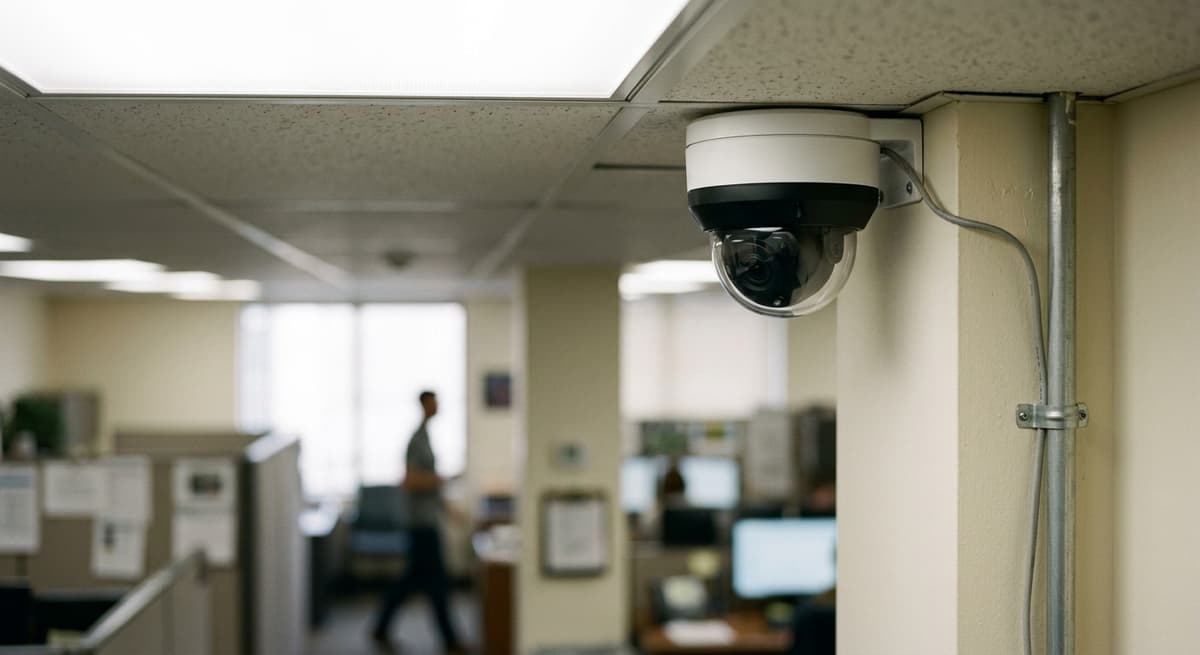
Landlords in Indiana can install security cameras in common areas of rental properties such as:
- Building entrances and lobbies
- Parking lots and garages
- Hallways and stairwells
- Laundry rooms
- Exterior areas of the building
What Landlords Cannot Do
Landlords cannot:
- Install cameras inside a tenant's unit without the tenant's consent. Under IC 35-46-8.5-1, placing an unattended camera on the private property of another person (which includes a tenant's rented space) without consent is unlawful surveillance.
- Place cameras aimed at windows or private areas of a tenant's unit from exterior locations.
- Install hidden cameras anywhere in the rental property without disclosure.
- Access or monitor the interior of a tenant's unit through any electronic means without consent.
A landlord who installs hidden cameras inside a tenant's unit may face criminal charges for both unlawful surveillance (IC 35-46-8.5-1) and voyeurism (IC 35-45-4-5), in addition to civil liability.
Tenant Camera Rights
Tenants can install their own security cameras inside their rented units. Doorbell cameras and exterior cameras may require landlord approval if the lease restricts modifications to the property. Tenants should:
- Check the lease for provisions about exterior modifications
- Position cameras to capture their own doorway and immediate area rather than neighboring units
- Ensure cameras do not capture interior spaces of other tenants' units
For more on landlord-tenant recording interactions, see Indiana landlord-tenant recording laws.
Audio Recording Through Security Cameras
The One-Party Consent Complication
Many modern security cameras include microphones that record audio along with video. In Indiana, audio recording is governed by the wiretapping statute (IC 35-33.5-5), which follows a one-party consent rule.
For security cameras, this creates a distinction:
- Cameras where the owner participates in conversations. If you are present and participating in conversations captured by your security camera, the audio recording is lawful under one-party consent.
- Unattended cameras capturing ambient audio. If a camera records conversations between other people while you are not present, the audio capture may implicate the wiretapping statute. The legal boundaries for ambient audio recording by security systems are not clearly defined in Indiana case law.
Best Practices for Audio on Security Cameras
- Disable audio recording on cameras that monitor areas where you will not be present, such as exterior cameras, parking lot cameras, and hallway cameras.
- Post signage if audio recording is enabled, notifying visitors and employees that audio and video recording is in progress.
- Limit audio recording to cameras where you regularly participate in conversations (such as a front door camera).
HOA and Community Rules
HOA Camera Policies
Homeowners' associations (HOAs) in Indiana can:
- Install security cameras in common areas (clubhouses, pools, parking areas, entrances)
- Adopt rules about homeowner camera placement that affects common areas or shared walls
- Restrict certain types of camera installations that violate aesthetic guidelines
HOAs cannot:
- Prohibit homeowners from installing cameras on their own property entirely (though they may regulate placement and appearance)
- Install cameras that capture the interior of homeowners' units
- Use cameras in pool changing rooms, restrooms, or other private facilities
Neighbor Disputes Over Cameras
Security camera disputes between neighbors in Indiana typically involve:
- Cameras aimed at a neighbor's windows or private areas
- Audio recording of conversations on adjacent properties
- Cameras perceived as surveillance or harassment
These disputes may involve claims under the voyeurism statute, the unlawful surveillance statute, or general harassment and nuisance laws. If you believe a neighbor's camera is invading your privacy, document the camera's placement and angle, and consult local law enforcement or an attorney.
Unlawful Surveillance: IC 35-46-8.5-1
The Core Prohibition
Indiana's unlawful surveillance statute IC 35-46-8.5-1 makes it a crime to knowingly or intentionally:
- Place a camera or electronic surveillance equipment that records images or data while unattended on the private property of another person without the owner's or tenant's consent
- Place a tracking device on an individual or their property without their knowledge or consent
Penalties
| Offense | Classification | Penalty |
|---|---|---|
| First offense | Class A misdemeanor | Up to 365 days in jail, $5,000 fine |
| Prior unrelated conviction | Level 6 felony | 6 months to 2.5 years in prison, up to $10,000 fine |
Doorbell Cameras and Smart Home Devices
Legal Considerations
Doorbell cameras (Ring, Nest, Eufy, etc.) are widely used in Indiana and are generally legal. They capture video and audio of your front door area, which is a semi-public space where visitors have limited privacy expectations.
Key considerations:
- Video recording of your doorway, porch, and the street in front of your home is lawful.
- Audio recording of conversations at your door is covered by one-party consent if you participate (such as answering the door or using two-way audio). Audio captured when you are not interacting falls into the ambient recording area discussed above.
- Ring and law enforcement partnerships. Some police departments in Indiana participate in programs that allow them to request (but not compel) doorbell camera footage from homeowners through platforms like Ring's Neighbors app.
Cloud Storage and Data Privacy
Security camera footage stored in the cloud raises data privacy considerations:
- Review your camera manufacturer's privacy policy and data retention terms
- Understand who can access your footage (the company, law enforcement with a warrant)
- Enable two-factor authentication on your security camera accounts
- Regularly review and delete footage you no longer need
More Indiana Recording Laws
Audio Recording | Video Recording | Voyeurism & Hidden Cameras | Workplace Recording | Recording Police | Phone Call Recording | Security Cameras | Recording in Public | Landlord-Tenant | Dashcam Laws | Schools | Medical Recording
Back to Indiana Recording Laws
See Also
- Indiana Surveillance Camera Laws covers home, HOA, neighbor, workplace, and landlord camera rules in Indiana.
More Indiana Recording Topics
More Indiana Laws
Frequently Asked Questions
Do I need permission to install security cameras on my Indiana home?
No. Indiana homeowners can install security cameras on their own property without permission. You do not need to notify neighbors or post signage, though both are recommended as best practices. Cameras cannot be aimed to record inside a neighbor's home or private areas.
Can my landlord put cameras inside my apartment in Indiana?
No. Under IC 35-46-8.5-1, placing an unattended camera inside a tenant's rented space without consent is unlawful surveillance, a Class A misdemeanor. Landlords can install cameras in common areas like lobbies, hallways, and parking lots, but not inside individual units.
Are security cameras with audio legal in Indiana?
Video recording through security cameras is generally legal on your own property. Audio recording is governed by Indiana's one-party consent wiretapping law (IC 35-33.5-5). Audio captured during conversations you participate in is lawful. Ambient audio recording of conversations between others when you are not present is a legal gray area. Disabling audio or posting signage is recommended for unattended cameras.
Can my HOA ban security cameras on my property?
HOAs can regulate the placement and appearance of security cameras through their governing documents, but they generally cannot prohibit cameras on your property entirely. Review your HOA's bylaws for specific camera policies. HOAs can install cameras in common areas but not in private facilities like changing rooms.
Can a business install hidden cameras in Indiana?
Businesses can use security cameras in common work and customer areas. Hidden cameras in restrooms, changing rooms, locker rooms, and fitting rooms are illegal under Indiana's voyeurism statute (IC 35-45-4-5). Even visible cameras in these locations are prohibited.
What should I do if I find an unauthorized camera on my property?
Do not touch or move the device. Document its location and appearance with photos. Contact local law enforcement to file a report. The person who placed the camera may face charges for unlawful surveillance under IC 35-46-8.5-1 and potentially voyeurism under IC 35-45-4-5.
Updates
Independently fact-checked against the cited primary sources
Governing law re-checked for recent changes
Reviewed and approved by an editor
The Law Behind This Article
This article rests on the statutory provisions below, held in our own legal record and retrieved from the official source. Tap a section to read the operative text.
Indiana Code, TITLE 35. CRIMINAL LAW AND PROCEDURE
§ 35-46-8.5-1Unlawful photography, surveillance, and tracking on private propertyIn forcecited in 9 of our articles
Sec. 1. (a) This section does not apply to any of the following: (1) Electronic or video toll collection facilities or activities authorized under any of the following: (A) IC 8-15-2. (B) IC 8-15-3. (C) IC 8-15.5. (D) IC 8-15.7. (E) IC 8-16. (F) IC 9-21-3.5. (2) A law enforcement officer who has obtained: (A) a search warrant; or (B) the consent of the owner of private property; to place a camera, electronic surveillance equipment, or tracking device on the private property, with respect to the placement of a camera, electronic surveillance equipment, or tracking device. (3) A law enforcement officer who uses a law enforcement recording device in performance of the officer's duties, with respect to the use of the law enforcement recording device. (4) A person who uses a tracking device to determine the location of a family member (as defined in IC 35-44.1-3-1), unless the person is the subject of a protective order obtained by the family member.
Official text (excerpt) · last checked 2026-08-31 · Read the full text in our law library · Verify at iga.in.gov
Also relied on in: Indiana Landlord-Tenant Recording Laws: Rights for Renters and Property Owners, Indiana Video Recording Laws: Surveillance Rules and Privacy Limits, Indiana Voyeurism and Hidden Camera Laws: Statutes and Penalties
§ 35-45-4-5Voyeurism; public voyeurism; aerial voyeurismIn forcecited in 14 of our articles
Sec. 5. (a) The following definitions apply throughout this section: (1) "Camera" means a camera, a video camera, a device that captures a digital image, or any other type of video recording device. (2) "Peep" means: (A) any looking of a clandestine, surreptitious, prying, or secretive nature; or (B) using a concealed camera with the intent of capturing an intimate image (as defined by IC 34-21.5-2-1). (3) "Private area" means the naked or undergarment clad genitals, pubic area, or buttocks of an individual. (b) A person: (1) who knowingly or intentionally: (A) peeps; or (B) goes upon the land of another with the intent to peep; into an occupied dwelling of another person; or (2) who knowingly or intentionally peeps in or into an area where an occupant of the area reasonably can be expected to disrobe or is actually expected to disrobe, including: (A) restrooms; (B) baths; (C) showers; and (D) dressing rooms; without the consent of the other person, commits voyeurism, a Class B misdemeanor.
Official text (excerpt) · last checked 2026-07-29 · Read the full text in our law library · Verify at iga.in.gov
Cited in 19 court opinions in our collectionLatest citing opinion in our collection: 2026
In the courts (editorial summary, independently checked):Casady v. State (2010) held restrooms and showers are areas where occupants reasonably can be expected to disrobe under 35-45-4-5, whether or not they actually did. Steven M. Sandleben v. State of Indiana (2014) read the public voyeurism definition of private area disjunctively, covering undergarment-clad or naked areas.
Opinions citing this section in our collection:
- Casady v. State (Indiana Court of Appeals 2010, 934 N.E.2d 1181)✓A man videotaped men at urinals and in a shower while hiding in a stall and a doorway; the court affirmed his voyeurism convictions, holding the filming was a clandestine peep and that restrooms are listed places where occupants can reasonably be expected to disrobe.
- Steven M. Sandleben v. State of Indiana (Indiana Court of Appeals 2014, 22 N.E.3d 782)✓A man put a camera under a four-year-old's skort in a store and filmed two girls underwater at a pool; the court upheld his public voyeurism convictions, holding the statute reaches naked or undergarment clad areas and was not vague as applied to him.
- David Delagrange v. State of Indiana (Indiana Court of Appeals 2013, 981 N.E.2d 1227)“…e other person, commits voyeurism, a Class B misdemeanor. Ind.Code § 35-45-4-5(a) (2005). After Delagrange committed t…”
Identified automatically from the court opinions citing this section — not a ranking of which case controls.
Also relied on in: Indiana Surveillance Camera Laws (2026 Guide), Indiana Smart Glasses Recording Laws 2025, Indiana Audio Recording Laws: One-Party Consent Rules and Penalties
§ 35-45-4-8Distribution of an intimate imageIn forcecited in 6 of our articles
Sec. 8. (a) This section does not apply to: (1) a photograph, digital image, or video that is distributed: (A) to report a possible criminal act; (B) in connection with a criminal investigation; (C) under a court order; (D) to a location that is: (i) intended solely for the storage or backup of personal data, including photographs, digital images, and video; and (ii) password protected; or (E) by a news reporting or an entertainment medium (as defined in IC 32-36-1-4); (2) a newspaper or news service that publishes news related information through a website; (3) a cloud service provider; or (4) an Internet provider, an affiliate or subsidiary of an Internet provider, or a search engine that: (A) solely provides access or connection to a website or other Internet content that is not under the control of that Internet service provider, affiliate or subsidiary, or search engine; and (B) is not responsible for creating or publishing the content that constitutes material harmful to minors.
Official text (excerpt) · last checked 2026-07-29 · Read the full text in our law library · Verify at iga.in.gov
Also relied on in: Indiana Deepfake Laws: AI Images, Voice Cloning & Penalties (2026), Indiana Sexting Laws: Legal Consequences and Penalties, Indiana AI Laws and Regulation (2026)
Explore the law
This article also draws on these acts and chapters (opening at their first section): Indiana Code, TITLE 32. PROPERTY § 32-31-1-1 (Determination of estates at will)
Related law for further reading — not part of this article’s citations.
Search our full record of US law — 2.1 million sections, every state + federal →
Sources and References
- Indiana Code IC 35-46-8.5-1(law.justia.com)
- Indiana Code IC 35-45-4-5(iga.in.gov).gov
- Indiana Code IC 35-33.5-5(iga.in.gov).gov
- Indiana Code IC 35-45-4-8(iga.in.gov).gov
- Indiana Code IC 35-46-8.5-1 - Unlawful Photography, Surveillance, and Tracking on Private Property(iga.in.gov).gov
- Indiana Landlord-Tenant Relations - IC Title 32, Article 31(iga.in.gov).gov
- FTC - Using Consumer Reports for Tenant Screening(ftc.gov).gov