
Hawaii
Hawaii Laws on Recording Police: Your Rights Under Act 164
Independently fact-checked against primary sources (last audited August 15, 2026). · Reviewed by the RecordingLaw editorial team. · Law checked current as of August 15, 2026. · 5 primary sources cited on this page. How we verify our legal content
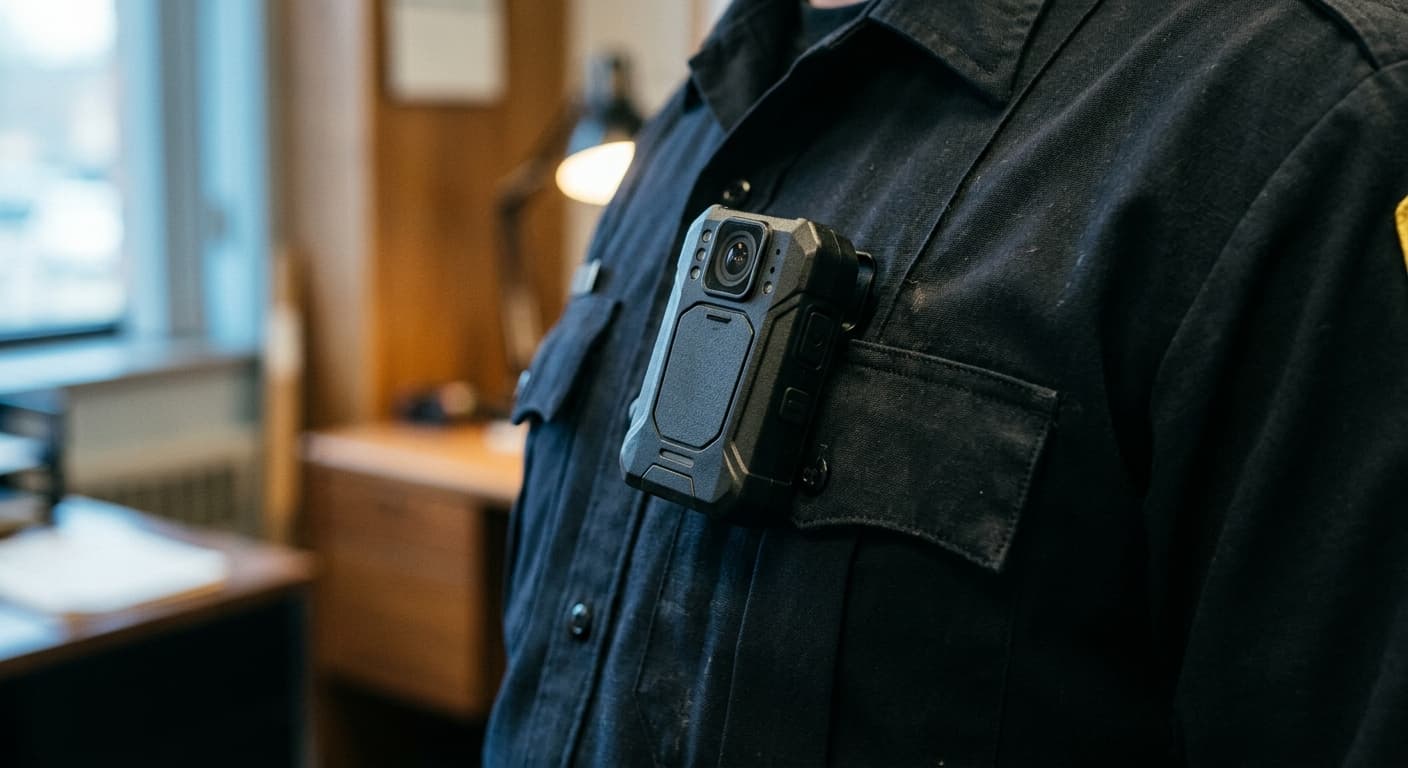
Hawaii law explicitly protects your right to record police officers in public. Act 164 (2016) amended HRS 711-1111 and HRS 710-1010 to confirm that filming officers performing their duties is neither a privacy violation nor obstruction. The First Amendment provides an independent constitutional basis for the same right.
Hawaii provides some of the strongest statutory protections in the nation for recording law enforcement officers. In 2016, the state legislature passed Act 164, which amended both the privacy statute and the obstruction statute to create explicit legal protection for citizens who record police. Combined with First Amendment protections that apply nationwide, Hawaii residents and visitors have clear authority to document police activity in public.
This guide covers the specific legal protections, the limitations on recording police, what officers can and cannot do when they encounter someone recording, and practical advice for exercising your rights safely.
Act 164 (2016): Hawaii's Right to Record Law
What the Law Says
Act 164 (2016) amended two key statutes to protect the right to record police:
Amendment to HRS 711-1111 (Privacy). The law added a new subsection to the privacy statute stating that it is not a violation of privacy in the second degree to make a video or audio recording of a law enforcement officer while the officer is in the performance of the officer's duty in a public area, or under circumstances in which the officer has no reasonable expectation of privacy.
Amendment to HRS 710-1010 (Obstruction). The law also amended the obstruction of government operations statute to state that making a video or audio recording of a law enforcement officer while the officer is performing duties shall not constitute obstruction of government operations, provided the person making the recording does not interfere with the officer's duties.
Why Hawaii Passed Act 164
The Hawaii Legislature found that the ability to record police interactions serves important public interests:
- Accountability: Recordings provide an objective record of police conduct
- Transparency: Public recording promotes openness in government operations
- Protection: Recordings protect both citizens and officers by preserving evidence of what actually occurred
- First Amendment rights: The Legislature recognized that recording government officials performing public duties is protected expression
What You Can Legally Record
Public Places
Under Act 164, you can record law enforcement officers performing their duties in any public place, including:
- Public streets, sidewalks, and intersections
- Public parks, beaches, and recreational areas
- Public buildings and government facilities open to the public
- Shopping centers, restaurants, and other businesses (with property owner permission)
- Airports, bus stations, and other transportation hubs
- Any area where the public has general access
Specific Police Activities You Can Record
You are legally protected when recording:
- Traffic stops, including your own traffic stop
- Arrests happening in public view
- Police responses to incidents in public areas
- Interactions between officers and civilians in public settings
- Use of force incidents
- Protests and demonstrations where police are present
- DUI checkpoints and sobriety tests
- Police press conferences and public statements
Audio and Video
Act 164 protects both video and audio recording. You can:
- Film with a smartphone, camera, or other video device
- Record audio using a voice recorder or phone
- Livestream police encounters on social media platforms
- Use a dashcam that captures police interactions
Limitations on Recording Police
Reasonable Actions by Officers
Act 164 specifically preserves the right of law enforcement officers to take certain reasonable actions while being recorded. Officers may:
- Maintain safety and control in dangerous situations
- Secure crime scenes and accident sites to preserve evidence
- Protect the integrity and confidentiality of ongoing investigations
- Protect public safety and order during emergencies or crowd control situations
- Establish perimeters around active crime scenes or emergency areas
What You Cannot Do While Recording
While your right to record is protected, you must comply with certain limitations:
- Do not physically interfere with police operations or place yourself in the way of officers performing their duties
- Do not trespass on restricted areas, crime scenes, or areas that have been lawfully cordoned off
- Do not obstruct traffic or create safety hazards while recording
- Do not tamper with evidence or crime scenes
- Follow lawful orders to move back from a dangerous area (though you can continue recording from a safe distance)
The Interference Standard
The line between lawful recording and unlawful interference is based on whether your presence and actions actually impede police operations. Courts have generally held that:
- Standing at a reasonable distance and recording does not constitute interference
- Verbally challenging officers while recording does not constitute interference (though it may escalate the situation)
- Physically blocking an officer, grabbing an officer, or inserting yourself into a physical altercation does constitute interference
- Refusing to move back when ordered to do so for legitimate safety reasons may constitute interference
What Officers Cannot Do
Prohibited Officer Actions
Law enforcement officers in Hawaii cannot legally:
- Order you to stop recording solely because they do not want to be filmed
- Seize your phone or camera without a warrant, except in rare exigent circumstances
- Delete your recordings under any circumstances
- Arrest you for recording when you are not otherwise interfering with their duties
- Threaten you with arrest for the act of recording alone
- Retaliate against you for exercising your right to record
The Warrant Requirement for Devices
Under the U.S. Supreme Court's decision in Riley v. California (2014), law enforcement generally needs a warrant to search the contents of a cell phone, including recorded videos and photos. This means officers cannot demand to view or delete your recordings without either a warrant or your voluntary consent.
If an Officer Tells You to Stop Recording
If a police officer orders you to stop recording in Hawaii:
- Remain calm and polite. Do not argue or become confrontational.
- State your rights clearly. You can say: "I am exercising my right to record under Hawaii Act 164. I am not interfering with your duties."
- Comply with lawful orders to move back from a dangerous area, but continue recording from a safe distance.
- Do not physically resist if an officer attempts to take your device. Assert your rights verbally but comply physically.
- Document everything afterward, including the officer's name, badge number, and details of the encounter.
- File a complaint with the relevant police department or contact an attorney if your rights were violated.
Recording Your Own Traffic Stop
Your Rights During a Traffic Stop
You have the right to record your own traffic stop in Hawaii. This includes:
- Keeping your phone or dashcam recording throughout the encounter
- Using a phone mounted on your dashboard to record video
- Holding your phone to record, though keeping your hands visible is advisable for safety
- Having passengers record the interaction
Practical Tips for Recording Traffic Stops
- Start recording before the officer approaches your vehicle if possible
- Keep the recording device in plain view rather than hiding it
- Do not reach for your phone if the officer is at your window; explain what you are doing
- State the date, time, and location at the start of the recording
- Keep your hands visible while recording for officer safety
- Save and back up the recording as soon as the stop is over
Constitutional Protections
First Amendment Right to Record
Beyond Hawaii's statutory protections under Act 164, the First Amendment to the U.S. Constitution provides an independent basis for the right to record police. Multiple federal circuit courts have recognized this right, and the U.S. Department of Justice has affirmed that recording police performing their duties in public is a constitutionally protected activity.
While the U.S. Supreme Court has not issued a definitive ruling on the right to record police, the overwhelming weight of federal appellate authority supports this right. In the Ninth Circuit, which covers Hawaii, Fordyce v. City of Seattle, 55 F.3d 436 (9th Cir. 1995) recognized a First Amendment right to film police in public, and Askins v. U.S. Department of Homeland Security, 899 F.3d 1035 (9th Cir. 2018) reaffirmed that right applies to federal officers as well.
Section 1983 Civil Rights Claims
If a law enforcement officer violates your right to record in Hawaii, you may have a federal civil rights claim under 42 U.S.C. 1983. This federal statute allows individuals to sue state actors who violate their constitutional rights. Remedies may include:
- Compensatory damages for injuries or losses
- Nominal damages for the constitutional violation itself
- Punitive damages for egregious misconduct
- Attorney fees and costs
Police Body Cameras in Hawaii
Body Camera Programs
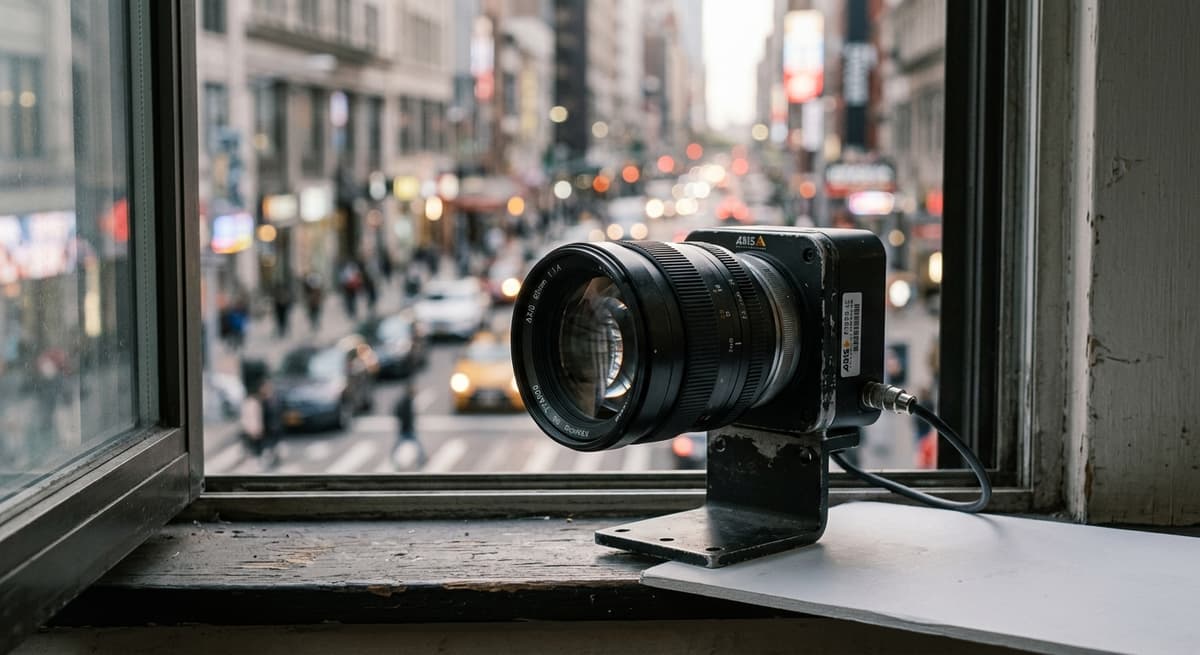
Several Hawaii law enforcement agencies have implemented or are implementing body camera programs. The Honolulu Police Department launched its body-worn camera program to increase transparency and accountability. Hawaii does not have a statewide statute setting operational or retention standards for body-worn cameras; individual county police departments, including HPD, set their own body-camera policies.
Public Access to Body Camera Footage
Access to police body camera footage in Hawaii is governed by the Uniform Information Practices Act (HRS Chapter 92F) and the UIPA framework under HRS sections 92F-13 and 92F-14. Footage may be available through public records requests, though exemptions exist for:
- Ongoing investigations
- Privacy of individuals captured in recordings
- Certain categories of sensitive law enforcement information
Recording in Specific Law Enforcement Settings
Courthouses
Recording in Hawaii courthouses is subject to the rules of the court. Generally, recording is not permitted inside courtrooms without prior approval from the presiding judge. Common areas of courthouses may have different rules.
Police Stations
Inside police stations, you may have limited recording rights in public areas such as lobbies. Interview rooms and secure areas are typically restricted. Recording your own interactions with officers at a station window or front desk is generally protected.
Correctional Facilities
Recording inside prisons and jails is heavily restricted. Visitors are generally not permitted to bring recording devices into correctional facilities. Any recording rights are subject to the security regulations of the specific facility.
Hawaii AI Deepfake Laws and Federal Updates
Hawaii's election deepfake law, Act 191 SLH 2024 (S.B. 2687), was permanently enjoined as facially unconstitutional in Babylon Bee LLC v. Lopez, No. 1:25-cv-00234 (D. Haw. Jan. 30, 2026) (Park, J.). The law cannot be enforced. The federal TAKE IT DOWN Act, signed May 19, 2025 and taking effect May 19, 2026, imposes platform notice-and-takedown obligations for non-consensual intimate images, including AI-generated deepfakes. It operates independently of Act 191 and is not affected by the injunction.
What to Do If Your Rights Are Violated
Immediate Steps
- Do not resist physically. If an officer confiscates your device or orders you to stop, comply physically while asserting your rights verbally.
- Remember details. Note the officer's name, badge number, patrol car number, and the time and location of the incident.
- Find witnesses. Get contact information from anyone who observed the encounter.
- File a complaint. Contact the relevant police department's internal affairs division.
Legal Remedies
You may be able to pursue:
- Internal affairs complaints with the police department
- Civilian oversight board complaints where available
- Federal civil rights lawsuits under 42 U.S.C. 1983
- State tort claims for trespass to personal property (if your device was seized), false arrest, or similar causes of action
More Hawaii Recording Laws
Audio Recording | Video Recording | Voyeurism and Hidden Cameras | Workplace Recording | Recording Police | Phone Call Recording | Security Cameras | Recording in Public | Landlord-Tenant Recording | Dashcam Laws | School Recording | Medical Recording
More Hawaii Recording Topics
More Hawaii Laws
Frequently Asked Questions
Can I legally record police officers in Hawaii?
Yes. Hawaii Act 164 (2016) explicitly protects your right to make video or audio recordings of law enforcement officers performing their duties in public places. This right is also protected by the First Amendment. You must not physically interfere with police operations while recording.
Can a police officer tell me to stop recording in Hawaii?
An officer cannot order you to stop recording solely because they do not want to be filmed. However, they can give lawful orders to move back from a dangerous area, secure a crime scene, or maintain public safety. You can continue recording from a safe distance while complying with those orders.
Can police delete my recordings in Hawaii?
No. Law enforcement officers cannot legally delete your recordings. Under the U.S. Supreme Court ruling in Riley v. California (2014), officers generally need a warrant to access the contents of your phone. Deleting recordings could also constitute destruction of evidence and a violation of your civil rights.
Can I record my own traffic stop in Hawaii?
Yes. You have the right to record your own traffic stop using a phone, dashcam, or other recording device. Keep the device in plain view, keep your hands visible for officer safety, and do not make sudden movements to reach for a recording device without explaining what you are doing.
What should I do if a police officer violates my right to record in Hawaii?
Comply physically but assert your rights verbally. Note the officer's name, badge number, and details of the encounter. Find witnesses. Then file a complaint with the police department's internal affairs division. You may also pursue a federal civil rights lawsuit under 42 U.S.C. 1983 for violations of your constitutional rights.
Updates
Corrected a citation error describing Hawaii's police body-camera oversight: the page cited HRS Chapter 52D, which is the county Police Commission chapter and does not address body-worn cameras. The page now states plainly that county police departments set their own body-camera policies, since no statewide statute exists.
Independently fact-checked against the cited primary sources; governing law re-checked for recent changes
Governing law re-checked for recent changes
Governing law re-checked for recent changes
Reviewed and approved by an editor
The Law Behind This Article
This article rests on the statutory provisions below, held in our own legal record and retrieved from the official source. Tap a section to read the operative text.
Hawaii Revised Statutes, Chapter 711: OFFENSES AGAINST PUBLIC ORDER
§ 711-1111Violation of privacy in the second degreeIn forcecited in 19 of our articles
(1) A person commits the offense of violation of privacy in the second degree if, except in the execution of a public duty or as authorized by law, the person intentionally: (a) Trespasses on property for the purpose of subjecting anyone to eavesdropping or other surveillance in a private place; (b) Peers or peeps into a window or other opening of a dwelling or other structure adapted for sojourn or overnight accommodations for the purpose of spying on the occupant thereof or invading the privacy of another person with a lewd or unlawful purpose, under circumstances in which a reasonable person in the dwelling or other structure would not expect to be observed; (c) Trespasses on property for the sexual gratification of the actor; (d) Installs or uses, or both, in any private place, without consent of the person or persons entitled to privacy therein, any means or device for observing, recording, amplifying, or broadcasting sounds or events in that place other than another person in a stage of undress or sexual activity; provided that this paragraph shall not prohibit a person from making a video or audio recording or taking a photograph of a law enforcement officer while the…
Official text (excerpt) · last checked 2026-08-31 · Read the full text in our law library · Verify at capitol.hawaii.gov
Cited in 10 court opinions in our collectionLatest citing opinion in our collection: 2026
In the courts (editorial summary, independently checked):Hawaii decisions have construed HRS 711-1111 mainly alongside neighboring statutes. State v. Kaakimaka (2026) read subsections (1)(d) and (1)(e) as an inside and outside pair while construing the first-degree offense. State v. Lee (1984) treated 711-1111(1) as drawn from Model Penal Code 250.12 in reading the wiretap statute.
Opinions citing this section in our collection:
- State v. Lee (Hawaii Supreme Court 1984, 67 Haw. 307)✓An undercover officer wearing a recorder taped conversations in a doctor's private office; construing the wiretap consent provision drawn from HRS 711-1111(1)(b) and (c), the court held a body-worn device is not an "installation" in a private place, so the tapes were admissible.
- State v. Kaakimaka (Hawaii Supreme Court 2026)“…711-1110.9 and second degree violation of privacy under HRS § 711-1111 (2014 & Supp. 2025) convinces me that…”
- State v. Lester (Hawaii Supreme Court 1982, 64 Haw. 659)“…The Code provision covering wiretapping and eavesdropping, HRS § 711-1111, permits "consensual eavesdropping".…”
Identified automatically from the court opinions citing this section — not a ranking of which case controls.
Also relied on in: Hawaii Recording Laws (2026): Hybrid Consent State Rules, Hawaii Smart Glasses Recording Laws (2026), Hawaii Audio Recording Laws: One-Party Consent Rules and Penalties
Hawaii Revised Statutes, Chapter 710: OFFENSES AGAINST PUBLIC ADMINISTRATION
§ 710-1010Obstructing government operationsIn forcecited in 2 of our articles
(1) A person commits the offense of obstructing government operations if, by using or threatening to use violence, force, or physical interference or obstacle, the person intentionally obstructs, impairs, or hinders: (a) The performance of a governmental function by a public servant acting under color of the public servant's official authority; (b) The enforcement of the penal law or the preservation of the peace by a law enforcement officer acting under color of the law enforcement officer's official authority; or (c) The operation of a radio, telephone, television, or other telecommunication system owned or operated by the State or one of its political subdivisions.
Official text (excerpt) · last checked 2026-07-30 · Read the full text in our law library · Verify at capitol.hawaii.gov
Cited in 2 court opinions in our collectionLatest citing opinion in our collection: 2017
Opinions citing this section in our collection:
- State v. Line (Hawaii Supreme Court 2009, 121 Haw. 74)“…ration of Law or Other Governmental Function” is similar to HRS § 710-1010, entitled “Obstructing government opera…”
- State v. Teale. (Hawaii Supreme Court 2017, 139 Haw. 351)“…illegal activity after being issued a citation”); see also HRS § 710-1010 (1993 & Supp. 2001) (setting forth offe…”
Identified automatically from the court opinions citing this section — not a ranking of which case controls.
Also relied on in: Hawaii Voyeurism Laws: Hidden Camera Penalties and Privacy Protections
Hawaii Revised Statutes, Chapter 803: ARRESTS, SEARCHES, SEARCH WARRANTS
§ 803-42Interception, access, and disclosure of wire, oral, or electronic communications, use of pen register, trap and trace device, and mobile tracking device prohibitedIn forcecited in 20 of our articles
(a) Except as otherwise specifically provided in this part, any person who: (1) Intentionally intercepts, endeavors to intercept, or procures any other person to intercept or endeavor to intercept, any wire, oral, or electronic communication; (2) Intentionally uses, endeavors to use, or procures any other person to use or endeavor to use any electronic, mechanical, or other device to intercept any wire, oral, or electronic communication when: (A) Such a device is affixed to, or otherwise transmits a signal through, a wire, cable, or other similar connection used in wire communication; or (B) Such a device transmits communications by radio, or interferes with the transmission of such communication; (3) Intentionally discloses, or endeavors to disclose, to any other person the contents of any wire, oral, or electronic communication, knowing or having reason to know that the information was obtained through the interception of a wire, oral, or electronic communication in violation of this part; (4) Intentionally uses, or endeavors to use, the contents of any wire, oral, or electronic communication, knowing or having reason to know that the information was obtained through the…
Official text (excerpt) · last checked 2026-08-28 · Read the full text in our law library · Verify at capitol.hawaii.gov
Cited in 14 court opinions in our collectionLatest citing opinion in our collection: 2026
In the courts (editorial summary, independently checked):State v. Lo (1983) held HRS 803-42(b)(3) barred police from secretly installing recording devices in a hotel room even though one participant consented, and suppressed the evidence. State v. Lee (1984) held a recorder worn by a consenting participant is not an installation in a private place, so no violation.
Opinions citing this section in our collection:
- State v. Lo (Hawaii Supreme Court 1983, 66 Haw. 653)✓Agents wired a hotel room and recorded a doctor lured there by a cooperating patient; the Hawaii Supreme Court held the statute bars installing a recording device in any private place without the consent of those entitled to privacy, and affirmed suppression.
- State v. Okubo (Hawaii Supreme Court 1984, 67 Haw. 197)✓Police recorded roughly forty bribery conversations using body recorders and phone taps with the participating officers' consent; the Hawaii Supreme Court found the consensual monitoring valid under the statute and the state constitution.
- State v. Lee (Hawaii Supreme Court 1984, 67 Haw. 307)✓An officer posing as a patient wore a recorder into a doctor's private office; the Hawaii Supreme Court held a device worn on a participant's body is not an installation in a private place, so the statute was not violated, distinguishing Lo.
Identified automatically from the court opinions citing this section — not a ranking of which case controls.
Also relied on in: Hawaii Landlord-Tenant Recording Laws: Surveillance and Privacy Rights, Hawaii Security Camera Laws: Residential and Business Surveillance Rules, Hawaii Video Recording Laws: Privacy Rules and Consent Requirements
United States Code Title 42
§ 1983Civil action for deprivation of rightsIn forcecited in 50 of our articles
Every person who, under color of any statute, ordinance, regulation, custom, or usage, of any State or Territory or the District of Columbia, subjects, or causes to be subjected, any citizen of the United States or other person within the jurisdiction thereof to the deprivation of any rights, privileges, or immunities secured by the Constitution and laws, shall be liable to the party injured in an action at law, suit in equity, or other proper proceeding for redress, except that in any action brought against a judicial officer for an act or omission taken in such officer’s judicial capacity, injunctive relief shall not be granted unless a declaratory decree was violated or declaratory relief was unavailable. For the purposes of this section, any Act of Congress applicable exclusively to the District of Columbia shall be considered to be a statute of the District of Columbia.
Official text (excerpt) · last checked 2026-07-28 · Read the full text in our law library · Verify at uscode.house.gov
Cited in 282,365 court opinions in our collectionLatest citing opinion in our collection: 2026
Opinions citing this section in our collection:
- Ashcroft v. Iqbal (Supreme Court of the United States 2009, 556 U.S. 662)“…its brought against state officials under Rev. Stat. §1979, 42 U. S. C. §1983.” Hartman, 547 U. S., at 254, n. 2. Cf.…”
- Celotex Corp. v. Catrett, Administratrix of the Estate of Catrett (Supreme Court of the United States 1986, 477 U.S. 317)“…policeman as she left. Petitioner brought an action under 42 U. S. C. § 1983 claiming that the refusal of service a…”
- Monell v. New York City Dept. of Social Servs. (Supreme Court of the United States 1978, 436 U.S. 658)“…decided less than two decades ago. Focusing new light on 42 U. S. C. § 1983 , that decision widened access to the f…”
Identified automatically from the court opinions citing this section — not a ranking of which case controls.
Also relied on in: Alabama Laws on Recording Police: Your Rights and Limits, Alaska Laws on Recording Police: Your Rights and Limits (2026), Arkansas Laws on Recording Police: Your Rights and Limits (2026)
Explore the law
This article also draws on these acts and chapters (opening at their first section): Hawaii Revised Statutes, Chapter 92F: UNIFORM INFORMATION PRACTICES ACT (MODIFIED) § 92F-1 (Short title)
Related law for further reading — not part of this article’s citations.
Search our full record of US law — 2.1 million sections, every state + federal →
Sources and References
- Hawaii Act 164 (2016) - Right to Record Law Enforcement(capitol.hawaii.gov).gov
- Hawaii Revised Statutes 711-1111 - Violation of Privacy in the Second Degree(capitol.hawaii.gov).gov
- Hawaii Revised Statutes 710-1010 - Obstructing Government Operations(capitol.hawaii.gov).gov
- Hawaii Revised Statutes Chapter 92F - Uniform Information Practices Act(capitol.hawaii.gov).gov
- 42 U.S.C. 1983 - Civil Action for Deprivation of Rights(law.cornell.edu)
- Hawaii Revised Statutes 803-42 - Interception of Communications(capitol.hawaii.gov).gov