
Hawaii
Hawaii School Recording Laws: Student Privacy, FERPA, and Classroom Rules (2026)
Independently fact-checked against primary sources (last audited August 15, 2026). · Reviewed by the RecordingLaw editorial team. · Law checked current as of August 15, 2026. · 4 primary sources cited on this page. How we verify our legal content
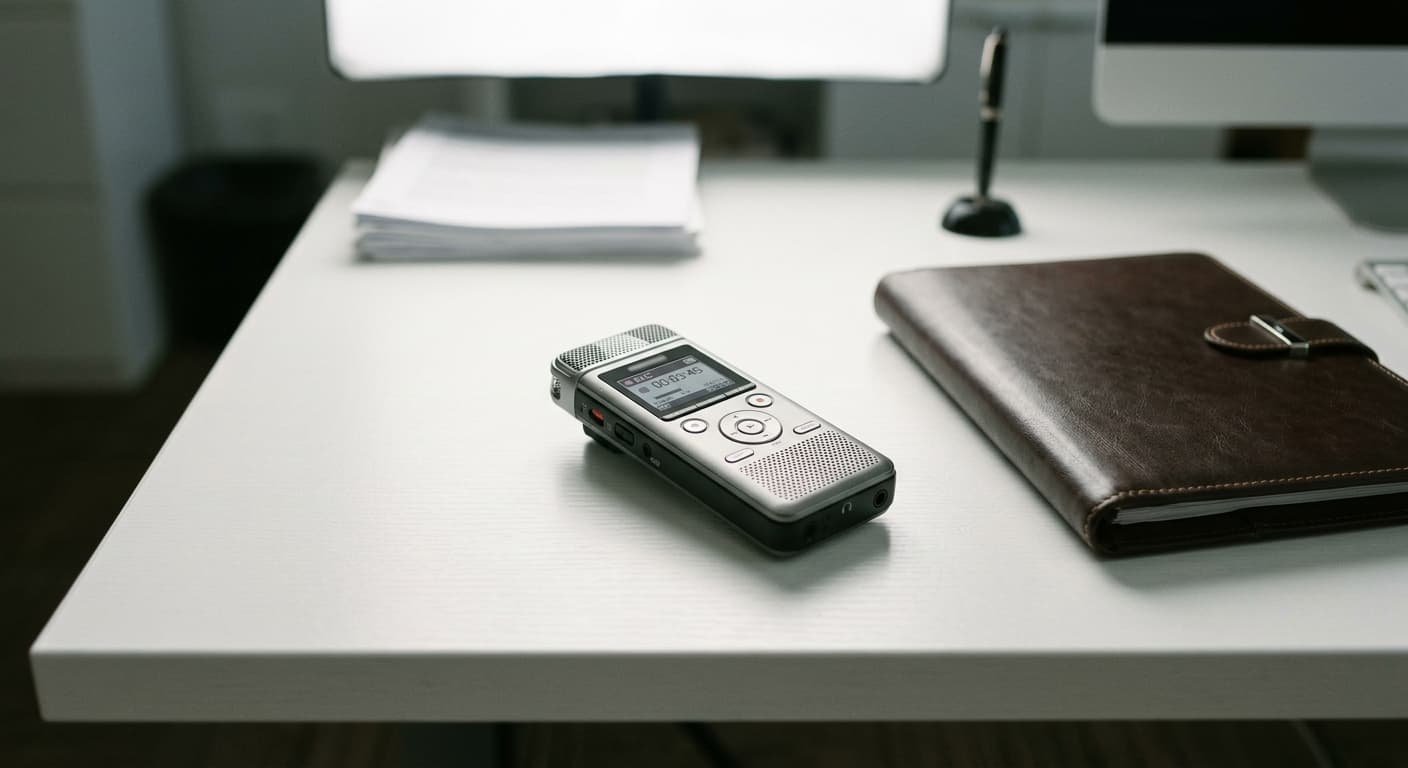
Under Hawaii's one-party consent law (HRS 803-42), a student, parent, or teacher who participates in a school meeting or classroom discussion may record it without notifying other parties. FERPA (20 U.S.C. 1232g) separately governs student education records, restricting how schools may disclose recordings that identify students.
Recording in Hawaii schools involves the state's one-party consent recording law, its separate privacy statute, federal student privacy protections under FERPA, and Hawaii Department of Education policies. Hawaii's one-party consent framework gives students and parents broad rights to record conversations they participate in, but school settings add layers of complexity around student privacy, school policies, and FERPA.
This guide covers when students, parents, and teachers can legally record in school settings, how FERPA interacts with recording rights, and what Hawaii's Department of Education policies say about recording devices.
Recording Laws That Apply in Hawaii Schools
State Law: HRS Section 803-42 (One-Party Consent)
Under Hawaii's wiretapping statute, anyone can record a conversation they participate in without informing others. This applies in school settings:
- Students can record classroom discussions they participate in
- Parents can record meetings with school officials they attend
- Teachers can record interactions with students or parents they participate in
- School administrators can record meetings they conduct
State Law: HRS Section 711-1111 (Private Places)
HRS Section 711-1111 adds restrictions for recording in private places. In school settings:
- Open classrooms and common areas are generally not "private places"
- A closed private counselor's office might qualify as a private place for purposes of third-party surveillance; whether it extends to a participant's own recording of their own meeting is unsettled under Hawaii law
- Bathrooms, locker rooms, and changing areas are always private places where recording is prohibited
- Recording in a private place without the consent of the person entitled to privacy is a misdemeanor under HRS 711-1111
Student Recording Rights
Can Students Record in Class?
Under HRS 803-42, yes. A student participating in a classroom discussion is a party to the conversation and can record, since the statute exempts a person who "is a party to the communication." However, the Hawaii Department of Education (HIDOE) and individual schools set device policies:
- Many schools require devices stored during class
- Student handbooks may prohibit phones and recording devices in classrooms
- Violating school device policies can result in disciplinary action, even if the recording itself is legally permitted under state law
- Teachers can confiscate devices that violate school policies
Recording School Administrators and Counselors
Students and parents can record meetings with school principals, counselors, and other administrators they attend. HRS 711-1111 requires consent of the person entitled to privacy in a private place, not wiretap-style all-party consent, and the statute is aimed at third parties covertly recording someone else rather than a participant recording their own meeting. Whether it reaches a student's or parent's own recording of a closed-door meeting they attend is unsettled under Hawaii law, so open-door meetings and meetings in conference rooms remain the most straightforward option.
Recording Other Students
Recording other students raises FERPA concerns. Even if a recording is made lawfully under one-party consent, sharing that recording in a way that identifies students and their activities may implicate FERPA restrictions on disclosing student education records.

Parent Recording Rights
Parent-Teacher and Parent-Administrator Meetings
Parents attending meetings with teachers, counselors, or administrators can record those meetings under one-party consent. Best practices include:
- Informing the school official at the start of the meeting that you are recording
- This is not legally required but reduces confrontation and potential claims about recording policy violations
- Recording is particularly valuable for IEP (Individualized Education Program) meetings and disciplinary hearings
IEP and Special Education Meetings
Parents of students with disabilities have heightened interests in accurate records of IEP meetings. Under one-party consent, parents can record their own IEP meetings. Some schools may ask for advance notice before recording IEP meetings, which is a reasonable request but not a legal requirement.
FERPA and Recording
What FERPA Covers
FERPA (the Family Educational Rights and Privacy Act, 20 U.S.C. 1232g) protects the privacy of student education records. FERPA restricts schools from disclosing personally identifiable information from student records without consent.
How FERPA Interacts With Recordings
FERPA becomes relevant when recordings capture identifiable information about students:
- A recording of a classroom discussion that identifies individual students and their academic performance may constitute an education record
- Schools cannot disclose such recordings to third parties without parental consent for K-12 students
- A recording made by a student of their own participation in class does not become subject to FERPA simply because it incidentally captures other students
Parent Access to School Recordings
If a school makes recordings of students (security cameras, classroom recordings for instructional purposes, etc.), parents may have FERPA-based rights to access records that identify their child.
School Surveillance by Administrators
Permissible Surveillance
Hawaii schools can install security cameras in:
- Building entrances and exits
- Hallways and common areas
- Parking lots
- Cafeterias and gyms
Prohibited Surveillance Areas
Schools cannot install cameras in:
- Bathrooms and restrooms (any gender)
- Locker rooms and changing areas
- Shower facilities
- Any area where students have a reasonable expectation of privacy
Installing cameras in prohibited areas violates HRS 711-1111 (misdemeanor) and potentially HRS 711-1110.9 (Class C felony) if intimate images are captured.
Federal Developments
Hawaii's election deepfake law, Act 191 SLH 2024, was permanently enjoined as facially unconstitutional in Babylon Bee LLC v. Lopez, No. 1:25-cv-00234 (D. Haw. Jan. 30, 2026) (Park, J.). The federal TAKE IT DOWN Act (effective May 19, 2026) creates platform takedown obligations for non-consensual intimate images. Schools handling student recordings or images on digital platforms should be aware of these obligations alongside FERPA requirements.
More Hawaii Recording Laws
Audio Recording | Video Recording | Voyeurism and Hidden Cameras | Workplace Recording | Recording Police | Phone Call Recording | Security Cameras | Recording in Public | Landlord-Tenant Recording | Dashcam Laws | School Recording | Medical Recording
More Hawaii Recording Topics
More Hawaii Laws
Frequently Asked Questions
Can a student record a teacher in Hawaii?
Yes. Under Hawaii's one-party consent law (HRS 803-42), a student who is a participant in a classroom discussion can record it without telling the teacher. However, school device policies may prohibit phones in class, and violating those policies can result in disciplinary action even if the recording is legally permitted.
Can a parent record a meeting with a school principal?
Yes. Parents attending meetings with school officials can record those meetings under one-party consent. While not required, informing the official at the start of the meeting is a professional courtesy that can reduce friction.
Can a parent record an IEP meeting?
Yes. Under Hawaii's one-party consent law, parents can record their own IEP meetings. Schools may request advance notice before recording IEP meetings, which is a reasonable request. Accurate records of IEP meetings can be valuable documentation for parents of students with disabilities.
Are school security cameras legal in Hawaii?
Yes, in appropriate locations. Schools can install cameras in hallways, entrances, and common areas. Cameras in bathrooms, locker rooms, and changing areas are illegal under HRS 711-1111 and potentially HRS 711-1110.9.
Does FERPA prevent parents from recording school meetings?
No. FERPA restricts what schools can do with student education records, not what parents can record in meetings they attend. However, if your recording captures other students and you share it in ways that identify those students, FERPA and privacy concerns may arise.
Updates
Removed a case citation, State v. Okubo, that was used to vouch for students' and parents' right to record; the case is a 1980s criminal evidence-suppression appeal about government monitoring, not a citizen-recording-rights ruling, so the one-party rule is now grounded directly in the statute's text. Also corrected the page's description of Hawaii's private-places law to reflect its actual consent standard rather than an all-party-consent framing.
Independently fact-checked against the cited primary sources; governing law re-checked for recent changes
Governing law re-checked for recent changes
Reviewed and approved by an editor
The Law Behind This Article
This article rests on the statutory provisions below, held in our own legal record and retrieved from the official source. Tap a section to read the operative text.
Hawaii Revised Statutes, Chapter 803: ARRESTS, SEARCHES, SEARCH WARRANTS
§ 803-42Interception, access, and disclosure of wire, oral, or electronic communications, use of pen register, trap and trace device, and mobile tracking device prohibitedIn forcecited in 20 of our articles
(a) Except as otherwise specifically provided in this part, any person who: (1) Intentionally intercepts, endeavors to intercept, or procures any other person to intercept or endeavor to intercept, any wire, oral, or electronic communication; (2) Intentionally uses, endeavors to use, or procures any other person to use or endeavor to use any electronic, mechanical, or other device to intercept any wire, oral, or electronic communication when: (A) Such a device is affixed to, or otherwise transmits a signal through, a wire, cable, or other similar connection used in wire communication; or (B) Such a device transmits communications by radio, or interferes with the transmission of such communication; (3) Intentionally discloses, or endeavors to disclose, to any other person the contents of any wire, oral, or electronic communication, knowing or having reason to know that the information was obtained through the interception of a wire, oral, or electronic communication in violation of this part; (4) Intentionally uses, or endeavors to use, the contents of any wire, oral, or electronic communication, knowing or having reason to know that the information was obtained through the…
Official text (excerpt) · last checked 2026-08-28 · Read the full text in our law library · Verify at capitol.hawaii.gov
Cited in 14 court opinions in our collectionLatest citing opinion in our collection: 2026
In the courts (editorial summary, independently checked):State v. Lo (1983) held HRS 803-42(b)(3) barred police from secretly installing recording devices in a hotel room even though one participant consented, and suppressed the evidence. State v. Lee (1984) held a recorder worn by a consenting participant is not an installation in a private place, so no violation.
Opinions citing this section in our collection:
- State v. Lo (Hawaii Supreme Court 1983, 66 Haw. 653)✓Agents wired a hotel room and recorded a doctor lured there by a cooperating patient; the Hawaii Supreme Court held the statute bars installing a recording device in any private place without the consent of those entitled to privacy, and affirmed suppression.
- State v. Okubo (Hawaii Supreme Court 1984, 67 Haw. 197)✓Police recorded roughly forty bribery conversations using body recorders and phone taps with the participating officers' consent; the Hawaii Supreme Court found the consensual monitoring valid under the statute and the state constitution.
- State v. Lee (Hawaii Supreme Court 1984, 67 Haw. 307)✓An officer posing as a patient wore a recorder into a doctor's private office; the Hawaii Supreme Court held a device worn on a participant's body is not an installation in a private place, so the statute was not violated, distinguishing Lo.
Identified automatically from the court opinions citing this section — not a ranking of which case controls.
Also relied on in: Hawaii Recording Laws (2026): Hybrid Consent State Rules, Hawaii Audio Recording Laws: One-Party Consent Rules and Penalties, Hawaii Smart Glasses Recording Laws (2026)
Hawaii Revised Statutes, Chapter 711: OFFENSES AGAINST PUBLIC ORDER
§ 711-1110.9Violation of privacy in the first degreeIn forcecited in 16 of our articles
(1) A person commits the offense of violation of privacy in the first degree if, except in the execution of a public duty or as authorized by law: (a) The person intentionally or knowingly installs or uses, or both, in any private place, without consent of the person or persons entitled to privacy therein, any device for observing, recording, amplifying, or broadcasting another person in a stage of undress or sexual activity in that place; (b) The person knowingly discloses or threatens to disclose an image or video of another identifiable person either in the nude, as defined in section 712‑1210, or engaging in sexual conduct, as defined in section 712-1210, without the consent of the depicted person, with intent to harm substantially the depicted person with respect to that person's health, safety, business, calling, career, education, financial condition, reputation, or personal relationships or as an act of revenge or retribution; or (c) The person intentionally creates or discloses or threatens to disclose an image or video of a composite fictitious person depicted in the nude as defined in section 712-1210, or engaged in sexual conduct as defined in section 712-1210, that…
Official text (excerpt) · last checked 2026-09-03 · Read the full text in our law library · Verify at capitol.hawaii.gov
Cited in 7 court opinions in our collectionLatest citing opinion in our collection: 2026
In the courts (editorial summary, independently checked):Hawaii courts have construed HRS 711-1110.9 in the Kaakimaka litigation. State v. Kaakimaka (2026) held subsection (1)(a) requires the device, or the person using it, to be inside the private place, and reversed a conviction where the phone stayed outside. A 2025 Kaakimaka opinion upheld the charge as drawn.
Opinions citing this section in our collection:
- State v. Kaakimaka (Hawaii Supreme Court 2026)✓A man stood outside a vacation home and aimed his phone at a bathroom window where a 15-year-old was showering; the court held the statute requires the device or the person using it to be inside the private place, found the evidence insufficient, and reversed the conviction.
- State v. Kaakimaka. ICA s.d.o., filed 01/31/2025 [ada], 155 Haw. 297. Opinion by Hiraoka, J. Concurring in Part and Dissenting in Part. Opinion by Guidry J. Concurring in Part and Dissenting in Part. Application for Writ of Certiorari, filed 05/16/2025. S.Ct. Order Accepting Application for Writ of Certiorari, filed 06/23/2025. S.Ct. Amended Order Accepting Application for Writ of Certiorari, filed 06/23/2025 [ada]. (Hawaii Supreme Court 2025)✓Charged with recording a girl showering, the defendant argued his indictment was defective because it did not define "private place"; the court held that term is an attendant circumstance whose statutory definition need not be alleged, and upheld the charge.
- State v. Olive (Hawaii Intermediate Court of Appeals 2025)“…and (b). These offenses are classified as Class C felonies. HRS § 711-1110.9(2) (2014 & 2018 Supp.). HR…”
Identified automatically from the court opinions citing this section — not a ranking of which case controls.
Also relied on in: Hawaii Landlord-Tenant Recording Laws: Surveillance and Privacy Rights, Hawaii Laws on Recording in Public: Your Rights in Public Spaces, Hawaii Security Camera Laws: Residential and Business Surveillance Rules
§ 711-1111Violation of privacy in the second degreeIn forcecited in 19 of our articles
(1) A person commits the offense of violation of privacy in the second degree if, except in the execution of a public duty or as authorized by law, the person intentionally: (a) Trespasses on property for the purpose of subjecting anyone to eavesdropping or other surveillance in a private place; (b) Peers or peeps into a window or other opening of a dwelling or other structure adapted for sojourn or overnight accommodations for the purpose of spying on the occupant thereof or invading the privacy of another person with a lewd or unlawful purpose, under circumstances in which a reasonable person in the dwelling or other structure would not expect to be observed; (c) Trespasses on property for the sexual gratification of the actor; (d) Installs or uses, or both, in any private place, without consent of the person or persons entitled to privacy therein, any means or device for observing, recording, amplifying, or broadcasting sounds or events in that place other than another person in a stage of undress or sexual activity; provided that this paragraph shall not prohibit a person from making a video or audio recording or taking a photograph of a law enforcement officer while the…
Official text (excerpt) · last checked 2026-08-31 · Read the full text in our law library · Verify at capitol.hawaii.gov
Cited in 10 court opinions in our collectionLatest citing opinion in our collection: 2026
In the courts (editorial summary, independently checked):Hawaii decisions have construed HRS 711-1111 mainly alongside neighboring statutes. State v. Kaakimaka (2026) read subsections (1)(d) and (1)(e) as an inside and outside pair while construing the first-degree offense. State v. Lee (1984) treated 711-1111(1) as drawn from Model Penal Code 250.12 in reading the wiretap statute.
Opinions citing this section in our collection:
- State v. Lee (Hawaii Supreme Court 1984, 67 Haw. 307)✓An undercover officer wearing a recorder taped conversations in a doctor's private office; construing the wiretap consent provision drawn from HRS 711-1111(1)(b) and (c), the court held a body-worn device is not an "installation" in a private place, so the tapes were admissible.
- State v. Kaakimaka (Hawaii Supreme Court 2026)“…711-1110.9 and second degree violation of privacy under HRS § 711-1111 (2014 & Supp. 2025) convinces me that…”
- State v. Lester (Hawaii Supreme Court 1982, 64 Haw. 659)“…The Code provision covering wiretapping and eavesdropping, HRS § 711-1111, permits "consensual eavesdropping".…”
Identified automatically from the court opinions citing this section — not a ranking of which case controls.
Also relied on in: Hawaii Dashcam Laws: Recording Rules, Audio Consent, and Legal Limits (2026), Hawaii Medical Recording Laws: Patient Rights, HIPAA, and Consent Rules (2026), Hawaii Phone Call Recording Laws: One-Party Consent Rules for Calls
United States Code Title 20
§ 1232gFamily educational and privacy rightsIn forcecited in 29 of our articles
No funds shall be made available under any applicable program to any educational agency or institution which has a policy of denying, or which effectively prevents, the parents of students who are or have been in attendance at a school of such agency or at such institution, as the case may be, the right to inspect and review the education records of their children. If any material or document in the education record of a student includes information on more than one student, the parents of one of such students shall have the right to inspect and review only such part of such material or document as relates to such student or to be informed of the specific information contained in such part of such material. Each educational agency or institution shall establish appropriate procedures for the granting of a request by parents for access to the education records of their children within a reasonable period of time, but in no case more than forty-five days after the request has been made.
Official text (excerpt) · last checked 2026-09-03 · Read the full text in our law library · Verify at uscode.house.gov
Cited in 981 court opinions in our collectionLatest citing opinion in our collection: 2026
In the courts (editorial summary, independently checked):Courts have held Section 1232g is enforced by the Secretary of Education, not by suit. Gonzaga University v. Doe (2002) held FERPA's nondisclosure provisions create no personal rights enforceable under 42 U.S.C. 1983. Kate Frazier v. Fairhaven School Committee (2002) held FERPA confers no private right of action, express or implied.
Opinions citing this section in our collection:
- Goss v. Lopez (Supreme Court of the United States 1975, 419 U.S. 565)“…ucation Amendments of 1974, Pub. L. 93-380, 88 Stat. 571, 20 U. S. C. § 1232g (1970 ed., Supp. IV), adding § 438 to t…”
- Gonzaga University v. Doe (Supreme Court of the United States 2002, 536 U.S. 273)✓A university official told the state teacher-licensing agency about sexual misconduct allegations against a student, who then lost the affidavit he needed to teach; the Supreme Court held FERPA's nondisclosure provisions create no personal rights enforceable under section 1983.
- Foster Children v. Jeb Bush, Kathleen Kearney, Chuck Bates, Robert Williams, Ester Tibbs (Court of Appeals for the Eleventh Circuit 2003, 329 F.3d 1255)“…Family Educational Rights and Privacy Act of 1974 (FERPA), 20 U.S.C. § 1232g. In FERPA Congress directed the Secreta…”
Identified automatically from the court opinions citing this section — not a ranking of which case controls.
Also relied on in: Alaska School Recording Laws: Student Privacy, FERPA, and Classroom Rules (2026), Arkansas School Recording Laws: Student Privacy, FERPA, and Classroom Rules (2026), DC School Recording Laws: Student Privacy, FERPA, and Classroom Rules (2026)
Search our full record of US law — 2.1 million sections, every state + federal →
Sources and References
- Hawaii Revised Statutes 803-42 - Interception of Wire, Oral, or Electronic Communications(capitol.hawaii.gov).gov
- Hawaii Revised Statutes 711-1111 - Violation of Privacy in the Second Degree(capitol.hawaii.gov).gov
- Hawaii Revised Statutes 711-1110.9 - Violation of Privacy in the First Degree(capitol.hawaii.gov).gov
- Hawaii Department of Education(hawaiipublicschools.org)
- Family Educational Rights and Privacy Act (FERPA)(law.cornell.edu)
- U.S. Department of Education(ed.gov).gov