
Hawaii
Hawaii Phone Call Recording Laws: One-Party Consent Rules for Calls
Independently fact-checked against primary sources (last audited August 15, 2026). · Reviewed by the RecordingLaw editorial team. · Law checked current as of August 15, 2026. · 6 primary sources cited on this page. How we verify our legal content

Hawaii is a one-party consent state for phone call recording. Under HRS 803-42, any participant in a call may record it without notifying the other parties. Recording a call you are not part of, or using spyware to intercept calls, is a Class C felony.
Hawaii's phone call recording rules are straightforward compared to the state's more complex in-person recording laws. Under HRS 803-42, Hawaii follows a one-party consent model for phone call recording. If you are a party to the call, you can record it without informing or obtaining permission from the other participants.
Unlike in-person recording, where the private places exception under HRS 711-1111 can require all-party consent in certain locations, phone call recording is governed solely by the wiretapping statute. This guide covers when you can record phone calls in Hawaii, the rules for interstate calls, business call recording, and the penalties for illegal interception.
The One-Party Consent Rule for Phone Calls
How HRS 803-42 Applies to Phone Calls
HRS 803-42 defines "wire communication" as any aural transfer made in whole or in part through the use of facilities for the transmission of communications by the aid of wire, cable, or other like connection. This covers all types of phone calls.
The statute makes it a Class C felony to intentionally intercept wire communications without authorization. The exception for phone recording is found in subsection (b)(4), which permits a person who is a party to the communication, or who has prior consent from one of the parties, to intercept the communication.
What This Means in Practice
As a participant in a phone call in Hawaii, you can:
- Record the call using your phone's built-in recording feature
- Use a third-party call recording app
- Connect the call to an external recording device
- Use a recording line or service
- Record without informing the other party at any point
Your own participation in the call and your knowledge that you are recording satisfies the consent requirement. No announcement, beep tone, or disclosure is legally required.
The Private Places Exception Does Not Apply
An important distinction for phone calls: the private places exception under HRS 711-1111 addresses the installation or use of recording devices in private physical locations. Phone call recording is governed by the wiretapping statute (HRS 803-42), not the privacy statute. This means:
- You can record a phone call regardless of where you physically are when making or receiving the call
- The location of the other party does not trigger the private places rule under Hawaii law
- One-party consent is sufficient for all phone call recording under Hawaii law
Types of Phone Calls Covered
Landline Calls
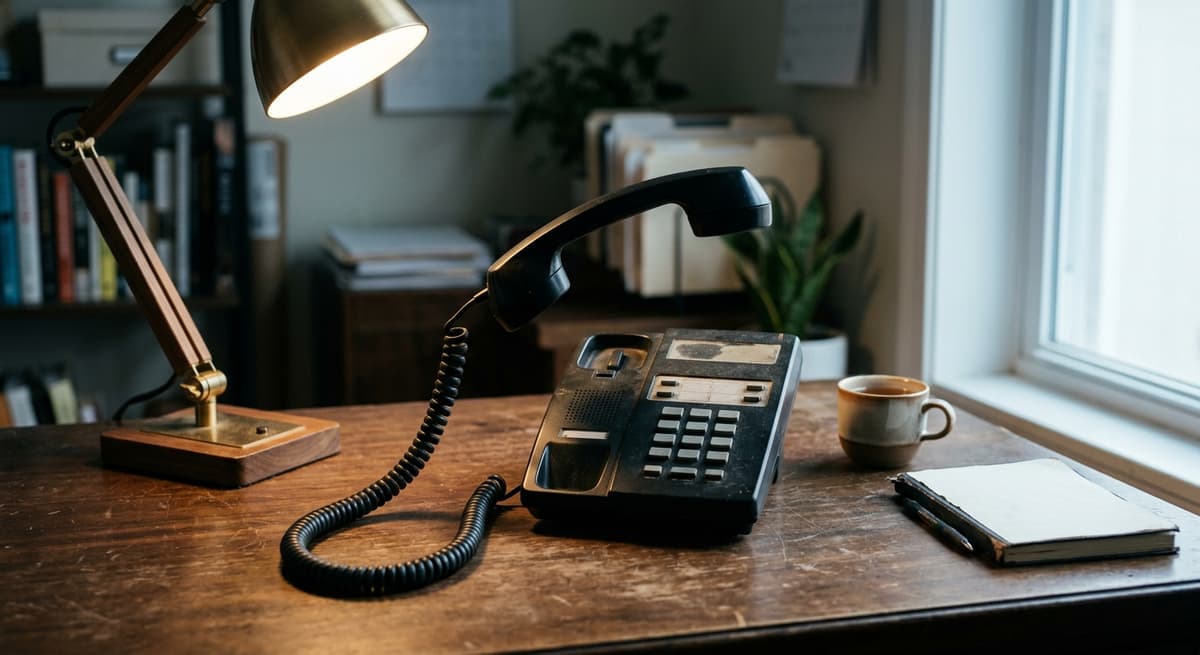
Traditional landline phone calls are "wire communications" under HRS 803-42 and are subject to the one-party consent rule. You can record any landline call you participate in.
Cell Phone Calls
Mobile phone calls are covered by HRS 803-42 as wire communications. The same one-party consent rule applies. You can record any cell phone call you are part of.
VoIP and Internet Calls
Voice over Internet Protocol (VoIP) calls, including calls through platforms like:
- Zoom
- Microsoft Teams
- Google Meet
- Skype
- FaceTime
- WhatsApp calls
- Facebook Messenger calls
These fall under the "electronic communication" definition in HRS 803-42 and are subject to one-party consent. As a participant, you can record without notifying others.
Video Calls
Video calls that include audio are covered by the same rules. The audio component follows one-party consent under HRS 803-42. You can record video calls you participate in without informing other participants, subject to the caveat that participants in two-party consent states may require notification.
Conference Calls
For multi-party conference calls, one-party consent still applies. Your own participation and knowledge of the recording satisfies the consent requirement. You do not need consent from every participant.
Interstate Phone Call Recording

The Challenge of Cross-State Calls
Hawaii's geographic isolation means that nearly all calls to the mainland United States are interstate calls. When you record a phone call from Hawaii to another state, the laws of both states may apply.
Two-Party Consent States to Watch For
If the other party is located in a two-party consent state, that state may require all parties to consent before recording begins. States with two-party or all-party consent requirements include:
- California
- Connecticut
- Florida
- Illinois
- Maryland
- Massachusetts
- Montana
- New Hampshire
- Oregon
- Pennsylvania
- Washington
Best Practices for Interstate Calls
When recording calls involving parties in other states:
- Determine which state the other party is in before recording
- If the other party is in a two-party consent state, inform them at the start of the call that you are recording
- Get explicit verbal consent at the start of the call when in doubt
- Document any consent on the recording itself ("I am recording this call with your consent, correct?")
Business Call Recording

Recording Customer and Client Calls
Hawaii businesses can record phone calls under one-party consent. Common business recording practices include:
- Quality assurance monitoring: Recording customer service calls to evaluate staff performance
- Training: Using call recordings to train new employees
- Compliance documentation: Recording calls in regulated industries for compliance verification
- Dispute resolution: Preserving call records to resolve billing or service disputes
Notice Requirements for Businesses
While Hawaii's one-party consent law does not technically require businesses to notify callers that calls are being recorded, best practices and regulatory requirements in many industries mandate disclosure:
- Financial services: FINRA and SEC regulations may require disclosure of recording practices
- Healthcare: HIPAA considerations apply to calls involving protected health information
- Debt collection: The Fair Debt Collection Practices Act has specific disclosure requirements
- General best practice: Playing a recorded announcement ("this call may be recorded for quality assurance") satisfies one-party consent and provides transparency
Interstate Business Calls
Businesses that regularly call customers in two-party consent states should implement a blanket disclosure policy. Stating "this call may be recorded" at the start of every call eliminates interstate consent complications and is a defensible best practice.
Regulatory Requirements
Certain industries face additional recording requirements:
- Financial services: SEC and FINRA rules may require recording of certain broker-dealer calls
- Healthcare: HIPAA restricts recording of calls containing protected health information
- Insurance: State insurance regulations may govern recording of claims-related calls
- Telecommunications: The FCC's one-to-one consent rule under the TCPA (FCC Order 24-24) was vacated by the Eleventh Circuit in Insurance Marketing Coalition Ltd. v. FCC, 127 F.4th 303 (11th Cir. 2025) and removed from the CFR, so it is not currently in force. Separately, 47 CFR Section 64.501 (the old call-recording rule) was removed effective November 20, 2017. Modern telecommunications recording requirements flow from the federal Wiretap Act and state wiretapping statutes
Criminal Penalties for Illegal Phone Recording
Wiretapping: Class C Felony
Illegally intercepting phone calls without any party's consent is a Class C felony under HRS 803-42:
| Penalty | Maximum |
|---|---|
| Prison time | Up to 5 years under HRS 706-660 |
| Fine | Up to $10,000 |
What Constitutes Illegal Phone Recording
The following actions are illegal under Hawaii law:
- Tapping someone else's phone line without their knowledge or consent
- Using spyware or monitoring apps to intercept another person's calls without consent
- Recording a call you are not party to and do not have consent from any party to record
- Intercepting voicemail or stored communications without authorization
The Criminal or Tortious Purpose Exception
Even if you are a party to a call, the one-party consent exception does not apply if the recording is made "for the purpose of committing any criminal or tortious act." Recording a call to facilitate blackmail, extortion, fraud, or harassment voids the consent exception.
Civil Remedies for Illegal Phone Recording
Statutory Damages Under HRS 803-48
Victims of illegal phone call interception can pursue civil damages under HRS 803-48:
- Actual damages and any profits from the violation
- Statutory damages of the greater of $100 per day or $10,000
- Attorney fees and litigation costs
- Equitable relief as appropriate
AI and Automated Phone Recording
Call Recording Apps and Services
Hawaii's one-party consent law permits the use of:
- Automated call recording apps that record calls you participate in
- AI transcription services that capture call audio for transcription
- Call recording features built into platforms like Google Voice, Zoom, and RingCentral
AI Meeting Assistants
AI meeting assistants that join phone or video calls as participants are generally permitted under Hawaii's one-party consent law. The key question is whether the AI tool is a "party to the communication" or has obtained consent from at least one party.
Robocalls and Automated Calls
The federal Telephone Consumer Protection Act (TCPA) governs automated calls and text messages. Under the TCPA, certain automated calls and texts to cell phones require prior express consent. The FCC's one-to-one consent rule (FCC Order 24-24), which would have updated consent requirements under the TCPA, was vacated by the Eleventh Circuit in 2025 and is not in force.
Federal Deepfake and AI Developments
Hawaii's election deepfake law, Act 191 SLH 2024, was permanently enjoined as facially unconstitutional in Babylon Bee LLC v. Lopez, No. 1:25-cv-00234 (D. Haw. Jan. 30, 2026) (Park, J.). Separately, the federal TAKE IT DOWN Act (signed May 19, 2025, effective May 19, 2026) requires platforms to remove non-consensual intimate images, including AI-generated deepfakes, within 48 hours of notice. These developments do not change Hawaii's one-party consent rules for phone calls but are relevant background for understanding the evolving legal landscape around recorded content.
More Hawaii Recording Laws
Audio Recording | Video Recording | Voyeurism and Hidden Cameras | Workplace Recording | Recording Police | Phone Call Recording | Security Cameras | Recording in Public | Landlord-Tenant Recording | Dashcam Laws | School Recording | Medical Recording
More Hawaii Recording Topics
More Hawaii Laws
Frequently Asked Questions
Can I record a phone call in Hawaii without telling the other person?
Yes. Hawaii is a one-party consent state under HRS 803-42. As a participant in the call, you can record it without notifying the other person. There is no legal requirement to announce the recording or play a beep tone. However, if the other party is in a two-party consent state, that state's law may require notification.
Can my employer record my work phone calls in Hawaii?
Yes, in most circumstances. Employers who are parties to calls (such as through company phone systems) can record calls under one-party consent. Employees are typically informed of recording practices through workplace policies. Employers cannot record personal calls that employees make on personal devices.
Do I need to tell callers from other states that I'm recording?
It depends on their state. If the caller is in a two-party consent state like California or Florida, you should inform them that you are recording. A safe practice is to state at the start of any recorded call: 'I want to let you know that this call is being recorded.'
Can I record customer service calls in Hawaii?
Yes. When a company plays a message saying 'this call may be recorded,' they are exercising their one-party consent right. You have the same right as a participant. You can record any customer service call you participate in without additional notice.
What happens if I illegally record a phone call in Hawaii?
Illegal interception of phone calls is a Class C felony under HRS 803-42, carrying up to 5 years in prison and a $10,000 fine. Victims can also sue for civil damages of at least $10,000 under HRS 803-48, plus actual damages and attorney fees.
Updates
Independently fact-checked against the cited primary sources; governing law re-checked for recent changes
Governing law re-checked for recent changes
Corrected the status of the FCC's TCPA one-to-one consent rule (FCC Order 24-24): it was vacated by the Eleventh Circuit and removed from the CFR, not currently in effect as the page previously stated; also removed a reference to a nonexistent 'FCC Order 23-107.'
Governing law re-checked for recent changes
Reviewed and approved by an editor
The Law Behind This Article
This article rests on the statutory provisions below, held in our own legal record and retrieved from the official source. Tap a section to read the operative text.
Hawaii Revised Statutes, Chapter 803: ARRESTS, SEARCHES, SEARCH WARRANTS
§ 803-42Interception, access, and disclosure of wire, oral, or electronic communications, use of pen register, trap and trace device, and mobile tracking device prohibitedIn forcecited in 20 of our articles
(a) Except as otherwise specifically provided in this part, any person who: (1) Intentionally intercepts, endeavors to intercept, or procures any other person to intercept or endeavor to intercept, any wire, oral, or electronic communication; (2) Intentionally uses, endeavors to use, or procures any other person to use or endeavor to use any electronic, mechanical, or other device to intercept any wire, oral, or electronic communication when: (A) Such a device is affixed to, or otherwise transmits a signal through, a wire, cable, or other similar connection used in wire communication; or (B) Such a device transmits communications by radio, or interferes with the transmission of such communication; (3) Intentionally discloses, or endeavors to disclose, to any other person the contents of any wire, oral, or electronic communication, knowing or having reason to know that the information was obtained through the interception of a wire, oral, or electronic communication in violation of this part; (4) Intentionally uses, or endeavors to use, the contents of any wire, oral, or electronic communication, knowing or having reason to know that the information was obtained through the…
Official text (excerpt) · last checked 2026-08-28 · Read the full text in our law library · Verify at capitol.hawaii.gov
Cited in 14 court opinions in our collectionLatest citing opinion in our collection: 2026
In the courts (editorial summary, independently checked):State v. Lo (1983) held HRS 803-42(b)(3) barred police from secretly installing recording devices in a hotel room even though one participant consented, and suppressed the evidence. State v. Lee (1984) held a recorder worn by a consenting participant is not an installation in a private place, so no violation.
Opinions citing this section in our collection:
- State v. Lo (Hawaii Supreme Court 1983, 66 Haw. 653)✓Agents wired a hotel room and recorded a doctor lured there by a cooperating patient; the Hawaii Supreme Court held the statute bars installing a recording device in any private place without the consent of those entitled to privacy, and affirmed suppression.
- State v. Okubo (Hawaii Supreme Court 1984, 67 Haw. 197)✓Police recorded roughly forty bribery conversations using body recorders and phone taps with the participating officers' consent; the Hawaii Supreme Court found the consensual monitoring valid under the statute and the state constitution.
- State v. Lee (Hawaii Supreme Court 1984, 67 Haw. 307)✓An officer posing as a patient wore a recorder into a doctor's private office; the Hawaii Supreme Court held a device worn on a participant's body is not an installation in a private place, so the statute was not violated, distinguishing Lo.
Identified automatically from the court opinions citing this section — not a ranking of which case controls.
§ 803-47Reports concerning intercepted wire, oral, or electronic communications; reports concerning pen registers and trap and trace devicesIn force
(a) In January of each year, the attorney general and county prosecuting attorneys of this State shall report to the administrative director of the courts of this State and to the administrative office of the United States Courts: (1) The fact that an order or extension was applied for; (2) The kind of order or extension applied for; (3) The fact that the order or extension was granted as applied for, was modified, or was denied; (4) The period of interceptions authorized by the order, and the number and duration of any extensions of the order; (5) The offense specified in the order or application, or extension of an order; (6) The identity of the investigative or law enforcement officer and agency requesting the application and the person authorizing the request for application; (7) The nature of the facilities from which or the place where communications were to be intercepted; (8) A general description of the interceptions made under such order or extension, including: (A) The approximate nature and frequency of incriminating communications intercepted; (B) The approximate nature and frequency of other communications intercepted; (C) The approximate number of persons…
Official text (excerpt) · last checked 2026-07-30 · Read the full text in our law library · Verify at capitol.hawaii.gov
§ 803-48Recovery of civil damages authorizedIn forcecited in 13 of our articles
Any person whose wire, oral, or electronic communication is accessed, intercepted, disclosed, or used in violation of this part shall[:] (1) Have a civil cause of action against any person who accesses, intercepts, discloses, or uses, or procures any other person to access, intercept, disclose, or use the communications[;] and (2) Be entitled to recover from any such person: (A) The greater of[:] (i) The sum of the actual damages suffered by the plaintiff and any profits made by the violator as a result of the violation[;] or (ii) Statutory damages of the greater of $100 a day for each day of violation or $10,000; (B) Punitive damages, where appropriate; and (C) A reasonable attorney's fee and other litigation costs reasonably incurred. The aggrieved person may also seek and be awarded such preliminary, and other equitable or declaratory relief as may be appropriate. A good faith reliance on a court order shall constitute a complete defense to any civil action brought under this part. [L 1978, c 218, pt of §2; am L 1986, c 303, §8; am L 1989, c 164, §10; am L 2006, c 200, pt of §4]
Official text (excerpt) · last checked 2026-07-30 · Read the full text in our law library · Verify at capitol.hawaii.gov
Hawaii Revised Statutes, Chapter 706: DISPOSITION OF CONVICTED DEFENDANTS
§ 706-660Sentence of imprisonment for class B and C felonies; ordinary terms; discretionary termsIn forcecited in 5 of our articles
(1) Except as provided in subsection (2), a person who has been convicted of a class B or class C felony may be sentenced to an indeterminate term of imprisonment except as provided for in section 706-660.1 relating to the use of firearms in certain felony offenses and section 706-606.5 relating to repeat offenders. When ordering such a sentence, the court shall impose the maximum length of imprisonment which shall be as follows: (a) For a class B felony--ten years; and (b) For a class C felony--five years. The minimum length of imprisonment shall be determined by the Hawaii paroling authority in accordance with section 706-669. (2) A person who has been convicted of a class B or class C felony for any offense under part IV of chapter 712 may be sentenced to an indeterminate term of imprisonment; provided that this subsection shall not apply to sentences imposed under sections 706-606.5, 706-660.1, 712-1240.5, 712-1240.8 as that section was in effect prior to July 1, 2016, 712-1242, 712-1245, 712-1249.5, 712‑1249.6, 712-1249.7, and 712-1257.
Official text (excerpt) · last checked 2026-07-30 · Read the full text in our law library · Verify at capitol.hawaii.gov
Cited in 78 court opinions in our collectionLatest citing opinion in our collection: 2026
Opinions citing this section in our collection:
- State v. Gaylord (Hawaii Supreme Court 1995, 78 Haw. 127)“…r alia, by an indeterminate ten-year term of imprisonment. HRS § 706-660(1) (Supp.1992). . We recognize th…”
- State v. Soto (Hawaii Supreme Court 1997, 84 Haw. 229)“…murder was a class B felony and was punishable pursuant to HRS § 706-660 (1985), 21 “which delineat…”
- State v. Rivera (Hawaii Supreme Court 2004, 106 Haw. 146)“…to the amendments made by Act 102 (1965), the commentary to HRS § 706-660 (1976) states, inter alia: In 1965…”
Identified automatically from the court opinions citing this section — not a ranking of which case controls.
Hawaii Revised Statutes, Chapter 711: OFFENSES AGAINST PUBLIC ORDER
§ 711-1111Violation of privacy in the second degreeIn forcecited in 19 of our articles
(1) A person commits the offense of violation of privacy in the second degree if, except in the execution of a public duty or as authorized by law, the person intentionally: (a) Trespasses on property for the purpose of subjecting anyone to eavesdropping or other surveillance in a private place; (b) Peers or peeps into a window or other opening of a dwelling or other structure adapted for sojourn or overnight accommodations for the purpose of spying on the occupant thereof or invading the privacy of another person with a lewd or unlawful purpose, under circumstances in which a reasonable person in the dwelling or other structure would not expect to be observed; (c) Trespasses on property for the sexual gratification of the actor; (d) Installs or uses, or both, in any private place, without consent of the person or persons entitled to privacy therein, any means or device for observing, recording, amplifying, or broadcasting sounds or events in that place other than another person in a stage of undress or sexual activity; provided that this paragraph shall not prohibit a person from making a video or audio recording or taking a photograph of a law enforcement officer while the…
Official text (excerpt) · last checked 2026-08-31 · Read the full text in our law library · Verify at capitol.hawaii.gov
Cited in 10 court opinions in our collectionLatest citing opinion in our collection: 2026
In the courts (editorial summary, independently checked):Hawaii decisions have construed HRS 711-1111 mainly alongside neighboring statutes. State v. Kaakimaka (2026) read subsections (1)(d) and (1)(e) as an inside and outside pair while construing the first-degree offense. State v. Lee (1984) treated 711-1111(1) as drawn from Model Penal Code 250.12 in reading the wiretap statute.
Opinions citing this section in our collection:
- State v. Lee (Hawaii Supreme Court 1984, 67 Haw. 307)✓An undercover officer wearing a recorder taped conversations in a doctor's private office; construing the wiretap consent provision drawn from HRS 711-1111(1)(b) and (c), the court held a body-worn device is not an "installation" in a private place, so the tapes were admissible.
- State v. Kaakimaka (Hawaii Supreme Court 2026)“…711-1110.9 and second degree violation of privacy under HRS § 711-1111 (2014 & Supp. 2025) convinces me that…”
- State v. Lester (Hawaii Supreme Court 1982, 64 Haw. 659)“…The Code provision covering wiretapping and eavesdropping, HRS § 711-1111, permits "consensual eavesdropping".…”
Identified automatically from the court opinions citing this section — not a ranking of which case controls.
United States Code Title 18
§ 2511Interception and disclosure of wire, oral, or electronic communications prohibitedIn forcecited in 418 of our articles
Except as otherwise specifically provided in this chapter any person who— intentionally intercepts, endeavors to intercept, or procures any other person to intercept or endeavor to intercept, any wire, oral, or electronic communication; intentionally uses, endeavors to use, or procures any other person to use or endeavor to use any electronic, mechanical, or other device to intercept any oral communication when— such device is affixed to, or otherwise transmits a signal through, a wire, cable, or other like connection used in wire communication; or such device transmits communications by radio, or interferes with the transmission of such communication; or such person knows, or has reason to know, that such device or any component thereof has been sent through the mail or transported in interstate or foreign commerce; or such use or endeavor to use (A) takes place on the premises of any business or other commercial establishment the operations of which affect interstate or foreign commerce; or (B) obtains or is for the purpose of obtaining information relating to the operations of any business or other commercial establishment the operations of which affect interstate or foreign…
Official text (excerpt) · last checked 2026-08-28 · Read the full text in our law library · Verify at uscode.house.gov
Cited in 2,045 court opinions in our collectionLatest citing opinion in our collection: 2026
In the courts (editorial summary, independently checked):Griggs-Ryan v. Smith (1990) applied the Section 2511(2)(d) prior-consent exception, treating a tenant repeatedly told that all incoming calls were taped as having impliedly consented. United States v. United States District Court (1972) read the then-current Section 2511(3) as conferring no presidential surveillance power.
Opinions citing this section in our collection:
- Mitchell v. Forsyth (Supreme Court of the United States 1985, 472 U.S. 511)✓The Attorney General authorized a warrantless 1970 national security wiretap that caught the plaintiff's calls; the Court held the since-repealed Section 2511(3) disclaimer left the tap lawful under Title III, and that Mitchell had qualified immunity.
- United States v. United States District Court for the Eastern District of Michigan (Supreme Court of the United States 1972, 407 U.S. 297)✓The Attorney General approved warrantless wiretaps on members of a domestic group accused of bombing a CIA office; the Court read Section 2511(3) as a congressional disclaimer conferring no surveillance power, then held the Fourth Amendment required prior judicial approval.
- Forsyth v. Barr (Court of Appeals for the Fifth Circuit 1994, 19 F.3d 1527)✓Dallas police used, in an internal affairs probe of an officer, calls private parties allegedly intercepted illegally; assuming that was unlawful, the Fifth Circuit held Section 2517(1) and (2) allowed the disclosure and use, defeating the Section 2511(1)(c) and (d) claims.
Identified automatically from the court opinions citing this section — not a ranking of which case controls.
§ 2520Recovery of civil damages authorizedIn forcecited in 115 of our articles
Except as provided in section 2511(2)(a)(ii), any person whose wire, oral, or electronic communication is intercepted, disclosed, or intentionally used in violation of this chapter may in a civil action recover from the person or entity, other than the United States, which engaged in that violation such relief as may be appropriate. In an action under this section, appropriate relief includes— such preliminary and other equitable or declaratory relief as may be appropriate; damages under subsection (c) and punitive damages in appropriate cases; and a reasonable attorney’s fee and other litigation costs reasonably incurred.
Official text (excerpt) · last checked 2026-07-28 · Read the full text in our law library · Verify at uscode.house.gov
Cited in 860 court opinions in our collectionLatest citing opinion in our collection: 2026
In the courts (editorial summary, independently checked):Walker v. Darby (1990) held a 2520 plaintiff need not prove the contents of intercepted conversations, only interception and a justified expectation against it. Bartnicki v. Vopper (2001) barred 2520 damages against defendants who took no part in the interception, obtained the tape lawfully, and disclosed a matter of public concern.
Opinions citing this section in our collection:
- Jessie Walker v. Thomas E. Darby, Hugh L. Robinson, Jr., and Kenneth Day (Court of Appeals for the Eleventh Circuit 1990, 911 F.2d 1573)✓A postal letter carrier said three supervisors wired an intercom near his workstation to listen in. Reversing summary judgment, the Eleventh Circuit held a section 2520 plaintiff can show interception without proving the contents of specific conversations.
- Gelbard v. United States (Supreme Court of the United States 1972, 408 U.S. 41)“…disclosure, or use is entitled to recover civil damages, 18 U. S. C. § 2520 . Title III also bars the use as eviden…”
- DirecTV, Inc. v. Hoa Huynh (Court of Appeals for the Ninth Circuit 2007, 503 F.3d 847)“…7 U.S.C. § 605 (e)(4), or alternatively, for violations of 18 U.S.C. § 2520 (a), or alternatively, for violations o…”
Identified automatically from the court opinions citing this section — not a ranking of which case controls.
§ 2703Required disclosure of customer communications or recordsIn forcecited in 6 of our articles
A governmental entity may require the disclosure by a provider of electronic communication service of the contents of a wire or electronic communication, that is in electronic storage in an electronic communications system for one hundred and eighty days or less, only pursuant to a warrant issued using the procedures described in the Federal Rules of Criminal Procedure (or, in the case of a State court, issued using State warrant procedures and, in the case of a court-martial or other proceeding under chapter 47 of title 10 (the Uniform Code of Military Justice), issued under section 846 of that title, in accordance with regulations prescribed by the President) by a court of competent jurisdiction. A governmental entity may require the disclosure by a provider of electronic communications services of the contents of a wire or electronic communication that has been in electronic storage in an electronic communications system for more than one hundred and eighty days by the means available under subsection (b) of this section.
Official text (excerpt) · last checked 2026-07-28 · Read the full text in our law library · Verify at uscode.house.gov
Cited in 776 court opinions in our collectionLatest citing opinion in our collection: 2026
Opinions citing this section in our collection:
- Carpenter v. United States (Supreme Court of the United States 2018, 585 U.S. 296)“…s were “relevant and material to an ongoing investigation.” 18 U. S. C. §2703(d). That showing falls well short of th…”
- United States v. Warshak (Court of Appeals for the Sixth Circuit 2010, 631 F.3d 266)“…e for 180 days or less “only pursuant to a warrant.” 18 U.S.C. § 2703(a). The government has three options fo…”
- Guest v. Leis (Court of Appeals for the Sixth Circuit 2001, 255 F.3d 325)“…communications and subscriber information, as set forth in 18 U.S.C. § 2703 (a), (b), and (c). Subsection (a) provi…”
Identified automatically from the court opinions citing this section — not a ranking of which case controls.
Search our full record of US law — 2.1 million sections, every state + federal →
Sources and References
- Hawaii Revised Statutes 803-42 - Interception of Communications(capitol.hawaii.gov).gov
- Hawaii Revised Statutes 803-47 - Suppression of Intercepted Communications(capitol.hawaii.gov).gov
- Hawaii Revised Statutes 803-48 - Recovery of Civil Damages(capitol.hawaii.gov).gov
- Hawaii Revised Statutes 706-660 - Sentencing(capitol.hawaii.gov).gov
- 18 U.S.C. 2511 - Federal Wiretap Act(law.cornell.edu)
- 18 U.S.C. 2520 - Federal Civil Remedies(law.cornell.edu)
- Hawaii Rules of Evidence Rule 901(capitol.hawaii.gov).gov
- Hawaii Revised Statutes 711-1111 - Violation of Privacy in the Second Degree(capitol.hawaii.gov).gov
- 18 U.S.C. 2703 - Federal Stored Communications Act(law.cornell.edu)