
Maine
Maine Laws on Recording Police: Your Rights and Limits (2026)
Independently fact-checked against primary sources (last audited August 15, 2026). · Reviewed by the RecordingLaw editorial team. · Law checked current as of August 9, 2026. · 8 primary sources cited on this page. How we verify our legal content
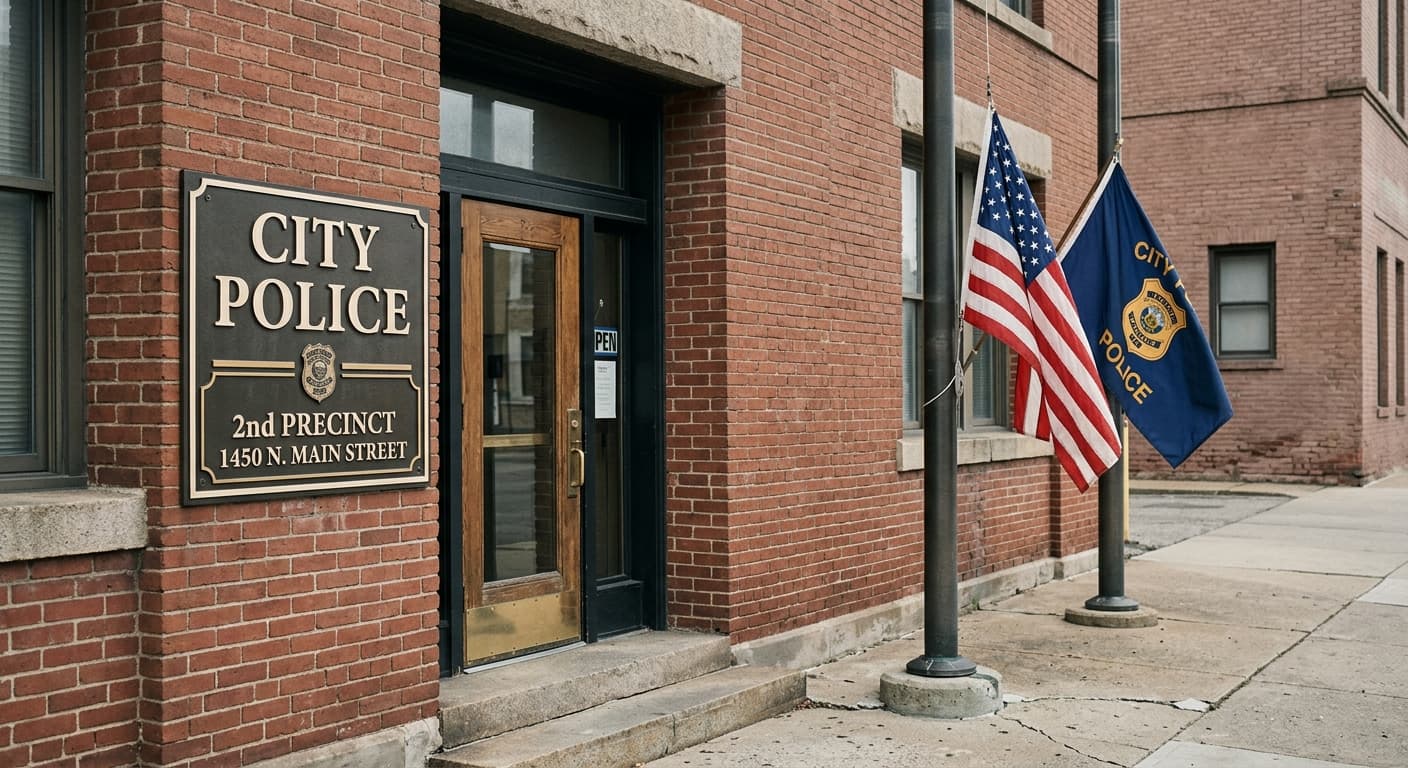
In Maine, you have a First Amendment right to record police officers performing their duties in public, and Maine's one-party consent rule (15 M.R.S.A. section 710, together with section 709's definition of "intercept") permits recording any conversation you are part of without notifying the officer. You must not physically interfere with police operations.
Recording police officers in Maine is protected by both the First Amendment to the U.S. Constitution and the state's one-party consent wiretapping law. The First Circuit Court of Appeals, which has jurisdiction over Maine, has confirmed that citizens have the right to record law enforcement performing their duties in public. This guide explains your rights, the legal limits, and practical guidance for recording police encounters in Maine.
Your Right to Record Police in Maine
First Amendment Protection
The First Amendment protects the right to record government officials, including police officers, performing their duties in public places. The First Circuit Court of Appeals established this right clearly in Glik v. Cunniffe, 655 F.3d 78 (1st Cir. 2011). In that case, the court held that recording police activity in public is a clearly established right protected under the First Amendment.
Because Maine falls within the First Circuit, the Glik ruling is binding precedent. This means:
The Rollins Extension: Secret Recording Is Also Protected
The First Circuit did not stop at open recording. In Project Veritas Action Fund v. Rollins, 982 F.3d 813 (1st Cir. 2020), the court extended Glik to cover secret audio recording of public officials performing their public duties in public spaces. The court held that the First Amendment right to gather information about government activity encompasses covert recording, not merely open recording.
This makes the First Circuit -- and Maine -- the strongest record-the-police jurisdiction in the country. In states covered by other federal circuits, courts have recognized the right only for open recording. In Maine, you have a constitutional right to record police activity even without the officer's knowledge, as long as you are in a public space and not interfering with operations.
- You can record police officers on public streets, sidewalks, parks, and other public areas
- You can use a smartphone, camera, body camera, or any other recording device
- You do not need to ask permission to record
- You do not need to identify yourself as a journalist or have any special credentials
- The right to record extends to all citizens, not just members of the press
Maine One-Party Consent
In addition to First Amendment protections, Maine's one-party consent rule applies. 15 M.R.S.A. section 710 criminalizes unauthorized interception, but section 709 defines "intercept" to exclude a person who is a party to the communication. When you are interacting with a police officer (during a traffic stop, at a checkpoint, or during a street encounter), you are a party to that conversation, so you can record it without informing the officer.
What You Can Record
You can legally record:
- Traffic stops where you are the driver or passenger
- Street encounters and questioning by officers
- Arrests that occur in public view
- Police activity visible from public spaces
- Protests, demonstrations, and public gatherings where police are present
- Interactions at police stations during voluntary visits
- Your own booking process (though stations may restrict devices)
What Police Cannot Do
Cannot Order You to Stop Recording
Police officers in Maine cannot order you to stop recording if you are in a public place and not interfering with their operations. An officer who orders you to stop recording, threatens arrest for recording, or retaliates against you for recording may be violating your constitutional rights.
Cannot Delete Your Footage
An officer cannot demand that you delete photos, video, or audio recordings from your device. Forcing you to delete recordings could constitute destruction of evidence and a violation of your First and Fourth Amendment rights.
Cannot Confiscate Your Device Without a Warrant
Under the Fourth Amendment and the U.S. Supreme Court's ruling in Riley v. California, 573 U.S. 373 (2014), police generally need a warrant to search or seize your cell phone or recording device. An officer cannot take your phone or camera simply because you are recording them.
Exceptions may exist in narrow circumstances:
- If the officer reasonably believes the device contains evidence of a crime and there is an immediate risk of destruction
- Incident to a lawful arrest (though Riley significantly limits phone searches even in this context)
- Under exigent circumstances involving immediate danger to life
Cannot Retaliate
Officers cannot retaliate against you for exercising your right to record. Retaliation can take many forms:
- Arresting you on fabricated charges
- Issuing citations or summonses as punishment
- Using excessive force
- Threatening to arrest you for obstruction or disorderly conduct without actual basis
- Following or harassing you after the recording
Your Obligations While Recording

Do Not Physically Interfere
While you have the right to record, you must not physically interfere with police operations. Interference includes:
- Stepping into an active crime scene
- Blocking officers' path during a pursuit or arrest
- Touching officers or their equipment
- Crossing police tape or barricades
- Getting close enough to endanger yourself or others
Maintain a Reasonable Distance
There is no specific distance requirement in Maine law, but courts generally expect you to maintain a distance that allows officers to perform their duties without obstruction. A general guideline is to stay at least 10 to 15 feet away from active police operations.
Follow Lawful Orders
You must follow lawful police orders that are not aimed at suppressing your recording. For example, if an officer orders you to move back from a crime scene for safety reasons, you should comply. You can continue recording from a greater distance.
Do Not Resist Arrest
If an officer arrests you for recording (even if the arrest is unlawful), do not physically resist. Comply with the arrest and assert your rights later through the legal system. Resisting arrest can result in additional criminal charges.
Recording During Traffic Stops

Your Rights During a Stop
During a traffic stop in Maine, you have the right to:
- Keep your dashcam recording throughout the stop
- Use your phone to record the interaction
- Have passengers record the encounter
- Refuse to turn off recording devices
Practical Tips for Recording Traffic Stops
- Inform the officer calmly that you are recording if asked (though you are not legally required to)
- Keep your hands visible and avoid sudden movements when reaching for a phone
- Mount your phone on a dashboard holder rather than holding it, to keep both hands free
- Do not reach for your phone if an officer has drawn a weapon or is giving commands about your hands
Passenger Recording Rights
Passengers in a vehicle during a traffic stop also have the right to record. Under Maine one-party consent, a passenger who is present during the interaction with the officer is a party to any conversation they can hear and can record it.
What to Do If Your Rights Are Violated
During the Encounter
If a police officer tells you to stop recording, orders you to delete footage, or attempts to confiscate your device:
- State calmly that you have a First Amendment right to record in public
- Do not physically resist if the officer takes your device
- Note the officer's name, badge number, and department
- Note the date, time, and location of the incident
- Identify any witnesses who observed the encounter
- As soon as possible, write down everything that happened
Filing a Complaint
You can file complaints about police misconduct through several channels:
- Internal Affairs at the officer's department
- The Maine Attorney General's Office - The AG's Office investigates police misconduct
- The ACLU of Maine - Can provide legal guidance on First Amendment violations
- Federal civil rights complaint - You can file a complaint with the U.S. Department of Justice Civil Rights Division
Legal Remedies
If your right to record was violated, you may have legal remedies including:
- 42 U.S.C. 1983 lawsuit for violation of your First and Fourth Amendment rights
- State tort claims for false arrest, assault, or conversion of property
- Municipal liability if the department has a pattern of suppressing recording
- Injunctive relief to prevent future violations
Police Body Cameras in Maine
Maine Body Camera Laws
Maine has no statewide statute that requires police to wear or activate body cameras. A bill that would have created one, LD 636 (SP 198, 129th Legislature), was introduced but did not become law. Instead, body-camera use in Maine is set by each law enforcement agency's own policy, subject to 25 M.R.S. section 2803-B, which requires agencies to adopt written policies on 17 operational topics, including the recording of suspect and witness interviews in murder and Class A, B, and C crime investigations. Where an agency does use body cameras:
- Activation practices are set by agency policy, not state law
- Retention periods are set by agency policy
- The public has a right to access body camera footage that exists under Maine's Freedom of Access Act, subject to standard exemptions
Requesting Body Camera Footage
Under Maine's Freedom of Access Act (1 M.R.S.A. section 400 et seq.), you can submit a public records request for police body camera footage. To request footage:
- Submit a written request to the law enforcement agency
- Identify the date, time, and location of the incident
- Specify the officers involved if known
- Be aware that some footage may be redacted or withheld for ongoing investigations or privacy reasons
Recording at Protests and Public Demonstrations
Your Rights at Protests
Maine residents have the right to record at protests and public demonstrations. This includes recording:
- Police deployment and crowd control tactics
- Arrests of protesters
- Use of force by officers
- Officer badge numbers and identifications
- Conversations with officers that you are part of
Protecting Your Recordings
At protests and other volatile situations, consider these precautions:
- Enable cloud backup so footage is saved even if your device is seized
- Use a passcode or biometric lock on your device
- Stream video live to a social media platform as a backup
- Share your location with a trusted contact
- Carry a portable battery charger
Recording Inside Police Stations
Voluntary Visits
If you voluntarily visit a police station to file a report, provide a statement, or conduct other business, you can record conversations you participate in under one-party consent. However, police stations may have policies restricting the use of electronic devices in certain areas.
During Arrest Processing
If you are arrested, the police may confiscate your phone and other personal property as part of the booking process. The phone may be placed in a property bag and returned to you upon release. Officers still need a warrant to search the contents of your phone under Riley v. California.
More Maine Recording Laws
Audio Recording | Video Recording | Voyeurism Laws | Workplace Recording | Recording Police | Phone Call Recording | Security Cameras | Recording in Public | Landlord-Tenant Recording | Dashcam Laws | School Recording | Medical Recording
More Maine Recording Topics
More Maine Laws
Frequently Asked Questions
Can I record police officers in public in Maine?
Yes. The First Amendment protects your right to record police officers performing their duties in public. The First Circuit Court of Appeals, which covers Maine, confirmed this right in Glik v. Cunniffe (2011). You can record with any device, and you do not need permission.
Do I have to tell a police officer I am recording in Maine?
No. Maine is a one-party consent state under 15 M.R.S.A. section 710 and section 709. Section 709's definition of "intercept" excludes a person who is a party to the communication, so when you are interacting with an officer, your own knowledge of the recording satisfies the consent requirement. You do not need to announce that you are recording.
Can a police officer take my phone because I was recording them?
Generally, no. Under the Fourth Amendment and Riley v. California (2014), police need a warrant to seize and search your phone. An officer cannot take your device simply because you recorded them. If an officer does take your phone, do not resist, but note the details and pursue legal remedies afterward.
What should I do if a Maine police officer orders me to stop recording?
Calmly state that you have a First Amendment right to record in public. If the officer persists, continue recording if you feel safe doing so, or comply and note the officer's name, badge number, and department. File a complaint afterward through internal affairs, the Maine AG's Office, or a civil rights attorney.
Can I request police body camera footage in Maine?
Yes. Under Maine's Freedom of Access Act (1 M.R.S.A. section 400 et seq.), you can submit a written public records request to the law enforcement agency. Identify the date, time, and location of the incident. Some footage may be withheld for ongoing investigations or redacted for privacy.
Updates
Corrected a fabricated body-worn-camera statute citation: Maine has no statewide law requiring police body cameras (a 2019 bill, LD 636, did not pass), and agency policy under 25 M.R.S. section 2803-B governs instead. Also replaced a dead case-law citation link with a working one from the First Circuit's own opinion archive.
Independently fact-checked against the cited primary sources
Governing law re-checked for recent changes
Corrected the citation for Maine's one-party consent rule as it applies to recording police: it derives from 15 M.R.S.A. section 709's definition of "intercept" (which excludes a party to the communication), not from section 712, whose four exceptions cover only carriers, law enforcement, and jail officials.
Governing law re-checked for recent changes
Added Project Veritas Action Fund v. Rollins, 982 F.3d 813 (1st Cir. 2020) -- extends Glik to secret audio recording of public officials in public spaces; Maine/First Circuit has the strongest record-the-police posture nationally. Corrected the body-worn camera discussion: Maine has no statewide body-camera statute (LD 636 died as a study resolve in 2020); law-enforcement policy requirements run through 25 M.R.S. section 2803-B. Updated KeyTakeaways to surface Rollins prominently.
Reviewed and approved by an editor
The Law Behind This Article
This article rests on the statutory provisions below, held in our own legal record and retrieved from the official source. Tap a section to read the operative text.
Maine Revised Statutes, Title 15: COURT PROCEDURE -- CRIMINAL, Part 2: PROCEEDINGS BEFORE TRIAL, Chapter 102: INTERCEPTION OF WIRE AND ORAL COMMUNICATIONS
§ 710OffensesIn forcecited in 17 of our articles
1. Interception, oral communications prohibited. Any person, other than an employee of a communication common carrier, a law enforcement officer, an investigative officer, another employee of the Department of Corrections authorized to exercise law enforcement powers as described in Title 34‑A, section 3011 or a jail investigative officer or a jail employee acting at the direction of a jail investigative officer, carrying out practices otherwise permitted by this chapter, who intentionally or knowingly intercepts, attempts to intercept or procures any other person to intercept or attempt to intercept any wire or oral communication is guilty of a Class C crime. 2. Editing of tape recordings in judicial proceedings prohibited. Any person who knowingly or intentionally edits, alters or tampers with any tape, transcription or other sound recording, or knows of such editing, altering or tampering, and presents that recording in any judicial proceeding or proceeding under oath, without fully indicating the nature of the changes made and the original state of the recording, is guilty of a Class C crime. 3. Disclosure or use of wire or oral communications prohibited.
Official text (excerpt) · last checked 2026-08-28 · Read the full text in our law library · Verify at legislature.maine.gov
Cited in 5 court opinions in our collectionLatest citing opinion in our collection: 2022
In the courts (editorial summary, independently checked):Williams v. Poulos (1993) affirmed section 710(1) liability for intercepting employee calls and held section 710(3)(A) and (B) require only knowledge the information came through interception. Glenn A. Griffin v. Cristie J. Griffin (2014) allowed a parent's vicarious consent for a young child only on a good faith best-interest belief.
Opinions citing this section in our collection:
- Glenn A. Griffin v. Cristie J. Griffin (Supreme Judicial Court of Maine 2014, 92 A.3d 1144)✓A father recorded his six-year-old daughter's nightly calls with her mother after overhearing abusive remarks; the court held a parent with a good faith, objectively reasonable best-interest belief may vicariously consent under section 709(4)(C), so section 710 was not violated.
- Archer v. Androscoggin County (Superior Court of Maine 2022)✓An attorney sought recordings of another inmate's jail calls under Maine's public records law; the court applied the wiretap chapter that makes interception a crime under section 710 and held a court-appointed defense lawyer is not within the section 712(4) disclosure exception.
- Williams v. Poulos (Court of Appeals for the First Circuit 1993)✓Company owners secretly recorded employee phone calls using alligator clips wired to a VCR, and their lawyers then used the tapes; the First Circuit affirmed liability under section 710, holding subsection 3 requires only knowledge that the material came from an interception.
Identified automatically from the court opinions citing this section — not a ranking of which case controls.
Also relied on in: Maine Dashcam Laws: Mounting Rules, Audio Recording, and Evidence (2026), Maine Landlord-Tenant Recording Laws: Cameras, Audio, and Privacy Rights (2026), Maine Phone Call Recording Laws: Consent Rules for Cell, Landline, and VoIP (2026)
§ 709DefinitionsIn forcecited in 10 of our articles
The following words and phrases as used in this chapter, unless the context otherwise indicates, shall have the following meanings. [PL 1973, c. 561 (NEW).] 1. Communication common carrier. "Communication common carrier" means any telephone or telegraph company. 1-A. Administration of criminal justice. 1-B. Administration of juvenile criminal justice. 1-C. Administration of juvenile justice. "Administration of juvenile justice" has the same meaning as in section 3003, subsection 1‑A. 2. Contents. "Contents," when used with respect to any wire or oral communication, means any information concerning the identity of the parties to such communication or the existence, contents, substance, purport or meaning of that communication. 3. Intercepting device. "Intercepting device" means any device or apparatus which can be used to intercept a wire or oral communication other than: A. Any telephone or telegraph instrument, equipment or facility or any component thereof being used by a communication common carrier in the ordinary course of its business or extension telephones used by a subscriber to telephone service; or [PL 1973, c. 561 (NEW).] B.
Official text (excerpt) · last checked 2026-07-30 · Read the full text in our law library · Verify at legislature.maine.gov
Cited in 8 court opinions in our collectionLatest citing opinion in our collection: 2021
Opinions citing this section in our collection:
- Glenn A. Griffin v. Cristie J. Griffin (Supreme Judicial Court of Maine 2014, 92 A.3d 1144)“…nterception of Wire and Oral Communications Act (the Act), 15 M.R.S. §§ 709-713 (2012),1 and (2) whether the court…”
- State v. Kehling (Supreme Judicial Court of Maine 1991, 601 A.2d 620)“…e Maine’s Interception of Wire and Oral Communications Act, 15 M.R.S.A. §§ 709-713 (Supp.1991). As to the sentence, we…”
- State v. Cyran (Supreme Judicial Court of Maine 1991, 586 A.2d 1238)“…versations. Nevertheless, both Maine’s wiretap regulations, 15 M.R.S.A. §§ 709-712, and the applicable federal provisi…”
Identified automatically from the court opinions citing this section — not a ranking of which case controls.
Also relied on in: Maine Smart Glasses Recording Laws: What You Need to Know, Maine Surveillance Camera Laws (2026 Guide), Maine Recording Laws (2026): One-Party Consent, § 710 and § 511
§ 712ExceptionsIn forcecited in 8 of our articles
1. Switchboard operators, communication common carrier agent. It is not a violation of this chapter for an operator of a switchboard or an officer, employee or agent of any communication common carrier, as defined in this chapter, to intercept, disclose or use that communication in the normal course of employment while engaged in any activity which is a necessary incident to the rendition of service or to the protection of the rights or property of the carrier of the communication, provided that the communication common carriers shall not utilize service for observing or random monitoring, except for mechanical or service quality control checks, nor shall any such officer, employee or agent use or disclose to another the contents as defined in this chapter of the communication so intercepted. 2. Investigative officers.
Official text (excerpt) · last checked 2026-07-30 · Read the full text in our law library · Verify at legislature.maine.gov
Cited in 4 court opinions in our collectionLatest citing opinion in our collection: 2014
Opinions citing this section in our collection:
- State v. Desjardins (Supreme Judicial Court of Maine 1979, 401 A.2d 165)“…nd under the circumstances was subject to the provisions of 15 M.R.S.A. § 712, which specifically proscribe the use o…”
- Glenn A. Griffin v. Cristie J. Griffin (Supreme Judicial Court of Maine 2014, 92 A.3d 1144)“…sent of either party to the call, and that no exception to 15 M.R.S. § 712 applied to allow Glenn to consent vica…”
- State v. Cyran (Supreme Judicial Court of Maine 1991, 586 A.2d 1238)“…federal guidelines apply here, he specifically argues that 15 M.R.S.A. § 712 (Supp.1990) should be interpreted as pr…”
Identified automatically from the court opinions citing this section — not a ranking of which case controls.
Also relied on in: Maine Audio Recording Laws: One-Party Consent Rules and Penalties (2026), Maine Workplace Recording Laws: Employee and Employer Rights (2026), Maine Ring Doorbell Laws: What You Need to Know in 2026
Maine Revised Statutes, Title 1: GENERAL PROVISIONS, Chapter 13: PUBLIC RECORDS AND PROCEEDINGS
§ 402DefinitionsIn forcecited in 3 of our articles
1. Conditional approval. Approval of an application or granting of a license, certificate or any other type of permit upon conditions not otherwise specifically required by the statute, ordinance or regulation pursuant to which the approval or granting is issued. 1-A. Legislative subcommittee. "Legislative subcommittee" means 3 or more Legislators from a legislative committee appointed for the purpose of conducting legislative business on behalf of the committee. 2. Public proceedings. The term "public proceedings" as used in this subchapter means the transactions of any functions affecting any or all citizens of the State by any of the following: A. The Legislature of Maine and its committees and subcommittees; [PL 1975, c. 758 (NEW).] B. Any board or commission of any state agency or authority, the Board of Trustees of the University of Maine System and any of its committees and subcommittees, the Board of Trustees of the Maine Maritime Academy and any of its committees and subcommittees, the Board of Trustees of the Maine Community College System and any of its committees and subcommittees; [PL 1989, c. 878, Pt. A, §1 (RPR); PL 2003, c. 20, Pt. OO, §2 (AMD); PL 2003, c.
Official text (excerpt) · last checked 2026-07-30 · Read the full text in our law library · Verify at legislature.maine.gov
Cited in 95 court opinions in our collectionLatest citing opinion in our collection: 2024
Opinions citing this section in our collection:
- Town of Burlington v. Hospital Administrative District No. 1 (Supreme Judicial Court of Maine 2001, 769 A.2d 857)“…the records are "trade secrets" exempted from disclosure by 1 M.R.S.A. § 402(3)(B) (Supp.2000). Furthermore, the cou…”
- MaineToday Media, Inc. v. State of Maine (Supreme Judicial Court of Maine 2013, 82 A.3d 104)“…that fall within any one of nineteen categories set out in 1 M.R.S. § 402(3)(A)-(R). See S. Portland Police Patr…”
- Great Northern Paper, Inc. v. Penobscot Nation (Supreme Judicial Court of Maine 2001, 770 A.2d 574)“…e “public records” provisions of the Freedom of Access Act, 1 M.R.S.A. § 402(3) (1989 & Supp. 2000), and in accordan…”
Identified automatically from the court opinions citing this section — not a ranking of which case controls.
Also relied on in: Maine Police Bodycam Laws (2026): No Mandate & Records Access, Maine Freedom of Access Act: Deadlines, Fees, Waivers, and How to Appeal
Maine Revised Statutes, Title 25: INTERNAL SECURITY AND PUBLIC SAFETY, Part 8: MAINE CRIMINAL JUSTICE ACADEMY, Chapter 341: THE MAINE CRIMINAL JUSTICE ACADEMY
§ 2803-BRequirements of law enforcement agenciesIn force
1. Law enforcement policies. All law enforcement agencies shall adopt written policies regarding procedures to deal with the following: A. Use of physical force, including the use of electronic weapons and less-than-lethal munitions; [PL 2009, c. 336, §18 (AMD).] B. Barricaded persons and hostage situations; [PL 1993, c. 744, §5 (NEW).] C. [PL 2013, c. 147, §16 (RP).] D. Domestic violence, which must include, at a minimum, the following: (1) A process to ensure that a victim receives notification of the defendant's release from jail; (2) A process for the collection of information regarding the defendant that includes the defendant's previous history, the parties' relationship, whether the commission of an alleged crime included the use of strangulation as defined in Title 17‑A, section 208, subsection 1, paragraph C, the name of the victim and a process to relay this information to a bail commissioner before a bail determination is made; (3) A process for the safe retrieval of personal property belonging to the victim or the defendant that includes identification of a possible neutral location for retrieval, the presence of at least one law enforcement officer during the…
Official text (excerpt) · last checked 2026-07-30 · Read the full text in our law library · Verify at legislature.maine.gov
Cited in 3 court opinions in our collectionLatest citing opinion in our collection: 2026
Opinions citing this section in our collection:
- State of Maine v. Maldonado (Superior Court of Maine 2021)“…search warrants. L.D. 1043 (130th Legis. 2021) (enacted at 25 MRSA §2803-B(l)). Almost all proponents and opponent…”
- LUCAS (District Court, D. Maine 2026)“…unicipalities maintain such policies. Opp’n at 20 (citing 25 M.R.S. § 2803-B(1)(D)(3)).3 Plaintiff also argues that…”
- JOHNSON v. CITY OF BIDDEFORD POLICE DEPARTMENT (District Court, D. Maine 2020)“…into protective custody.7 7 Johnson and Welch also cite 25 M.R.S.A. § 2803-B, which at the time required all Maine l…”
Identified automatically from the court opinions citing this section — not a ranking of which case controls.
United States Code Title 42
§ 1983Civil action for deprivation of rightsIn forcecited in 50 of our articles
Every person who, under color of any statute, ordinance, regulation, custom, or usage, of any State or Territory or the District of Columbia, subjects, or causes to be subjected, any citizen of the United States or other person within the jurisdiction thereof to the deprivation of any rights, privileges, or immunities secured by the Constitution and laws, shall be liable to the party injured in an action at law, suit in equity, or other proper proceeding for redress, except that in any action brought against a judicial officer for an act or omission taken in such officer’s judicial capacity, injunctive relief shall not be granted unless a declaratory decree was violated or declaratory relief was unavailable. For the purposes of this section, any Act of Congress applicable exclusively to the District of Columbia shall be considered to be a statute of the District of Columbia.
Official text (excerpt) · last checked 2026-07-28 · Read the full text in our law library · Verify at uscode.house.gov
Cited in 282,365 court opinions in our collectionLatest citing opinion in our collection: 2026
Opinions citing this section in our collection:
- Ashcroft v. Iqbal (Supreme Court of the United States 2009, 556 U.S. 662)“…its brought against state officials under Rev. Stat. §1979, 42 U. S. C. §1983.” Hartman, 547 U. S., at 254, n. 2. Cf.…”
- Celotex Corp. v. Catrett, Administratrix of the Estate of Catrett (Supreme Court of the United States 1986, 477 U.S. 317)“…policeman as she left. Petitioner brought an action under 42 U. S. C. § 1983 claiming that the refusal of service a…”
- Monell v. New York City Dept. of Social Servs. (Supreme Court of the United States 1978, 436 U.S. 658)“…decided less than two decades ago. Focusing new light on 42 U. S. C. § 1983 , that decision widened access to the f…”
Identified automatically from the court opinions citing this section — not a ranking of which case controls.
Also relied on in: Alabama Laws on Recording Police: Your Rights and Limits, Alaska Laws on Recording Police: Your Rights and Limits (2026), Arkansas Laws on Recording Police: Your Rights and Limits (2026)
Search our full record of US law — 2.1 million sections, every state + federal →
Sources and References
- 15 M.R.S.A. section 710 - Interception of Communications (Maine Legislature)(legislature.maine.gov).gov
- 15 M.R.S.A. section 712 - Exceptions (Communication Carriers & Investigative Officers) (Maine Legislature)(legislature.maine.gov).gov
- Maine Attorney General's Office(maine.gov).gov
- 25 M.R.S. section 2803-B - Law Enforcement Agency Policies (Written Directives) (Maine Legislature)(legislature.maine.gov).gov
- Project Veritas Action Fund v. Rollins, 982 F.3d 813 (1st Cir. 2020) - Secret audio recording of public officials (U.S. Court of Appeals for the First Circuit opinion archive)(media.ca1.uscourts.gov).gov
- 1 M.R.S.A. section 402 - Freedom of Access Act (Maine Legislature)(legislature.maine.gov).gov
- U.S. Department of Justice Civil Rights Division(justice.gov).gov
- 15 M.R.S.A. section 709 - Definitions (One-Party Consent) (Maine Legislature)(legislature.maine.gov).gov