
Florida
Florida Windshield Mounting Laws (2026 Guide)
Independently fact-checked against primary sources (last audited August 17, 2026). · Reviewed by the RecordingLaw editorial team. · Law checked current as of August 17, 2026. · 8 primary sources cited on this page. How we verify our legal content
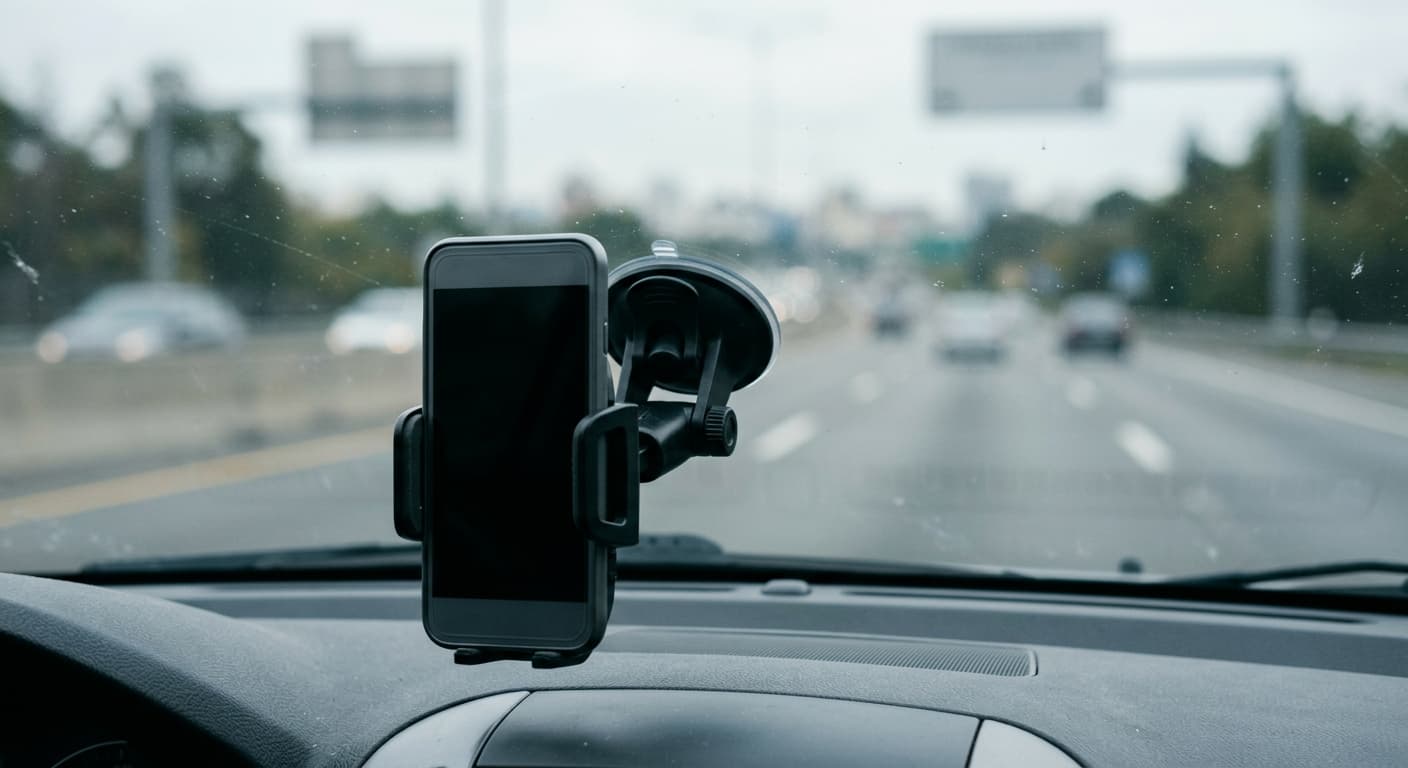
Florida law permits GPS devices and government-issued toll transponders on the windshield under Fla. Stat. 316.2952. Dashcams are generally allowed if mounted without obstructing the driver's view. Cell phones lack an explicit exemption, though a phone running navigation software may qualify under the GPS provision.
Florida is one of the more driver-friendly states when it comes to windshield-mounted devices. The state's windshield law (Fla. Stat. 316.2952) explicitly permits GPS navigation devices and government-issued toll transponders on the windshield, making it easier for drivers to use navigation aids legally.
However, the law does not cover every device. Cell phones used as phones (rather than as GPS navigation devices) are not specifically listed as an exemption, and decorative items, stickers, and other non-essential attachments remain prohibited.
Florida Windshield Obstruction Law
Fla. Stat. 316.2952 establishes the requirements and restrictions for motor vehicle windshields in Florida. The statute has two main components: a windshield requirement and a list of what can and cannot be placed on it.
Windshield requirement (subsection 1): Every motor vehicle operated on a public highway in Florida must have a windshield in a fixed and upright position, equipped with safety glazing material that meets federal motor vehicle safety standards. Motorcycles and farm implements are exempt from this requirement.
Placement restrictions (subsection 2): No person shall operate a motor vehicle on any public highway, road, or street with any sign, sunscreening material, product, or covering attached to, or located in or upon, the windshield, except for the items listed in subsections (a) through (d).
The law also requires functioning windshield wipers (subsection 3) that must be maintained in good working order (subsection 4).
Permitted Windshield Attachments in Florida
Florida law explicitly permits four categories of items on the windshield:
(a) Certificates and Papers Required by Law
Any certificate or other paper that is required to be displayed by law may be placed on the windshield. This includes vehicle registration decals, inspection certificates, and parking permits mandated by state or local law.
(b) Transparent Sunscreening Material
Sunscreening material may be applied along a strip at the top of the windshield, provided that the material is transparent and does not encroach upon the driver's direct forward viewing area as defined in Federal Motor Vehicle Safety Standards No. 205 (the AS-1 line).
(c) Electronic Toll Payment Devices
A device issued by a governmental entity for the purpose of electronic toll payments is explicitly permitted. In Florida, this primarily applies to SunPass transponders, but it also covers E-ZPass and other government-issued toll devices from other states.
(d) GPS and Navigation Devices
The statute specifically permits "a global positioning system device or similar satellite receiver device that uses the global positioning system operated pursuant to 10 U.S.C. s. 2281 to obtain navigation, to improve driver safety as a component of safety monitoring equipment capable of providing driver feedback, or to otherwise route information while the motor vehicle is being operated."
This is one of the broadest GPS exemptions of any state. It covers standalone GPS units (like Garmin or TomTom devices), fleet safety monitoring equipment, and other satellite-based navigation or routing systems.
The language "to improve driver safety as a component of safety monitoring equipment capable of providing driver feedback" was added by the 2014 amendment (s. 13, ch. 2014-216) and expands the exemption to include commercial fleet monitoring devices that use GPS to track driver behavior and provide safety alerts.
Cell Phone Mounts
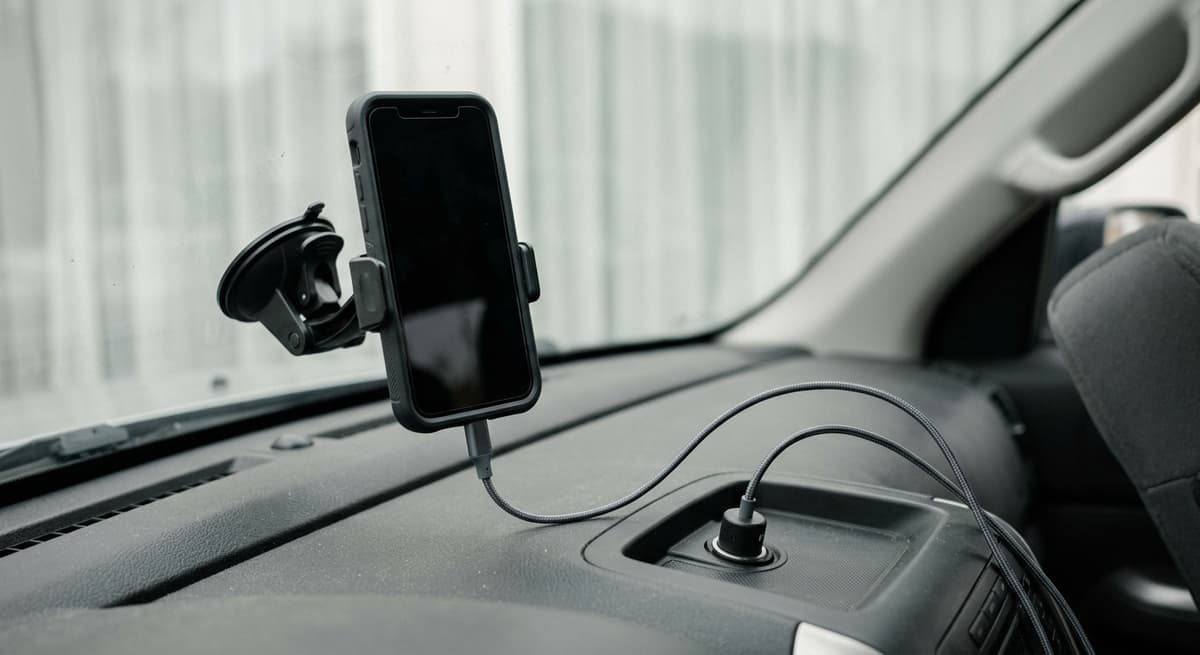
Florida's windshield law does not explicitly list cell phones or smartphones as a permitted windshield attachment. The GPS exemption in subsection (2)(d) covers devices that use GPS for navigation, but a phone used primarily for calling, texting, or other non-navigation functions may not fall squarely within this exemption.
In practice, many Florida drivers mount their phones on the windshield for GPS navigation without being cited. When a phone is actively running a navigation app (Google Maps, Apple Maps, Waze), it is functioning as a GPS device, which is arguably covered by subsection (2)(d).
However, to minimize legal risk, Florida drivers may want to consider dashboard mounts or vent-clip mounts as alternatives. These mounting locations avoid the windshield entirely and eliminate any question about compliance with Section 316.2952.
Florida's texting-while-driving law (Fla. Stat. 316.305) prohibits operating a motor vehicle while manually typing, sending, or reading data on a wireless communications device. This law is enforced as a primary offense, meaning officers can pull you over specifically for texting. Using a hands-free mount for navigation does not violate this law.
Dashcam Rules in Florida
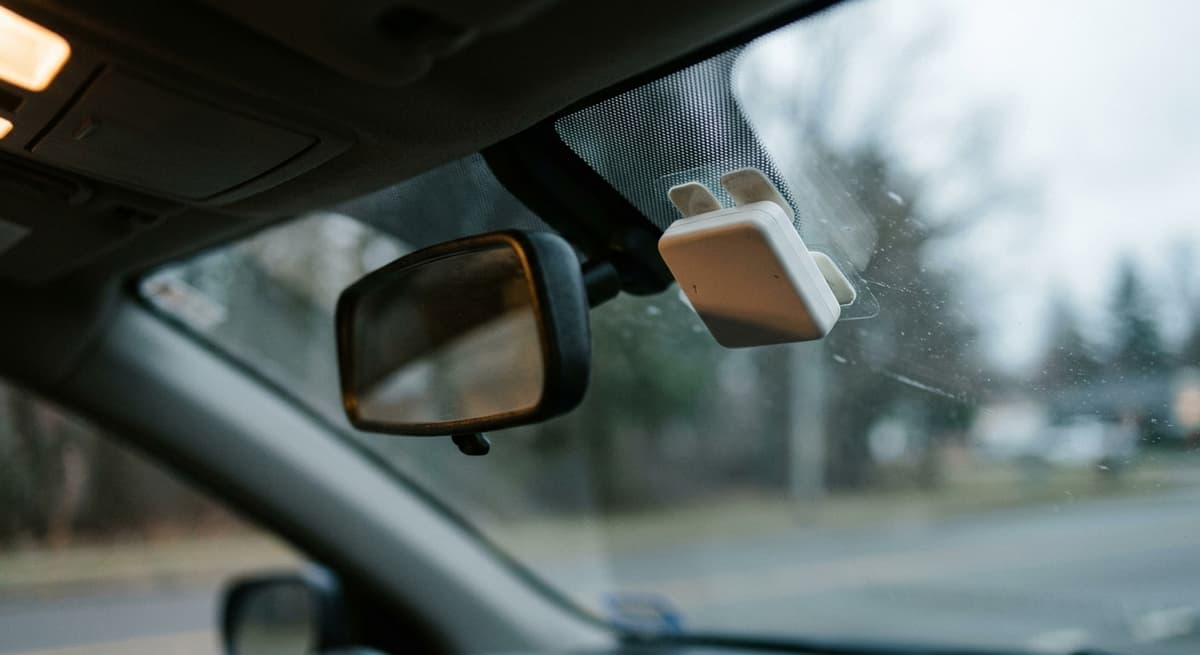
Dashcams are not specifically listed as one of the four permitted windshield attachments in Section 316.2952. However, dashcams are widely used in Florida and are generally considered legal if they are mounted in a way that does not seriously obstruct, obscure, or impair the driver's view of the road.
Fla. Stat. 316.2004 provides additional guidance, prohibiting the operation of a vehicle when the driver's view is obstructed. A small dashcam mounted behind the rearview mirror or in the lower corner of the passenger side of the windshield is unlikely to draw a citation.
For audio recording, Florida is a two-party (all-party) consent state under Fla. Stat. 934.03. If your dashcam records audio inside the vehicle, all occupants must consent to the recording. Many dashcam users in Florida turn off audio recording or post a notice inside the vehicle informing passengers that audio is being recorded.
Windshield Tinting
Florida splits window tinting across three separate statutes. The windshield strip is governed by Fla. Stat. 316.2952(2)(b); side wings and side windows forward of or adjacent to the operator's seat are governed by Fla. Stat. 316.2953, titled "Side windows; restrictions on sunscreening material"; and windows behind the driver are governed by Fla. Stat. 316.2954, titled "Windows behind the driver; restrictions on sunscreening material." The tinting rules for each window position are:
- Windshield: Under Section 316.2952(2)(b), non-reflective sunscreening material is allowed along a strip at the top of the windshield above the AS-1 line. The material must be transparent and must not encroach on the driver's direct forward viewing area.
- Front side windows: Under Section 316.2953, sunscreening material must have a light transmittance of at least 28 percent. The floor is inclusive, so glass measuring exactly 28 percent complies.
- Rear side windows: Under Section 316.2954(1)(a), at least 15 percent light transmittance, with total solar reflectance of no more than 35 percent.
- Rear window: Under Section 316.2954(1)(a), at least 15 percent light transmittance. Multipurpose passenger vehicles may go as low as 6 percent light transmittance under the same paragraph.
Florida also allows medical exemptions for window tinting. Under Fla. Stat. 316.29545, persons with lupus, autoimmune diseases, or other medical conditions that require limited exposure to light may obtain a medical exemption certificate that permits darker tinting on all windows, including the windshield.
Military and Specialty Vehicle Exemptions
Florida provides specific windshield exemptions for certain vehicle types:
Grove equipment and electric vehicles (subsection 5): Grove or farm equipment and certain electric-powered vehicles may be exempt from the windshield requirement if equipped with a department-approved windscreen alternative.
Former military vehicles (subsection 6): Vehicles originally manufactured for military use may be exempt from windshield requirements if the Florida Department of Highway Safety and Motor Vehicles determines that the exemption is necessary to preserve the vehicle's accurate military design. Operators and passengers of such vehicles must wear approved eye protection while the vehicle is in motion.
Penalties for Windshield Violations
A violation of Section 316.2952 is a noncriminal traffic infraction, punishable as a nonmoving violation under Chapter 318. The total cost of a nonmoving violation in Florida includes:
| Component | Amount |
|---|---|
| Base fine | $30 |
| Court costs | $18 |
| Administrative fee | $12.50 |
| Article V assessment | $10 |
| Approximate total | $70.50 |
Some counties may add a local surcharge of up to $15, bringing the maximum total to approximately $85.50. These are civil penalties only. A windshield obstruction ticket in Florida does not carry criminal penalties, does not add points to your driving record, and does not result in jail time.
Exemptions Summary
| Item | Permitted on Windshield? | Authority |
|---|---|---|
| Certificates or papers required by law | Yes | 316.2952(2)(a) |
| Transparent sunscreening above AS-1 line | Yes | 316.2952(2)(b) |
| Government-issued toll transponder (SunPass) | Yes | 316.2952(2)(c) |
| GPS/satellite navigation device | Yes | 316.2952(2)(d) |
| Fleet safety monitoring GPS equipment | Yes | 316.2952(2)(d) |
| Cell phone (as phone, not GPS) | Not explicitly exempted | 316.2952 |
| Dashcam | Not explicitly exempted, but generally allowed | 316.2004 |
| Decorative stickers or signs | No | 316.2952 |
| Aftermarket tint below AS-1 line | No | 316.2952(2)(b) |
| Medical exemption tinting | Yes, with certificate | 316.29545 |
Practical Tips for Florida Drivers
Following these guidelines will help you stay compliant with Florida's windshield laws:
-
Mount your GPS device on the windshield with confidence. Florida explicitly permits GPS and satellite navigation devices. Standalone GPS units and fleet monitoring equipment are clearly covered by subsection (2)(d).
-
Consider a dashboard mount for your phone. While a phone running a GPS app may qualify under the navigation exemption, a dashboard or vent mount eliminates any ambiguity about compliance.
-
Keep your SunPass transponder properly mounted. Government-issued toll transponders are explicitly permitted. If you use a portable transponder, make sure it is properly affixed where it can be read by toll sensors.
-
Mount dashcams behind the rearview mirror. Position the camera where it captures the road ahead without blocking your forward view. Turn off audio recording or notify all passengers if audio recording is enabled.
-
Check your window tint levels. Front side windows must allow at least 28 percent light transmittance under Section 316.2953. If you purchased a vehicle with aftermarket tint that is too dark, have it corrected to avoid a tinting citation.
-
Keep required documents on the windshield. Registration decals and legally required certificates should be displayed as mandated by Florida law.
More Florida Laws
Frequently Asked Questions
Can I mount a GPS on my windshield in Florida?
Yes. Florida Statute 316.2952(2)(d) explicitly permits GPS and satellite navigation devices on the windshield. This covers standalone GPS units, fleet monitoring equipment, and other devices that use GPS for navigation, safety monitoring, or routing.
Can I mount my phone on the windshield in Florida?
Cell phones are not specifically listed as a permitted windshield attachment. However, when a phone is running a navigation app and functioning as a GPS device, it may fall under the GPS exemption in subsection (2)(d). To avoid any ambiguity, consider using a dashboard or vent-clip mount instead.
Are dashcams legal on the windshield in Florida?
Dashcams are not specifically listed in the four permitted windshield attachment categories, but they are widely used and generally considered legal if mounted in a way that does not obstruct the driver's view. Mount behind the rearview mirror for the safest placement. If your dashcam records audio, all vehicle occupants must consent under Florida's two-party consent law.
What is the fine for a windshield violation in Florida?
A windshield violation is a noncriminal nonmoving infraction. The total fine is approximately $70.50, which includes the $30 base fine plus $18 in court costs, $12.50 in administrative fees, and a $10 Article V assessment. Some counties add a surcharge of up to $15.
Is windshield tinting legal in Florida?
Under Florida Statute 316.2952(2)(b), non-reflective sunscreening material is allowed only along a strip at the top of the windshield above the AS-1 line. The tint must be transparent and cannot encroach on the driver's direct forward viewing area. Medical exemption certificates are available for persons with lupus, autoimmune diseases, or conditions requiring limited light exposure.
Updates
Corrected the window tint section to cite the right statute for each window position, restated the 28 percent and 15 percent limits as the inclusive statutory floors they are, added the 6 percent multipurpose passenger vehicle allowance, and dated the GPS safety monitoring language to the 2014 amendment rather than a nonexistent 2017 one.
Independently fact-checked against the cited primary sources; governing law re-checked for recent changes
Corrected the citation for Florida's window-tint medical exemption from F.S. 316.2954 (which is a different statute, about rear-window sunscreening material specs) to the actual medical-exemption statute, F.S. 316.29545. Live-verified against leg.state.fl.us: 316.29545 does authorize a medical exemption certificate for lupus, autoimmune disease, or other light-sensitivity conditions, covering the windshield and other windows, matching the article's substantive description.
Governing law re-checked for recent changes
Reviewed and approved by an editor
The Law Behind This Article
This article rests on the statutory provisions below, held in our own legal record and retrieved from the official source. Tap a section to read the operative text.
Florida Statutes
§ 316.2952Windshields; requirements; restrictions.In force
(1) A windshield in a fixed and upright position, which windshield is equipped with safety glazing as required by federal safety-glazing material standards, is required on every motor vehicle which is operated on the public highways, roads, and streets, except on a motorcycle or implement of husbandry. (2) A person shall not operate any motor vehicle on any public highway, road, or street with any sign, sunscreening material, product, or covering attached to, or located in or upon, the windshield, except the following:(a) A certificate or other paper required to be displayed by law. (b) Sunscreening material along a strip at the top of the windshield, so long as such material is transparent and does not encroach upon the driver’s direct forward viewing area as more particularly described and defined in Federal Motor Vehicle Safety Standards No. 205 as the AS/1 portion of the windshield. (c) A device, issued by a governmental entity as defined in s. 334.03, or its designee, for the purpose of electronic toll payments. (d) A global positioning system device or similar satellite receiver device that uses the global positioning system operated pursuant to 10 U.S.C. s.
Official text (excerpt) · last checked 2026-09-07 · Read the full text in our law library · Verify at leg.state.fl.us
Cited in 7 court opinions in our collectionLatest citing opinion in our collection: 2020
Opinions citing this section in our collection:
- Hilton v. State (Supreme Court of Florida 2007, 961 So. 2d 284)“…nstruction to section 316.610, Florida Statutes (2001), and section 316.2952, Florida Statutes (2001). Prior to the United States Su…”
- State v. Burke (District Court of Appeal of Florida 2005, 902 So. 2d 955)“…crack in the windshield was a proper basis for the stop. Section 316.2952, Florida Statutes (2003), provides that a windshield is r…”
- Ivory v. State (District Court of Appeal of Florida 2005, 898 So. 2d 184)“…ion and endangered neither him nor members of the public. Section 316.2952, Florida Statutes, provides that a vehicle must have a wi…”
Identified automatically from the court opinions citing this section — not a ranking of which case controls.
§ 316.2004Obstruction to driver’s view or driving mechanism.In forcecited in 2 of our articles
(1) No person shall drive a vehicle when it is so loaded, or when there are in the front seat such a number of persons, as to obstruct the view of the driver to the front or sides of the vehicle or as to interfere with the driver’s control over the driving mechanism of the vehicle. (2)(a) No passenger in a vehicle shall ride in such position as to interfere with the driver’s view ahead or to the sides or with the driver’s control over the driving mechanism of the vehicle. (b) No person shall drive any motor vehicle with any sign, poster, or other nontransparent material upon the front windshield, side wings, or side or rear windows of such vehicle which materially obstructs, obscures, or impairs the driver’s clear view of the highway or any intersecting highway. (3) A violation of this section is a noncriminal traffic infraction, punishable as a nonmoving violation as provided in chapter 318.
Official text (excerpt) · last checked 2026-07-28 · Read the full text in our law library · Verify at leg.state.fl.us
Also relied on in: Florida Dashcam Laws: Rules for Dashboard Cameras (2026)
§ 316.2953Side windows; restrictions on sunscreening material.In forcecited in 2 of our articles
A person shall not operate any motor vehicle on any public highway, road, or street on which vehicle the side wings and side windows on either side forward of or adjacent to the operator’s seat are composed of, covered by, or treated with any sunscreening material or other product or covering which has the effect of making the window nontransparent or which would alter the window’s color, increase its reflectivity, or reduce its light transmittance, except as expressly permitted by this section. A sunscreening material is authorized for such windows if, when applied to and tested on the glass of such windows on the specific motor vehicle, the material has a total solar reflectance of visible light of not more than 25 percent as measured on the nonfilm side and a light transmittance of at least 28 percent in the visible light range. A violation of this section is a noncriminal traffic infraction, punishable as a nonmoving violation as provided in chapter 318.
Official text (excerpt) · last checked 2026-09-01 · Read the full text in our law library · Verify at leg.state.fl.us
Cited in 13 court opinions in our collectionLatest citing opinion in our collection: 2025
In the courts (editorial summary, independently checked):Florida courts have applied section 316.2953 mainly as a basis for traffic stops. State v. Gary Coley (2015) held an officer had probable cause where side tint hid the driver in daylight, the officer knowing the 28 percent limit. United States v. Frantz Pierre (2016) held illegal tint supplied probable cause regardless of motive.
Opinions citing this section in our collection:
- State v. Gary Coley (District Court of Appeal of Florida 2015, 157 So. 3d 542)“…see through it, therefore, it’s illegal. 1 Pursuant to section 316.2953, Florida Statutes (2013), the restriction as to sunscreen…”
- United States v. Frantz Pierre (Court of Appeals for the Eleventh Circuit 2016, 825 F.3d 1183)✓A detective could not see inside a Cadillac with dark tinted windows and had a marked unit stop it; the court held probable cause of a Florida tint violation supported the stop, so the debit cards found in the ensuing consent search were not suppressed.
- United States v. Larry Dwayne Leonard (Court of Appeals for the Eleventh Circuit 2009, 356 F. App'x 231)“…318. 11 Fla. Stat. § 316.2953. Here, Leonard did not raise a…”
Identified automatically from the court opinions citing this section — not a ranking of which case controls.
Also relied on in: Florida Window Tint Laws (2026): Legal VLT Limits
§ 316.2954Windows behind the driver; restrictions on sunscreening material.In force
(1) A person shall not operate any motor vehicle on any public highway, road, or street on which vehicle any windows behind the driver are composed of, covered by, or treated with any sunscreening material, or other product or material which has the effect of making the window nontransparent or which would alter the window’s color, increase its reflectivity, or reduce its light transmittance, except as specified below:(a) Sunscreening material consisting of film which, when applied to and tested on the rear window glass of the specific motor vehicle, has a total solar reflectance of visible light of not more than 35 percent as measured on the nonfilm side and a light transmittance of at least 15 percent in the visible light range; however, sunscreening material which, when applied to and tested on the rear window glass of the specific motor vehicle, has a total solar reflectance of visible light of not more than 35 percent as measured on the nonfilm side and a light transmittance of at least 6 percent in the visible light range may be used on multipurpose passenger vehicles.
Official text (excerpt) · last checked 2026-07-28 · Read the full text in our law library · Verify at leg.state.fl.us
§ 316.29545Window sunscreening exclusions; medical exemption; certain law enforcement vehicles, process server vehicles, and private investigative service vehicles exempt.In force
(1) The department shall issue medical exemption certificates to persons who are afflicted with Lupus, any autoimmune disease, or other medical conditions which require a limited exposure to light, which certificates shall entitle the person to whom the certificate is issued to have sunscreening material on the windshield, side windows, and windows behind the driver which is in violation of the requirements of ss. 316.2951-316.2957. The department shall consult with the Medical Advisory Board established in s. 322.125 for guidance with respect to the autoimmune diseases and other medical conditions which shall be included on the form of the medical certificate authorized by this section. At a minimum, the medical exemption certificate shall include a vehicle description with the make, model, year, vehicle identification number, medical exemption decal number issued for the vehicle, and the name of the person or persons who are the registered owners of the vehicle. A medical exemption certificate shall be nontransferable and shall become null and void upon the sale or transfer of the vehicle identified on the certificate.
Official text (excerpt) · last checked 2026-07-28 · Read the full text in our law library · Verify at leg.state.fl.us
§ 318.18Amount of penalties.In forcecited in 2 of our articles
The penalties required for a noncriminal disposition pursuant to s. 318.14 or a criminal offense listed in s. 318.17 are as follows:(1) Fifteen dollars for:(a) All infractions of pedestrian regulations. (b) All infractions of s. 316.2065, unless otherwise specified. (c) Other violations of chapter 316 by persons 14 years of age or under who are operating bicycles, regardless of the noncriminal traffic infraction’s classification. (2) Thirty dollars for all nonmoving traffic violations and:(a) For all violations of s. 322.19. (b) For all violations of ss. 320.0605, 320.07(1), 322.065, and 322.15(1). Any person who is cited for a violation of s. 320.07(1) shall be charged a delinquent fee pursuant to s. 320.07(4).1. If a person who is cited for a violation of s. 320.0605 or s. 320.07 can show proof of having a valid registration at the time of arrest, the clerk of the court may dismiss the case and may assess a dismissal fee of up to $10, from which the clerk shall remit $2.50 to the Department of Revenue for deposit into the General Revenue Fund.
Official text (excerpt) · last checked 2026-07-28 · Read the full text in our law library · Verify at leg.state.fl.us
Cited in 13 court opinions in our collectionLatest citing opinion in our collection: 2025
Opinions citing this section in our collection:
- In re Florida Rules of Practice & Procedure for Traffic Courts (Supreme Court of Florida 1982, 410 So. 2d 1337)“…admission's and payment of civil penalties as provided in section 318.18, Florida Statutes, in traffic infraction cases where the…”
- State v. Johnson (Supreme Court of Florida 1977, 345 So. 2d 1069)“…ted therein may either pay the civil penalty established by Section 318.18, Florida Statutes, or request a full hearing to contest t…”
- Levitz v. State (Supreme Court of Florida 1976, 339 So. 2d 655)“…ted therein may either pay the civil penalty established by Section 318.18, Florida Statutes, or request a full hearing to contest t…”
Identified automatically from the court opinions citing this section — not a ranking of which case controls.
Also relied on in: Florida Camera Ticket Laws: Red Light and Speed Camera Rules
§ 316.305Wireless communications devices; prohibition.In force
(1) This section may be cited as the “Florida Ban on Texting While Driving Law.” (2) It is the intent of the Legislature to:(a) Improve roadway safety for all vehicle operators, vehicle passengers, bicyclists, pedestrians, and other road users. (b) Prevent crashes related to the act of text messaging while driving a motor vehicle. (c) Reduce injuries, deaths, property damage, health care costs, health insurance rates, and automobile insurance rates related to motor vehicle crashes. (d) Authorize law enforcement officers to stop motor vehicles and issue citations to persons who are texting while driving. (3)(a) A person may not operate a motor vehicle while manually typing or entering multiple letters, numbers, symbols, or other characters into a wireless communications device or while sending or reading data on such a device for the purpose of nonvoice interpersonal communication, including, but not limited to, communication methods known as texting, e-mailing, and instant messaging.
Official text (excerpt) · last checked 2026-07-28 · Read the full text in our law library · Verify at leg.state.fl.us
§ 934.03Interception and disclosure of wire, oral, or electronic communications prohibited.In forcecited in 51 of our articles
(1) Except as otherwise specifically provided in this chapter, any person who:(a) Intentionally intercepts, endeavors to intercept, or procures any other person to intercept or endeavor to intercept any wire, oral, or electronic communication; (b) Intentionally uses, endeavors to use, or procures any other person to use or endeavor to use any electronic, mechanical, or other device to intercept any oral communication when:1. Such device is affixed to, or otherwise transmits a signal through, a wire, cable, or other like connection used in wire communication; or 2.
Official text (excerpt) · last checked 2026-08-31 · Read the full text in our law library · Verify at leg.state.fl.us
Cited in 74 court opinions in our collectionLatest citing opinion in our collection: 2026
In the courts (editorial summary, independently checked):State v. Walls (1978) held that recording an in-home oral communication without the consent of all parties violated section 934.03 and required suppression, and State v. Inciarrano (1985) held the statute protects only communications uttered with a reasonable expectation of privacy.
Opinions citing this section in our collection:
- State v. Walls (Supreme Court of Florida 1978, 356 So. 2d 294)✓An extortion victim secretly recorded threats made to him in his own home; the court held that was a protected oral communication, that recording it without every party's consent violated Section 934.03, and that Section 934.06 barred using the tape as evidence.
- SHARRON TASHA FORD v. CITY OF BOYNTON BEACH (District Court of Appeal of Florida 2021)“…ng oral communications in violation of the wiretap statute, section 934.03, Florida Statutes (2009), and for obstructing without vio…”
- State v. Calhoun (Circuit Court for the Judicial Circuits of Florida 1984, 7 Fla. Supp. 2d 3)“…hall not be violated” . . . (emphasis mine) Furthermore, section 934.03, Florida Statutes, makes it unlawful for *6 any person (…”
Identified automatically from the court opinions citing this section — not a ranking of which case controls.
Also relied on in: Florida Recording Laws (2026): All-Party Consent Rules, Can an Employer Record Conversations Without Consent? (2026), Can You Record ICE Agents? Know Your Rights by State (2026)
Search our full record of US law — 2.1 million sections, every state + federal →
Sources and References
- Fla. Stat. 316.2952 - Windshields; requirements; restrictions(leg.state.fl.us).gov
- Fla. Stat. 316.2953 - Windshield sunscreening and tinting(leg.state.fl.us).gov
- Fla. Stat. 316.29545 - Medical exemption for window tinting(leg.state.fl.us).gov
- Fla. Stat. 316.2004 - Obstruction of view(leg.state.fl.us).gov
- Fla. Stat. 316.305 - Wireless communications devices; prohibition(leg.state.fl.us).gov
- Fla. Stat. 318.18 - Amount of penalties(leg.state.fl.us).gov
- Fla. Stat. 934.03 - Interception and disclosure of communications(leg.state.fl.us).gov
- Florida Senate - 2024 Statutes 316.2952(flsenate.gov).gov
- Fla. Stat. 316.2954 - Windows behind the driver; restrictions on sunscreening material(leg.state.fl.us)