
Indiana
Indiana Windshield Mounting Laws (2026 Guide)
Independently fact-checked against primary sources (last audited August 17, 2026). · Reviewed by the RecordingLaw editorial team. · Law checked current as of August 9, 2026. · 13 primary sources cited on this page. How we verify our legal content
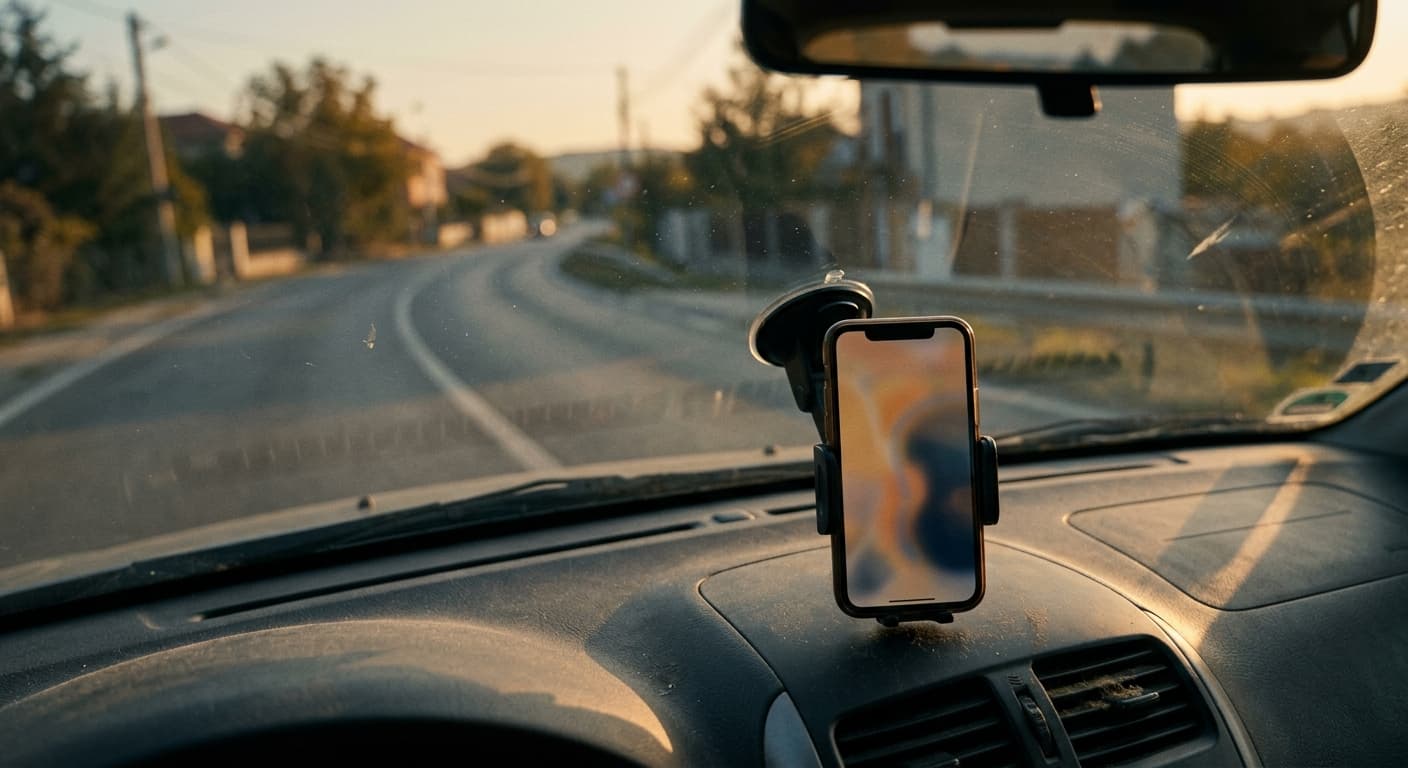
Indiana allows windshield-mounted GPS units, dashcams, and phone holders as long as they do not obstruct the driver's clear view under Indiana Code 9-19-19-3. Items no larger than four inches square in the lower passenger-side corner are explicitly permitted. Dashboard mounts fall outside the statute entirely.
Indiana drivers who want to mount a GPS, dashcam, phone holder, or toll transponder on their windshield need to understand the boundaries set by Indiana Code 9-19-19-3. This statute controls what materials can be placed on vehicle windows and under what conditions.
Unlike states that carve out specific mounting zones for electronic devices, Indiana uses a general obstruction standard combined with a narrow size-and-placement exception. The result is a straightforward rule, but one that has produced notable court decisions interpreting exactly what the law covers.
What Indiana Code 9-19-19-3 Says
Indiana Code 9-19-19-3, titled "Decals, Signs, Posters, Sunscreens, or Other Nontransparent Material," contains two subsections.
Subsection (a) establishes a military exemption. The section does not apply to the display of a decal required by the United States Department of Defense on military vehicles, motor vehicles owned by persons serving in the armed forces, motor vehicles owned by persons employed by the armed forces, or motor vehicles authorized to display the decal by military police.
Subsection (b) is the core rule. It states: "A person may not drive a motor vehicle with a sign, poster, sunscreening material, or other nontransparent material upon the front windshield, side wings, or side or rear windows of the vehicle that obstructs the driver's clear view of the highway or an intersecting highway."
Subsection (b) then adds an exception: "Signs, posters, or other nontransparent material not larger than four (4) inches square may be placed upon the front windshield, side wings, or side or rear windows in the lower corner farthest removed from the driver's position."
The statute was originally enacted through P.L.2-1991 and falls under Title 9, Article 19, Chapter 19 of the Indiana Code, which covers Windows and Windshield Wipers.
The 4-Inch Square Exception Explained
The exception in IC 9-19-19-3(b) is one of the most specific windshield placement rules in any state statute. It permits nontransparent material on the windshield or windows under three conditions, all of which must be met simultaneously:
-
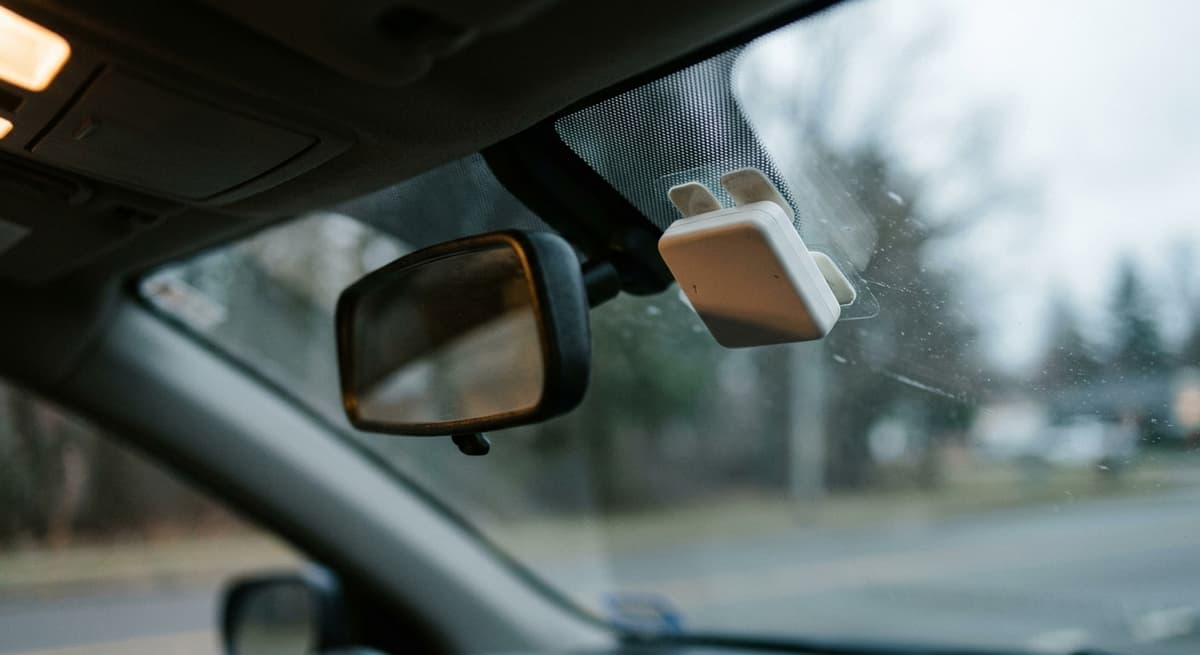
Size limit. The item must not exceed four inches by four inches (4 inches square).
-
Location. The item must be placed in the lower corner of the windshield or window.
-
Position. The corner must be the one farthest removed from the driver's position. In a standard left-hand-drive vehicle, this means the lower right corner of the windshield (passenger side).
This exception applies to items like registration stickers, parking permits, toll transponders, and small inspection decals. It does not create a blanket authorization for larger devices.
A standard E-ZPass transponder, which measures approximately 3 inches by 3 inches, fits within the 4-inch square limit. The Indiana Toll Road instructs drivers to mount transponders on the windshield behind the rearview mirror, which is a separate location from the lower corner exception. However, transponders mounted in this position are generally not challenged because they do not obstruct the driver's view.
The Meaning of "Upon" in the Statute
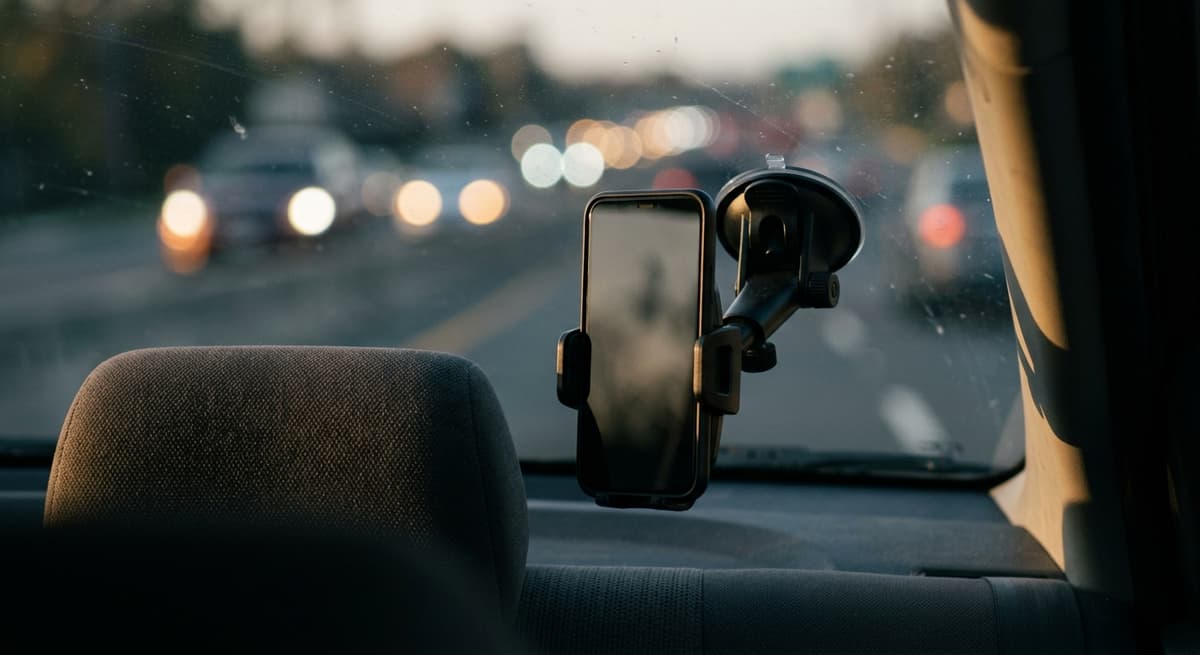
The word "upon" in IC 9-19-19-3 carries specific legal weight in Indiana. The statute does not prohibit an "obstructed view" in general terms. It prohibits nontransparent material placed "upon" the windshield or windows that obstructs the driver's view.
This distinction became the central issue in a 2018 Indiana Court of Appeals decision.
Anthony v. State (2018)
In John W. Anthony v. State of Indiana, Case No. 49A02-1712-CR-2859, the Indiana Court of Appeals reversed a finding that a driver had violated IC 9-19-19-3. The case was a traffic infraction proceeding, not a criminal prosecution. As the court restated, traffic infractions in Indiana are civil rather than criminal in nature, so what was at stake was a fine, not a criminal record.
The facts were straightforward. On July 25, 2017, Indianapolis Metropolitan Police Department Officer Kenneth Greer observed Anthony driving a car filled with plastic bags of trash, canned foods, and clothes piled from the floor to the ceiling. The items covered the dashboard and blocked the view through the side and rear windows. Officer Greer could only see into the vehicle through the driver's window. He issued a citation for violating IC 9-19-19-3.
The trial court found Anthony had committed the violation and assessed a fine. Anthony paid the fine and appealed. The Court of Appeals, in a decision authored by Judge Melissa May, agreed with Anthony and reversed.
The court's reasoning focused on the statutory language. IC 9-19-19-3 prohibits material "upon the front windshield, side wings, or side or rear windows." The items in Anthony's vehicle were not affixed to the windows and were not dependent on the windows for support. They were resting on the floors, seats, and dashboard.
The court noted that a different statute, IC 9-21-8-43, addresses the situation where a vehicle is "loaded in a manner so as to obstruct the view of the person who drives the vehicle to the front or sides." That statute would have applied to Anthony's situation, but the State charged him under the wrong section.
What This Means for Windshield Mounts
The Anthony decision clarifies an important point for drivers who use windshield-mounted devices. IC 9-19-19-3 applies specifically to items placed "upon" the glass. A GPS, dashcam, or phone attached to the windshield with a suction cup or adhesive mount is placed "upon" the windshield and falls within the scope of this statute.
Items sitting on the dashboard, clipped to a vent, or otherwise not in contact with the windshield glass are not governed by IC 9-19-19-3. A dashboard-mounted GPS or phone holder avoids the windshield obstruction statute entirely.
GPS and Phone Mount Rules in Indiana
Indiana does not have a separate statute specifically addressing GPS or phone mounts on the windshield. These devices are regulated by the general obstruction standard in IC 9-19-19-3 and the state's hands-free driving law.
Where to Mount a GPS or Phone
Because the 4-inch square exception only covers the lower corner farthest from the driver, most consumer GPS units and phone holders will not fit within the exception. A typical phone mount with a smartphone attached measures well over 4 inches in any direction.
However, a device that exceeds 4 inches is not automatically illegal. The primary prohibition in IC 9-19-19-3(b) applies to material "that obstructs the driver's clear view." If a device does not obstruct the view, it does not violate the statute, regardless of its size.
This creates a practical framework for choosing a mounting location:
| Mounting Location | Risk Level | Notes |
|---|---|---|
| Dashboard (not on windshield) | Lowest | Falls outside IC 9-19-19-3 entirely |
| Behind the rearview mirror | Low | Minimal impact on driver's line of sight |
| Lower passenger-side corner | Low to moderate | Within the 4-inch exception zone if device is small enough |
| Lower driver-side corner | Moderate | Not the "farthest removed" corner from the driver |
| Center of windshield | High | Most likely to obstruct the driver's clear view |
Indiana's Hands-Free Law (IC 9-21-8-59)
Indiana Code 9-21-8-59, titled "Use of Telecommunications Device While Operating a Moving Motor Vehicle," went into effect on July 1, 2020. The law fundamentally changed how drivers may interact with phones and other devices while driving.
The statute prohibits a person from holding or using a telecommunications device while operating a moving motor vehicle, unless the device is used in conjunction with hands-free or voice-operated technology.
A windshield-mounted or dashboard-mounted phone used as a GPS navigator is legal, provided:
- The driver does not hold the phone in their hand
- The driver uses voice commands or one-touch activation to operate the device
- The driver does not manually type addresses or text while the vehicle is moving
- The driver sets the destination before starting to drive or while the vehicle is parked
The law includes an exception for calling 911 to report a bona fide emergency. In that situation, a driver may hold and use the phone.
Hands-Free Law Penalties
A violation of IC 9-21-8-59 is classified as a Class C infraction. Fines may reach up to $500.
Starting July 1, 2021, the Indiana Bureau of Motor Vehicles began assigning four points to a driver's license for each hands-free law violation. Accumulating too many points within a two-year period can lead to license suspension.
A law enforcement officer may not confiscate, search, or download information from a driver's phone solely to investigate a hands-free law violation without probable cause to believe the device was used in the commission of a crime.
Dashcam Laws in Indiana
Dashcams are legal in Indiana. The state does not prohibit video recording from a vehicle-mounted camera. However, dashcam placement is subject to the same windshield obstruction rules under IC 9-19-19-3.
Recommended Mounting Positions
The best position for a dashcam in Indiana is directly behind the rearview mirror. Most compact dashcams fit in this location, and the area is already partially blocked by the mirror itself.
If the dashcam is small enough to fit within the 4-inch square limit, the lower passenger-side corner of the windshield is also a compliant location under the statutory exception.
Avoid mounting a dashcam in the center of the windshield, near the driver's direct line of sight, or in any position where it blocks your view of the road, intersections, or traffic signals.
Audio Recording Considerations
Indiana is a one-party consent state for audio recording. Under Indiana Code 35-33.5-5-5, it is lawful to intercept a communication when one of the parties to the communication has given prior consent.
If your dashcam records audio, it is legal in Indiana as long as you are present in the vehicle and consent to the recording. You do not need to inform passengers that audio is being recorded, though doing so is a common courtesy.
Window Tinting Rules
Indiana Code 9-19-19-4, titled "Tinting, Glazing, or Sunscreening Vehicle Windows," establishes separate standards for window tinting. While tinting addresses a different issue than device mounting, it interacts with overall windshield visibility requirements.
Windshield Tinting
Non-reflective tint is allowed only above the manufacturer's AS-1 line on the front windshield. No tinting is permitted below that line.
Side and Rear Window Standards
IC 9-19-19-4(c) regulates only the windshield, side wings, the side window that is part of a front door, and the rear back window. It does not list rear-door (rear side) windows at all, and it does not create any exception based on vehicle type such as SUV or van.
| Window | Minimum VLT (Visible Light Transmission) | Maximum Reflectance |
|---|---|---|
| Front-door side windows | 30% or more | No more than 25% |
| Rear-door side windows | Not regulated under IC 9-19-19-4 | Not regulated under IC 9-19-19-4 |
| Rear back window | 30% or more | No more than 25% |
Medical Exemption
Indiana law provides a medical exemption from the tinting restrictions. The exemption applies to vehicles owned by individuals who are required for medical reasons to be shielded from the direct rays of the sun, or vehicles in which such an individual is a habitual passenger.
To qualify, the medical necessity must be attested to by a physician or optometrist licensed to practice in Indiana. The physician's or optometrist's certification must be carried in the vehicle at all times.
Tinting Penalties
A violation of the tinting statute under IC 9-19-19-4 is generally a Class C infraction. The one exception is IC 9-19-19-8, which states that a person who violates section 4(e) commits a Class A infraction. Section 4(e) is aimed at whoever performs the work rather than at the driver: it prohibits tinting, covering, or treating the windows described in IC 9-19-19-4(c) or (d) with sunscreening so that operating the vehicle afterward violates those subsections. It is not a violation if the work is done for a person who supplies the physician's or optometrist's statement described in IC 9-19-19-4(b). A Class A infraction carries a judgment of up to $10,000 under Indiana Code 34-28-5-4.
Penalties for Windshield Mounting Violations
Obstruction Under IC 9-19-19-3
A violation of Indiana Code 9-19-19-3 is classified as a Class C infraction under IC 9-19-19-7. The maximum fine for a Class C infraction under Indiana Code 34-28-5-4 is $500.
In practice, fines for first-time moving violations are often lower. If a driver admits the violation or enters a plea of nolo contendere before the court date, the judgment may not exceed $35.50 plus court costs. If the violation is contested and the driver is found to have committed it, fines scale based on prior moving violations within the past five years:
| Prior Moving Violations (Past 5 Years) | Maximum Fine |
|---|---|
| None | $35.50 |
| One | $250.50 |
| Two or more | $500.00 |
Court costs and fees are added on top of the base fine amount.
Obstructed View Under IC 9-21-8-43
If a driver's view is obstructed by items not placed "upon" the windshield (such as items piled on the dashboard or seats), IC 9-21-8-43 may apply instead. This statute prohibits driving a vehicle "loaded in a manner so as to obstruct the view of the person who drives the vehicle to the front or sides."
As the Anthony v. State decision showed, prosecutors must charge the correct statute based on the specific facts. IC 9-19-19-3 covers material placed "upon" windows. IC 9-21-8-43 covers obstructed views caused by how a vehicle is loaded.
Windshield Condition Requirements
Windshield Required
Indiana Code 9-19-19-2 requires every motor vehicle (except motorcycles and motor-driven cycles) registered with the Bureau of Motor Vehicles to be equipped with a front windshield.
Windshield Wipers
Indiana Code 9-19-19-6 requires every motor vehicle windshield to be equipped with windshield wipers that the driver can control. Every windshield wiper must be maintained in good working order.
Driving with broken or missing windshield wipers is a separate Class C infraction under the same chapter.
Safety Glazing
Indiana Code 9-19-19-5 requires safety glazing materials in all passenger-type motor vehicles and in the driver's compartment of trucks and truck-tractors. A new motor vehicle cannot be sold or registered unless it is equipped with approved safety glazing material wherever glazing is used in doors, windows, and windshields.
Commercial Vehicle Considerations
Commercial motor vehicles operating on Indiana highways must comply with both state law and federal regulations. The Federal Motor Carrier Safety Administration (FMCSA) amended 49 CFR 393.60(e) effective May 6, 2022, expanding the authorized mounting area for vehicle safety technology on commercial motor vehicle windshields.
Under the federal rule, devices may be mounted within an area up to 8.5 inches below the upper edge of the area swept by the windshield wipers. Covered devices include:
- Driver camera systems
- Braking warning and assist systems
- Lane departure warning systems
- GPS and navigation systems
- Traffic sign recognition systems
For commercial vehicles, Indiana's general obstruction standard under IC 9-19-19-3 applies alongside the federal mounting rules. Where both standards govern, the more restrictive rule controls.
Tips for Staying Compliant in Indiana
Because Indiana combines a general obstruction standard with the specific 4-inch square exception, following these guidelines will help you avoid a citation:
-
Use a dashboard mount when possible. A device mounted on the dashboard rather than the windshield falls outside IC 9-19-19-3 entirely, as confirmed by the reasoning in Anthony v. State.
-
If using a windshield mount, place the device behind the rearview mirror. This location causes the least obstruction to the driver's forward view.
-
Keep small stickers and decals in the lower passenger-side corner. This is the only location where the 4-inch square exception applies in a standard left-hand-drive vehicle.
-
Set your GPS destination before you start driving. Indiana's hands-free law prohibits manually entering information into a device while the vehicle is in motion.
-
Secure the mount firmly. A device that falls off the windshield while driving creates a sudden distraction and a potential safety hazard.
-
Clear your windshield of all snow, ice, and debris before driving. A clear windshield reduces the chance of any obstruction issue and supports compliance with the general equipment requirements.
More Indiana Laws
Frequently Asked Questions
Can I mount a GPS or phone on my windshield in Indiana?
Yes, with limitations. Indiana Code 9-19-19-3 prohibits nontransparent material on the windshield that obstructs the driver's clear view. There is a specific exception for items no larger than 4 inches square placed in the lower corner farthest from the driver (the lower passenger-side corner in most vehicles). A GPS or phone mount that exceeds 4 inches is not automatically illegal, but it must not obstruct your view. The safest option is a dashboard mount, which avoids the windshield statute entirely. If you use a windshield mount, position the device behind the rearview mirror or in the lower passenger-side corner.
What is the fine for a windshield obstruction violation in Indiana?
A violation of Indiana Code 9-19-19-3 is a Class C infraction under IC 9-19-19-7. The maximum fine is $500, but first-time offenders who admit the violation before the court date may pay as little as $35.50 plus court costs. Fines scale based on the number of prior moving violations within the past five years. Court costs and fees are added on top of the base fine.
Are dashcams legal in Indiana?
Yes. Indiana does not prohibit dashcams. The camera must be mounted so it does not obstruct the driver's clear view under IC 9-19-19-3. The recommended position is behind the rearview mirror. Indiana is a one-party consent state for audio recording, so dashcam audio is legal as long as you are present in the vehicle and consent to the recording.
Can I hold my phone while driving in Indiana?
No. Indiana Code 9-21-8-59, effective July 1, 2020, prohibits holding or using a telecommunications device while operating a moving motor vehicle unless it is used with hands-free or voice-operated technology. You may use one-touch activation to answer or end calls, and you may use voice commands for navigation. Violations carry fines up to $500 and four points on your driver's license. The only exception is calling 911 to report a bona fide emergency.
What did the Anthony v. State case decide about Indiana's windshield law?
In Anthony v. State (2018), Case No. 49A02-1712-CR-2859, the Indiana Court of Appeals reversed a finding that a driver had violated IC 9-19-19-3. The defendant had trash, clothes, and food piled throughout his car, blocking the view through the windows. The court ruled that because those items were resting on the floors, seats, and dashboard rather than placed 'upon' the windows, the statute did not apply. The decision established that IC 9-19-19-3 specifically requires material to be affixed to or dependent on the glass. A separate statute, IC 9-21-8-43, covers obstructed views caused by how a vehicle is loaded. The case was a civil infraction proceeding rather than a criminal prosecution, so it involved a fine rather than a criminal conviction.
Updates
Corrected the description of IC 9-19-19-8, which makes it a Class A infraction to perform an illegal tint job under IC 9-19-19-4(e) rather than to have windows through which occupants cannot be recognized; narrowed the window-tint takeaway to the four glass surfaces IC 9-19-19-4(c) actually lists and fixed the 30% light-transmission threshold so that exactly 30% is lawful; and clarified that Anthony v. State reversed a civil traffic-infraction judgment, not a criminal conviction.
Replaced a competitor-site (FindLaw) case citation for Anthony v. State (2018) with the opinion on CourtListener, and corrected the statute pinpoint for Indiana's one-party-consent recording rule from IC 35-33.5-5-4 (a civil-damages provision) to IC 35-33.5-5-5.
Independently fact-checked against the cited primary sources
Corrected the window-tint table: IC 9-19-19-4(c) regulates the windshield, side wings, front-door side windows, and the rear back window only, with no rear-side-window standard and no SUV/van exception; removed the fabricated 'any darkness' vehicle-type carve-out.
Governing law re-checked for recent changes
Reviewed and approved by an editor
The Law Behind This Article
This article rests on the statutory provisions below, held in our own legal record and retrieved from the official source. Tap a section to read the operative text.
Indiana Code, TITLE 9. MOTOR VEHICLES
§ 9-19-19-3Decals, signs, posters, sunscreens, or other nontransparent materialIn force
Sec. 3. (a) This section does not apply to the display of a decal required by the United States Department of Defense on the following: (1) A military vehicle. (2) A motor vehicle owned by a person in the service of the armed forces of the United States. (3) A motor vehicle owned by a person employed by the armed forces of the United States. (4) A motor vehicle authorized to display the decal by the military police of the armed forces of the United States. (b) A person may not drive a motor vehicle with a sign, poster, sunscreening material, or other nontransparent material upon the front windshield, side wings, or side or rear windows of the vehicle that obstructs the driver's clear view of the highway or an intersecting highway. However, signs, posters, or other nontransparent material not larger than four (4) inches square may be placed upon the front windshield, side wings, or side or rear windows in the lower corner farthest removed from the driver's position. [Pre-1991 Recodification Citation: 9-8-6-38(b).]
Official text (excerpt) · last checked 2026-09-07 · Read the full text in our law library · Verify at iga.in.gov
Cited in 1 court opinions in our collectionLatest citing opinion in our collection: 2018
Opinions citing this section in our collection:
- John W. Anthony v. State of Indiana (Indiana Court of Appeals 2018, 103 N.E.3d 696)“…dows . . . that obstructs the driver’s clear view.” Ind. Code § 9-19-19-3. The State did not present such…”
Identified automatically from the court opinions citing this section — not a ranking of which case controls.
§ 9-21-8-43Loaded vehicles; passengers; obstruction of view; interference with control of vehicleIn force
Sec. 43. (a) A person may not drive a vehicle when any of the following conditions exist: (1) The vehicle: (A) is loaded in a manner; or (B) has more than three (3) persons in the front seat; so as to obstruct the view of the person who drives the vehicle to the front or sides of the vehicle. (2) The vehicle: (A) is loaded in a manner; or (B) has more than three (3) persons in the front seat; so as to interfere with the person's control over the driving mechanism of the vehicle. (b) A passenger in a vehicle may not do the following: (1) Ride in a position that interferes with the view ahead or to the sides of the person who drives the vehicle. (2) Interfere with the person's control over the driving mechanism of the vehicle. [Pre-1991 Recodification Citation: 9-4-1-117.]
Official text (excerpt) · last checked 2026-07-29 · Read the full text in our law library · Verify at iga.in.gov
§ 9-21-8-59Use of telecommunications device while operating a moving motor vehicleIn force
Sec. 59. (a) Except as provided in subsections (b) and (c), a person may not hold or use a telecommunications device while operating a moving motor vehicle. (b) A telecommunications device described in IC 9-13-2-177.3(a)(1) may be used in conjunction with hands free or voice operated technology. (c) A telecommunications device may be used or held to call 911 to report a bona fide emergency. (d) A police officer may not, without the consent of the person: (1) confiscate a telecommunications device for the purpose of determining compliance with this section; (2) confiscate a telecommunications device and retain it as evidence pending trial for a violation of this section; or (3) extract or otherwise download information from a telecommunications device for a violation of this section unless: (A) the police officer has probable cause to believe that the telecommunications device has been used in the commission of a crime; (B) the information is extracted or otherwise downloaded under a valid search warrant; or (C) otherwise authorized by law.
Official text (excerpt) · last checked 2026-07-29 · Read the full text in our law library · Verify at iga.in.gov
Cited in 1 court opinions in our collectionLatest citing opinion in our collection: 2016
Opinions citing this section in our collection:
- United States v. Gregorio Paniagua-Garcia (Court of Appeals for the Seventh Circuit 2016, 813 F.3d 1013)“…smit, or read a text message or an electronic-mail message, Ind. Code § 9-21-8-59(a)—in short it prohibits “tex- ting” (s…”
Identified automatically from the court opinions citing this section — not a ranking of which case controls.
§ 9-19-19-4Tinting, glazing, or sunscreening vehicle windowsIn forcecited in 2 of our articles
Sec. 4. (a) This section does not apply to a manufacturer's tinting or glazing of motor vehicle windows or windshields that is otherwise in compliance with or permitted by FMVSS205 as promulgated in 49 CFR 571.205. Proof from the manufacturer, supplier, or installer that the tinting or glazing is in compliance with or permitted by FMVSS205 must be carried in the vehicle. (b) This section does not apply to the driver of a vehicle: (1) that is owned by an individual required for medical reasons to be shielded from the direct rays of the sun; or (2) in which an individual required for medical reasons to be shielded from the direct rays of the sun is a habitual passenger. The medical reasons must be attested to by a physician or optometrist licensed to practice in Indiana, and the physician's or optometrist's certification of that condition must be carried in the vehicle. The physician's or optometrist's certificate must be renewed annually.
Official text (excerpt) · last checked 2026-09-01 · Read the full text in our law library · Verify at iga.in.gov
Cited in 9 court opinions in our collectionLatest citing opinion in our collection: 2022
In the courts (editorial summary, independently checked):Indiana courts have applied section 9-19-19-4 to stops where officers could not identify occupants through a window. Gregory Johnson v. State of Indiana (2013) upheld such a stop even assuming the tint was legal, and Clayton Doctor v. State of Indiana (2016) held later proof of compliance would not negate reasonable suspicion.
Opinions citing this section in our collection:
- Erving Sanders v. State of Indiana (Indiana Court of Appeals 2013, 981 N.E.2d 616)“…id basis to stop Sanders’s vehicle. The State asserts that Ind. Code § 9-19-19-4 does not require an officer to conclus…”
- Abbott v. State (Indiana Supreme Court 2012, 961 N.E.2d 1016)“…separate opinion in which DICKSON, J., concurs. . See Ind.Code § 9-19-19-4. . The trial court also sentenced…”
- Gregory Johnson v. State of Indiana (Indiana Court of Appeals 2013, 992 N.E.2d 955)✓An officer stopped a minivan whose factory-standard rear tint he could not see through to identify the occupants; the court held his good-faith mistake still supplied reasonable suspicion under the tint statute and that the stop was reasonable under the Indiana Constitution.
Identified automatically from the court opinions citing this section — not a ranking of which case controls.
Also relied on in: Indiana Window Tint Laws (2026): Legal VLT Limits
§ 9-19-19-7United States Department of Transportation regulations; classification of violationsIn force
Sec. 7. (a) This section does not apply to a person who owns or operates a vehicle or combination of vehicles that: (1) contains parts and accessories; and (2) is equipped; as required under regulations of the United States Department of Transportation. (b) Except as provided in section 8 of this chapter, a person who violates this chapter commits a Class C infraction. [Pre-1991 Recodification Citation: 9-8-6-2(a).]
Official text (excerpt) · last checked 2026-07-29 · Read the full text in our law library · Verify at iga.in.gov
§ 9-19-19-8Action of tinting or applying sunscreening so vehicle occupants not easily identified; classification of offenseIn force
Sec. 8. A person who violates section 4(e) of this chapter commits a Class A infraction.
Official text (excerpt) · last checked 2026-07-29 · Read the full text in our law library · Verify at iga.in.gov
§ 9-19-19-2Front windshieldIn force
Sec. 2. A motor vehicle, except a motorcycle or a motor driven cycle, required to be registered with the bureau must be equipped with a front windshield. [Pre-1991 Recodification Citation: 9-8-6-38(a).]
Official text (excerpt) · last checked 2026-07-29 · Read the full text in our law library · Verify at iga.in.gov
§ 9-19-19-6Windshield wipersIn force
Sec. 6. (a) The windshield on a motor vehicle must be equipped with a device for cleaning rain, snow, or other moisture from the windshield. The device must be constructed to be controlled or operated by the driver of the vehicle. (b) A windshield wiper upon a motor vehicle must be maintained in good working order. [Pre-1991 Recodification Citation: 9-8-6-38(c); (d).]
Official text (excerpt) · last checked 2026-07-29 · Read the full text in our law library · Verify at iga.in.gov
§ 9-19-19-5Sale or registration of new vehicles not equipped with approved safety glazing; application of sectionIn force
Sec. 5. (a) This section applies to all passenger-type motor vehicles, including passenger buses and school buses. With respect to trucks, including truck-tractors, the requirements for safety glazing material in this section apply to all glazing material used in doors, windows, and windshields in the driver's compartment of a vehicle. (b) A person may not sell a new motor vehicle and a new motor vehicle may not be registered unless the vehicle is equipped with safety glazing material of a type approved by the director of traffic safety wherever glazing material is used in doors, windows, and windshields. [Pre-1991 Recodification Citation: 9-8-6-40(a) part.]
Official text (excerpt) · last checked 2026-07-29 · Read the full text in our law library · Verify at iga.in.gov
Indiana Code, TITLE 34. CIVIL LAW AND PROCEDURE
§ 34-28-5-4Costs; deposit of funds; findings required for judgment; special provisions for moving violationsIn force
Sec. 4. (a) A judgment of up to ten thousand dollars ($10,000) may be entered for a violation constituting a Class A infraction. (b) A judgment of up to one thousand dollars ($1,000) may be entered for a violation constituting a Class B infraction. (c) Except as provided in subsection (f), a judgment of up to five hundred dollars ($500) may be entered for a violation constituting a Class C infraction. (d) A judgment of up to twenty-five dollars ($25) may be entered for a violation constituting a Class D infraction. (e) Subject to section 1 of this chapter, a judgment: (1) up to the amount requested in the complaint; and (2) not exceeding any limitation under IC 36-1-3-8; may be entered for an ordinance violation.
Official text (excerpt) · last checked 2026-07-29 · Read the full text in our law library · Verify at iga.in.gov
Cited in 5 court opinions in our collectionLatest citing opinion in our collection: 2024
Opinions citing this section in our collection:
- John Doe 1 v. Indiana Department of Child Services (Indiana Supreme Court 2017, 81 N.E.3d 199)“…ine of up to $10,000. See I.C. § 5-14-3-10(a) (Supp. 2012); I.C. § 34-28-5-4(a) (Supp. 2012). Second, that employee…”
- State v. Jackson (Indiana Court of Appeals 2007, 864 N.E.2d 431)“…s, and instead a judgment of only up to $500 may be issued. Ind.Code § 34-28-5-4. Also, the OWHTV statute makes no refer…”
- Rory Kerwood v. Elkhart County Sheriff's Department (Indiana Court of Appeals 2024)“…ine of up to $10,000. See Ind. Code § 5-14-3-10(a); Ind. Code § 34-28-5-4(a). [12] The Indiana legislature, i…”
Identified automatically from the court opinions citing this section — not a ranking of which case controls.
Code of Federal Regulations Title 49
§ 393.60Glazing in specified openings.In forcecited in 15 of our articles
(a) Glazing material. Glazing material used in windshields, windows, and doors on a motor vehicle manufactured on or after December 25, 1968, shall at a minimum meet the requirements of Federal Motor Vehicle Safety Standard (FMVSS) No. 205 in effect on the date of manufacture of the motor vehicle. The glazing material shall be marked in accordance with FMVSS No. 205 (49 CFR 571.205, S6). (b) Windshields required. Each bus, truck and truck-tractor shall be equipped with a windshield. Each windshield or portion of a multi-piece windshield shall be mounted using the full periphery of the glazing material. (c) Windshield condition. With the exception of the conditions listed in paragraphs (c)(1), (c)(2), and (c)(3) of this section, each windshield shall be free of discoloration or damage in the area extending upward from the height of the top of the steering wheel (excluding a 51 mm (2 inch) border at the top of the windshield) and extending from a 25 mm (1 inch) border at each side of the windshield or windshield panel.
Official text (excerpt) · last checked 2026-07-28 · Read the full text in our law library · Verify at ecfr.gov
Cited in 3 court opinions in our collectionLatest citing opinion in our collection: 2021
In the courts (editorial summary, independently checked):The 70 percent light transmittance floor of 49 CFR 393.60(d) covers the windshield and the windows immediately right and left of the driver. Grooms Hauling, LLC v. Robinson (2020) applied it through Pennsylvania adoption and rejected racial profiling claims over tint citations; State v. Ford (2021) noted that Kansas adopts it too.
Opinions citing this section in our collection:
- United States of America, Government v. Robert L. Pierre, Defendant (District Court, D. New Hampshire 2015, 2015 DNH 083)“…rallel luminous transmittance of not less than 70 percent.” 49 C.F.R. 393.60(c). Neither the Government nor the defe…”
- GROOMS HAULING, LLC v. ROBINSON (District Court, E.D. Pennsylvania 2020)✓Officers repeatedly cited a Black-owned hauling company whose truck windows passed only 17 to 20 percent of light; treating 49 CFR 393.60's 70 percent transmittance standard as the governing rule, the court granted the officers summary judgment on the profiling claims.
- State v. Ford (Court of Appeals of Kansas 2021)“…Relevant to this appeal are regulations on window tinting (49 C.F.R. § 393.60[d]), medical examiner certificates (49…”
Identified automatically from the court opinions citing this section — not a ranking of which case controls.
Also relied on in: Connecticut Windshield Mounting Laws (2026 Guide), Idaho Windshield Mounting Laws (2026 Guide), Kansas Windshield Mounting Laws (2026 Guide)
Search our full record of US law — 2.1 million sections, every state + federal →
Sources and References
- Indiana Code 9-19-19-3 - Decals, Signs, Posters, Sunscreens, or Other Nontransparent Material(iga.in.gov).gov
- Indiana Code 9-19-19-4 - Tinting, Glazing, or Sunscreening Vehicle Windows(iga.in.gov).gov
- Indiana Code 9-21-8-59 - Use of Telecommunications Device While Operating a Moving Motor Vehicle(iga.in.gov).gov
- Indiana Code 9-21-8-43 - Loaded Vehicles; Passengers; Obstruction of View(iga.in.gov).gov
- Indiana Code 9-19-19-7 - Classification of Violations (Windows and Windshield Wipers Chapter)(iga.in.gov).gov
- Indiana Code 9-19-19-8 - Action of Tinting So Vehicle Occupants Not Easily Identified; Classification of Offense(iga.in.gov).gov
- Indiana Code 9-19-19-2 - Front Windshield Requirement(iga.in.gov).gov
- Indiana Code 9-19-19-5 - Safety Glazing Materials(iga.in.gov).gov
- Indiana Code 9-19-19-6 - Windshield Wipers(iga.in.gov).gov
- Indiana Code 34-28-5-4 - Judgment for Class C Infraction(iga.in.gov).gov
- Indiana BMV - Common Traffic Violations and Point Values(in.gov).gov
- Indiana Hands-Free Driving Law Fact Sheet - INDOT(in.gov).gov
- FMCSA Final Rule - Authorized Windshield Area for Vehicle Safety Technology (49 CFR 393.60)(federalregister.gov).gov
- Anthony v. State (2018) - Indiana Court of Appeals, Case No. 49A02-1712-CR-2859(courtlistener.com)