
Arizona
Arizona Security Camera Laws: Rules for Homes and Businesses
Independently fact-checked against primary sources (last audited August 15, 2026). · Reviewed by the RecordingLaw editorial team. · Law checked current as of August 7, 2026. · 7 primary sources cited on this page. How we verify our legal content
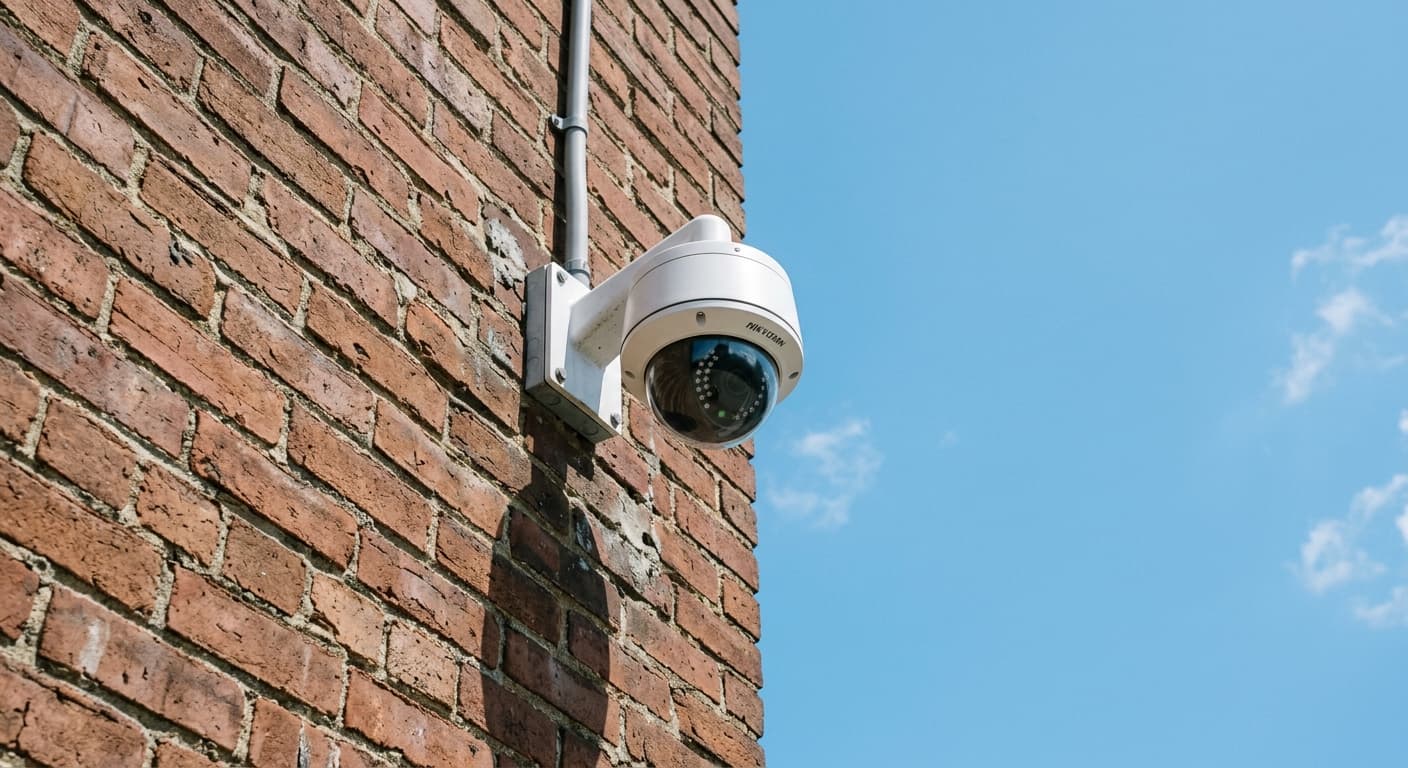
Arizona permits residential and business security cameras without a permit. Silent video aimed at your own property is broadly legal, but cameras must not capture areas where others have a reasonable expectation of privacy under A.R.S. 13-3019. When audio is recorded, one-party consent rules under A.R.S. 13-3005 apply.
Arizona does not have a single, comprehensive security camera statute. Instead, the legality of security cameras is governed by several overlapping laws, including the surreptitious recording statute (ARS 13-3019), the wiretapping statute (ARS 13-3005), voyeurism law (ARS 13-1424), and local municipal ordinances.
This guide covers everything you need to know about security camera laws in Arizona in 2026, including rules for residential and commercial cameras, audio recording considerations, neighbor disputes, HOA restrictions, and how security camera footage can be used as evidence.
Residential Security Camera Laws in Arizona
Your Right to Install Security Cameras
Arizona homeowners and renters have the right to install security cameras on their own property. There is no statewide permit, registration, or notification requirement. You can use:
- Doorbell cameras (Ring, Nest, Arlo, etc.)
- Exterior mounted cameras covering your driveway, yard, and entry points
- Interior cameras monitoring rooms inside your home
- Trail cameras on your own land
- Wireless and wired camera systems
Where You Can Point Your Cameras
While you can install cameras on your property, Arizona law limits where those cameras can be directed:
Legal camera placement:
- Aimed at your own front door, back door, and garage
- Covering your own driveway and walkways
- Monitoring your own yard and garden
- Pointed at the public street in front of your home
- Covering shared spaces like lobbies and parking lots (in apartment or condo settings)
Problematic camera placement:
- Aimed directly into a neighbor's bedroom window
- Positioned to capture the interior of a neighbor's home
- Directed at a neighbor's backyard pool or hot tub area where they have a privacy expectation
- Pointed into areas where people might be in a state of undress
Under ARS 13-3019, it is a felony to secretly view or record another person in a location where they have a reasonable expectation of privacy and have not consented to observation. A security camera that captures your neighbor changing clothes through their window could trigger criminal liability.
Interior Camera Rules
Inside your own home, you can place cameras freely in common areas. However:
- Bathrooms: You cannot place cameras in bathrooms, even in your own home, if guests or other household members use them without knowledge of the cameras
- Guest bedrooms: Hidden cameras in rooms where guests sleep violate privacy expectations
- Nanny cameras: Arizona law permits nanny cameras in common areas of your home for monitoring childcare. You do not need to tell the caretaker about the camera. However, cameras in areas where the caretaker changes clothes or uses the bathroom are prohibited
- Intimate recordings: Using hidden cameras to record intimate activities without consent violates ARS 13-1424 (voyeurism)
Audio Recording on Security Cameras

When Audio Changes the Rules
Many modern security cameras include microphone capabilities. In Arizona, the moment your security camera records audio, the one-party consent rules under ARS 13-3005 come into play for conversations in private settings.
Key distinctions:
- Silent video surveillance of your own property exterior is broadly legal
- Audio recording of conversations you are part of is legal under one-party consent
- Audio recording of conversations you are not part of in private settings requires consent from at least one participant
- Audio recording in public areas (sidewalks, streets) is generally permissible because there is no reasonable expectation of privacy
Practical Implications
If your doorbell camera records audio of a conversation between two people standing at your front door, and you are not part of that conversation, the legality depends on whether those individuals have a reasonable expectation of privacy. On a front porch visible from the street, the expectation of privacy is typically low.
If your interior camera with audio captures a conversation between your babysitter and another person in your living room while you are away, the analysis is more nuanced. The safest approach is to inform people that audio recording is active in your home.
Business Security Camera Laws

Permitted Camera Locations
Arizona businesses can install surveillance cameras in areas where employees and customers do not have a reasonable expectation of privacy:
- Retail sales floors and showrooms
- Lobbies, reception areas, and waiting rooms
- Hallways and corridors
- Parking lots and garages
- Loading docks and receiving areas
- Warehouses and storage rooms
- Building exteriors and entry points
- Cash register areas and point-of-sale stations
Prohibited Camera Locations
Under ARS 13-3019, businesses cannot place cameras in:
- Restrooms and bathrooms
- Locker rooms and changing rooms
- Employee shower areas
- Fitting rooms in retail stores
- Any area where people have a reasonable expectation of privacy while undressing
Violations are a Class 5 felony (up to 2.5 years in prison), or a Class 4 felony (up to 3.75 years) if the recordings are distributed and the person depicted is recognizable.
Employee Notification
Arizona does not have a specific statute requiring businesses to notify employees about video surveillance. However, posting visible signs ("This area is under video surveillance") is strongly recommended because it:
- Reduces invasion of privacy claims
- Strengthens the argument that employees had no reasonable expectation of privacy in monitored areas
- May be required by some local municipal codes
- Supports the admissibility of footage in legal proceedings
Customer Notification
Similarly, there is no statewide requirement to notify customers about security cameras in a business. However, posted signs serve as a deterrent to shoplifting and other criminal activity, and they reduce potential privacy claims.
Neighbor Disputes Over Security Cameras

Common Issues in Arizona
Security camera disputes between neighbors are common, particularly regarding:
- Cameras that capture a neighbor's property
- Cameras with audio that record nearby conversations
- Cameras with bright LED lights that shine onto adjacent properties
- Cameras perceived as harassment or intimidation tools
What Constitutes Harassment
Under ARS 13-2921, harassment occurs when a person directs conduct at a specific person that would cause a reasonable person to be seriously alarmed, annoyed, or harassed. If a security camera is positioned specifically to intimidate or harass a neighbor rather than for legitimate security purposes, it could support a harassment charge.
Factors courts may consider:
- Is the camera pointed at a legitimate security concern (your property, your car) or specifically at the neighbor?
- Did the camera placement change after a dispute with the neighbor?
- Are there multiple cameras all directed at the same neighbor?
- Does the camera have a legitimate security purpose?
Resolving Camera Disputes
If you have a dispute with a neighbor about security cameras:
- Talk to your neighbor directly about your concerns
- Check local ordinances for any camera-specific regulations
- Document the issue with photos showing the camera angle and what it captures
- Contact your HOA if applicable
- Request mediation through your city or county's dispute resolution program
- Consult an attorney if the camera violates ARS 13-3019 or constitutes harassment
HOA Rules on Security Cameras
CC&R Restrictions
Many Arizona homeowners' associations (HOAs) have Covenants, Conditions, and Restrictions (CC&Rs) that address security cameras. Common HOA camera rules include:
- Restrictions on visible exterior cameras
- Requirements that cameras match the home's exterior color scheme
- Limits on the number of cameras
- Prohibitions on cameras aimed at common areas
- Rules about camera mounting height and placement
Arizona's Planned Communities Act does not itself grant HOAs the authority to enforce architectural or aesthetic standards; ARS 33-1801 is only the chapter's applicability section. That authority comes from the association's own declaration and CC&Rs, and ARS 33-1817 governs how an association reviews projects against design guidelines the community has already adopted. Camera restrictions grounded in the governing documents that serve a legitimate community interest are generally enforceable.
No Dedicated HOA Security Camera Statute
Arizona does not have a statute that specifically bars HOAs from prohibiting security cameras or video doorbells. ARS 33-1808 addresses flag display, political signs, caution signs, and community activities, not security devices. HOA authority over camera installation is instead governed by the association's own CC&Rs and the general architectural-review powers described above.
This means whether your HOA can restrict or ban security cameras depends on your community's governing documents, not on a statewide guarantee of the right to install one.
Using Security Camera Footage as Evidence
Admissibility in Criminal Cases
Security camera footage is regularly used as evidence in Arizona criminal cases. For footage to be admissible:
- Authentication: Someone must testify that the footage accurately depicts what it shows, a requirement under Arizona Rule of Evidence 901, a rule of the Arizona Supreme Court, not an Arizona Revised Statute
- Chain of custody: You must show how the footage has been stored and who has had access to it
- Relevance: The footage must relate to a material issue in the case
- Technical reliability: The recording system must be shown to be functioning properly at the time of recording
Admissibility in Civil Cases
Security camera footage is also commonly used in civil matters including:
- Slip-and-fall lawsuits and personal injury claims
- Property damage disputes
- Neighbor disputes and nuisance claims
- Insurance fraud investigations
- Domestic relations cases
Sharing Footage with Law Enforcement
You can voluntarily share your security camera footage with police. Arizona law enforcement may also request footage through:
- A voluntary request (you can decline)
- A subpoena
- A search warrant
- A court order
You are not required to provide footage in response to a voluntary police request, but you must comply with a valid warrant or court order.
Arizona Recording Laws by Topic
Phone Call Recording | Audio Recording | Video Recording | Workplace Recording | Recording Police | Security Cameras | Recording in Public | Landlord-Tenant | Dashcam Laws | Schools | Medical Recording | Voyeurism & Hidden Cameras
Back to Arizona Recording Laws
More Arizona Recording Topics
See Also
- Arizona Surveillance Camera Laws covers home, HOA, neighbor, workplace, and landlord camera rules in Arizona.
More Arizona Laws
Frequently Asked Questions
Do I need a permit for security cameras in Arizona?
No. Arizona does not require permits or registration for residential or commercial security cameras. You can install cameras on your own property without notifying any government agency.
Can my security camera point at my neighbor's house in Arizona?
Your camera can capture incidental views of neighboring property, but it should not be aimed directly into areas where your neighbor has a reasonable expectation of privacy, such as through bedroom windows. Under ARS 13-3019, secretly recording someone in a private location is a felony.
Can my HOA ban security cameras in Arizona?
Arizona does not have a statute that specifically prevents HOAs from restricting security cameras or video doorbells, unlike its rules for flags and political signs under ARS 33-1808. Whether your HOA can limit or ban cameras depends on your community's CC&Rs and its general architectural-review authority.
Do I have to tell people about my security cameras in Arizona?
There is no statewide law requiring you to post signs or notify people about residential security cameras. However, if your cameras record audio, one-party consent rules under ARS 13-3005 apply to conversations in private settings. Posting a sign is recommended as a best practice.
Can police request my security camera footage in Arizona?
Yes. Law enforcement can ask for your footage voluntarily, and you have the right to decline. They can also compel production through a subpoena, search warrant, or court order. You must comply with valid legal process.
Updates
Corrected the ARS 13-3019 Class 5 felony maximum from 2 to 2.5 years to match the statute's aggravated sentencing ceiling, replaced a dead and mislabeled Rules-of-Evidence citation with the Arizona Supreme Court's live rules portal, and corrected the HOA architectural-authority citation, which pointed to the Planned Communities Act's applicability section rather than the provision governing architectural review.
Independently fact-checked against the cited primary sources
Corrected two errors: removed a fabricated claim that ARS 33-1808 bars HOAs from prohibiting security cameras (that statute covers flags and political signs, not security devices), and fixed the security-camera felony classification under ARS 13-3019 from class 6 to class 5, with the class 4 distribution enhancement now correctly conditioned on the person depicted being recognizable.
Governing law re-checked for recent changes
Reviewed and approved by an editor
The Law Behind This Article
This article rests on the statutory provisions below, held in our own legal record and retrieved from the official source. Tap a section to read the operative text.
Arizona Revised Statutes, Title 13 (Criminal Code), Chapter 30 (EAVESDROPPING AND COMMUNICATIONS)
§ 13-3019Surreptitious photographing, videotaping, filming or digitally recording or viewing; exemptions; classification; definitionsIn forcecited in 16 of our articles
A. It is unlawful for any person to knowingly photograph, videotape, film, digitally record or by any other means secretly view, with or without a device, another person without that person's consent under either of the following circumstances: 1. In a restroom, bathroom, locker room, bedroom or other location where the person has a reasonable expectation of privacy and the person is urinating, defecating, dressing, undressing, nude or involved in sexual intercourse or sexual contact. 2. In a manner that directly or indirectly captures or allows the viewing of the person's genitalia, buttock or female breast, whether clothed or unclothed, that is not otherwise visible to the public. B. It is unlawful to disclose, display, distribute or publish a photograph, videotape, film or digital recording made in violation of subsection A of this section without the consent or knowledge of the person depicted. C. This section does not apply to: 1.
Official text (excerpt) · last checked 2026-08-31 · Read the full text in our law library · Verify at azleg.gov
Cited in 8 court opinions in our collectionLatest citing opinion in our collection: 2026
In the courts (editorial summary, independently checked):State of Arizona v. Whytte Dragun Duncan (2024) found a hidden bathroom camera established a fair probability of surreptitious recording under 13-3019, supporting a search warrant. State of Arizona v. Agustin Gonzalez Gongora (2014) contrasted the section with the voyeurism statute, which adds a sexual stimulation element.
Opinions citing this section in our collection:
- State of Arizona v. Agustin Gonzalez Gongora (Court of Appeals of Arizona 2014, 235 Ariz. 178)✓A man crouched behind a shopper in a store and looked up her dress; convicted under the separate voyeurism statute, he argued a 2006 draft amendment made upskirt viewing only a section 13-3019 offense, and the court rejected that reading of the two statutes.
- Tucson Unified School District v. Borek (Court of Appeals of Arizona 2014, 234 Ariz. 364)“…g or recording another person without their consent.” See A.R.S. § 13-3019(A), (D).…”
- State of Arizona v. Whytte Dragun Duncan (Court of Appeals of Arizona 2024, 548 P.3d 1128)✓A foster parent hid a camera inside a USB charger in the bathroom and recorded teenage girls showering and undressing; the court held that even with the unlawfully searched SD card excised, the affidavit showed a fair probability of a section 13-3019 offense.
Identified automatically from the court opinions citing this section — not a ranking of which case controls.
Also relied on in: Arizona Audio Recording Laws: Complete Guide to Consent Rules, Arizona Landlord-Tenant Recording Laws: Rights for Renters and Property Owners, Arizona Medical Recording Laws: Patient Rights and HIPAA Rules
§ 13-3005Interception of wire, electronic and oral communications; installation of pen register or trap and trace device; classification; exceptionsIn forcecited in 21 of our articles
A. Except as provided in this section and section 13-3012, a person is guilty of a class 5 felony who either: 1. Intentionally intercepts a wire or electronic communication to which he is not a party, or aids, authorizes, employs, procures or permits another to so do, without the consent of either a sender or receiver thereof. 2. Intentionally intercepts a conversation or discussion at which he is not present, or aids, authorizes, employs, procures or permits another to so do, without the consent of a party to such conversation or discussion. 3. Intentionally intercepts the deliberations of a jury or aids, authorizes, employs, procures or permits another to so do. B. Except as provided in sections 13-3012 and 13-3017, a person who intentionally and without lawful authority installs or uses a pen register or trap and trace device on the telephone lines or communications facilities of another person which are utilized for wire or electronic communication is guilty of a class 6 felony.
Official text (excerpt) · last checked 2026-08-31 · Read the full text in our law library · Verify at azleg.gov
Cited in 7 court opinions in our collectionLatest citing opinion in our collection: 2025
In the courts (editorial summary, independently checked):State v. Morrison (2002) held that 13-3005 criminalizes unlawful interception but provides no exclusionary remedy, so a recording made in violation of it is not automatically inadmissible. State v. Hauss (1984) held the section inapplicable to a police station interview room talk where no reasonable expectation of privacy existed.
Opinions citing this section in our collection:
- State v. Morrison (Court of Appeals of Arizona 2002, 203 Ariz. 489)“…ause it was made without his or her consent in violation of A.R.S. § 13-3005 and 18 U.S.C. § 2511 and was, therefo…”
- State v. Hauss (Court of Appeals of Arizona 1984, 142 Ariz. 159)✓Police secretly recorded an arrested suspect's talk with his girlfriend in a station interview room, after telling her the room was being monitored; the court held there was no reasonable expectation of privacy in that setting, so section 13-3005 did not apply.
- State v. Allgood (Court of Appeals of Arizona 1992, 171 Ariz. 522)“…communication.” (Emphasis added.) See also A.R.S. § 13-3005. (penalizing as a class 5 felony interc…”
Identified automatically from the court opinions citing this section — not a ranking of which case controls.
Also relied on in: Arizona Recording Laws (2026): One-Party Consent Rules, One-Party Consent States: Complete 2026 Guide, Arizona Phone Call Recording Laws: What You Need to Know
Arizona Revised Statutes, Title 13 (Criminal Code), Chapter 14 (SEXUAL OFFENSES)
§ 13-1424Voyeurism; classificationIn forcecited in 8 of our articles
A. It is unlawful to knowingly invade the privacy of another person without the knowledge of the other person for the purpose of sexual stimulation. B. It is unlawful for a person to disclose, display, distribute or publish a photograph, videotape, film or digital recording that is made in violation of subsection A of this section without the consent or knowledge of the person depicted. C. For the purposes of this section, a person's privacy is invaded if both of the following apply: 1. The person has a reasonable expectation that the person will not be photographed, videotaped, filmed, digitally recorded or otherwise viewed or recorded. 2. The person is photographed, videotaped, filmed, digitally recorded or otherwise viewed, with or without a device, either: (a) While the person is in a state of undress or partial dress. (b) While the person is engaged in sexual intercourse or sexual contact. (c) While the person is urinating or defecating. (d) In a manner that directly or indirectly captures or allows the viewing of the person's genitalia, buttock or female breast, whether clothed or unclothed, that is not otherwise visible to the public. D.
Official text (excerpt) · last checked 2026-08-04 · Read the full text in our law library · Verify at azleg.gov
Cited in 15 court opinions in our collectionLatest citing opinion in our collection: 2026
Opinions citing this section in our collection:
- State v. Blazak (Arizona Supreme Court 1977, 114 Ariz. 199)“…timony and not to the admissibility of the evidence. A.R.S. § 13-1424 permits a peace officer to apply to a m…”
- State v. Grijalva (Arizona Supreme Court 1975, 111 Ariz. 476)“…fense sought to suppress certain evidence taken pursuant to ARS § 13-1424, including photographs of the defendant…”
- Long v. Garrett (Court of Appeals of Arizona 1974, 22 Ariz. App. 397)“…tioner's special action challenges the constitutionality of A.R.S. § 13-1424, both on its face and as construed and…”
Identified automatically from the court opinions citing this section — not a ranking of which case controls.
Also relied on in: Arizona Video Recording Laws: Rules for Cameras and Filming, Arizona Surreptitious Recording & Voyeurism Laws: ARS 13-3019 Penalties (2026), Arizona Data Privacy Laws: Breach Rules & Consumer Rights (2026)
Arizona Revised Statutes, Title 13 (Criminal Code), Chapter 29 (OFFENSES AGAINST PUBLIC ORDER)
§ 13-2921Harassment; classification; definitionIn forcecited in 2 of our articles
A. A person commits harassment if the person knowingly and repeatedly commits an act or acts that harass another person or the person knowingly commits any one of the following acts in a manner that harasses: 1. Contacts or causes a communication with another person by verbal, electronic, mechanical, telegraphic, telephonic or written means. 2. Continues to follow another person in or about a public place after being asked by that person to desist. 3. Surveils or causes a person to surveil another person. 4. Makes a false report to a law enforcement, credit or social service agency against another person. 5. Interferes with the delivery of any public or regulated utility to another person. B.
Official text (excerpt) · last checked 2026-08-04 · Read the full text in our law library · Verify at azleg.gov
Cited in 43 court opinions in our collectionLatest citing opinion in our collection: 2026
Opinions citing this section in our collection:
- Cardoso v. Soldo (Court of Appeals of Arizona 2012, 230 Ariz. 614)“…(defining domestic violence as including harassment under A.R.S. § 13-2921(A)(1) if the victim has a specified rel…”
- State v. Brown (Court of Appeals of Arizona 2004, 207 Ariz. 231)“…n that motion. Brown contends Arizona’s harassment statute, A.R.S. § 13-2921, is unconstitutionally vague and over-b…”
- State v. LYCHWICK (Court of Appeals of Arizona 2009, 222 Ariz. 604)“…e underlying facts supporting a finding of harassment under A.R.S. § 13-2921 (2001). 4 Defendant’s sole…”
Identified automatically from the court opinions citing this section — not a ranking of which case controls.
Also relied on in: Arizona Laws on Recording in Public: What You Can and Cannot Film
Arizona Revised Statutes, Title 33 (Property), Chapter 16 (PLANNED COMMUNITIES), Article 1 (General Provisions)
§ 33-1801Applicability; exemptions; voluntary election to be subjected to chapterIn force
A. This chapter applies to all planned communities. B. Notwithstanding any provisions in the community documents, this chapter does not apply to any school that receives monies from this state, including a charter school, and a school is exempt from regulation or any enforcement action by any homeowners' association that is subject to this chapter. With the exception of homeschools as defined in section 15-802, schools shall not be established within the living units of a homeowners' association. The homeowners' association may enter into a contractual agreement with a school district or charter school to allow use of the homeowners' association's common areas by the school district or charter school. C. This chapter does not apply to either of the following: 1. Timeshare plans or associations that are subject to chapter 20 of this title. 2.
Official text (excerpt) · last checked 2026-08-04 · Read the full text in our law library · Verify at azleg.gov
Cited in 5 court opinions in our collectionLatest citing opinion in our collection: 2026
Opinions citing this section in our collection:
- Shamrock v. Wagon Wheel Park Homeowners Ass'n (Court of Appeals of Arizona 2003, 206 Ariz. 42)“…ndatory membership under Arizona’s Planned Communities Act, A.R.S. § 33-1801 to -1808 (2000 & Supp. 2003) (the “Act”…”
- A Z N H v. Sunland Springs (Court of Appeals of Arizona 2026)“…n subject to the provisions of A.R.S. Title 33, Chapter 16. A.R.S. §§ 33-1801–20. Homeowner owns residential real pro…”
- Gelb v. Department of Fire, Building & Life Safety (Court of Appeals of Arizona 2010, 225 Ariz. 515)“…nstruments.” A.R.S. § 33-1802(3); see also A.R.S. §§ 33-1801 to - 1816 (2007 & Supp.2009) (governing…”
Identified automatically from the court opinions citing this section — not a ranking of which case controls.
§ 33-1808Flag display; political signs; caution signs; for sale, rent or lease signs; political and community activities; definitionsIn forcecited in 2 of our articles
A. Notwithstanding any provision in the community documents, an association shall not prohibit the outdoor front yard or backyard display of any of the following: 1. The American flag or an official or replica of a flag of the uniformed services of the United States by an association member on that member's property if the American flag or a uniformed services flag is displayed in a manner consistent with the federal flag code (P.L. 94-344; 90 Stat. 810; 4 United States Code sections 4 through 10). 2. The POW/MIA flag. 3. The Arizona state flag. 4. An Arizona Indian nations flag. 5. The Gadsden flag. 6. A first responder flag. A first responder flag may incorporate the design of one or two other first responder flags to form a combined flag. 7. A blue star service flag or a gold star service flag. 8. Any historic version of the American flag, including the Betsy Ross flag, without regard to how the stars and stripes are arranged on the flag. B. The association shall adopt reasonable rules and regulations regarding the placement and manner of display of the flags prescribed by subsection A of this section. The association rules: 1.
Official text (excerpt) · last checked 2026-08-04 · Read the full text in our law library · Verify at azleg.gov
Cited in 1 court opinions in our collectionLatest citing opinion in our collection: 2013
Opinions citing this section in our collection:
- Hawk v. PC Village Ass'n (Court of Appeals of Arizona 2013, 233 Ariz. 94)“…s argued that Section 12.3 of the CC & Rs was superseded by AR.S. §§ 33-1808(F) and 33-441, and the Association argu…”
Identified automatically from the court opinions citing this section — not a ranking of which case controls.
Also relied on in: HOA Security Camera Rules: Can They Make You Remove It?
§ 33-1817Declaration amendment; design, architectural committees; reviewIn force
A. Except during the period of declarant control, or if during the period of declarant control with the written consent of the declarant in each instance, the following apply to an amendment to a declaration: 1. The declaration may be amended by the association, if any, or, if there is no association or board, the owners of the property that is subject to the declaration, by an affirmative vote or written consent of the number of owners or eligible voters specified in the declaration, including the assent of any individuals or entities that are specified in the declaration. 2. An amendment to a declaration may apply to fewer than all of the lots or less than all of the property that is bound by the declaration and an amendment is deemed to conform to the general design and plan of the community, if both of the following apply: (a) The amendment receives the affirmative vote or written consent of the number of owners or eligible voters specified in the declaration, including the assent of any individuals or entities that are specified in the declaration.
Official text (excerpt) · last checked 2026-08-04 · Read the full text in our law library · Verify at azleg.gov
Cited in 8 court opinions in our collectionLatest citing opinion in our collection: 2023
Opinions citing this section in our collection:
- Maarten Kalway v. Calabria Ranch Hoa LLC (Arizona Supreme Court 2022, 66 Arizona Cases Digest 8)“…uch voting scheme is specified in the original declaration. A.R.S. § 33-1817(A). But § 33-1817(A) does not displace…”
- Thompson Thrift v. Albertson (Court of Appeals of Arizona 2023)“…s statement that a similar statute for planned communities, A.R.S. § 33-1817(A), did not do so. Kalway, 252 Ariz. at…”
- Watson v. Leisure World (Court of Appeals of Arizona 2021)“…d that because both recorded documents were not adopted per A.R.S. § 33-1817(A)(2), they could not be released solel…”
Identified automatically from the court opinions citing this section — not a ranking of which case controls.
Search our full record of US law — 2.1 million sections, every state + federal →
Sources and References
- Arizona Revised Statutes 13-3019 - Surreptitious Photographing, Videotaping, Filming(azleg.gov).gov
- Arizona Revised Statutes 13-3005 - Interception of Communications(azleg.gov).gov
- Arizona Revised Statutes 13-1424 - Voyeurism Classification(azleg.gov).gov
- Arizona Revised Statutes 33-1801 - Planned Community Act(azleg.gov).gov
- Arizona Revised Statutes 13-2921 - Harassment(azleg.gov).gov
- FAA Unmanned Aircraft Systems(faa.gov).gov
- Arizona Revised Statutes 33-1817 - Declaration Amendment; Design, Architectural Committees; Review(azleg.gov).gov