
Wisconsin
Wisconsin Video Recording Laws: Surveillance, Filming, and Privacy Rules (2026)
Independently fact-checked against primary sources (last audited August 15, 2026). · Reviewed by the RecordingLaw editorial team. · Law checked current as of August 15, 2026. · 8 primary sources cited on this page. How we verify our legal content
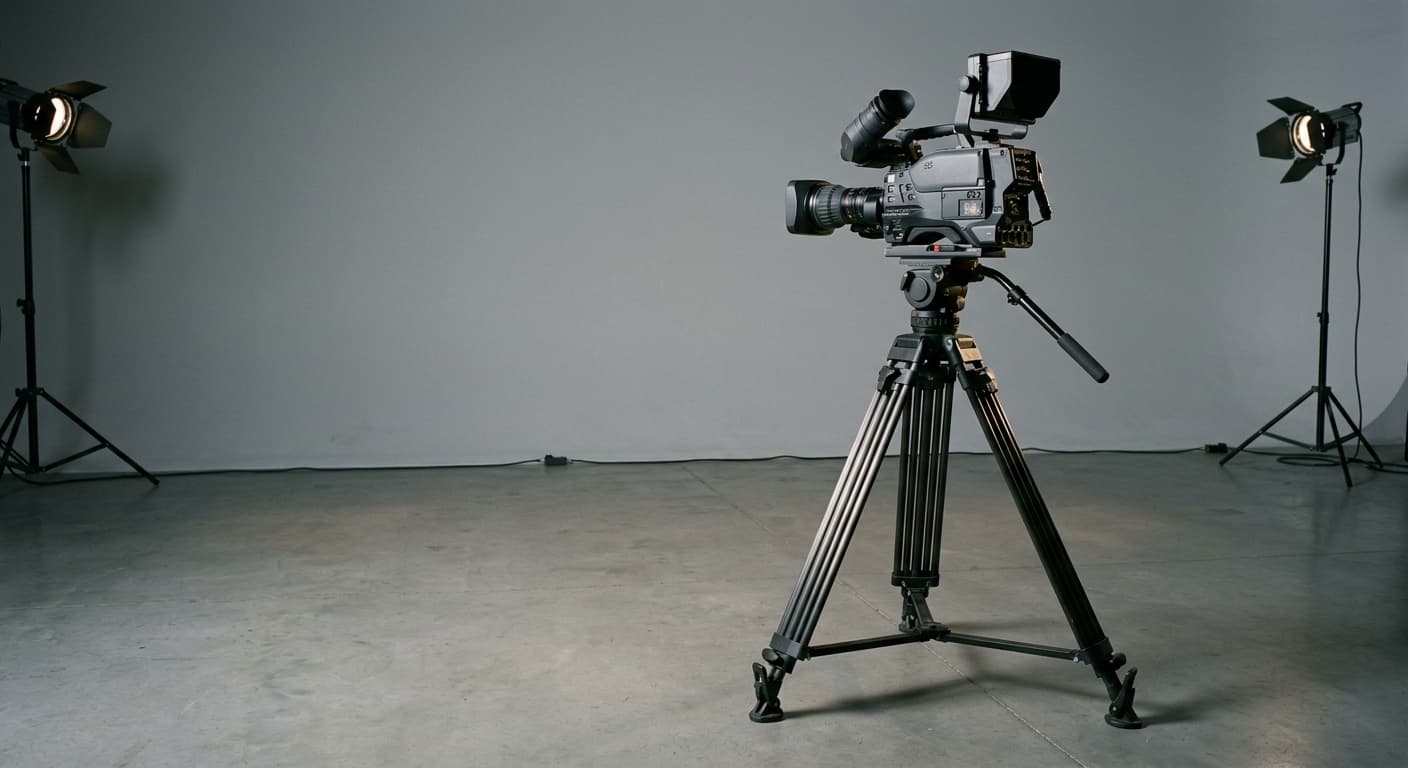
In Wisconsin, silent video recording in public spaces is legal with no general prohibition. When video also captures audio, one-party consent rules apply under Wis. Stat. 968.31. Recording intimate representations without consent in private spaces violates Wis. Stat. 942.09 and can result in felony charges.
Wisconsin does not have a single, comprehensive video recording statute. Instead, the legality of video recording depends on where you are filming, what you are capturing, and whether audio is also being recorded. Public filming is broadly protected, while recording in private spaces is governed by the state's invasion of privacy and voyeurism statutes.
This guide covers every aspect of video recording law in Wisconsin, from filming on public streets to operating security cameras on private property, so you can understand exactly what is permitted and what crosses the line.
Overview of Wisconsin Video Recording Law
No General Video Recording Statute
Unlike some states that have specific video surveillance statutes, Wisconsin does not have a single law that governs all video recording. Instead, video recording is regulated by a combination of:
- Wis. Stat. 942.08 (Invasion of privacy) which prohibits using surveillance devices to observe people in private places
- Wis. Stat. 942.09 (Representations depicting nudity) which prohibits capturing intimate images without consent
- Wis. Stat. 968.31 (Wiretapping) which governs any audio captured alongside video
- Common law privacy torts which allow civil lawsuits for unreasonable intrusion upon seclusion
- Constitutional protections including the First Amendment right to film in public
The Audio Component
When your video camera also records audio, the audio portion is subject to Wisconsin's one-party consent wiretapping law under Wis. Stat. 968.31. This means:
- You can record video with audio in any conversation you are part of
- You cannot leave a video camera running to secretly capture other people's conversations when you are not present
- In public places where there is no expectation of privacy, recording audio alongside video is generally permissible
Video Recording in Public Spaces
What You Can Film
Wisconsin has no law prohibiting video recording in public spaces. You have the right to film:
- Public streets, sidewalks, and parks. These are traditional public forums where filming is protected by the First Amendment.
- Public buildings. Government buildings that are open to the public, including the Wisconsin State Capitol, courthouses (in public areas), and city halls.
- Public events. Parades, protests, demonstrations, festivals, and other gatherings in public spaces.
- Public meetings. Under the Wisconsin Open Meetings Law (Wis. Stat. 19.81), governmental body meetings that are open to the public may be recorded.
- Anything visible from a public space. If you can see it from a public sidewalk or road, you can generally film it.
Limitations on Public Filming
Even in public, some restrictions apply:
- You cannot block traffic or obstruct pedestrians while filming. Local ordinances in cities like Milwaukee, Madison, and Green Bay may regulate where you can stand.
- You cannot trespass onto private property to get a better camera angle.
- You cannot interfere with emergency responders or law enforcement operations.
- Some public buildings restrict recording in specific areas, such as courtroom proceedings (which require judicial permission) or areas with security restrictions.
Video Recording on Private Property
Property Owner Rights
On private property, the property owner or occupant sets the rules about video recording. A business, homeowner, or landlord can:
- Prohibit filming on their premises
- Require consent before filming
- Ask you to stop filming and ask you to leave if you refuse
- Post "no filming" or "no photography" signs
If you continue filming after being asked to stop on private property, you may be trespassing under Wis. Stat. 943.13 once you are asked to leave and refuse.
When Property Owners Cannot Record
Even property owners face restrictions on where they can place cameras:
- Bathrooms and restrooms are always off limits for video recording
- Changing rooms and locker rooms cannot be recorded
- Bedrooms in rental properties cannot be monitored by landlords
- Any area where people have a reasonable expectation of privacy is protected
Invasion of Privacy: Wis. Stat. 942.08
What the Statute Prohibits
Wis. Stat. 942.08 is Wisconsin's primary invasion of privacy statute as it relates to video recording. Under this law, it is illegal to:
- Observe someone in a private place by using a surveillance device, without that person's consent
- Install a surveillance device in a private place without consent for the purpose of observing occupants
- **Photograph or record** a person in a private place without consent when the recording is made from outside the private place
A "private place" under the statute means a place where a person may reasonably expect to be safe from being observed without their knowledge and consent.
Penalties for Violation
Violating Wis. Stat. 942.08 is a Class A misdemeanor, which carries:
| Offense | Classification | Potential Penalty |
|---|---|---|
| Surveillance of a private place | Class A Misdemeanor | Up to 9 months in jail, up to $10,000 fine |
| Installing a surveillance device in a private place | Class A Misdemeanor | Up to 9 months in jail, up to $10,000 fine |
Examples of Private Places
Wisconsin courts have recognized the following as private places under the statute:
- Bathrooms and restrooms (including public restrooms)
- Bedrooms
- Hotel rooms
- Changing rooms and fitting rooms
- Locker rooms
- Doctor's examination rooms
- Any enclosed area where a person undresses
Capturing Intimate Representations: Wis. Stat. 942.09
What the Statute Prohibits
Wis. Stat. 942.09 specifically addresses capturing images of intimate body parts without consent. Under this law, it is illegal to:
- Capture a representation of a person's intimate parts when the person is in a place where they have a reasonable expectation of privacy, without that person's consent
- Capture a representation of a person's intimate parts without consent where the person reasonably expects they are not being captured. Note that upskirting itself is a separate, location-independent offense: Wis. Stat. 942.08(3) makes capturing an image under a person's outer clothing without consent a Class I felony regardless of where it happens
- Post, publish, or distribute a private representation, meaning an image the depicted person shared or allowed to be captured in confidence, without that person's consent, even if the image itself was originally captured lawfully
Penalties Based on Circumstances
Wis. Stat. 942.09 punishes two distinct pathways: distributing, possessing, or exhibiting an image that was unlawfully captured, and separately, posting a private representation the depicted person shared consensually but never agreed to have made public (the typical revenge-porn scenario). Penalties vary by pathway and by the age of the victim:
| Offense | Classification | Potential Penalty |
|---|---|---|
| Capturing intimate representation (adult victim) | Class I Felony | Up to 3.5 years prison, $10,000 fine |
| Capturing intimate representation (minor victim) | Class H Felony | Up to 6 years prison, $10,000 fine |
| Distributing, possessing, or exhibiting an unlawfully captured intimate image (adult victim) | Class I Felony | Up to 3.5 years prison, $10,000 fine |
| Distributing, possessing, or exhibiting an unlawfully captured intimate image (minor victim) | Class H Felony | Up to 6 years prison, $10,000 fine |
| Posting a private representation without the depicted person's consent (adult victim) | Class A Misdemeanor | Up to 9 months jail, $10,000 fine |
| Posting a private representation without the depicted person's consent (minor victim) | Class I Felony | Up to 3.5 years prison, $10,000 fine |
Filming Government Proceedings
Open Meetings Law
Wisconsin's Open Meetings Law (Wis. Stat. 19.81 et seq.) requires most government meetings to be open to the public. The law reflects a strong public policy that the public is entitled to the fullest and most complete information regarding the affairs of government.
You can video record:
- County board meetings
- City council and village board meetings
- School board meetings
- Committee meetings of governmental bodies
- Public hearings
- State legislative proceedings (from designated areas)
Court Proceedings
Wisconsin allows cameras in courtrooms under Wisconsin Supreme Court Rule 61.11, but only with the presiding judge's permission. Media organizations must submit a written request. Members of the public generally cannot film court proceedings without prior authorization.
Drone Video Recording

Drone operators in Wisconsin must comply with both federal FAA regulations and state privacy laws. Wisconsin has a dedicated drone surveillance statute: Wis. Stat. 942.10 makes it a Class A misdemeanor (up to 9 months jail, $10,000 fine) to use a drone with intent to photograph, record, or observe a person in a place where that person has a reasonable expectation of privacy. Drone footage that also captures audio of private conversations can additionally implicate Wis. Stat. 968.31, and footage capturing intimate images can implicate Wis. Stat. 942.09. Key considerations include:
- FAA rules require registration for drones over 0.55 pounds and prohibit flying above 400 feet in uncontrolled airspace
- Flying a drone over private property to record activities that are not visible from ground level may constitute invasion of privacy
- Some Wisconsin municipalities, including Milwaukee and Madison, have local drone ordinances
- Using a drone to record through windows or over privacy fences could lead to criminal charges
Video Recording and Consent Forms
If you are recording someone's likeness for business purposes, promotional materials, or commercial use, you should obtain proper consent. Wisconsin recognizes both common law and statutory rights related to a person's image. Getting a signed photo or video consent form protects you from later claims of unauthorized use of someone's likeness.
Using Video Recordings as Evidence
Admissibility in Wisconsin Courts
Video recordings that are lawfully obtained are generally admissible as evidence in Wisconsin courts. To use a video recording as evidence, you must:
- Authenticate the recording by having a witness testify that it accurately represents what it purports to show
- Establish that the recording has not been altered or edited in a misleading way
- Show relevance to the matter at issue
- Address any hearsay concerns if the video includes statements by parties
Illegally Obtained Video
Video recordings obtained in violation of Wisconsin's privacy statutes may be excluded from evidence. Additionally, the person who made the illegal recording may face criminal charges and civil liability. Courts weigh the probative value of the evidence against the privacy violation.
Civil Liability for Video Recording Violations
Beyond criminal penalties, victims of illegal video recording in Wisconsin can pursue civil remedies including:
- Invasion of privacy tort claims for unreasonable intrusion upon seclusion
- Intentional infliction of emotional distress claims
- Negligent infliction of emotional distress in some circumstances
- Injunctive relief to stop ongoing surveillance
- Compensatory damages for emotional harm and reputational injury
- Punitive damages in cases of particularly egregious conduct
Recent Developments
As of early 2026, Wisconsin's video recording laws remain largely unchanged:
- No comprehensive video surveillance statute has been introduced. Wisconsin continues to rely on the combination of Wis. Stat. 942.08, 942.09, and common law privacy torts.
- Body camera legislation. Wisconsin law (Wis. Stat. 165.87) requires law enforcement agencies that use body cameras to adopt written policies governing their use, including retention periods and public records requests.
- Revenge porn protections. Wisconsin's existing prohibition on non-consensual distribution of intimate images under Wis. Stat. 942.09 remains in effect, with no significant amendments.
More Wisconsin Recording Laws
Audio Recording | Video Recording | Voyeurism & Hidden Cameras | Workplace Recording | Recording Police | Phone Call Recording | Security Cameras | Recording in Public | Landlord-Tenant | Dashcam Laws | Schools | Medical Recording
Back to Wisconsin Recording Laws
More Wisconsin Recording Topics
More Wisconsin Laws
Frequently Asked Questions
Is it legal to video record someone in Wisconsin without their consent?
It depends on the location. In public spaces, you can video record anyone without consent. In private places, Wis. Stat. 942.08 prohibits using surveillance devices to observe someone without their consent. The key factor is whether the person has a reasonable expectation of privacy.
Can I film in a Wisconsin government building?
Generally yes. Wisconsin's Open Meetings Law requires most government meetings to be open to the public, and recording is typically permitted. However, courtroom filming requires the judge's permission, and some secured areas of government buildings may restrict recording.
What are the penalties for illegal video recording in Wisconsin?
Invasion of privacy under Wis. Stat. 942.08 is a Class A misdemeanor carrying up to 9 months in jail and a $10,000 fine. Capturing intimate representations under Wis. Stat. 942.09 can be a Class I felony (up to 3.5 years) or a Class H felony (up to 6 years) if the victim is a minor.
Does Wisconsin have a revenge porn law?
Yes, but the penalty depends on how the image was obtained. Distributing, possessing, or exhibiting an image that was unlawfully captured (Wis. Stat. 942.09(2)(am)3) is a Class I felony for an adult victim and a Class H felony for a minor victim. The more common revenge-porn scenario, posting a private representation the depicted person shared consensually but never consented to have posted (Wis. Stat. 942.09(3m)(a)), is a Class A misdemeanor for an adult victim, rising to a Class I felony under (3m)(am) if the victim is a minor.
Can a business record customers on video in Wisconsin?
Yes, businesses can use video surveillance in public areas of their premises such as sales floors, lobbies, and parking lots. They cannot place cameras in areas where customers have a reasonable expectation of privacy, such as restrooms, fitting rooms, or changing areas.
Updates
Rebuilt the revenge-porn penalty table and FAQ answer to distinguish two separate offenses under Wis. Stat. 942.09: distributing an unlawfully captured intimate image (Class I felony, Class H if the victim is a minor) and posting a private representation without consent, the typical revenge-porn scenario, which is a Class A misdemeanor for an adult victim and only a Class I felony (not Class H) for a minor victim.
Independently fact-checked against the cited primary sources; governing law re-checked for recent changes
Governing law re-checked for recent changes
Corrected two errors: the minor-victim penalty tier under Wis. Stat. 942.09 (capturing or distributing intimate representations) is a Class H felony (up to 6 years, $10,000 fine), not the far more severe Class C felony (up to 40 years, $100,000) the article stated in five places; and the body-camera statute citation was corrected from Wis. Stat. 175.47 (officer-involved-death investigations) to the real body-camera statute, Wis. Stat. 165.87.
Corrected the Sources box: the body-camera citation was Wis. Stat. 175.47 (officer-involved-death investigations, no body-camera content), restating the exact error the article body was already fixed to correct. Replaced with the real body-camera statute, Wis. Stat. 165.87, verified against the official Wisconsin Legislature text (written policies, retention periods, public-records access for body camera data).
Governing law re-checked for recent changes
Reviewed and approved by an editor
The Law Behind This Article
This article rests on the statutory provisions below, held in our own legal record and retrieved from the official source. Tap a section to read the operative text.
Wisconsin Statutes, Chapter 942: Crimes Against Reputation, Privacy And Civil Liberties
§ 942.08Invasion of privacy.In forcecited in 13 of our articles
(1) In this section: (a) “Nude or partially nude person” means any human being who has less than fully and opaquely covered genitals, pubic area or buttocks, any female human being who has less than a fully opaque covering over any portion of a breast below the top of the nipple, or any male human being with covered genitals in a discernibly turgid state. (b) “Private place” means a place where a person may reasonably expect to be safe from being observed without his or her knowledge and consent. (c) “Surveillance device” means any device, instrument, apparatus, implement, mechanism or contrivance used, designed to be used to observe, or capable of observing, the activities of a person. “Surveillance device” includes a peephole. (2) Except as provided in sub. (4), whoever does any of the following is guilty of a Class A misdemeanor: (a) Knowingly installs a surveillance device in any private place, or uses a surveillance device to observe in a private place, with the intent to observe any nude or partially nude person without the consent of the person observed.
Official text (excerpt) · last checked 2026-08-31 · Read the full text in our law library · Verify at docs.legis.wisconsin.gov
Cited in 7 court opinions in our collectionLatest citing opinion in our collection: 2026
In the courts (editorial summary, independently checked):Wisconsin courts have applied Wis. Stat. 942.08 to hidden surveillance of nudity. Gillund v. Meridian Mutual Insurance (2009) concluded that secretly videotaping a houseguest violated 942.08(2) and that, unlike the civil privacy statute, it requires specific intent. State v. Jahnke (2008) described 942.08 as addressing live viewing.
Opinions citing this section in our collection:
- Gillund v. Meridian Mutual Insurance (Court of Appeals of Wisconsin 2009, 323 Wis. 2d 1)✓An uncle secretly videotaped his niece undressed in his home; applying Wis. Stat. 942.08(2) (1999-2000), the court held his admitted conduct violated the criminal invasion of privacy statute even though he was never convicted, so the penal-law exclusion barred coverage.
- State v. Culver (Court of Appeals of Wisconsin 2018, 384 Wis. 2d 222)✓Convicted of posting nude photos of a woman online, Culver attacked the definition of "nude or partially nude person" that the post-or-publish statute borrows from Wis. Stat. 942.08(1)(a); the court declined to analyze it in detail and said it reasonably tracked common usage.
- State v. Jahnke (Court of Appeals of Wisconsin 2008, 316 Wis. 2d 324)“…nces. As the State points out, at least one other statute, Wis. Stat. § 942.08 , our "Peeping Tom" law, addresses live…”
Identified automatically from the court opinions citing this section — not a ranking of which case controls.
§ 942.09Representations depicting nudity.In forcecited in 13 of our articles
(1) In this section: (a) “Captures a representation” means takes a photograph, makes a motion picture, videotape, recording, or other visual or audio representation, or records or stores in any medium data that represents a visual image. (ae) “Consent” means words or overt actions by a person who is competent to give informed consent indicating a freely given agreement to the act. A person who has not attained the age of 18 is incapable of consent. The following persons are presumed incapable of consent but the presumption may be rebutted by competent evidence, subject to the provisions of s. 972.11 (2): 1. A person suffering from a mental illness or defect that impairs capacity to appraise personal conduct. 2. A person who is unconscious or for any other reason is physically unable to communicate unwillingness to an act. (ag) “Intimate representation” means any of the following: 1. A representation of a nude or partially nude person. 2. A representation of clothed, covered, or partially clothed or covered genitalia or buttock that is not otherwise visible to the public. 3. A representation of a person urinating, defecating, or using a feminine hygiene product. 4.
Official text (excerpt) · last checked 2026-08-30 · Read the full text in our law library · Verify at docs.legis.wisconsin.gov
Cited in 12 court opinions in our collectionLatest citing opinion in our collection: 2025
In the courts (editorial summary, independently checked):State v. Nelson (2006) gave "reasonable expectation of privacy" in Wis. Stat. 942.09 its ordinary meaning, not the Fourth Amendment test. State v. Jahnke (2008) called that incomplete: the test is whether one reasonably expected not to be recorded nude. State v. Culver (2018) upheld the post-or-publish ban against overbreadth.
Opinions citing this section in our collection:
- State v. Nelson (Court of Appeals of Wisconsin 2006, 294 Wis. 2d 578)✓Nelson secretly videotaped neighbors through their bathroom window from next door. Affirming his 942.09(2)(a) conviction, the court held "reasonable expectation of privacy" has its ordinary meaning under an objective reasonable-person test, not Fourth Amendment case law.
- State v. Culver (Court of Appeals of Wisconsin 2018, 384 Wis. 2d 222)✓Culver posted nude photos of a woman online without her consent and pleaded guilty under 942.09(3m)(a)2. The court rejected his overbreadth and vagueness attacks on the post-or-publish statute, found he lacked standing to raise a Commerce Clause claim, and affirmed.
- State v. Chagnon (Court of Appeals of Wisconsin 2015, 364 Wis. 2d 719)✓Chagnon, a registered sex offender, cut 189 photos of clothed girls out of magazines and pasted them into a notebook. The court held that 942.09(1)(a)'s definition of "captures a representation" does not reach that conduct, and reversed the refusal to dismiss 23 counts.
Identified automatically from the court opinions citing this section — not a ranking of which case controls.
§ 942.10Use of a drone.In forcecited in 5 of our articles
Whoever uses a drone, as defined in s. 175.55 (1) (a), with the intent to photograph, record, or otherwise observe another individual in a place or location where the individual has a reasonable expectation of privacy is guilty of Class A misdemeanor. This section does not apply to a law enforcement officer authorized to use a drone pursuant to s. 175.55 (2).
Official text (excerpt) · last checked 2026-08-31 · Read the full text in our law library · Verify at docs.legis.wisconsin.gov
Wisconsin Statutes, Chapter 165: Department Of Justice
§ 165.87Body cameras and law enforcement.In forcecited in 7 of our articles
(1) If a law enforcement agency uses a body camera on a law enforcement officer, the law enforcement agency shall do all of the following: (a) Administer a written policy regarding all of the following: 1. The use, maintenance, and storage of body cameras and data recorded by the body cameras. 2. Any limitations the law enforcement agency imposes on which law enforcement officers may wear a body camera. 3. Any limitations the law enforcement agency imposes on situations, persons, or encounters that may be recorded by a body camera. (b) Train all law enforcement officers wearing a body camera on the policy under par. (a) and on the requirements under sub. (2). (c) Train all employees that use, maintain, store, or release data from a body camera on the policy under par. (a) and on the requirements under subs. (2) and (3). (d) Periodically review practices regarding the body cameras and data from body cameras to ensure compliance with the policy under par. (a) and the requirements under subs. (2) and (3). (e) If the law enforcement agency maintains an Internet site or has an Internet site maintained on its behalf, make the policy under par.
Official text (excerpt) · last checked 2026-08-31 · Read the full text in our law library · Verify at docs.legis.wisconsin.gov
Cited in 1 court opinions in our collectionLatest citing opinion in our collection: 2022
Opinions citing this section in our collection:
- Pressley v. City of South Milwaukee (District Court, E.D. Wisconsin 2022)“…3. The plaintiff argues that the defendants have relied on Wis. Stat. §165.87(3)(c) to avoid giving him the body came…”
Identified automatically from the court opinions citing this section — not a ranking of which case controls.
Wisconsin Statutes, Chapter 19: General Duties Of Public Officials
§ 19.81Declaration of policy.In forcecited in 3 of our articles
(1) In recognition of the fact that a representative government of the American type is dependent upon an informed electorate, it is declared to be the policy of this state that the public is entitled to the fullest and most complete information regarding the affairs of government as is compatible with the conduct of governmental business. (2) To implement and ensure the public policy herein expressed, all meetings of all state and local governmental bodies shall be publicly held in places reasonably accessible to members of the public and shall be open to all citizens at all times unless otherwise expressly provided by law. (3) In conformance with article IV, section 10, of the constitution, which states that the doors of each house shall remain open, except when the public welfare requires secrecy, it is declared to be the intent of the legislature to comply to the fullest extent with this subchapter.
Official text (excerpt) · last checked 2026-07-29 · Read the full text in our law library · Verify at docs.legis.wisconsin.gov
Wisconsin Statutes, Chapter 943: Crimes Against Property
§ 943.13Trespass to land.In forcecited in 3 of our articles
(1e) In this section: (aL) “Carry” has the meaning given in s. 175.60 (1) (ag). (ar) “Dwelling unit” means a structure or that part of a structure which is used or intended to be used as a home, residence or sleeping place by one person or by 2 or more persons maintaining a common household, to the exclusion of all others. (az) “Implied consent” means conduct or words or both that imply that an owner or occupant of land has given consent to another person to enter the land. (b) “Inholding” means a parcel of land that is private property and that is surrounded completely by land owned by the United States, by this state or by a local governmental unit or any combination of the United States, this state and a local governmental unit. (bm) “Licensee” means a licensee, as defined in s. 175.60 (1) (d), or an out-of-state licensee, as defined in s. 175.60 (1) (g). (c) “Local governmental unit” means a political subdivision of this state, a special purpose district in this state, an instrumentality or corporation of the political subdivision or special purpose district or a combination or subunit of any of the foregoing.
Official text (excerpt) · last checked 2026-07-29 · Read the full text in our law library · Verify at docs.legis.wisconsin.gov
Cited in 8 court opinions in our collectionLatest citing opinion in our collection: 2022
Opinions citing this section in our collection:
- Vincent Milewski v. Town of Dover (Wisconsin Supreme Court 2017)“…they enter a home without consent. See Wis. Stat. § 943.13(4m)(am)4. (no trespass e…”
- Danelle Duncan v. Asset Recovery Specialists, Inc. (Wisconsin Supreme Court 2022, 400 Wis. 2d 1)“…rs.[9] The court also considered part of the criminal code, Wis. Stat. § 943.13, "Trespass to Land," that defines "dwel…”
- Jacque v. Steenberg Homes, Inc. (Wisconsin Supreme Court 1997, 209 Wis. 2d 605)“…lfpenny, and the possibility of a Class B forfeiture under Wis. Stat. § 943.13 . We conclude that both the private lan…”
Identified automatically from the court opinions citing this section — not a ranking of which case controls.
Wisconsin Statutes, Chapter 968: Commencement Of Criminal Proceedings
§ 968.31Interception and disclosure of wire, electronic or oral communications prohibited.In forcecited in 22 of our articles
(1) Except as otherwise specifically provided in ss. 196.63 or 968.28 to 968.30, whoever commits any of the acts enumerated in this section is guilty of a Class H felony: (a) Intentionally intercepts, attempts to intercept or procures any other person to intercept or attempt to intercept, any wire, electronic or oral communication. (b) Intentionally uses, attempts to use or procures any other person to use or attempt to use any electronic, mechanical or other device to intercept any oral communication. (c) Discloses, or attempts to disclose, to any other person the contents of any wire, electronic or oral communication, knowing or having reason to know that the information was obtained through the interception of a wire, electronic or oral communication in violation of this section or under circumstances constituting violation of this section. (d) Uses, or attempts to use, the contents of any wire, electronic or oral communication, knowing or having reason to know that the information was obtained through the interception of a wire, electronic or oral communication in violation of this section or under circumstances constituting violation of this section.
Official text (excerpt) · last checked 2026-08-31 · Read the full text in our law library · Verify at docs.legis.wisconsin.gov
Cited in 23 court opinions in our collectionLatest citing opinion in our collection: 2026
In the courts (editorial summary, independently checked):State v. Maloney held recordings made with one party's prior consent fall under Section 968.31(2)(b) and (c), and that aiding a police sting is not an "injurious act." State v. Gilmore pointed to 968.31(2m) damages and 968.31(1)(e) penalties, reserving suppression for illegal interceptions.
Opinions citing this section in our collection:
- State v. Maloney (Wisconsin Supreme Court 2005, 281 Wis. 2d 595)✓A homicide suspect's girlfriend let police record her hotel room conversations with him in Las Vegas; the court held the videotapes lawful under 968.31(2)(b) and (c) because she was a consenting party, and that helping a lawful sting is not an injurious act.
- State v. Popenhagen (Wisconsin Supreme Court 2008, 309 Wis. 2d 601)“…Arnold, 51 Wis.2d at 442 , 187 N.W.2d 354 (citing Wis. Stat. § 968.31 (2)(b)). However, in considering all th…”
- State v. Gilmore (Wisconsin Supreme Court 1996, 201 Wis. 2d 820)✓Prosecutors filed a public complaint quoting 27 pages of lawfully wiretapped calls; the court held the unsealed filing violated the surveillance law but refused suppression, pointing to the civil action in 968.31(2m) and the criminal penalty in 968.31(1)(e) as the remedies.
Identified automatically from the court opinions citing this section — not a ranking of which case controls.
United States Code Title 18
§ 2511Interception and disclosure of wire, oral, or electronic communications prohibitedIn forcecited in 418 of our articles
Except as otherwise specifically provided in this chapter any person who— intentionally intercepts, endeavors to intercept, or procures any other person to intercept or endeavor to intercept, any wire, oral, or electronic communication; intentionally uses, endeavors to use, or procures any other person to use or endeavor to use any electronic, mechanical, or other device to intercept any oral communication when— such device is affixed to, or otherwise transmits a signal through, a wire, cable, or other like connection used in wire communication; or such device transmits communications by radio, or interferes with the transmission of such communication; or such person knows, or has reason to know, that such device or any component thereof has been sent through the mail or transported in interstate or foreign commerce; or such use or endeavor to use (A) takes place on the premises of any business or other commercial establishment the operations of which affect interstate or foreign commerce; or (B) obtains or is for the purpose of obtaining information relating to the operations of any business or other commercial establishment the operations of which affect interstate or foreign…
Official text (excerpt) · last checked 2026-08-28 · Read the full text in our law library · Verify at uscode.house.gov
Cited in 2,045 court opinions in our collectionLatest citing opinion in our collection: 2026
In the courts (editorial summary, independently checked):Griggs-Ryan v. Smith (1990) applied the Section 2511(2)(d) prior-consent exception, treating a tenant repeatedly told that all incoming calls were taped as having impliedly consented. United States v. United States District Court (1972) read the then-current Section 2511(3) as conferring no presidential surveillance power.
Opinions citing this section in our collection:
- Mitchell v. Forsyth (Supreme Court of the United States 1985, 472 U.S. 511)✓The Attorney General authorized a warrantless 1970 national security wiretap that caught the plaintiff's calls; the Court held the since-repealed Section 2511(3) disclaimer left the tap lawful under Title III, and that Mitchell had qualified immunity.
- United States v. United States District Court for the Eastern District of Michigan (Supreme Court of the United States 1972, 407 U.S. 297)✓The Attorney General approved warrantless wiretaps on members of a domestic group accused of bombing a CIA office; the Court read Section 2511(3) as a congressional disclaimer conferring no surveillance power, then held the Fourth Amendment required prior judicial approval.
- Forsyth v. Barr (Court of Appeals for the Fifth Circuit 1994, 19 F.3d 1527)✓Dallas police used, in an internal affairs probe of an officer, calls private parties allegedly intercepted illegally; assuming that was unlawful, the Fifth Circuit held Section 2517(1) and (2) allowed the disclosure and use, defeating the Section 2511(1)(c) and (d) claims.
Identified automatically from the court opinions citing this section — not a ranking of which case controls.
Search our full record of US law — 2.1 million sections, every state + federal →
Sources and References
- Wis. Stat. 942.08 - Invasion of Privacy(docs.legis.wisconsin.gov).gov
- Wis. Stat. 942.09 - Representations Depicting Nudity(docs.legis.wisconsin.gov).gov
- Wis. Stat. 968.31 - Interception and Disclosure(docs.legis.wisconsin.gov).gov
- Wis. Stat. 19.81 - Open Meetings Law(docs.legis.wisconsin.gov).gov
- Wis. Stat. 165.87 - Body Cameras(docs.legis.wisconsin.gov).gov
- Wisconsin State Law Library - Wiretapping(wilawlibrary.gov).gov
- FAA - Drone Rules(faa.gov).gov
- 18 U.S.C. 2511 - Federal Wiretap Act(law.cornell.edu)
- Wis. Stat. 942.10 - Drone Surveillance (Class A misdemeanor)(docs.legis.wisconsin.gov).gov