
Tennessee
Tennessee School Recording Laws: Student, Parent, and Teacher Rights
Independently fact-checked against primary sources (last audited August 15, 2026). · Reviewed by the RecordingLaw editorial team. · Law checked current as of August 9, 2026. · 5 primary sources cited on this page. How we verify our legal content

Under Tennessee's one-party consent law (Tenn. Code Ann. section 39-13-601), students, parents, and teachers may record any school conversation they participate in without notifying the other party. School districts may restrict recording through campus policy, and FERPA governs how recordings containing student education records can be shared.
Recording in Tennessee schools involves a complex intersection of state wiretapping law, school district policies, federal student privacy laws, and practical concerns about campus safety. Tennessee's one-party consent rule technically allows participants to record their own conversations, but school administrators have broad authority to regulate recording on campus.
This guide covers the recording rights and restrictions that apply to students, parents, teachers, and school administrators in Tennessee.
Tennessee Law and School Recording
The One-Party Consent Foundation
Under Tenn. Code Ann. section 39-13-601, Tennessee follows a one-party consent rule for recording conversations. In a school context, this means:
- A student can legally record a conversation they are participating in with a teacher, administrator, or other student
- A parent can record meetings they attend with school officials
- A teacher can record conversations they participate in with students, parents, or administrators
The state law does not carve out an exception for schools. The one-party consent rule applies everywhere in Tennessee.
School District Authority
While state law permits one-party consent recording, school districts have the authority to establish campus rules that restrict recording. These policies are grounded in the school's responsibility to:
- Maintain an orderly educational environment
- Protect student privacy
- Prevent disruption of classroom instruction
- Comply with federal student privacy laws
- Ensure campus safety
Violating a school recording policy is not a crime, but it can result in:
- Student disciplinary action, including suspension
- Teacher disciplinary action, including written reprimands or termination proceedings
- Removal from school property for parents or visitors
- Confiscation of recording devices during school hours (for students)
Student Recording Rights

In the Classroom
Students in Tennessee have the legal right under state law to record classroom instruction and conversations they participate in. However, school district policies typically restrict this right. Common restrictions include:
- Requiring teacher permission before recording lectures or class discussions
- Prohibiting recording of other students without consent
- Restricting phone and device use during class time
- Banning recording in certain sensitive settings
Students who need to record classes for academic purposes, such as students with disabilities, may have recording rights established through formal accommodations.
Disability Accommodations
Students with documented disabilities may have the right to record classroom instruction as a reasonable accommodation under:
- Section 504 of the Rehabilitation Act (29 U.S.C. section 794), which prohibits disability discrimination in programs receiving federal funding
- The Individuals with Disabilities Education Act (IDEA) (20 U.S.C. section 1400 et seq.), which provides rights for students with disabilities in public schools
- The Americans with Disabilities Act (ADA) (42 U.S.C. section 12101), which provides broad disability protections
If recording is included in a student's Individualized Education Program (IEP) or 504 plan, the school must allow it regardless of general campus recording policies.
Recording Bullying and Harassment
Students who experience bullying or harassment may want to record incidents for evidence. Tennessee's one-party consent law allows a student to record a conversation in which they are being bullied, as long as they are a participant. This recording could be used:
- To report the incident to school administrators
- As evidence in a formal bullying complaint
- To support a legal claim if the school fails to act
- To document a pattern of behavior over time
Tennessee's anti-bullying statute (Tenn. Code Ann. section 49-6-4503) requires schools to have policies addressing bullying and to investigate reported incidents. A recording can strengthen a student's report.
Parent Recording Rights

IEP Meetings and Special Education Conferences
Parents have the right to record IEP meetings and other special education proceedings in Tennessee. This right is supported by:
- Tennessee's one-party consent law, which allows any participant to record
- Federal guidance from the U.S. Department of Education indicating that parent recording of IEP meetings should not be prohibited unless the state or district has a specific policy addressing it and provides an alternative means of ensuring parental participation
Even if a school district has a general no-recording policy, courts and federal agencies have recognized that IEP meetings involve critical parental rights that may warrant recording. Parents of children with disabilities should:
- Notify the school in advance if they plan to record (recommended, though not legally required under state law)
- Be prepared for the school to also record the meeting
- Understand that the school may have its own policy requiring advance notice
- Keep the recording for personal records and potential dispute resolution
Parent-Teacher Conferences
Parents can record parent-teacher conferences they attend under Tennessee's one-party consent law. Recording these meetings can help:
- Document what was discussed about the child's academic performance
- Preserve recommendations from teachers
- Maintain accurate records of commitments made by school officials
- Provide evidence if a dispute later arises about what was agreed upon
Disciplinary Hearings
When a student faces disciplinary action, parents who attend the hearing can record the proceedings. This can be particularly valuable when:
- The student faces suspension or expulsion
- There are factual disputes about what the student did
- Due process concerns arise during the hearing
- The parent wants to preserve the record for a potential appeal
Teacher and Staff Recording Rights
Recording in the Classroom
Teachers in Tennessee can record their own classroom instruction and conversations they participate in under the one-party consent law. Some teachers record lectures for:
- Students who were absent
- Online or hybrid learning purposes
- Self-improvement and professional development
- Documentation of classroom incidents
However, teachers must follow their school district's recording policies. Districts may require:
- Administrative approval for classroom recording
- FERPA compliance measures for recordings that include student information
- Specific storage and access controls for recorded material
- Notification to parents when classroom recording occurs
Recording for Professional Protection
Teachers sometimes record interactions with administrators, parents, or students to protect themselves in disputes. Under state law, this is legal if the teacher is a participant. However, district policies may restrict recording, and violating those policies can lead to employment consequences.
School Security Cameras
Where Schools Can Place Cameras
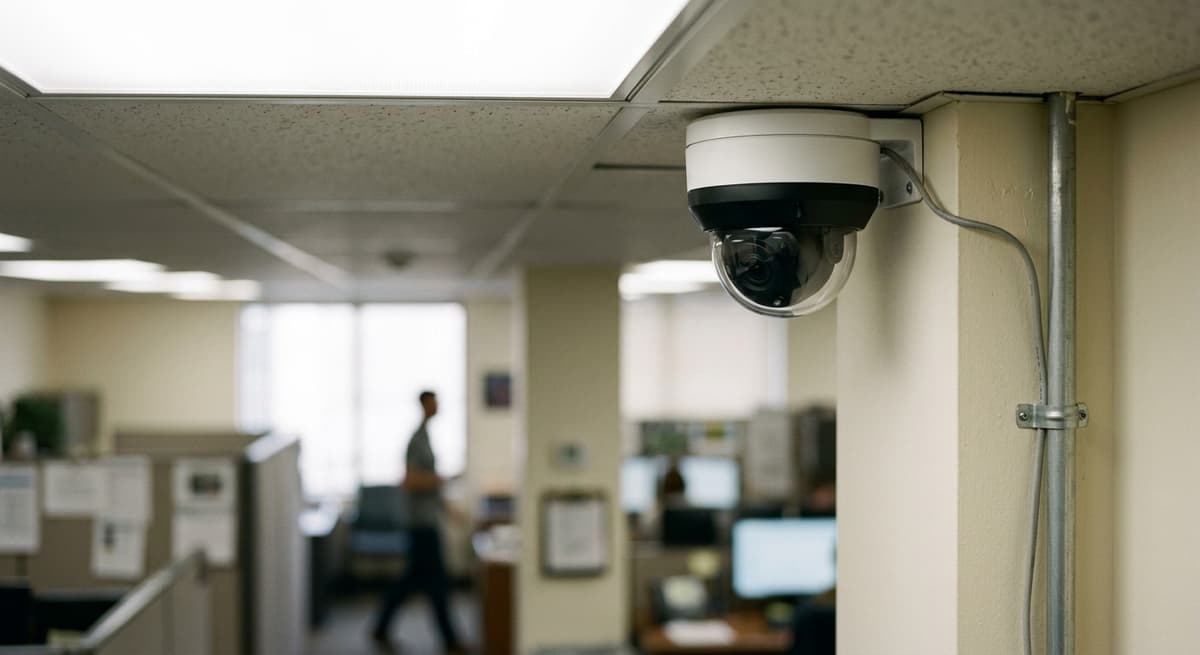
Tennessee school districts can install security cameras throughout campus for safety purposes. Common camera locations include:
- Hallways and corridors throughout school buildings
- Cafeterias and lunch areas
- Gymnasiums and auditoriums (common areas, not changing rooms)
- Parking lots and drop-off areas
- Building entrances and exits
- School bus interiors for student safety
- Playgrounds and outdoor common areas
- Administrative offices and reception areas
Where Cameras Are Prohibited
Cameras cannot be placed in:
- Student restrooms and bathrooms
- Locker rooms and changing areas
- Nurse's offices where students may undress for examination
- Any location where students have a reasonable expectation of bodily privacy
Placing cameras in these locations would violate Tennessee's unlawful photography statute (Tenn. Code Ann. section 39-13-605) and could constitute a crime.
School Bus Cameras
Tennessee allows and encourages video cameras on school buses. These cameras help:
- Monitor student behavior and safety during transport
- Document incidents for disciplinary proceedings
- Provide evidence in accident investigations
- Deter bullying and misconduct on buses
Audio recording on school buses is subject to the one-party consent rule. Some districts install cameras with audio capability while others limit recording to video only.
FERPA and Student Privacy
What FERPA Requires
The Family Educational Rights and Privacy Act (FERPA) is a federal law that protects student education records. FERPA affects school recording in several ways:
- Recordings that become part of a student's education record are subject to FERPA protections
- Schools cannot share recordings containing students' personally identifiable information without parental consent (with limited exceptions)
- Parents have the right to inspect education records, which may include recordings maintained by the school
- Security camera footage that is maintained by a school's law enforcement unit may be exempt from FERPA
When Recordings Become Education Records
Not all recordings made in a school setting are education records under FERPA. A recording becomes an education record when it is:
- Directly related to a student
- Maintained by the school or by a party acting on behalf of the school
A parent's personal recording of an IEP meeting is not a FERPA-protected education record. However, a school's official recording of the same meeting, if maintained in the student's file, would be.
Sharing Recordings
If you record an incident at school that captures other students, be cautious about sharing the recording publicly. While your right to record under Tennessee law is clear, sharing a recording that reveals other students' educational or disciplinary information could implicate FERPA (for the school) or raise privacy concerns.
Tennessee Recording Laws by Topic
Phone Call Recording | Audio Recording | Video Recording | Workplace Recording | Recording Police | Security Cameras | Recording in Public | Landlord-Tenant | Dashcam Laws | Schools | Medical Recording | Voyeurism & Hidden Cameras
Back to Tennessee Recording Laws
More Tennessee Recording Topics
More Tennessee Laws
Frequently Asked Questions
Can students record in school in Tennessee?
Under Tennessee's one-party consent law, students can legally record conversations they participate in. However, school districts typically have policies restricting recording on campus, and violating these policies can result in disciplinary action. Students with disabilities may have recording rights through IEP or 504 accommodations.
Can parents record IEP meetings in Tennessee?
Yes. Parents can record IEP meetings they attend under Tennessee's one-party consent law. Federal guidance from the U.S. Department of Education also supports parent recording rights at IEP meetings. Notifying the school in advance is recommended as a best practice.
Can schools install security cameras in Tennessee?
Yes. Schools can install security cameras in hallways, cafeterias, parking lots, entrances, and other common areas. Cameras cannot be placed in restrooms, locker rooms, changing areas, or any location where students have a reasonable expectation of bodily privacy.
Can a teacher record students in the classroom in Tennessee?
Under state law, a teacher who is participating in a classroom conversation can record it. However, teachers must follow their school district's policies on recording, and any recordings containing student information must comply with FERPA requirements.
Can my child record a bullying incident at school in Tennessee?
Yes. Tennessee's one-party consent law allows your child to record a conversation in which they are being bullied. This recording can serve as evidence when reporting the incident to school administrators. However, the school may have its own recording policy that could result in separate consequences.
Updates
Independently fact-checked against the cited primary sources
Governing law re-checked for recent changes
Corrected the citation for Tennessee's anti-bullying statute from Tenn. Code Ann. section 49-6-1016 (which actually covers noncompulsory elementary-school gun safety classes) to the correct section, 49-6-4503, which requires school districts to adopt bullying policies and investigate reports.
Replaced a dead tn.gov PDF link for the anti-bullying statute (Tenn. Code Ann. section 49-6-4503) with a live Tennessee Department of Education page, in both the article text and the Sources box.
Governing law re-checked for recent changes
Reviewed and approved by an editor
The Law Behind This Article
This article rests on the statutory provisions below, held in our own legal record and retrieved from the official source. Tap a section to read the operative text.
Tennessee Code Annotated
§ 39-13-601Wiretapping and electronic surveillance — Prohibited acts — Exceptions.In forcecited in 20 of our articles
(a)(1) Except as otherwise specifically provided in §§ 39-13-601 — [former] 39-13-603 [repealed] and title 40, chapter 6, part 3, a person commits an offense who: (A) Intentionally intercepts, endeavors to intercept, or procures any other person to intercept or endeavor to intercept, any wire, oral
Official text (excerpt) · last checked 2026-08-31 · Read the full text in our law library · Verify at publications.tnsosfiles.com
Cited in 25 court opinions in our collectionLatest citing opinion in our collection: 2026
In the courts (editorial summary, independently checked):Lawrence v. Lawrence held a parent may vicariously consent under Section 39-13-601 to recording a 2 1/2-year-old child's phone call with the other parent. State of Tennessee v. Henry Floyd Sanders noted that a body-wire recording made with one party's consent is lawful under the section's exceptions.
Opinions citing this section in our collection:
- Lawrence v. Lawrence (Court of Appeals of Tennessee 2010, 360 S.W.3d 416)“…called upon to construe the term “consent” as it is used in Tenn. Code Ann. § 39-13-601 to determine whether Mother had an “unr…”
- Harold Dean McDaniel v. Kimberly Ruth McDaniel (Court of Appeals of Tennessee 2010)“…ourt: I have had an opportunity to look at T.C.A. 39-13-601(a)(1), (A) and (B), and…”
- State of Tennessee v. Henry Floyd Sanders (Tennessee Supreme Court 2014, 452 S.W.3d 300)✓Police recorded a front yard conversation in which a man admitted touching his ex-partner's daughter; the court upheld admission of the recording as a voluntary statement to a confidante and noted that this type of recording is sanctioned as lawful by 39-13-601(b)(4)-(5).
Identified automatically from the court opinions citing this section — not a ranking of which case controls.
Also relied on in: Tennessee Recording Laws (2026): One-Party Consent Rules, Tennessee Voyeurism and Hidden Camera Laws: Statutes and Penalties, Tennessee Audio Recording Laws: One-Party Consent Rules and Penalties
§ 39-13-605Unlawful photographing in violation of privacy.In forcecited in 10 of our articles
(a) It is an offense for a person to knowingly photograph, or cause to be photographed an individual, when the individual has a reasonable expectation of privacy, without the prior effective consent of the individual, or in the case of a minor, without the prior effective consent of the minor's…
Official text (excerpt) · last checked 2021-05-21 · Read the full text in our law library
Cited in 14 court opinions in our collectionLatest citing opinion in our collection: 2026
In the courts (editorial summary, independently checked):State of Tennessee v. David Eric Lambert (2020) reversed a conviction under the pre-2018 version of section 39-13-605 because a fully clothed shopper in public had no reasonable expectation of privacy. State of Tennessee v. Brandon Robert Vandenburg (2019) rejected a vagueness challenge to the same element.
Opinions citing this section in our collection:
- State of Tennessee v. Thomas Whited (Tennessee Supreme Court 2016, 506 S.W.3d 416)✓A father hid a phone to video his twelve-year-old daughter and her friend undressing; the court noted the evidence would have supported unlawful photography under section 39-13-605, but charges were dropped because the statute excepts photographing a minor with parental consent.
- State of Tennessee v. David Eric Lambert (Court of Criminal Appeals of Tennessee 2020)✓A man followed a fully clothed woman through a Walmart and aimed his phone at her, but no image was ever found; the court held section 39-13-605 was not satisfied because she had no reasonable expectation of privacy and no photograph existed to judge, and reversed the conviction.
- State of Tennessee v. Brandon Robert Vandenburg (Court of Criminal Appeals of Tennessee 2019)✓A student photographed and filmed an unconscious, intoxicated woman as she was sexually assaulted in his dorm, then sent the files to a friend; the court upheld his felony conviction under section 39-13-605 and rejected his claim that the statute was unconstitutionally vague.
Identified automatically from the court opinions citing this section — not a ranking of which case controls.
Also relied on in: Tennessee Landlord-Tenant Recording Laws: Rights and Restrictions, Tennessee Security Camera Laws: Home, Business, and HOA Rules, Tennessee Video Recording Laws: What Is Legal and What Is Not
§ 49-6-4503Adoption of policy prohibiting harassment, intimidation, bullying or cyber-bullying by the school district.In force
(a) Each school district shall adopt a policy prohibiting harassment, intimidation, bullying or cyber-bullying. School districts are encouraged to develop the policy after consultation with parents and guardians, school employees, volunteers, students, administrators and community…
Official text (excerpt) · last checked 2021-05-21 · Read the full text in our law library
United States Code Title 29
§ 794Nondiscrimination under Federal grants and programsIn force
No otherwise qualified individual with a disability in the United States, as defined in section 705(20) of this title, shall, solely by reason of her or his disability, be excluded from the participation in, be denied the benefits of, or be subjected to discrimination under any program or activity receiving Federal financial assistance or under any program or activity conducted by any Executive agency or by the United States Postal Service. The head of each such agency shall promulgate such regulations as may be necessary to carry out the amendments to this section made by the Rehabilitation, Comprehensive Services, and Developmental Disabilities Act of 1978. Copies of any proposed regulation shall be submitted to appropriate authorizing committees of the Congress, and such regulation may take effect no earlier than the thirtieth day after the date on which such regulation is so submitted to such committees.
Official text (excerpt) · last checked 2026-07-28 · Read the full text in our law library · Verify at uscode.house.gov
Cited in 9,423 court opinions in our collectionLatest citing opinion in our collection: 2026
Opinions citing this section in our collection:
- Pennhurst State School and Hospital v. Halderman (Supreme Court of the United States 1984, 465 U.S. 89)“…504 of the Rehabilitation Act of 1973, 87 Stat. 394 , 29 U. S. C. § 794 , and the Pennsylvania Mental Health an…”
- Fowler v. UPMC SHADYSIDE (Court of Appeals for the Third Circuit 2009, 578 F.3d 203)“…Fowler alleges violations of the Rehabilitation Act, 29 U.S.C. § 794 et seq. 2 Congress passed…”
- Harris v. Mills (Court of Appeals for the Second Circuit 2009)“…S.C. § 12131 et seq., the 31 Rehabilitation Act of 1973, 29 U.S.C. § 794 et seq., and 42…”
Identified automatically from the court opinions citing this section — not a ranking of which case controls.
Search our full record of US law — 2.1 million sections, every state + federal →
Sources and References
- Tenn. Code Ann. section 39-13-601 - Wiretapping and Electronic Surveillance(law.justia.com)
- Tenn. Code Ann. section 49-6-4503 - Anti-Bullying Policy(tn.gov).gov
- FERPA - Student Privacy Policy Office(studentprivacy.ed.gov).gov
- Individuals with Disabilities Education Act (IDEA)(sites.ed.gov).gov
- Americans with Disabilities Act(ada.gov).gov
- U.S. Department of Education(ed.gov).gov
- Tenn. Code Ann. section 39-13-605 - Unlawful Photography(law.justia.com)
- Section 504 of the Rehabilitation Act(law.cornell.edu)