Indiana Phone Call Recording Laws: One-Party Consent Rules Explained
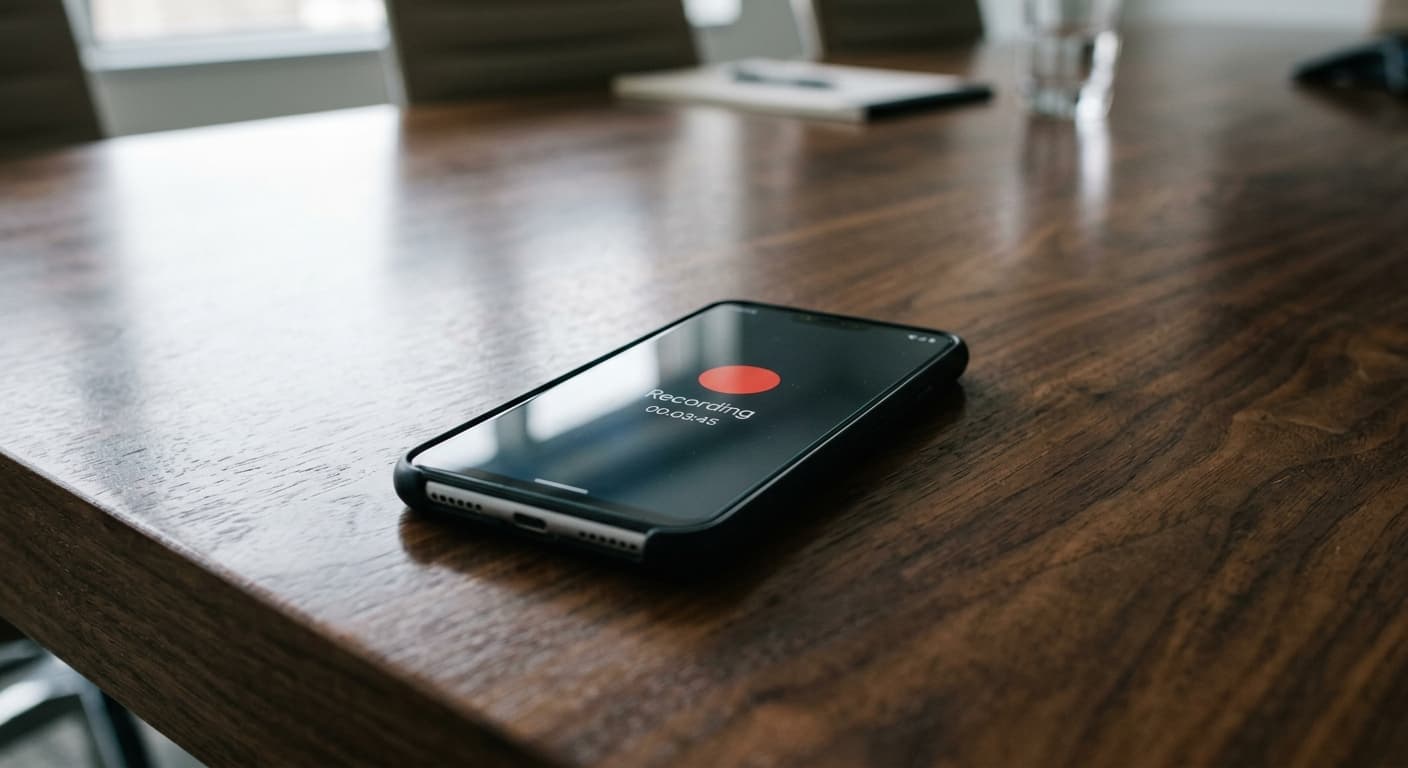
Indiana law gives you broad rights to record your own phone calls. Under IC 35-33.5-5, Indiana follows one-party consent for recording wire and electronic communications. If you are a party to a phone call, you can record it without informing or getting permission from anyone else on the line.
This guide covers everything you need to know about recording phone calls in Indiana, including personal calls, business calls, VoIP and video conference audio, interstate call complications, and the penalties for illegal call recording.
Indiana's One-Party Consent Rule for Phone Calls
The Legal Basis
Two key Indiana statutes govern phone call [recording. IC 35-33.5-5-5 prohibits the intentional interception of wire or electronic communications without consent](/us-laws/is-it-illegal-to-record-someone). The statute then provides the critical one-party consent exception: recording is legal when done by a party to the communication or with the consent of at least one party.
The definition of "interception" under IC 35-31.5-2-176 further clarifies the law. Interception means the intentional recording or acquisition of the contents of an electronic communication by a person other than the sender or receiver, without consent from either party. If you are the sender or receiver, your own recording is not "interception" at all under this definition.
This means phone call recording is legal in Indiana when:
- You are on the call. Your own participation satisfies the consent requirement.
- Someone on the call authorized you to record. A participant can give you prior consent to record, even if you are not directly on the line.
What Types of Calls Are Covered
Indiana's one-party consent rule applies to all forms of telephone communication:
- Landline calls from home or office phones
- Cell phone calls on any carrier or device
- VoIP calls through platforms like Skype, WhatsApp, Signal, or Google Voice
- Video call audio from Zoom, Microsoft Teams, Google Meet, or FaceTime
- Conference calls with multiple participants, as long as you are one of them
What You Do NOT Need to Do
Under Indiana's one-party consent law, you are not required to:
- Announce that you are recording the call
- Play a beep tone or notification sound
- Get verbal or written consent from other parties
- Use any specific type of recording device or software
- Inform the other party after the call that it was recorded
Recording Personal Phone Calls
Calls With Family Members
You can record phone calls with family members, including your spouse, parents, siblings, or adult children, as long as you are participating in the conversation. These recordings can be useful for preserving important family discussions, documenting verbal agreements, or keeping a record of conversations during family disputes.
In divorce and custody proceedings, recorded phone calls are commonly submitted as evidence. Indiana courts will generally admit recordings made under the one-party consent rule, though judges evaluate each recording for relevance, authenticity, and whether the probative value outweighs any prejudicial effect.
Calls With Service Providers
Recording calls with customer service representatives, insurance companies, utility providers, medical offices, and other service providers is lawful. Many consumers record these calls to:
- Document promises or commitments made by representatives
- Preserve details of service agreements or billing disputes
- Create evidence if a disagreement arises later
- Remember complex instructions or information
Since many companies already record their calls and often announce this at the start, you are exercising the same right they do when you record from your end.
Calls Involving Disputes
Recording phone calls during disputes with landlords, contractors, neighbors, business partners, or creditors can provide valuable documentation. Indiana's one-party consent law protects these recordings as long as you are a participant. For specific guidance on landlord interactions, see Indiana landlord-tenant recording laws.
Recording Business Phone Calls in Indiana
Employer Recording Policies
Indiana businesses can record calls for quality assurance, training, compliance monitoring, and dispute resolution. Because Indiana follows one-party consent, a business employee participating in the call provides the necessary consent. The employer does not need consent from the customer or client on the other end.
Despite this, many Indiana businesses announce call recording as a standard practice. Common methods include:
- Automated announcements. "This call may be recorded for quality assurance and training purposes."
- Verbal notification by the representative. The employee states at the beginning of the call that recording is in progress.
- Tone alerts. A periodic beep tone during the conversation.
These announcements serve as a best practice rather than a legal requirement under Indiana law. They reduce friction with callers from other states and provide an additional layer of legal protection for businesses that handle interstate communications.
Federal Law Alignment
The federal Wiretap Act (18 U.S.C. 2511) also follows a one-party consent standard. This alignment means Indiana businesses operating under both state and federal jurisdiction face consistent rules. Federal law permits recording when one party to the communication consents, which matches Indiana's standard exactly.
Industry-Specific Requirements
Certain industries face additional recording obligations beyond Indiana's general consent rules:
- Financial services. Regulations from the SEC and FINRA may require recording of client calls and retention of those recordings for specified periods.
- Healthcare. HIPAA does not prohibit patients from recording their own calls with providers, but healthcare organizations must handle recordings containing protected health information (PHI) under HIPAA's privacy and security rules. For more, see Indiana medical recording laws.
- Legal profession. Attorneys should consider the Indiana Rules of Professional Conduct when recording calls with clients, opposing parties, or witnesses.
Interstate and Cross-State Phone Calls
The Two-State Problem
Phone call recording becomes complicated when parties are in different states with different consent laws. If you are in Indiana (one-party consent) calling someone in a two-party consent state, both states' laws may apply.
Courts have generally held that the stricter standard controls in interstate recording disputes. This means that if you call someone in California, Florida, or Pennsylvania, you may need all parties' consent even though Indiana only requires one.
Neighboring Illinois: A Critical Concern
Indiana shares a border with Illinois, which requires all-party consent for recording private conversations. If you are in Indiana calling someone in Illinois, the Illinois standard may apply. This is especially important for businesses in the Indianapolis, Gary, or Terre Haute areas that frequently communicate with contacts in Chicago or other Illinois locations.
Two-Party Consent States to Watch
If you regularly make calls to people in any of the following states, consider informing all parties or getting explicit consent:
| State | Consent Standard |
|---|---|
| California | All-party |
| Connecticut | All-party |
| Florida | All-party |
| Illinois | All-party |
| Maryland | All-party |
| Massachusetts | All-party |
| Montana | All-party |
| New Hampshire | All-party |
| Pennsylvania | All-party |
| Washington | All-party |
Best Practices for Interstate Calls
- Know where the other party is located. Consent requirements depend on physical location, not area code.
- When in doubt, inform all parties. A simple statement like "I am recording this call for my records" satisfies even the strictest all-party consent states.
- Document the other party's location if possible. This helps determine which state's law applies if a dispute arises.
- Businesses should default to all-party notice. Companies making calls across state lines benefit from routinely announcing recording to avoid liability.
VoIP, Zoom, and Video Conference Call Recording
Audio Recording of Virtual Meetings
Indiana's one-party consent law applies to the audio component of virtual meetings. If you participate in a Zoom call, Teams meeting, or Google Meet session, you can record the audio without informing other participants.
However, several practical considerations apply:
- Platform notifications. Most conferencing platforms display a recording indicator when someone uses the built-in recording feature. Using a separate, external recording device bypasses these notifications.
- Video component. The video recording portion raises separate privacy concerns under Indiana's voyeurism statute if participants are in private locations.
- Interstate participants. If any participant is located in a two-party consent state, the stricter standard may apply to the entire call.
AI Meeting Transcription Tools
AI-powered meeting transcription tools like Otter.ai, Fireflies.ai, and similar products record audio and generate transcripts. Using these tools on calls you participate in is lawful under Indiana's one-party consent rule. However, if participants are in two-party consent states, using AI notetakers without everyone's consent may violate those states' laws.
Call Recording Apps and Technology
Methods for Recording Phone Calls
Several approaches exist for recording phone calls in Indiana:
- Built-in phone features. Some Android devices include native call recording. Apple's iOS does not offer built-in call recording.
- Third-party apps. Apps like Rev Call Recorder, TapeACall, and Cube ACR provide call recording functionality.
- Dedicated recording devices. External voice recorders with phone adapters can capture calls from any phone type.
- VoIP platform features. Zoom, Teams, and Google Meet all offer built-in recording functionality.
Storage and Security Best Practices
After recording a call, protect the recording by:
- Backing up files to cloud storage and a local device
- Noting the date, time, and participants for each recording
- Storing recordings securely to prevent unauthorized access
- Preserving original files without editing for potential evidentiary use
- Keeping recordings organized by date and subject for easy retrieval
Using Phone Recordings as Evidence
Admissibility in Indiana Courts
Phone call recordings made legally under Indiana's one-party consent law are generally admissible as evidence. Courts consider:
- Authentication. Can you prove the recording is genuine and unaltered? Keeping the original file with metadata strengthens authentication.
- Relevance. Does the recording relate to the issues in the case?
- Hearsay rules. Some statements may be excluded under Indiana Rules of Evidence, though many exceptions apply to recorded conversations.
- Prejudicial effect. A judge may exclude a recording if its prejudicial effect substantially outweighs its probative value.
Common Uses in Legal Proceedings
Recorded phone calls are frequently used as evidence in:
- Divorce and custody disputes
- Employment discrimination and harassment claims
- Contract disputes where terms were discussed verbally
- Landlord-tenant disagreements
- Insurance claim disputes
- Debt collection violations
Penalties for Illegal Phone Call Recording
Criminal Consequences
Recording a phone call without any party's consent violates IC 35-33.5-5-5 and is classified as a Level 5 felony under IC 35-50-2-6:
| Penalty | Range |
|---|---|
| Prison | 1 to 6 years |
| Advisory sentence | 3 years |
| Fine | Up to $10,000 |
Each illegal recording constitutes a separate offense, so tapping multiple calls can result in multiple felony charges.
Civil Liability
Victims of illegal call recording can file civil lawsuits under IC 35-33.5-5-4 seeking:
- Liquidated damages of $100 per day of the violation, or $1,000, whichever is greater
- Actual damages for harm suffered
- Punitive damages at the court's discretion
- Attorney fees and court costs
The statute of limitations for civil claims is two years from the date the interception, disclosure, or use first occurred.
Evidence Suppression
Illegally recorded phone calls are generally inadmissible in Indiana courts. Both state and federal exclusionary rules prevent the use of evidence obtained through unlawful wiretapping. A recording that captures proof of someone else's wrongdoing will likely be thrown out if you obtained it illegally.
More Indiana Laws
- Indiana Lemon Laws
- Indiana Statute of Limitations
- [Indiana Data Privacy Laws](/us-laws/data-privacy-laws/indiana-data-privacy-laws)
- Indiana Recording Laws
- Indiana Child Support Laws
- Indiana Whistleblower Laws
- Indiana Sexting Laws
- Indiana Recording Laws
More Indiana Recording Laws
Audio Recording | Video Recording | Voyeurism & Hidden Cameras | Workplace Recording | Recording Police | Phone Call Recording | Security Cameras | Recording in Public | Landlord-Tenant | Dashcam Laws | Schools | Medical Recording
Sources and References
- Indiana Code IC 35-33.5-5(iga.in.gov).gov
- Indiana Code IC 35-31.5-2-176(iga.in.gov).gov
- Indiana Code IC 35-50-2-6(iga.in.gov).gov
- 18 U.S.C. 2511 - Federal Wiretap Act(law.cornell.edu)
- NLRB - Employee Rights(nlrb.gov).gov