
Oregon
Oregon Laws on Recording Police: Your Rights and Legal Limits
Independently fact-checked against primary sources (last audited August 22, 2026). · Reviewed by the RecordingLaw editorial team. · Law checked current as of August 22, 2026. · 6 primary sources cited on this page. How we verify our legal content
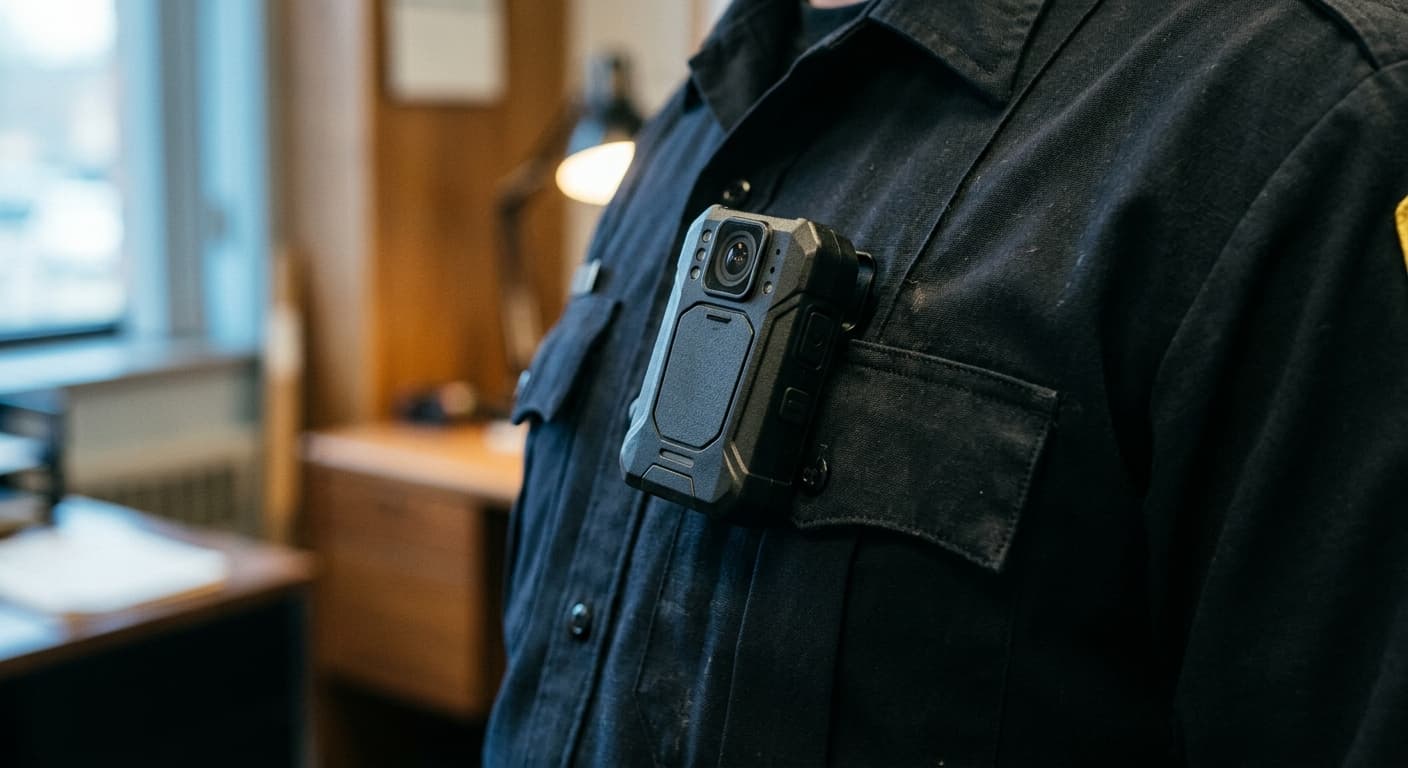
Oregon law allows you to record police officers performing official duties in public. The First Amendment protects this right, and ORS 165.540 sets the rules: silent video recording is always lawful, while audio recording of in-person encounters requires keeping your device visible to satisfy the unconcealed device exception.
You have the right to record police officers in Oregon when they are performing their duties in public. The First Amendment protects this right, and federal courts, including the Ninth Circuit Court of Appeals, have repeatedly affirmed it. However, Oregon's split consent framework under ORS 165.540 adds specific rules about audio recording that you need to understand before pressing record.
This guide explains your rights and responsibilities when recording law enforcement in Oregon in 2026, including what you can legally film, how the split consent framework applies, and what to do if an officer tells you to stop recording.
Your First Amendment Right to Record Police
The Constitutional Foundation
The right to record government officials, including police officers, performing their public duties is protected by the First Amendment to the U.S. Constitution. The Ninth Circuit Court of Appeals, which covers Oregon, has recognized this right in multiple decisions. In Fordyce v. Seattle, 55 F.3d 436 (9th Cir. 1995), the Ninth Circuit first recognized a First Amendment right to film police in public. In Askins v. DHS, 899 F.3d 1035 (9th Cir. 2018), the court reaffirmed and extended that right, holding that the First Amendment protects the right to photograph and film government officials, including police and border patrol, in public spaces.
This right applies when:
- Officers are conducting traffic stops in public
- Officers are making arrests on public streets or in public buildings
- Officers are responding to incidents in public areas
- Officers are interacting with protesters or demonstrators
- Officers are performing any official duty visible to the public
The right to record is not unlimited. You must not physically interfere with police operations, obstruct officers in the performance of their duties, or place yourself or others in danger.
Oregon's Position on Recording Police
Oregon does not have a specific statute that either grants or prohibits recording police. Instead, the right derives from the First Amendment and is subject to the general recording rules in ORS 165.540. The practical effect is that you can record police, but you need to be aware of the split consent framework when your recording captures audio.
How Oregon's Split Consent Framework Applies to Recording Police
Silent Video Recording of Police
Recording silent video of police officers in public is legal and does not trigger any provision of ORS 165.540. The wiretapping statute governs audio interception, not visual recording. You can:
- Film police activity with your phone's camera (video only, no audio)
- Use a camcorder or digital camera to record video
- Stream silent video live to social media
Audio Recording of Police in Public
When your recording captures audio of an in-person conversation with or involving police officers, Oregon's all-party notification rule under ORS 165.540(1)(c) technically applies. However, several exceptions may protect your recording:
The unconcealed device exception under ORS 165.540(6)(a) permits recording with a device that is not concealed at various public events and settings. When you visibly hold up your phone to record a police encounter on a public street, the device is not concealed. Whether a specific police encounter qualifies under one of the listed exceptions (public meetings, hearings, public speeches, etc.) depends on the circumstances.
The law enforcement participant exception under ORS 165.540(5) permits recording when a law enforcement officer is a participant in the conversation and certain conditions are met. This exception primarily benefits law enforcement and those working with them, but it reflects the legislature's recognition that recording police interactions serves legitimate purposes.
Practical Guidance for Audio Recording of Police
Given the legal complexity, here is practical guidance:
- Always keep your recording device visible. Do not conceal your phone or camera. The unconcealed device exception provides the strongest protection.
- Do not interfere with police activity. Maintain a reasonable distance. Record from the sidewalk or other public areas.
- Be prepared to identify yourself. While Oregon does not have a stop-and-identify statute for bystanders, cooperation can prevent escalation.
- If asked to stop recording, calmly assert your right. You can state: "I am exercising my First Amendment right to record in a public place." Do not argue or become confrontational.
What Police Officers Can and Cannot Do
Officers Cannot:
- Order you to stop recording their public activities solely because you are filming
- Seize your recording device without a warrant or exigent circumstances
- Delete your recordings under any circumstances
- Arrest you solely for recording their public activities
- Demand that you unlock your phone to review recordings without a warrant
Officers Can:
- Ask you to move back if you are physically interfering with their work or creating a safety hazard
- Establish a perimeter and require bystanders to stay outside it
- Arrest you for obstruction under ORS 162.247 if your recording activities actually interfere with their duties
- Seize your device with a warrant as part of a criminal investigation
- Order you to move if you are in an area that poses immediate danger
ORS 162.247: Interfering With a Police Officer
Oregon's interference statute makes it a Class A misdemeanor to intentionally act in a way that prevents or attempts to prevent a police officer from performing lawful duties. Simply recording from a safe distance does not constitute interference. However, the following could be considered interference:
- Physically blocking an officer's path while recording
- Reaching into a police vehicle to get a better angle
- Shouting at officers to distract them during an arrest
- Crossing a police line or entering a restricted area
- Standing so close that you impede officer movement
Recording Police During Protests and Demonstrations

Rights of Protesters and Bystanders
Oregon has seen significant protest activity, particularly in Portland. During protests and demonstrations:
- You can record police activity from public areas
- The unconcealed device exception supports recording at rallies and public demonstrations with a visible device
- Press and citizen journalists have the same recording rights as other members of the public
- Police crowd-control actions, use of force, and arrests can be recorded
Police Use of Surveillance During Protests
Oregon law places some limits on law enforcement surveillance. ORS 181A.250 restricts law enforcement agencies from collecting or maintaining information about the political, religious, or social activities of individuals unless there is reasonable suspicion of criminal conduct. This statute limits the scope of police surveillance at protests and demonstrations.
The City of Portland has additional ordinances governing surveillance technology. The Portland City Code Chapter 34.10 requires city bureaus to obtain approval before acquiring or using surveillance technologies.
Law Enforcement Body Cameras
Oregon Body Camera Policies
Oregon law does not mandate body cameras statewide, but many departments have adopted them. The Oregon Department of Public Safety Standards and Training provides training standards that include guidance on body camera use.
Body camera recordings by law enforcement are governed by ORS 133.741, which sets standards for law enforcement body cameras, and are also subject to the law enforcement exception in ORS 165.540(5), which permits recording when a law enforcement officer participates in the conversation under specified conditions.
Public Records Requests for Body Camera Footage
Body camera recordings held by Oregon law enforcement agencies are generally public records subject to disclosure under the Oregon Public Records Law (ORS 192.311-192.478). However, several exemptions may limit access:
- Personal privacy exemptions under ORS 192.345(1)
- Ongoing investigation exemptions
- Exemptions for recordings made inside private residences
- Juvenile-related exemptions
To request body camera footage, submit a public records request to the specific law enforcement agency. Agencies may charge fees for review and production of records.
What to Do If Your Rights Are Violated
During the Encounter
- Remain calm and do not resist physically
- Clearly state that you believe your recording rights are being violated
- Do not consent to device searches
- Note the officer's badge number, name, and patrol car number
- Look for witnesses who observed the encounter
After the Encounter
- Document everything in writing as soon as possible
- If your device was seized, do not attempt to retrieve it without legal advice
- File a complaint with the law enforcement agency's internal affairs division
- Contact the ACLU of Oregon for guidance on civil rights violations
- Consult with a civil rights attorney about potential claims under 42 U.S.C. 1983, which allows lawsuits against government officials who violate constitutional rights
Penalties Related to Recording Police Encounters
Penalties for Obstructing Police
If your recording activity crosses the line into interference with police duties under ORS 162.247:
| Offense | Classification | Maximum Penalty |
|---|---|---|
| Interfering with a police officer | Class A misdemeanor | 364 days jail, $6,250 fine |
Penalties for Illegal Audio Recording
If audio recording of a police encounter violates ORS 165.540:
| Penalty | Maximum |
|---|---|
| Jail time | Up to 364 days |
| Fine | Up to $6,250 |
Penalties for Officers Who Violate Your Rights
Officers who unlawfully seize your device, delete recordings, or arrest you for lawful recording activity may face:
- Internal department discipline
- Civil liability under 42 U.S.C. 1983
- Qualified immunity defenses may limit recovery, but clearly established rights (like the right to record police) weaken immunity claims
Oregon Recording Laws by Topic
Phone Call Recording | Audio Recording | Video Recording | Workplace Recording | Recording Police | Security Cameras | Recording in Public | Landlord-Tenant | Dashcam Laws | Schools | Medical Recording | Voyeurism & Hidden Cameras
More Oregon Recording Topics
More Oregon Laws
Frequently Asked Questions
Can I record police officers in Oregon?
Yes. You have a First Amendment right to record police officers performing their duties in public. Silent video recording is always legal. For audio recording, keep your device visible to take advantage of the unconcealed device exception under ORS 165.540(6)(a), and do not physically interfere with police operations.
Can a police officer tell me to stop recording in Oregon?
An officer cannot order you to stop recording solely because you are filming. However, an officer can ask you to move if you are physically interfering with their duties, creating a safety hazard, or within an established perimeter. If asked to move back, comply while continuing to record from a safe distance.
Can police seize my phone in Oregon?
Police generally cannot seize your phone without a warrant. If they claim exigent circumstances, the seizure must be justified. Officers cannot delete your recordings under any circumstances. If your phone is seized, do not consent to a search and contact an attorney.
Can I record police during a protest in Oregon?
Yes. The First Amendment protects recording at protests and demonstrations. Oregon's unconcealed device exception also supports recording at rallies and public demonstrations with a visible device. Stay at a safe distance, do not interfere with police operations, and keep your recording device visible.
What should I do if police violate my recording rights in Oregon?
Remain calm during the encounter and do not resist. Note the officer's badge number and name. Document everything in writing afterward. File a complaint with the department's internal affairs division. Contact the ACLU of Oregon or a civil rights attorney about potential claims under 42 U.S.C. 1983.
Updates
Corrected a KeyTakeaways bullet that inverted Project Veritas v. Schmidt's holding: the case upheld Oregon's all-party notification requirement, it did not create a right to record police, which instead comes from Fordyce v. Seattle and Askins v. DHS.
Independently fact-checked against the cited primary sources; governing law re-checked for recent changes
Corrected three mis-cites of the unconcealed-device exception (KeyTakeaways, body text, and FAQ) from ORS 165.540(2), the telecom-employee/jail-official exception, to the correct ORS 165.540(6)(a).
Governing law re-checked for recent changes
Governing law re-checked for recent changes
Reviewed and approved by an editor
The Law Behind This Article
This article rests on the statutory provisions below, held in our own legal record and retrieved from the official source. Tap a section to read the operative text.
Oregon Revised Statutes, Chapter 165: Offenses Involving Fraud or Deception
§ 165.540Obtaining contents of communicationsIn forcecited in 19 of our articles
(1) Except as otherwise provided in ORS 133.724 or 133.726 or subsections (2) to (8) of this section, a person may not: (a) Obtain or attempt to obtain the whole or any part of a telecommunication or a radio communication to which the person is not a participant, by means of any device, contrivance, machine or apparatus, whether electrical, mechanical, manual or otherwise, unless consent is given by at least one participant. (b) Tamper with the wires, connections, boxes, fuses, circuits, lines or any other equipment or facilities of a telecommunication or radio communication company over which messages are transmitted, with the intent to obtain unlawfully the contents of a telecommunication or radio communication to which the person is not a participant. (c) Obtain or attempt to obtain the whole or any part of a conversation by means of any device, contrivance, machine or apparatus, whether electrical, mechanical, manual or otherwise, if not all participants in the conversation are specifically informed that their conversation is being obtained.
Official text (excerpt) · last checked 2026-08-31 · Read the full text in our law library · Verify at oregonlegislature.gov
Cited in 76 court opinions in our collectionLatest citing opinion in our collection: 2026
In the courts (editorial summary, independently checked):State v. Fleetwood (2000) applied ORS 165.540 to body wire evidence, holding that words spoken into a telephone are a telecommunication under subsection (1)(a) and that the (5)(a)(B) exception fails unless the officer or the officer's agent shares reciprocally in the conversation, so the recordings were inadmissible.
Opinions citing this section in our collection:
- State v. Klein (Oregon Supreme Court 2012, 352 Or. 302)“…eing 3 recorded. Conversations recorded in violation of ORS 165.540 are not admissible in 4 court excep…”
- North Pacific Lumber Co. v. Oliver (Oregon Supreme Court 1979, 286 Or. 639)✓A lumber wholesaler secretly monitored traders' calls; on de novo review the court said the practice may have violated ORS 165.540 but refused to rest unclean hands on it, since the ex-employee's calls were never monitored. The employer's noncompete suit failed on other grounds.
- State v. Fleetwood (Oregon Supreme Court 2000, 331 Or. 511)✓A detective wired an informant and recorded the suspect's side of a phone call and his talks with his mother and a juvenile seller; the court held those interceptions violated ORS 165.540(1)(a) and (1)(c) because the informant was not a participant, and upheld suppression.
Identified automatically from the court opinions citing this section — not a ranking of which case controls.
Also relied on in: Oregon Recording Laws (2026): Hybrid One-Party and All-Party Rules, Oregon Voyeurism and Hidden Camera Laws: Offenses, Penalties, and Protections, Oregon Audio Recording Laws: Split Consent Rules for Conversations and Calls
Oregon Revised Statutes, Chapter 162: Offenses Against the State and Public Justice
§ 162.247Interfering with a peace officer or parole and probation officerIn force
(1) A person commits the crime of interfering with a peace officer or parole and probation officer if the person, knowing that another person is a peace officer or a parole and probation officer as defined in ORS 181A.355, intentionally or knowingly acts in a manner that prevents, or attempts to prevent, the peace officer or parole and probation officer from performing the lawful duties of the officer with regard to another person or a criminal investigation. (2) Interfering with a peace officer or parole and probation officer is a Class A misdemeanor. (3) This section does not apply: (a) In situations in which the person is engaging in passive resistance. (b) To the act of informing another person of the other person’s civil or constitutional rights. (4) A person may not be arrested or charged under this section if the person is arrested or charged for another offense based on the same conduct. [1997 c.719 §1; 1999 c.1040 §7; 2005 c.668 §1; 2021 c.254 §1; 2025 c.246 §3] Note: 162.247 was enacted into law by the Legislative Assembly but was not added to or made a part of ORS chapter 162 or any series therein by legislative action.
Official text (excerpt) · last checked 2026-07-29 · Read the full text in our law library · Verify at oregonlegislature.gov
Cited in 120 court opinions in our collectionLatest citing opinion in our collection: 2026
Opinions citing this section in our collection:
- State v. Ashbaugh (Oregon Supreme Court 2010, 349 Or. 297)“…rkeby. See ORS 811.535 (failure to obey a police officer); ORS 162.247(l)(b) (failure to obey a peace officer)…”
- State v. Backstrand (Oregon Supreme Court 2013, 354 Or. 392)“…igating are simply inapplicable in this circumstance. See ORS 162.247(l)(a) (crime to prevent officer from pe…”
- State v. McNally (Oregon Supreme Court 2017, 361 Or. 314)“…cer charged him with Interfering with a Peace Officer under ORS 162.247(1)(b). The trial court later refused de…”
Identified automatically from the court opinions citing this section — not a ranking of which case controls.
Oregon Revised Statutes, Chapter 181A: State Police; Crime Reporting and Records; Public Safety Standards and Training; Private Security
§ 181A.250Specific information not to be collected or maintainedIn force
No law enforcement agency, as defined in ORS 181A.010, may collect or maintain information about the political, religious or social views, associations or activities of any individual, group, association, organization, corporation, business or partnership unless such information directly relates to an investigation of criminal activities, and there are reasonable grounds to suspect the subject of the information is or may be involved in criminal conduct. [Formerly 181.575] Note: 181A.250 was made a part of 181A.160 to 181A.250 by legislative action but was not added to 181A.010 to 181A.350. See Preface to Oregon Revised Statutes for further explanation.
Official text (excerpt) · last checked 2026-07-29 · Read the full text in our law library · Verify at oregonlegislature.gov
Cited in 1 court opinions in our collectionLatest citing opinion in our collection: 2025
Opinions citing this section in our collection:
- ACLU of Oregon v. City of Portland (Court of Appeals of Oregon 2025, 338 Or. App. 750)“…t least portions” of the livestreams in this case “violated ORS 181A.250” and “breached [the PPB’s] obligations”…”
Identified automatically from the court opinions citing this section — not a ranking of which case controls.
United States Code Title 42
§ 1983Civil action for deprivation of rightsIn forcecited in 50 of our articles
Every person who, under color of any statute, ordinance, regulation, custom, or usage, of any State or Territory or the District of Columbia, subjects, or causes to be subjected, any citizen of the United States or other person within the jurisdiction thereof to the deprivation of any rights, privileges, or immunities secured by the Constitution and laws, shall be liable to the party injured in an action at law, suit in equity, or other proper proceeding for redress, except that in any action brought against a judicial officer for an act or omission taken in such officer’s judicial capacity, injunctive relief shall not be granted unless a declaratory decree was violated or declaratory relief was unavailable. For the purposes of this section, any Act of Congress applicable exclusively to the District of Columbia shall be considered to be a statute of the District of Columbia.
Official text (excerpt) · last checked 2026-07-28 · Read the full text in our law library · Verify at uscode.house.gov
Cited in 282,365 court opinions in our collectionLatest citing opinion in our collection: 2026
Opinions citing this section in our collection:
- Ashcroft v. Iqbal (Supreme Court of the United States 2009, 556 U.S. 662)“…its brought against state officials under Rev. Stat. §1979, 42 U. S. C. §1983.” Hartman, 547 U. S., at 254, n. 2. Cf.…”
- Celotex Corp. v. Catrett, Administratrix of the Estate of Catrett (Supreme Court of the United States 1986, 477 U.S. 317)“…policeman as she left. Petitioner brought an action under 42 U. S. C. § 1983 claiming that the refusal of service a…”
- Monell v. New York City Dept. of Social Servs. (Supreme Court of the United States 1978, 436 U.S. 658)“…decided less than two decades ago. Focusing new light on 42 U. S. C. § 1983 , that decision widened access to the f…”
Identified automatically from the court opinions citing this section — not a ranking of which case controls.
Also relied on in: Alabama Laws on Recording Police: Your Rights and Limits, Alaska Laws on Recording Police: Your Rights and Limits (2026), Arkansas Laws on Recording Police: Your Rights and Limits (2026)
Search our full record of US law — 2.1 million sections, every state + federal →
Sources and References
- ORS 165.540 - Obtaining Contents of Communications(oregonlegislature.gov).gov
- ORS 162.247 - Interfering With a Police Officer(oregonlegislature.gov).gov
- ORS 181A.250 - Law Enforcement Surveillance Limits(oregonlegislature.gov).gov
- ORS 192.311-478 - Oregon Public Records Law(oregonlegislature.gov).gov
- Oregon DPSST(oregon.gov).gov
- 42 U.S.C. 1983 - Civil Action for Deprivation of Rights(law.cornell.edu)
- Project Veritas v. Schmidt - Ninth Circuit En Banc Opinion(cdn.ca9.uscourts.gov).gov