
Oregon
Oregon Landlord-Tenant Recording Laws: Surveillance, Privacy, and Consent
Independently fact-checked against primary sources (last audited August 22, 2026). · Reviewed by the RecordingLaw editorial team. · Law checked current as of August 22, 2026. · 5 primary sources cited on this page. How we verify our legal content

Oregon uses a split consent framework for landlord-tenant recordings under ORS 165.540. Phone calls between landlords and tenants require only one-party consent, while in-person conversations require all-party notification before recording begins. Landlords cannot install cameras inside a rental unit without the tenant's explicit consent.
Recording interactions with landlords or tenants in Oregon requires understanding both the state's split consent framework under ORS 165.540 and the privacy protections in the Oregon Residential Landlord and Tenant Act (ORS Chapter 90). Whether you are a landlord installing security cameras or a tenant recording a maintenance complaint, Oregon's recording laws apply with full force.
This guide covers how Oregon's recording rules work in the landlord-tenant context in 2026, including surveillance cameras, recording disputes, documenting lease violations, and privacy protections.
Oregon's Split Consent Framework for Landlords and Tenants
Phone Calls With Your Landlord or Tenant
Under ORS 165.540(1)(a), Oregon follows one-party consent for telephone and electronic communications. This means:
- Tenants can record phone calls with landlords, property managers, and maintenance staff without telling them
- Landlords can record phone calls with tenants without notification
- This applies to cell phone calls, landline calls, VoIP calls, and video calls
- The recording is legal as long as the person recording is a participant in the call
Recording phone calls is one of the most straightforward ways for both landlords and tenants to document important conversations about lease terms, maintenance requests, rent disputes, and notices.
In-Person Conversations With Your Landlord or Tenant
For face-to-face conversations, ORS 165.540(1)(c) requires that all participants be specifically informed before recording. This means:
- You cannot secretly record an in-person conversation with your landlord during a property inspection
- You cannot secretly record a conversation with your tenant during a walk-through
- If you want to record a face-to-face discussion about lease violations, repairs, or rent, you must tell everyone present before you start recording
Video Conferencing Calls
If you communicate with your landlord or tenant through video conferencing platforms like Zoom or FaceTime, the call is treated as a "conversation" under ORS 165.540(1)(c), not a one-party-consent telecommunication. All participants must be specifically informed before the call is recorded, and secretly recording a private landlord-tenant video call risks a Class A misdemeanor. Oregon's narrow video-conferencing exceptions under ORS 165.540(6)(a) and (6)(b) apply only to specific listed proceedings or to evidence-gathering in coordination with law enforcement, an attorney, or a regulator, not to an ordinary landlord-tenant call.
Landlord Surveillance Camera Rules
Common Area Cameras
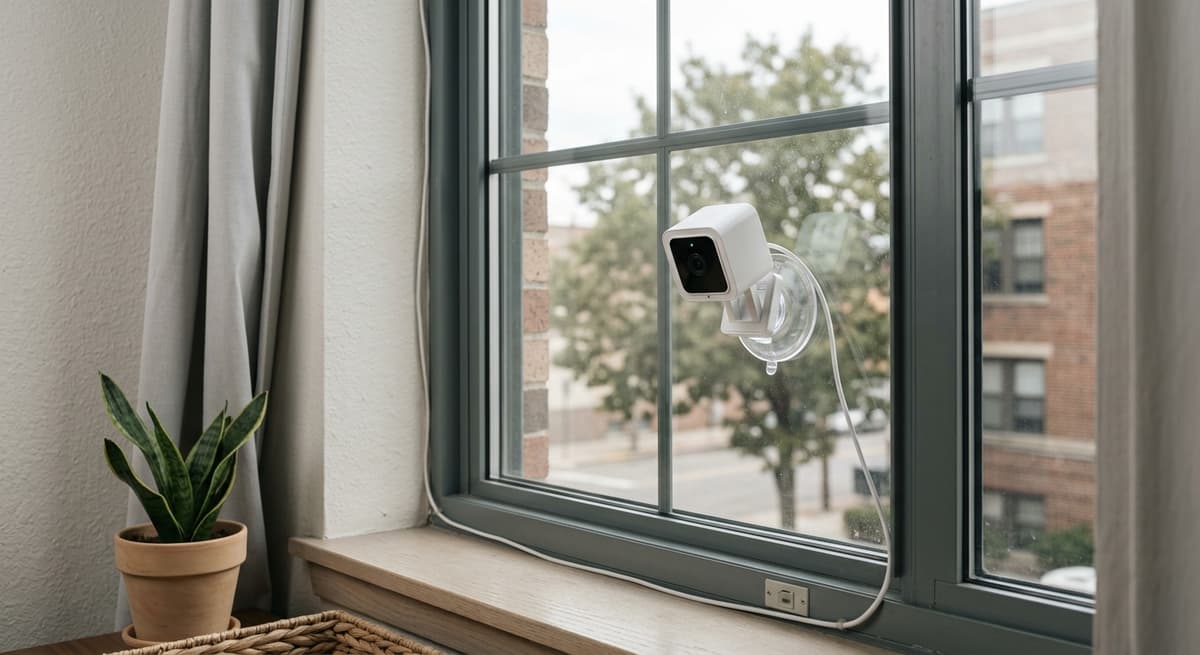
Oregon landlords can install video surveillance cameras in the common areas of rental properties. Permitted locations include:
- Building lobbies and entryways
- Hallways and stairwells
- Parking lots and garages
- Laundry rooms
- Exterior areas and building perimeters
- Mail rooms and package delivery areas
These cameras serve legitimate security purposes and do not require individual tenant consent when placed in shared spaces.
Cameras Inside Rental Units
Landlords cannot install cameras inside a tenant's rental unit without the tenant's explicit consent. The rental unit is the tenant's private space, and Oregon law provides strong protections for tenant privacy.
Under the Oregon Residential Landlord and Tenant Act:
- The landlord must provide proper notice before entering a rental unit (generally 24 hours under ORS 90.322)
- The landlord's right of entry does not include the right to install recording devices
- Placing a camera inside a tenant's unit without consent could violate ORS 165.540 (if audio is captured) and, if the camera captures the tenant's intimate area (nudity, or undergarments covered by clothing) in a place where the tenant has a reasonable expectation of privacy, ORS 163.700 (invasion of personal privacy)
Audio on Surveillance Cameras
If a landlord's security cameras capture audio of in-person conversations, the all-party notification requirement under ORS 165.540(1)(c) applies. Landlords who use audio-enabled cameras must:
- Post prominent signage indicating that audio recording is in use
- Consider disabling the audio feature to avoid compliance complications
- Ensure tenants and visitors are specifically informed about audio capture
Tenant Recording Rights
Recording Inside Your Rental Unit
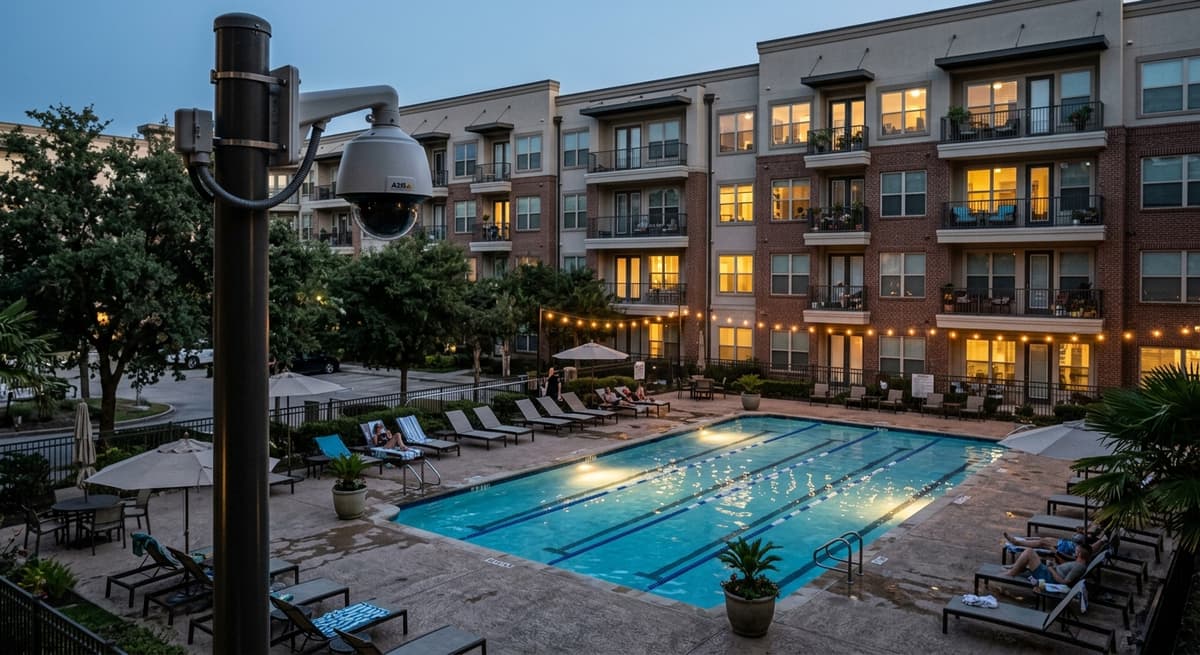
Tenants have broad rights to record inside their own rental units:
- You can install security cameras inside your apartment or house
- You can record phone calls with one-party consent
- For in-person conversations with guests, roommates, or visitors, the all-party notification rule applies if you capture audio
- You may need landlord permission to mount cameras that require drilling or modifications (check your lease)
Recording Maintenance Issues
Documenting property conditions is one of the most common reasons tenants record. Oregon law supports this:
- Photos and video (silent): You can photograph and video record maintenance issues, property damage, mold, pest infestations, and safety hazards without any consent requirements
- Video with audio: If you narrate while filming (talking to yourself), no notification is needed because there is no other participant in the conversation. If a landlord or maintenance worker is present and speaking, all-party notification is required for the audio portion
- Phone calls about maintenance: You can record calls with landlords, property managers, and maintenance services under one-party consent
Recording Lease Violations by Landlords
If your landlord violates the lease or Oregon tenant protection laws, recordings can serve as evidence:
- Record phone calls about unauthorized entry, rent disputes, or retaliation without telling the landlord
- For in-person confrontations, you must notify the landlord before recording
- Document conditions with silent video and photos to avoid the audio notification issue
- Written communication (email, text) is often the most practical way to create a paper trail
Privacy in Rental Housing
Tenant Privacy Rights Under ORS Chapter 90
The Oregon Residential Landlord and Tenant Act provides several privacy protections:
Entry notice requirements. Under ORS 90.322, landlords must generally provide at least 24 hours' written notice before entering a rental unit. Entry is permitted only for specific purposes including inspections, repairs, and showing the unit to prospective tenants.
Prohibited harassment. Landlords cannot use surveillance or recording as a tool to harass or intimidate tenants. Using cameras to monitor tenant comings and goings in a way designed to intimidate could support a harassment claim.
Quiet enjoyment. Tenants have the right to quiet enjoyment of their rental unit. Excessive surveillance that interferes with a tenant's ability to use and enjoy their home may violate this right.
Shared Housing Situations
In shared housing (roommates, house shares), recording rules become more complex:
- Each roommate has privacy rights within their own bedroom
- Common areas in shared housing follow the same rules as any other in-person setting: all-party notification for audio recording
- One roommate cannot install hidden cameras in another roommate's private bedroom
- Security cameras in shared common areas should be agreed upon by all occupants
Recording During Eviction Proceedings
Documenting the Eviction Process
If you are facing eviction or pursuing an eviction, recordings can be valuable evidence:
Tenants being evicted:
- Record all phone calls with landlords and their attorneys under one-party consent
- Document property conditions with silent photos and video
- If your landlord attempts an illegal lockout, recording the event (even with audio if you announce you are recording) creates evidence
- Save all written communications
Landlords pursuing eviction:
- Record phone calls with tenants about lease violations under one-party consent
- Document property damage and lease violations with photos and silent video
- If conducting an in-person conversation with the tenant about violations, notify them before recording
Recordings as Evidence in Eviction Court
Recordings made in compliance with Oregon law are generally admissible in Oregon courts, including eviction proceedings. Under ORS 41.910, recordings obtained in violation of ORS 165.540 are inadmissible. This means:
- Phone call recordings (one-party consent): Admissible
- In-person recordings with proper notification: Admissible
- Secret in-person recordings: Inadmissible and potentially criminal
Penalties for Recording Violations in the Landlord-Tenant Context
Criminal Penalties
Violating ORS 165.540 is a Class A misdemeanor:
| Penalty | Maximum |
|---|---|
| Jail time | Up to 364 days |
| Fine | Up to $6,250 |
Civil Liability
Under ORS 133.739:
- Actual damages (minimum $100/day or $1,000)
- Punitive damages
- Attorney fees
Privacy Violations
If a landlord places a camera that captures a tenant's intimate area (nudity, or undergarments covered by clothing) without consent, in a place where the tenant has a reasonable expectation of privacy:
| Offense | Classification | Maximum Penalty |
|---|---|---|
| ORS 163.700 (Second Degree) | Class A misdemeanor | 364 days jail, $6,250 fine |
| ORS 163.701 (First Degree) | Class C felony | 5 years prison, $125,000 fine |
Oregon Recording Laws by Topic
Phone Call Recording | Audio Recording | Video Recording | Workplace Recording | Recording Police | Security Cameras | Recording in Public | Landlord-Tenant | Dashcam Laws | Schools | Medical Recording | Voyeurism & Hidden Cameras
More Oregon Recording Topics
More Oregon Laws
Frequently Asked Questions
Can I record phone calls with my landlord in Oregon?
Yes. Oregon follows one-party consent for phone calls under ORS 165.540(1)(a). You can record any phone call with your landlord, property manager, or maintenance staff as long as you are a participant. You do not need to tell the other person.
Can my landlord put cameras inside my apartment in Oregon?
No. A landlord cannot install cameras inside your rental unit without your explicit consent. The rental unit is your private space, and installing cameras would violate Oregon privacy laws. Landlords can install cameras in common areas like lobbies, hallways, and parking lots.
Can I secretly record my landlord during an inspection?
You cannot secretly audio record an in-person conversation with your landlord under ORS 165.540(1)(c). You must notify them before recording. However, you can take silent photos and video of property conditions without any notification requirement, and you can record phone calls about the inspection under one-party consent.
Can I use recordings in eviction court in Oregon?
Recordings made in compliance with Oregon law are generally admissible. Phone call recordings under one-party consent are admissible. In-person recordings with proper all-party notification are admissible. Recordings made secretly in violation of ORS 165.540 are inadmissible under ORS 41.910.
Can my landlord record audio in the hallways of my apartment building?
Audio recording in hallways triggers the all-party notification requirement under ORS 165.540(1)(c). Every person whose conversation is captured must be specifically informed. Landlords should post prominent signage or disable the audio feature on hallway cameras.
Updates
Independently fact-checked against the cited primary sources; governing law re-checked for recent changes
Corrected the description of Oregon's video-conferencing recording exception, which is a narrow evidence-gathering carve-out and not blanket one-party consent for ordinary Zoom/FaceTime calls, and clarified that ORS 163.700 only applies to cameras that capture a tenant's intimate area (nudity or covered undergarments), not to interior cameras generally.
Governing law re-checked for recent changes
Reviewed and approved by an editor
The Law Behind This Article
This article rests on the statutory provisions below, held in our own legal record and retrieved from the official source. Tap a section to read the operative text.
Oregon Revised Statutes, Chapter 165: Offenses Involving Fraud or Deception
§ 165.540Obtaining contents of communicationsIn forcecited in 19 of our articles
(1) Except as otherwise provided in ORS 133.724 or 133.726 or subsections (2) to (8) of this section, a person may not: (a) Obtain or attempt to obtain the whole or any part of a telecommunication or a radio communication to which the person is not a participant, by means of any device, contrivance, machine or apparatus, whether electrical, mechanical, manual or otherwise, unless consent is given by at least one participant. (b) Tamper with the wires, connections, boxes, fuses, circuits, lines or any other equipment or facilities of a telecommunication or radio communication company over which messages are transmitted, with the intent to obtain unlawfully the contents of a telecommunication or radio communication to which the person is not a participant. (c) Obtain or attempt to obtain the whole or any part of a conversation by means of any device, contrivance, machine or apparatus, whether electrical, mechanical, manual or otherwise, if not all participants in the conversation are specifically informed that their conversation is being obtained.
Official text (excerpt) · last checked 2026-08-31 · Read the full text in our law library · Verify at oregonlegislature.gov
Cited in 76 court opinions in our collectionLatest citing opinion in our collection: 2026
In the courts (editorial summary, independently checked):State v. Fleetwood (2000) applied ORS 165.540 to body wire evidence, holding that words spoken into a telephone are a telecommunication under subsection (1)(a) and that the (5)(a)(B) exception fails unless the officer or the officer's agent shares reciprocally in the conversation, so the recordings were inadmissible.
Opinions citing this section in our collection:
- State v. Klein (Oregon Supreme Court 2012, 352 Or. 302)“…eing 3 recorded. Conversations recorded in violation of ORS 165.540 are not admissible in 4 court excep…”
- North Pacific Lumber Co. v. Oliver (Oregon Supreme Court 1979, 286 Or. 639)✓A lumber wholesaler secretly monitored traders' calls; on de novo review the court said the practice may have violated ORS 165.540 but refused to rest unclean hands on it, since the ex-employee's calls were never monitored. The employer's noncompete suit failed on other grounds.
- State v. Fleetwood (Oregon Supreme Court 2000, 331 Or. 511)✓A detective wired an informant and recorded the suspect's side of a phone call and his talks with his mother and a juvenile seller; the court held those interceptions violated ORS 165.540(1)(a) and (1)(c) because the informant was not a participant, and upheld suppression.
Identified automatically from the court opinions citing this section — not a ranking of which case controls.
Also relied on in: Oregon Recording Laws (2026): Hybrid One-Party and All-Party Rules, Oregon Voyeurism and Hidden Camera Laws: Offenses, Penalties, and Protections, Oregon Audio Recording Laws: Split Consent Rules for Conversations and Calls
Oregon Revised Statutes, Chapter 163: Offenses Against Persons
§ 163.700Invasion of personal privacy in the second degreeIn forcecited in 11 of our articles
(1) Except as provided in ORS 163.702, a person commits the crime of invasion of personal privacy in the second degree if: (a)(A) For the purpose of arousing or gratifying the sexual desire of the person, the person is in a location to observe another person in a state of nudity without the consent of the other person; and (B) The other person is in a place and circumstances where the person has a reasonable expectation of personal privacy; or (b)(A) The person knowingly makes or records a photograph, motion picture, videotape or other visual recording of another person’s intimate area without the consent of the other person; and (B) The person being recorded has a reasonable expectation of privacy concerning the intimate area. (2) As used in this section and ORS 163.701: (a) “Intimate area” means nudity, or undergarments that are being worn by a person and are covered by clothing.
Official text (excerpt) · last checked 2026-08-31 · Read the full text in our law library · Verify at oregonlegislature.gov
Cited in 16 court opinions in our collectionLatest citing opinion in our collection: 2023
In the courts (editorial summary, independently checked):State v. McQueen (2020) held that a person who intentionally exposes an intimate area to another has no reasonable expectation of privacy as to that person under ORS 163.700(1)(b)(B), reversing a conviction for secretly recording consensual sex. State v. Mayes (2008) read the nudity definition as reaching only post-pubescent people.
Opinions citing this section in our collection:
- State v. Parra-Sanchez (Court of Appeals of Oregon 2023, 324 Or. App. 712)“…wrong, and likely a criminal invasion of her privacy under ORS 163.700. To the extent that our case law regard…”
- State v. Rodriguez-Ganegar (Court of Appeals of Oregon 2003, 186 Or. App. 530)“…hat people were making love in it, the person would violate ORS 163.700(1)(b) by looking into the room in the m…”
- State v. Mayes (Court of Appeals of Oregon 2008, 220 Or. App. 385)✓A man hid cameras in workplace and office restrooms and secretly recorded women and two girls, ages nine and seven. The court held the nudity definition in ORS 163.700 reaches only post-pubescent people, measured from the onset of puberty, and reversed the seven-year-old's count.
Identified automatically from the court opinions citing this section — not a ranking of which case controls.
Also relied on in: Oregon Medical Recording Laws: Patient Rights, HIPAA, and Consent, Oregon School Recording Laws: Student, Parent, and Teacher Rights, Oregon Security Camera Laws: Installation, Audio, and Privacy Rules
Search our full record of US law — 2.1 million sections, every state + federal →
Sources and References
- ORS 165.540 - Obtaining Contents of Communications(oregonlegislature.gov).gov
- ORS Chapter 90 - Residential Landlord and Tenant Act(oregonlegislature.gov).gov
- ORS 163.700 - Invasion of Personal Privacy(oregonlegislature.gov).gov
- ORS 133.739 - Civil Remedies for Willful Interception(oregonlegislature.gov).gov
- ORS 41.910 - Intercepted Communications Inadmissible(oregonlegislature.gov).gov