
Oregon
Oregon Laws on Recording in Public: Rights, Consent, and Limits
Independently fact-checked against primary sources (last audited August 22, 2026). · Reviewed by the RecordingLaw editorial team. · Law checked current as of August 22, 2026. · 5 primary sources cited on this page. How we verify our legal content
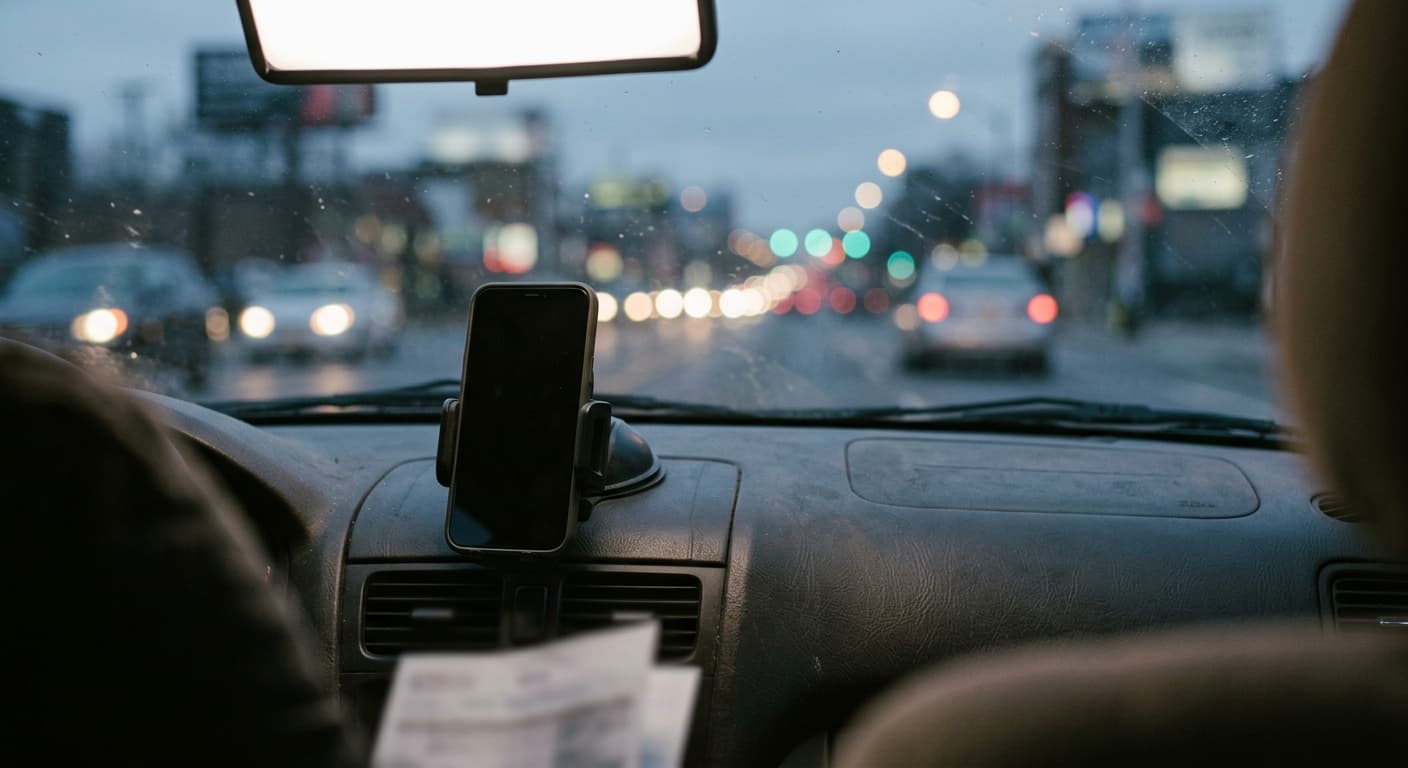
Silent video and photography in public spaces are legal in Oregon under First Amendment protections. For in-person audio recording, Oregon requires all-party notification under ORS 165.540, though an unconcealed device exception applies at rallies, public meetings, and similar events.
Recording in public in Oregon is more complicated than in most states. While the First Amendment broadly protects your right to photograph and film in public spaces, Oregon's split consent framework under ORS 165.540 adds unique restrictions on audio recording. The state's all-party notification requirement for in-person conversations applies in public settings, not just private ones.
This guide explains what you can and cannot record in public in Oregon in 2026, how the split consent framework works outdoors and in public venues, and what exceptions apply.
The First Amendment and Public Recording
Your Right to Film in Public
The First Amendment to the U.S. Constitution protects your right to record photographs, video, and other visual media in public spaces. This right has been affirmed by federal courts, including the Ninth Circuit Court of Appeals, which has jurisdiction over Oregon.
You can generally record in:
- Public streets, sidewalks, and crosswalks
- Public parks and plazas
- Government building exteriors and public areas inside government buildings
- Businesses open to the public (from publicly accessible areas)
- Public transportation facilities
- Any place open to the general public
Limits on the Right to Film
The right to film in public is not absolute:
- Private property owners can restrict recording on their property
- Government buildings may have specific rules about recording in secure areas
- Recording that constitutes harassment or stalking may violate other laws
- You cannot trespass to obtain recordings
- Recording in areas with restricted access (military installations, secure government facilities) may be prohibited
Oregon's Split Consent Framework in Public Spaces

The Key Distinction
Oregon treats public recording differently depending on whether you are capturing video only or video with audio (or audio only).
Silent video or photography in public: Legal without restriction. ORS 165.540 does not apply because no conversation is being intercepted.
Audio recording of in-person conversations in public: Subject to the all-party notification requirement under ORS 165.540(1)(c). Every participant in the conversation must be specifically informed before recording begins, even if the conversation happens on a public sidewalk, in a park, or at an outdoor cafe.
This is where Oregon diverges from most states. In a typical one-party consent state, you could record any conversation you participate in, anywhere. In Oregon, the split consent framework means phone calls follow one-party consent, but face-to-face conversations require all-party notification regardless of location.
The 2025 Ninth Circuit Confirmation
The Ninth Circuit's January 2025 en banc ruling in Project Veritas v. Schmidt directly addressed this issue. The court upheld Oregon's notification requirement as content-neutral and applicable to public settings. The 10-2 decision found that Oregon has a substantial interest in protecting conversational privacy that extends beyond private spaces. The U.S. Supreme Court denied certiorari on October 6, 2025.
This ruling confirmed that Oregon's all-party notification requirement for in-person audio recording is fully enforceable in public spaces. You cannot secretly record a conversation with audio at a park, on the street, in a restaurant, or at any other public location.
The Unconcealed Device Exception
What It Covers
ORS 165.540(6)(a) provides an important exception for recording with an unconcealed (visible) device. If your recording device is not hidden, you may record without individual notification at:
- Public or semipublic meetings, hearings, and trials
- Press conferences and public speeches
- Rallies and demonstrations
- Sporting events
- Regularly scheduled classes and seminars
- Private meetings or conferences where all participants knew or reasonably should have known the recording was being made
How to Use This Exception
To rely on the unconcealed device exception:
- Your recording device must be clearly visible, not hidden in a pocket, bag, or concealed on your body
- The event must fall within one of the listed categories in ORS 165.540(6)(a)
- Hold your phone, camera, or recorder where participants can see it
- At events like rallies or public meetings, a visible camera is generally sufficient notification
What It Does Not Cover
The unconcealed device exception does not create a blanket right to record all public conversations with a visible device. It applies to the specific types of events listed in the statute. A one-on-one conversation on a sidewalk, a group discussion at a restaurant patio, or a casual chat in a park does not fall into the listed categories even if your recording device is visible.
For everyday conversations in public, the all-party notification requirement still applies to audio recording, even if you are holding your phone in plain sight.
Common Public Recording Scenarios in Oregon

Recording at Restaurants and Coffee Shops
If you are having a conversation at a restaurant or coffee shop and want to record it:
- Video only (no audio): Legal, though the business owner may ask you to stop
- Audio recording: You must specifically inform everyone in the conversation before recording
- Background conversations captured incidentally by your device may raise concerns under ORS 165.540(1)(c)
Recording in Stores and Businesses
Retail stores, grocery stores, and other businesses open to the public are generally public access areas. However:
- The business owner can set recording policies for their property
- "No Recording" signs should be respected as a condition of entry
- Audio recording of conversations with employees or other customers requires all-party notification
- Silent video of product displays, store layouts, and public areas is generally legal
Street Photography and Public Filming
Oregon does not restrict silent photography or videography in public spaces. Street photographers and filmmakers can:
- Photograph people on public streets without consent (for non-commercial use)
- Film buildings, landscapes, and public activities
- Record public events and gatherings with a visible device under the unconcealed device exception
Adding audio to street footage triggers the notification requirement for any captured conversations.
Recording at Public Parks and Outdoor Spaces
Oregon's public parks and outdoor recreation areas are public spaces where filming is generally permitted:
- Silent video of park activities, scenery, and events: Legal
- Audio recording of your own conversations with companions: Requires notifying everyone in the conversation
- Recording at organized public events in parks: The unconcealed device exception may apply
Recording Public Transportation
Public transit systems in Oregon, including TriMet in the Portland metropolitan area, operate their own surveillance cameras. As a passenger:
- You can take photos and silent video on public transit
- Audio recording of conversations with other passengers requires all-party notification
- TriMet's own cameras and security systems operate under agency policies
Recording Protests and Public Demonstrations
Your Rights at Protests
Oregon has a strong tradition of public protest, and recording at demonstrations is protected activity. The unconcealed device exception under ORS 165.540(6)(a) specifically lists "rallies" as an event where recording with a visible device is permitted.
At protests and demonstrations:
- Record with your device clearly visible
- Film from public sidewalks and streets
- Capture police activity (see the recording police page for details)
- Live-stream to social media
Drone Recording in Public
Oregon follows FAA regulations for drone use. Drones can capture aerial video in public spaces, subject to:
- FAA Part 107 rules for commercial drone operators
- Restrictions on flying near airports, over crowds, and above 400 feet
- Local ordinances that may limit drone use in certain areas
- Oregon's privacy laws if the drone captures audio or records in areas with a reasonable expectation of privacy
Penalties for Illegal Public Recording in Oregon
Criminal Penalties
Violating the all-party notification requirement for audio recording in public is a Class A misdemeanor under ORS 165.540:
| Penalty | Maximum |
|---|---|
| Jail time | Up to 364 days |
| Fine | Up to $6,250 |
| Probation | Up to 5 years |
Civil Liability
Under ORS 133.739, victims of illegal recording can sue for:
- Actual damages (minimum $100/day or $1,000)
- Punitive damages
- Attorney fees
Evidentiary Consequences
Recordings obtained in violation of ORS 165.540 are inadmissible in Oregon courts under ORS 41.910.
Oregon Recording Laws by Topic
Phone Call Recording | Audio Recording | Video Recording | Workplace Recording | Recording Police | Security Cameras | Recording in Public | Landlord-Tenant | Dashcam Laws | Schools | Medical Recording | Voyeurism & Hidden Cameras
More Oregon Recording Topics
More Oregon Laws
Frequently Asked Questions
Can I record video in public in Oregon?
Yes. Silent video recording in public is protected by the First Amendment and is not governed by ORS 165.540. You can film on public streets, sidewalks, parks, and other public areas. If your video captures audio of in-person conversations, the all-party notification requirement applies.
Can I record a conversation in a public park in Oregon?
You can record silent video freely. For audio recording of an in-person conversation, you must specifically inform all participants before recording under ORS 165.540(1)(c). This requirement applies even in public spaces. The Ninth Circuit confirmed this in its January 2025 en banc ruling.
Does Oregon's notification rule apply outdoors?
Yes. Oregon's all-party notification requirement for in-person conversations applies in all settings, including outdoors. The Ninth Circuit upheld this in Project Veritas v. Schmidt, finding that Oregon's interest in protecting conversational privacy extends to public spaces.
Can I live-stream in public in Oregon?
Silent live-streaming of video is generally legal. If your live stream captures in-person conversations with audio, the all-party notification rule applies. At rallies, public meetings, and similar events listed in ORS 165.540(6)(a), the unconcealed device exception permits recording with a visible device.
What is the unconcealed device exception in Oregon?
Under ORS 165.540(6)(a), you can record with a visible device at public meetings, hearings, press conferences, rallies, sporting events, and regularly scheduled classes without individually notifying each participant. The device must not be hidden, and the event must fall within the listed categories.
Updates
Fixed a vote-count error: the Ninth Circuit's en banc decision in Project Veritas v. Schmidt was 10-2, not 9-2.
Independently fact-checked against the cited primary sources; governing law re-checked for recent changes
Corrected the citation for Oregon's unconcealed-device recording exception (public meetings, rallies, press conferences, classes) from the unrelated ORS 165.540(2) to the correct ORS 165.540(6)(a) in all six places it appeared on the page.
Governing law re-checked for recent changes
Reviewed and approved by an editor
The Law Behind This Article
This article rests on the statutory provisions below, held in our own legal record and retrieved from the official source. Tap a section to read the operative text.
Oregon Revised Statutes, Chapter 165: Offenses Involving Fraud or Deception
§ 165.540Obtaining contents of communicationsIn forcecited in 19 of our articles
(1) Except as otherwise provided in ORS 133.724 or 133.726 or subsections (2) to (8) of this section, a person may not: (a) Obtain or attempt to obtain the whole or any part of a telecommunication or a radio communication to which the person is not a participant, by means of any device, contrivance, machine or apparatus, whether electrical, mechanical, manual or otherwise, unless consent is given by at least one participant. (b) Tamper with the wires, connections, boxes, fuses, circuits, lines or any other equipment or facilities of a telecommunication or radio communication company over which messages are transmitted, with the intent to obtain unlawfully the contents of a telecommunication or radio communication to which the person is not a participant. (c) Obtain or attempt to obtain the whole or any part of a conversation by means of any device, contrivance, machine or apparatus, whether electrical, mechanical, manual or otherwise, if not all participants in the conversation are specifically informed that their conversation is being obtained.
Official text (excerpt) · last checked 2026-08-31 · Read the full text in our law library · Verify at oregonlegislature.gov
Cited in 76 court opinions in our collectionLatest citing opinion in our collection: 2026
In the courts (editorial summary, independently checked):State v. Fleetwood (2000) applied ORS 165.540 to body wire evidence, holding that words spoken into a telephone are a telecommunication under subsection (1)(a) and that the (5)(a)(B) exception fails unless the officer or the officer's agent shares reciprocally in the conversation, so the recordings were inadmissible.
Opinions citing this section in our collection:
- State v. Klein (Oregon Supreme Court 2012, 352 Or. 302)“…eing 3 recorded. Conversations recorded in violation of ORS 165.540 are not admissible in 4 court excep…”
- North Pacific Lumber Co. v. Oliver (Oregon Supreme Court 1979, 286 Or. 639)✓A lumber wholesaler secretly monitored traders' calls; on de novo review the court said the practice may have violated ORS 165.540 but refused to rest unclean hands on it, since the ex-employee's calls were never monitored. The employer's noncompete suit failed on other grounds.
- State v. Fleetwood (Oregon Supreme Court 2000, 331 Or. 511)✓A detective wired an informant and recorded the suspect's side of a phone call and his talks with his mother and a juvenile seller; the court held those interceptions violated ORS 165.540(1)(a) and (1)(c) because the informant was not a participant, and upheld suppression.
Identified automatically from the court opinions citing this section — not a ranking of which case controls.
Also relied on in: Oregon Recording Laws (2026): Hybrid One-Party and All-Party Rules, Oregon Voyeurism and Hidden Camera Laws: Offenses, Penalties, and Protections, Oregon Audio Recording Laws: Split Consent Rules for Conversations and Calls
Search our full record of US law — 2.1 million sections, every state + federal →
Sources and References
- ORS 165.540 - Obtaining Contents of Communications(oregonlegislature.gov).gov
- ORS 133.739 - Civil Remedies for Willful Interception(oregonlegislature.gov).gov
- ORS 41.910 - Intercepted Communications Inadmissible(oregonlegislature.gov).gov
- Project Veritas v. Schmidt - Ninth Circuit En Banc Opinion(cdn.ca9.uscourts.gov).gov
- FAA Unmanned Aircraft Systems(faa.gov).gov