
Delaware
Delaware Laws on Recording Police: Your Rights, Body Cameras, and Legal Protections (2026)
Independently fact-checked against primary sources (last audited August 22, 2026). · Reviewed by the RecordingLaw editorial team. · Law checked current as of August 22, 2026. · 4 primary sources cited on this page. How we verify our legal content
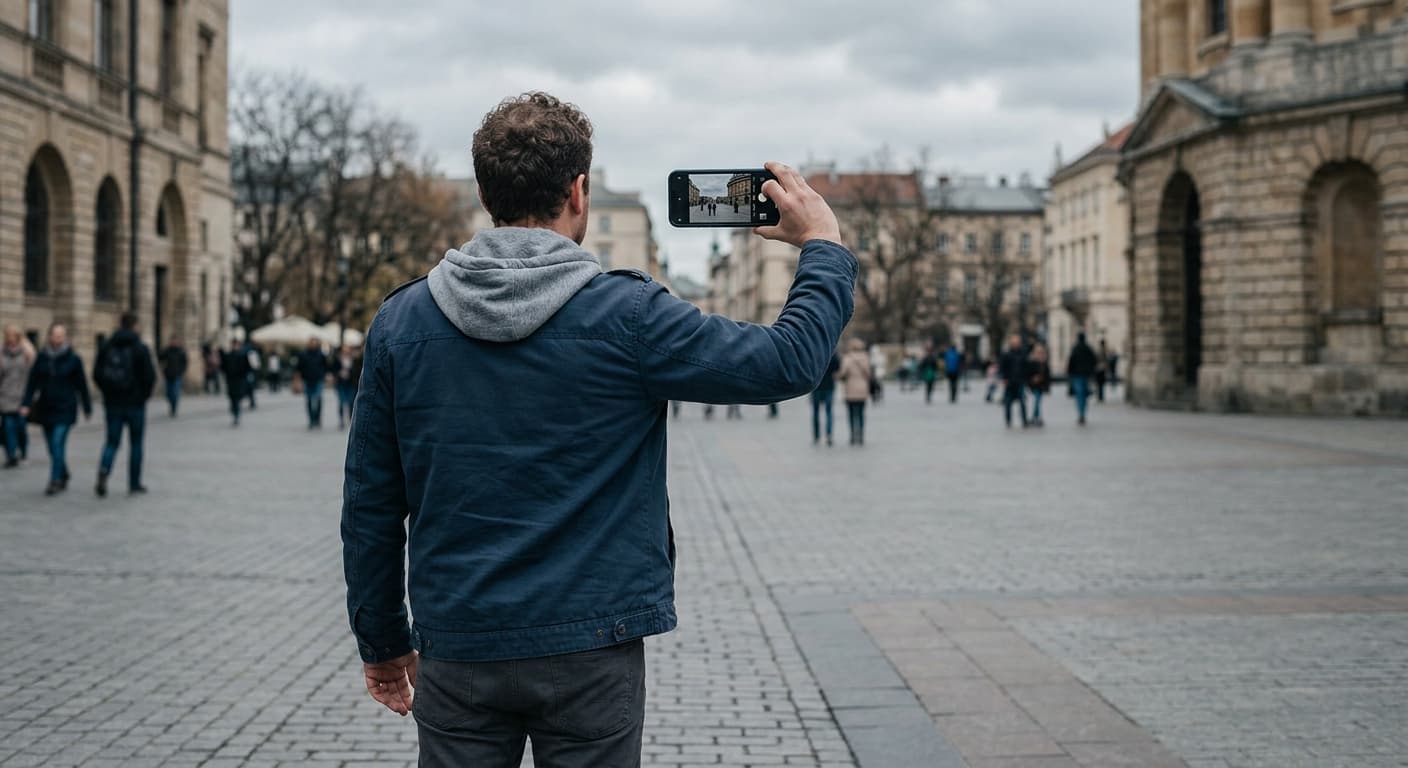
In Delaware, the First Amendment protects your right to record police officers on duty in public. On-duty officers have no reasonable expectation of privacy, so Delaware's all-party consent law (11 Del. C. Section 1335) does not block you. The Third Circuit affirmed this in Fields v. City of Philadelphia (2017).
Recording police officers is a constitutionally protected activity in the United States, and Delaware residents have clear legal authority to exercise this right. The First Amendment to the U.S. Constitution protects the right to record law enforcement officers performing their duties in public spaces. Delaware has further strengthened police accountability by enacting body-worn camera legislation that requires officers to record their interactions with the public.
This guide explains your rights when recording police in Delaware, the legal framework governing body-worn cameras, how to access police recordings through public records requests, and what to do if your recording rights are violated.
Your Constitutional Right to Record Police
First Amendment Protections
The First Amendment to the U.S. Constitution protects the right to gather information about government officials, including police officers, performing their public duties. Multiple federal appellate courts have affirmed that this right extends to recording police with cameras, smartphones, and other devices.
While the U.S. Supreme Court has not issued a definitive ruling specifically on the right to record police, the Third Circuit Court of Appeals (which covers Delaware) addressed the issue in Fields v. City of Philadelphia (862 F.3d 353, 3d Cir. 2017). The Third Circuit held that the First Amendment protects the act of recording police officers carrying out their official duties in public.
This means Delaware residents have a clearly established constitutional right to:
- Film or photograph police officers during traffic stops, arrests, and other enforcement activities in public
- Record from any location where you have a legal right to be
- Use any recording device, including smartphones, cameras, body cameras, and wearable devices
- Livestream police encounters in real time
When You Can Record Police in Delaware
You can legally record police in Delaware when:
- Officers are performing their duties in public spaces (streets, sidewalks, parks, government buildings)
- You are standing in a location where you have a legal right to be
- You are not physically interfering with police operations
- You maintain a safe and reasonable distance from the encounter
- You are not trespassing on private property to record
Limitations on Recording Police
Your right to record police is not absolute. Recording becomes legally problematic when:
- Physical interference: If your recording activity physically obstructs officers from performing their duties, you could face charges for obstruction or interference. Standing in the way of an arrest, reaching into a police vehicle, or crossing a crime scene perimeter all constitute interference.
- Lawful orders: Officers can issue lawful orders to move back from a dangerous scene for safety reasons. You must comply with these orders, even while continuing to record from a greater distance.
- Secure areas: Recording may be restricted in certain secure areas such as the interior of police stations, booking areas, or locations with active security threats.
- Private property: If you are on private property and the property owner or police ask you to leave, you must comply. Your right to record does not override trespassing laws.
Delaware Body-Worn Camera Law

11 Del. C. Section 8402A: Requirements and Provisions
Delaware enacted comprehensive body-worn camera legislation through House Bill 195, codified at 11 Del. C. Section 8402A. This law establishes mandatory requirements for law enforcement agencies across the state.
Key provisions include:
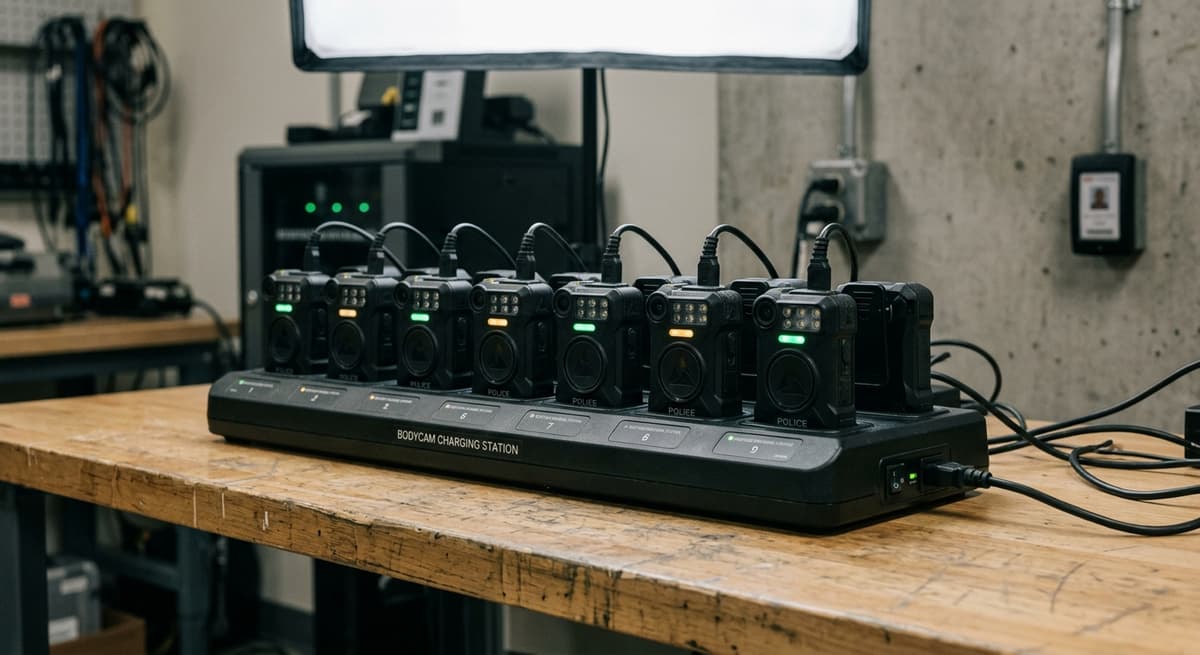
Mandatory use: Officers must activate body-worn cameras when interacting with members of the public while performing their law enforcement duties. This includes traffic stops, arrests, searches, interrogations, and any encounter where the officer exercises enforcement authority.
No tampering: The implementing regulation, 1 Del. Admin. Code 801-26.0, strictly prohibits officers from editing, altering, or erasing body-worn camera recordings. Any attempt to tamper with footage may result in disciplinary action and potential criminal charges.
Agency policies: Each law enforcement agency must establish written policies governing:
- When cameras must be activated and deactivated
- How footage is stored and for how long
- Who can access recorded footage
- Procedures for reviewing footage in connection with complaints or investigations
- Consequences for failing to activate cameras or tampering with footage
Notification: Officers are generally expected to inform individuals that they are being recorded by a body-worn camera, though the failure to provide such notice does not invalidate the recording.
Delaware State Police Body Camera Program
The Delaware State Police has implemented body-worn cameras across its patrol divisions. The program includes:
- Standard-issue body cameras for all uniformed officers
- Dashboard cameras in patrol vehicles that work in conjunction with body-worn cameras
- Digital evidence management systems for storing and cataloging footage
- Policies governing footage retention, access, and release
Municipal Police Body Camera Programs
Individual municipal police departments across Delaware have adopted their own body camera policies in compliance with the state law. Departments in Wilmington, Dover, Newark, and other municipalities maintain body camera programs with varying specific procedures for activation, storage, and public access.
Accessing Police Recordings Through FOIA
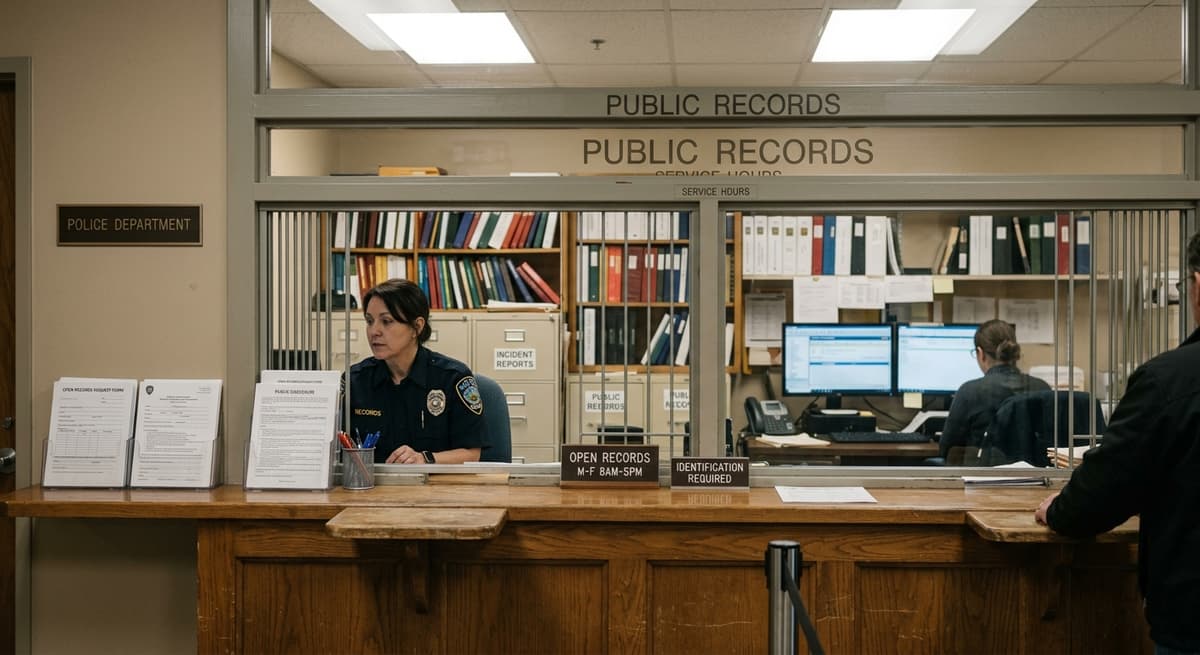
Delaware Freedom of Information Act
Delaware's Freedom of Information Act (29 Del. C. Chapter 100) provides the framework for public access to government records, including police body camera footage and other law enforcement recordings.
Under 29 Del. C. Section 10003, all public records are open to inspection and copying by any citizen unless specifically exempted by law. This general principle of openness applies to body camera footage, dashboard camera recordings, and other police video and audio recordings.
How to Request Police Recordings
To request police body camera footage or other recordings in Delaware:
- Identify the agency: Determine which law enforcement agency has the recording (Delaware State Police, local municipal police, etc.)
- Submit a written FOIA request: Send a written request to the agency's FOIA coordinator specifying the recording you seek, including the date, time, location, and officers involved if known
- Specify the format: Request the recording in a specific digital format (MP4, AVI, etc.) to ensure you receive a usable copy
- Allow processing time: Agencies have 15 business days to respond to FOIA requests under Delaware law
- Pay applicable fees: Agencies may charge reasonable fees for copying and producing records
Exemptions That May Limit Access
Certain exemptions under the FOIA may restrict access to police recordings:
- Active investigations: Footage related to ongoing criminal investigations may be withheld until the investigation concludes
- Personal privacy: Recordings that contain personally identifiable information about victims, witnesses, or uninvolved third parties may be redacted
- Minors: Footage showing minor children may be restricted or redacted
- Private residences: Footage captured inside private homes during police encounters may receive additional privacy protections
- Confidential informants: Recordings that could reveal the identity of confidential informants may be withheld
Appealing a FOIA Denial
If your FOIA request for police recordings is denied, you can appeal to the Delaware Attorney General's FOIA coordinator. If the appeal is unsuccessful, you may file a lawsuit in the Delaware Superior Court to compel disclosure, per 29 Del. C. Section 10005.
What to Do When Recording Police in Delaware
Practical Guidelines
When recording a police encounter in Delaware:
- Stay calm and courteous: Maintain a respectful demeanor while asserting your right to record
- Keep your distance: Stand far enough away that you cannot be accused of interfering, but close enough that your recording captures meaningful footage
- Keep your hands visible: Hold your recording device in a way that officers can see it is a phone or camera, not a weapon
- Do not reach for anything suddenly: Sudden movements may be perceived as threatening
- Announce that you are recording: While not legally required, announcing your recording can help establish your intent and may prevent confrontations
- Do not cross police tape or barriers: Crime scene perimeters and police barriers are lawful boundaries
- Continue recording even if told to stop: If an officer tells you to stop recording in a public space, you can calmly state that you are exercising your First Amendment right. However, always prioritize your personal safety
If Police Order You to Stop Recording
If a police officer orders you to stop recording in a public space:
- Calmly assert your rights: State something like, "I am exercising my First Amendment right to record. I am not interfering with your duties."
- Do not physically resist: If the officer escalates, comply physically while continuing to assert your rights verbally
- Do not delete footage: You are never required to delete recordings. If ordered to delete, you can decline while remaining calm
- Note the officer's name and badge number: This information will be important if you decide to file a complaint or lawsuit
- File a complaint afterward: Report the incident to the police department's internal affairs division and consider consulting an attorney
If Police Confiscate Your Recording Device
If an officer takes your phone or camera:
- The officer generally needs a warrant to search or access the contents of your device, per the U.S. Supreme Court's ruling in Riley v. California (573 U.S. 373, 2014)
- Confiscation of your device solely to prevent recording may constitute a First Amendment violation
- Document the confiscation, including the officer's name, badge number, and the circumstances
- Contact an attorney about recovering your device and pursuing legal remedies
Legal Remedies for Violations of Your Recording Rights
Civil Rights Lawsuits Under 42 U.S.C. Section 1983
If a police officer violates your right to record in Delaware, you may have grounds for a federal civil rights lawsuit under 42 U.S.C. Section 1983. This statute allows individuals to sue government officials who violate their constitutional rights while acting under color of state law.
Available remedies include:
- Compensatory damages for any physical injury, property damage, or emotional distress
- Punitive damages if the officer's conduct was particularly egregious
- Attorney fees under 42 U.S.C. Section 1988
- Injunctive relief ordering the police department to change its policies
Filing a Complaint with the Police Department
You can file an internal affairs complaint with the relevant police department. Most Delaware law enforcement agencies have formal complaint procedures that investigate allegations of officer misconduct.
Contacting the ACLU of Delaware
The ACLU of Delaware provides legal assistance in cases involving violations of recording rights and other civil liberties. They may be able to represent you or refer you to an attorney who handles police accountability cases.
Recording at Government Meetings and Public Proceedings
Open Meeting Requirements
Delaware's Freedom of Information Act requires that meetings of public bodies be open to the public under 29 Del. C. Section 10004. You can record these meetings, including:
- City council meetings
- County council meetings
- School board meetings
- State legislative sessions
- Planning and zoning hearings
- Public hearings on proposed regulations
Public bodies composed entirely of elected members must make recordings available for public review within a reasonable time after the meeting concludes.
Courtroom Recording
Recording in Delaware courtrooms is subject to specific rules set by individual judges and the Delaware courts. Generally:
- Photography and recording in courtrooms require advance permission from the presiding judge
- Some proceedings may be livestreamed or recorded by court-approved media
- Unauthorized recording in courtrooms can result in contempt of court charges
Police Recordings as Evidence
Using Your Recording in Legal Proceedings
If you record a police encounter and the recording becomes relevant to a legal case (whether your own or someone else's), the recording may be admissible as evidence if:
- It was made legally (from a location where you had a right to be, without interfering with police)
- It has not been altered or edited
- It can be authenticated (you can testify to when, where, and how it was made)
- It is relevant to the issues in the case
Preserving Your Recording
To preserve the evidentiary value of your police recording:
- Do not edit or alter the original recording
- Make backup copies immediately after the recording
- Upload to cloud storage to prevent loss if your device is confiscated or damaged
- Note the circumstances: Write down the date, time, location, and what you witnessed as soon as possible
- Consult an attorney if you believe the recording captures police misconduct or evidence relevant to a legal proceeding
Explore More Delaware Recording Laws
Audio Recording | Video Recording | Voyeurism Laws | Workplace Recording | Recording Police | Phone Call Recording | Security Cameras | Recording in Public | Landlord-Tenant Recording | Dashcam Laws | School Recording | Medical Recording
Back to Delaware Recording Laws
More Delaware Recording Topics
More Delaware Laws
Frequently Asked Questions
Can I record police officers in Delaware?
Yes. The First Amendment protects your right to record police officers performing their public duties. The Third Circuit Court of Appeals, which covers Delaware, confirmed this right in Fields v. City of Philadelphia (2017). You can record from any public location as long as you do not physically interfere with police operations.
Do Delaware police officers have to wear body cameras?
Yes. Under 11 Del. C. Section 8402A, Delaware law enforcement officers are required to wear and use body-worn cameras when interacting with the public while on duty. The implementing regulation, 1 Del. Admin. Code 801-26.0, prohibits officers from editing, altering, or erasing body camera footage.
Can I request body camera footage from Delaware police?
Yes. Body camera footage is generally accessible through Delaware's Freedom of Information Act (29 Del. C. Chapter 100). Submit a written FOIA request to the relevant law enforcement agency. Agencies have 15 business days to respond, though certain exemptions may limit access for active investigations or sensitive content.
What should I do if a police officer tells me to stop recording in Delaware?
Calmly assert your First Amendment right to record while continuing to film from a safe distance. Do not physically resist or escalate the situation. Note the officer's name and badge number, and file a complaint with the department's internal affairs division afterward. You may also consult an attorney about filing a civil rights lawsuit under 42 U.S.C. Section 1983.
Can police search my phone if they confiscate it while I am recording in Delaware?
Generally, no. The U.S. Supreme Court ruled in Riley v. California (2014) that police need a warrant to search the contents of a cell phone. Confiscating your phone solely to stop you from recording may violate your First Amendment rights and could form the basis of a civil rights claim.
Updates
Corrected the court named for a denied police-records FOIA appeal from the Court of Chancery to the Superior Court, which has jurisdiction over records-access suits under 29 Del. C. Section 10005.
Independently fact-checked against the cited primary sources; governing law re-checked for recent changes
Corrected the sourcing of Delaware's body-camera no-tampering rule: the prohibition on editing, altering, or erasing footage comes from the implementing regulation (1 Del. Admin. Code 801-26.0), not from 11 Del. C. Section 8402A itself, matching the correction already made on the Delaware recording-laws hub page.
Governing law re-checked for recent changes
Spoke-propagation audit. Confirmed no wrong 19 Del. C. Section 1335 cites (correct title is 11 Del. C.). All citations use delcode.delaware.gov canonical URLs. Two-statute conflict (11 Del. C. Section 2402 one-party vs. Section 1335 all-party) verified present. No em-dash violations found.
Reviewed and approved by an editor
The Law Behind This Article
This article rests on the statutory provisions below, held in our own legal record and retrieved from the official source. Tap a section to read the operative text.
Delaware Code, Title 11 (Crimes and Criminal Procedure), Chapter 024 (WIRETAPPING, ELECTRONIC SURVEILLANCE AND INTERCEPTION OF COMMUNICATIONS)
§ 2402Interception of communications generally; divulging contents of communications, violations of chapter.In forcecited in 15 of our articles
(a) Prohibited acts. — Except as specifically provided in this chapter or elsewhere in this Code no person shall: (1) Intentionally intercept, endeavor to intercept, or procure any other person to intercept or endeavor to intercept any wire, oral or electronic communication; (2) Intentionally disclose or endeavor to disclose to any other person the contents of any wire, oral or electronic communication, knowing or having reason to know that the information was obtained through the interception of a wire, oral or electronic communication in violation of this chapter; or (3) Intentionally use or endeavor to use the contents of any wire, oral or electronic communication, knowing or having reason to know that the information was obtained through the interception of a wire, oral or electronic communication in violation of this chapter. (b) Penalties for violation of subsection (a) of this section. — Any person who violates subsection (a) of this section shall be guilty of a class E felony and be fined not more than $10,000. (c) Lawful acts.
Official text (excerpt) · last checked 2026-08-28 · Read the full text in our law library · Verify at delcode.delaware.gov
Cited in 4 court opinions in our collectionLatest citing opinion in our collection: 2023
In the courts (editorial summary, independently checked):Dayton v. Collison (2020) applied 11 Del. C. 2402(a)(1), finding neighbors intercepted a homeowner's backyard conversations with a motion-activated video camera, an intrusion upon seclusion. State v. Hunt (2023) said in the alternative that police access to a consenting owner's phone, if an interception, was lawful under 2402(c)(3).
Opinions citing this section in our collection:
- Dayton v. Collison (Superior Court of Delaware 2020)✓Neighbors aimed a motion-activated audio and video camera at a man's backyard and recorded his conversations there; after trial the court found they intentionally intercepted oral communications in violation of section 2402(a), and that this was an intrusion on his seclusion.
- Everett v. State (Supreme Court of Delaware 2018, 186 A.3d 1224)“…d or a location was bugged, and a host of other details.”); 11 Del. C. § 2402(c)(3) (authorizing government wiretappi…”
- State v. Hunt (Superior Court of Delaware 2023)✓Police read and answered texts on a cooperating witness's phone with his permission; rejecting a postconviction claim, the court found no interception occurred and reasoned in the alternative that any interception in the drug investigation was lawful under section 2402(c)(3).
Identified automatically from the court opinions citing this section — not a ranking of which case controls.
Also relied on in: Delaware Recording Laws (2026): Two-Statute Consent Conflict, Delaware Landlord-Tenant Recording Laws: Surveillance, Privacy Rights, and Legal Limits (2026), Federal Wiretap Act and ECPA: The Complete Guide (2026)
Delaware Code, Title 11 (Crimes and Criminal Procedure), Chapter 005 (SPECIFIC OFFENSES)
§ 1335Violation of privacy; class A misdemeanor; class G felony.In forcecited in 19 of our articles
(a) A person is guilty of violation of privacy when, except as authorized by law, the person: (1) Trespasses on property intending to subject anyone to eavesdropping or other surveillance in a private place; or (2) Installs in any private place, without consent of the person or persons entitled to privacy there, any device for observing, photographing, recording, amplifying or broadcasting sounds or events in that place; or (3) Installs or uses outside a private place any device for hearing, recording, amplifying or broadcasting sounds originating in that place which would not ordinarily be audible or comprehensible outside, without the consent of the person or persons entitled to privacy there; or (4) Intercepts without the consent of all parties thereto a message by telephone, telegraph, letter or other means of communicating privately, including private conversation; or (5) Divulges without the consent of the sender and the receiver the existence or contents of any message by telephone, telegraph, letter or other means of communicating privately if the accused knows that the message was unlawfully intercepted or if the accused learned of the message in the course of…
Official text (excerpt) · last checked 2026-08-31 · Read the full text in our law library · Verify at delcode.delaware.gov
Cited in 15 court opinions in our collectionLatest citing opinion in our collection: 2026
In the courts (editorial summary, independently checked):State v. Pulgini (1976) held 11 Del. C. 1335 does not reach police acts covered by sections 1336 and 1431, so a police interception made with one party's consent was lawful. State of Delaware v. Steven Wu (2026) construed 1335(a)(9)(b) as protecting confidentiality from third parties regardless of whether the relationship has ended.
Opinions citing this section in our collection:
- State v. Pulgini (Superior Court of Delaware 1976, 366 A.2d 1198)✓Police recorded a call between the defendant and an informant with the informant's consent but no court order. The court held section 1335 does not apply to police acts covered by sections 1336 and 1431, and one-party consent made the interception lawful.
- State of Delaware v. Steven Wu (Delaware Court of Common Pleas 2026)✓Charged after leaving printed intimate photos from a past affair in the woman's shared mailbox, a man sought a pretrial ruling on section 1335(a)(9)(b). On uncontested facts, the court read beyond that relationship as disclosure outside the private relationship, ended or not.
- Duffy v. State (Supreme Court of Delaware 2019)“…er 2017, Duffy was indicted for Violation of Privacy under 11 Del. C. § 1335(a)(7). The charges arose from Duffy tak…”
Identified automatically from the court opinions citing this section — not a ranking of which case controls.
Also relied on in: Delaware GPS Tracking Laws: Is It Legal to Put a Tracker on a Car? (2026), Delaware Video Recording Laws: Consent Rules, Surveillance, and Penalties (2026), Delaware Voyeurism Laws: Hidden Cameras, Penalties, and Privacy Protections (2026)
Delaware Code, Title 11 (Crimes and Criminal Procedure), Chapter 084a (Body-Worn Cameras for Law-Enforcement Officers)
§ 8402ABody-worn camera requirements.In forcecited in 3 of our articles
(a) In accordance with the regulations established in §§ 8404, 4321, and 9003 of this title, a police officer, a probation and parole officer of the Department of Correction assigned to a law-enforcement task force, and a juvenile probation and parole officer of the Department of Services for Children, Youth, and Their Families shall wear a body-worn camera while on duty in a role that is likely to result in interactions with the public. (b) A police officer, a probation and parole officer of the Department of Correction assigned to a law-enforcement task force, and a juvenile probation and parole officer of the Department of Services for Children, Youth, and Their Families required to wear a body-worn camera under subsection (a) of this section shall use the body-worn camera to record interactions with the public while on duty in accordance with the regulations established in §§ 8404, 4321, and 9003 of this title.
Official text (excerpt) · last checked 2026-08-31 · Read the full text in our law library · Verify at delcode.delaware.gov
Also relied on in: Delaware Police Body Camera Laws: Rules & Public Access (2026), How to Get a Police Report in Delaware (2026): Crash & Incident Reports
Delaware Code, Title 29 (State Government), Chapter 100 (FREEDOM OF INFORMATION ACT)
§ 10003Examination and copying of public records.In forcecited in 3 of our articles
(a) All public records shall be open to inspection and copying during regular business hours by the custodian of the records for the appropriate public body. Reasonable access to and reasonable facilities for copying of these records shall not be denied to any citizen. (b) All state agencies and public bodies shall implement and promulgate a policy for addressing requests made under the Freedom of Information Act. (c) All state agencies and public bodies shall develop a web portal for receiving FOIA requests through the internet. Such portals shall utilize the standard request form promulgated by the Attorney General. (d) (1) All state agencies and public bodies are to provide reasonable assistance to the public in identifying and locating public records to which they are entitled access, and all records held by the agency are “public records” to which the public should have access unless they fall within the scope of enumerated exceptions in § 10002 of this title.
Official text (excerpt) · last checked 2026-09-02 · Read the full text in our law library · Verify at delcode.delaware.gov
Cited in 15 court opinions in our collectionLatest citing opinion in our collection: 2026
In the courts (editorial summary, independently checked):Delaware's Superior Court has applied section 10003's mechanics. Flowers, Jr. v. Office of the Governor (2017) held subsection (h)(2) requires a public body to give reasons for a denial but not a document-by-document index, and Reyek v. Albence (2023) treated section 10003, not the policy section, as the provision a FOIA claim must plead.
Opinions citing this section in our collection:
- Flowers, Jr. v. Office of the Governor (Superior Court of Delaware 2017, 167 A.3d 530)✓Requesters sought Governor's Office emails referencing a former State Treasurer; applying section 10003(h)(2), which requires only reasons and no document index, the court held an affidavit plus a detailed written statement of reasons can satisfy the agency's burden.
- Vanella v. Duran (Superior Court of Delaware 2024)✓A news outlet asked the Delaware State Police for trooper names, ranks and salaries; the court held pointing to a private salary website did not carry the agency's burden where section 10003(j)(1) required it to request noncustodial records, and ordered production.
- Reyek v. Albence (Superior Court of Delaware 2023)“…ublic officials. Rather, the operative provision of FOIA is 29 Del. C. § 10003, which provides the mechanics for submi…”
Identified automatically from the court opinions citing this section — not a ranking of which case controls.
Also relied on in: Delaware FOIA: 15 Business Days, Fees, and Attorney General Petitions
United States Code Title 42
§ 1983Civil action for deprivation of rightsIn forcecited in 50 of our articles
Every person who, under color of any statute, ordinance, regulation, custom, or usage, of any State or Territory or the District of Columbia, subjects, or causes to be subjected, any citizen of the United States or other person within the jurisdiction thereof to the deprivation of any rights, privileges, or immunities secured by the Constitution and laws, shall be liable to the party injured in an action at law, suit in equity, or other proper proceeding for redress, except that in any action brought against a judicial officer for an act or omission taken in such officer’s judicial capacity, injunctive relief shall not be granted unless a declaratory decree was violated or declaratory relief was unavailable. For the purposes of this section, any Act of Congress applicable exclusively to the District of Columbia shall be considered to be a statute of the District of Columbia.
Official text (excerpt) · last checked 2026-07-28 · Read the full text in our law library · Verify at uscode.house.gov
Cited in 282,365 court opinions in our collectionLatest citing opinion in our collection: 2026
Opinions citing this section in our collection:
- Ashcroft v. Iqbal (Supreme Court of the United States 2009, 556 U.S. 662)“…its brought against state officials under Rev. Stat. §1979, 42 U. S. C. §1983.” Hartman, 547 U. S., at 254, n. 2. Cf.…”
- Celotex Corp. v. Catrett, Administratrix of the Estate of Catrett (Supreme Court of the United States 1986, 477 U.S. 317)“…policeman as she left. Petitioner brought an action under 42 U. S. C. § 1983 claiming that the refusal of service a…”
- Monell v. New York City Dept. of Social Servs. (Supreme Court of the United States 1978, 436 U.S. 658)“…decided less than two decades ago. Focusing new light on 42 U. S. C. § 1983 , that decision widened access to the f…”
Identified automatically from the court opinions citing this section — not a ranking of which case controls.
Also relied on in: Alabama Laws on Recording Police: Your Rights and Limits, Alaska Laws on Recording Police: Your Rights and Limits (2026), Arkansas Laws on Recording Police: Your Rights and Limits (2026)
Search our full record of US law — 2.1 million sections, every state + federal →
Sources and References
- 11 Del. C. Section 8402A - Body-Worn Cameras(delcode.delaware.gov).gov
- 29 Del. C. Chapter 100 - FOIA(delcode.delaware.gov).gov
- 29 Del. C. Section 10003 - Public Records(delcode.delaware.gov).gov
- 11 Del. C. Section 1335 - Violation of Privacy(delcode.delaware.gov).gov
- 42 U.S.C. Section 1983(law.cornell.edu)
- Fields v. City of Philadelphia (3d Cir. 2017)(law.justia.com)
- Riley v. California, 573 U.S. 373 (2014)(supreme.justia.com)