
Delaware
Delaware Dashcam Laws: Recording Rules, Audio Consent, and Legal Limits (2026)
Independently fact-checked against primary sources (last audited August 22, 2026). · Reviewed by the RecordingLaw editorial team. · Law checked current as of August 22, 2026. · 7 primary sources cited on this page. How we verify our legal content
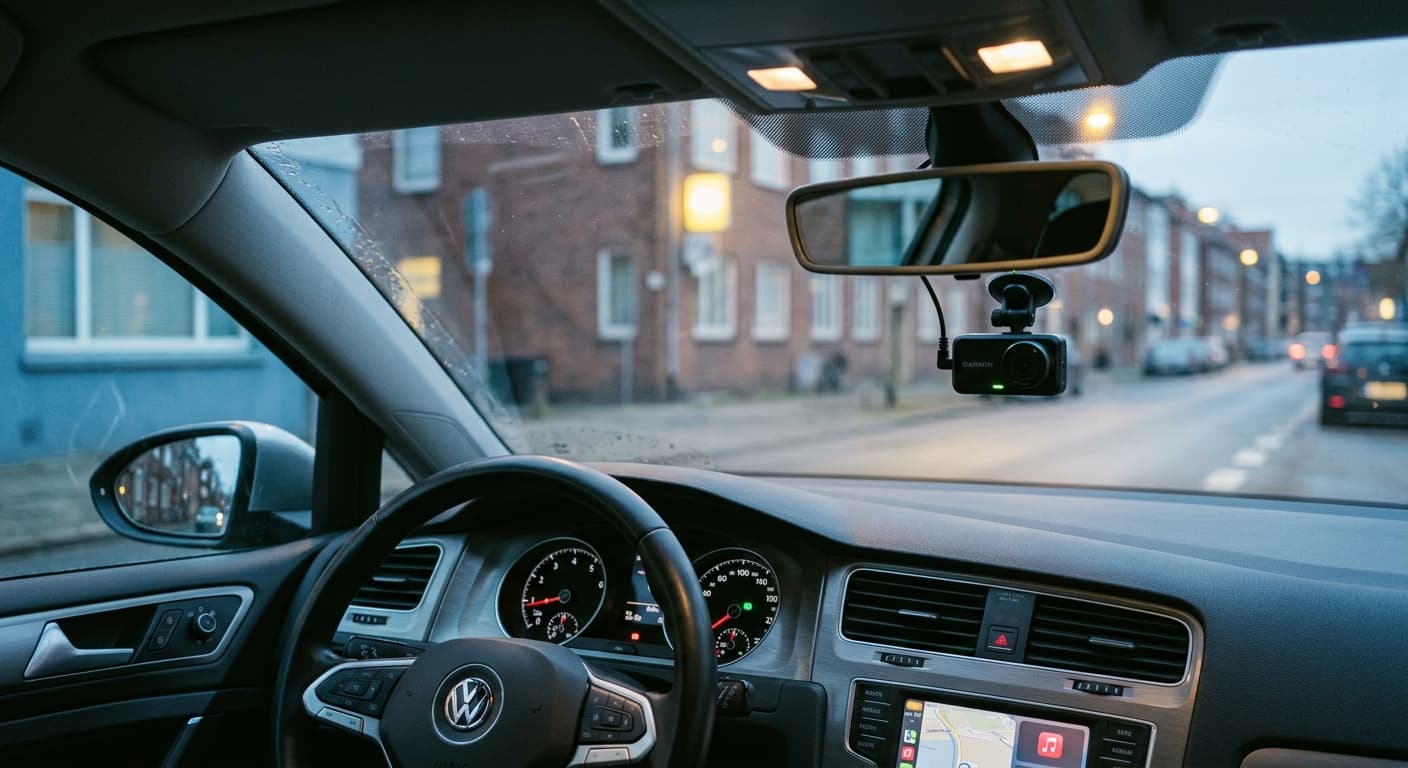
In Delaware, dashcam video recording is legal on public roads with no specific dashcam statute governing the practice. Audio recording inside the vehicle requires the consent of all parties under 11 Del. C. Section 1335. Mount your dashcam to avoid materially obstructing your view under 21 Del. C. Section 4309.
Delaware does not have a standalone dashcam statute. Instead, the legality of using a dashboard camera in the state depends on general recording laws, windshield obstruction rules, and privacy protections. Video-only dashcam recording is legal on public roads, but dashcams that capture audio raise serious legal questions because of Delaware's conflicting consent statutes.
The wiretapping law (11 Del. C. Section 2402) permits one-party consent for recording, while the privacy law (11 Del. C. Section 1335) requires all-party consent. Because this conflict has not been resolved by Delaware state courts, the safest approach is to treat any audio captured by a dashcam as requiring the consent of every person in the vehicle.
Delaware Dashcam Legality Overview
Is It Legal to Use a Dashcam in Delaware?
Yes. Delaware law does not prohibit the use of dashcams in personal or commercial vehicles. Drivers are free to install dashboard cameras that record video of the road, traffic conditions, and surrounding environments. The legal issues arise not from the camera itself but from two related concerns: windshield obstruction and audio recording.
Because Delaware treats its recording laws conservatively, drivers should understand how each rule applies before turning on a dashcam for the first time.
Video-Only vs. Audio-Enabled Dashcams
The distinction between video-only and audio-enabled dashcams is legally significant in Delaware.
| Feature | Legal Status in Delaware |
|---|---|
| Video-only dashcam (no microphone) | Legal on public roads |
| Dashcam with audio recording | Requires all-party consent for private conversations |
| Dashcam recording exterior audio | Generally legal (no expectation of privacy on public roads) |
| Interior audio capturing passengers | Requires consent from all occupants |
A video-only dashcam that records road conditions, other vehicles, and traffic events does not trigger Delaware's consent statutes. However, the moment a dashcam captures audio of a private conversation inside the vehicle, the all-party consent requirement under 11 Del. C. Section 1335 applies.
If your dashcam has a built-in microphone, you should either disable the audio recording feature or inform every passenger that the dashcam is recording audio and get their consent before starting the vehicle.
Windshield Mounting Rules in Delaware

21 Del. C. Section 4309: Windshield Obstruction
Delaware's windshield obstruction law is found in 21 Del. C. Section 4309. This statute prohibits any sign, poster, or other nontransparent material on the front windshield, side wings, or side or rear windows that impairs the driver's ability to see clearly through the glass.
While this section does not specifically mention dashcams, any device mounted to the windshield that materially obstructs the driver's view could violate the statute. Delaware law enforcement officers may cite drivers whose dashcam placement interferes with their line of sight.
Best Practices for Dashcam Placement
To stay compliant with Delaware's windshield rules, follow these mounting guidelines:
- Behind the rearview mirror: This is the most common and safest placement. The dashcam sits in an area already partially obstructed by the mirror, minimizing any additional visibility impact.
- Lower corner of the passenger side: If the dashcam cannot fit behind the mirror, mounting it in the lower right corner of the windshield keeps it out of the driver's direct line of sight.
- Dashboard mount: Some drivers avoid the windshield entirely by using a suction-free dashboard mount. This eliminates any obstruction concern but may provide a less optimal recording angle.
- Avoid the center or driver-side areas: Placing a dashcam directly in front of the driver or in the center of the windshield is most likely to draw a citation.
Windshield Tinting and Dashcam Visibility
Delaware regulates window tinting under 21 Del. C. Section 4313. Factory-installed tint on the front side windows must allow at least 70% light transmittance, while the windshield may carry only non-reflective tint above the manufacturer's AS-1 line. Heavy tinting can reduce the effectiveness of a dashcam and may also draw law enforcement attention. Make sure your window tint complies with Delaware law if you are relying on dashcam footage for evidentiary purposes.
Audio Recording Consent and Your Dashcam
Why Audio Is the Primary Legal Risk
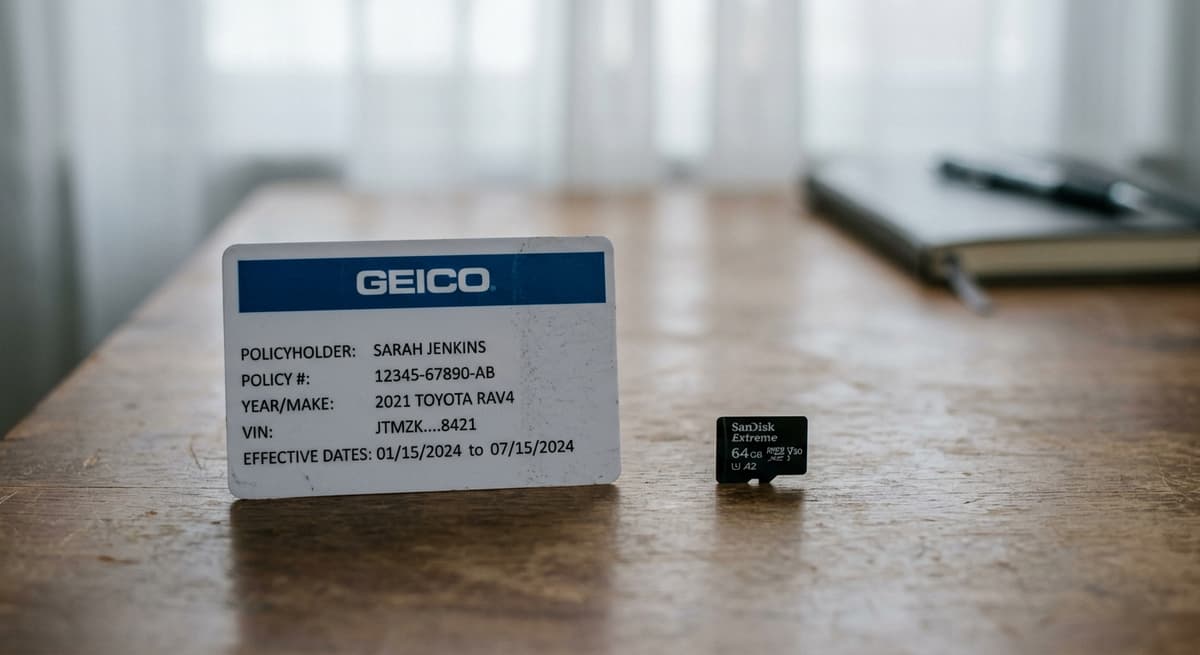
The single biggest legal risk of using a dashcam in Delaware is inadvertent audio recording. Many dashcams come with built-in microphones that are enabled by default. If your dashcam records conversations between you and your passengers, you are capturing private communications that fall under 11 Del. C. Section 1335.
Because Delaware's privacy statute requires consent from all parties before intercepting a private conversation, recording passengers without their knowledge could expose you to criminal liability.
How to Handle Audio Consent in Your Vehicle
There are several practical approaches to staying compliant:
- Disable the microphone: The simplest solution. Most dashcams allow you to turn off audio recording in the settings menu. This eliminates the consent issue entirely.
- Post a visible notice: Place a small sign on your dashboard stating "Audio and video recording in progress." While a sign alone may not satisfy the legal definition of consent, it puts passengers on notice.
- Verbal disclosure: When passengers enter your vehicle, inform them that your dashcam records audio and video. Ask if they consent to being recorded.
- Written consent for rideshare and commercial drivers: If you drive for a rideshare service or operate a commercial vehicle, consider keeping a written consent form or adding a recording disclosure to your service terms.
Rideshare and Taxi Dashcams
Delaware rideshare and taxi drivers face particular challenges with dashcam audio. Passengers have a reasonable expectation of privacy during a ride, and the driver has a legal obligation under the all-party consent standard to obtain permission before recording audio. Many rideshare platforms include recording disclosures in their terms of service, but drivers should verify whether those disclosures satisfy Delaware's consent requirement.
The Delaware Division of Motor Vehicles and the Delaware Department of Transportation do not currently regulate dashcams in rideshare vehicles beyond general traffic safety standards.
Using Dashcam Footage as Evidence in Delaware
Accident and Insurance Claims
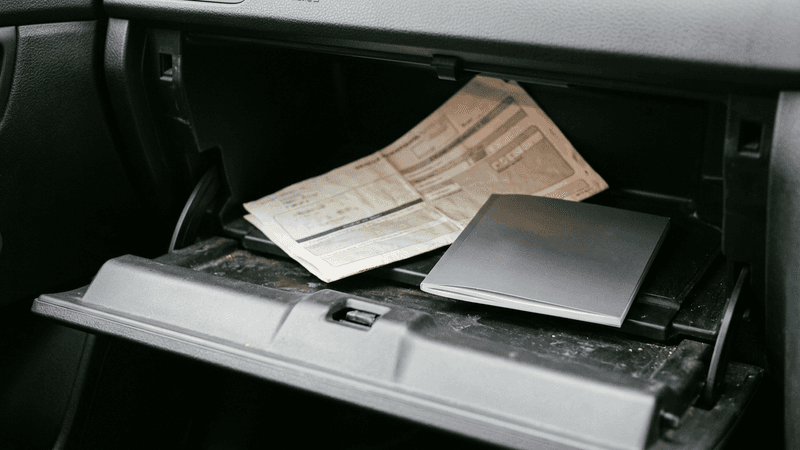
Dashcam footage can be a powerful tool in Delaware accident claims. Video evidence showing the moments before, during, and after a collision can help establish fault, corroborate witness testimony, and counter false claims.
Delaware insurance companies routinely accept dashcam footage as supporting evidence for claims. To maximize the evidentiary value of your dashcam recordings:
- Use a dashcam with date and time stamping enabled
- Make sure the camera resolution is high enough to capture license plates and road signs
- Preserve the original footage file without editing or altering it
- Download and back up footage promptly, as many dashcams overwrite old recordings automatically
Admissibility in Delaware Courts
For dashcam footage to be admitted as evidence in a Delaware court, it must meet several requirements:
- Relevance: The footage must be relevant to the issues in the case.
- Authenticity: The party introducing the footage must demonstrate that it has not been tampered with.
- Legal recording: If the footage includes audio of private conversations, it must have been recorded with all-party consent.
- Chain of custody: The footage must be preserved securely from the time of recording to the time it is presented in court.
Dashcam video that only captures road conditions and exterior events (without interior audio) is generally straightforward to admit. Footage containing audio of private conversations recorded without consent may be challenged by the opposing party and could be excluded.
Traffic Violations and Law Enforcement
Delaware law enforcement officers may request dashcam footage during traffic stops or accident investigations. You are not required to provide footage voluntarily, but a court order or subpoena may compel production. If an officer asks for your dashcam footage:
- You have the right to decline a voluntary request
- An officer may seize your dashcam or its footage without a warrant in many circumstances (for example, incident to a lawful stop or in plain view), but generally needs a warrant to search or extract the contents of the device, per Riley v. California, 573 U.S. 373 (2014)
- Cooperating voluntarily may help your case if the footage supports your version of events
- Consult with a Delaware attorney before turning over footage if you have any concerns about self-incrimination
Criminal Penalties for Illegal Dashcam Audio Recording
Privacy Statute Penalties
Recording private conversations through a dashcam without all-party consent violates 11 Del. C. Section 1335. This offense is classified as a Class A misdemeanor and carries the following penalties:
- Up to 1 year in jail
- A fine of up to $2,300
- Or both
Wiretapping Statute Penalties
If a dashcam audio recording is deemed an unlawful interception under 11 Del. C. Section 2402, the penalties are significantly more severe:
- A Class E felony conviction carries up to 5 years in prison
- A fine of up to $10,000
- Or both
Civil Liability
Under 11 Del. C. Section 2409, anyone whose communications are unlawfully intercepted through a dashcam can file a civil lawsuit. Available damages include:
- Actual damages with a minimum of $100 per day of violation or $1,000, whichever is greater
- Punitive damages for willful or egregious conduct
- Reasonable attorney fees and litigation costs
| Statute | Offense | Classification | Max Prison | Max Fine |
|---|---|---|---|---|
| Section 1335 | Audio recording without all-party consent | Class A Misdemeanor | 1 year | $2,300 |
| Section 2402 | Unlawful interception of communications | Class E Felony | 5 years | $10,000 |
Commercial Vehicle Dashcams in Delaware
Trucking and Fleet Dashcams
Commercial trucking companies operating in Delaware increasingly use dashcams for fleet management, safety monitoring, and liability protection. The Federal Motor Carrier Safety Administration (FMCSA) does not mandate dashcams in commercial vehicles, but it does not prohibit them either.
Delaware commercial vehicle operators should be aware that:
- Video-only dashcams in commercial vehicles are legal on Delaware roads
- Interior-facing dashcams that record driver audio require compliance with the all-party consent standard
- Employers who monitor drivers through dashcams must comply with Title 19 Section 705, which requires advance notice before monitoring employee communications
- Fleet management dashcams that transmit GPS data, speed, and braking information are not subject to audio recording consent laws unless they also capture audio
School Bus Dashcams
Delaware school districts may use dashcams on school buses for safety and disciplinary purposes. These cameras typically record video of the bus interior, exterior, and road conditions. If school bus dashcams include audio recording, the school district should provide notice to parents and students about the recording and follow the consent requirements applicable to minors.
The Delaware Department of Education sets policies for school bus safety, and individual districts may have additional rules about camera use on buses.
Dashcam Privacy Considerations
Recording Other Drivers and Pedestrians
A dashcam that records video of other vehicles, pedestrians, and public road conditions does not generally raise privacy concerns under Delaware law. People on public roads have a reduced expectation of privacy, and capturing their images in a public setting is permissible.
However, using dashcam footage to harass, stalk, or intimidate another person could violate other Delaware laws, including harassment statutes under 11 Del. C. Section 1311.
Parking Mode and Surveillance
Many modern dashcams have a "parking mode" that activates recording when the vehicle detects motion or impact while parked. This feature is generally legal in Delaware when the vehicle is parked on a public street or in a public parking lot, as there is no expectation of privacy in these spaces.
If your vehicle is parked on private property (such as a neighbor's driveway or a private parking garage), parking mode recording may raise additional privacy concerns. Recording on private property without the property owner's consent could implicate the trespass-to-eavesdrop provision of 11 Del. C. Section 1335(a)(1).
Sharing Dashcam Footage Online
Posting dashcam footage to social media or video-sharing platforms is generally legal if the footage was recorded lawfully and does not contain private information (such as conversations recorded without consent). However, Delaware residents should be cautious about posting footage that identifies other individuals in embarrassing or defamatory contexts, as this could give rise to civil claims for defamation or invasion of privacy.
Explore More Delaware Recording Laws
Audio Recording | Video Recording | Voyeurism Laws | Workplace Recording | Recording Police | Phone Call Recording | Security Cameras | Recording in Public | Landlord-Tenant Recording | Dashcam Laws | School Recording | Medical Recording
Back to Delaware Recording Laws
More Delaware Recording Topics
More Delaware Laws
Frequently Asked Questions
Are dashcams legal in Delaware?
Yes. Delaware does not prohibit dashcams. Video-only dashcams are legal on public roads. However, dashcams that record audio of private conversations inside the vehicle require all-party consent under 11 Del. C. Section 1335.
Can my dashcam record audio in Delaware?
Your dashcam can record audio only if every person whose voice may be captured has given consent. Delaware is treated as an all-party consent state due to its conflicting recording statutes. The safest approach is to disable the dashcam microphone or inform all passengers and get their agreement before driving.
Where should I mount my dashcam in Delaware?
Mount your dashcam behind the rearview mirror or in the lower corner of the passenger-side windshield. Delaware law under 21 Del. C. Section 4309 prohibits objects that materially obstruct the driver's view. Avoid placing the dashcam in the center of the windshield or directly in front of the driver.
Can dashcam footage be used as evidence in Delaware courts?
Yes. Dashcam footage is admissible in Delaware courts if it is relevant, authentic, unaltered, and was obtained legally. If the footage includes audio of private conversations recorded without all-party consent, it may be challenged and potentially excluded.
What are the penalties for recording audio without consent through a dashcam in Delaware?
Recording private conversations without all-party consent is a Class A misdemeanor under the privacy statute (up to 1 year in jail, $2,300 fine) and could be charged as a Class E felony under the wiretapping statute (up to 5 years in prison, $10,000 fine). Victims can also sue for civil damages of at least $100 per day or $1,000, whichever is greater.
Updates
Corrected the windshield-mounting citation from a repealed brake-fluid statute to the real obstruction law (21 Del. C. Section 4309), fixed an inverted description of Riley v. California on device seizure versus search, and clarified that Delaware's 70% tint-transparency rule applies to front side windows, not the windshield.
Independently fact-checked against the cited primary sources; governing law re-checked for recent changes
Spoke-propagation audit. Confirmed no wrong 19 Del. C. Section 1335 cites (correct title is 11 Del. C.). All citations use delcode.delaware.gov canonical URLs. Two-statute conflict (11 Del. C. Section 2402 one-party vs. Section 1335 all-party) verified present. No em-dash violations found.
Reviewed and approved by an editor
The Law Behind This Article
This article rests on the statutory provisions below, held in our own legal record and retrieved from the official source. Tap a section to read the operative text.
Delaware Code, Title 11 (Crimes and Criminal Procedure), Chapter 024 (WIRETAPPING, ELECTRONIC SURVEILLANCE AND INTERCEPTION OF COMMUNICATIONS)
§ 2402Interception of communications generally; divulging contents of communications, violations of chapter.In forcecited in 17 of our articles
(a) Prohibited acts. — Except as specifically provided in this chapter or elsewhere in this Code no person shall: (1) Intentionally intercept, endeavor to intercept, or procure any other person to intercept or endeavor to intercept any wire, oral or electronic communication; (2) Intentionally disclose or endeavor to disclose to any other person the contents of any wire, oral or electronic communication, knowing or having reason to know that the information was obtained through the interception of a wire, oral or electronic communication in violation of this chapter; or (3) Intentionally use or endeavor to use the contents of any wire, oral or electronic communication, knowing or having reason to know that the information was obtained through the interception of a wire, oral or electronic communication in violation of this chapter. (b) Penalties for violation of subsection (a) of this section. — Any person who violates subsection (a) of this section shall be guilty of a class E felony and be fined not more than $10,000. (c) Lawful acts.
Official text (excerpt) · last checked 2026-08-28 · Read the full text in our law library · Verify at delcode.delaware.gov
Cited in 4 court opinions in our collectionLatest citing opinion in our collection: 2023
In the courts (editorial summary, independently checked):Dayton v. Collison (2020) applied 11 Del. C. 2402(a)(1), finding neighbors intercepted a homeowner's backyard conversations with a motion-activated video camera, an intrusion upon seclusion. State v. Hunt (2023) said in the alternative that police access to a consenting owner's phone, if an interception, was lawful under 2402(c)(3).
Opinions citing this section in our collection:
- Dayton v. Collison (Superior Court of Delaware 2020)✓Neighbors aimed a motion-activated audio and video camera at a man's backyard and recorded his conversations there; after trial the court found they intentionally intercepted oral communications in violation of section 2402(a), and that this was an intrusion on his seclusion.
- Everett v. State (Supreme Court of Delaware 2018, 186 A.3d 1224)“…d or a location was bugged, and a host of other details.”); 11 Del. C. § 2402(c)(3) (authorizing government wiretappi…”
- State v. Hunt (Superior Court of Delaware 2023)✓Police read and answered texts on a cooperating witness's phone with his permission; rejecting a postconviction claim, the court found no interception occurred and reasoned in the alternative that any interception in the drug investigation was lawful under section 2402(c)(3).
Identified automatically from the court opinions citing this section — not a ranking of which case controls.
Also relied on in: Delaware Recording Laws (2026): Two-Statute Consent Conflict, Delaware Landlord-Tenant Recording Laws: Surveillance, Privacy Rights, and Legal Limits (2026), Federal Wiretap Act and ECPA: The Complete Guide (2026)
Search our full record of US law — 2.1 million sections, every state + federal →
Sources and References
- Delaware Code Title 11, Section 1335 - Violation of Privacy(delcode.delaware.gov).gov
- Delaware Code Title 11, Section 2402 - Interception of Communications(delcode.delaware.gov).gov
- Delaware Code Title 21, Section 4309 - Obstructions to View on Windshield or Windows(delcode.delaware.gov).gov
- Delaware Code Title 11, Section 2409 - Civil Liability(delcode.delaware.gov).gov
- Delaware Code Title 19, Section 705 - Employer Monitoring(delcode.delaware.gov).gov
- Federal Motor Carrier Safety Administration - FMCSA(fmcsa.dot.gov).gov
- Delaware Department of Transportation(deldot.gov).gov