
Delaware
Delaware Landlord-Tenant Recording Laws: Surveillance, Privacy Rights, and Legal Limits (2026)
Independently fact-checked against primary sources (last audited August 22, 2026). · Reviewed by the RecordingLaw editorial team. · Law checked current as of August 22, 2026. · 6 primary sources cited on this page. How we verify our legal content

Delaware requires all-party consent for audio recordings under 11 Del. C. Section 1335, which shapes every landlord-tenant interaction. Landlords cannot install cameras or recording devices inside a rental unit. Tenants who want to record a conversation with their landlord must first obtain consent.
The relationship between landlords and tenants in Delaware involves a careful balance of property rights and privacy protections. Delaware law provides strong privacy protections for tenants within their rental units while allowing landlords to maintain reasonable security measures in common areas. This guide explains the recording rules that apply to both landlords and tenants in Delaware, covering security cameras, audio recording, dispute documentation, and the legal remedies available when privacy rights are violated.
Landlord Recording and Surveillance Rules
Inside the Rental Unit: Strictly Prohibited
The most important rule for landlords in Delaware is clear: you cannot install any cameras or recording devices inside a tenant's rental unit. This applies to all types of recording devices, including:
- Visible security cameras
- Hidden cameras of any kind
- Audio recording devices
- Smart home devices with recording capabilities that remain under the landlord's control
Tenants have a reasonable expectation of privacy inside their rented homes. Installing any camera or recording device inside a rental unit without the tenant's consent violates 11 Del. C. Section 1335(a)(2), a Class A misdemeanor. If the camera captures a tenant undressed, nude, or secretly recorded under or through clothing, it escalates to voyeurism under Section 1335(a)(6) or (a)(7), a Class G felony punishable by up to 2 years in prison.
This prohibition applies regardless of:
- Whether the landlord owns the property
- Whether the lease mentions surveillance
- Whether the landlord claims a legitimate security purpose
- Whether the cameras are visible or hidden
Common Area Surveillance: Generally Permitted
Landlords can install video security cameras in common areas of multi-unit properties for legitimate security purposes. Common areas include:
- Building entrances and exits
- Hallways and corridors
- Lobbies and reception areas
- Parking lots and garages
- Laundry rooms (not inside individual machines)
- Mailbox areas
- Exterior grounds and walkways
- Pool and fitness center areas (not changing rooms or restrooms)
Audio considerations: If common area cameras have audio recording capability, the all-party consent requirement under Section 1335 applies to any private conversations captured. The safest approach is to use video-only cameras in common areas or to post clear signs notifying tenants and visitors that audio and video recording is in progress.
Cameras Pointed at Individual Unit Entrances
Landlords may install cameras near the building entrance that capture views of individual apartment doors in common hallways. However, cameras should not be positioned to:
- Look inside units when doors are opened
- Focus exclusively on a single tenant's door in a way that constitutes targeted surveillance
- Capture footage of private areas visible through windows or open doors
Landlord Entry and Recording During Inspections
Delaware's Residential Landlord-Tenant Code (25 Del. C. Section 5509) governs when landlords can enter rental units. When a landlord enters for inspections, maintenance, or showings:
- The landlord must provide reasonable notice (at least 48 hours for non-emergency entry)
- The landlord should not record audio or video inside the unit during the entry
- If the landlord wishes to photograph the condition of the unit (for documentation of damages, etc.), they should inform the tenant in advance and limit recording to the relevant areas
- The tenant can be present during the entry and can record the interaction (with the landlord's consent, given Delaware's all-party consent framework)
Tenant Recording Rights and Restrictions
Recording Inside Your Own Rental Unit
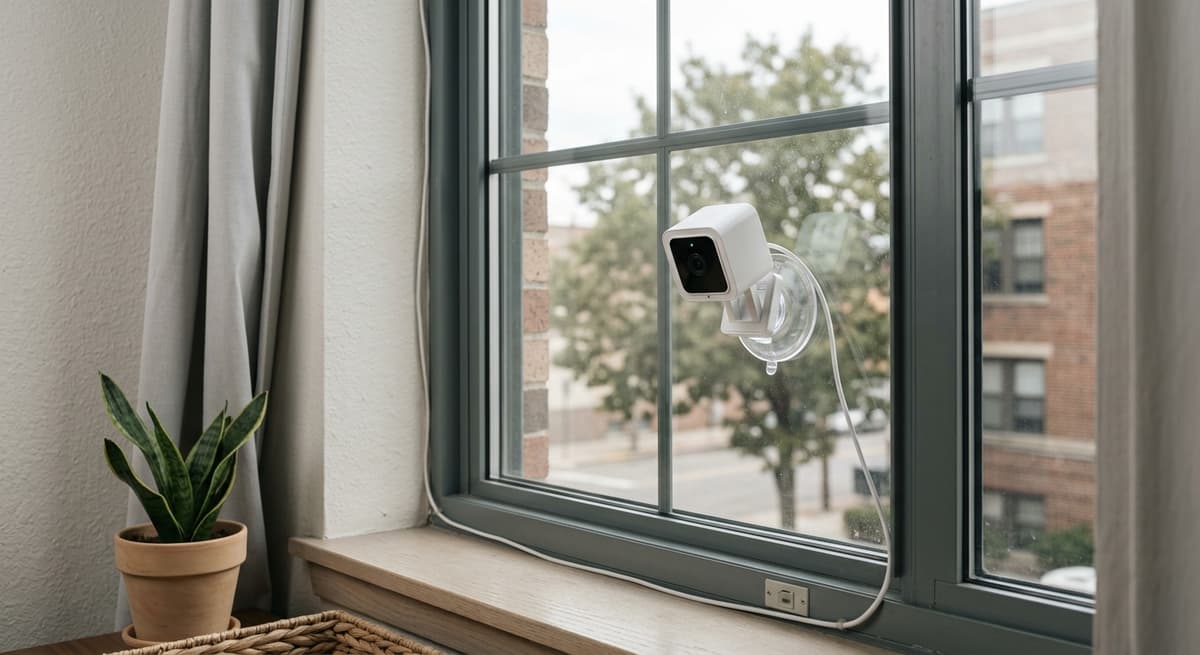
Tenants have the right to install their own security cameras and recording devices inside their rental units. This includes:
- Security cameras in living areas
- Doorbell cameras on apartment doors (check lease for exterior modification rules)
- Nanny cameras for monitoring childcare providers
- Pet cameras for monitoring animals
Audio recording inside your unit: If your recording devices capture audio, the all-party consent rule applies to private conversations with visitors, guests, or anyone entering your unit. Inform visitors that audio recording is in progress or disable audio recording features.
Exterior cameras: Tenants who want to install exterior cameras (such as doorbell cameras) should check their lease agreement and get landlord approval before making any modifications to the building's exterior.
Recording Conversations with Your Landlord
Tenants often want to record conversations with their landlord to document repair requests, complaints, lease negotiations, or disagreements. In Delaware, you must obtain the landlord's consent before recording any private conversation due to the all-party consent standard under 11 Del. C. Section 1335.
Alternative documentation methods:
- Send repair requests, complaints, and important communications in writing (email, text, or certified mail)
- Keep copies of all written correspondence
- Take dated photographs of maintenance issues
- Keep a written log of interactions with your landlord, including dates, times, and what was discussed
- Bring a witness to important in-person meetings
Recording in Common Areas
Tenants can record in common areas of their building, subject to the same rules that apply to any person recording in a semi-public space:
- Video recording in hallways, lobbies, and parking areas is generally permitted
- Audio recording of private conversations in common areas may require consent
- Recording that is directed at other tenants' private activities could raise privacy concerns
Specific Landlord-Tenant Recording Scenarios
Documenting Property Conditions
Both landlords and tenants have legitimate reasons to document the condition of a rental property:
Move-in/move-out inspections: Both parties should photograph and video record the condition of the unit at the beginning and end of the lease. This documentation is critical for security deposit disputes. Video-only recording (without audio commentary that includes private conversations) is straightforward. If you want to narrate the recording, inform the other party.
Maintenance issues: Tenants should photograph and video record maintenance problems (leaks, mold, pest infestations, broken appliances) and send the documentation to the landlord in writing. This creates a record that can be used in court if the landlord fails to make repairs.
Lease violations: Landlords who need to document lease violations should photograph the visible evidence rather than recording tenants' private activities.
Recording During Eviction Proceedings
If you are facing eviction in Delaware, recording the process can be important:
- You can record the eviction hearing at the Justice of the Peace Court (check specific court rules)
- During a physical eviction, you can record from public areas
- Do not record private conversations with your landlord about the eviction without their consent
- Keep written records of all notices, communications, and events related to the eviction
Noise Complaints and Neighbor Disputes
If you are documenting noise complaints against neighbors:
- Recording the noise level from inside your own unit is generally permissible
- Recording your own conversations about the noise with building management requires their consent
- Directing recording devices at a neighbor's door or windows to capture their private activities violates Section 1335
- Submit written noise complaints to your landlord with dates, times, and descriptions
Short-Term Rentals, Airbnb, and Vacation Properties
Host Recording Obligations
Hosts of short-term rental properties in Delaware must comply with all applicable recording laws:
- No cameras inside the rental: Hidden or visible cameras inside the rental unit are prohibited. This includes bedrooms, bathrooms, living areas, and any enclosed private space.
- Exterior cameras must be disclosed: If the property has exterior cameras (doorbell cameras, driveway cameras, etc.), hosts must disclose their existence and location in the listing and check-in information.
- Platform policies: Airbnb, VRBO, and similar platforms have their own recording disclosure policies that may be stricter than Delaware law. Airbnb's policy, for example, prohibits all cameras in private spaces and requires disclosure of any cameras in common areas.
Guest Rights
Guests in Delaware short-term rentals have the same privacy rights as long-term tenants regarding recording:
- They cannot be recorded inside the rental unit
- They must be informed of any exterior cameras
- They can file criminal complaints if they discover hidden cameras
- They can pursue civil damages under 11 Del. C. Section 2409
What to Do If You Find a Hidden Camera in a Rental
If you discover a hidden camera in a Delaware rental property:
- Do not touch or remove the camera (preserve evidence)
- Take photos of the camera and its location
- Leave the property if possible
- Call local police to file a report
- Notify the rental platform (Airbnb, VRBO, etc.) if applicable
- Contact an attorney about civil remedies
- Document everything including reservation details and communications with the host
Delaware Residential Landlord-Tenant Code
Relevant Provisions
The Delaware Residential Landlord-Tenant Code (25 Del. C. Chapter 55) establishes the rights and obligations of both landlords and tenants. Key provisions relevant to recording and privacy include:
Section 5305 - Landlord obligations: Landlords must provide a rental unit that does not endanger the health, welfare, or safety of tenants and is fit for the purpose for which it is rented, and must keep the unit's electrical, plumbing, and other supplied facilities in good working order. This general obligation supports a tenant's right to a private, secure living environment.
Section 5509 - Access: Landlords must provide at least 48 hours notice before entering a rental unit for non-emergency purposes. Unauthorized entry can support claims that the landlord violated the tenant's privacy.
Section 5516 - Retaliation: Landlords cannot retaliate against tenants who exercise their legal rights, including filing complaints about privacy violations.
Justice of the Peace Court
Most landlord-tenant disputes in Delaware, including those involving privacy and recording issues, are handled by the Justice of the Peace Court. This court has jurisdiction over:
- Security deposit disputes
- Eviction proceedings
- Small claims (up to $25,000)
- Landlord-tenant code violations
Penalties and Legal Remedies
Criminal Penalties for Landlords
Landlords who violate tenant privacy through illegal recording face:
| Offense | Classification | Max Prison | Max Fine |
|---|---|---|---|
| Hidden camera inside rental capturing undress (voyeurism, Section 1335(a)(6)/(a)(7)) | Class G Felony | 2 years | Varies |
| Camera installed inside rental without consent, no undress captured (Section 1335(a)(2)) | Class A Misdemeanor | 1 year | $2,300 |
| Audio recording without consent | Class A Misdemeanor | 1 year | $2,300 |
| Wiretapping | Class E Felony | 5 years | $10,000 |
Civil Remedies for Tenants
Tenants can pursue civil damages under 11 Del. C. Section 2409, which provides for three specific remedies:
- Statutory minimum damages: $100 per day of violation or $1,000, whichever is greater
- Punitive damages: For willful or egregious conduct
- Attorney fees: Reasonable attorney fees and litigation costs
Lease termination and injunctive relief are not remedies Section 2409 itself provides in a private tenant lawsuit; a tenant may still have grounds for these through other landlord-tenant law provisions.
Reporting Privacy Violations
Tenants who believe their landlord has violated their recording privacy rights should:
- Document the violation with photos and written records
- File a police report if criminal conduct is suspected
- Contact the Delaware Attorney General's Consumer Protection Unit
- Consult with a tenant rights attorney
- File a complaint with the Justice of the Peace Court if appropriate
Explore More Delaware Recording Laws
Audio Recording | Video Recording | Voyeurism Laws | Workplace Recording | Recording Police | Phone Call Recording | Security Cameras | Recording in Public | Landlord-Tenant Recording | Dashcam Laws | School Recording | Medical Recording
Back to Delaware Recording Laws
More Delaware Recording Topics
More Delaware Laws
Frequently Asked Questions
Can my landlord put cameras inside my apartment in Delaware?
No, not without your consent. Tenants have a reasonable expectation of privacy in their homes. Installing any camera inside a rental unit without the tenant's consent is at least a Class A misdemeanor under 11 Del. C. Section 1335(a)(2), and if the camera captures the tenant undressed or nude, it escalates to voyeurism, a Class G felony punishable by up to 2 years in prison.
Can my landlord have security cameras in the hallway and parking lot?
Yes. Landlords can install video security cameras in common areas such as hallways, lobbies, parking lots, and building entrances for legitimate security purposes. However, if the cameras record audio, the all-party consent requirement applies to any private conversations captured.
Can I record a conversation with my landlord in Delaware?
You need your landlord's consent. Delaware is treated as an all-party consent state, so you must inform your landlord and get their agreement before recording a private conversation. As an alternative, communicate important matters in writing (email, text, certified mail) to create a documented record.
Can I install a Ring doorbell camera on my apartment door in Delaware?
Check your lease first. Installing a doorbell camera may require landlord approval if it involves modifying the building exterior. Many landlords permit adhesive-mounted or removable devices. If your doorbell camera records audio, the all-party consent requirement applies to private conversations in the hallway.
What should I do if I find a hidden camera in my Delaware rental?
Do not touch or remove the camera. Take photos documenting its location, then contact local police to file a report. If you are in a short-term rental, notify the platform (Airbnb, VRBO). Consult with an attorney about civil remedies, which can include damages of at least $100 per day or $1,000, plus punitive damages.
Updates
Fixed two wrong-neighbor statute citations: the landlord habitability duty is 25 Del. C. Section 5305 (not 5505), and the anti-retaliation protection is Section 5516 (not 5513); also replaced a dead Attorney General domain with the live one.
Independently fact-checked against the cited primary sources; governing law re-checked for recent changes
Corrected the article's blanket claim that any camera installed inside a Delaware rental unit is voyeurism: a bare installation without consent is a Class A misdemeanor under Section 1335(a)(2), and it only escalates to Class G felony voyeurism if it captures the tenant undressed or nude. Also corrected the Section 2409 civil-remedies list, which does not itself provide for lease termination or injunctive relief.
Governing law re-checked for recent changes
Spoke-propagation audit. Confirmed no wrong 19 Del. C. Section 1335 cites (correct title is 11 Del. C.). All citations use delcode.delaware.gov canonical URLs. Two-statute conflict (11 Del. C. Section 2402 one-party vs. Section 1335 all-party) verified present. No em-dash violations found.
Reviewed and approved by an editor
The Law Behind This Article
This article rests on the statutory provisions below, held in our own legal record and retrieved from the official source. Tap a section to read the operative text.
Delaware Code, Title 11 (Crimes and Criminal Procedure), Chapter 024 (WIRETAPPING, ELECTRONIC SURVEILLANCE AND INTERCEPTION OF COMMUNICATIONS)
§ 2402Interception of communications generally; divulging contents of communications, violations of chapter.In forcecited in 17 of our articles
(a) Prohibited acts. — Except as specifically provided in this chapter or elsewhere in this Code no person shall: (1) Intentionally intercept, endeavor to intercept, or procure any other person to intercept or endeavor to intercept any wire, oral or electronic communication; (2) Intentionally disclose or endeavor to disclose to any other person the contents of any wire, oral or electronic communication, knowing or having reason to know that the information was obtained through the interception of a wire, oral or electronic communication in violation of this chapter; or (3) Intentionally use or endeavor to use the contents of any wire, oral or electronic communication, knowing or having reason to know that the information was obtained through the interception of a wire, oral or electronic communication in violation of this chapter. (b) Penalties for violation of subsection (a) of this section. — Any person who violates subsection (a) of this section shall be guilty of a class E felony and be fined not more than $10,000. (c) Lawful acts.
Official text (excerpt) · last checked 2026-08-28 · Read the full text in our law library · Verify at delcode.delaware.gov
Cited in 4 court opinions in our collectionLatest citing opinion in our collection: 2023
In the courts (editorial summary, independently checked):Dayton v. Collison (2020) applied 11 Del. C. 2402(a)(1), finding neighbors intercepted a homeowner's backyard conversations with a motion-activated video camera, an intrusion upon seclusion. State v. Hunt (2023) said in the alternative that police access to a consenting owner's phone, if an interception, was lawful under 2402(c)(3).
Opinions citing this section in our collection:
- Dayton v. Collison (Superior Court of Delaware 2020)✓Neighbors aimed a motion-activated audio and video camera at a man's backyard and recorded his conversations there; after trial the court found they intentionally intercepted oral communications in violation of section 2402(a), and that this was an intrusion on his seclusion.
- Everett v. State (Supreme Court of Delaware 2018, 186 A.3d 1224)“…d or a location was bugged, and a host of other details.”); 11 Del. C. § 2402(c)(3) (authorizing government wiretappi…”
- State v. Hunt (Superior Court of Delaware 2023)✓Police read and answered texts on a cooperating witness's phone with his permission; rejecting a postconviction claim, the court found no interception occurred and reasoned in the alternative that any interception in the drug investigation was lawful under section 2402(c)(3).
Identified automatically from the court opinions citing this section — not a ranking of which case controls.
Also relied on in: Delaware Recording Laws (2026): Two-Statute Consent Conflict, Federal Wiretap Act and ECPA: The Complete Guide (2026), Delaware Laws on Recording in Public: First Amendment Rights, Public Spaces, and Restrictions (2026)
§ 2409Civil liability; defense to civil or criminal action.In forcecited in 4 of our articles
(a) Civil liability. — Any person whose wire, oral or electronic communication is intercepted, disclosed or used in violation of this chapter shall have a civil cause of action against any person who intercepts, discloses, uses, or procures any other person to intercept, disclose or use the communications and be entitled to recover from any person: (1) Actual damages, but not less than liquidated damages computed at the rate of $100 a day for each day of violation or $1,000, whichever is higher; (2) Punitive damages; and, (3) A reasonable attorneys’ fee and other litigation costs reasonably incurred. (b) Defense. — A good faith reliance on a court order or legislative authorization shall constitute a complete defense to any civil or criminal action brought under this chapter or under any other law.
Official text (excerpt) · last checked 2026-07-29 · Read the full text in our law library · Verify at delcode.delaware.gov
Also relied on in: Delaware Phone Call Recording Laws: Consent Rules, Interstate Calls, and Penalties (2026), Delaware Security Camera Laws: Residential, Business, and HOA Rules (2026), Delaware AI Meeting Recording Laws (2026)
Delaware Code, Title 11 (Crimes and Criminal Procedure), Chapter 005 (SPECIFIC OFFENSES)
§ 1335Violation of privacy; class A misdemeanor; class G felony.In forcecited in 19 of our articles
(a) A person is guilty of violation of privacy when, except as authorized by law, the person: (1) Trespasses on property intending to subject anyone to eavesdropping or other surveillance in a private place; or (2) Installs in any private place, without consent of the person or persons entitled to privacy there, any device for observing, photographing, recording, amplifying or broadcasting sounds or events in that place; or (3) Installs or uses outside a private place any device for hearing, recording, amplifying or broadcasting sounds originating in that place which would not ordinarily be audible or comprehensible outside, without the consent of the person or persons entitled to privacy there; or (4) Intercepts without the consent of all parties thereto a message by telephone, telegraph, letter or other means of communicating privately, including private conversation; or (5) Divulges without the consent of the sender and the receiver the existence or contents of any message by telephone, telegraph, letter or other means of communicating privately if the accused knows that the message was unlawfully intercepted or if the accused learned of the message in the course of…
Official text (excerpt) · last checked 2026-08-31 · Read the full text in our law library · Verify at delcode.delaware.gov
Cited in 15 court opinions in our collectionLatest citing opinion in our collection: 2026
In the courts (editorial summary, independently checked):State v. Pulgini (1976) held 11 Del. C. 1335 does not reach police acts covered by sections 1336 and 1431, so a police interception made with one party's consent was lawful. State of Delaware v. Steven Wu (2026) construed 1335(a)(9)(b) as protecting confidentiality from third parties regardless of whether the relationship has ended.
Opinions citing this section in our collection:
- State v. Pulgini (Superior Court of Delaware 1976, 366 A.2d 1198)✓Police recorded a call between the defendant and an informant with the informant's consent but no court order. The court held section 1335 does not apply to police acts covered by sections 1336 and 1431, and one-party consent made the interception lawful.
- State of Delaware v. Steven Wu (Delaware Court of Common Pleas 2026)✓Charged after leaving printed intimate photos from a past affair in the woman's shared mailbox, a man sought a pretrial ruling on section 1335(a)(9)(b). On uncontested facts, the court read beyond that relationship as disclosure outside the private relationship, ended or not.
- Duffy v. State (Supreme Court of Delaware 2019)“…er 2017, Duffy was indicted for Violation of Privacy under 11 Del. C. § 1335(a)(7). The charges arose from Duffy tak…”
Identified automatically from the court opinions citing this section — not a ranking of which case controls.
Also relied on in: Delaware GPS Tracking Laws: Is It Legal to Put a Tracker on a Car? (2026), Delaware Video Recording Laws: Consent Rules, Surveillance, and Penalties (2026), Delaware Voyeurism Laws: Hidden Cameras, Penalties, and Privacy Protections (2026)
Search our full record of US law — 2.1 million sections, every state + federal →
Sources and References
- 11 Del. C. Section 1335 - Violation of Privacy(delcode.delaware.gov).gov
- 25 Del. C. Chapter 55 - Landlord-Tenant Code(delcode.delaware.gov).gov
- 11 Del. C. Section 2402 - Wiretapping(delcode.delaware.gov).gov
- 11 Del. C. Section 2409 - Civil Liability(delcode.delaware.gov).gov
- Delaware Justice of the Peace Court(courts.delaware.gov).gov
- Delaware Attorney General - Consumer Protection Unit(attorneygeneral.delaware.gov).gov