
Delaware
Delaware Police Body Camera Laws: Rules & Public Access (2026)
Independently fact-checked against primary sources (last audited August 20, 2026). · Reviewed by the RecordingLaw editorial team. · Law checked current as of August 20, 2026. · 4 primary sources cited on this page. How we verify our legal content
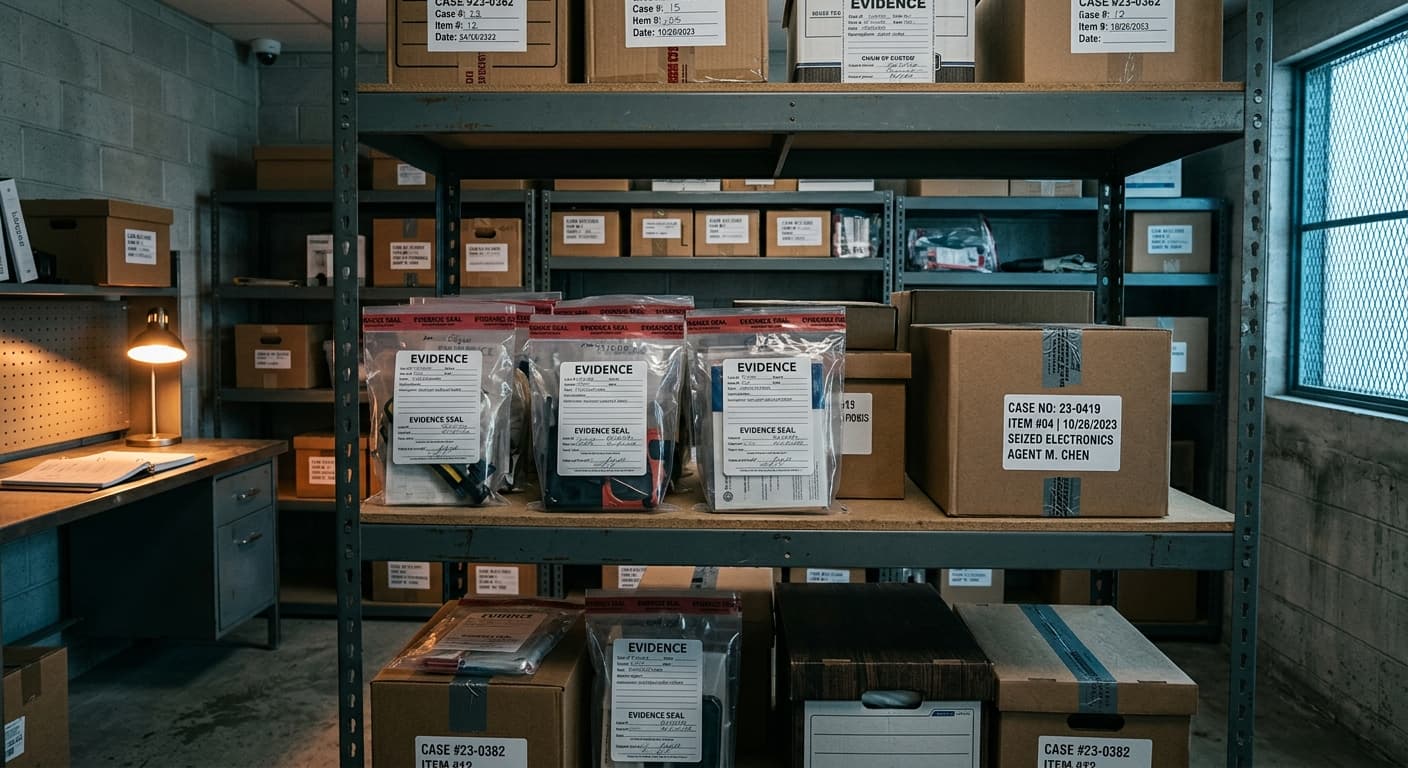
Delaware has required police statewide to wear body cameras since 2021 under 11 Del. Code § 8402A, but the statute itself is silent on public access. Requesters instead face Delaware's general open-records exemptions for investigatory files and pending litigation, which agencies have repeatedly used to deny bodycam requests.
Information last verified on 2026-07-08. This article presents general legal information, not legal advice.
This article addresses body-worn camera law under 11 Del. Code § 8402A, the Police Officer Standards and Training Commission's implementing regulations at 1 Del. Admin. Code § 801-26.0, and Delaware's general Freedom of Information Act, 29 Del. C. Chapter 100, as they apply to police in Delaware. It does not address a civilian's right to record an on-duty officer, a separate question covered in Is It Illegal to Record Someone?. For other states' body camera rules, see the Police Bodycam Laws by State hub.
Does Delaware Require Police to Wear Body Cameras?
Yes. 11 Del. Code § 8402A, part of Chapter 84A, requires a police officer, a probation and parole officer of the Department of Correction assigned to a law enforcement task force, and a juvenile probation and parole officer of the Department of Services for Children, Youth, and Their Families to wear a body-worn camera while on duty in a role that is likely to result in interactions with the public. The Department of Services category reached its current wording through a later amendment, 85 Del. Laws, c. 303, § 1. Governor John Carney signed the original mandate into law as House Bill 195 in July 2021, making Delaware one of a small number of states with a statewide bodycam requirement rather than one left to local-agency discretion. The statute directs the Department of Safety and Homeland Security, the Delaware State Police, and other state agencies to jointly implement the program, including procuring cameras, building a central data-storage system, and supporting municipal departments.
| Quick facts | Delaware |
|---|---|
| Statute | 11 Del. Code § 8402A (Ch. 84A) |
| Mandate | Statewide, phased rollout beginning 2021 |
| Activation standard | 1 Del. Admin. Code § 801-26.4, as soon as safe |
| Retention | No fixed period; "no longer than useful" per agency schedule |
| Public access route | General Delaware FOIA, 29 Del. C. Ch. 100, case by case |
The mandate on paper did not translate into immediate camera coverage. Roughly eight months after Governor Carney signed the bill, the Delaware State Police and about two dozen smaller municipal forces still had not equipped officers, and the Department of Safety and Homeland Security had not finished procurement, bidding, or building the promised central storage system, with equipment purchases for the remaining agencies not expected until summer 2022. A reader checking whether footage exists for a Delaware incident from 2021 or early 2022 should keep that rollout lag in mind.

When Must a Delaware Officer Turn On the Camera?
The Police Officer Standards and Training Commission's regulations implementing Chapter 84A, codified at 1 Del. Admin. Code § 801-26.4, require an officer to activate the body-worn camera during calls for service, whenever an arrest or detention appears likely, whenever a use of force appears likely, whenever activation may help preserve evidence, and whenever it may promote the safety of people or property. Activation must occur as soon as circumstances permit safe activation, meaning an officer is not required to jeopardize their own safety or another person's to turn the camera on at the exact start of an encounter.
Older sources attribute these rules to the Council on Police Training, which adopted them. Under 11 Del. C. § 8411, all powers and duties formerly vested in that body passed to the Police Officer Standards and Training Commission as of August 7, 2023, and § 8404(c) now directs the Commission to periodically review and propose updates to the standards governing body-worn camera use and activation, the electronic storage and dissemination of recordings, and a victim's right to review footage containing their own statements.
How Long Is Body Camera Footage Kept in Delaware?
Unlike states that set a specific day count, such as a 90-day or 180-day baseline, Chapter 84A and its implementing regulation take a purpose-based approach. Files must be securely stored in accordance with applicable state or municipal records retention law or policy, and no longer than useful for purposes of liability protection, training, or use in an investigation or prosecution. In practice, this leaves the operative retention period to each agency's own records schedule, layered on top of the purpose-based standard set at the state level, rather than a single statewide number a requester can point to.
Can the Public Get a Copy of Delaware Body Camera Footage?
Chapter 84A itself is silent on public disclosure. The Commission's regulations restrict routine dissemination of footage to a defined list of authorized purposes, such as official investigations, misconduct reviews, supervisory review, court discovery, redacted training use, and department audits, rather than creating a general public right to view or copy a recording. That silence means a member of the public seeking Delaware bodycam footage has to use the state's general Freedom of Information Act, 29 Del. C. Chapter 100, the same statute used to request any other government record, rather than a body-camera-specific access statute. FOIA custodians must respond as soon as possible and in any event within 15 business days of a request under 29 Del. C. § 10003(h)(1).
In practice, agencies have leaned on two FOIA exemptions to deny bodycam requests. The Delaware Department of Justice, which issues binding opinion letters resolving FOIA disputes, upheld a Delaware State Police denial of a December 2025 bodycam request by citing the investigatory-files exemption, 29 Del. C. § 10002(o)(3), which covers files compiled for civil or criminal law-enforcement purposes. In a separate opinion issued in June 2025, the Department of Justice upheld a denial to a requester who had already indicated an intent to sue over the underlying incident, relying on the pending-or-potential-litigation exemption at § 10002(o)(9).
Those exemptions are not an absolute bar, and denials can be challenged. In March 2026, the ACLU of Delaware sued the Town of Dewey Beach in New Castle County Superior Court after the town denied a FOIA request for body camera footage from six officers, sought after a report of possible racial discrimination against a group of young people in August 2025. Dewey Beach had cited Delaware's investigatory-files and confidentiality exemptions; the case settled in June 2026, with Dewey Beach turning over the footage. For a use of force causing death or serious injury, the Commission's regulations add further release conditions, including completion of witness interviews, a family review opportunity, and approval from the Delaware Department of Justice's Division of Civil Rights and Public Trust.
The bottom line for a Delaware requester: bodycam footage is neither presumptively public nor categorically exempt. Whether a specific recording comes out depends on whether an investigation or litigation is pending, how the custodial agency exercises its discretion under the general FOIA exemptions, and, in some cases, whether the requester presses the point through the Department of Justice's opinion process or in court.
What Happens If an Officer Fails to Activate the Camera?
Neither Chapter 84A nor the Commission's regulations set out a stand-alone civil or criminal penalty for a missed activation. Compliance is enforced through each department's own internal disciplinary process rather than through the statute directly. Because the activation duty and the specific triggers are defined in state regulation rather than left entirely to department discretion, a documented pattern of non-activation can factor into a broader misconduct or Division of Civil Rights and Public Trust review when a serious incident is involved, even without a separate penalty clause in Chapter 84A itself.
Related articles
Last updated: 2026-08-31.
More Delaware Laws
Frequently Asked Questions
Does Delaware require police to wear body cameras?
Yes. 11 Del. Code § 8402A, enacted in 2021, requires police officers and certain other law enforcement personnel to wear and use body-worn cameras statewide, though the actual equipment rollout to some departments lagged well behind the law's effective date.
Is Delaware police body camera footage a public record?
Not automatically. Chapter 84A has no dedicated access rule, so requests go through Delaware's general Freedom of Information Act. Agencies have repeatedly denied bodycam requests by citing the investigatory-files or pending-litigation exemptions, though those denials are not absolute and can be challenged.
How long does Delaware keep police body camera footage?
There is no fixed statewide day count. Footage must be stored no longer than useful for liability protection, training, or an investigation or prosecution, under each agency's own records retention schedule.
What FOIA exemption do Delaware agencies use to withhold body camera footage?
Most commonly the investigatory-files exemption at 29 Del. C. § 10002(o)(3), which covers records compiled for civil or criminal law-enforcement purposes, and the pending-or-potential-litigation exemption at § 10002(o)(9) when the requester has indicated an intent to sue.
Can I challenge a Delaware agency's denial of my body camera footage request?
Yes. The ACLU of Delaware sued the Town of Dewey Beach in Superior Court in March 2026 after it denied a bodycam records request, and the case settled with the town releasing the footage in June 2026, showing that a denial under Delaware's general FOIA exemptions can be challenged in court.
Which Delaware officers have to wear a body camera?
Under 11 Del. Code § 8402A, police officers, Department of Correction probation and parole officers assigned to a law enforcement task force, and juvenile probation and parole officers of the Department of Services for Children, Youth, and Their Families, whenever they are on duty in a role likely to result in interactions with the public.
When must a Delaware officer turn on the body camera?
State regulations require activation during calls for service and whenever an arrest, detention, or use of force appears likely, or whenever recording would help preserve evidence or promote safety, as soon as it is safe for the officer to do so.
Does Delaware release body camera footage automatically after a police shooting?
Not automatically to the general public. Agency regulations require witness interviews to be complete, a family review opportunity, and sign-off from the Delaware Department of Justice's Division of Civil Rights and Public Trust before any release tied to a death or serious use of force.
Updates
Updated the list of Delaware officers covered by 11 Del. Code § 8402A to match the current statutory text, which now names juvenile probation and parole officers of the Department of Services for Children, Youth, and Their Families, and renamed the body that administers the body-worn camera regulations to the Police Officer Standards and Training Commission, which took over the Council on Police Training's powers on August 7, 2023.
Independently fact-checked against the cited primary sources; governing law re-checked for recent changes
Governing law re-checked for recent changes
Reviewed and approved by an editor
The Law Behind This Article
This article rests on the statutory provisions below, held in our own legal record and retrieved from the official source. Tap a section to read the operative text.
Delaware Code, Title 11 (Crimes and Criminal Procedure), Chapter 084a (Body-Worn Cameras for Law-Enforcement Officers)
§ 8402ABody-worn camera requirements.In forcecited in 3 of our articles
(a) In accordance with the regulations established in §§ 8404, 4321, and 9003 of this title, a police officer, a probation and parole officer of the Department of Correction assigned to a law-enforcement task force, and a juvenile probation and parole officer of the Department of Services for Children, Youth, and Their Families shall wear a body-worn camera while on duty in a role that is likely to result in interactions with the public. (b) A police officer, a probation and parole officer of the Department of Correction assigned to a law-enforcement task force, and a juvenile probation and parole officer of the Department of Services for Children, Youth, and Their Families required to wear a body-worn camera under subsection (a) of this section shall use the body-worn camera to record interactions with the public while on duty in accordance with the regulations established in §§ 8404, 4321, and 9003 of this title.
Official text (excerpt) · last checked 2026-08-31 · Read the full text in our law library · Verify at delcode.delaware.gov
Also relied on in: Delaware Laws on Recording Police: Your Rights, Body Cameras, and Legal Protections (2026), How to Get a Police Report in Delaware (2026): Crash & Incident Reports
Search our full record of US law — 2.1 million sections, every state + federal →
Sources and References
- 11 Del. Code § 8402A (Body-worn camera requirements, Ch. 84A)(delcode.delaware.gov).gov
- 1 Del. Admin. Code § 801-26.0 (Mandatory Standards for Use of Body Worn Cameras)(law.cornell.edu)
- 29 Del. C. Chapter 100 (Delaware Freedom of Information Act), § 10002 exemptions and § 10003 response deadline(delcode.delaware.gov).gov
- Delaware Department of Justice, FOIA Opinion Letter 26-IB05 (Feb. 3, 2026, re: Delaware State Police)(attorneygeneral.delaware.gov).gov
- Delaware Department of Justice, FOIA Opinion Letter 25-IB31 (June 4, 2025, re: Dept. of Correction and Delaware State Police)(attorneygeneral.delaware.gov).gov
- WHYY, "Delaware's police body camera not off the ground eight months after mandate"(whyy.org)
- WBOC, "ACLU of Delaware obtains Dewey Beach police body camera footage in lawsuit settlement" (June 2026)(wboc.com)
- 11 Del. C. Ch. 84 (Police Officer Standards and Training Commission), § 8404(c) body-worn camera regulations and § 8411 transfer of Council on Police Training powers effective August 7, 2023(delcode.delaware.gov)