
New Hampshire
New Hampshire Windshield Mounting Laws (2026 Guide)
Independently fact-checked against primary sources (last audited August 17, 2026). · Reviewed by the RecordingLaw editorial team. · Law checked current as of August 9, 2026. · 7 primary sources cited on this page. How we verify our legal content
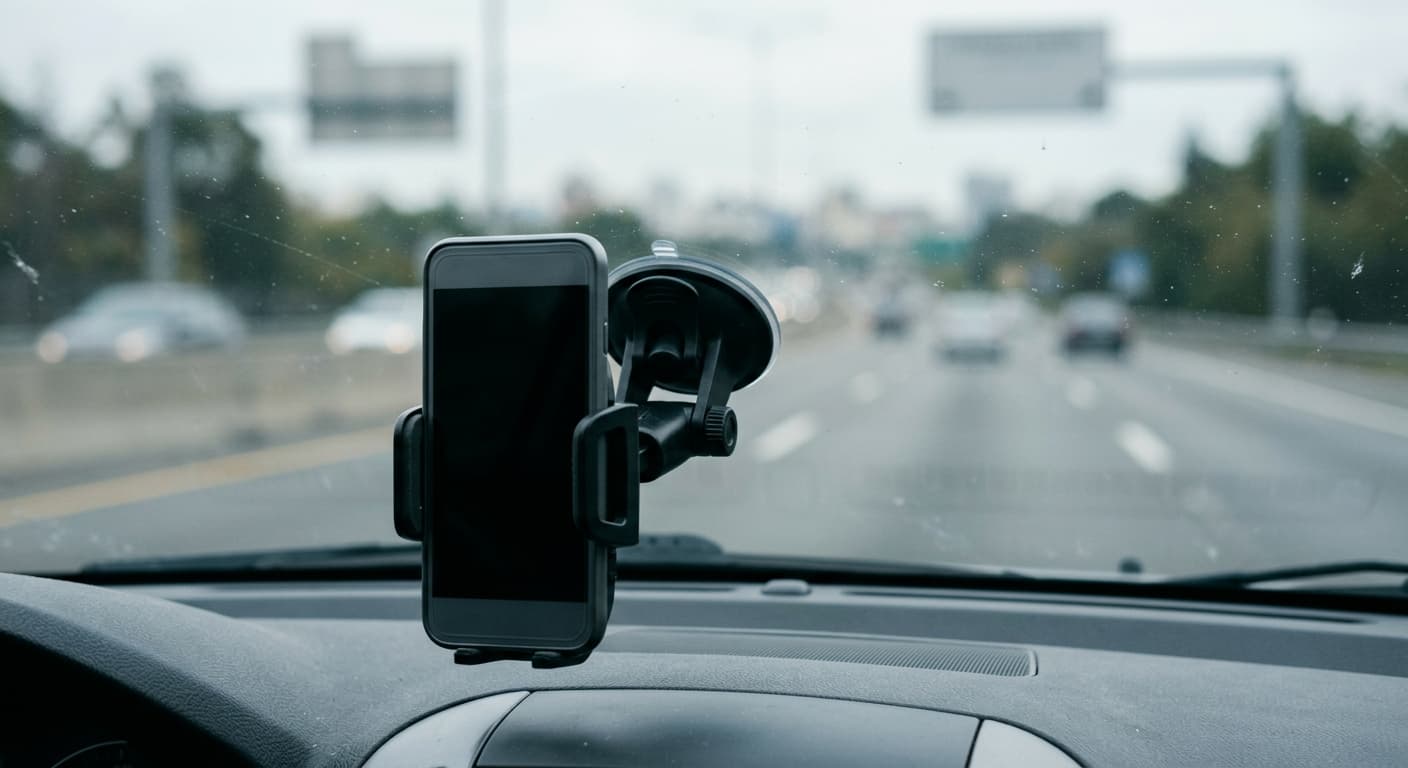
New Hampshire law permits dashcams, GPS units, and phone mounts on the windshield. RSA 265:79-c paragraph V says nothing in the hands-free law prohibits receiving turn-by-turn routing information from a screen mounted on the dashboard, windshield, or visor. Drivers must still position any device so it does not obstruct their clear view of the road under RSA 265:95.
New Hampshire takes a practical approach to windshield mounting laws. The state does not impose a blanket ban on all windshield-mounted devices. Instead, it prohibits items that obstruct the driver's view, while a separate statute leaves room for windshield-mounted navigation screens. Understanding where these rules overlap is important for anyone who uses a phone mount, GPS unit, or dashcam in the Granite State.
The primary statute governing windshield obstructions is RSA 265:95, titled "Obstruction to Driver's View or Riding Mechanism." Additional rules come from the hands-free driving law (RSA 265:79-c) and the tinted glass statute (RSA 266:58-a).
RSA 265:95: The Windshield Obstruction Law
RSA 265:95 is the core statute that controls what you can and cannot place on your windshield in New Hampshire.
What the Law Prohibits
Paragraph III(a) of RSA 265:95 states that no person shall drive on any way with "any sign, poster, sticker, or other nontransparent material upon or adjacent to the front windshield, side wings, or side or rear windows" if the material obstructs the driver's clear view of the road or any intersecting way.
The law also prohibits aftermarket tinting on the windshield as defined by RSA 266:58-a.
The key phrase is "which shall obstruct the driver's clear view." New Hampshire does not automatically ban every object attached to the windshield. The test is whether the item blocks or limits what the driver can see. A small transponder mounted near the rearview mirror is treated differently from a large poster covering half the glass.
Director Authorization
RSA 265:95 includes an exception for items "authorized by the director." This means the Director of the Division of Motor Vehicles can approve certain items for windshield placement. The statute does not name which items have been approved, and the DMV does not publish a list of them. Common windshield items such as toll transponders are therefore best understood as generally treated as permissible in practice under the obstruction test, rather than as items carrying a documented director authorization.
Rear Window Exception
Under paragraph III(b) of the same statute, stickers and other nontransparent materials are permitted on the rear window if the vehicle has exterior rearview mirrors on both sides that give the driver a clear view to the rear, and the materials are placed along the perimeter of the rear window so the inside rearview mirror still provides a view through the center portion.
Front Seat Occupancy Rule
Paragraphs I and II of RSA 265:95 also address physical obstructions. No more than three passengers may sit in the front seat if doing so blocks the driver's view or interferes with the steering mechanism. Passengers may not ride in any position that blocks the driver's forward or side view.
GPS and Phone Mounts on the Windshield
New Hampshire's hands-free driving law carves windshield-mounted navigation screens out of its prohibition. That carve-out comes from RSA 265:79-c rather than from the obstruction statute itself, which continues to apply on its own terms.
What RSA 265:79-c Allows
Paragraph V of RSA 265:79-c states that nothing in the section prohibits a driver, regardless of age, from:
- Receiving aural (spoken) routing information from a hands-free GPS device or navigation service through a mobile electronic device
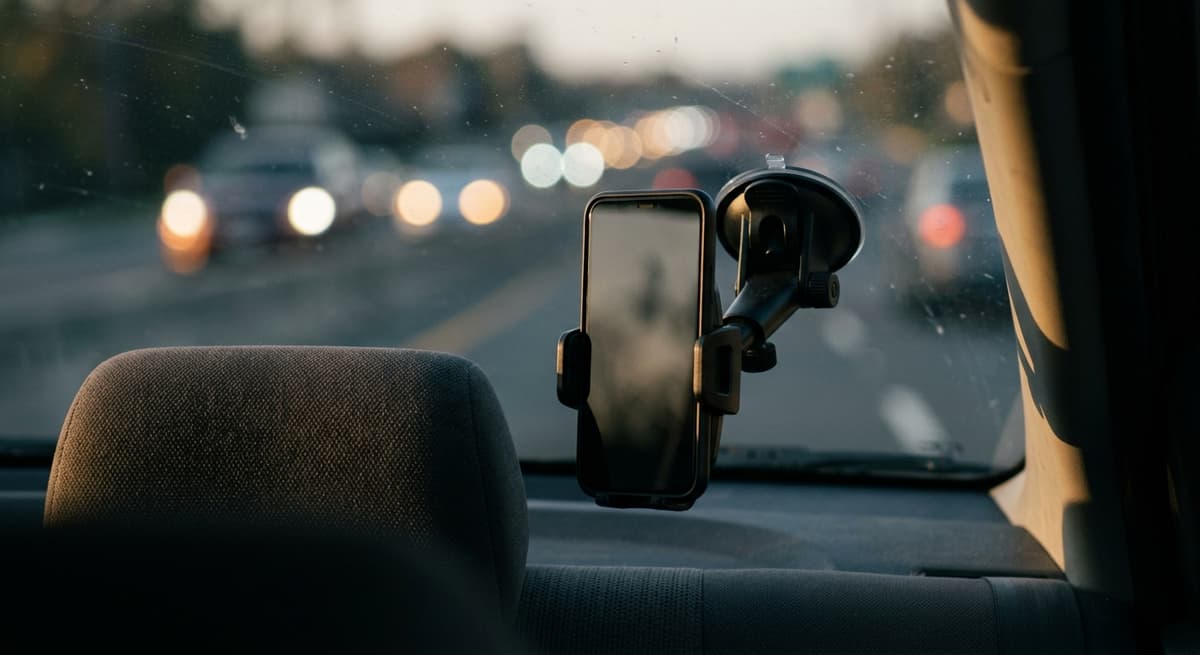
- Receiving turn-by-turn routing information from the screen of a GPS device or navigation service through a mobile electronic device that is integrated into the vehicle or mounted on the dashboard, windshield, or visor of the vehicle
This means the hands-free law itself does not stand in the way of mounting a GPS device or smartphone on the windshield for navigation. The paragraph names the windshield alongside the dashboard and visor, but it operates as a carve-out from the hands-free prohibition, not as an approval of windshield placement under RSA 265:95.
Interaction Between the Two Statutes
Even though RSA 265:79-c permits windshield-mounted navigation devices, RSA 265:95 still requires that the device not obstruct your view. In practice, this means:
- A phone or GPS mount placed to one side of the windshield or below the rearview mirror is generally acceptable
- A large tablet or device placed directly in the driver's primary line of sight could still violate RSA 265:95
- The device must be positioned so the driver maintains a clear view of the road and intersecting ways
The safest approach is to mount any device as low on the windshield as practical, or to use a dashboard or vent mount instead.
The Hands-Free Driving Law (RSA 265:79-c)
Understanding New Hampshire's hands-free law is essential because it directly affects how you interact with any windshield-mounted device while driving.
What Is Prohibited
RSA 265:79-c prohibits any person driving a moving vehicle (or stopped temporarily in traffic) from using a hand-held mobile electronic device for:
- Reading, composing, viewing, or posting electronic messages
- Initiating, receiving, or conducting phone conversations by hand
- Initiating commands or requests to access the internet
- Manually typing data into a GPS or navigation device
- Manually entering data into any other portable electronic device
What Is Permitted
The law allows drivers to:
- Use Bluetooth-enabled or other hands-free devices for calls and information, as long as attention stays on the road
- Receive turn-by-turn GPS directions on a screen mounted to the windshield, dashboard, or visor
- Listen to spoken navigation directions from a hands-free device
- Activate, deactivate, or initiate a function of the phone with one hand (such as tapping to accept a call on a hands-free system)
- Use a non-cellular two-way radio with one hand
- Call 911 or emergency services in an emergency
Rules for Drivers Under 18
New Hampshire imposes stricter rules on drivers younger than 18. Under RSA 265:79-c, no person under 18 may use a cellular phone or mobile electronic device while driving, whether hands-free or not. The only exception is to report an emergency through the 911 system or directly to a public safety agency.
However, drivers under 18 are still permitted to receive GPS navigation directions, both audio and on-screen, from a properly mounted device. The GPS navigation exemption in paragraph V applies "regardless of age."
Penalties for Hands-Free Law Violations
| Offense | Fine |
|---|---|
| First offense | $100 plus penalty assessment |
| Second offense (within 24 months) | $250 plus penalty assessment |
| Third or subsequent offense (within 24 months) | $500 plus penalty assessment |
These fines are in addition to any applicable penalty assessments added by the court. Repeat violations within a 24-month window escalate quickly.
Dashcam Mounting Rules
New Hampshire does not have a specific statute addressing dashboard cameras or video event recorders. Dashcams are treated like any other windshield-mounted device under the general obstruction rule in RSA 265:95.
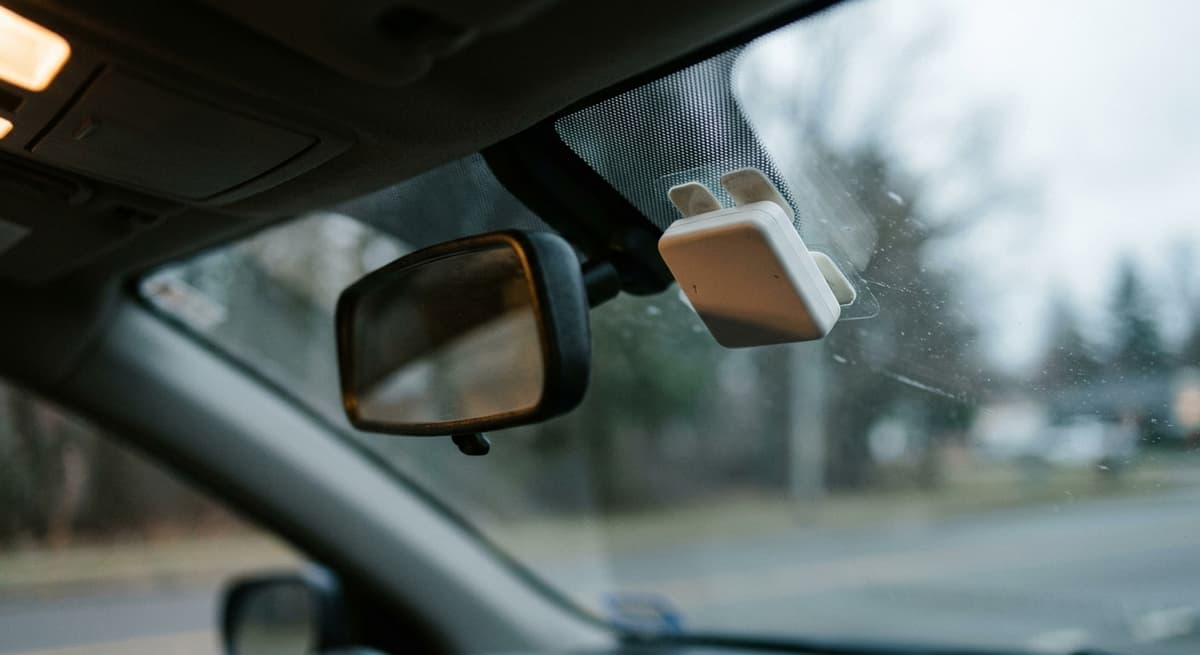
A dashcam is permitted as long as it does not obstruct the driver's view of the road. The safest placement is behind the rearview mirror, where the camera has a clear view of the road but does not block the driver's sightline.
Audio Recording Considerations
New Hampshire is an all-party consent state for audio recording under RSA 570-A:2. If your dashcam records audio inside the vehicle, all occupants must be informed and consent to the recording. Video-only recording of the road ahead does not require consent from other parties.
Windshield Tinting Rules (RSA 266:58-a)
New Hampshire's tinted glass law, RSA 266:58-a, restricts aftermarket tinting on vehicle windows and is referenced directly in the windshield obstruction statute.
Windshield Tinting
Aftermarket tinting on the windshield is prohibited in New Hampshire. It is unlawful to sell, inspect (when inspections were active), or drive a vehicle registered in the state with aftermarket tinting on the windshield.
Exception: A tint strip up to 6 inches wide at the very top of the windshield is permitted, as long as the light transmittance of the strip is at least 35%.
Other Window Tinting Standards
| Window Location | Minimum Light Transmittance |
|---|---|
| Windshield (full) | No aftermarket tinting allowed |
| Windshield tint strip (top 6 inches) | 35% VLT minimum |
| Front side windows (left and right of driver) | 70% VLT minimum |
| Rear windows | 35% VLT minimum (multipurpose vehicles and pickup trucks may instead follow applicable federal standards) |
When aftermarket tinting is applied to windows behind the driver, the vehicle must have exterior rearview mirrors on both sides.
Medical Exemption
Individuals who need darker tinting for medical reasons may apply for a special permit that exempts them from the standard tinting restrictions on the windshield and front side windows.
Toll Transponders and Other Permitted Items
Certain items are commonly found on New Hampshire windshields and are generally considered permissible:
- E-ZPass transponders: New Hampshire's turnpike system uses E-ZPass, and the transponder is designed to be mounted on the windshield behind the rearview mirror. The NH E-ZPass program provides installation instructions that place the tag to the right of and behind the rearview mirror. That is installation guidance, not a director authorization, so the placement still has to satisfy the obstruction test in RSA 265:95.
- Items authorized by the director: RSA 265:95, III(a) puts items the Director of Motor Vehicles authorizes outside the obstruction rule. New Hampshire does not publish a list of the items that have been authorized.
- Factory-installed components: Items installed by the vehicle manufacturer (such as rain sensors, automatic dimming mirrors, and heads-up display projectors) are not considered aftermarket additions.
Penalties for Windshield Violations
| Violation | Statute | Fine |
|---|---|---|
| Windshield obstruction | RSA 265:95 | $75 |
| Illegal windshield tinting | RSA 266:58-a | Violation-level fine |
| Hand-held device use (first offense) | RSA 265:79-c | $100 plus penalty assessment |
| Hand-held device use (second offense) | RSA 265:79-c | $250 plus penalty assessment |
| Hand-held device use (third+ offense) | RSA 265:79-c | $500 plus penalty assessment |
RSA 265:95 violations carry a flat $75 fine. The fine applies to any of the three paragraphs of the statute, including the windshield obstruction provision, the front-seat crowding rule, and the passenger positioning rule.
Safety Glass Requirement (RSA 266:58)
Under RSA 266:58, any motor vehicle manufactured or assembled on or after January 1, 1936 must be equipped with safety glass in all partitions, doors, windows, and windshields. Safety glass is glass that has been treated or combined with other materials to reduce the risk of injury when cracked or broken compared to ordinary sheet glass or plate glass.
Driving with a severely cracked or damaged windshield could result in a citation, as the glass may no longer meet the safety glass standard or may obstruct the driver's view under RSA 265:95.
Vehicle Inspection Changes (2025-2026)
New Hampshire's legislature enacted a repeal of the mandatory annual vehicle inspection program effective January 31, 2026, under the 2025 legislative session, but that repeal is still tied up in federal court. The program's former inspection vendor sued under the Clean Air Act, and a federal judge issued a preliminary injunction on January 27, 2026 ordering the state to keep the program running. New Hampshire appealed, and the U.S. Court of Appeals for the First Circuit stayed that injunction, so as of this update the program is suspended rather than finally ended: inspection stations are not currently authorized to issue state inspection stickers, and vehicles are not required to obtain an annual state inspection, but the litigation remains pending and the outcome could still change.
However, drivers remain responsible under existing law for keeping their vehicles safe to operate. A windshield that is cracked, obstructed, or improperly tinted can still result in a citation under RSA 265:95 or RSA 266:58-a during a routine traffic stop, even without the formal inspection program in place.
More New Hampshire Laws
Frequently Asked Questions
Can I mount a GPS or phone on my windshield in New Hampshire?
Yes. RSA 265:79-c paragraph V says nothing in the hands-free law prohibits a driver of any age from receiving turn-by-turn navigation on a screen mounted to the windshield, dashboard, or visor. The device must still not obstruct the driver's clear view of the road under RSA 265:95. Mount the device to the side or below the rearview mirror for best compliance.
Is it legal to use a dashcam in New Hampshire?
Yes. New Hampshire has no statute that specifically bans dashcams. A dashcam is permitted on the windshield as long as it does not obstruct the driver's view under RSA 265:95. Place it behind the rearview mirror for the safest position. If the dashcam records audio, all vehicle occupants must consent under New Hampshire's all-party consent law (RSA 570-A:2).
What is the fine for windshield obstruction in New Hampshire?
A violation of RSA 265:95, which covers windshield obstructions, carries a $75 fine. This applies to any nontransparent material on the windshield that blocks the driver's view, as well as to aftermarket tinting and front-seat crowding.
Can I tint my windshield in New Hampshire?
Not the full windshield. RSA 266:58-a prohibits aftermarket tinting on the windshield. However, a tint strip up to 6 inches wide at the very top of the windshield is allowed if the light transmittance is at least 35%. Medical exemptions are available for individuals who need darker tinting for health reasons.
Can drivers under 18 use a phone mount for GPS in New Hampshire?
Drivers under 18 are banned from all cell phone use while driving, including hands-free calls. However, RSA 265:79-c paragraph V allows drivers 'regardless of age' to receive GPS navigation directions on a properly mounted screen. Teen drivers may view a mounted GPS but cannot use the phone for any other purpose while driving.
Updates
Clarified that New Hampshire's hands-free statute (RSA 265:79-c, V) carves navigation screens out of its own prohibition rather than approving windshield mounting, and removed the unsupported claim that toll transponders and registration items are authorized by the DMV director under RSA 265:95.
Corrected the vehicle-inspection section to reflect that New Hampshire's inspection program is currently suspended amid ongoing federal litigation, not finally repealed; fixed a dead citation link for the state's wiretapping statute; and added the pickup/multipurpose-vehicle federal-standard exception to the rear-window tint table.
Independently fact-checked against the cited primary sources
Governing law re-checked for recent changes
Governing law re-checked for recent changes
Reviewed and approved by an editor
The Law Behind This Article
This article rests on the statutory provisions below, held in our own legal record and retrieved from the official source. Tap a section to read the operative text.
New Hampshire Revised Statutes Annotated, TITLE XXI MOTOR VEHICLES, CHAPTER 265 RULES OF THE ROAD
§ 265:95Obstruction to Driver's View or Riding Mechanism.In forcecited in 2 of our articles
I. No person shall drive a vehicle when it is so loaded, or when there are in the front seat such a number of persons, exceeding 3, as to obstruct the view of the driver, to the front or side of the vehicle or as to interfere with the driver's control over the driving mechanism of the vehicle. II. No passenger in a vehicle shall ride in such position as to interfere with the driver's view ahead or to the sides, or to interfere with his control over the driving mechanism of the vehicle. (a) Except as permitted by subparagraph (b), no person shall drive upon any way any vehicle with any sign, poster, sticker, or other nontransparent material upon or adjacent to the front windshield, side wings, or side or rear windows of such vehicle which shall obstruct the driver's clear view of the way or any intersecting way, unless authorized by the director so to do. No person shall drive upon any way any vehicle with after market tinting on the windshield, as prohibited under RSA 266:58-a.
Official text (excerpt) · last checked 2026-09-08 · Read the full text in our law library · Verify at gc.nh.gov
Cited in 2 court opinions in our collectionLatest citing opinion in our collection: 2018
Opinions citing this section in our collection:
- State v. Mercier (Supreme Court of New Hampshire 2013, 165 N.H. 83)“…that the police had reasonable suspicion of a violation of RSA 265:95, III (Supp. 2012), which prohibits “non…”
- State v. Alyssa A. Turcotte (Supreme Court of New Hampshire 2018)“…4 (2014), and a rear window completely covered by snow, see RSA 265:95 (2014). When she approached the…”
Identified automatically from the court opinions citing this section — not a ranking of which case controls.
Also relied on in: New Hampshire Dashcam Laws
New Hampshire Revised Statutes Annotated, TITLE LVIII PUBLIC JUSTICE, CHAPTER 570-A WIRETAPPING AND EAVESDROPPING
§ 570-A:2Interception and Disclosure of Telecommunication or Oral Communications Prohibited.In forcecited in 23 of our articles
I. A person is guilty of a class B felony if, except as otherwise specifically provided in this chapter or without the consent of all parties to the communication, the person: (a) Wilfully intercepts, endeavors to intercept, or procures any other person to intercept or endeavor to intercept, any telecommunication or oral communication; (b) Wilfully uses, endeavors to use, or procures any other person to use or endeavor to use any electronic, mechanical, or other device to intercept any oral communication when: (1) Such device is affixed to, or otherwise transmits a signal through, a wire, cable, or other like connection used in telecommunication, or (2) Such device transmits communications by radio, or interferes with the transmission of such communication, or (3) Such use or endeavor to use (A) takes place on premises of any business or other commercial establishment, or (B) obtains or is for the purpose of obtaining information relating to the operations of any business or other commercial establishment; or (c) Wilfully discloses, or endeavors to disclose, to any other person the contents of any telecommunication or oral communication, knowing or having reason to know that…
Official text (excerpt) · last checked 2026-08-31 · Read the full text in our law library · Verify at gc.nh.gov
Cited in 35 court opinions in our collectionLatest citing opinion in our collection: 2025
In the courts (editorial summary, independently checked):New Hampshire courts read the felony offense in RSA 570-A:2, I as requiring more than intent to record. Fischer v. Hooper (1999) held wilfully means intentional or reckless disregard for the lawfulness of the conduct, so a good faith belief is a defense. State of New Hampshire v. Adam Mueller (2014) reversed on that mens rea.
Opinions citing this section in our collection:
- State v. Kilgus (Supreme Court of New Hampshire 1986, 128 N.H. 577)✓A murder-for-hire middleman agreed to wear a hidden recorder and got the defendant to confirm paying $1,000 to have a man killed; the court held the taping was lawful under RSA 570-A:2, II(d) because one party consented and homicide is an enumerated offense.
- Fischer v. Hooper (Supreme Court of New Hampshire 1999, 143 N.H. 585)✓A father secretly taped his ex-wife's calls with their daughter though a guardian ad litem had said both parents must agree; the court held wilfully in RSA 570-A:2, I requires intentional or reckless disregard for the lawfulness of the conduct, and reversed for a new trial.
- State of New Hampshire v. Adam Mueller (Supreme Court of New Hampshire 2014, 166 N.H. 65)✓A police-accountability activist recorded three phone calls with a police captain and two school officials without telling them; the court held that instructing the jury on purposely rather than the statute's wilfully was plain error and reversed his wiretapping convictions.
Identified automatically from the court opinions citing this section — not a ranking of which case controls.
Also relied on in: New Hampshire Security Camera Laws, New Hampshire Video Recording Laws, New Hampshire Voyeurism Laws
Search our full record of US law — 2.1 million sections, every state + federal →
Sources and References
- RSA 265:95 - Obstruction to Driver's View or Riding Mechanism(gc.nh.gov).gov
- RSA 265:79-c - Use of Mobile Electronic Devices While Driving; Prohibition(gc.nh.gov).gov
- RSA 266:58-a - Tinted Glass(gc.nh.gov).gov
- RSA 266:58 - Safety Glass Required(law.justia.com)
- NH DMV - Tinted Windows(dmv.nh.gov).gov
- NH E-ZPass System(ezpassnh.com)
- RSA 570-A:2 - Wiretapping and Eavesdropping (All-Party Consent)(gc.nh.gov).gov
- NH DMV - Rules and Laws(dmv.nh.gov).gov
- NH DOJ - Vehicle Inspection Program Public Guidance(doj.nh.gov).gov