
New Hampshire
New Hampshire Dashcam Laws
Independently fact-checked against primary sources (last audited August 22, 2026). · Reviewed by the RecordingLaw editorial team. · Law checked current as of August 22, 2026. · 8 primary sources cited on this page. How we verify our legal content
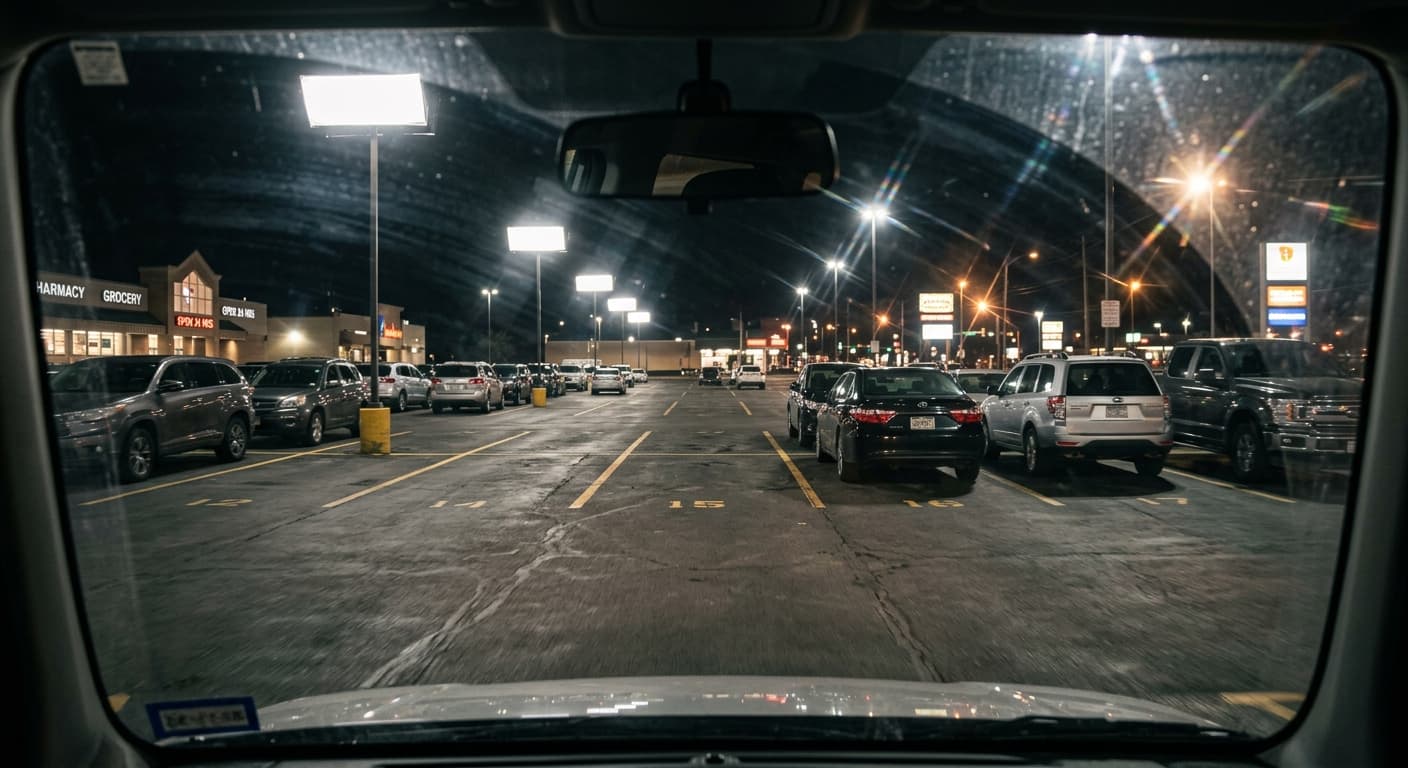
In New Hampshire, dashcams that record only video are legal on public roads. Once a dashcam captures in-car audio, RSA 570-A:2 requires all-party consent before recording conversations between drivers and passengers. Mount the camera so it does not obstruct your view under RSA 265:95.
Dashcams have become an essential tool for New Hampshire drivers seeking to protect themselves in accident disputes, document road conditions, and record unexpected events. While New Hampshire does not have a specific dashcam statute, the state's wiretapping law, windshield obstruction rules, and privacy statutes all affect how dashcams may be legally used.
This guide covers the legal framework for dashcam use in New Hampshire, including audio recording restrictions, windshield mounting rules, using dashcam footage as evidence, commercial vehicle considerations, and best practices for compliance.
Legal Framework for Dashcams in New Hampshire
Video Recording While Driving
New Hampshire does not prohibit the use of dashboard cameras for video recording while driving. Silent dashcam footage of the road ahead, traffic conditions, and surrounding vehicles is generally legal because:
- No oral communication is intercepted when the camera records external road views
- Public roads are areas where there is no reasonable expectation of privacy for other drivers and pedestrians
- The dashcam captures events that are visible to any observer on the public road
This means a basic dashcam pointing out through your windshield that records only video operates in a legally straightforward area in New Hampshire.
Audio Recording Complications
The legal landscape changes significantly when a dashcam has audio recording capability. Many modern dashcams record audio by default, capturing conversations inside the vehicle. Under RSA 570-A:2:
- All-party consent is required before recording any oral communication where a speaker has a reasonable expectation of privacy
- Conversations inside your vehicle between you and your passengers are private oral communications
- Recording passenger conversations without their consent may violate the wiretapping statute
- A participant who knowingly records without consent faces a misdemeanor under RSA 570-A:2, I-a, which by default is a Class B misdemeanor (no jail, up to $1,200) unless the State elects Class A treatment before arraignment (up to 1 year, $2,000)
- A willful interception without consent is a Class B felony (up to 7 years, $4,000 per RSA 651:2)
Audio from outside the vehicle is less likely to trigger the wiretapping statute because conversations on public streets often lack a reasonable expectation of privacy. However, audio from inside the car, especially during private conversations, is clearly protected.
The Practical Solution
The simplest way to ensure legal compliance with a dashcam in New Hampshire:
- Disable audio recording on your dashcam if you frequently have passengers
- Inform all passengers about the dashcam and its audio recording capability before starting any trip
- Obtain verbal consent from every person in the vehicle before driving with audio recording enabled
- If you drive alone most of the time, the risk is lower, but disable audio when carrying passengers without consent
Windshield Mounting and Placement Rules

RSA 265:95 Windshield Obstructions
New Hampshire law under RSA 265:95 regulates what may be placed on or near a vehicle windshield. The statute prohibits objects that obstruct the driver's clear view of the road or intersecting roads. (RSA 266:58-a is a separate statute governing aftermarket window tinting, addressed below.)
While the statute does not specifically mention dashcams, it applies to any device mounted on or near the windshield. To comply:
- Mount the dashcam in a location that does not obstruct your view of the road
- Behind the rearview mirror is the most common recommended position, as it minimizes visual obstruction
- Lower corners of the windshield may also work, though they should not block your view of traffic signals, signs, or approaching vehicles
- Avoid large devices that create significant blind spots
- Suction cup mounts should be secure enough that the camera does not fall during driving, which could create a safety hazard
Tinted Window Considerations
New Hampshire's vehicle tinting law under RSA 266:58-a also regulates window tinting. If your vehicle has tinted windows, ensure that:
- The dashcam lens can see through the tint clearly
- Tint does not reduce the camera's effectiveness to the point where footage is unusable
- Both the tint and the dashcam comply with the general windshield obstruction standard
Using Dashcam Footage as Evidence
In Traffic Accidents
Dashcam footage can be valuable evidence in New Hampshire accident claims:
- Establishing fault: Video showing the moments before, during, and after a collision can clearly demonstrate which driver was at fault
- Documenting road conditions: Footage of potholes, icy roads, missing signs, or construction zones can support claims against municipalities or contractors
- Recording traffic violations: Red light running, failure to yield, improper lane changes, and speeding by other drivers can be captured
- Countering false claims: Dashcam footage can disprove fabricated or exaggerated injury claims
Admissibility Standards
For dashcam footage to be admissible in New Hampshire courts, it must meet standard evidentiary requirements:
- Authentication: You must be able to establish that the footage is genuine, unaltered, and from the time and place claimed
- Relevance: The footage must relate to a material issue in the case
- Legal acquisition: Footage with audio obtained without all-party consent may face suppression challenges
- Chain of custody: You should be able to demonstrate that the footage has not been tampered with
Under RSA 570-A:6, audio recordings obtained through a felony violation of the wiretapping law may be suppressed. However, the video component of dashcam footage is not subject to this suppression rule.
Tips for Maximizing Evidentiary Value
- Use a reliable dashcam with accurate date and time stamps
- Set the correct date and time on the device and verify it periodically
- Do not edit or alter any footage
- Save relevant clips immediately after an incident to prevent them from being overwritten by loop recording
- Back up footage to a separate storage device or cloud service
- Preserve the original memory card if the footage may be needed for litigation
Insurance Claims
Many insurance companies accept dashcam footage as supporting evidence for claims:
- Footage can speed up claim resolution by providing clear evidence of fault
- Some insurers may reduce premiums for drivers who use dashcams
- Dashcam footage can be shared with adjusters via digital upload during the claims process
- Be aware that dashcam footage showing your own traffic violations could be used against you
Commercial and Rideshare Dashcams

Commercial Vehicle Requirements
New Hampshire does not mandate dashcams for commercial vehicles, but many fleet operators use them for:
- Accident documentation and liability protection
- Driver behavior monitoring for safety and training
- Compliance documentation for federal Motor Carrier Safety Administration (FMCSA) regulations
- Theft prevention and cargo security
Commercial fleet operators should implement dashcam policies that address:
- Audio recording consent from drivers and passengers
- Data storage and retention periods
- Access controls for dashcam footage
- Driver privacy expectations while operating company vehicles
Rideshare Drivers (Uber, Lyft)
Rideshare drivers in New Hampshire face particular challenges with dashcam audio:
- Passengers must consent to audio recording under RSA 570-A:2 before the ride begins
- Posting a visible notice inside the vehicle stating "audio and video recording in progress" provides notification but may not constitute consent
- Disabling audio and recording only video is the safest legal approach
- Interior-facing cameras that capture passenger video (without audio) are generally permitted but may make passengers uncomfortable
- Rideshare company policies may also address camera use by drivers
Taxi and Livery Services
Licensed taxi and livery services in New Hampshire may be subject to municipal regulations regarding in-vehicle cameras:
- Check local ordinances for specific requirements
- Some municipalities may require passenger notification about cameras
- Audio recording requires all-party consent regardless of local regulations
Dual-Camera and Multi-Camera Systems
Interior and Exterior Cameras
Many modern dashcam systems include multiple cameras:
- Front-facing camera: Records the road ahead. Video only is generally legal.
- Rear-facing camera: Records through the rear window. Video only is generally legal.
- Interior cabin camera: Records the vehicle interior. Audio recording triggers consent requirements.
- Side cameras: Some commercial systems include side-view cameras. Video only is generally legal.
For any camera that captures audio inside the vehicle, the all-party consent requirement applies.
Parking Mode
Many dashcams offer a parking mode that activates recording when motion or impact is detected while the vehicle is parked:
- Silent video recording of activity around a parked vehicle is generally legal
- Audio recording during parking mode may capture conversations of passersby, but public conversations without a reasonable expectation of privacy are less likely to trigger the wiretapping statute
- Interior audio captured during parking mode (such as conversations of people who enter the vehicle without authorization) raises complex consent questions
Penalties for Dashcam-Related Violations
| Offense | Classification | Maximum Penalty |
|---|---|---|
| Audio recording passengers without consent (RSA 570-A:2, I-a) | Misdemeanor (Class B by default) | None (Class B); up to 1 year, $2,000 if State elects Class A |
| Willful audio interception (RSA 570-A:2, I) | Class B Felony | 7 years, $4,000 |
| Windshield obstruction (RSA 265:95) | Violation | Fine (up to $75) |
| Civil damages for illegal recording (RSA 570-A:11) | Civil | $100/day or $1,000 min + punitive |
2024-2025 Court Rulings: In State v. Clark, 2024 N.H. 64 (N.H. Nov. 13, 2024), the New Hampshire Supreme Court held that the suppression remedy under RSA 570-A:6 applies only to felony violations of RSA 570-A:2, I, not to misdemeanor participant recordings under RSA 570-A:2, I-a. In State v. Hersom, No. 2023-0352 (N.H. Jan. 24, 2025), the court held that the State must prove NH jurisdiction and willful mental state before the suppression framework applies.
Best Practices for Dashcam Use in New Hampshire
For Personal Vehicles
- Choose a dashcam with the option to disable audio recording
- Disable audio when carrying passengers who have not consented
- Mount the camera behind the rearview mirror to minimize windshield obstruction
- Set accurate date and time stamps on the device
- Use loop recording to manage storage, but save important clips immediately
- Inform passengers about the dashcam when they enter your vehicle
- Back up important footage to a computer or cloud service promptly
For Commercial and Fleet Vehicles
- Develop a written dashcam policy that addresses audio recording, data storage, and access
- Obtain written consent from drivers regarding interior camera monitoring
- Post notices in vehicles about recording capability
- Establish data retention periods and deletion schedules
- Limit access to dashcam footage to authorized management personnel
- Consult legal counsel about compliance with state and federal privacy laws
- Train drivers on proper dashcam use and company policies
More New Hampshire Recording Laws
Audio Recording | Video Recording | Voyeurism | Workplace Recording | Recording Police | Phone Call Recording | Security Cameras | Recording in Public | Landlord-Tenant | Dashcam Laws | Schools | Medical Recording
Back to New Hampshire Recording Laws
More New Hampshire Recording Topics
More New Hampshire Laws
Frequently Asked Questions
Are dashcams legal in New Hampshire?
Yes. Silent video dashcams are legal in New Hampshire. There is no state law prohibiting dashboard cameras. However, dashcams with audio recording that capture in-car conversations may trigger the all-party consent requirement under RSA 570-A:2. Mount the camera so it does not obstruct your view of the road per RSA 265:95.
Can my dashcam record audio in New Hampshire?
Only with consent from everyone in the vehicle. New Hampshire is an all-party consent state, so recording conversations between you and your passengers without their consent may violate RSA 570-A:2. The safest approach is to disable audio recording or inform all passengers and obtain their consent before starting a trip.
Can dashcam footage be used as evidence in New Hampshire?
Yes. Dashcam video is commonly used as evidence in accident claims, insurance disputes, and traffic violation cases. The footage must be authenticated as genuine and unaltered. Audio components obtained without consent may face suppression under RSA 570-A:6, but the video portion is not subject to this restriction.
Where should I mount my dashcam in New Hampshire?
Mount the dashcam behind the rearview mirror or in a lower corner of the windshield where it does not obstruct your view of the road. RSA 265:95 prohibits objects that interfere with the driver's clear view. The camera should be secure enough that it does not fall during driving.
Can rideshare drivers use dashcams in New Hampshire?
Yes, but with restrictions. Silent video recording is generally legal. Audio recording requires all-party consent from passengers under RSA 570-A:2. The safest approach for rideshare drivers is to disable audio and record video only. Check your rideshare company's policies for additional requirements.
Updates
Corrected the dashcam windshield-mounting rule to cite RSA 265:95 (general obstruction statute) instead of RSA 266:58-a (which actually governs window tinting), and fixed the TAKE IT DOWN Act's signing date to May 19, 2025.
Independently fact-checked against the cited primary sources; governing law re-checked for recent changes
Governing law re-checked for recent changes
Corrected the RSA 570-A:2, I-a misdemeanor penalty for recording passengers without consent: it defaults to a Class B misdemeanor (no jail, up to $1,200) under RSA 625:9, not a flat 1 year/$2,000, unless the State elects Class A treatment before arraignment.
Governing law re-checked for recent changes
Propagated State v. Clark (2024 N.H. 64, Nov. 13, 2024) and State v. Hersom (No. 2023-0352, Jan. 24, 2025) two-tier suppression framework from parent hub; confirmed RSA 570-A:2, I-a misdemeanor framing; updated federal overlay (NLRB GC Memo 25-07, [TAKE IT DOWN Act](/us-laws/take-it-down-act) May 19 2025); RSA 105-D body cam reference added where applicable.
Reviewed and approved by an editor
The Law Behind This Article
This article rests on the statutory provisions below, held in our own legal record and retrieved from the official source. Tap a section to read the operative text.
New Hampshire Revised Statutes Annotated, TITLE LVIII PUBLIC JUSTICE, CHAPTER 570-A WIRETAPPING AND EAVESDROPPING
§ 570-A:2Interception and Disclosure of Telecommunication or Oral Communications Prohibited.In forcecited in 25 of our articles
I. A person is guilty of a class B felony if, except as otherwise specifically provided in this chapter or without the consent of all parties to the communication, the person: (a) Wilfully intercepts, endeavors to intercept, or procures any other person to intercept or endeavor to intercept, any telecommunication or oral communication; (b) Wilfully uses, endeavors to use, or procures any other person to use or endeavor to use any electronic, mechanical, or other device to intercept any oral communication when: (1) Such device is affixed to, or otherwise transmits a signal through, a wire, cable, or other like connection used in telecommunication, or (2) Such device transmits communications by radio, or interferes with the transmission of such communication, or (3) Such use or endeavor to use (A) takes place on premises of any business or other commercial establishment, or (B) obtains or is for the purpose of obtaining information relating to the operations of any business or other commercial establishment; or (c) Wilfully discloses, or endeavors to disclose, to any other person the contents of any telecommunication or oral communication, knowing or having reason to know that…
Official text (excerpt) · last checked 2026-08-31 · Read the full text in our law library · Verify at gc.nh.gov
Cited in 35 court opinions in our collectionLatest citing opinion in our collection: 2025
In the courts (editorial summary, independently checked):New Hampshire courts read the felony offense in RSA 570-A:2, I as requiring more than intent to record. Fischer v. Hooper (1999) held wilfully means intentional or reckless disregard for the lawfulness of the conduct, so a good faith belief is a defense. State of New Hampshire v. Adam Mueller (2014) reversed on that mens rea.
Opinions citing this section in our collection:
- State v. Kilgus (Supreme Court of New Hampshire 1986, 128 N.H. 577)✓A murder-for-hire middleman agreed to wear a hidden recorder and got the defendant to confirm paying $1,000 to have a man killed; the court held the taping was lawful under RSA 570-A:2, II(d) because one party consented and homicide is an enumerated offense.
- Fischer v. Hooper (Supreme Court of New Hampshire 1999, 143 N.H. 585)✓A father secretly taped his ex-wife's calls with their daughter though a guardian ad litem had said both parents must agree; the court held wilfully in RSA 570-A:2, I requires intentional or reckless disregard for the lawfulness of the conduct, and reversed for a new trial.
- State of New Hampshire v. Adam Mueller (Supreme Court of New Hampshire 2014, 166 N.H. 65)✓A police-accountability activist recorded three phone calls with a police captain and two school officials without telling them; the court held that instructing the jury on purposely rather than the statute's wilfully was plain error and reversed his wiretapping convictions.
Identified automatically from the court opinions citing this section — not a ranking of which case controls.
Also relied on in: New Hampshire Security Camera Laws, New Hampshire Video Recording Laws, New Hampshire Voyeurism Laws
§ 570-A:1Definitions.In forcecited in 11 of our articles
As used in this chapter: I. "Telecommunication" means the transfer of any form of information in whole or in part through the facilities of a communications common carrier. "Telecommunication" does not include any communication made through a tone-only paging system or from a tracking device. II. "Oral communication" means any verbal communication uttered by a person who has a reasonable expectation that the communication is not subject to interception, under circumstances justifying such expectation. III. "Intercept" means the aural or other acquisition of, or the recording of, the contents of any telecommunication or oral communication through the use of any electronic, mechanical, or other device. IV.
Official text (excerpt) · last checked 2026-07-29 · Read the full text in our law library · Verify at gc.nh.gov
Cited in 12 court opinions in our collectionLatest citing opinion in our collection: 2025
Opinions citing this section in our collection:
- State v. Lamontagne (Supreme Court of New Hampshire 1992, 136 N.H. 575)“…State contends that there was no “intercept” as defined by RSA 570-A:1, III (1986 & Supp. 1992), while the def…”
- State v. Lott (Supreme Court of New Hampshire 2005, 152 N.H. 436)“…g.” State v. Townsend, 57 P.3d 255, 260 n.2 (Wash. 2002). RSA 570-A:1, IV states that an intercept is the rec…”
- State v. MacMillan (Supreme Court of New Hampshire 2005, 152 N.H. 67)“…rial court’s ruling that the interception was illegal under RSA 570-A:1 (2001), the only issue before us is whe…”
Identified automatically from the court opinions citing this section — not a ranking of which case controls.
Also relied on in: New Hampshire Audio Recording Laws, New Hampshire Phone Call Recording Laws, New Hampshire Laws on Recording in Public
§ 570-A:11Recovery of Civil Damages Authorized.In forcecited in 14 of our articles
Any person whose telecommunication or oral communication is intercepted, disclosed, or used in violation of this chapter shall have a civil cause of action against any person who intercepts, discloses, or uses, or procures any other person to intercept, disclose or use such communications, and be entitled to recover from any such person: (a) actual damages but not less than liquidated damages computed at the rate of $100 a day for each day of violation or $1,000, whichever is higher; (b) punitive damages; and (c) a reasonable attorney's fee and other litigation costs reasonably incurred. Good faith reliance on a court order or on a representation made by the attorney general, deputy attorney general or a county attorney shall constitute a complete defense to any civil or criminal action brought under this chapter.
Official text (excerpt) · last checked 2026-07-29 · Read the full text in our law library · Verify at gc.nh.gov
Cited in 6 court opinions in our collectionLatest citing opinion in our collection: 2021
In the courts (editorial summary, independently checked):Courts have applied RSA 570-A:11 as the chapter's private damages remedy. Desilets v. Wal-Mart Stores (1997) awarded fees and costs under 570-A:11(c) after a jury found statutory damages for secret workplace recording; Lath v. Manchester PD, et al. (2017) entered judgment for the defendant where no interception was shown.
Opinions citing this section in our collection:
- Karen Warrington, individually, and as m/n/f of J.W. v. P John Edward Warrington (District Court, D. New Hampshire 2021, 2021 DNH 070)✓A father secretly recorded a call with his son at a New Hampshire boarding school and later used it in divorce proceedings; the court dismissed the mother's 570-A:11 damages claim because the complaint never alleged he was in New Hampshire when he recorded.
- Sanjeev Lath v. Oak Brook Condominium Owners’ Association, Gerard Dufresne, and Betty Mullen (District Court, D. New Hampshire 2018, 2018 DNH 013)“…upport dogs. Count 9: an eavesdropping claim under RSA 570-A:11 against Mullen, for installing came…”
- Lath v. Manchester PD, et al. (District Court, D. New Hampshire 2017, 2017 DNH 164)✓A condominium owner claimed a neighbor drilled holes in their shared wall and installed listening devices in his unit; on her unrebutted affidavit denying it, the court granted summary judgment against his 570-A:11 eavesdropping claim.
Identified automatically from the court opinions citing this section — not a ranking of which case controls.
Also relied on in: New Hampshire Landlord-Tenant Recording Laws, New Hampshire Medical Recording Laws, New Hampshire School Recording Laws
§ 570-A:6Prohibition of Use as Evidence of Intercepted Telecommunications or Oral Communications.In forcecited in 9 of our articles
Whenever any telecommunication or oral communication has been intercepted, no part of the contents of such communication and no evidence derived therefrom may be received in evidence in any trial, hearing, or other proceeding in or before any court, grand jury, department, officer, agency, regulatory body, legislative committee, or other authority of the state, or a political subdivision thereof, if the disclosure of that information would be in violation of this chapter.
Official text (excerpt) · last checked 2026-07-29 · Read the full text in our law library · Verify at gc.nh.gov
Cited in 16 court opinions in our collectionLatest citing opinion in our collection: 2025
Opinions citing this section in our collection:
- State v. McLeod (Supreme Court of New Hampshire 2013, 165 N.H. 42)“…dio-recording of a one-party telephonic interception, see RSA 570-A:6 (2001). We reverse in part, vacate in p…”
- State v. MacMillan (Supreme Court of New Hampshire 2005, 152 N.H. 67)“…sion of Detective Warchol’s testimony is not required under RSA 570-A:6 (2001) because the detective’s knowledg…”
- State v. Telles (Supreme Court of New Hampshire 1995, 139 N.H. 344)“…ions that she had overheard. The defendant objected, citing RSA 570-A:6, which prohibits the admission of evide…”
Identified automatically from the court opinions citing this section — not a ranking of which case controls.
Also relied on in: New Hampshire Smart Glasses Recording Laws (2026), New Hampshire Recording Laws (2026): All-Party Consent Rules, New Hampshire Ring Doorbell Laws: What You Need to Know in 2026
New Hampshire Revised Statutes Annotated, TITLE XXI MOTOR VEHICLES, CHAPTER 265 RULES OF THE ROAD
§ 265:95Obstruction to Driver's View or Riding Mechanism.In forcecited in 2 of our articles
I. No person shall drive a vehicle when it is so loaded, or when there are in the front seat such a number of persons, exceeding 3, as to obstruct the view of the driver, to the front or side of the vehicle or as to interfere with the driver's control over the driving mechanism of the vehicle. II. No passenger in a vehicle shall ride in such position as to interfere with the driver's view ahead or to the sides, or to interfere with his control over the driving mechanism of the vehicle. (a) Except as permitted by subparagraph (b), no person shall drive upon any way any vehicle with any sign, poster, sticker, or other nontransparent material upon or adjacent to the front windshield, side wings, or side or rear windows of such vehicle which shall obstruct the driver's clear view of the way or any intersecting way, unless authorized by the director so to do. No person shall drive upon any way any vehicle with after market tinting on the windshield, as prohibited under RSA 266:58-a.
Official text (excerpt) · last checked 2026-09-08 · Read the full text in our law library · Verify at gc.nh.gov
Cited in 2 court opinions in our collectionLatest citing opinion in our collection: 2018
Opinions citing this section in our collection:
- State v. Mercier (Supreme Court of New Hampshire 2013, 165 N.H. 83)“…that the police had reasonable suspicion of a violation of RSA 265:95, III (Supp. 2012), which prohibits “non…”
- State v. Alyssa A. Turcotte (Supreme Court of New Hampshire 2018)“…4 (2014), and a rear window completely covered by snow, see RSA 265:95 (2014). When she approached the…”
Identified automatically from the court opinions citing this section — not a ranking of which case controls.
Also relied on in: New Hampshire Windshield Mounting Laws (2026 Guide)
New Hampshire Revised Statutes Annotated, TITLE LXII CRIMINAL CODE, CHAPTER 625 PRELIMINARY
§ 625:9Classification of Crimes.In forcecited in 13 of our articles
I. The provisions of this section govern the classification of every offense, whether defined within this code or by any other statute. II. Every offense is either a felony, misdemeanor or violation. (a) Felonies and misdemeanors are crimes. (b) A violation does not constitute a crime and conviction of a violation shall not give rise to any disability or legal disadvantage based on conviction of a criminal offense. III. A felony is murder or a crime so designated by statute within or outside this code or a crime defined by statute outside of this code where the maximum penalty provided is imprisonment in excess of one year; provided, however, that a crime defined by statute outside of this code is a felony when committed by a corporation or an unincorporated association if the maximum fine therein provided is more than $200. (a) Felonies other than murder are either class A felonies or class B felonies when committed by an individual. Felonies committed by a corporation or an unincorporated association are unclassified.
Official text (excerpt) · last checked 2026-07-29 · Read the full text in our law library · Verify at gc.nh.gov
Cited in 65 court opinions in our collectionLatest citing opinion in our collection: 2026
Opinions citing this section in our collection:
- State v. Samuel Pennock (Supreme Court of New Hampshire 2015, 168 N.H. 294)“…shall not include incarceration or probation”); see also RSA 625:9, IV(b) (2007) (defining a class B misde…”
- State v. Morrill (Supreme Court of New Hampshire 1983, 123 N.H. 707)“…ed the sum of $500. In 1971, the legislature enacted RSA 625:9, under which every offense defined with…”
- State v. Woods (Supreme Court of New Hampshire 1995, 139 N.H. 399)“…es that his violation is not a “criminal” act because under RSA 625:9, 11(b) (1986), a violation is not a “cr…”
Identified automatically from the court opinions citing this section — not a ranking of which case controls.
Also relied on in: New Hampshire Laws on Recording Police, New Hampshire AI Meeting Recording Laws (2026), New Hampshire Surveillance Camera Laws (2026 Guide)
New Hampshire Revised Statutes Annotated, TITLE LXII CRIMINAL CODE, CHAPTER 651 SENTENCES
§ 651:2Sentences and Limitations.In forcecited in 14 of our articles
I. A person convicted of a felony or a Class A misdemeanor may be sentenced to imprisonment, probation, conditional or unconditional discharge, or a fine. II. If a sentence of imprisonment is imposed, the court shall fix the maximum thereof which is not to exceed: (a) Fifteen years for a class A felony, (b) Seven years for a class B felony, (c) One year for a class A misdemeanor, (d) Life imprisonment for murder in the second degree, and, in the case of a felony only, a minimum which is not to exceed 1/2 of the maximum, or if the maximum is life imprisonment, such minimum term as the court may order. II-a. A person convicted of murder in the first degree shall be sentenced as provided in RSA 630:1-a. II-b. A person convicted of a second or subsequent offense for the felonious use of a firearm, as provided in RSA 650-A:1, shall, in addition to any punishment provided for the underlying felony, be given a minimum mandatory sentence of 3 years imprisonment.
Official text (excerpt) · last checked 2026-07-29 · Read the full text in our law library · Verify at gc.nh.gov
Cited in 147 court opinions in our collectionLatest citing opinion in our collection: 2025
In the courts (editorial summary, independently checked):State v. Russell (2009) found plain error where the jury was never asked whether the deadly weapon was a firearm, as RSA 651:2, II-g requires, but affirmed the extended term because that evidence was overwhelming. State v. Elbert (1984) held the minimum and maximum term rule of RSA 651:2, II applies only if a defendant is parole eligible.
Opinions citing this section in our collection:
- State v. Kousounadis (Supreme Court of New Hampshire 2009, 159 N.H. 413)“…rder, see RSA 173-B:9, III (2002). He was sentenced under RSA 651:2, II-g (2007). We affirm in part, revers…”
- State v. Russell (Supreme Court of New Hampshire 2009, 159 N.H. 475)✓A jury convicted Russell of armed robbery but was never instructed it had to find the deadly weapon was a firearm; the court called the resulting RSA 651:2, II-g enhanced sentence plain error yet declined to disturb it given overwhelming, undisputed firearm evidence.
- Duquette v. Warden, New Hampshire State Prison (Supreme Court of New Hampshire 2007, 154 N.H. 737)✓A prisoner serving consecutive sexual assault terms argued no statute allowed them; the court found RSA 651:2 silent on consecutive sentences except its firearm provision in II-b, but held trial courts retain common law authority to impose them and rejected a vagueness challenge.
Identified automatically from the court opinions citing this section — not a ranking of which case controls.
Also relied on in: New Hampshire Workplace Recording Laws
Search our full record of US law — 2.1 million sections, every state + federal →
Sources and References
- RSA 570-A:2 - Interception Prohibited(gc.nh.gov).gov
- RSA 570-A:1 - Definitions(gc.nh.gov).gov
- RSA 266:58-a - Windshields(gc.nh.gov).gov
- RSA 570-A:6 - Evidence Suppression(gencourt.state.nh.us).gov
- RSA 570-A:11 - Civil Damages(gencourt.state.nh.us).gov
- RSA 651:2 - Sentences(gc.nh.gov).gov
- RSA 625:9 - Classification of Crimes(gc.nh.gov).gov
- RSA 265:95 - Obstruction to Driver's View or Riding Mechanism(gc.nh.gov).gov