
Arizona
Arizona Windshield Mounting Laws (2026 Guide)
Independently fact-checked against primary sources (last audited August 17, 2026). · Reviewed by the RecordingLaw editorial team. · Law checked current as of August 17, 2026. · 11 primary sources cited on this page. How we verify our legal content
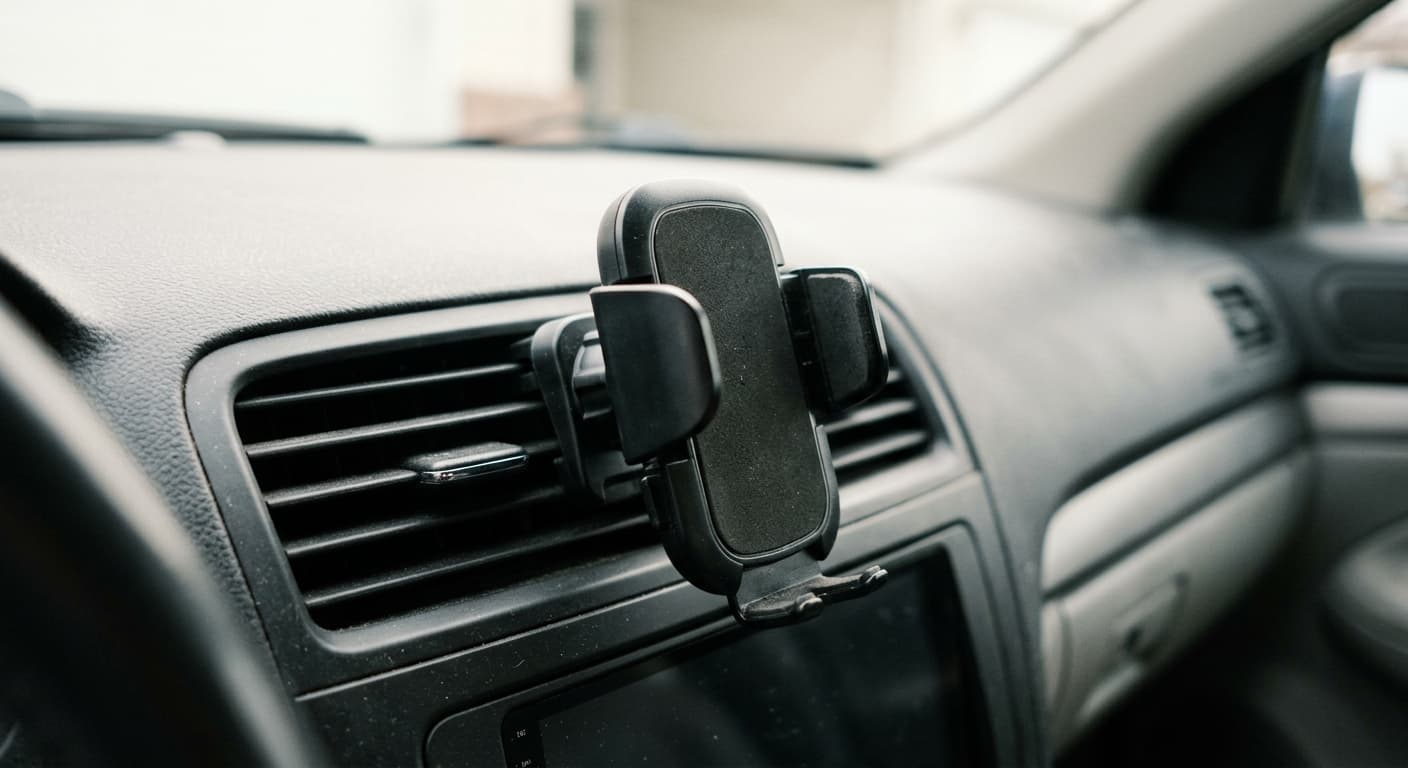
Arizona permits windshield-mounted dashcams, GPS units, and phone holders under ARS 28-959.01, as long as the device does not obstruct the driver's clear view. The statute's 5-inch and 7-inch lower-corner zones are written for signs, stickers, and other materials, not electronic devices; a dashcam can instead qualify as safety monitoring equipment mounted immediately behind, slightly above, or slightly below the rearview mirror, and a GPS or phone mount is otherwise safest on the dashboard.
Arizona regulates what drivers can attach to their windshields through ARS 28-959.01, titled "Materials on windows or windshield; exceptions; requirements; violation; definitions." The statute sets strict placement and size rules for any object mounted to the windshield while also carving out specific exemptions for safety equipment, stickers, and medical needs.
This guide covers every part of the law that affects GPS mounts, dashcams, phone holders, toll transponders, and tinted film.
Core Prohibition Under ARS 28-959.01
The foundation of Arizona's windshield mounting law is a single rule: a person shall not operate a motor vehicle with an object or material placed, displayed, installed, affixed, or applied on the windshield or side or rear windows in a manner that obstructs or reduces the driver's clear view.
This language appears in ARS 28-959.01(B). It does not single out any particular type of device. Any object, whether a GPS mount, phone holder, dashcam, air freshener, or sticker, is subject to this rule if it impairs visibility.
A separate statute, ARS 28-893, reinforces this principle. It prohibits operating a vehicle when the load or passengers obstruct the driver's view to the front or sides, or interfere with the driver's control of the vehicle.
Where Devices Can Be Mounted on the Windshield
Arizona law does not ban all windshield-mounted objects. ARS 28-959.01(A) lists twelve categories of exceptions. The two most relevant for consumer devices are the sticker/material zones and the safety monitoring equipment exemption.
The Corner Placement Rule
Under ARS 28-959.01(A), signs, stickers, or other materials may be displayed in either of these locations:
| Location | Maximum Size |
|---|---|
| Lower corner of the windshield farthest from the driver (passenger side) | 7-inch square |
| Lower corner of the windshield nearest the driver (driver side) | 5-inch square |
ARS 28-959.01(A)(5) writes this exception for "signs, stickers or other materials," not electronic devices, so it covers items like parking permits, toll transponder stickers, and inspection decals rather than GPS units, phone mounts, or dashcams. A GPS, phone mount, or dashcam is instead evaluated under the safety monitoring equipment exemption in (A)(12) or the general obstruction standard in ARS 28-959.01(B).
Safety Monitoring Equipment Exemption
ARS 28-959.01(A)(12) provides a separate exemption for "safety monitoring equipment and driver feedback" devices. These may be mounted in either of the following locations:
- Immediately behind, slightly above, or slightly below the rearview mirror
- Where the rearview mirror would commonly be positioned if the vehicle does not have a windshield-mounted rearview mirror
This exemption is significant for dashcam users. A dashcam that qualifies as safety monitoring equipment can be mounted behind the rearview mirror without needing to fit within the 5-inch or 7-inch corner zones. Most consumer dashcams are designed to mount in this location.
The statute does not define "safety monitoring equipment," which gives law enforcement some discretion. However, devices that record driving events, monitor driver behavior, or provide collision warnings generally fall within this category based on their function.
Top-of-Windshield Tint Strip
Transparent material may be applied to the topmost portion of the windshield if the bottom edge is at least 29 inches above the undepressed driver's seat, measured from a point 5 inches in front of the bottom of the backrest with the seat in its rearmost and lowest position on a level surface. This provision governs tint strips (sometimes called "eyebrows") at the top of the windshield.
GPS and Phone Mounts
Arizona does not have a statute that specifically addresses GPS devices or smartphone mounts by name. These devices are governed by the general windshield obstruction rules in ARS 28-959.01.
Legal Placement Options
A GPS or phone mount is legal in Arizona if it meets one of these conditions:
- Behind the rearview mirror: If the device qualifies as safety monitoring equipment under ARS 28-959.01(A)(12)
- Dashboard mount: Mounting on the dashboard avoids windshield restrictions entirely, as long as the device does not obstruct the view through the windshield
The 5-inch and 7-inch lower-corner exception in ARS 28-959.01(A)(5) applies to signs, stickers, and other materials, not electronic devices, so a GPS or phone mount placed in those corners is not specifically authorized and would instead be evaluated under the general obstruction standard in ARS 28-959.01(B).
Hands-Free Law Interaction
ARS 28-914, Arizona's hands-free driving law effective January 1, 2021, prohibits physically holding a portable wireless communication device while operating a vehicle. Using a properly mounted device for hands-free navigation or GPS is permitted.
The law allows communication and navigation "without the use of either of the driver's hands, except to activate or deactivate a function of the device." A windshield-mounted or dashboard-mounted phone used for navigation complies with this requirement as long as the driver does not hold the device.
Penalties under the hands-free law:
| Offense | Fine Range |
|---|---|
| First violation | $75 to $149 |
| Subsequent violations | $150 to $250 |
These penalties are separate from any windshield obstruction citation.
Dashcam Laws in Arizona
Dashcams are legal in Arizona. The state does not prohibit video recording from a vehicle-mounted camera, and Arizona law specifically accommodates dashcams through the safety monitoring equipment exemption.
Mounting Requirements
A dashcam can be legally mounted in Arizona in any of these positions:
- Behind the rearview mirror under the ARS 28-959.01(A)(12) safety monitoring equipment exemption. This is the most common and recommended position.
- On the dashboard outside the windshield entirely
The 5-inch and 7-inch lower-corner zones in ARS 28-959.01(A)(5) are written for signs, stickers, and other materials, not for a dashcam or other electronic device.
Most compact dashcams fit comfortably behind the rearview mirror and do not obstruct the driver's view, making them fully compliant with Arizona law.
Audio Recording and Consent
Arizona is a one-party consent state for audio recording under ARS 13-3005. This means you can legally record conversations in your vehicle as long as at least one person in the conversation (including you, the driver) consents to the recording.
If your dashcam records audio, it is legal to use in Arizona as long as you are present in the vehicle. Recording conversations between passengers when you are not participating would require consent from at least one of those passengers.
Intercepting communications without the consent of any party is a Class 5 felony under ARS 13-3005, punishable by 6 months to 2.5 years in prison and fines up to $150,000. This penalty applies to secret recording of conversations you are not part of, not to standard dashcam use by the vehicle's driver.
Video Recording on Public Roads
Recording video on public roads in Arizona does not require anyone's consent. People do not have a reasonable expectation of privacy on public roadways. ARS 13-3019 addresses surreptitious recording, but it applies to private settings where a person has a reasonable expectation of privacy, not to dashcam footage captured on public streets.
Window Tinting Restrictions
ARS 28-959.01(C) prohibits placing transparent material on the windshield or side or rear windows if the material alters the color or reduces the light transmittance of the glass. The specific standards are:
| Window | Maximum Luminous Reflectance | Minimum Light Transmission |
|---|---|---|
| Front side windows (driver and passenger) | 35% (+/- 3%) | 33% (+/- 3%) |
| Rear side windows | 35% (+/- 3%) or less | No minimum (any darkness) |
| Rear window | 35% (+/- 3%) or less | No minimum (if vehicle has both side mirrors) |
| Windshield | Not specified in ARS 28-959.01 for the permitted top strip | Tint only on the topmost portion, with the bottom edge at least 29 inches above the undepressed driver's seat, and not red or amber |
Red and Amber Tint Restriction
The only color-specific bar in ARS 28-959.01 is paragraph A(11)(b): transparent material applied to the topmost portion of the windshield must not be red or amber in color. Arizona has no separate provision singling out red film across every window. Film on the side and rear windows is instead governed by subsection C, which bars any transparent material that alters the color or reduces the light transmittance of the windshield or the side or rear windows, subject to the exceptions listed in subsection A.
Manufacturer Certification
Under ARS 28-959.01(D), manufacturers of window film or transparent materials must certify that their products comply with Arizona's reflectance and transmittance standards when properly installed.
Seller and Installer Disclosure
ARS 28-959.01(F) requires any person who sells or installs window film to conspicuously disclose that the installation may be illegal in some states. This protects consumers who drive across state lines.
Medical Exemptions
ARS 28-959.01(G) allows the Arizona Department of Transportation (ADOT) to issue a medical exemption from window tinting restrictions. To qualify, a person must:
- Have a medical condition requiring protection from direct sunlight
- Obtain written attestation from a physician licensed under Arizona Title 32, Chapter 13, 14, or 17
- Apply to ADOT using Form 40-1511
The exemption applies to the side and rear windows. ARS 28-959.01(G) permits a person to operate a vehicle, alter the color, or reduce the light transmitted "through the side or rear windows of a vehicle" under an exemption, so it does not authorize any tinting of the windshield.
The medical exemption covers a motor vehicle belonging to the applicant or a vehicle in which the applicant is a habitual passenger.
Image Display Device Restrictions
ARS 28-963 adds a separate layer of regulation for screens and displays visible to the driver. While a vehicle is in motion on a public road, the driver may not view:
- Broadcast television images
- Dynamic visual content from a DVD or other storage device
- Any rapidly changing images that are not related to navigation or vehicle operation
Permitted displays while driving include:
- Navigation and GPS mapping
- Vehicle information and controls
- Static background images
- Displays that enhance the driver's view of the area around the vehicle (such as backup cameras)
- Devices that display information intended to enhance traffic safety
This statute interacts with dashcam use: a dashcam that shows a live feed to the driver while driving is permitted because it enhances the driver's view of the surrounding area. However, watching recorded playback on any screen while driving would violate ARS 28-963.
Commercial Vehicle Rules
Commercial motor vehicles operating in Arizona must comply with both state and federal windshield mounting rules. The Federal Motor Carrier Safety Administration (FMCSA) issued a final rule effective May 6, 2022, amending 49 CFR 393.60(e) to expand the authorized mounting area for vehicle safety technology on commercial motor vehicle windshields.
Under the FMCSA rule, devices may be mounted up to 8.5 inches below the upper edge of the area swept by the windshield wipers. This is more permissive than the previous 4-inch limit. Covered devices include:
- Driver camera systems
- Braking warning and assist systems
- Lane departure warning systems
- GPS and navigation systems
- Traffic sign recognition systems
For commercial vehicles, the federal rule applies alongside Arizona's state requirements. Where state and federal rules differ, the more restrictive standard governs for safety equipment placement.
Windshield Condition Requirements
Beyond mounting restrictions, Arizona law sets baseline requirements for the windshield itself.
Windshield Required
ARS 28-957.01 requires an adequate windshield on all passenger vehicles, motor trucks, and truck tractors. Exceptions exist for:
- Motorcycles, ATVs, and golf carts manufactured before June 17, 1998
- Farm equipment classified as implements of husbandry
- Antique or classic vehicles not originally equipped with a windshield
- Fully autonomous vehicles incapable of human operation
Safety Glass
ARS 28-959 requires all glass in vehicle doors, windows, and windshields to be safety glass, defined as glass manufactured to substantially prevent shattering and flying when struck or broken. Replacement glass must also be safety glass that meets federal standards.
Windshield Cracks and Damage
Arizona does not require periodic vehicle safety inspections. However, a windshield with cracks or damage that obstructs the driver's view can result in a citation under the general obstruction provisions of ARS 28-959.01(B). Federal guidelines used as enforcement reference points include:
- No more than one crack extending into the center area of the windshield (the space above the steering wheel, extending to within 2 inches of the top and 1 inch from each side)
- Chips or cracks larger than 3/4 inch in the driver's direct line of sight should be repaired
- Multiple cracks, spidering, or connected damage in the center area are not acceptable
Windshield Wipers
ARS 28-957 requires functioning windshield wipers that are driver-controllable and capable of removing rain, snow, and other moisture.
Penalties for Violations
Windshield mounting and obstruction violations under ARS 28-959.01 are civil traffic infractions in Arizona. There is no statewide fixed fine amount. Instead, each county court sets its own fine schedule.
| Jurisdiction | Typical Fine for ARS 28-959.01 Violation |
|---|---|
| Coconino County | $164 |
| Mohave County | $105 to $212 |
| Maricopa County (Phoenix area) | $150 to $250 |
| Other counties | Varies by court |
In addition to the base fine, Arizona courts add surcharges and assessments that can increase the total amount owed. A violation does not add points to your driving record, as it is classified as a civil (not criminal) traffic matter.
Officers have discretion in enforcement. A small, properly placed dashcam behind the rearview mirror is unlikely to draw a citation. A large GPS unit blocking a significant portion of the windshield is more likely to result in a stop and ticket.
Summary of Placement Rules
| Device Type | Legal Placement Options | Key Statute |
|---|---|---|
| GPS / Navigation | Dashboard, or behind mirror if it qualifies as safety monitoring equipment | ARS 28-959.01(A)(12), (B) |
| Phone mount (hands-free) | Dashboard, or behind mirror if it qualifies as safety monitoring equipment | ARS 28-959.01(A)(12), (B), ARS 28-914 |
| Dashcam | Behind rearview mirror (preferred, as safety equipment), dashboard | ARS 28-959.01(A)(12) |
| Toll transponder | Lower corners (5" or 7" zones) | ARS 28-959.01(A) |
| Parking permit / sticker | Lower corners (5" or 7" zones) | ARS 28-959.01(A) |
| Tint strip | Top of windshield, above 29" from seat | ARS 28-959.01(A) |
More Arizona Laws
Frequently Asked Questions
Can I mount a GPS or phone on my windshield in Arizona?
Yes, with restrictions. Under ARS 28-959.01, the device must not obstruct your view through the windshield. The statute's 5-inch and 7-inch lower-corner zones apply to signs and stickers, not electronic devices, so the safest legal placements for a GPS or phone mount are on the dashboard or, if it qualifies as safety monitoring equipment, behind the rearview mirror. Arizona's hands-free law (ARS 28-914) requires that phones be used hands-free while driving.
Where should I mount a dashcam in Arizona?
The best location is behind the rearview mirror. ARS 28-959.01(A)(12) exempts safety monitoring equipment mounted immediately behind, slightly above, or slightly below the rearview mirror. This position keeps the dashcam out of the driver's line of sight and complies with the law. The lower-corner size zones in ARS 28-959.01(A)(5) are written for signs and stickers, not dashcams, so a dashboard mount is a better fallback than the corner zones.
Is dashcam audio recording legal in Arizona?
Yes. Arizona is a one-party consent state under ARS 13-3005. As long as you (the driver) are present and consent to the recording, your dashcam can legally record audio of conversations in your vehicle. Recording conversations you are not part of without any party's consent is a Class 5 felony.
What is the fine for a windshield obstruction ticket in Arizona?
Fines vary by county because Arizona does not set a single statewide amount for civil traffic infractions. Typical fines range from $100 to $250 before surcharges. Coconino County, for example, lists a $164 fine for ARS 28-959.01 violations.
Can I get a medical exemption for darker window tint in Arizona?
Yes. Under ARS 28-959.01(G), ADOT can grant an exemption if a physician attests that you have a medical condition requiring protection from sunlight. The exemption covers the side and rear windows only and does not authorize windshield tinting. Apply using ADOT Form 40-1511.
Updates
Corrected the Arizona window tinting and medical exemption sections: removed references to an AS-1 line, which does not appear in ARS 28-959.01, replaced them with the statute's 29-inch top-of-windshield measurement, limited the medical exemption to the side and rear windows, and narrowed the red tint claim to the red-or-amber bar that applies only to the topmost windshield strip.
Independently fact-checked against the cited primary sources; governing law re-checked for recent changes
Governing law re-checked for recent changes
Corrected the article's placement guidance for GPS units, phone mounts, and dashcams: Arizona's 5-inch/7-inch windshield corner-zone exception (ARS 28-959.01(A)(5)) applies to signs, stickers, and similar materials, not to electronic devices, which instead rely on the safety monitoring equipment exemption near the mirror or a dashboard mount.
Governing law re-checked for recent changes
Reviewed and approved by an editor
The Law Behind This Article
This article rests on the statutory provisions below, held in our own legal record and retrieved from the official source. Tap a section to read the operative text.
Arizona Revised Statutes, Title 28 (Transportation), Chapter 3 (TRAFFIC AND VEHICLE REGULATION), Article 16 (Equipment)
§ 28-959.01Materials on windows or windshield; exceptions; requirements; violation; definitionsIn forcecited in 4 of our articles
A. This section does not apply to: 1. Front side wing vents and windows that have a substance or material in conjunction with glazing material that has a light transmission of thirty-three percent plus or minus three percent and a luminous reflectance of thirty-five percent plus or minus three percent. 2. Front side wing vents and windows that have a substance or material not attached in conjunction with glazing material that is used by a vehicle operator on a moving vehicle during daylight hours as provided in section 28-922. 3. Rearview mirrors. 4. Adjustable nontransparent sun visors that are mounted forward of the side windows and that are not attached to the glass. 5. Signs, stickers or other materials that are either: (a) Displayed in a seven inch square in the lower corner of the windshield farthest removed from the driver. (b) Displayed in a five inch square in the lower corner of the windshield nearest the driver. 6. Side windows that are to the rear of the driver and rear windows that have a substance or material in conjunction with glazing material that has a luminous reflectance of thirty-five percent plus or minus three percent or less. 7.
Official text (excerpt) · last checked 2026-09-07 · Read the full text in our law library · Verify at azleg.gov
Cited in 2 court opinions in our collectionLatest citing opinion in our collection: 2016
Opinions citing this section in our collection:
- State of Arizona v. Jesus Ramiro Moreno (Court of Appeals of Arizona 2014, 236 Ariz. 347)“…vehicle based on mistaken view of the law). 4Under A.R.S. § 28-959.01(A)(1), window tint on the front-side wi…”
- State v. Meza-Contreras (Court of Appeals of Arizona 2016)“…er that obstructs or restricts the driver’s clear view. See A.R.S. § 28-959.01.B; see also A.R.S. § 28- 1594 (An offic…”
Identified automatically from the court opinions citing this section — not a ranking of which case controls.
Also relied on in: Arizona Dashcam Laws: Rules for Dashboard Cameras in Vehicles, Window Tint Laws by State (2026): Legal VLT Limits, Arizona Window Tint Laws (2026): Legal VLT Limits
§ 28-963Image display device; prohibition; exceptions; definitionIn force
A. While a person is driving a motor vehicle and the motor vehicle is in motion on a public roadway or on an off-highway vehicle trail as defined in section 28-1171, the person shall not: 1. View a broadcast television image or a visual image from an image display device within the motor vehicle unless the visual image is a static background image or imagery in support of mapping services or applications. 2. Watch a video or movie on a portable wireless communication device or stand-alone electronic device other than watching data related to the navigation of the motor vehicle, except that a person may view data related to the navigation of the motor vehicle, vehicle information or information related to driving a motor vehicle. 3. Record or broadcast a video on a portable wireless communication device or stand-alone electronic device, except that the person may use the devices for the sole purpose of continuously recording or broadcasting video within or outside of the motor vehicle. B. A person shall not operate a motor vehicle with an image display device that is visible to a driver seated in a normal driving position when the vehicle is in motion. C.
Official text (excerpt) · last checked 2026-08-04 · Read the full text in our law library · Verify at azleg.gov
§ 28-957.01Windshields required; exceptionsIn forcecited in 2 of our articles
A. The following vehicles shall be equipped with an adequate windshield: 1. A passenger vehicle, except a motorcycle, an all-terrain vehicle and a golf cart manufactured or modified before June 17, 1998. 2. A motor truck or truck tractor, except fire trucks, fire engines or other fire apparatus, whether publicly or privately owned. B. This section does not apply to any of the following: 1. An implement of husbandry. 2. An antique, classic or horseless carriage automobile if it was not originally equipped with a windshield. 3. A fully autonomous vehicle that is incapable of operation by a human driver.
Official text (excerpt) · last checked 2026-08-04 · Read the full text in our law library · Verify at azleg.gov
Cited in 2 court opinions in our collectionLatest citing opinion in our collection: 2003
Opinions citing this section in our collection:
- State v. Vera (Court of Appeals of Arizona 1999, 196 Ariz. 342)“…iously cracked "windshield. ¶ 7 Appellee argues that A.R.S. § 28-957.01(A) is unduly vague as to what constitut…”
- United States v. Alfred Garcia-Rivera (Court of Appeals for the Ninth Circuit 2003, 353 F.3d 788)“…ated for driving a motor vehicle with a cracked windshield. A.R.S. § 28-957.01; State v. Vera, 196 Ariz…”
Identified automatically from the court opinions citing this section — not a ranking of which case controls.
§ 28-959Safety glass required; applicability; denial or suspension of registration; definitionIn force
A. A person shall not sell and the department shall not register a new motor vehicle as specified in this section unless the vehicle is equipped with safety glass wherever glass is used in doors, windows and windshields. B. This section applies to passenger motor vehicles, other than golf carts, including passenger buses and school buses. For trucks, including truck tractors, the requirements of this section for safety glass apply to all glass used in doors, windows and windshields in the drivers' compartments of the vehicles. C. The director shall not register a new motor vehicle unless it is equipped with an approved type of safety glass. The director shall suspend the registration of any motor vehicle that is subject to this section and that the director finds is not equipped with an approved type of safety glass. The suspension shall continue until the motor vehicle is made to conform to the requirements of this section. D. A person shall not replace glass or glazing materials used in partitions, doors, windows, windshields or wind deflectors in a motor vehicle with a material other than safety glass. E.
Official text (excerpt) · last checked 2026-08-04 · Read the full text in our law library · Verify at azleg.gov
Arizona Revised Statutes, Title 28 (Transportation), Chapter 3 (TRAFFIC AND VEHICLE REGULATION), Article 15 (Miscellaneous Rules)
§ 28-893Obstruction to view; interference with drivingIn force
A. A person shall not drive a vehicle when the vehicle's load or passengers obstruct the driver's view to the front or sides of the vehicle or interfere with the driver's control over the vehicle's driving mechanism. B. A passenger in a vehicle shall not ride in a position that interferes with the driver's view ahead or to the sides or that interferes with the driver's control over the vehicle's driving mechanism.
Official text (excerpt) · last checked 2026-08-04 · Read the full text in our law library · Verify at azleg.gov
Cited in 3 court opinions in our collectionLatest citing opinion in our collection: 1988
Opinions citing this section in our collection:
- Alires v. Southern Pacific Company (Arizona Supreme Court 1963, 93 Ariz. 97)“…ecord, a proper instruction incorporating the provisions of A.R.S. § 28-893 would unlawfully permit the jury to spe…”
- Mitchell v. Colquette (Arizona Supreme Court 1963, 93 Ariz. 211)“…times, be left to the juryi” • 3 . See A.R.S. § 28-893 (B) “No passenger in a vehicle shall ri…”
- Santiago v. Phoenix Newspapers, Inc. (Court of Appeals of Arizona 1988, 162 Ariz. 86)“…ot violate the statutes governing traffic in Arizona. See A.R.S. §§ 28-893 and 28-956. At most, a vehicle with a l…”
Identified automatically from the court opinions citing this section — not a ranking of which case controls.
§ 28-914Use of portable wireless communication device while driving; prohibition; civil penalty; state preemption; definitionsIn force
A. Unless a motor vehicle is parked or stopped pursuant to section 28-645, subsection A, paragraph 3 or section 28-851, a person may not operate a motor vehicle on a street or highway if the person does either of the following: 1. Physically holds or supports with any part of the person's body either of the following: (a) A portable wireless communication device, except that a person may use a portable wireless communication device with an earpiece, headphone device or device worn on a wrist to conduct a voice-based communication. (b) A stand-alone electronic device. 2. Writes, sends or reads any text-based communication, including a text message, instant message, email or internet data, on a portable wireless communication device or stand-alone electronic device. This paragraph does not apply to either of the following: (a) The use of voice-based communications, including through the use of a portable wireless communication device or stand-alone electronic device, to direct the writing, sending, reading or other communicating of any text-based communication.
Official text (excerpt) · last checked 2026-08-04 · Read the full text in our law library · Verify at azleg.gov
Cited in 1 court opinions in our collectionLatest citing opinion in our collection: 2025
Opinions citing this section in our collection:
- Sanchez v. Lily Transportation Corporation (District Court, D. Arizona 2025)“…ited by 26 statute, is punishable only by civil penalty. A.R.S. § 28-914(D). Although the absence of 27 crimi…”
Identified automatically from the court opinions citing this section — not a ranking of which case controls.
Arizona Revised Statutes, Title 13 (Criminal Code), Chapter 30 (EAVESDROPPING AND COMMUNICATIONS)
§ 13-3005Interception of wire, electronic and oral communications; installation of pen register or trap and trace device; classification; exceptionsIn forcecited in 21 of our articles
A. Except as provided in this section and section 13-3012, a person is guilty of a class 5 felony who either: 1. Intentionally intercepts a wire or electronic communication to which he is not a party, or aids, authorizes, employs, procures or permits another to so do, without the consent of either a sender or receiver thereof. 2. Intentionally intercepts a conversation or discussion at which he is not present, or aids, authorizes, employs, procures or permits another to so do, without the consent of a party to such conversation or discussion. 3. Intentionally intercepts the deliberations of a jury or aids, authorizes, employs, procures or permits another to so do. B. Except as provided in sections 13-3012 and 13-3017, a person who intentionally and without lawful authority installs or uses a pen register or trap and trace device on the telephone lines or communications facilities of another person which are utilized for wire or electronic communication is guilty of a class 6 felony.
Official text (excerpt) · last checked 2026-08-31 · Read the full text in our law library · Verify at azleg.gov
Cited in 7 court opinions in our collectionLatest citing opinion in our collection: 2025
In the courts (editorial summary, independently checked):State v. Morrison (2002) held that 13-3005 criminalizes unlawful interception but provides no exclusionary remedy, so a recording made in violation of it is not automatically inadmissible. State v. Hauss (1984) held the section inapplicable to a police station interview room talk where no reasonable expectation of privacy existed.
Opinions citing this section in our collection:
- State v. Morrison (Court of Appeals of Arizona 2002, 203 Ariz. 489)“…ause it was made without his or her consent in violation of A.R.S. § 13-3005 and 18 U.S.C. § 2511 and was, therefo…”
- State v. Hauss (Court of Appeals of Arizona 1984, 142 Ariz. 159)✓Police secretly recorded an arrested suspect's talk with his girlfriend in a station interview room, after telling her the room was being monitored; the court held there was no reasonable expectation of privacy in that setting, so section 13-3005 did not apply.
- State v. Allgood (Court of Appeals of Arizona 1992, 171 Ariz. 522)“…communication.” (Emphasis added.) See also A.R.S. § 13-3005. (penalizing as a class 5 felony interc…”
Identified automatically from the court opinions citing this section — not a ranking of which case controls.
Also relied on in: Arizona Recording Laws (2026): One-Party Consent Rules, One-Party Consent States: Complete 2026 Guide, Arizona Audio Recording Laws: Complete Guide to Consent Rules
§ 13-3019Surreptitious photographing, videotaping, filming or digitally recording or viewing; exemptions; classification; definitionsIn forcecited in 16 of our articles
A. It is unlawful for any person to knowingly photograph, videotape, film, digitally record or by any other means secretly view, with or without a device, another person without that person's consent under either of the following circumstances: 1. In a restroom, bathroom, locker room, bedroom or other location where the person has a reasonable expectation of privacy and the person is urinating, defecating, dressing, undressing, nude or involved in sexual intercourse or sexual contact. 2. In a manner that directly or indirectly captures or allows the viewing of the person's genitalia, buttock or female breast, whether clothed or unclothed, that is not otherwise visible to the public. B. It is unlawful to disclose, display, distribute or publish a photograph, videotape, film or digital recording made in violation of subsection A of this section without the consent or knowledge of the person depicted. C. This section does not apply to: 1.
Official text (excerpt) · last checked 2026-08-31 · Read the full text in our law library · Verify at azleg.gov
Cited in 8 court opinions in our collectionLatest citing opinion in our collection: 2026
In the courts (editorial summary, independently checked):State of Arizona v. Whytte Dragun Duncan (2024) found a hidden bathroom camera established a fair probability of surreptitious recording under 13-3019, supporting a search warrant. State of Arizona v. Agustin Gonzalez Gongora (2014) contrasted the section with the voyeurism statute, which adds a sexual stimulation element.
Opinions citing this section in our collection:
- State of Arizona v. Agustin Gonzalez Gongora (Court of Appeals of Arizona 2014, 235 Ariz. 178)✓A man crouched behind a shopper in a store and looked up her dress; convicted under the separate voyeurism statute, he argued a 2006 draft amendment made upskirt viewing only a section 13-3019 offense, and the court rejected that reading of the two statutes.
- Tucson Unified School District v. Borek (Court of Appeals of Arizona 2014, 234 Ariz. 364)“…g or recording another person without their consent.” See A.R.S. § 13-3019(A), (D).…”
- State of Arizona v. Whytte Dragun Duncan (Court of Appeals of Arizona 2024, 548 P.3d 1128)✓A foster parent hid a camera inside a USB charger in the bathroom and recorded teenage girls showering and undressing; the court held that even with the unlawfully searched SD card excised, the affidavit showed a fair probability of a section 13-3019 offense.
Identified automatically from the court opinions citing this section — not a ranking of which case controls.
Also relied on in: Arizona Landlord-Tenant Recording Laws: Rights for Renters and Property Owners, Arizona Medical Recording Laws: Patient Rights and HIPAA Rules, Arizona Laws on Recording in Public: What You Can and Cannot Film
Code of Federal Regulations Title 49
§ 393.60Glazing in specified openings.In forcecited in 15 of our articles
(a) Glazing material. Glazing material used in windshields, windows, and doors on a motor vehicle manufactured on or after December 25, 1968, shall at a minimum meet the requirements of Federal Motor Vehicle Safety Standard (FMVSS) No. 205 in effect on the date of manufacture of the motor vehicle. The glazing material shall be marked in accordance with FMVSS No. 205 (49 CFR 571.205, S6). (b) Windshields required. Each bus, truck and truck-tractor shall be equipped with a windshield. Each windshield or portion of a multi-piece windshield shall be mounted using the full periphery of the glazing material. (c) Windshield condition. With the exception of the conditions listed in paragraphs (c)(1), (c)(2), and (c)(3) of this section, each windshield shall be free of discoloration or damage in the area extending upward from the height of the top of the steering wheel (excluding a 51 mm (2 inch) border at the top of the windshield) and extending from a 25 mm (1 inch) border at each side of the windshield or windshield panel.
Official text (excerpt) · last checked 2026-07-28 · Read the full text in our law library · Verify at ecfr.gov
Cited in 3 court opinions in our collectionLatest citing opinion in our collection: 2021
In the courts (editorial summary, independently checked):The 70 percent light transmittance floor of 49 CFR 393.60(d) covers the windshield and the windows immediately right and left of the driver. Grooms Hauling, LLC v. Robinson (2020) applied it through Pennsylvania adoption and rejected racial profiling claims over tint citations; State v. Ford (2021) noted that Kansas adopts it too.
Opinions citing this section in our collection:
- United States of America, Government v. Robert L. Pierre, Defendant (District Court, D. New Hampshire 2015, 2015 DNH 083)“…rallel luminous transmittance of not less than 70 percent.” 49 C.F.R. 393.60(c). Neither the Government nor the defe…”
- GROOMS HAULING, LLC v. ROBINSON (District Court, E.D. Pennsylvania 2020)✓Officers repeatedly cited a Black-owned hauling company whose truck windows passed only 17 to 20 percent of light; treating 49 CFR 393.60's 70 percent transmittance standard as the governing rule, the court granted the officers summary judgment on the profiling claims.
- State v. Ford (Court of Appeals of Kansas 2021)“…Relevant to this appeal are regulations on window tinting (49 C.F.R. § 393.60[d]), medical examiner certificates (49…”
Identified automatically from the court opinions citing this section — not a ranking of which case controls.
Also relied on in: Connecticut Windshield Mounting Laws (2026 Guide), Idaho Windshield Mounting Laws (2026 Guide), Kansas Windshield Mounting Laws (2026 Guide)
Search our full record of US law — 2.1 million sections, every state + federal →
Sources and References
- ARS 28-959.01 - Materials on windows or windshield; exceptions; requirements; violation; definitions(azleg.gov).gov
- ARS 28-893 - Obstruction to view; interference with driving(azleg.gov).gov
- ARS 28-914 - Use of portable wireless communication device while driving; prohibition; civil penalty; state preemption; definitions(azleg.gov).gov
- ARS 13-3005 - Interception of wire, electronic and oral communications; classification; exceptions(azleg.gov).gov
- ARS 13-3019 - Surreptitious photographing, videotaping, filming or digitally recording; exemptions; classification(azleg.gov).gov
- ARS 28-963 - Image display device; prohibition; exceptions; definition(azleg.gov).gov
- ARS 28-957.01 - Windshields required; exceptions(azleg.gov).gov
- ARS 28-959 - Safety glass required; applicability; definition(azleg.gov).gov
- ADOT Form 40-1511 - Application for Window Tint Medical Exemption(apps.azdot.gov).gov
- ADOT - Window Tinting Exemption(azdot.gov).gov
- FMCSA Final Rule - Authorized Windshield Area for Vehicle Safety Technology (49 CFR 393.60)(federalregister.gov).gov