District of Columbia Windshield Mounting Laws
Independently fact-checked against primary sources (last audited August 17, 2026). · Reviewed by the RecordingLaw editorial team. · Law checked current as of August 17, 2026. · 9 primary sources cited on this page. How we verify our legal content
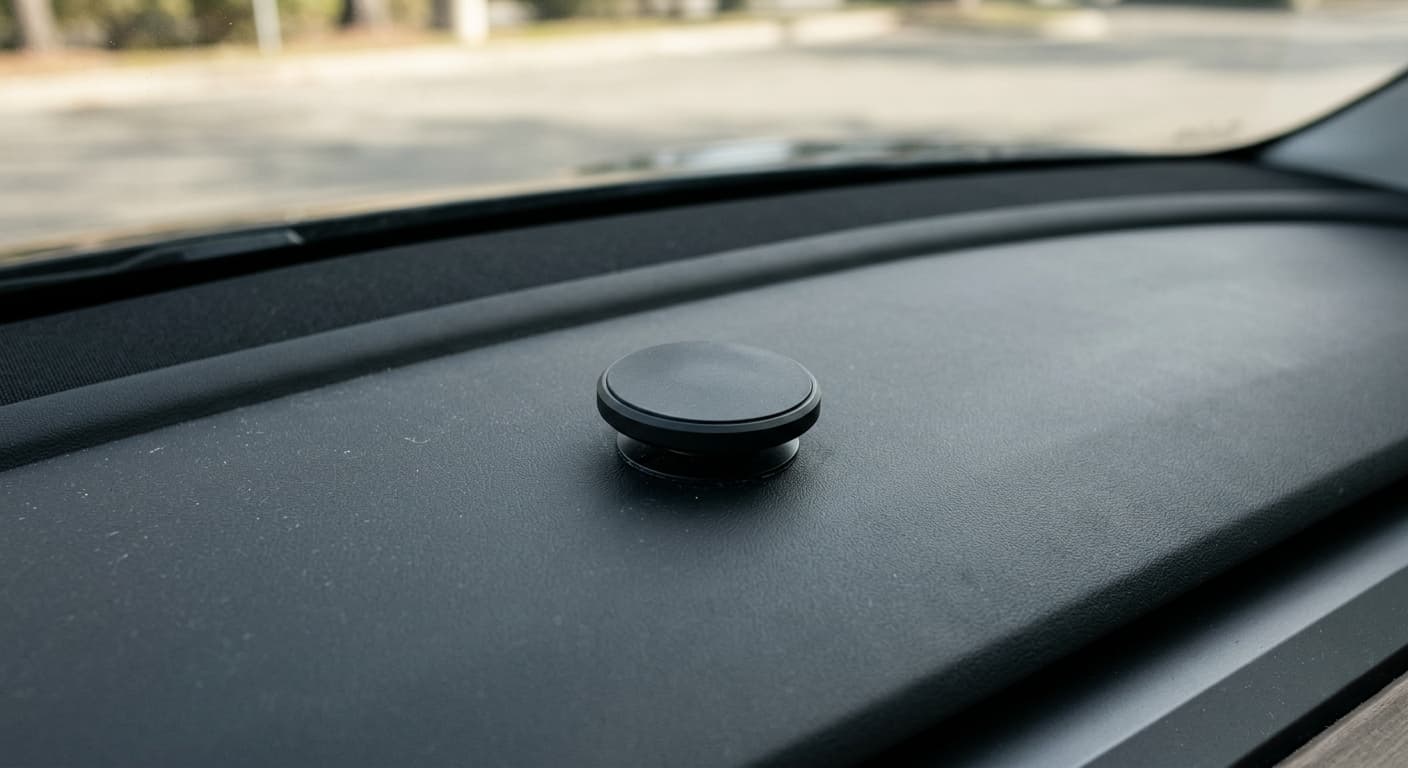
The District of Columbia does not ban objects from the windshield outright. The regulation that once did, 18 DCMR 2213.7, was repealed by the NEAR Act of 2016 and the official DCMR text now reads "[REPEALED]." What survives is the general obstruction test in 18 DCMR 2213.1, so a dashcam, GPS unit, or phone mount is judged by whether it blocks a significant portion of the driver's view.
The District of Columbia is widely described as banning every windshield-mounted device. That description is out of date. The provision it rests on was repealed in 2016, and the rule that replaced it turns on whether a device actually obstructs the driver's view rather than on where it is attached. Alongside that, D.C. still enforces a strict 70% visible light transmittance (VLT) requirement and a comprehensive hands-free driving law.
This guide covers every regulation that affects windshield mounting in the District, including what the obstruction law actually says today, tint requirements, hands-free rules, penalties, exemptions, and how these laws interact.
D.C. Windshield Obstruction Law (18 DCMR 2213)
The regulation governing what can and cannot be placed on a windshield in the District of Columbia is 18 DCMR Section 2213, titled "Obstruction of Driver's View or Driving Mechanism."
The General Rule
18 DCMR 2213.1 is the operative provision. In the current codified text it reads:
No person shall drive a vehicle with any object in any position that obstructs a significant portion of the view of the driver to the front or sides of the vehicle, or interferes with the driver's control over the driving mechanism of the vehicle.
Two things follow from that wording. First, the standard is obstruction of a significant portion of the view, which is a question of fact about the particular device and where it sits. Second, the rule says nothing about attachment. It does not matter whether an object is stuck to the glass, hanging from the mirror, or sitting on the dashboard; what matters is what it blocks.
There is one wrinkle worth knowing. D.C. Law 21-125 Section 301(a) rewrote 2213.1 to protect the driver's view "to the front, sides, or back of the vehicle." The codified text published by the D.C. Office of Documents still reads "to the front or sides," an apparent codification lag. The broader version is the safer assumption for a driver.
The Repealed Blanket Ban
D.C. formerly had a much stricter rule. 18 DCMR 2213.7 prohibited any object attached to or suspended from the windshield, the rear window, the front side windows, the rearview mirror, or their frames, and 2213.8 was a companion provision.
Both were repealed. D.C. Law 21-125, the Neighborhood Engagement Achieves Results (NEAR) Act of 2016, struck them at Section 301, effective June 30, 2016. The change was carried into the DCMR effective October 8, 2016, and the official current text of both subsections now reads simply "[REPEALED]."
The repeal was deliberate policy, not an oversight. It came in a package aimed at reducing minor-equipment offenses that functioned as grounds for pretextual traffic stops. Removing the per se attachment offense removed that basis for a stop.
What This Means in Practice
Many published guides still contrast D.C. with states like California, which allows a 7-inch square in the lower corner of the windshield, or Arkansas, which permits devices within 4.5 inches of the bottom, and conclude that D.C. is stricter because it carves out no permitted zone. That comparison no longer holds, and it points the wrong way.
D.C. does not carve out a permitted zone because it no longer has an object-specific windshield prohibition to carve an exception out of. A state with a measured safe-harbor zone tells you exactly where a mount is lawful. D.C. instead asks a general question in every case: does this object obstruct a significant portion of the view? A small dash-mounted phone holder or a compact dashcam tucked beside the rearview mirror obstructs very little and is not prohibited by 2213.1.
That cuts the other way for large objects. A wide tablet-sized screen in the driver's sight line, or something dangling in the middle of the windshield, can violate 2213.1 even though nothing is "attached" in the old sense.
Windshield Condition Requirements (18 DCMR 731)
18 DCMR Section 731 sets out the physical condition requirements for windshields and mirrors on vehicles operated in the District.
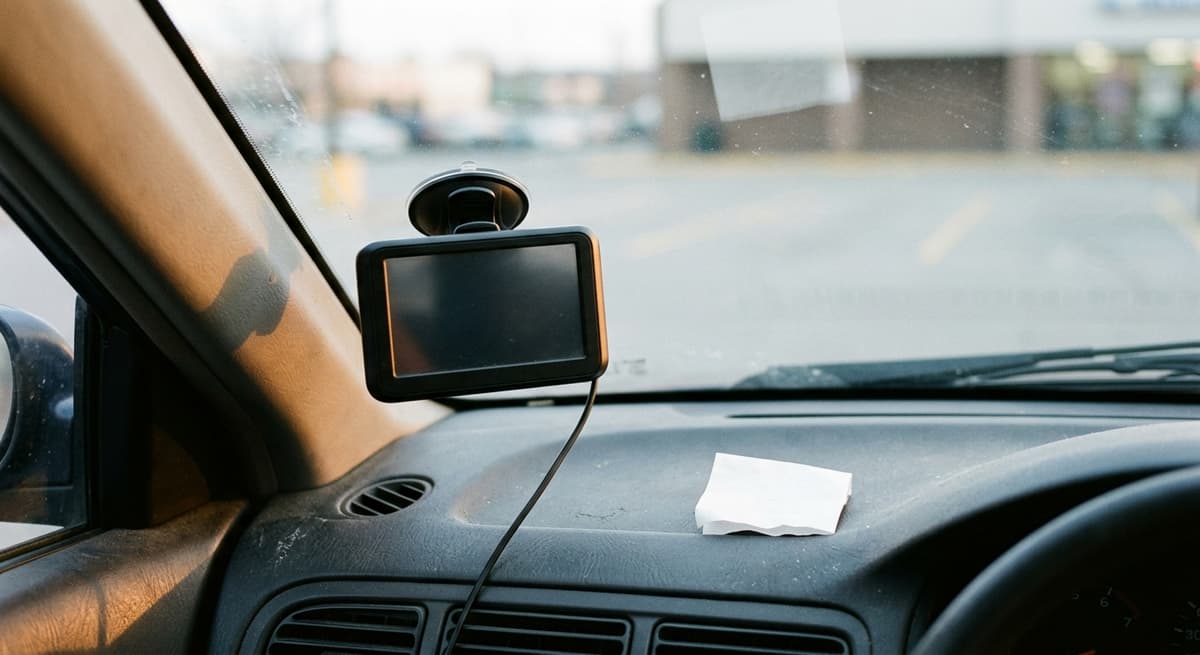
Key Requirements
| Requirement | Regulation |
|---|---|
| No sign, poster, or other non-transparent material on the windshield or windows, except an authorized sticker | 18 DCMR 731.1 |
| Driver-controlled mechanical device for clearing rain, snow, or moisture from the windshield | 18 DCMR 731.2 |
| Windshield wipers required on vehicles manufactured after January 1, 1938 | 18 DCMR 731.3 |
| Wipers must cover both driver and passenger sides | 18 DCMR 731.3 |
| All wipers must be maintained in good working order | 18 DCMR 731.4 |
| No cracked, scarred, clouded, or otherwise defective windshield that obstructs vision | 18 DCMR 731.5 |
| Rearview mirror giving a view of at least 200 feet to the rear | 18 DCMR 731.6 |
A windshield with cracks or damage that impairs the driver's view is a separate, citable violation from the obstruction rules. While D.C. does not require annual safety inspections for most private vehicles, officers can issue citations for a damaged windshield during any traffic encounter.
The One Windshield-Specific Rule That Survived
18 DCMR 731.1 is worth reading closely, because it is the closest thing D.C. still has to a windshield-attachment rule. It bars driving with "any sign, poster, or other non-transparent material upon the front windshield, sidewings, or side or rear windows," other than a sticker authorized by the Mayor, the Public Service Commission, the Joint Board, or the Director.
Its plain target is flat material applied to the glass, such as signs, posters, and decals. Whether "other non-transparent material" reaches a suction-cup phone cradle or a dashcam body is an open question that the text does not settle, and we are not aware of D.C. case law resolving it. It is a reason to prefer a low, compact mount, but it is not a stated ban on devices.
Window Tint and VLT Requirements (DC Code 50-2207.02)
DC Code Section 50-2207.02 governs window tinting across all vehicle windows, including the windshield. D.C. requires 70% VLT on the windshield, making it one of the strictest jurisdictions in the nation for windshield tinting.
VLT Standards by Vehicle Type
| Window | Standard Vehicles | Minivans |
|---|---|---|
| Windshield | 70% VLT minimum | 55% VLT minimum |
| Front side windows | 70% VLT minimum | 55% VLT minimum |
| Rear side windows | 50% VLT minimum | 35% VLT minimum |
| Rear windshield | 50% VLT minimum | 35% VLT minimum |
Windshield Tint Strip Exception
The law allows a tint strip above the AS-1 line or within 5 inches from the top of the windshield with lower light transmittance. This is the only area of the windshield where darker tinting is permitted. Below that line, the full 70% VLT requirement applies.
The AS-1 line is a marking typically found on the windshield glass itself, placed by the manufacturer to indicate the boundary for factory tinting compliance with federal safety standards.
Exempt Vehicles
The tint law does not apply to:
- Limousines
- Ambulances
- Buses
- Hearses
- Church-owned vehicles
- Official government vehicles
- Vehicles with factory-installed tinting that meets federal standards
- Vehicles with approved medical exemptions
Medical Exemption Process
Drivers or vehicle owners with medical conditions requiring additional protection from sunlight can apply for a Vehicle Tint Waiver through the DC DMV. The process requires:
- A letter on official letterhead from a physician, physician assistant, ophthalmologist, or optometrist
- The letter must certify that protection from sunlight or bright lights is medically necessary
- The letter must identify the specific medical condition
- The completed Vehicle Tint Waiver Request Form must be submitted to the DC DMV Inspection Station
- The waiver must be maintained in the vehicle at all times
Making a false statement on the waiver form is a violation of DC law (DC Official Code 22-2405), punishable by a fine of up to $1,000 or 180 days imprisonment or both.
GPS and Phone Mounts
Because 18 DCMR 2213.7 was repealed, there is no D.C. rule that makes a suction-cup GPS or phone mount unlawful simply because it touches the windshield. The question under 18 DCMR 2213.1 is whether the mount and the device in it obstruct a significant portion of your view to the front or sides.
In practice that favors a mount that is small, low, and out of the sight line: the bottom corner on the driver's side, the far bottom corner on the passenger side, or immediately beside or below the rearview mirror, where the mirror already blocks the view. A phone parked in the middle of the glass at eye level is the arrangement most likely to draw a citation.
Lower-Risk Alternatives
None of the following is legally required, but each keeps a device well clear of the obstruction test:
- Dashboard mounts that attach to the dash surface or use weighted, non-permanent bases
- Vent clip mounts that attach to the vehicle's air conditioning vents
- Console mounts that attach to the center console or cup holder area
- CD slot mounts for vehicles that still have a disc player
- Built-in vehicle navigation systems or Android Auto / Apple CarPlay integration
Whatever the mounting solution, the driver must still operate the device hands-free to comply with DC Code 50-1731.04. That requirement is about handling the phone, not about where the phone sits.
Dashcam Placement
D.C. does not have a specific dashcam statute, and since the 2016 repeal it has no rule that prohibits attaching a dashcam to the windshield. A windshield-mounted dashcam is lawful in the District so long as it does not obstruct a significant portion of the driver's view under 18 DCMR 2213.1.
The standard placement, tucked behind or immediately beside the rearview mirror, sits in an area the mirror already occupies and is very unlikely to meet the obstruction test. A dashboard mount is an equally good option, but it is a matter of preference rather than compliance with a mandatory rule.
Hands-Free Driving Law (DC Code 50-1731)
D.C. was one of the first jurisdictions in the country to enact a comprehensive hands-free law. The Distracted Driving Safety Act of 2004 (DC Code Chapter 17A) governs the use of mobile phones and electronic devices while driving.
What the Law Requires
Under DC Code 50-1731.04, drivers may not:
- Use or attempt to use a mobile phone or personal wireless communications device without a hands-free accessory
- Hold or attempt to hold a mobile phone or personal wireless communications device while driving
- Wear headphones covering both ears or earbuds in both ears (except for hearing-impaired drivers)
What Counts as "Hands-Free"
Under DC Code 50-1731.02, a "hands-free accessory" is any attachment, add-on, built-in feature, or addition to a mobile phone that allows the driver to maintain both hands on the steering wheel while using the device. This includes:
- Bluetooth connections to the vehicle's audio system
- Wireless earbuds (one ear only)
- Voice-activated controls
- Dashboard or vent-mounted cradles (operated by voice, not by hand)
Navigation Devices Are Treated Differently
The definition of "personal wireless communications device" in DC Code 50-1731.02 explicitly excludes navigation systems and emergency assistance devices installed in a vehicle. This means a dedicated GPS unit installed in the dashboard is not subject to the same restrictions as a mobile phone. However, a phone being used for navigation is still a "mobile telephone" under the law and must be operated hands-free.
Exceptions to the Hands-Free Law
The law allows phone use without a hands-free accessory in these situations:
- Emergency calls to 911, 311, hospitals, ambulance services, fire departments, law enforcement, or first aid squads
- Use by law enforcement and emergency personnel acting in official capacity
- Briefly initiating or terminating a phone call, or turning the phone on or off
- Using a device when the vehicle is safely and completely stopped off an active roadway
Additional Restrictions for Certain Drivers
Under DC Code 50-1731.05:
- Learner's permit holders and drivers under 18 may not use any mobile phone or electronic device while driving, even with a hands-free accessory, except in emergencies
- School bus drivers carrying passengers may not use any mobile phone or electronic device, even with a hands-free accessory, except for emergency calls to school officials
Penalties and Fines
D.C. enforces windshield and device violations through several overlapping penalty structures.
Windshield and Obstruction Violations
The figures below come from the Metropolitan Police Department's Collateral List for Moving, Parking, and Non-Moving Violations, revised January 2025. Note that the collateral list carries no entry for a per se windshield-attachment offense, which is consistent with the repeal of 2213.7. Both obstruction entries require actual obstruction.
| Violation | Code | Regulation | Fine |
|---|---|---|---|
| Front or side view obstructed | T189 | 18 DCMR 2213 | $75 |
| Objects hanging so as to obstruct | T190 | 18 DCMR 2213 | $75 |
| Defective windshield | T192 | 18 DCMR 731.5 | $75 |
| Obstructed windshield | T193 | 18 DCMR 731.5 | $75 |
| Operating vehicle without windshield wipers | T194 | 18 DCMR 731.3 | $75 |
The collateral list sets fine amounts but does not assign license points to individual entries, and MPD states that the document is general guidance rather than legal authority. Check with the DC DMV for the point consequences of a specific citation.
Window Tint Violations
| Violation | Statute | Fine | Additional Consequences |
|---|---|---|---|
| First tint violation | DC Code 50-2207.02 | $50 | Must present vehicle at inspection station within 5 business days |
| Failure to comply within 5 days | DC Code 50-2207.02 | Up to $1,000 | Vehicle may be ordered removed from public streets |
| Subsequent tint violation | DC Code 50-2207.02 | Up to $5,000 | Must pass re-inspection within 5 business days |
Window tint violations carry no points on the driver's record. However, the escalating fine structure is significant. A first-time $50 ticket can become a $5,000 penalty for repeat offenders who fail to bring their vehicle into compliance.
Distracted Driving and Phone Violations
| Violation | Statute | Fine | Notes |
|---|---|---|---|
| Using phone without hands-free | DC Code 50-1731.04 | $100 | First offense fine may be suspended with proof of hands-free purchase |
| Texting while driving | DC Code 50-1731.04 | $100 | No suspension available for texting violations |
| General distracted driving | DC Code 50-1731.03 | $100 | Broad catch-all provision |
| Minor/learner's permit phone use | DC Code 50-1731.05 | $100 | No hands-free exception |
All distracted driving violations are processed as moving violations but carry no points.
How the Laws Interact
D.C.'s windshield laws create a layered regulatory framework. Here is how the rules work together in common scenarios:
Small phone mount low on the windshield, phone operated by voice: No violation. Nothing prohibits the attachment, and a compact mount out of the sight line does not obstruct a significant portion of the view under 18 DCMR 2213.1. Voice operation satisfies DC Code 50-1731.04.
Large phone or tablet mounted at eye level in the middle of the windshield: This can violate 18 DCMR 2213.1 on the obstruction test alone. If the driver is also holding or touching the device while driving, that is a separate violation of DC Code 50-1731.04, and two citations are possible.
Air freshener or other item hanging from the rearview mirror: Lawful in itself since the repeal of 2213.7, but MPD can still write a $75 ticket under T190 for objects hanging so as to obstruct if the item actually blocks the view.
GPS unit mounted on the windshield: Judged only by obstruction. Dedicated GPS devices are also excluded from the distracted driving law's device definition, so a dashboard-installed unit sits outside the hands-free rules as well.
Dark windshield tint plus a mounted device: The tint is assessed on its own under 50-2207.02 and the mount on its own under 2213.1. Illegal tint plus a large obstructing screen plus a phone held in the hand could produce three separate citations.
Toll Transponders and Parking Permits
E-ZPass transponders and similar electronic toll collection devices are commonly mounted on windshields nationwide, and nothing in current D.C. regulation prohibits them. Since the repeal of 2213.7 there is no attachment-based offense to trigger, and a small transponder does not obstruct a significant portion of the driver's view under 2213.1.
The conventional placement, behind or just below the rearview mirror, keeps a transponder entirely out of the sight line. D.C. residential parking permits (zone stickers) are typically displayed on bumpers or rear windows.
Recent Changes and Updates
NEAR Act of 2016 (D.C. Law 21-125)
Section 301 of the Neighborhood Engagement Achieves Results Amendment Act of 2016 is the change that reshaped this area of law. It repealed 18 DCMR 2213.7 and 2213.8, eliminating the blanket prohibition on objects attached to or suspended from the windshield and windows, and it rewrote 2213.1 to cover obstruction of the driver's view to the front, sides, or back. The law took effect June 30, 2016, and the amended DCMR text became effective October 8, 2016.
Vision Zero Enhancement Omnibus Amendment Act of 2020 (D.C. Law 23-158)
This law strengthened the distracted driving framework by prohibiting drivers from wearing headphones over both ears or earbuds in both ears while driving (with an exception for hearing-impaired drivers). It also removed a prior provision that shielded distracted driving violations from point assessment when they did not contribute to an accident.
STEER Act of 2024 (D.C. Law 25-161)
The Strengthening Traffic Enforcement, Education, and Responsibility Amendment Act of 2024 amended various motor vehicle laws, including clarifications to offenses affecting license suspension and reinstatement requirements. It did not change the windshield obstruction rules.
Current Status of the Core Rules
The most recent adopted version of 18 DCMR 2213 on the D.C. Office of Documents register is the October 8, 2016 text, so the obstruction rules have not been amended since the NEAR Act. The 70% VLT standard for windshields under DC Code 50-2207.02 also remains unchanged.
More D.C. Laws
Frequently Asked Questions
Can I mount a GPS or phone on my windshield in Washington, D.C.?
There is no longer a flat ban. 18 DCMR 2213.7, which prohibited objects attached to or suspended from the windshield, was repealed by the NEAR Act of 2016, and the official DCMR text now reads '[REPEALED].' What applies instead is 18 DCMR 2213.1: an object may not obstruct a significant portion of your view to the front or sides or interfere with your control of the vehicle. A small mount low on the glass or beside the rearview mirror is unlikely to meet that test. A large screen at eye level in the middle of the windshield could.
Why do so many sources say D.C. bans all windshield mounts?
Because they are repeating the pre-2016 rule. 18 DCMR 2213.7 really did ban any object attached to or suspended from the windshield, mirror, rear window, or side windows, and that text is still circulating on unofficial code mirrors and in older guides. It was repealed by D.C. Law 21-125 Section 301, effective June 30, 2016, as part of a package aimed at reducing pretextual traffic stops. The current text on the D.C. Office of Documents register reads '2213.7 [REPEALED].'
What is the fine for an obstructed windshield in D.C.?
MPD's January 2025 collateral list sets $75 for a front or side view obstructed (T189) and $75 for objects hanging so as to obstruct (T190), both under 18 DCMR 2213, and both require actual obstruction. A defective or obstructed windshield under 18 DCMR 731.5 is also $75. Using a phone without a hands-free accessory adds $100 under DC Code 50-1731.04, and window tint violations start at $50 and can escalate to $5,000 for repeat offenders.
What are D.C.'s windshield tint requirements?
Standard vehicles must allow at least 70% visible light transmittance (VLT) through the windshield under DC Code 50-2207.02. Minivans require at least 55% VLT. A tint strip is allowed above the AS-1 line or within 5 inches of the top of the windshield. Medical exemptions are available through the DC DMV.
Is it legal to use a dashcam in D.C.?
Yes. D.C. has no dashcam-specific statute, and the windshield-attachment rule that once reached dashcams was repealed in 2016. A windshield-mounted dashcam is lawful so long as it does not obstruct a significant portion of your view under 18 DCMR 2213.1. Mounting it behind or immediately beside the rearview mirror keeps it out of the sight line.
Can I get a medical exemption for darker windshield tint in D.C.?
Yes. Under DC Code 50-2207.02, the DMV Director can grant an exemption if the vehicle owner has a medical condition requiring reduced light exposure. You must submit a physician's letter and a Vehicle Tint Waiver Request Form to the DC DMV Inspection Station. The waiver must be kept in the vehicle at all times. False statements on the form carry penalties of up to $1,000 or 180 days in jail.
Updates
Corrected this page's central legal claim: D.C.'s blanket ban on windshield-attached objects (18 DCMR 2213.7) was repealed by the NEAR Act of 2016, so windshield mounts, dashcams and GPS units are now governed only by the general significant-obstruction test in 18 DCMR 2213.1, and we also fixed a misattributed windshield-condition citation and re-sourced the fine schedule to the official MPD collateral list.
Independently fact-checked against the cited primary sources; governing law re-checked for recent changes
Governing law re-checked for recent changes
Reviewed and approved by an editor
The Law Behind This Article
This article rests on the statutory provisions below, held in our own legal record and retrieved from the official source. Tap a section to read the operative text.
Code of the District of Columbia, Title 50: Motor and Non-Motor Vehicles and Traffic. - Chapter 22: Regulation of Traffic. - Subchapter IV: Obscured Vision.
§ 50-2207.02Tinted windows prohibited.In forcecited in 2 of our articles
(1) Except as provided in subsection (b) of this section, no motor vehicle, other than a mini-van, may be operated or parked upon the public streets or spaces of the District of Columbia with: (A) A front windshield or front side windows that allow less than 70% light transmittance; or (B) A rear windshield or rear side windows that allow less than 50% light transmittance. (2) Except as provided in subsection (b) of this section, no mini-van may be operated or parked upon the public streets or spaces of the District of Columbia with: (A) A front windshield or front side windows that allow less than 55% light transmittance, or (B) A rear windshield or rear side windows that allow less than 35% light transmittance. (b) A motor vehicle may be operated or parked upon the public streets of the District of Columbia with a front windshield that allows less than 70% light transmittance above the AS-1 line, or within 5 inches from the top of the windshield. (c) Any person who operates or parks a motor vehicle in violation of subsection (a) of this section shall be issued a $50 citation.
Official text (excerpt) · last checked 2026-09-01 · Read the full text in our law library · Verify at github.com
Cited in 6 court opinions in our collectionLatest citing opinion in our collection: 2026
In the courts (editorial summary, independently checked):Griffin v. United States (2026) held that Section 50-2207.02 sets a 70% light transmittance floor for front windshields on vehicles other than mini-vans, so an officer's belief that any tint was unlawful was not a reasonable mistake of law. United States v. Person (2024) left open whether "public streets or spaces" covers a private lot.
Opinions citing this section in our collection:
- Griffin v. United States (District of Columbia Court of Appeals 2026)✓Police stopped a driver because his front windshield looked tinted, but the officer wrongly believed any tint was illegal and never measured light transmittance; the court held the 70% limit in the statute is clear, found no reasonable suspicion, and vacated the convictions.
- Smith v. United States (District of Columbia Court of Appeals 2022)✓Officers stopped a car for apparent excessive tint and later found PCP; in a footnote the court noted the government's concession that a tint violation is not arrestable under the statute, which carries a $50 citation, though it called that error inconsequential.
- Maurice Coleman v. United States (District of Columbia Court of Appeals 2018, 194 A.3d 915)“…police officers for excessive window tint, in violation of D.C. Code § 50-2207.02 (a)(1) (2012 Repl.). The officers d…”
Identified automatically from the court opinions citing this section — not a ranking of which case controls.
Also relied on in: District of Columbia Window Tint Laws (2026): Legal VLT Limits
Code of the District of Columbia, Title 50: Motor and Non-Motor Vehicles and Traffic. - Chapter 17A: Distracted Driving Prevention.
§ 50-1731.04Restricted use of mobile telephone and other electronic devices.In force
(a) No person shall, while operating a motor vehicle in the District: (1) Use, or attempt to use, a mobile telephone or other personal wireless communications device without using a hands-free accessory; or (2) Hold, or attempt to hold, a mobile telephone or other personal wireless communications device. (b) The provisions of subsection (a) of this section shall not apply to the following: (1) Emergency use of a mobile telephone, including calls to 911 or 311, a hospital, an ambulance service provider, a fire department, a law enforcement agency, or a first-aid squad; (2) Use of a mobile telephone by law enforcement and emergency personnel or by a driver of an authorized emergency vehicle, acting within the scope of official duties; (3) Initiating or terminating a telephone call, or turning the telephone on or off; or (4) The operation of a vehicle that has stopped on the side of, or off, an active roadway in a location where it can safely remain stationary. (c) No person shall use headphones that cover both ears or earbuds in both ears while operating a motor vehicle in the District, except if the headphones or earbuds are being used to assist a hearing-impaired driver.
Official text (excerpt) · last checked 2026-07-30 · Read the full text in our law library · Verify at github.com
Cited in 3 court opinions in our collectionLatest citing opinion in our collection: 2025
Opinions citing this section in our collection:
- EARL WORKMAN v. UNITED STATES (District of Columbia Court of Appeals 2014, 96 A.3d 678)“…driver of the police car, approached the 1 D.C. Code § 50-1731.04 (2012 Repl.). 2 D.C. Co…”
- Zuk v. Washington Metropolitan Area Transit Authority (District Court, District of Columbia 2025)“…ring AirPods at the time of the collision, in violation of D.C. Code § 50-1731.04(c). See ECF 15-1 at 7. In its reply, W…”
- Bussman v. Uber Technologies, Inc. (District Court, District of Columbia 2025)“…ephone or device is equipped with a hands-free accessory.” D.C. Code § 50-1731.04(a); Am. Compl., ¶ 110 (citing statute)…”
Identified automatically from the court opinions citing this section — not a ranking of which case controls.
§ 50-1731.02Definitions.In force
For the purposes of this chapter, the term: (1) “Distracted driving” means inattentive driving while operating a motor vehicle that results in the unsafe operation of the vehicle where such inattention is caused by reading, writing, performing personal grooming, interacting with pets or unsecured cargo, using personal communications technologies, or engaging in any other activity which causes distractions. (2) “Hands-free accessory” means an attachment, add-on, built-in feature, or addition to a mobile telephone or other personal wireless communications device, whether or not permanently installed in a motor vehicle, that allows the vehicle operator to maintain both hands on the steering wheel while the vehicle operator is using the mobile telephone or other personal wireless communications device. (3) “Mobile telephone” means a cellular, analog, wireless, or digital telephone capable of sending or receiving telephone messages without an access line for service.
Official text (excerpt) · last checked 2026-07-30 · Read the full text in our law library · Verify at github.com
§ 50-1731.05Additional restrictions on use of mobile telephone or other electronic devices by school bus drivers and holders of learner’s permits.In force
(a) A person shall not use a mobile telephone or other electronic device, including those with hands-free accessories, while operating a moving school bus that is carrying passengers; provided, that this section shall not apply to a school bus driver who places an emergency call to school officials or to the exceptions set forth in § 50-1731.04(b). (b) A person who holds a learner's permit or is under the age of 18 shall be prohibited from using any mobile telephone or other electronic device, including those with hands-free accessories, while operating a moving motor vehicle on a public highway except in an emergency, as set forth in § 50-1731.04(b).
Official text (excerpt) · last checked 2026-07-30 · Read the full text in our law library · Verify at github.com
§ 50-1731.06Enforcement; fines and penalties.In force
(a) The penalty for violating §§ 50-1731.03, 50-1731.04, or 50-1731.05 shall be a fine of $100; provided, that, for a violation of § 50-1731.04, the fine shall be suspended for a first time violator who, subsequent to the violation but prior to the imposition of a fine, provides proof of acquisition of a hands-free accessory of the type required by this chapter. The suspension shall not apply to violations related to texting. (a-1) Repealed. (a-2) Repealed. (a-3) Repealed. (a-4) Repealed. (b) A violation of the provisions of §§ 50-1731.03, 50-1731.04, or 50-1731.05 shall be processed and adjudicated under the provisions applicable to moving violations set forth in subchapter II of Chapter 23 of this title.
Official text (excerpt) · last checked 2026-07-30 · Read the full text in our law library · Verify at github.com
Search our full record of US law — 2.1 million sections, every state + federal →
Sources and References
- DC Code 50-2207.02 - Tinted Windows Prohibited(code.dccouncil.gov).gov
- 18 DCMR 2213 - Obstruction of Driver's View or Driving Mechanism(dcrules.elaws.us)
- 18 DCMR 731 - Windshields and Mirrors(dcrules.elaws.us)
- DC Code 50-1731.04 - Restricted Use of Mobile Telephone and Other Electronic Devices(code.dccouncil.gov).gov
- DC Code 50-1731.02 - Distracted Driving Definitions(code.dccouncil.gov).gov
- DC Code 50-1731.06 - Enforcement, Fines and Penalties(code.dccouncil.gov).gov
- DC Code 50-1731.05 - Additional Restrictions for School Bus Drivers and Learner's Permits(code.dccouncil.gov).gov
- DC DMV - Medical Waivers for Vehicle Window Tinting Restrictions(dmv.dc.gov).gov
- D.C. Law 23-158 - Vision Zero Enhancement Omnibus Amendment Act of 2020(code.dccouncil.gov).gov
- D.C. Law 25-161 - STEER Amendment Act of 2024(code.dccouncil.gov).gov
- MPDC Collateral List for Moving and Parking Violations (January 2025)(mpdc.dc.gov).gov
- 18 DCMR 2213 - Obstruction of Driver's View or Driving Mechanism (official current text; 2213.7 and 2213.8 repealed, effective October 8, 2016)(dcregs.dc.gov)
- D.C. Law 21-125 - NEAR Act of 2016, Section 301 (repealing 18 DCMR 2213.7 and 2213.8 and amending 2213.1)(code.dccouncil.gov)
- 18 DCMR Chapter 7, Section 731 - Windshields and Mirrors (official current text)(dcregs.dc.gov)