
Arizona
Arizona Hit and Run Laws: Penalties and What to Do
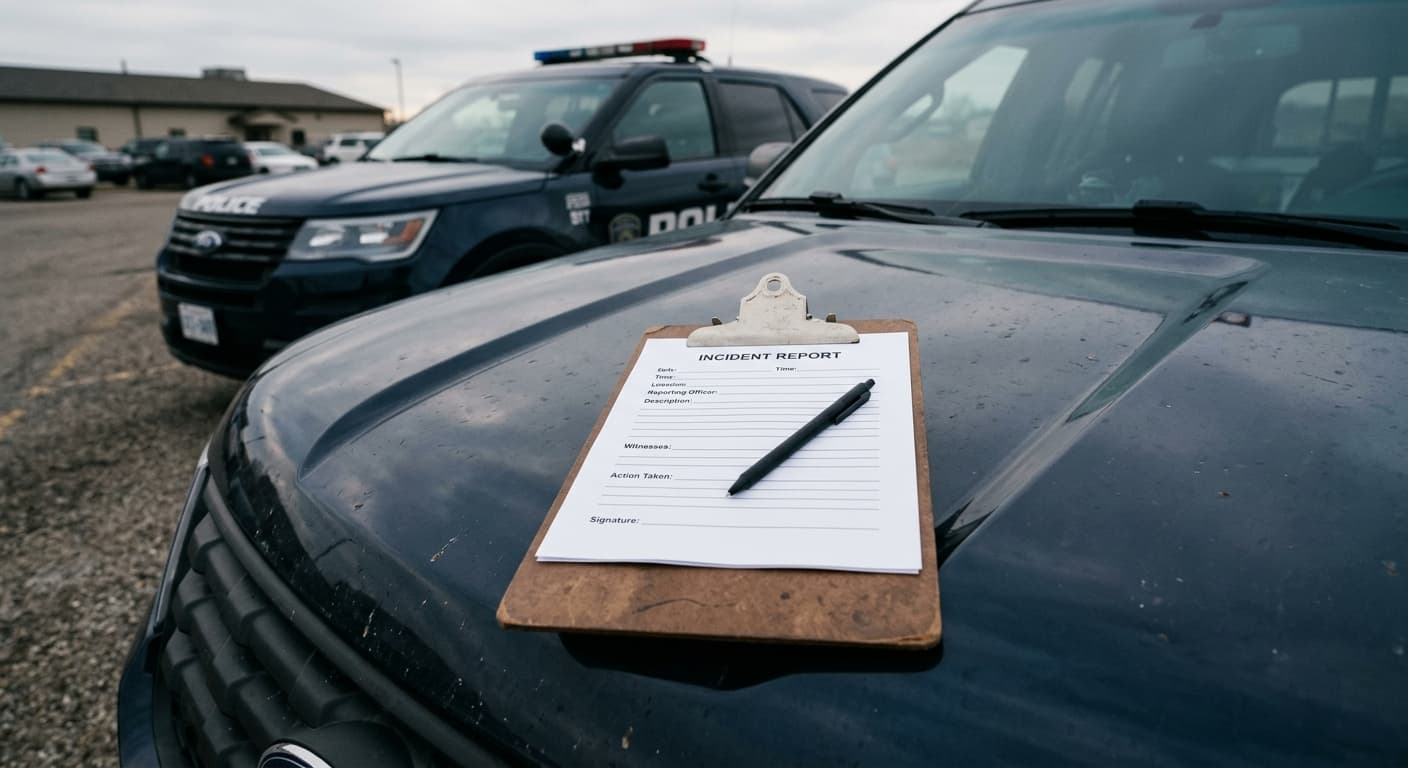
Arizona classifies leaving the scene of an accident as either a misdemeanor or a felony depending on the harm caused. Property-damage incidents carry a Class 1 misdemeanor under A.R.S. 28-662, while accidents involving injury or death trigger felony charges under A.R.S. 28-661, ranging from a Class 5 to a Class 2 felony.
Hurt in a hit-and-run? If the driver who hit you fled or had no insurance, your own uninsured/underinsured-motorist (UM/UIM) coverage may pay your injury claim. Estimate what it could be worth with our free Arizona Car Accident Settlement Calculator.
Last verified: March 2026. This article reflects current Arizona Revised Statutes Title 28 and recent court decisions.
What Is a Hit and Run in Arizona?
Arizona does not use the phrase "hit and run" in its statutes. Instead, the law refers to "leaving the scene of an accident" or "failure to stop." The relevant statutes are found in Arizona Revised Statutes (ARS) Title 28, Chapter 3, Article 3.
Three primary statutes govern hit and run offenses in Arizona:
- ARS 28-661 covers accidents involving death or physical injury.
- ARS 28-662 covers accidents involving only vehicle damage.
- ARS 28-663 imposes duties to exchange information and render aid.
- ARS 28-664 covers hitting an unattended vehicle.
- ARS 28-665 covers striking highway fixtures or roadside property.
Each statute carries different penalties depending on the severity of the accident and the driver's level of fault.
ARS 28-661: Leaving the Scene of an Injury or Fatal Accident
ARS 28-661 is Arizona's most serious hit and run statute. It requires any driver involved in an accident that results in injury or death to immediately stop at the scene or as close to it as possible. The driver must remain until all requirements under ARS 28-663 are met.
This statute applies to accidents on both public and private property.
Penalty Tiers Under ARS 28-661
The classification depends on both the severity of harm and whether the driver caused the accident:
| Scenario | Classification | Prison Range (First Offense) |
|---|---|---|
| Injury (not serious), driver did not cause accident | Class 5 felony | 6 months to 2.5 years |
| Death or serious injury, driver did not cause accident | Class 3 felony | 2 to 8.75 years |
| Death or serious injury, driver caused the accident | Class 2 felony | 3 to 12.5 years |
"Serious physical injury" under Arizona law means an injury that creates a reasonable risk of death, causes serious and permanent disfigurement, or results in protracted loss or impairment of any body organ or limb.
License Revocation Under ARS 28-661
A conviction under ARS 28-661 triggers mandatory license revocation:
- Serious injury: License revoked for 5 years (not including time incarcerated).
- Death: License revoked for 10 years (not including time incarcerated).
- After 5 years of the revocation period, a driver may apply for restricted driving privileges if they have paid full restitution and have no additional motor vehicle convictions during the revocation.
If drugs or alcohol contributed to the accident, the court may require completion of a drug or alcohol screening program before license reinstatement.
ARS 28-662: Leaving the Scene of a Property Damage Accident
When an accident results only in damage to an attended vehicle and no injuries occur, ARS 28-662 applies. Drivers must immediately stop and remain at the scene until they fulfill the information exchange requirements of ARS 28-663.
Penalties for Property Damage Hit and Run
- Classification: Class 1 misdemeanor
- Jail time: Up to 6 months
- Fine: Up to $2,500
- License suspension: The court may order a 1-year suspension
- Additional penalties: Restitution, community service, probation
The statute also includes provisions for fully autonomous vehicles and neighborhood occupantless electric vehicles (NOEVs). If the vehicle is operating without a human driver, the requirements are satisfied when the vehicle stops at or near the scene and remains until all information obligations are met.
ARS 28-663: Duty to Exchange Information and Render Aid
Regardless of fault or the type of accident, ARS 28-663 requires every driver involved in a collision to:
- Provide their name, address, and vehicle registration number to the other party.
- Show their driver's license on request.
- Render reasonable assistance to any injured person, including arranging transportation to a medical facility if treatment appears necessary or is requested.
Failure to Render Aid
Failing to provide reasonable assistance to an injured person is a separate Class 6 felony under ARS 28-663(A)(3). This charge can be filed in addition to any other hit and run charge. A first-time Class 6 felony carries a sentencing range of 4 months to 2 years in prison.
ARS 28-664: Hitting an Unattended Vehicle
If you strike a parked or unattended vehicle, ARS 28-664 requires you to either locate and notify the owner or leave a written note in a conspicuous place on the vehicle. The note must include the name and address of the driver and the owner of the vehicle that caused the damage.
- Classification: Class 2 misdemeanor
- Jail time: Up to 4 months
- Fine: Up to $750
ARS 28-665: Striking Highway Fixtures
If you hit a guardrail, traffic sign, utility pole, or other property legally on or adjacent to a highway, ARS 28-665 requires you to take reasonable steps to locate and notify the property owner.
- Classification: Class 3 misdemeanor
- Jail time: Up to 30 days
- Fine: Up to $500
Complete Penalty Summary Table
| Offense | Statute | Classification | Max Jail/Prison | Max Fine |
|---|---|---|---|---|
| Property damage (attended vehicle) | ARS 28-662 | Class 1 misdemeanor | 6 months | $2,500 |
| Striking unattended vehicle | ARS 28-664 | Class 2 misdemeanor | 4 months | $750 |
| Striking highway fixture | ARS 28-665 | Class 3 misdemeanor | 30 days | $500 |
| Failure to render aid | ARS 28-663 | Class 6 felony | 2 years | $150,000 |
| Minor injury, not at fault | ARS 28-661 | Class 5 felony | 2.5 years | $150,000 |
| Serious injury/death, not at fault | ARS 28-661 | Class 3 felony | 8.75 years | $150,000 |
| Serious injury/death, at fault | ARS 28-661 | Class 2 felony | 12.5 years | $150,000 |
Note: Prison ranges listed are aggravated maximums for first-time offenders under ARS 13-702.
DUI Hit and Run in Arizona
If a driver is intoxicated at the time of the accident, additional charges can be filed on top of the hit and run offense. Common additional charges include:
- Aggravated DUI (ARS 28-1383)
- Manslaughter (ARS 13-1103) if the victim dies
- Second degree murder (ARS 13-1104) if the driver acted with extreme indifference to human life
- Endangerment (ARS 13-1201)
- Aggravated assault (ARS 13-1204)
A DUI hit and run involving a fatality can result in decades of combined prison time across multiple charges. Courts in Arizona treat these cases with particular severity, especially when the driver fled to avoid detection of intoxication.
Reporting Requirements
ARS 28-666: Immediate Notification
Arizona law requires drivers to notify law enforcement of any accident involving injuries, deaths, or property damage "immediately by the quickest means of communication." This notification can be oral or written and goes to the local police department, county sheriff, or highway patrol.
ARS 28-667: Written Accident Report
When an accident results in bodily injury, death, or property damage exceeding $2,000, a law enforcement officer must complete a written report within 24 hours of completing the investigation. A report is also required any time a citation is issued at the scene, regardless of the damage amount.
Statute of Limitations
Arizona's statute of limitations for hit and run charges varies by classification:
- Misdemeanors (property damage only): 1 year from the date of the offense under ARS 13-107.
- Felonies (Class 2 through Class 6): 7 years from the date of the offense.
- Homicide-related charges: No time limit.
The statute of limitations does not run during any period when the defendant cannot reasonably be found within the state.
Insurance Implications for Hit and Run Victims
Arizona law requires all drivers to carry liability insurance, but it does not require uninsured motorist (UM) coverage. However, all insurance companies doing business in Arizona must offer UM coverage.

If you are the victim of a hit and run and the at-fault driver is never identified, insurance companies treat the claim the same as an uninsured motorist claim. This means:
- If you purchased UM coverage, your own policy pays for your injuries and damages up to your coverage limits.
- If you did not purchase UM coverage, you may have limited options for recovery.
- Arizona's minimum liability requirements are $25,000 per person and $50,000 per accident for bodily injury, plus $15,000 for property damage.
Under ARS 12-555, you must provide written notice to your insurer of your intent to pursue a UM claim within 3 years of the accident date.
How Arizona Determines Fault
Arizona follows the pure comparative negligence rule. This means:
- A jury calculates each party's percentage of fault.
- Your damages are reduced by your share of responsibility.
- You can recover damages even if you were partially at fault.
Example: If you are 30% responsible for an accident and have $50,000 in damages, you can recover $35,000.
This rule is significant in hit and run cases because fleeing the scene does not automatically make a driver 100% at fault for the accident itself. Fault for the collision and criminal liability for leaving the scene are separate legal questions.
What to Do After an Accident in Arizona
If You Are the Driver
- Stop immediately at the scene or as close to it as safely possible.
- Call 911 if anyone is injured or if property damage exceeds $2,000.
- Provide your name, address, and vehicle registration to the other party.
- Show your driver's license on request.
- Render reasonable assistance to any injured person.
- Wait for law enforcement to arrive and complete a report.
- Contact your insurance company promptly.
- Speak with an attorney before making detailed statements beyond the required information.
If You Are the Victim
- Document the scene: date, time, location, weather, and traffic conditions.
- Photograph the fleeing vehicle if possible, focusing on the license plate.
- Note the vehicle make, model, color, and any distinguishing features.
- Collect contact information from witnesses.
- Call 911 immediately.
- Seek medical attention, even if injuries seem minor.
- File a UM claim with your insurance company if applicable.
- Consult an attorney to understand your recovery options.
Important: Do not admit fault at the scene. Arizona is a pure comparative fault state, and your statements may reduce your recovery. Avoid phrases like "I did not see the other vehicle" or "it was my fault."
Legal Defenses for Hit and Run Charges
Fear for Personal Safety
If you had a reasonable fear of assault, violence, road rage, or robbery at the scene, this may justify leaving. You must still report the accident to law enforcement as soon as possible.
Lack of Knowledge
If you genuinely did not realize you struck a person or vehicle, this can serve as a defense. Investigators will examine vehicle damage, surveillance footage, and other evidence to assess this claim.
Emergency Circumstances
If you left the scene to seek emergency medical assistance for yourself or a passenger, and you reported the accident promptly, this may mitigate the charges.
Can You Settle a Hit and Run Case Out of Court?
Under ARS 13-3981, Arizona allows compromise of certain misdemeanor offenses. If the injured party acknowledges satisfaction before trial, the court may dismiss the prosecution upon payment of costs.
Limitations of this approach:
- Only applies to misdemeanor offenses (not felonies)
- Does not apply if the victim is a law enforcement officer
- Does not apply to repeat offenders
- The victim must voluntarily agree to the compromise
Notable Arizona Hit and Run Cases
Lisa Mancuso Case (2024)
In February 2024, 43-year-old Lisa Mancuso was jogging on the shoulder of 7th Avenue and Cloud Road when she was struck by a pickup truck. The driver fled the scene. The suspect was identified as the son of a Phoenix police lieutenant. He later pleaded guilty to the charges in April 2025, demonstrating that law enforcement connections do not shield defendants from prosecution.
Tristan Loper Case (2025)
In December 2025, 29-year-old Tristan Loper was arrested weeks after a deadly hit and run on I-10 in west Phoenix. Investigators used highway surveillance systems and vehicle debris analysis to identify the suspect, illustrating how modern forensic techniques make it increasingly difficult to avoid detection.
Arizona Crash Statistics
Arizona's roads present significant safety challenges, particularly for pedestrians:
- Over 122,000 crashes occurred statewide in 2023, with numbers continuing to rise.
- 263 pedestrians died in car accidents in 2024, representing about 21% of all traffic fatalities.
- Approximately 40% of pedestrian crashes were fatal.
- 2024 marked a five-year high in pedestrian and cyclist crashes according to ADOT.
- Over 1,200 traffic fatalities occurred statewide in recent years.
Phoenix has responded to rising pedestrian deaths by updating jaywalking ordinances and increasing enforcement in high-risk areas.
More Arizona Laws
Frequently Asked Questions
Is hit and run a felony in Arizona?
It depends on the outcome. If only property damage occurred, leaving the scene is a Class 1 misdemeanor under ARS 28-662. If someone was injured or killed, it becomes a felony under ARS 28-661, ranging from a Class 5 felony (minor injury) to a Class 2 felony (at-fault driver causing death or serious injury).
What if I hit a parked car in Arizona?
Under ARS 28-664, you must either locate and notify the owner or leave a written note with your name and address in a conspicuous place on the vehicle. Failing to do so is a Class 2 misdemeanor, punishable by up to 4 months in jail and a $750 fine.
How long does Arizona have to press charges for hit and run?
For misdemeanor hit and run (property damage only), prosecutors have 1 year. For felony hit and run (injury or death), prosecutors have 7 years. If the charge involves homicide, there is no time limit. The clock pauses if the suspect cannot reasonably be found within Arizona.
Will I lose my license for a hit and run in Arizona?
For property damage only (ARS 28-662), the court may suspend your license for 1 year. For accidents involving serious injury (ARS 28-661), your license is revoked for 5 years. For fatal accidents, the revocation period is 10 years. Time spent in prison does not count toward the revocation period.
Does insurance cover hit and run accidents in Arizona?
If you are a victim, your uninsured motorist (UM) coverage applies when the at-fault driver cannot be identified. Arizona does not require UM coverage, but all insurers must offer it. Without UM coverage, your options for financial recovery may be limited. You have 3 years to file a UM claim under ARS 12-555.
Injured in Arizona? Get a free case review from a personal-injury attorney
If someone else's negligence caused your injury, you may be owed compensation for medical bills, lost wages, and pain and suffering. Get a free, no-obligation review from a Arizona personal-injury attorney. Most work on contingency, so there is no upfront cost.
The Law Behind This Article
This article rests on the statutory provisions below, held in our own legal record and retrieved from the official source. Tap a section to read the operative text.
Arizona Revised Statutes, Title 12 (Courts and Civil Proceedings), Chapter 5 (LIMITATIONS OF ACTIONS), Article 3 (Personal Actions)
§ 12-555Uninsured and underinsured motorist coverage; claims; time limitsIn force
A. An insurer is not liable for uninsured motorist coverage benefits unless the person making the claim gives written notice to the insurer of the person's intent to pursue the claim against the uninsured motorist portion of a motor vehicle policy within three years after the date of the accident that caused the bodily injury, except that a person may make an uninsured motorist claim within three years after the earliest of the following: 1. The date the person knew that the tortfeasor was uninsured. 2. The date the person knows or should have known that coverage was denied by the tortfeasor's insurer. 3. The date the person knows or should have known of the insolvency of the tortfeasor's insurer. B.
Official text (excerpt) · last checked 2026-08-04 · Read the full text in our law library · Verify at azleg.gov
Cited in 4 court opinions in our collectionLatest citing opinion in our collection: 2025
Opinions citing this section in our collection:
- State Farm v. Frank (Court of Appeals of Arizona 2024)“…leged that any claim for UIM coverage was time-barred under A.R.S. § 12-555(C)(2) because Frank had “failed to requ…”
- Wallace v. Moffatt (Court of Appeals of Arizona 2014)“…en Wallace’s claims accrued, for count 1, the court applied A.R.S. § 12-555(B) and found Wallace’s “May 2011 discov…”
- Creasman v. Farmers Casualty Insurance Company (District Court, D. Arizona 2023)“…28 5 A.R.S. § 12-555(B) sets forth the circumstances for whe…”
Identified automatically from the court opinions citing this section — not a ranking of which case controls.
Arizona Revised Statutes, Title 13 (Criminal Code), Chapter 1 (GENERAL PROVISIONS)
§ 13-107Time limitationsIn forcecited in 2 of our articles
A. A prosecution for any homicide, any conspiracy to commit homicide that results in the death of a person, any offense that is listed in chapter 14 or 35.1 of this title and that is a class 2 felony, any violent sexual assault pursuant to section 13-1423, any violation of section 13-2308.01, 13-2308.03 or 13-3212, any misuse of public monies or a felony involving falsification of public records or any attempt to commit an offense listed in this subsection may be commenced at any time. B. Except as otherwise provided in this section and sections 28-672, 28-1381 and 28-1382, prosecutions for other offenses must be commenced within the following periods after actual discovery by the state or the political subdivision having jurisdiction of the offense or discovery by the state or the political subdivision that should have occurred with the exercise of reasonable diligence, whichever first occurs: 1. For a class 2 through a class 6 felony, seven years. 2. For a misdemeanor, one year. 3. For a petty offense, six months. C. For the purposes of subsection B of this section, a prosecution is commenced when an indictment, information or complaint is filed. D.
Official text (excerpt) · last checked 2026-08-04 · Read the full text in our law library · Verify at azleg.gov
Cited in 45 court opinions in our collectionLatest citing opinion in our collection: 2025
Opinions citing this section in our collection:
- State v. Jackson (Court of Appeals of Arizona 2004, 208 Ariz. 56)“…hich the trial court based its ruling is *59 A.R.S. § 13-107(B). That statute provides that “prosecu…”
- Taylor v. Cruikshank (Court of Appeals of Arizona 2006, 214 Ariz. 40)“…to dismiss the indictment, arguing the limitation period in A.R.S. § 13-107(B) had expired and the state there…”
- State v. Aguilar (Court of Appeals of Arizona 2008, 218 Ariz. 25)“…t cases, this court has addressed the meaning and effect of A.R.S. § 13-107, the statute of limitations that applie…”
Identified automatically from the court opinions citing this section — not a ranking of which case controls.
Also relied on in: Arizona Statute of Limitations: Filing Deadlines by Case Type
Arizona Revised Statutes, Title 13 (Criminal Code), Chapter 38 (MISCELLANEOUS), Article 13 (Trials)
§ 13-3981Compromise of misdemeanors and petty offenses; domestic violence; effect of order of dismissal; exceptions and limitationsIn force
A. When a defendant is accused of a misdemeanor or petty offense for which the person injured by the act constituting the offense has a remedy by a civil action, the offense may be compromised as provided in this section, except: 1. When the offense is committed by or upon any officer of justice while in the execution of the duties of his office. 2. When the offense is committed riotously. 3. When the offense is committed with intent to commit a felony. B. If a defendant is accused of an act involving assault, threatening or intimidating or a misdemeanor offense of domestic violence as defined in section 13-3601, the offense shall not be compromised except on recommendation of the prosecuting attorney. C. If the party injured appears before the court in which the action is pending at any time before trial, and acknowledges that he has received satisfaction for the injury, the court may, on payment of the costs incurred, order the prosecution dismissed, and the defendant discharged. The reasons for the order shall be set forth and entered of record on the minutes and the order shall be a bar to another prosecution for the same offense. D.
Official text (excerpt) · last checked 2026-08-04 · Read the full text in our law library · Verify at azleg.gov
Cited in 9 court opinions in our collectionLatest citing opinion in our collection: 2015
Opinions citing this section in our collection:
- State v. Larson (Court of Appeals of Arizona 1988, 159 Ariz. 14)“…accepted a misdemeanor compromise of the matter pursuant to A.R.S. § 13-3981, over the state’s objection, and dismis…”
- State v. Superior Court (Arizona Supreme Court 1981, 130 Ariz. 256)“…10:15 on the morning of September 24, 1980.” Pursuant to A.R.S. § 13-3981, the misdemeanor compromise statute, Li…”
- Norgord v. State Ex Rel. Berning (Court of Appeals of Arizona 2001, 201 Ariz. 228)“…to victims’ rights because it may not be compromised under A.R.S. § 13-3981. State ex rel. Baumert v. Superi…”
Identified automatically from the court opinions citing this section — not a ranking of which case controls.
Arizona Revised Statutes, Title 13 (Criminal Code), Chapter 7 (SENTENCING AND IMPRISONMENT)
§ 13-702First time felony offenders; sentencing; definitionIn forcecited in 10 of our articles
A. Unless a specific sentence is otherwise provided, the term of imprisonment for a first felony offense shall be the presumptive sentence determined pursuant to subsection D of this section. Except for those felonies involving a dangerous offense or if a specific sentence is otherwise provided, the court may increase or reduce the presumptive sentence within the ranges set by subsection D of this section. Any reduction or increase shall be based on the aggravating and mitigating circumstances listed in section 13-701, subsections D and E and shall be within the ranges prescribed in subsection D of this section. B.
Official text (excerpt) · last checked 2026-08-04 · Read the full text in our law library · Verify at azleg.gov
Cited in 446 court opinions in our collectionLatest citing opinion in our collection: 2026
Opinions citing this section in our collection:
- State v. Shattuck (Arizona Supreme Court 1984, 140 Ariz. 582)“…ly under the authority of the language in what is currently A.R.S. § 13-702(D)(11) [formerly A.R.S. 13-702(D)(9)] —…”
- State v. Henderson (Arizona Supreme Court 2005, 210 Ariz. 561)“…t fit within the list of statutory aggravators codified in A.R.S. § 13-702.C: infliction or thr…”
- State v. Walton (Arizona Supreme Court 1989, 159 Ariz. 571)“…he Arizona death penalty statute. Under the provisions of A.R.S. § 13-702(D), which applies to noncapital sentenc…”
Identified automatically from the court opinions citing this section — not a ranking of which case controls.
Also relied on in: Arizona Audio Recording Laws: Complete Guide to Consent Rules, Arizona Phone Call Recording Laws: What You Need to Know, Arizona Recording Laws (2026): One-Party Consent Rules
Arizona Revised Statutes, Title 20 (Insurance), Chapter 2 (TRANSACTION OF INSURANCE BUSINESS), Article 2 (Kinds of Insurance; Reinsurance; Limits of Risk)
§ 20-259.01Motor vehicle liability policy; uninsured optional; underinsured optional; subrogation; medical payments liens; definitionsIn forcecited in 3 of our articles
A. Every insurer writing automobile liability or motor vehicle liability policies shall make available to the named insured thereunder and by written notice offer the named insured and at the request of the named insured shall include within the policy uninsured motorist coverage that extends to and covers all persons insured under the policy, in limits not less than the liability limits for bodily injury or death contained within the policy. The offer of limits to a named insured or applicant shall be made on a form approved by the director. An insurance producer that uses such a form in offering uninsured motorist coverage satisfies the insurance producer's standard of care in offering and explaining the nature and applicability of uninsured motorist coverage. The policy declarations page must be sent to the named insured, constitutes the final expression of the named insured's decision to purchase or reject uninsured motorist coverage and is valid for, extends to and covers all persons insured under the policy.
Official text (excerpt) · last checked 2026-08-04 · Read the full text in our law library · Verify at azleg.gov
Cited in 230 court opinions in our collectionLatest citing opinion in our collection: 2026
Opinions citing this section in our collection:
- Calvert v. Farmers Ins. Co. of Arizona (Arizona Supreme Court 1985, 144 Ariz. 291)“…ists Act (hereafter referred to as the “Act” or “Statute”), A.R.S. § 20-259.01. We granted review in this case to sett…”
- State Farm Mutual Automobile Insurance v. Wilson (Arizona Supreme Court 1989, 162 Ariz. 251)“…use both UM and UIM insurance are creatures of statute (see A.R.S. § 20-259.01), we turn first to consider whether the…”
- Lowing v. Allstate Insurance (Arizona Supreme Court 1993, 176 Ariz. 101)“…ninsured" within the meaning of the Uninsured Motorist Act, A.R.S. § 20-259.01, and thus whether an insurance policy t…”
Identified automatically from the court opinions citing this section — not a ranking of which case controls.
Also relied on in: Arizona Supreme Court Bars UIM Stacking Across Jointly Purchased Household Policies , Arizona Car Accident Laws: Fault, Insurance, and Your Claim
Arizona Revised Statutes, Title 28 (Transportation), Chapter 3 (TRAFFIC AND VEHICLE REGULATION), Article 4 (Accidents)
§ 28-661Accidents involving death or physical injuries; autonomous vehicles; neighborhood occupantless electric vehicles; failure to stop; violation; classification; driver license revocation; restricted privilege to drive; alcohol or other drug screeningIn force
A. The driver of a vehicle involved in an accident on public or private property resulting in injury to or death of a person shall: 1. Immediately stop the vehicle at the scene of the accident or as close to the accident scene as possible but shall immediately return to the accident scene. 2. Remain at the scene of the accident until the driver has fulfilled the requirements of section 28-663. B. If the vehicle described in subsection A of this section is a fully autonomous vehicle operating without a human driver or a neighborhood occupantless electric vehicle, the requirements of this section are satisfied if the fully autonomous vehicle or neighborhood occupantless electric vehicle stops at the scene of the accident or as close to the accident scene as possible and remains stopped at that location until the requirements of section 28-663 have been satisfied. C. A driver who is involved in an accident resulting in death or serious physical injury as defined in section 13-105 and who fails to stop or to comply with the requirements of section 28-663 is guilty of a class 3 felony, except that if a driver caused the accident the driver is guilty of a class 2 felony. D.
Official text (excerpt) · last checked 2026-08-04 · Read the full text in our law library · Verify at azleg.gov
Cited in 35 court opinions in our collectionLatest citing opinion in our collection: 2026
Opinions citing this section in our collection:
- State v. Tinajero (Court of Appeals of Arizona 1997, 188 Ariz. 350)“…s his argument on his construction of the relevant statute, A.R.S. section 28-661, which at the time of the offense state…”
- State v. Powers (Arizona Supreme Court 2001, 200 Ariz. 363)“…asked to decide whether the number of accident scenes under A.R.S. § 28-661 is defined by the number of victims aff…”
- State v. Phillips (Arizona Supreme Court 1987, 152 Ariz. 533)“…cident involving death or personal injuries, a violation of A.R.S. § 28-661. The plea agreement provided: “Restitut…”
Identified automatically from the court opinions citing this section — not a ranking of which case controls.
§ 28-662Accidents involving damage to vehicle; failure to stop; autonomous vehicles; neighborhood occupantless electric vehicles; violation; classification; driver license suspension; alcohol or other drug screeningIn force
A. The driver of a vehicle involved in an accident on public or private property resulting only in damage to a vehicle that is driven or attended by a person shall: 1. Immediately stop the vehicle at the scene of the accident or as close to the accident scene as possible but shall immediately return to the accident scene. 2. Remain at the scene of the accident until the driver has fulfilled the requirements of section 28-663. 3. Make the stop without obstructing traffic more than is necessary. B. If the first vehicle described in subsection A of this section is a fully autonomous vehicle operating without a human driver or a neighborhood occupantless electric vehicle, the requirements of this section are satisfied if the fully autonomous vehicle or neighborhood occupantless electric vehicle: 1. Immediately stops at the scene of the accident or as close to the accident scene as possible. 2. Remains stopped at or as close as possible to the scene until the requirements of section 28-663 have been satisfied. 3. Makes the stop without obstructing traffic more than necessary. C. A person failing to stop or comply with this section is guilty of a class 1 misdemeanor. D.
Official text (excerpt) · last checked 2026-08-04 · Read the full text in our law library · Verify at azleg.gov
Cited in 4 court opinions in our collectionLatest citing opinion in our collection: 2024
Opinions citing this section in our collection:
- State v. Porras (Court of Appeals of Arizona 1980, 125 Ariz. 490)“…ant’s position that when A.R.S. § 28-661 is contrasted with A.R.S. § 28-662, 1 dealing with “an accide…”
- State v. Robertson (Court of Appeals of Arizona 2024)“…f the Avalanche and therefore committed the crime violating A.R.S. § 28-662(A). “Reasonable suspicion can be based…”
- State v. Nelson (Court of Appeals of Arizona 2016)“…rime of leaving the scene of a damage accident. Pursuant to A.R.S. § 28-662 (Supp. 2015), if after a vehicular acci…”
Identified automatically from the court opinions citing this section — not a ranking of which case controls.
§ 28-663Duty to give information and assistance; autonomous vehicles; neighborhood occupantless electric vehicles; violation; classification; alcohol or other drug screeningIn force
A. The driver of a vehicle involved in an accident on public or private property resulting in injury to or death of a person or damage to a vehicle that is driven or attended by a person shall: 1. Give the driver's name and address and the registration number of the vehicle the driver is driving. 2. On request, exhibit the person's driver license to the person struck or the driver or occupants of or person attending a vehicle collided with. 3. Render reasonable assistance to a person injured in the accident, including making arrangements for the carrying of the person to a physician, surgeon or hospital for medical or surgical treatment if it is apparent that treatment is necessary or if the carrying is requested by the injured person. B. If the first vehicle described in subsection A of this section is a fully autonomous vehicle operating without a human driver or a neighborhood occupantless electric vehicle, the requirements of this section are satisfied if both: 1.
Official text (excerpt) · last checked 2026-08-04 · Read the full text in our law library · Verify at azleg.gov
Cited in 15 court opinions in our collectionLatest citing opinion in our collection: 2024
Opinions citing this section in our collection:
- State v. Tinajero (Court of Appeals of Arizona 1997, 188 Ariz. 350)“…hose injured and to otherwise comply with the provisions of A.R.S. § 28-663. Defendant’s duty was to remain at the…”
- State v. Milligan (Arizona Supreme Court 1960, 87 Ariz. 165)“…was charged, defendant did not fulfill the requirements of A.R.S. § 28-663 in that he did not give his name, addre…”
- Quinn v. Cardenas (Court of Appeals of Arizona 2023, 256 Ariz. 77)“…erson certain information including their name and address. A.R.S. § 28-663(A). Failure to do so can be a misdemean…”
Identified automatically from the court opinions citing this section — not a ranking of which case controls.
§ 28-664Duty on striking unattended vehicle; autonomous vehicles; neighborhood occupantless electric vehicles; violation; classificationIn force
A. The driver of a vehicle that collides with a vehicle that is unattended on public or private property shall immediately: 1. Stop. 2. Either: (a) Locate and notify the operator or owner of the vehicle of the name and address of the driver and owner of the vehicle striking the unattended vehicle. (b) In a conspicuous place in the vehicle struck, leave a written notice giving the name and address of the driver and of the owner of the vehicle doing the striking. B. If the first vehicle described in subsection A of this section is a fully autonomous vehicle operating without a human driver or a neighborhood occupantless electric vehicle, the requirements of this section are satisfied if the fully autonomous vehicle or neighborhood occupantless electric vehicle immediately stops and the vehicle owner or a person on behalf of the vehicle owner provides the notice prescribed in subsection A, paragraph 2 of this section. C. A person who violates this section is guilty of a class 1 misdemeanor.
Official text (excerpt) · last checked 2026-08-04 · Read the full text in our law library · Verify at azleg.gov
Cited in 3 court opinions in our collectionLatest citing opinion in our collection: 2004
Opinions citing this section in our collection:
- David G. v. Pollard Ex Rel. County of Pima (Arizona Supreme Court 2004, 207 Ariz. 308)“…minal acts under Title 28. A.R.S. §§ 28-664(B), -693(B). Thus, becau…”
- Pinto v. Superior Court (Court of Appeals of Arizona 1978, 119 Ariz. 612)“…along with leaving the scene of an accident in violation of A.R.S. Sec. 28-664 and driving a vehicle without a driver'…”
- State v. Seats (Court of Appeals of Arizona 1981, 131 Ariz. 102)“…s of reckless driving and leaving the scene of an accident. A.R.S. §§ 28-664 and 28-693(A). He was adjudged guilty o…”
Identified automatically from the court opinions citing this section — not a ranking of which case controls.
§ 28-665Striking fixtures on a highway; autonomous vehicles; neighborhood occupantless electric vehicles; violation; classificationIn force
A. The driver of a vehicle involved in an accident resulting only in damage to fixtures or other property legally on or adjacent to a highway shall: 1. Take reasonable steps to locate and notify the owner or person in charge of the property of: (a) The fact of the accident. (b) The driver's name and address. (c) The registration number of the vehicle the driver is driving. 2. On request, exhibit the driver's driver license. B. If the vehicle described in subsection A of this section is a fully autonomous vehicle operating without a human driver or a neighborhood occupantless electric vehicle, the requirements of this section are satisfied if the vehicle owner or a person on behalf of the vehicle owner takes reasonable steps to notify the owner or person in charge of the property of all of the following: 1. The fact of the accident. 2. The vehicle owner's name and address. 3. The vehicle's registration number. C. A person who violates this section is guilty of a class 1 misdemeanor.
Official text (excerpt) · last checked 2026-08-04 · Read the full text in our law library · Verify at azleg.gov
Cited in 1 court opinions in our collectionLatest citing opinion in our collection: 1984
Opinions citing this section in our collection:
- Litak v. Scott (Arizona Supreme Court 1984, 138 Ariz. 599)“…accident and driving under the influence of alcohol (DWI), A.R.S. §§ 28-665 and 28-692(A). She filed a motion to su…”
Identified automatically from the court opinions citing this section — not a ranking of which case controls.
§ 28-666Notice of vehicle accident; autonomous vehicles; neighborhood occupantless electric vehiclesIn force
A. The driver of a vehicle involved in an accident resulting in injury to or death of a person shall give notice of the accident immediately by the quickest means of communication, whether oral or written, to either: 1. The local police department if the accident occurs within a municipality. 2. The office of the county sheriff. 3. The nearest office of the highway patrol. B. If the vehicle described in subsection A of this section is a fully autonomous vehicle operating without a human driver or a neighborhood occupantless electric vehicle, the notice described in this section may be provided by the vehicle owner or a person on behalf of the vehicle owner.
Official text (excerpt) · last checked 2026-08-04 · Read the full text in our law library · Verify at azleg.gov
Cited in 1 court opinions in our collectionLatest citing opinion in our collection: 1994
Opinions citing this section in our collection:
- Washington v. Superior Court (Court of Appeals of Arizona 1994, 180 Ariz. 91)“…motion to withdraw. In that response, the state quoted from A.R.S. § 28-666, which requires a driver in an injury-c…”
Identified automatically from the court opinions citing this section — not a ranking of which case controls.
§ 28-667Written accident report; definitionIn forcecited in 2 of our articles
A. A law enforcement officer or public employee who, in the regular course of duty, investigates a motor vehicle accident resulting in bodily injury, death or damage to the property of any person in excess of $2,000 or the issuance of a citation shall complete a written report of the accident as follows: 1. Either at the time of and at the scene of the accident or after the accident by interviewing participants or witnesses. 2. Within twenty-four hours after completing the investigation. B. Every law enforcement officer or public employee who, in the regular course of duty, investigates a motor vehicle accident that results in damage to the property of any person in an amount of $2,000 or less, but that does not result in the issuance of a citation or bodily injury or death, shall complete a portion of the written report of the accident. The portion of the written report shall: 1. Be completed either at the time of and at the scene of the accident or after the accident by interviewing participants or witnesses. 2. Be completed within twenty-four hours after completing the investigation. 3.
Official text (excerpt) · last checked 2026-09-02 · Read the full text in our law library · Verify at azleg.gov
Cited in 7 court opinions in our collectionLatest citing opinion in our collection: 1996
In the courts (editorial summary, independently checked):Arizona decisions cite Section 28-667 when admitting police accident reports in evidence. State v. Stone (1969) upheld admission of a highway patrol accident report as a public record, and Killingsworth v. Nottingham (1972) held such a report admissible under the statute as it then read.
Opinions citing this section in our collection:
- State v. Richcreek (Court of Appeals of Arizona 1996, 186 Ariz. 459)“…ion relevant to the accident he was investigating and cites A.R.S. §§ 28-667 and 28-1401.01 to support the stop. Fir…”
- Chase v. State Farm Mutual Automobile Insurance (Court of Appeals of Arizona 1982, 131 Ariz. 461)“…ff the public highways as required by chapter 6, article 4, A.R.S. § 28-667. The SRA also comes into play up…”
- State v. Stone (Arizona Supreme Court 1969, 104 Ariz. 339)✓A driver blamed his crash on an obsolete center line left visible where an old highway merged into a new one; the court held the patrolmen's accident report was admissible as a public record kept under a statutory duty, citing section 28-667(C).
Identified automatically from the court opinions citing this section — not a ranking of which case controls.
Also relied on in: How to Get a Police Report in Arizona (2026): Crash & Incident Reports
Search our full record of US law — 2.1 million sections, every state + federal →
Sources and References
- ARS 28-661: Accidents Involving Death or Physical Injuries(azleg.gov).gov
- ARS 28-662: Accidents Involving Damage to Vehicle(azleg.gov).gov
- ARS 28-663: Duty to Give Information and Assistance(azleg.gov).gov
- ARS 28-664: Duty on Striking Unattended Vehicle(azleg.gov).gov
- ARS 28-665: Striking Fixtures on a Highway(azleg.gov).gov
- ARS 28-666: Notice of Vehicle Accident(azleg.gov).gov
- ARS 28-667: Written Accident Report(azleg.gov).gov
- ARS 13-107: Time Limitations (Statute of Limitations)(azleg.gov).gov
- ARS 13-702: First Time Felony Offenders; Sentencing(azleg.gov).gov
- ARS 13-3981: Compromise of Misdemeanor Offenses(azleg.gov).gov
- ARS 12-555: Uninsured and Underinsured Motorist Coverage; Claims; Time Limits(azleg.gov).gov
- ARS 20-259.01: Motor Vehicle Liability Policy; Uninsured Motorist Coverage(azleg.gov).gov