42 U.S.C. § 1983 Explained: Civil Rights Lawsuits (2026)
Independently fact-checked against primary sources (last audited August 12, 2026). · 1 primary source cited on this page. How we verify our legal content
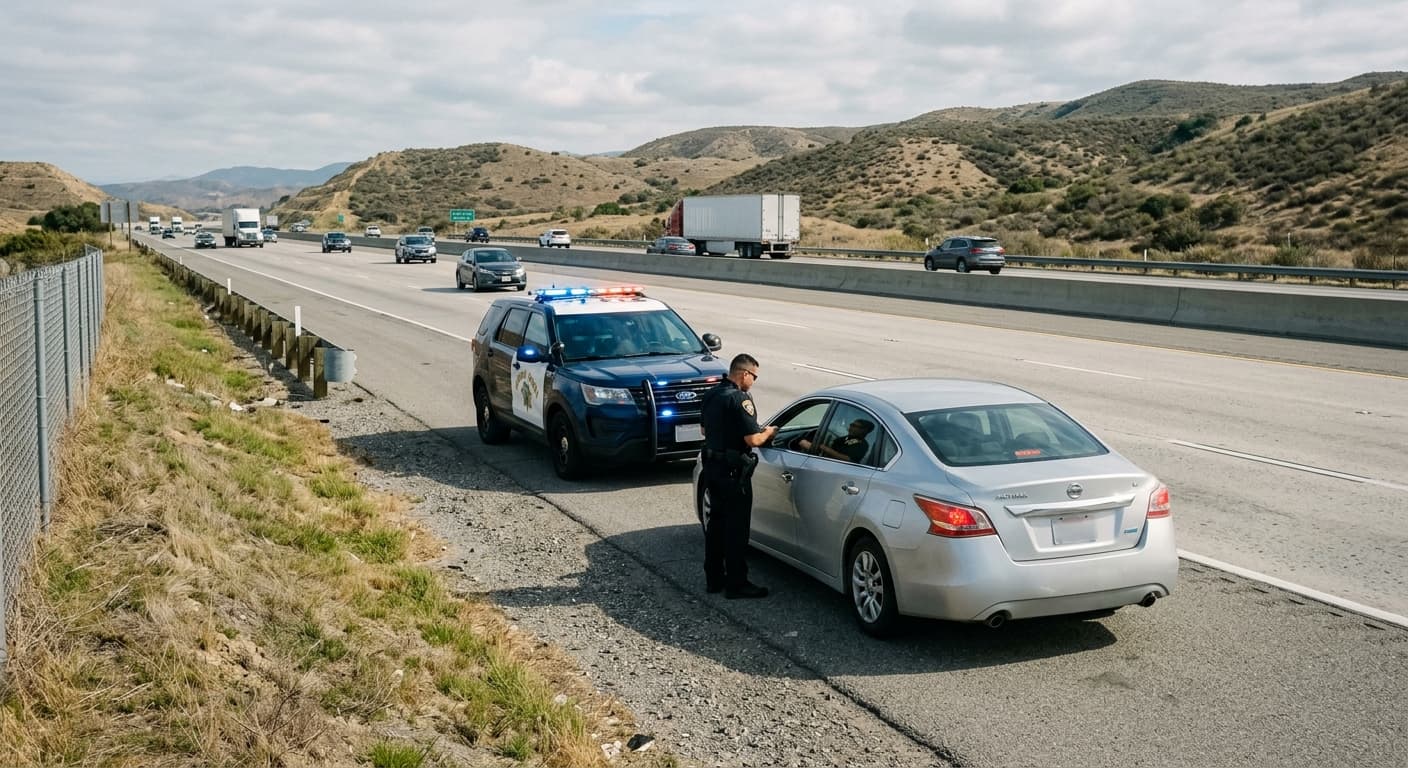
42 U.S.C. § 1983 is the federal statute that lets a person sue a state or local government official, acting under color of state law, for money damages or an injunction when that official violates a right secured by the Constitution or federal law.
This article covers 42 U.S.C. § 1983 as a federal statute of nationwide application to conduct by state, county, municipal, and District of Columbia officials. It does not cover claims against federal officers, who are reached through a separate, narrower judge-made remedy called a Bivens action, and it does not state any specific state's statute of limitations, which varies and is discussed below only in general terms. For how the right to record police fits into a Section 1983 claim in a specific state, see the state guides linked near the end of this article.
Information last verified against primary federal sources on August 12, 2026. This article has not yet been reviewed by a licensed lawyer.
What 42 U.S.C. § 1983 Actually Says
42 U.S.C. § 1983 provides that every person who, under color of any statute, ordinance, regulation, custom, or usage of any State or Territory or the District of Columbia, subjects any citizen of the United States or other person within the jurisdiction to the deprivation of any rights, privileges, or immunities secured by the Constitution and laws, is liable to the injured party in an action at law, suit in equity, or other proper proceeding for redress.
The statute adds one carve-out: in an action brought against a judicial officer for an act taken in that officer’s judicial capacity, a court cannot grant injunctive relief unless a declaratory decree was violated or declaratory relief was unavailable. That limit was added by the Federal Courts Improvement Act of 1996 and means judges keep broad protection from injunctions even beyond ordinary judicial immunity.
Boiled down, a Section 1983 claim has two elements: the defendant acted under color of state, territorial, or District of Columbia law, and that conduct deprived the plaintiff of a right secured by the federal Constitution or a federal statute. Section 1983 was originally enacted as part of the Civil Rights Act of 1871, sometimes called the Ku Klux Klan Act, to give individuals a federal remedy against state officials who violated their constitutional rights, including where state courts and state law offered no real protection.
Section 1983 Is a Remedy, Not a Source of Rights
Section 1983 does not create any substantive right on its own. It is a procedural vehicle: a plaintiff must point to a right that already exists somewhere else, most often the Fourth, Eighth, or Fourteenth Amendment, and show that a person acting under color of state law violated it. There is no such thing as “a Section 1983 right” separate from the underlying constitutional or statutory right being enforced.
Section 1983 is also a civil statute, not a criminal one. A separate federal statute, 18 U.S.C. § 242, makes it a federal crime for a person acting under color of law to willfully deprive someone of a constitutional right, but that is a criminal prosecution brought by the government, with its own elements and a much higher burden of proof. A Section 1983 lawsuit is a private civil action for damages or an injunction, and it does not depend on whether any criminal charge was ever filed.
Who Can Be Sued Under Section 1983
Whether a defendant counts as a “person” who can be sued under Section 1983, and in what capacity, is one of the most consequential threshold questions in any case.

Individual officers, sued personally. A government employee, such as a police officer, corrections officer, or other state or local official, sued in their individual (personal) capacity for their own unconstitutional conduct is a “person” under Section 1983 and can be held personally liable for damages. This is where qualified immunity, discussed below, most often comes into play.
Cities, counties, and other local governments. A municipality is also a “person” that can be sued under Section 1983. The Supreme Court held in Monell v. New York City Dept. of Social Servs., 436 U.S. 658 (1978), that local governments are suable “persons,” overruling the Court’s earlier position that they were not. But Monell also limits that liability sharply: a city or county cannot be held liable simply because it employed the officer who caused the harm. Liability attaches only when the constitutional violation implements or executes an official government policy, ordinance, or regulation, or a governmental custom that is “permanent and well settled,” even without formal written approval. A single bad act by one officer, without more, generally does not establish municipal liability under this standard, often called a Monell claim.
States and state officials sued in their official capacity, for damages. Neither a State nor a state official sued in their official capacity for money damages is a “person” under Section 1983. The Supreme Court so held in Will v. Michigan Dept. of State Police, 491 U.S. 58 (1989), reasoning that an official-capacity damages suit is really a suit against the state itself, which sovereign immunity bars. In practical terms, this means you cannot recover money damages from a state government, or from a state official in their official role, under Section 1983.
States and state officials sued in their official capacity, for an injunction. There is an important carve-out to the rule above. A state official sued in their official capacity for prospective injunctive relief, meaning a court order stopping ongoing unconstitutional conduct going forward, is treated as a “person” under Section 1983, because an official-capacity suit for injunctive relief is not treated as a suit against the state itself. This is the Ex parte Young doctrine, applied to Section 1983 in Will v. Michigan Dept. of State Police. So a plaintiff who cannot collect money damages from a state can still ask a court to order a state official to stop an ongoing violation.
The District of Columbia. Section 1983 itself resolves an edge case that trips people up: for purposes of the statute, any Act of Congress that applies exclusively to the District of Columbia is treated as a statute of the District of Columbia. In practice, that means DC officials acting under DC law are reached through Section 1983 the same way state and local officials are, rather than through the narrower federal remedy described next.
Federal officials are not covered. Section 1983 reaches conduct under color of state, territorial, or District of Columbia law. It does not reach federal officers, such as FBI or DEA agents, acting under color of federal law. A claim against a federal officer for a constitutional violation instead proceeds, where available at all, under Bivens v. Six Unknown Named Agents, a narrower, judicially implied damages remedy that the Supreme Court has significantly cut back in recent decades. This is a frequent point of confusion: a person injured by a federal agent cannot simply file “a Section 1983 claim” against that agent.
Qualified Immunity: The Biggest Practical Hurdle
Qualified immunity is a defense available only to individual government officials sued personally, not to municipalities. It shields an official from damages liability unless the plaintiff shows two things: the facts, viewed in the plaintiff’s favor, make out an actual violation of a constitutional right, and the right was “clearly established” at the time of the conduct, meaning existing case law would have put a reasonable official on notice that the specific conduct was unlawful.
Courts have discretion to take up either prong first and can resolve a case on the “clearly established” prong alone without ever deciding whether a constitutional violation occurred, a flexibility the Supreme Court confirmed. This is why qualified immunity is frequently outcome-determinative even where a plaintiff has a strong argument that their rights were in fact violated: if no prior case put the specific right beyond debate in a factually similar situation, immunity applies regardless.
Qualified immunity does not mean government officials can never be sued, and it is not automatic dismissal. It also does not apply at all to a municipal-liability claim against a city or county under Monell; a plaintiff who cannot overcome an individual officer’s qualified immunity may still be able to proceed against the municipality on a separate policy-or-custom theory if the facts support one.
Pleading a Section 1983 Claim: The Iqbal Standard
A Section 1983 complaint must clear the federal pleading standard set out in Ashcroft v. Iqbal, 556 U.S. 662 (2009). Iqbal was itself a Bivens case against federal officials rather than a Section 1983 case, but its two holdings are applied directly to Section 1983 litigation. First, a complaint must plead “sufficient factual matter, accepted as true, to state a claim to relief that is plausible on its face,” not just a bare recitation of the elements. Second, and importantly for civil rights suits against supervisors and department leadership, “vicarious liability is inapplicable to Bivens and §1983 suits”: a supervisor cannot be held liable merely because a subordinate violated someone’s rights. A supervisor is liable only for their own unconstitutional conduct, such as directing the violation, or knowingly acquiescing in a pattern of it, not automatically for an employee’s independent misconduct.
Do You Have to Exhaust Administrative Remedies First?
For most Section 1983 plaintiffs, no. The Supreme Court held that exhaustion of state administrative remedies is not a prerequisite to a Section 1983 action, meaning a plaintiff can generally go straight to court without first filing an internal-affairs complaint, a state agency grievance, or any other administrative process. Congress has since created a narrower exception for people who are incarcerated at the time of filing, under a separate federal statute governing prison litigation; the details of that carve-out are beyond the scope of this general overview, so anyone currently in custody should confirm the current exhaustion rule before filing.
How Long Do You Have to File? (Statute of Limitations)
Section 1983 contains no statute of limitations of its own. Instead, courts borrow the forum state’s general, catch-all personal injury statute of limitations for Section 1983 claims. The Supreme Court set that borrowing rule in Wilson v. Garcia, 471 U.S. 261 (1985), and later clarified in Owens v. Okure that where a state has more than one personal injury limitations period, courts use the state’s general or residual period rather than one aimed at a specific intentional tort.
Because the limitations period is a matter of state law, it is different in every state, and this article does not state a specific number of years for any state; check the applicable statute in your own state, or a state guide on this site, before assuming how much time remains. Separately, some states impose a much shorter notice-of-claim requirement, measured in months rather than years, to preserve certain state-law claims against a government entity. That notice deadline is a different clock than the Section 1983 limitations period itself and can expire long before the Section 1983 claim would.
What Damages Can You Recover?
A successful Section 1983 plaintiff can generally recover compensatory damages for the actual harm caused by the constitutional violation, and, where the defendant is a state official sued in their official capacity, prospective injunctive relief rather than money damages, as described above.

Punitive damages are not available against a municipality under Section 1983. The Supreme Court held in City of Newport v. Fact Concerts, 453 U.S. 247 (1981), that a municipality is immune from punitive damages under the statute, reasoning that such damages would fall on taxpayers rather than the wrongdoer and that municipal immunity from punitive damages existed at common law when the statute was enacted. Whether, and under what standard, punitive damages may be available against an individual official sued personally is governed by a separate line of Supreme Court case law that is beyond the scope of this general overview; do not assume a specific standard without checking current authority.
Attorney's Fees Under 42 U.S.C. § 1988
42 U.S.C. § 1988(b) lets a court, in its discretion, award reasonable attorney’s fees to the prevailing party, other than the United States, in an action to enforce Section 1983, among other listed civil rights statutes. The statute separately limits fee and cost liability against a judicial officer to acts “clearly in excess of such officer’s jurisdiction.”
Fee-shifting under Section 1988 is asymmetric in practice. A prevailing plaintiff is ordinarily awarded reasonable fees. A prevailing defendant, by contrast, can recover fees from the plaintiff only if the court finds the plaintiff’s claim was frivolous, unreasonable, or without foundation, or that the plaintiff kept litigating after it clearly became so, not merely because the plaintiff ultimately lost. That “meritless” standard originated in a Title VII case and was extended to Section 1983 and Section 1988 cases in Hughes v. Rowe, 449 U.S. 5 (1980), a case brought by an unrepresented prisoner, which stressed that it applies “with special force” to uncounseled prisoner-plaintiffs.
Common Section 1983 Claim Types in Practice
Section 1983 covers an enormous range of constitutional claims against state and local actors. A few recurring categories illustrate how the elements above play out.
Deliberate indifference to a prisoner’s medical needs. In Estelle v. Gamble, 429 U.S. 97 (1976), a genuine Section 1983 case, the Supreme Court held that deliberate indifference to a prisoner’s serious medical needs violates the Eighth Amendment, but that ordinary medical malpractice or negligence does not rise to a constitutional violation. Courts applying Estelle generally use the “deliberate indifference” standard the Supreme Court articulated in Farmer v. Brennan, 511 U.S. 825 (1994), which requires that the official actually perceived a substantial risk of serious harm and disregarded it, not merely that the official was in a position to know of the risk. Farmer itself was a Bivens action against federal prison officials rather than a Section 1983 case, but its subjective-recklessness standard is imported into parallel Section 1983 claims against state and local corrections officials by analogy.
Interference with recording police in public. A number of federal appellate courts have recognized a First Amendment right to record police officers performing their duties in a public place, though recognition is not uniform nationwide and the exact contours differ by federal circuit. An arrest, device seizure, or other retaliation for recording police can be the basis of a Section 1983 claim against the officer personally, and potentially against the municipality if a policy or widespread practice of interfering with recording can be shown. See the state-specific guides on this site, such as those for Massachusetts, Pennsylvania, and the District of Columbia, for how the right to record intersects with each state’s own recording-consent law.
Wrongful arrest. A wrongful arrest, including one based on a facial-recognition misidentification, can support a Section 1983 claim against the arresting officer and, where a department policy or practice is implicated, the municipality. For a real, current example of this fact pattern, see Florida Man Sues Police Over Facial Recognition Arrest.
Federal courts have applied Section 1983 an enormous number of times; recordinglaw.com’s case-law index shows well over 280,000 federal court decisions citing the statute, making it one of the most cited provisions in the entire United States Code. That raw count includes cases across every constitutional right imaginable, so a high citation count for any individual case does not by itself mean that case decided a Section 1983 question; some frequently cited opinions mention the statute only in passing while resolving an unrelated procedural issue.
Common Misconceptions About Section 1983
“Section 1983 is a criminal statute.” It is not. Section 1983 is a civil remedy for money damages or an injunction. A separate statute, 18 U.S.C. § 242, covers criminal prosecution of the same underlying conduct, brought by the government rather than the injured person, with a different and higher burden of proof.
“I can sue the State of [X] itself for money damages.” You cannot. States and state officials sued in their official capacity for damages are not “persons” under Section 1983. You can sue the individual officer personally, the city or county if a policy or custom caused the harm, or a state official in their official capacity for an injunction only.
“The officer has to be criminally charged, or convicted, before I can sue.” No. A Section 1983 civil claim and a criminal prosecution are independent. Winning a Section 1983 case does not require any criminal charge, and an officer’s acquittal or a decision not to prosecute does not bar a civil Section 1983 claim, because the two tracks use different proof standards.
“I have to file an internal-affairs complaint or grievance first.” Generally, no. There is no requirement to exhaust a police department’s internal complaint process or a similar administrative channel before filing a Section 1983 suit, subject to the narrower exhaustion rule that applies to people who are incarcerated, described above.
“Qualified immunity means officials can never be sued.” It does not. Qualified immunity requires a plaintiff to additionally show the specific right was clearly established, a real and often outcome-determinative hurdle, but it is not automatic dismissal, and it does not apply at all to a municipal-liability claim under Monell.
“There’s one nationwide deadline to file a Section 1983 lawsuit.” There is not. Section 1983 borrows each state’s own general personal injury statute of limitations, so the deadline is different state by state, and some states add a separate, shorter notice-of-claim requirement on top of it.
Related Guides
Section 1983 comes up most often for readers of this site in the context of recording the police, since interference with that activity is a common trigger for a civil rights claim. These guides cover the state-by-state recording-consent rules and how each state frames the right to record police:
- Massachusetts Laws on Recording Police
- Pennsylvania Laws on Recording Police: Your Rights and Limits
- Illinois Laws on Recording Police: Your Rights and Protections
- Rhode Island Laws on Recording Police: First Circuit Protections
- New Mexico Laws on Recording Police: Your First Amendment Rights
- Georgia Laws on Recording Police: Your First Amendment Rights
- Colorado Laws on Recording Police: Rights, Protections, and Body Cameras
- District of Columbia Laws on Recording Police
- Florida Man Sues Police Over Facial Recognition Arrest
Disclaimer
This article provides general information about the federal civil rights statute, 42 U.S.C. § 1983, as in effect and verified against primary federal sources on the date noted above. It is not legal advice and does not create an attorney-client relationship. Whether a specific set of facts supports a Section 1983 claim, which defendants can be sued, what deadline applies in a particular state, and what defenses such as qualified immunity might apply are fact-specific and jurisdiction-specific questions. Consult a lawyer licensed in your state before relying on anything here for a specific situation.
Last updated: August 12, 2026.
Frequently Asked Questions
What is a Section 1983 lawsuit?
A Section 1983 lawsuit is a federal civil claim under 42 U.S.C. § 1983 for money damages or an injunction against a person who, acting under color of state, territorial, or District of Columbia law, deprived someone of a right secured by the Constitution or federal law.
Who can be sued under 42 U.S.C. § 1983?
An individual state or local official can be sued personally for their own unconstitutional conduct, and a city or county can be sued if an official policy or a well-settled custom caused the harm. A state, or a state official sued in their official capacity for money damages, generally cannot be sued under Section 1983.
Can I sue a police officer personally under Section 1983?
Yes, if the officer was acting under color of state or local law and violated a right secured by the Constitution or federal law. The officer can raise qualified immunity as a defense, which the plaintiff must overcome by showing a constitutional violation of a clearly established right.
Can I sue the police department or the city?
You can sue the city or county under the Monell standard from Monell v. New York City Dept. of Social Servs., but only if the constitutional violation implemented an official policy or a permanent, well-settled custom. A city cannot be held liable simply because it employed the officer who caused the harm.
Can I sue the State itself under Section 1983?
Not for money damages. Neither a State nor a state official sued in their official capacity for damages is a person under Section 1983. You can still sue a state official in their official capacity for an injunction ordering them to stop ongoing unconstitutional conduct.
What is qualified immunity and how does it affect a Section 1983 case?
Qualified immunity is a defense available only to individual officials sued personally. It shields the official from damages unless the facts show an actual constitutional violation and the right was clearly established at the time, meaning existing case law would have put a reasonable official on notice. It does not apply to a Monell claim against a municipality.
How long do I have to file a Section 1983 lawsuit (statute of limitations)?
Section 1983 has no filing deadline of its own. Courts borrow the forum state's general personal injury statute of limitations, so the deadline is different in every state. Check your state's specific statute, since this varies and some states also impose a separate, shorter notice-of-claim deadline for claims against a government entity.
Do I have to file a complaint with the police department first before suing?
Generally, no. The Supreme Court has held that exhausting a state administrative process is not a prerequisite to a Section 1983 action. A narrower exception applies to people currently incarcerated under a separate federal statute governing prison litigation.
What damages can I recover in a Section 1983 case?
Compensatory damages for the actual harm caused, and, against a state official sued in their official capacity, an injunction rather than money damages. Punitive damages are not available against a municipality; whether they are available against an individual official depends on a separate legal standard beyond this overview.
Can I get my attorney's fees paid if I win a Section 1983 case?
Often, yes. 42 U.S.C. § 1988(b) lets a court award reasonable attorney's fees to a prevailing plaintiff. A prevailing defendant can recover fees from the plaintiff only if the claim was frivolous, unreasonable, or without foundation, not merely because the plaintiff lost.
Does Section 1983 apply to federal agents (FBI, DEA, etc.), or only state and local officials?
Only state, local, and District of Columbia officials acting under color of that law. A federal agent acting under color of federal law is not reached by Section 1983. Claims against federal officers instead use a separate, narrower remedy called a Bivens action.
Is a Section 1983 claim the same thing as a criminal charge against the officer?
No. Section 1983 is a civil lawsuit for damages or an injunction, brought by the injured person. Criminal prosecution of the same conduct, under a separate statute, 18 U.S.C. § 242, is brought by the government and uses a different, higher burden of proof. The two tracks are independent.
Can I sue if police stopped me from recording them?
Potentially, yes. A number of federal appellate courts have recognized a First Amendment right to record police performing their duties in public, and interference with that right, such as an arrest or device seizure in retaliation, can support a Section 1983 claim. Recognition of the right differs by federal circuit, so the strength of a claim depends on where it arises.
Updates
Independently fact-checked against the cited primary sources
The Law Behind This Article
This article rests on the statutory provisions below, held in our own legal record and retrieved from the official source. Tap a section to read the operative text.
United States Code Title 18
§ 242Deprivation of rights under color of lawIn force
Whoever, under color of any law, statute, ordinance, regulation, or custom, willfully subjects any person in any State, Territory, Commonwealth, Possession, or District to the deprivation of any rights, privileges, or immunities secured or protected by the Constitution or laws of the United States, or to different punishments, pains, or penalties, on account of such person being an alien, or by reason of his color, or race, than are prescribed for the punishment of citizens, shall be fined under this title or imprisoned not more than one year, or both; and if bodily injury results from the acts committed in violation of this section or if such acts include the use, attempted use, or threatened use of a dangerous weapon, explosives, or fire, shall be fined under this title or imprisoned not more than ten years, or both; and if death results from the acts committed in violation of this section or if such acts include kidnapping or an attempt to kidnap, aggravated sexual abuse, or an attempt to commit aggravated sexual abuse, or an attempt to kill, shall be fined under this title, or imprisoned for any term of years or for life, or both, or may be sentenced to death.
Official text (excerpt) · last checked 2026-07-28 · Read the full text in our law library · Verify at uscode.house.gov
Cited in 2,352 court opinions in our collectionLatest citing opinion in our collection: 2026
Opinions citing this section in our collection:
- Adickes v. S. H. Kress & Co. (Supreme Court of the United States 1970, 398 U.S. 144)“…provisions mean the same thing for § 1983 as they do for 18 U. S. C. § 242 , the direct descendant of § 2 of the 1…”
- Imbler v. Pachtman (Supreme Court of the United States 1976, 424 U.S. 409)“…l deprivations of constitutional rights on the strength of 18 U. S. C. § 242 , 28 the criminal analog of § 1983. O…”
- Parratt v. Taylor (Supreme Court of the United States 1981, 451 U.S. 527)“…39-140 . Section 1983, unlike its criminal counterpart, 18 U. S. C. § 242 , has never been found by this Court to…”
Identified automatically from the court opinions citing this section — not a ranking of which case controls.
United States Code Title 42
§ 1983Civil action for deprivation of rightsIn forcecited in 50 of our articles
Every person who, under color of any statute, ordinance, regulation, custom, or usage, of any State or Territory or the District of Columbia, subjects, or causes to be subjected, any citizen of the United States or other person within the jurisdiction thereof to the deprivation of any rights, privileges, or immunities secured by the Constitution and laws, shall be liable to the party injured in an action at law, suit in equity, or other proper proceeding for redress, except that in any action brought against a judicial officer for an act or omission taken in such officer’s judicial capacity, injunctive relief shall not be granted unless a declaratory decree was violated or declaratory relief was unavailable. For the purposes of this section, any Act of Congress applicable exclusively to the District of Columbia shall be considered to be a statute of the District of Columbia.
Official text (excerpt) · last checked 2026-07-28 · Read the full text in our law library · Verify at uscode.house.gov
Cited in 282,365 court opinions in our collectionLatest citing opinion in our collection: 2026
Opinions citing this section in our collection:
- Ashcroft v. Iqbal (Supreme Court of the United States 2009, 556 U.S. 662)“…its brought against state officials under Rev. Stat. §1979, 42 U. S. C. §1983.” Hartman, 547 U. S., at 254, n. 2. Cf.…”
- Celotex Corp. v. Catrett, Administratrix of the Estate of Catrett (Supreme Court of the United States 1986, 477 U.S. 317)“…policeman as she left. Petitioner brought an action under 42 U. S. C. § 1983 claiming that the refusal of service a…”
- Monell v. New York City Dept. of Social Servs. (Supreme Court of the United States 1978, 436 U.S. 658)“…decided less than two decades ago. Focusing new light on 42 U. S. C. § 1983 , that decision widened access to the f…”
Identified automatically from the court opinions citing this section — not a ranking of which case controls.
Also relied on in: Alabama Laws on Recording Police: Your Rights and Limits, Alaska Laws on Recording Police: Your Rights and Limits (2026), Arkansas Laws on Recording Police: Your Rights and Limits (2026)
§ 1988Proceedings in vindication of civil rightsIn forcecited in 6 of our articles
The jurisdiction in civil and criminal matters conferred on the district courts by the provisions of titles 13, 24, and 70 of the Revised Statutes for the protection of all persons in the United States in their civil rights, and for their vindication, shall be exercised and enforced in conformity with the laws of the United States, so far as such laws are suitable to carry the same into effect; but in all cases where they are not adapted to the object, or are deficient in the provisions necessary to furnish suitable remedies and punish offenses against law, the common law, as modified and changed by the constitution and statutes of the State wherein the court having jurisdiction of such civil or criminal cause is held, so far as the same is not inconsistent with the Constitution and laws of the United States, shall be extended to and govern the said courts in the trial and disposition of the cause, and, if it is of a criminal nature, in the infliction of punishment on the party found guilty. In any action or proceeding to enforce a provision of sections 1981, 1981a, 1982, 1983, 1985, and 1986 of this title, title IX of Public Law 92–318 [20 U.S.C.
Official text (excerpt) · last checked 2026-07-28 · Read the full text in our law library · Verify at uscode.house.gov
Cited in 17,943 court opinions in our collectionLatest citing opinion in our collection: 2026
Opinions citing this section in our collection:
- Monell v. New York City Dept. of Social Servs. (Supreme Court of the United States 1978, 436 U.S. 658)“…cts of its deputies and sheriff,” id., at 696 , under 42 U. S. C. § 1988 . In rejecting this vicarious-liability…”
- Gall v. United States (Supreme Court of the United States 2007, 552 U.S. 38)“…ssing the Civil Rights Attorney’s Fees Awards Act of 1976, 42 U. S. C. § 1988 ). See also United States v. Oakland…”
- Hensley v. Eckerhart (Supreme Court of the United States 1983, 461 U.S. 424)“…ing the proper amount of an award of attorney’s fees under 42 U. S. C. § 1988 .” Ante, at 440. I agree with the Cou…”
Identified automatically from the court opinions citing this section — not a ranking of which case controls.
Also relied on in: Georgia Laws on Recording Police: Your First Amendment Rights (2026), New Mexico Laws on Recording Police: Your First Amendment Rights (2026), Kansas Laws on Recording Police
Search our full record of US law — 2.1 million sections, every state + federal →
Sources and References
- 42 U.S.C. § 1983, Civil action for deprivation of rights, govinfo.gov (U.S. Code, 2023 edition)(govinfo.gov).gov
- 42 U.S.C. § 1983, Cornell Legal Information Institute(law.cornell.edu)
- 42 U.S.C. § 1988, Attorney's fees, Cornell Legal Information Institute(law.cornell.edu)
- Monell v. New York City Dept. of Social Servs., 436 U.S. 658 (1978)(courtlistener.com)
- Will v. Michigan Dept. of State Police, 491 U.S. 58 (1989)(law.cornell.edu)
- Patsy v. Board of Regents of the State of Florida, 457 U.S. 496 (1982)(law.cornell.edu)
- Wilson v. Garcia, 471 U.S. 261 (1985)(law.cornell.edu)
- Owens v. Okure, 488 U.S. 235 (1989)(law.cornell.edu)
- Hughes v. Rowe, 449 U.S. 5 (1980)(law.cornell.edu)
- City of Newport v. Fact Concerts, 453 U.S. 247 (1981)(law.cornell.edu)
- Estelle v. Gamble, 429 U.S. 97 (1976)(law.cornell.edu)
- Farmer v. Brennan, 511 U.S. 825 (1994)(law.cornell.edu)
- Ashcroft v. Iqbal, 556 U.S. 662 (2009)(law.cornell.edu)
- Qualified Immunity, Cornell Legal Information Institute Wex(law.cornell.edu)