
Connecticut
Connecticut Knife Laws (2026): Open and Concealed Carry
Independently fact-checked against primary sources (last audited September 18, 2026). · 5 primary sources cited on this page. How we verify our legal content
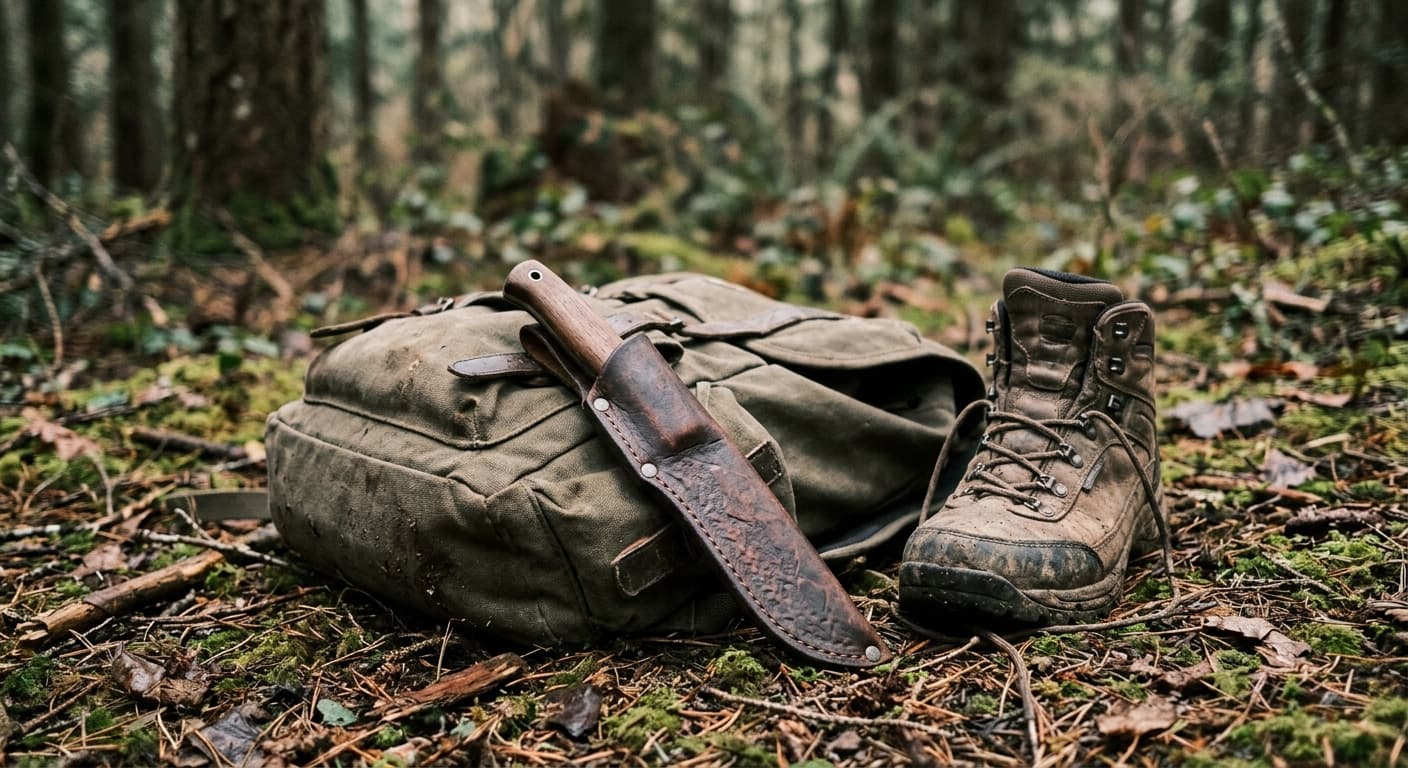
Connecticut is unusual among states in that its main knife-carrying ban is not limited to concealed carry. Conn. Gen. Stat. § 53-206 makes it a class E felony to carry, openly or concealed, a dirk knife, a switch knife, any knife with an automatic spring-release blade over 1.5 inches, a stiletto, or any knife with an edged blade of 4 inches or more. A list of exceptions covers common situations like moving household goods, transporting a knife to and from repair, hunting and fishing with a valid license, and gun or knife shows, but every one of those exceptions is keyed specifically to the edged-blade-4-inches-or-more knife category; none of them reaches a dirk knife, switch knife, spring-release knife over 1.5 inches, or stiletto. A separate, differently worded rule, using Connecticut's general "deadly weapon" definition rather than this statute's specific list, governs school grounds and the state capitol.
Jurisdiction scope: This page covers Connecticut state law only, principally Conn. Gen. Stat. §§ 53-206, 29-38, 53a-217b, and 2-1e. It does not cover Connecticut's separate assault and robbery statutes, which apply to a knife used as a weapon regardless of how it was carried.
Connecticut bans carrying certain knives, open or concealed
Conn. Gen. Stat. § 53-206(a) reads, in relevant part:

Any person who carries upon his or her person any BB. gun, blackjack, metal or brass knuckles, or any dirk knife, or any switch knife, or any knife having an automatic spring release device by which a blade is released from the handle, having a blade of over one and one-half inches in length, or stiletto, or any knife the edged portion of the blade of which is four inches or more in length, any police baton or nightstick, or any martial arts weapon or electronic defense weapon... or any other dangerous or deadly weapon or instrument, shall be guilty of a class E felony.
Unlike a concealed-carry statute, this offense reaches carrying these items at all, whether visible or hidden. The specific knife categories are a dirk knife, a switch knife, a knife with a spring-release opening mechanism where the blade exceeds 1.5 inches, a stiletto, and any knife with an edged blade portion of 4 inches or more. An ordinary knife falling outside all of these categories, such as a shorter fixed-blade or standard folding knife under these thresholds, is not covered by this specific list, though the statute's catch-all for "any other dangerous or deadly weapon or instrument" could still reach a knife used or carried in a threatening manner, depending on the facts.
Exceptions to Connecticut's carrying ban
Section 53-206(b) lists several situations where carrying certain otherwise-covered items is not an offense. The knife-specific exceptions in (b)(3) apply only to "the carrying of a knife, the edged portion of the blade of which is four inches or more in length"; they do not reach a dirk knife, switch knife, spring-release knife with a blade over 1.5 inches, or stiletto, which have no equivalent carve-out:
- Transporting such a knife as merchandise or for display at an authorized gun or knife show.
- Lawfully moving household goods or effects between residences with the knife concealed on the person.
- Carrying the knife to or from repair, peaceably, between the person's home or business and the repair location.
- Holders of a valid hunting, fishing, or trapping license, or a saltwater fisherman, carrying the knife for those lawful activities.
- Participants in an authorized historic reenactment.
- Members of the armed forces or state military, on duty or going to or from duty, and military members on parade or going to or from an assembly.
Separate, broader exceptions in (b) are not limited to the 4-inch category: law enforcement officers engaged in official duties, and security guards carrying a baton or nightstick on duty; martial arts school students, instructors, or event participants carrying a martial arts weapon to, from, or during class or an authorized event; and a person 21 or older with a permit carrying an electronic defense weapon as defined in § 53a-3.
Weapons in vehicles: the same list, a separate felony
Conn. Gen. Stat. § 29-38 makes it a class D felony to knowingly have, in a vehicle a person owns, operates, or occupies, a "weapon" defined by the same specific list as § 53-206: a BB gun, blackjack, metal or brass knuckles, police baton or nightstick, dirk knife or switch knife, a knife with a spring-release blade over 1.5 inches, a stiletto, or a knife with an edged blade portion of 4 inches or more, a martial arts weapon or electronic defense weapon, or any other dangerous or deadly weapon. The presence of such a weapon in the vehicle is prima facie evidence of a violation by the owner, operator, and each occupant. The exception list largely mirrors § 53-206's, with an added exception for a person lawfully moving household goods who has a dirk knife or police baton in the vehicle, and a BB gun exception if it is unloaded and stored in the trunk or a locked container other than the glove compartment or console.

School grounds and the state capitol: a different, narrower definition
Connecticut's general definition of "deadly weapon," in Conn. Gen. Stat. § 53a-3(6), covers "any weapon, whether loaded or unloaded, from which a shot may be discharged, or a switchblade knife, gravity knife, billy, blackjack, bludgeon, or metal knuckles." That definition expressly does not apply to §§ 29-38 or 53-206 above, which use their own specific lists instead. It does apply to two other offenses:
- School grounds: Conn. Gen. Stat. § 53a-217b makes it a class D felony to knowingly, without being licensed or privileged, possess a firearm or deadly weapon (as defined in § 53a-3, so a switchblade or gravity knife by name here, not a dirk knife, stiletto, or 4-inch edged knife) on the real property of a public or private elementary or secondary school, or at a school-sponsored activity.
- The state capitol and General Assembly buildings: Conn. Gen. Stat. § 2-1e makes it a class D felony to bring into, or possess within, a building housing the General Assembly's chamber, a member's or committee's office, or a public hearing room, a switchblade, gravity knife, blackjack, bludgeon, metal knuckles, "or any other dangerous or deadly weapon or instrument."
The school-grounds offense is genuinely limited to § 53a-3's narrower list (a switchblade or gravity knife by name), so a dirk knife, stiletto, or 4-inch-edged knife that would violate § 53-206 does not automatically violate § 53a-217b. The capitol-building offense is different: § 2-1e names the same switchblade/gravity-knife items but adds its own catch-all for "any other dangerous or deadly weapon or instrument," so a dirk knife or a 4-inch-edged knife brought into a General Assembly building can still fall inside that catch-all even though it is not one of the items named by number.
Does Connecticut preempt local knife ordinances?
Connecticut has no statute preempting local knife regulation; its municipal-powers chapters contain no such provision. Because Connecticut does not preempt the field, a city or town could adopt its own ordinance adding restrictions beyond the state rules described above; check local ordinances for a specific municipality before assuming the statewide rules are the only ones that apply.

Federal law: what it does and does not reach
Federal law does not ban an individual from owning or carrying a switchblade. The Federal Switchblade Act, 15 U.S.C. §§ 1241 to 1245, instead regulates interstate commerce in switchblade knives, barring their manufacture, sale, transport, or introduction into interstate commerce, and, in 15 U.S.C. § 1245 makes it a federal offense to knowingly possess, manufacture, sell, or import a ballistic knife in or affecting interstate commerce or within federal territorial jurisdiction. Sections 1242 and 1243, the two federal offenses, do not apply to certain knives and people under 15 U.S.C. § 1244. A 2009 amendment, § 1244(5), exempts from those prohibitions any knife with a spring, detent, or other closure-bias mechanism that requires hand, wrist, or arm exertion on the blade itself to overcome the bias and assist opening, which is what keeps modern assisted-opening folding knives legal in interstate commerce. A separate exemption, § 1244(4), covers a person with only one arm possessing or carrying a switchblade with a blade three inches or less. None of this changes what Connecticut allows for ordinary carry; state law, with its own switch-knife ban and spring-release threshold, governs that question within Connecticut.
Disclaimer: This article provides general legal information about Connecticut's knife laws as of September 2026. It is not legal advice. Consult a lawyer licensed in Connecticut for advice about a specific situation. Connecticut's carrying ban applies to open as well as concealed carry, which is stricter than the default assumption in many other states, and because Connecticut does not preempt local knife regulation, a specific city or town ordinance can add further restrictions.
For a state-by-state comparison, see knife laws by state. Connecticut's self-defense statutes are covered separately on the Connecticut self-defense laws page.
Statutes cited reflect their in-force version as of 2026-09-18. Last updated: 2026-09-18.
Frequently Asked Questions
Is it legal to carry a knife in Connecticut?
It depends on the knife. Conn. Gen. Stat. 53-206 bans carrying, open or concealed, a dirk knife, a switch knife, a spring-release knife with a blade over 1.5 inches, a stiletto, or any knife with an edged blade of 4 inches or more, as a class E felony. The statute's exceptions list (household moves, repair transport, knife shows, licensed hunting and fishing, and similar) applies only to the edged-blade-4-inches-or-more category; a dirk knife, switch knife, spring-release knife, or stiletto has no equivalent carve-out. A knife falling outside all of these named categories is not on the statute's specific list, though its catch-all for 'any other dangerous or deadly weapon or instrument' could still reach it depending on the facts.
What is the legal knife blade length in Connecticut?
There is no single number. A dirk knife, a switch knife, or a stiletto is listed with no blade-length threshold; a knife with an automatic spring-release device is covered once its blade exceeds 1.5 inches; and any other knife is covered once its edged blade reaches 4 inches or more. Other knives under these thresholds fall outside the specific list in Conn. Gen. Stat. 53-206.
Are switchblades illegal in Connecticut?
Conn. Gen. Stat. 53-206 lists 'any switch knife' as a banned item to carry with no blade-length threshold, and separately bans any knife with an automatic spring-release device whose blade exceeds 1.5 inches. A switchblade knife is also separately named in the state's general deadly-weapon definition used for the school-grounds and state-capitol offenses.
Can I keep a knife in my car in Connecticut?
Conn. Gen. Stat. 29-38 bans knowingly having the same specific list of knives banned under 53-206 in a vehicle you own, operate, or occupy, as a class D felony. The exceptions largely track 53-206's, with a couple of vehicle-specific additions.
Updates
Corrected the FAQ to reflect that Connecticut's carry ban lists dirk knives, switch knives and stilettos with no blade-length threshold, and that the statute's catch-all for other dangerous weapons can still reach unlisted knives.
Independently fact-checked against the cited primary sources
The Law Behind This Article
This article rests on the statutory provisions below, held in our own legal record and retrieved from the official source. Tap a section to read the operative text.
Connecticut General Statutes, Title 53 (Crimes), Chapter 943
§ 53-206Carrying of dangerous weapons prohibited.In forcecited in 3 of our articles
(a) Any person who carries upon his or her person any BB. gun, blackjack, metal or brass knuckles, or any dirk knife, or any switch knife, or any knife having an automatic spring release device by which a blade is released from the handle, having a blade of over one and one-half inches in length, or stiletto, or any knife the edged portion of the blade of which is four inches or more in length, any police baton or nightstick, or any martial arts weapon or electronic defense weapon, as defined in section 53a-3, or any other dangerous or deadly weapon or instrument, shall be guilty of a class E felony. Whenever any person is found guilty of a violation of this section, any weapon or other instrument within the provisions of this section, found upon the body of such person, shall be forfeited to the municipality wherein such person was apprehended, notwithstanding any failure of the judgment of conviction to expressly impose such forfeiture.
Official text (excerpt) · last checked 2026-09-23 · Read the full text in our law library · Verify at cga.ct.gov
Cited in 87 court opinions in our collectionLatest citing opinion in our collection: 2026
Opinions citing this section in our collection:
- State v. Sealy (Supreme Court of Connecticut 1988, 208 Conn. 689)“…f the crimes of carrying a dangerous weapon in violation of General Statutes § 53-206 (a), and threatening in violation of Ge…”
- State v. Holloway (Connecticut Appellate Court 1987, 11 Conn. App. 665)“…ed a charge of carrying a dangerous weapon as prohibited by General Statutes § 53-206, 1 and whether the court erred in its…”
- State v. Medrano (Connecticut Appellate Court 2011, 131 Conn. App. 528)“…d one count of carrying a dangerous weapon, in violation of General Statutes § 53-206. At trial, the jury found the defendant…”
Identified automatically from the court opinions citing this section — not a ranking of which case controls.
Also relied on in: Pepper Spray and Stun Gun Laws by State (2026), Connecticut Pepper Spray and Stun Gun Laws (2026)
Connecticut General Statutes, Title 29 (Public Safety and State Police), Chapter 529
§ 29-38Weapons in vehicles. Penalty. Exceptions.In forcecited in 2 of our articles
(a) Any person who knowingly has, in any vehicle owned, operated or occupied by such person, any weapon, any pistol or revolver for which a proper permit has not been issued as provided in section 29-28 or any machine gun which has not been registered as required by section 53-202, shall be guilty of a class D felony, and the presence of any such weapon, pistol or revolver, or machine gun in any vehicle shall be prima facie evidence of a violation of this section by the owner, operator and each occupant thereof. The word “weapon”, as used in this section, means any BB. gun, any blackjack, any metal or brass knuckles, any police baton or nightstick, any dirk knife or switch knife, any knife having an automatic spring release device by which a blade is released from the handle, having a blade of over one and one-half inches in length, any stiletto, any knife the edged portion of the blade of which is four inches or more in length, any martial arts weapon or electronic defense weapon, as defined in section 53a-3, or any other dangerous or deadly weapon or instrument.
Official text (excerpt) · last checked 2026-07-29 · Read the full text in our law library · Verify at cga.ct.gov
Cited in 137 court opinions in our collectionLatest citing opinion in our collection: 2026
Opinions citing this section in our collection:
- State v. Davis (Supreme Court of Connecticut 2010, 298 Conn. 1)“…ossession of a weapon in a motor vehicle under General Statutes § 29-38 because § 29-38 punishes both the unlaw…”
- State v. Allen (Supreme Court of Connecticut 1987, 205 Conn. 370)“…nd having a weapon in a motor vehicle in vio *372 lation of General Statutes § 29-38. The defendant was sentenced to a priso…”
- State v. Lutters (Supreme Court of Connecticut 2004, 270 Conn. 198)“…eral Statutes § 29-35 (a), if allowed to stand, would place General Statutes § 29-38 in constitutional jeopardy with *222 r…”
Identified automatically from the court opinions citing this section — not a ranking of which case controls.
Connecticut General Statutes, Title 53a (Penal Code), Chapter 952
§ 53a-217bPossession of a weapon on school grounds: Class D felony.In forcecited in 2 of our articles
(a) A person is guilty of possession of a weapon on school grounds when, knowing that such person is not licensed or privileged to do so, such person possesses a firearm or deadly weapon, as defined in section 53a-3, (1) in or on the real property comprising a public or private elementary or secondary school, or (2) at a school-sponsored activity as defined in subsection (h) of section 10-233a. (b) The provisions of subsection (a) of this section shall not apply to the otherwise lawful possession of a firearm (1) by a person for use in a program approved by school officials in or on such school property or at such school-sponsored activity, (2) by a person in accordance with an agreement entered into between school officials and such person or such person's employer, (3) by a peace officer, as defined in subdivision (9) of section 53a-3, while engaged in the performance of such peace officer's official duties, or (4) by a person while traversing such school property for the purpose of gaining access to public or private lands open to hunting or for other lawful purposes, provided such firearm is not loaded and the entry on such school property is permitted by the local or…
Official text (excerpt) · last checked 2026-07-29 · Read the full text in our law library · Verify at cga.ct.gov
Cited in 5 court opinions in our collectionLatest citing opinion in our collection: 2026
Opinions citing this section in our collection:
- State v. Foster (Supreme Court of Connecticut 2025, 353 Conn. 1)“…a weapon on school grounds, a class D felony. See General Statutes § 53a-217b (c). To be clear, any act o…”
- State v. Dukes (Connecticut Appellate Court 2026)“…tion hearing. State v. Dukes General Statutes § 53a-217b, possession of more than the legal limi…”
Identified automatically from the court opinions citing this section — not a ranking of which case controls.
Connecticut General Statutes, Title 02 (General Assembly and Legislative Agencies), Chapter 16
§ 2-1eInterference with the legislative process; firearms; dangerous or deadly weapons; explosives; felony.In force
(a) A person is guilty of interfering with the legislative process when he, alone or in concert with others, either by force, physical interference, fraud, intimidation or by means of any independently unlawful act, prevents or attempts to prevent any member, officer or employee of the General Assembly, either house thereof or any committee of the General Assembly or either house thereof, from performing any of his official functions, powers or duties. (b) A person is guilty of coercing performance when he, alone or in concert with others, either by force, physical interference, fraud, intimidation or by means of any unlawful act, compels or induces any member, officer or employee of the General Assembly, either house thereof or any committee of the General Assembly or either house thereof to perform any acts as a member, officer or employee against his will.
Official text (excerpt) · last checked 2026-07-29 · Read the full text in our law library · Verify at cga.ct.gov
Connecticut General Statutes, Title 53a (Penal Code), Chapter 950
§ 53a-3Definitions.In forcecited in 2 of our articles
Except where different meanings are expressly specified, the following terms have the following meanings when used in this title: (1) “Person” means a human being, and, where appropriate, a public or private corporation, a limited liability company, an unincorporated association, a partnership, a government or a governmental instrumentality; (2) “Possess” means to have physical possession or otherwise to exercise dominion or control over tangible property; (3) “Physical injury” means impairment of physical condition or pain; (4) “Serious physical injury” means physical injury which creates a substantial risk of death, or which causes serious disfigurement, serious impairment of health or serious loss or impairment of the function of any bodily organ; (5) “Deadly physical force” means physical force which can be reasonably expected to cause death or serious physical injury; (6) “Deadly weapon” means any weapon, whether loaded or unloaded, from which a shot may be discharged, or a switchblade knife, gravity knife, billy, blackjack, bludgeon, or metal knuckles.
Official text (excerpt) · last checked 2026-07-29 · Read the full text in our law library · Verify at cga.ct.gov
Cited in 546 court opinions in our collectionLatest citing opinion in our collection: 2026
Opinions citing this section in our collection:
- State v. Salamon (Supreme Court of Connecticut 2008, 287 Conn. 509)“…reliance on the definition of “intentionally” set forth in General Statutes § 53a-3 (11) to support its conclusion that unl…”
- State v. Kitchens (Supreme Court of Connecticut 2011, 299 Conn. 447)“…conduct element of the statutory definition of intent under General Statutes § 53a-3 (11), 4 *even though kidnapping and un…”
- State v. Sivri (Supreme Court of Connecticut 1994, 231 Conn. 115)“…d the conscious objective to cause the death of the victim. General Statutes § 53a-3 (11). . . .” (Internal quotation marks…”
Identified automatically from the court opinions citing this section — not a ranking of which case controls.
United States Code Title 15
§ 1241DefinitionsIn forcecited in 52 of our articles
As used in this chapter— The term “interstate commerce” means commerce between any State, Territory, possession of the United States, or the District of Columbia, and any place outside thereof. The term “switchblade knife” means any knife having a blade which opens automatically— by hand pressure applied to a button or other device in the handle of the knife, or by operation of inertia, gravity, or both.
Official text (excerpt) · last checked 2026-07-28 · Read the full text in our law library · Verify at uscode.house.gov
Cited in 15 court opinions in our collectionLatest citing opinion in our collection: 2014
Opinions citing this section in our collection:
- Stewart A. Taylor, D/B/A Taylor Cutlery Mfg. Co. v. United States of America (Court of Appeals for the Sixth Circuit 1988, 848 F.2d 715)“…Service, are not switchblade knives within the meaning of 15 U.S.C. § 1241 (b) and 19 C.F.R. § 1295 (a)(1). The d…”
- Crowley Cutlery Company v. United States of America and Commissioner of Customs of the United States Customs Service (Court of Appeals for the Seventh Circuit 1988, 849 F.2d 273)“…Illinois for a declaration that the Switchblade Knife Act, 15 U.S.C. §§ 1241 et seq., which forbids th…”
- Edna Fall, as Administratrix of the Estate of Phillip Fall, Deceased v. Esso Standard Oil Company (Court of Appeals for the Fifth Circuit 1962, 297 F.2d 411)“…25 S.Ct. 158 , 49 L.Ed. 363 . Section 1 of the Act, 15 U.S.C.A. § 1241 (b), defines the term “switchblade knif…”
Identified automatically from the court opinions citing this section — not a ranking of which case controls.
Also relied on in: Knife Laws by State (2026): Carry Rules, Blade Limits, Penalties, Alabama Knife Laws (2026): What Is Legal to Carry, Alaska Knife Laws (2026): Concealed Carry Rules Explained
§ 1244ExceptionsIn forcecited in 52 of our articles
Sections 1242 and 1243 of this title shall not apply to— any common carrier or contract carrier, with respect to any switchblade knife shipped, transported, or delivered for shipment in interstate commerce in the ordinary course of business; the manufacture, sale, transportation, distribution, possession, or introduction into interstate commerce, of switchblade knives pursuant to contract with the Armed Forces; the Armed Forces or any member or employee thereof acting in the performance of his duty; the possession, and transportation upon his person, of any switchblade knife with a blade three inches or less in length by any individual who has only one arm; or a knife that contains a spring, detent, or other mechanism designed to create a bias toward closure of the blade and that requires exertion applied to the blade by hand, wrist, or arm to overcome the bias toward closure to assist in opening the knife.
Official text (excerpt) · last checked 2026-07-28 · Read the full text in our law library · Verify at uscode.house.gov
Also relied on in: Arizona Knife Laws (2026): Carry Rules and Preemption, Arkansas Knife Laws (2026): Intent-Based Carry Rules, California Knife Laws (2026): Four Blade-Length Rules
§ 1245Ballistic knivesIn forcecited in 50 of our articles
Whoever in or affecting interstate commerce, within any Territory or possession of the United States, within Indian country (as defined in section 1151 of title 18), or within the special maritime and territorial jurisdiction of the United States (as defined in section 7 of title 18), knowingly possesses, manufactures, sells, or imports a ballistic knife shall be fined as provided in title 18, or imprisoned not more than ten years, or both. Whoever possesses or uses a ballistic knife in the commission of a Federal crime of violence shall be fined as provided in title 18, or imprisoned not less than five years and not more than ten years, or both. The exceptions provided in paragraphs (1), (2), and (3) of section 1244 of this title with respect to switchblade knives shall apply to ballistic knives under subsection (a) of this section. As used in this section, the term “ballistic knife” means a knife with a detachable blade that is propelled by a spring-operated mechanism.
Official text (excerpt) · last checked 2026-07-28 · Read the full text in our law library · Verify at uscode.house.gov
Cited in 2 court opinions in our collectionLatest citing opinion in our collection: 2008
Opinions citing this section in our collection:
- ALCANTAR (Board of Immigration Appeals 1994, 20 I. & N. Dec. 801)“…ed by an adult, would be felony and crime of violence); cf. 15 U.S.C. § 1245(b) (1988) (use of ballistic knife in co…”
- United States v. Polizzi (District Court, E.D. New York 2008, 549 F. Supp. 2d 308)“…8 Trust in l’estraint of import trade 3 months 15 U.S.C. § 1245 (b) Possession/use of a ballistic knife…”
Identified automatically from the court opinions citing this section — not a ranking of which case controls.
Also relied on in: Colorado Knife Laws (2026): Concealed Carry and Exceptions, Delaware Knife Laws (2026): Carry, Switchblades, and Bans, D.C. Knife Laws (2026): Possession and Carry Rules
Search our full record of US law — 2.1 million sections, every state + federal →
Sources and References
- Conn. Gen. Stat. 53-206 - Carrying of dangerous weapons prohibited (dirk knife, switch knife, stiletto, 4-inch edged blade list, class E felony, exceptions)(cga.ct.gov).gov
- Conn. Gen. Stat. 29-38 - Weapons in vehicles, same named list, class D felony(cga.ct.gov).gov
- Conn. Gen. Stat. 53a-3(6) - deadly weapon definition (switchblade/gravity knife), expressly excludes 29-38 and 53-206(cga.ct.gov).gov
- Conn. Gen. Stat. 53a-217b - Possession of a weapon on school grounds, class D felony(cga.ct.gov).gov
- Conn. Gen. Stat. 2-1e - Interference with the legislative process; weapons in General Assembly buildings, class D felony(cga.ct.gov).gov
- 15 U.S.C. 1241-1245 - Federal Switchblade Act, interstate commerce and importation scope(law.cornell.edu)
- 15 U.S.C. 1244 - exceptions, including the 2009 assisted-opening carve-out and the one-arm exception(law.cornell.edu)