
Connecticut
Connecticut Pepper Spray and Stun Gun Laws (2026)
Independently fact-checked against primary sources (last audited September 23, 2026). · 14 primary sources cited on this page. How we verify our legal content
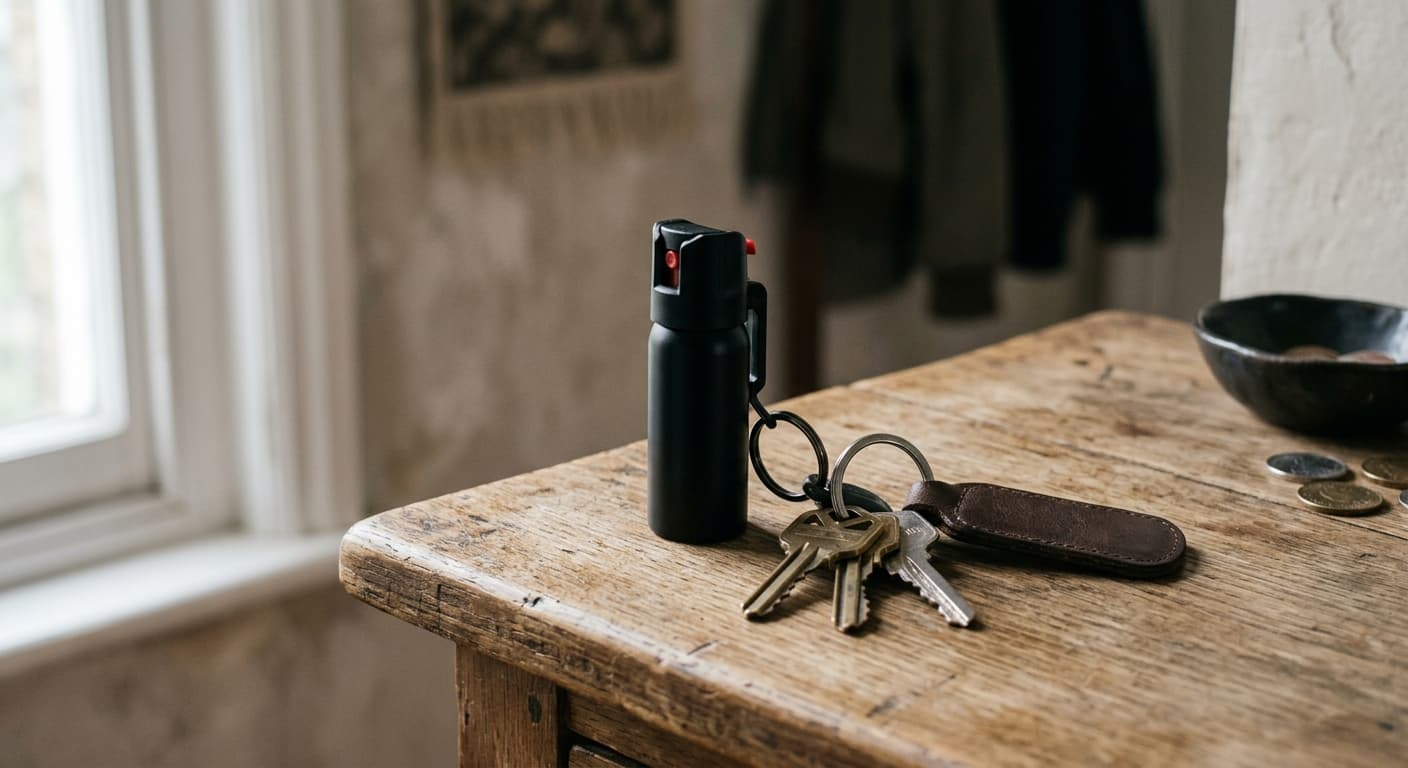
Connecticut treats an "electronic defense weapon," its statutory term for a stun gun, as a felony to carry or keep in a vehicle unless the holder is 21 or older and holds one of four specific Connecticut firearm permits or certificates; selling one to a minor or to anyone without that permit is also a felony. Pepper spray and tear gas are not named in the general prohibitions of Connecticut's carrying or vehicle-weapons statutes, so ordinary self-defense carry is not itself listed as an offense, but a 2025 amendment wrote a narrow security-officer exception into the carrying statute for a "less lethal weapon," a term a companion statute defines as a baton or pepper spray, and both statutes end in a catch-all for "any other dangerous or deadly weapon or instrument" that the new exception suggests can reach it. The Connecticut Supreme Court has separately held that pepper spray can be a "dangerous instrument" when it is used to injure someone.
Jurisdiction scope: This page covers Connecticut state law only, principally Conn. Gen. Stat. §§ 53-206, 53-206k, 29-38, 29-161q, 53a-3, 53a-61, 53a-216, 53a-217, 53a-217b, and 53a-167c. It does not cover Connecticut's handgun eligibility certificate or pistol permit statutes in detail or local municipal ordinances.
Is pepper spray legal in Connecticut?
Yes, for ordinary self-defense carry, in the sense that § 53-206(a)'s own list of named items does not include tear gas, mace, pepper spray, or any other chemical spray, so it is not a per se prohibited or permit-requiring item. Connecticut's core dangerous-weapons carrying statute, § 53-206(a), lists specific items by name: "any BB. gun, blackjack, metal or brass knuckles, or any dirk knife, or any switch knife, or any knife having an automatic spring release device by which a blade is released from the handle, having a blade of over one and one-half inches in length, or stiletto, or any knife the edged portion of the blade of which is four inches or more in length, any police baton or nightstick, or any martial arts weapon or electronic defense weapon, as defined in section 53a-3, or any other dangerous or deadly weapon or instrument." A chemical spray is not among those named items, and Connecticut's vehicle-weapons statute, § 29-38(a), lists the same items for a vehicle. Both statutes end with the same catch-all, "any other dangerous or deadly weapon or instrument," language that is not limited to the items named ahead of it. A 2025 amendment, Public Act 25-157, added a narrower exception at § 53-206(b)(2) for "the carrying of a less lethal weapon, as defined in section 29-161q, by a licensed security officer or a person who meets the requirements of subsection (h) of section 29-161q while engaged in the pursuit of such officer's or person's official duties," and § 29-161q(b) defines "less lethal weapon" as "a baton or oleoresin capsicum spray, commonly referred to as 'O.C. spray' or 'pepper spray.'" That exception is written for licensed security officers on duty, not the general public, but its existence is evidence the Legislature reads § 53-206(a)'s catch-all as capable of reaching OC spray in the first place; the statute's text does not resolve whether ordinary carrying by someone outside that exception falls inside the catch-all.

Conn. Gen. Stat. § 53a-3(7) defines "dangerous instrument" as "any instrument, article or substance which, under the circumstances in which it is used or attempted or threatened to be used, is capable of causing death or serious physical injury." In State v. Ovechka, 292 Conn. 533 (2009), the Connecticut Supreme Court held that the evidence was sufficient for a jury to find that pepper spray used against a neighbor was such a dangerous instrument, and that the Appellate Court's contrary sufficiency ruling had improperly invaded the jury's fact-finding province; the Court reversed that judgment and remanded the case for the defendant's remaining claims, so the second-degree assault conviction under § 53a-60(a)(2) was not itself reinstated by this ruling. Separately, § 53a-167c(a)(3) makes it a class C felony, when done with intent to prevent a reasonably identifiable peace officer, firefighter, or other listed emergency or health care personnel from performing their duties and while that person is acting in the performance of those duties, to use "any mace, tear gas or any like or similar deleterious agent" against them. No Connecticut statute sets an age minimum, capacity limit, or permit requirement for buying or carrying pepper spray for ordinary self-defense.
Is a stun gun legal in Connecticut?
Yes, but on much more restrictive terms than pepper spray. Connecticut's statutory term for a stun gun is "electronic defense weapon," defined in Conn. Gen. Stat. § 53a-3(20) as "a weapon which by electronic impulse or current is capable of immobilizing a person temporarily, including a stun gun or other conductive energy device." A 2021 amendment, Public Act 21-31, redefined this term to delete a requirement that the weapon not be capable of inflicting death or serious physical injury, broadening the category of devices it covers.

Carrying an electronic defense weapon is a class E felony under § 53-206(a), the same as carrying an unlicensed dirk knife or a set of brass knuckles, unless an exception applies. Section 53-206(b)(6) states the exception directly: the carrying statute "shall not apply to... the carrying of an electronic defense weapon, as defined in section 53a-3, by any person who is twenty-one years of age or older and possesses a permit or certificate issued under the provisions of section 29-28, 29-36f, 29-37p or 29-38n." Carrying a stun gun on the person is lawful only for someone 21 or older who holds one of those four specific permits or certificates, all of which are Connecticut firearm-related credentials; there is no separate stun-gun-only permit. Keeping a stun gun in a vehicle is a distinct offense with a parallel exception: § 29-38(a) makes it a class D felony to knowingly have an electronic defense weapon, or several other listed items, in any vehicle a person owns, operates, or occupies, and "the presence of any such weapon... in any vehicle shall be prima facie evidence of a violation of this section by the owner, operator and each occupant thereof." Section 29-38(b)(6) provides the identical 21-plus-permit exception for the vehicle offense.
Selling side restrictions are separate and specific: § 53-206k states, "Any person who sells or transfers an electronic defense weapon, as defined in section 53a-3, to any person who is under twenty-one years of age or does not possess a permit or certificate issued under the provisions of section 29-28, 29-36f, 29-37p or 29-38n shall be guilty of a class D felony." That permit requirement is what makes a stun gun effectively a permit-conditioned purchase and carry in Connecticut, unlike the license-free rule most other states apply to the device.
Prohibited persons and penalties
Connecticut restricts who may possess an electronic defense weapon well beyond the standard felon-in-possession rule. Conn. Gen. Stat. § 53a-217 makes criminal possession of a firearm, ammunition, or an electronic defense weapon a class C felony for a list of people, for which two years and one day of the sentence imposed may not be suspended or reduced by the court, and $5,000 of the fine imposed may not be remitted or reduced by the court unless it states its reasons on the record. A qualifying felony conviction bars possession with no time limit at all, reaching a felony "committed prior to, on or after October 1, 2013." Three separate misdemeanor branches follow, and only one carries a time window: a misdemeanor violation of the controlled-substance statute, § 21a-279, on or after October 1, 2015, under (a)(1)(B), has no time limit; a misdemeanor violation of the specified assault, threatening, harassment, and related offenses listed in (a)(1)(C), committed on or after October 1, 2013, bars possession only "during the preceding twenty years," so that 20-year window belongs to subparagraph (C) alone; and a misdemeanor family-violence-crime conviction committed on or after October 1, 2023, under (a)(1)(D), has no time limit either. Possession is also barred for a person adjudicated delinquent for a serious juvenile offense; someone discharged within the preceding 20 years after being found not guilty of a crime by reason of mental disease or defect; a person subject to a qualifying restraining, protective, or foreign protective order; a person with specified recent psychiatric-hospital confinement or admission; a person subject to a firearms seizure order issued before June 1, 2022, or a risk protection order or risk protection investigation order issued on or after that date; and a person barred under the federal prohibited-person categories in 18 U.S.C. § 922(g)(2), (g)(4), or (g)(9). This list extends prohibited-person status well beyond a felony conviction, unlike the narrower felon-only bars many other states apply to a stun gun.
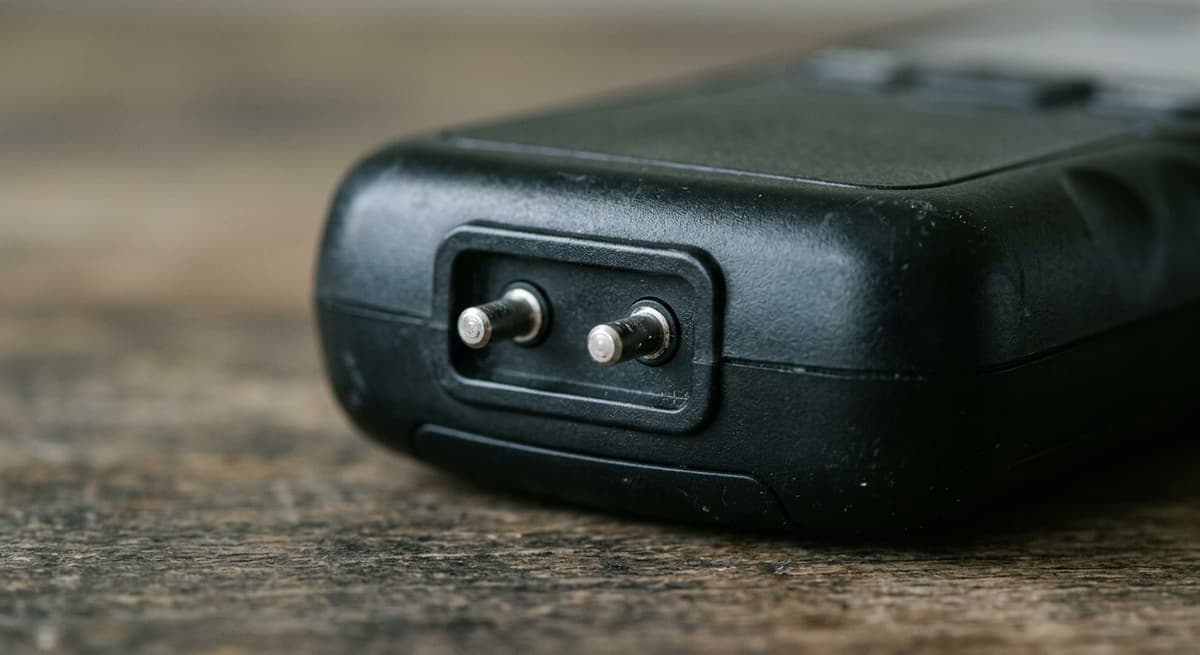
Using or threatening to use an electronic defense weapon while committing another class A, B, or C, or unclassified felony is a separate offense, criminal use of a firearm or electronic defense weapon, under § 53a-216. Subsection (b) states: "Criminal use of a firearm or electronic defense weapon is a class D felony for which five years of the sentence imposed may not be suspended or reduced by the court." Subsection (a) limits how that offense combines with the underlying felony: "No person shall be convicted of criminal use of a firearm or electronic defense weapon and the underlying felony upon the same transaction but such person may be charged and prosecuted for both such offenses upon the same information." A person cannot be convicted of both offenses for the same transaction, though both may be charged; the five-year non-suspendable term attaches to a conviction for criminal use itself, not as an addition stacked on top of a separate conviction for the underlying felony.
Connecticut's school-grounds weapons felony, § 53a-217b(a), makes a person guilty "when, knowing that such person is not licensed or privileged to do so, such person possesses a firearm or deadly weapon, as defined in section 53a-3," in or on the real property comprising a public or private elementary or secondary school or at a school-sponsored activity, a class D felony under subsection (c). The exemptions in subsection (b) are written for "the otherwise lawful possession of a firearm" only, so they do not extend to a deadly weapon. Section 53a-3(6) defines "deadly weapon" as "any weapon, whether loaded or unloaded, from which a shot may be discharged, or a switchblade knife, gravity knife, billy, blackjack, bludgeon, or metal knuckles," a list that does not name a stun gun or a chemical spray, and adds: "The definition of 'deadly weapon' in this subdivision shall be deemed not to apply to section 29-38 or 53-206 and does not include an electronic defense weapon when used by a peace officer," a clause a 2025 amendment, Public Act 25-29, added to this subdivision. That sentence states which sections the § 53a-3(6) definition does not govern, 29-38 and 53-206, which is why those two sections carry their own separate weapon lists; it does not, by itself, say a stun gun falls outside the definition, and the clause added in 2025 excluding "an electronic defense weapon when used by a peace officer" implies the opposite for anyone else, that an electronic defense weapon can be a § 53a-3(6) deadly weapon in other hands. Whether § 53a-217b can therefore reach a stun gun on school grounds is an open question the statute's text does not resolve. A chemical spray is not named in § 53a-3(6)'s enumeration and is not evidently affected by the 2025 amendment. A stun gun remains subject to the permit rules in § 53-206 and § 29-38 wherever it is carried, including on or near school property.
Carrying an electronic defense weapon without a qualifying exception under § 53-206 is a class E felony; keeping one in a vehicle without the exception is a class D felony under § 29-38; selling or transferring one to a person under 21 or without a required permit is a class D felony under § 53-206k. Causing physical injury to another person by means of a deadly weapon, a dangerous instrument, or an electronic defense weapon, with criminal negligence rather than intent, is assault in the third degree under § 53a-61(a)(3), a class A misdemeanor that carries a mandatory, non-suspendable one-year prison term under § 53a-61(b), a penalty an ordinary self-defense user is more likely to face than the felonies above. There is no equivalent dedicated possession-permit penalty for pepper spray, since § 53-206(a)'s own list does not name the device, though § 53a-167c(a)(3) carries its own class C felony penalty for using mace or tear gas against protected personnel with intent to prevent them from performing their duties. The assault statutes reach a spray through the dangerous-instrument route rather than by name: § 53a-61(a)(3) covers causing physical injury with criminal negligence "by means of a deadly weapon, a dangerous instrument or an electronic defense weapon," so the same mandatory, non-suspendable one-year term applies to a pepper spray injury on the authority of Ovechka above, and § 53a-60(a)(2), the offense at issue in that case, makes causing physical injury with intent by means of a dangerous instrument assault in the second degree, a class D felony under § 53a-60(b), or a class C felony if the offense resulted in serious physical injury.
Federal law: what it does and does not reach
No federal statute regulates a civilian's purchase or possession of pepper spray or a stun gun. Federal law matters in three places.
Federal buildings. Under 18 U.S.C. § 930(a), whoever knowingly possesses or causes to be present "a firearm or other dangerous weapon in a Federal facility (other than a Federal court facility)" faces a fine, imprisonment of up to 1 year, or both. Subsection (e) sets up to 2 years for a federal court facility, and subsection (b) up to 5 years where the weapon is intended to be used in a crime. Section 930(g)(2) defines the term:
The term "dangerous weapon" means a weapon, device, instrument, material, or substance, animate or inanimate, that is used for, or is readily capable of, causing death or serious bodily injury, except that such term does not include a pocket knife with a blade of less than 2½ inches in length.
The definition names neither device. Whether a particular spray or stun gun is "readily capable of" causing serious bodily injury is a question of fact the statute does not answer. Subsection (d)(3) exempts "the lawful carrying of firearms or other dangerous weapons in a Federal facility incident to hunting or other lawful purposes," and subsection (h) requires notice of the ban to be posted at each public entrance. A "Federal facility" is "a building or part thereof owned or leased by the Federal Government, where Federal employees are regularly present for the purpose of performing their official duties."
Air travel. The Transportation Security Administration's screening rules, which are agency policy rather than statute, bar both devices from carry-on bags. One 4 fl. oz. (118 ml) container of mace or pepper spray is permitted in checked baggage if it has a safety mechanism to prevent accidental discharge, and sprays containing more than 2 percent by mass of tear gas (CS or CN) are prohibited in checked baggage. Tasers, stun guns and other electro-shock weapons may travel in checked baggage only if transported so the device cannot discharge accidentally. Airlines may set stricter rules.
National parks. National Park Service regulations prohibit possessing, carrying or using a "weapon" in a park area except as the regulations provide (36 CFR 2.4(b)(1)). 36 CFR 1.4 defines "weapon" to include an "irritant gas device" and any "weapon the possession of which is prohibited under the laws of the State in which the park area or portion thereof is located."
Disclaimer: This article provides general legal information about Connecticut's pepper spray and stun gun laws as of September 2026. It is not legal advice. Consult a lawyer licensed in Connecticut for advice about a specific situation.
For a state-by-state comparison, see pepper spray and stun gun laws by state. Connecticut's self-defense statutes are covered separately on the Connecticut self-defense laws page.
Statutes cited reflect Connecticut's 2026 Supplement, current through the 2025 regular session. Last updated: 2026-09-22.
Frequently Asked Questions
Do you need a permit to carry a stun gun in Connecticut?
Yes. Conn. Gen. Stat. 53-206(b)(6) exempts only a person 21 or older who holds a permit or certificate issued under 29-28, 29-36f, 29-37p, or 29-38n from the state's felony carrying statute. Without that age and permit, carrying an electronic defense weapon is a class E felony under 53-206(a).
Can you keep a stun gun in your car in Connecticut without a permit?
No. Conn. Gen. Stat. 29-38(a) makes it a class D felony to knowingly have an electronic defense weapon in a vehicle a person owns, operates, or occupies, and its presence is prima facie evidence of a violation against the owner, operator, and every occupant. The same 21-plus-permit exception in 29-38(b)(6) applies.
Is pepper spray legal to carry in Connecticut?
Generally yes, though the answer is not as flat as it looks. Section 53-206(a)'s own list of named carrying-statute items does not include tear gas, mace, or pepper spray, so ordinary self-defense carry is not listed there by name. But both 53-206(a) and the vehicle-weapons statute (29-38) end in a catch-all for any other dangerous or deadly weapon or instrument, and a 2025 amendment added an exception at 53-206(b)(2) naming a 'less lethal weapon,' defined at 29-161q(b) as a baton or oleoresin capsicum (pepper) spray, for a licensed security officer on duty, evidence the Legislature reads that catch-all as capable of reaching OC spray. The Connecticut Supreme Court has separately held pepper spray can be a dangerous instrument under 53a-3(7) when used to injure someone, in State v. Ovechka, 292 Conn. 533 (2009); using mace or tear gas against police, fire, or certain medical personnel with intent to prevent them from performing their duties is a separate class C felony under 53a-167c(a)(3).
Who is banned from possessing a stun gun in Connecticut?
More people than just convicted felons. Conn. Gen. Stat. 53a-217 makes possessing an electronic defense weapon a class C felony, for which two years and one day of the sentence imposed may not be suspended or reduced, for anyone with a qualifying felony conviction (no time limit), a misdemeanor violation of specified assault, threatening, harassment, and related offenses committed within the preceding 20 years, certain other misdemeanor drug or family-violence convictions with no time limit, a serious-juvenile-offense delinquency adjudication, a not-guilty-by-reason-of-mental-disease-or-defect discharge within 20 years, specified recent psychiatric confinement, a qualifying restraining or protective order, or a firearms seizure or risk protection order.
What is the penalty for using a stun gun during a crime in Connecticut?
Criminal use of a firearm or electronic defense weapon, Conn. Gen. Stat. 53a-216, is a class D felony carrying a five-year portion of the sentence a court may not suspend or reduce. A person cannot be convicted of both this offense and the underlying felony for the same transaction, though both may be charged.
Can you carry a stun gun or pepper spray on Connecticut school grounds?
Connecticut's school-grounds weapons felony, 53a-217b(a), requires the state to prove that the person, 'knowing that such person is not licensed or privileged to do so,' possessed a firearm or a deadly weapon as defined in 53a-3, on school property or at a school-sponsored activity; the deadly-weapon list in 53a-3(6) does not name a stun gun or a chemical spray. A 2025 amendment added language excluding 'an electronic defense weapon when used by a peace officer' from that definition, which implies a stun gun in someone else's hands can be a 53a-3(6) deadly weapon; whether 53a-217b can reach a stun gun on school grounds is therefore an open question the statute's text does not resolve. A chemical spray is not named in 53a-3(6) and is not evidently affected by that amendment. A stun gun still requires the 21-plus-permit exception under 53-206 wherever it is carried, including at school.
Updates
Independently fact-checked against the cited primary sources
The Law Behind This Article
This article rests on the statutory provisions below, held in our own legal record and retrieved from the official source. Tap a section to read the operative text.
Connecticut General Statutes, Title 29 (Public Safety and State Police), Chapter 534
§ 29-161qQualifications of security officers. License. Instructor approval. Registration. Identification card. Prohibition. Applicant performance of security officer duties. Penalty.In force
(a) Any security service or business may employ as many security officers as such security service or business deems necessary for the conduct of the business, provided such security officers are of good moral character and at least eighteen years of age. (b) No person hired or otherwise engaged to perform work as a security officer, as defined in section 29-152u, shall perform the duties of a security officer prior to being licensed as a security officer by the Commissioner of Emergency Services and Public Protection, except as provided in subsection (h) of this section. Each applicant for a license shall complete a minimum of eight hours training in the following areas: Basic first aid, search and seizure laws and regulations, use of force, basic criminal justice and public safety issues.
Official text (excerpt) · last checked 2026-07-29 · Read the full text in our law library · Verify at cga.ct.gov
Connecticut General Statutes, Title 29 (Public Safety and State Police), Chapter 529
§ 29-38Weapons in vehicles. Penalty. Exceptions.In forcecited in 2 of our articles
(a) Any person who knowingly has, in any vehicle owned, operated or occupied by such person, any weapon, any pistol or revolver for which a proper permit has not been issued as provided in section 29-28 or any machine gun which has not been registered as required by section 53-202, shall be guilty of a class D felony, and the presence of any such weapon, pistol or revolver, or machine gun in any vehicle shall be prima facie evidence of a violation of this section by the owner, operator and each occupant thereof. The word “weapon”, as used in this section, means any BB. gun, any blackjack, any metal or brass knuckles, any police baton or nightstick, any dirk knife or switch knife, any knife having an automatic spring release device by which a blade is released from the handle, having a blade of over one and one-half inches in length, any stiletto, any knife the edged portion of the blade of which is four inches or more in length, any martial arts weapon or electronic defense weapon, as defined in section 53a-3, or any other dangerous or deadly weapon or instrument.
Official text (excerpt) · last checked 2026-07-29 · Read the full text in our law library · Verify at cga.ct.gov
Cited in 137 court opinions in our collectionLatest citing opinion in our collection: 2026
Opinions citing this section in our collection:
- State v. Davis (Supreme Court of Connecticut 2010, 298 Conn. 1)“…ossession of a weapon in a motor vehicle under General Statutes § 29-38 because § 29-38 punishes both the unlaw…”
- State v. Allen (Supreme Court of Connecticut 1987, 205 Conn. 370)“…nd having a weapon in a motor vehicle in vio *372 lation of General Statutes § 29-38. The defendant was sentenced to a priso…”
- State v. Lutters (Supreme Court of Connecticut 2004, 270 Conn. 198)“…eral Statutes § 29-35 (a), if allowed to stand, would place General Statutes § 29-38 in constitutional jeopardy with *222 r…”
Identified automatically from the court opinions citing this section — not a ranking of which case controls.
Also relied on in: Connecticut Knife Laws (2026): Open and Concealed Carry
Connecticut General Statutes, Title 53 (Crimes), Chapter 943
§ 53-206Carrying of dangerous weapons prohibited.In forcecited in 3 of our articles
(a) Any person who carries upon his or her person any BB. gun, blackjack, metal or brass knuckles, or any dirk knife, or any switch knife, or any knife having an automatic spring release device by which a blade is released from the handle, having a blade of over one and one-half inches in length, or stiletto, or any knife the edged portion of the blade of which is four inches or more in length, any police baton or nightstick, or any martial arts weapon or electronic defense weapon, as defined in section 53a-3, or any other dangerous or deadly weapon or instrument, shall be guilty of a class E felony. Whenever any person is found guilty of a violation of this section, any weapon or other instrument within the provisions of this section, found upon the body of such person, shall be forfeited to the municipality wherein such person was apprehended, notwithstanding any failure of the judgment of conviction to expressly impose such forfeiture.
Official text (excerpt) · last checked 2026-09-23 · Read the full text in our law library · Verify at cga.ct.gov
Cited in 87 court opinions in our collectionLatest citing opinion in our collection: 2026
Opinions citing this section in our collection:
- State v. Sealy (Supreme Court of Connecticut 1988, 208 Conn. 689)“…f the crimes of carrying a dangerous weapon in violation of General Statutes § 53-206 (a), and threatening in violation of Ge…”
- State v. Holloway (Connecticut Appellate Court 1987, 11 Conn. App. 665)“…ed a charge of carrying a dangerous weapon as prohibited by General Statutes § 53-206, 1 and whether the court erred in its…”
- State v. Medrano (Connecticut Appellate Court 2011, 131 Conn. App. 528)“…d one count of carrying a dangerous weapon, in violation of General Statutes § 53-206. At trial, the jury found the defendant…”
Identified automatically from the court opinions citing this section — not a ranking of which case controls.
Also relied on in: Pepper Spray and Stun Gun Laws by State (2026)
§ 53-206kConditions for sale or transfer of electronic defense weapons. Penalty.In force
Any person who sells or transfers an electronic defense weapon, as defined in section 53a-3, to any person who is under twenty-one years of age or does not possess a permit or certificate issued under the provisions of section 29-28, 29-36f, 29-37p or 29-38n shall be guilty of a class D felony.
Official text (excerpt) · last checked 2026-07-29 · Read the full text in our law library · Verify at cga.ct.gov
Connecticut General Statutes, Title 53a (Penal Code), Chapter 952
§ 53a-167cAssault of public safety, emergency medical, public transit or health care personnel: Class C felony.In force
(a) A person is guilty of assault of public safety, emergency medical, public transit or health care personnel when, with intent to prevent a reasonably identifiable peace officer, firefighter or employee of an emergency medical service organization, as defined in section 53a-3, emergency room physician or nurse, health care employee as defined in section 19a-490q, employee of the Department of Correction, member or employee of the Board of Pardons and Paroles, probation officer, employee of the Judicial Branch assigned to provide pretrial or post-conviction secure detention and programming services to juveniles accused of the commission of a delinquent act, liquor control agent, state or municipal animal control officer, security officer, employee of the Department of Children and Families assigned to provide direct services to children and youths in the care or custody of the department, employee of a municipal police department assigned to provide security at the police department's lockup and holding facility, active individual member of a volunteer canine search and rescue team, as defined in section 5-249, or public transit employee from performing his or her duties, and…
Official text (excerpt) · last checked 2026-07-29 · Read the full text in our law library · Verify at cga.ct.gov
Cited in 193 court opinions in our collectionLatest citing opinion in our collection: 2026
Opinions citing this section in our collection:
- State v. Flynn (Connecticut Appellate Court 1988, 14 Conn. App. 10)“…of the crimes of assault on a peace officer in violation of General Statutes § 53a-167c, reckless endangerment in the second de…”
- State v. Wolff (Supreme Court of Connecticut 1996, 237 Conn. 633)“…of two counts of assault of a peace officer in violation of General Statutes § 53a-167c (a) (l), 2 and one count of breach of…”
- State v. Woolcock (Supreme Court of Connecticut 1986, 201 Conn. 605)“…4a, one count of assault on a peace officer in violation of General Statutes § 53a-167c (a) (1), and four counts of the sale of…”
Identified automatically from the court opinions citing this section — not a ranking of which case controls.
§ 53a-216Criminal use of firearm or electronic defense weapon: Class D felony.In force
(a) A person is guilty of criminal use of a firearm or electronic defense weapon when he commits any class A, B or C or unclassified felony as defined in section 53a-25 and in the commission of such felony he uses or threatens the use of a pistol, revolver, machine gun, shotgun, rifle or other firearm or electronic defense weapon. No person shall be convicted of criminal use of a firearm or electronic defense weapon and the underlying felony upon the same transaction but such person may be charged and prosecuted for both such offenses upon the same information. (b) Criminal use of a firearm or electronic defense weapon is a class D felony for which five years of the sentence imposed may not be suspended or reduced by the court.
Official text (excerpt) · last checked 2026-07-29 · Read the full text in our law library · Verify at cga.ct.gov
Cited in 28 court opinions in our collectionLatest citing opinion in our collection: 2024
Opinions citing this section in our collection:
- State v. Velasco (Supreme Court of Connecticut 2000, 253 Conn. 210)“…ew M. Norton. In specific, Norton analogized P.A. 93-306 to General Statutes § 53a-216 (b), a statute that he claimed was “so…”
- State v. Dash (Supreme Court of Connecticut 1997, 242 Conn. 143)“…d conduct of the kind contemplated by § 53-202k; see, e.g., General Statutes §§ 53a-216 and 53a-217; 7 § 53-202k contains no l…”
- Ham v. Greene (Supreme Court of Connecticut 1999, 248 Conn. 508)“…and two counts of criminal use of a firearm in violation of General Statutes § 53a-216. 3 Although it did not identify Cypres…”
Identified automatically from the court opinions citing this section — not a ranking of which case controls.
§ 53a-217Criminal possession of a firearm, ammunition or an electronic defense weapon: Class C felony.In forcecited in 2 of our articles
(a) A person is guilty of criminal possession of a firearm, ammunition or an electronic defense weapon when such person possesses a firearm, ammunition or an electronic defense weapon and (1) has been convicted of (A) a felony committed prior to, on or after October 1, 2013, (B) a misdemeanor violation of section 21a-279 on or after October 1, 2015, (C) a misdemeanor violation of section 53a-58, 53a-61, 53a-61a, 53a-62, 53a-63, 53a-96, 53a-175, 53a-176, 53a-178 or 53a-181d committed on or after October 1, 2013, and during the preceding twenty years, or (D) a misdemeanor violation of any law of this state that has been designated as a family violence crime pursuant to section 46b-38h and was committed on or after October 1, 2023, (2) has been convicted as delinquent for the commission of a serious juvenile offense, as defined in section 46b-120, (3) has been discharged from custody within the preceding twenty years after having been found not guilty of a crime by reason of mental disease or defect pursuant to section 53a-13, (4) knows that such person is subject to (A) a restraining or protective order of a court of this state that has been issued against such person, after notice…
Official text (excerpt) · last checked 2026-07-29 · Read the full text in our law library · Verify at cga.ct.gov
Cited in 306 court opinions in our collectionLatest citing opinion in our collection: 2026
Opinions citing this section in our collection:
- State v. Jones (Supreme Court of Connecticut 1995, 234 Conn. 324)“…ession of a firearm by a person convicted of a felony under General Statutes § 53a-217, the bifurcation procedure should have…”
- State v. Carpenter (Connecticut Appellate Court 1989, 19 Conn. App. 48)“…charge was criminal possession of a pistol in violation of General Statutes § 53a-217. The defendant principally relies upo…”
- State v. Banta (Connecticut Appellate Court 1988, 15 Conn. App. 161)“…(a) (4) and criminal possession of a pistol in violation of General Statutes § 53a-217 (a). Both defendants were found guilty…”
Identified automatically from the court opinions citing this section — not a ranking of which case controls.
Also relied on in: Connecticut Restraining Order Laws (2026): How to Get a Civil Restraining Order
§ 53a-217bPossession of a weapon on school grounds: Class D felony.In forcecited in 2 of our articles
(a) A person is guilty of possession of a weapon on school grounds when, knowing that such person is not licensed or privileged to do so, such person possesses a firearm or deadly weapon, as defined in section 53a-3, (1) in or on the real property comprising a public or private elementary or secondary school, or (2) at a school-sponsored activity as defined in subsection (h) of section 10-233a. (b) The provisions of subsection (a) of this section shall not apply to the otherwise lawful possession of a firearm (1) by a person for use in a program approved by school officials in or on such school property or at such school-sponsored activity, (2) by a person in accordance with an agreement entered into between school officials and such person or such person's employer, (3) by a peace officer, as defined in subdivision (9) of section 53a-3, while engaged in the performance of such peace officer's official duties, or (4) by a person while traversing such school property for the purpose of gaining access to public or private lands open to hunting or for other lawful purposes, provided such firearm is not loaded and the entry on such school property is permitted by the local or…
Official text (excerpt) · last checked 2026-07-29 · Read the full text in our law library · Verify at cga.ct.gov
Cited in 5 court opinions in our collectionLatest citing opinion in our collection: 2026
Opinions citing this section in our collection:
- State v. Foster (Supreme Court of Connecticut 2025, 353 Conn. 1)“…a weapon on school grounds, a class D felony. See General Statutes § 53a-217b (c). To be clear, any act o…”
- State v. Dukes (Connecticut Appellate Court 2026)“…tion hearing. State v. Dukes General Statutes § 53a-217b, possession of more than the legal limi…”
Identified automatically from the court opinions citing this section — not a ranking of which case controls.
§ 53a-61Assault in the third degree: Class A misdemeanor.In force
(a) A person is guilty of assault in the third degree when: (1) With intent to cause physical injury to another person, he causes such injury to such person or to a third person; or (2) he recklessly causes serious physical injury to another person; or (3) with criminal negligence, he causes physical injury to another person by means of a deadly weapon, a dangerous instrument or an electronic defense weapon. (b) Assault in the third degree is a class A misdemeanor and any person found guilty under subdivision (3) of subsection (a) of this section shall be sentenced to a term of imprisonment of one year which may not be suspended or reduced.
Official text (excerpt) · last checked 2026-07-29 · Read the full text in our law library · Verify at cga.ct.gov
Cited in 391 court opinions in our collectionLatest citing opinion in our collection: 2025
Opinions citing this section in our collection:
- State v. Winot (Supreme Court of Connecticut 2010, 294 Conn. 753)“…ird degree or breach of the peace in the second degree. See General Statutes §§ 53a-61(a)(1) and 53a-181(a)(2). Moreover, as w…”
- State v. Palmer (Supreme Court of Connecticut 1988, 206 Conn. 40)“…nd one count of assault in the third degree in violation of General Statutes § 53a-61 (a) (1). 6 The defendant pleaded not g…”
- State v. Smith (Supreme Court of Connecticut 1981, 185 Conn. 63)“…under the first count, and assault in the third degree; General Statutes § 53a-61 (a) (3) ; 13 under the sec…”
Identified automatically from the court opinions citing this section — not a ranking of which case controls.
Connecticut General Statutes, Title 53a (Penal Code), Chapter 950
§ 53a-3Definitions.In forcecited in 2 of our articles
Except where different meanings are expressly specified, the following terms have the following meanings when used in this title: (1) “Person” means a human being, and, where appropriate, a public or private corporation, a limited liability company, an unincorporated association, a partnership, a government or a governmental instrumentality; (2) “Possess” means to have physical possession or otherwise to exercise dominion or control over tangible property; (3) “Physical injury” means impairment of physical condition or pain; (4) “Serious physical injury” means physical injury which creates a substantial risk of death, or which causes serious disfigurement, serious impairment of health or serious loss or impairment of the function of any bodily organ; (5) “Deadly physical force” means physical force which can be reasonably expected to cause death or serious physical injury; (6) “Deadly weapon” means any weapon, whether loaded or unloaded, from which a shot may be discharged, or a switchblade knife, gravity knife, billy, blackjack, bludgeon, or metal knuckles.
Official text (excerpt) · last checked 2026-07-29 · Read the full text in our law library · Verify at cga.ct.gov
Cited in 546 court opinions in our collectionLatest citing opinion in our collection: 2026
Opinions citing this section in our collection:
- State v. Salamon (Supreme Court of Connecticut 2008, 287 Conn. 509)“…reliance on the definition of “intentionally” set forth in General Statutes § 53a-3 (11) to support its conclusion that unl…”
- State v. Kitchens (Supreme Court of Connecticut 2011, 299 Conn. 447)“…conduct element of the statutory definition of intent under General Statutes § 53a-3 (11), 4 *even though kidnapping and un…”
- State v. Sivri (Supreme Court of Connecticut 1994, 231 Conn. 115)“…d the conscious objective to cause the death of the victim. General Statutes § 53a-3 (11). . . .” (Internal quotation marks…”
Identified automatically from the court opinions citing this section — not a ranking of which case controls.
Code of Federal Regulations Title 36
§ 1.4What terms do I need to know?In forcecited in 53 of our articles
(a) The following definitions shall apply to this chapter, unless modified by the definitions for a specific part or regulation: Abandonment means the voluntary relinquishment of property with no intent to retain possession. Administrative activities means those activities conducted under the authority of the National Park Service for the purpose of safeguarding persons or property, implementing management plans and policies developed in accordance and consistent with the regulations in this chapter, or repairing or maintaining government facilities. Airboat means a vessel that is supported by the buoyancy of its hull and powered by a propeller or fan above the waterline. This definition should not be construed to mean a “hovercraft,” that is supported by a fan-generated air cushion. Aircraft means a device that is used or intended to be used for human flight in the air, including powerless flight. Archeological resource means material remains of past human life or activities that are of archeological interest and are at least 50 years of age.
Official text (excerpt) · last checked 2026-07-28 · Read the full text in our law library · Verify at ecfr.gov
Cited in 34 court opinions in our collectionLatest citing opinion in our collection: 2026
Opinions citing this section in our collection:
- WildEarth Guardians v. National Park Service (Court of Appeals for the Tenth Circuit 2013, 703 F.3d 1178)“…collect, kill, wound, or attempt to do any of the above.” 36 C.F.R. § 1.4(a). WildEarth argues that because NPS…”
- Nature v. United States (District Court, E.D. California 2017, 250 F. Supp. 3d 634)“…ent, historic, parkway, recreational, or other purposes. 36 C.F.R. § 1.4 . Nature argues that the El Portal Admi…”
- United States v. Knauer (District Court, E.D. New York 2010, 707 F. Supp. 2d 379)“…ng or attempting to take wildlife, except trapping. 36 C.F.R. § 1.4 (a) (in relevant part, reordered for cl…”
Identified automatically from the court opinions citing this section — not a ranking of which case controls.
Also relied on in: Knife Laws by State (2026): Carry Rules, Blade Limits, Penalties, Alabama Pepper Spray and Stun Gun Laws (2026), Alaska Pepper Spray and Stun Gun Laws (2026)
§ 2.4Weapons, traps and nets.In forcecited in 53 of our articles
(a) None of the provisions in this section or any regulation in this chapter may be enforced to prohibit an individual from possessing a firearm, including an assembled or functional firearm, in any National Park System unit if: (1) The individual is not otherwise prohibited by law from possessing the firearm; and (2) The possession of the firearm is in compliance with the law of the State in which the National Park System unit is located. (b)(1) Except as otherwise provided in this section and parts 7 (special regulations) and 13 (Alaska regulations), the following are prohibited: (i) Possessing a weapon, trap or net (ii) Carrying a weapon, trap or net (iii) Using a weapon, trap or net (2) Weapons, traps or nets may be carried, possessed or used: (i) At designated times and locations in park areas where: (A) The taking of wildlife is authorized by law in accordance with § 2.2 of this chapter; (B) The taking of fish is authorized by law in accordance with § 2.3 of this part. (ii) When used for target practice at designated times and at facilities or locations designed and constructed specifically for this purpose and designated pursuant to special regulations.
Official text (excerpt) · last checked 2026-07-28 · Read the full text in our law library · Verify at ecfr.gov
Cited in 26 court opinions in our collectionLatest citing opinion in our collection: 2024
Opinions citing this section in our collection:
- United States v. Masciandaro (Court of Appeals for the Fourth Circuit 2011, 638 F.3d 458)“…motor vehicle within a national park area, in violation of 36 C.F.R. § 2.4(b). He challenges his con- viction on t…”
- Brady Campaign to Prevent Gun Violence v. Salazar (District Court, District of Columbia 2009, 612 F. Supp. 2d 1)“…eady use.” 48 Fed.Reg. 30,252 (June 30, 1983), codified at 36 C.F.R. § 2.4 (a)(2). A similar regulation applied to…”
- United States v. Otis Lofton, United States of America v. Otis Lofton (Court of Appeals for the Fourth Circuit 2000, 233 F.3d 313)“…l Park Service. See 36 C.F.R. § 1.2 (2000); 36 C.F.R. § 2.4 (2000). Lofton’s conviction was affirm…”
Identified automatically from the court opinions citing this section — not a ranking of which case controls.
Also relied on in: Pennsylvania Pepper Spray and Stun Gun Laws (2026), Arizona Pepper Spray and Stun Gun Laws (2026), Arkansas Pepper Spray and Stun Gun Laws (2026)
United States Code Title 18
§ 922Unlawful actsIn forcecited in 72 of our articles
It shall be unlawful— for any person— except a licensed importer, licensed manufacturer, or licensed dealer, to engage in the business of importing, manufacturing, or dealing in firearms, or in the course of such business to ship, transport, or receive any firearm in interstate or foreign commerce; or except a licensed importer or licensed manufacturer, to engage in the business of importing or manufacturing ammunition, or in the course of such business, to ship, transport, or receive any ammunition in interstate or foreign commerce; for any importer, manufacturer, dealer, or collector licensed under the provisions of this chapter to ship or transport in interstate or foreign commerce any firearm to any person other than a licensed importer, licensed manufacturer, licensed dealer, or licensed collector, except that— this paragraph and subsection (b)(3) shall not be held to preclude a licensed importer, licensed manufacturer, licensed dealer, or licensed collector from returning a firearm or replacement firearm of the same kind and type to a person from whom it was received; and this paragraph shall not be held to preclude an individual from mailing a firearm owned in compliance…
Official text (excerpt) · last checked 2026-09-16 · Read the full text in our law library · Verify at uscode.house.gov
Cited in 40,024 court opinions in our collectionLatest citing opinion in our collection: 2026
In the courts (editorial summary, independently checked):Section 922(g)(1) bars a felon from possessing a firearm, and the Supreme Court cases in this line turn on sentencing, not on the ban. Taylor v. United States (1990) and Shepard v. United States (2005) held that whether prior convictions enhance a 922(g) sentence under 924(e) is decided from offense elements and limited plea records.
Opinions citing this section in our collection:
- United States v. Booker (Supreme Court of the United States 2004, 543 U.S. 220)“…e Johnson with one crime (say, illegal gun possession, see 18 U. S. C. § 922 (g)) and Jackson with another (say, ban…”
- Almendarez-Torres v. United States (Supreme Court of the United States 1998, 523 U.S. 224)“…cidivism an offense element in such circumstances. But cf. 18 U. S. C. § 922 (g)(1) (prior felony conviction an elem…”
- Taylor v. United States (Supreme Court of the United States 1990, 495 U.S. 575)✓Taylor pleaded guilty to felon-in-possession under 18 U.S.C. § 922(g)(1) and had two Missouri burglary convictions; the Court held that 'burglary' in the § 924(e) enhancement attached to a § 922(g) conviction means generic burglary judged by the prior statute's elements.
Identified automatically from the court opinions citing this section — not a ranking of which case controls.
Also relied on in: Can You Become an ICE Agent with a Criminal Record? (2026 Guide), How Long Does a Felony Stay on Your Record? (2026), Supreme Court Limits the Federal Gun Ban on Marijuana Users (Hemani, 2026)
§ 930Possession of firearms and dangerous weapons in Federal facilitiesIn forcecited in 55 of our articles
Except as provided in subsection (d), whoever knowingly possesses or causes to be present a firearm or other dangerous weapon in a Federal facility (other than a Federal court facility), or attempts to do so, shall be fined under this title or imprisoned not more than 1 year, or both. Whoever, with intent that a firearm or other dangerous weapon be used in the commission of a crime, knowingly possesses or causes to be present such firearm or dangerous weapon in a Federal facility, or attempts to do so, shall be fined under this title or imprisoned not more than 5 years, or both. A person who kills any person in the course of a violation of subsection (a) or (b), or in the course of an attack on a Federal facility involving the use of a firearm or other dangerous weapon, or attempts or conspires to do such an act, shall be punished as provided in sections 1111, 1112, 1113, and 1117.
Official text (excerpt) · last checked 2026-07-28 · Read the full text in our law library · Verify at uscode.house.gov
Cited in 90 court opinions in our collectionLatest citing opinion in our collection: 2026
Opinions citing this section in our collection:
- United States v. Odeh (Court of Appeals for the Second Circuit 2008, 552 F.3d 93)“…f an attack on a U.S. facility in Nairobi, in violation of 18 U.S.C. § 930 (c) (Counts 9-221); murder of U.S. offi…”
- Kawaljeet Tagore v. USA (Court of Appeals for the Fifth Circuit 2013, 735 F.3d 324)“…statutory ban on weapons with blades exceeding 2.5 inches. 18 U.S.C. § 930(a), (g)(2).…”
- Heller v. District of Columbia (Court of Appeals for the D.C. Circuit 2015, 801 F.3d 264)“…universally prohibited from possessing firearms. See, e.g., 18 U.S.C. § 930(a), (g)(1) (unlawful to “knowingly poss…”
Identified automatically from the court opinions citing this section — not a ranking of which case controls.
Also relied on in: Idaho Knife Laws (2026): Carry, Blade Length, Preemption, North Dakota Knife Laws (2026): The 6-Inch Rule and Licensing, California Pepper Spray and Stun Gun Laws (2026)
Search our full record of US law — 2.1 million sections, every state + federal →
Sources and References
- Conn. Gen. Stat. 53-206 (2026 Supplement, as amended by Public Act 25-157) - Carrying of dangerous weapons prohibited (electronic defense weapon listed, class E felony, 21-plus-permit exception at (b)(6), less-lethal-weapon security-officer exception at (b)(2))(cga.ct.gov).gov
- Conn. Gen. Stat. 53-206k - Conditions for sale or transfer of electronic defense weapons; penalty (class D felony)(cga.ct.gov).gov
- Conn. Gen. Stat. 29-38 - Weapons in vehicles; penalty; exceptions (class D felony, prima facie evidence, 21-plus-permit exception at (b)(6); unchanged by the 2025 session)(cga.ct.gov).gov
- Conn. Gen. Stat. 29-161q(b) - Qualifications of security officers; definition of 'less lethal weapon' (baton or oleoresin capsicum/pepper spray)(cga.ct.gov).gov
- Conn. Gen. Stat. 53a-3 (2026 Supplement, as amended by Public Act 25-29) - Definitions ((6) deadly weapon, excludes 29-38/53-206, excludes an electronic defense weapon used by a peace officer; (7) dangerous instrument; (20) electronic defense weapon)(cga.ct.gov).gov
- Conn. Gen. Stat. 53a-216 - Criminal use of firearm or electronic defense weapon (class D felony, 5-year non-suspendable minimum, anti-stacking clause)(cga.ct.gov).gov
- Conn. Gen. Stat. 53a-217 - Criminal possession of a firearm, ammunition or an electronic defense weapon (class C felony, prohibited-persons list, mandatory two years and one day non-suspendable and $5,000 non-remittable fine portion)(cga.ct.gov).gov
- Conn. Gen. Stat. 53a-217b - Possession of a weapon on school grounds (class D felony, limited to firearm or 53a-3(6) deadly weapon)(cga.ct.gov).gov
- Conn. Gen. Stat. 53a-167c - Assault of public safety, emergency medical, public transit or health care personnel (mace/tear gas used with intent to prevent duties, class C felony)(cga.ct.gov).gov
- Conn. Gen. Stat. 53a-61(a)(3), (b) - Assault in the third degree by means of an electronic defense weapon with criminal negligence (class A misdemeanor, mandatory non-suspendable one-year term)(cga.ct.gov).gov
- State v. Ovechka, 292 Conn. 533 (2009) - pepper spray as a dangerous instrument under 53a-3(7)(courtlistener.com)
- 18 U.S.C. § 930 - Possession of firearms and dangerous weapons in Federal facilities(law.cornell.edu)
- Transportation Security Administration - What Can I Bring? Pepper Spray(tsa.gov).gov
- Transportation Security Administration - What Can I Bring? Stun Guns/Shocking Devices(tsa.gov).gov
- 36 CFR 1.4 - National Park Service definitions (weapon)(ecfr.gov).gov
- 36 CFR 2.4 - Weapons, traps and nets(ecfr.gov).gov