
Colorado
Colorado Knife Laws (2026): Concealed Carry and Exceptions
Independently fact-checked against primary sources (last audited September 18, 2026). · 5 primary sources cited on this page. How we verify our legal content
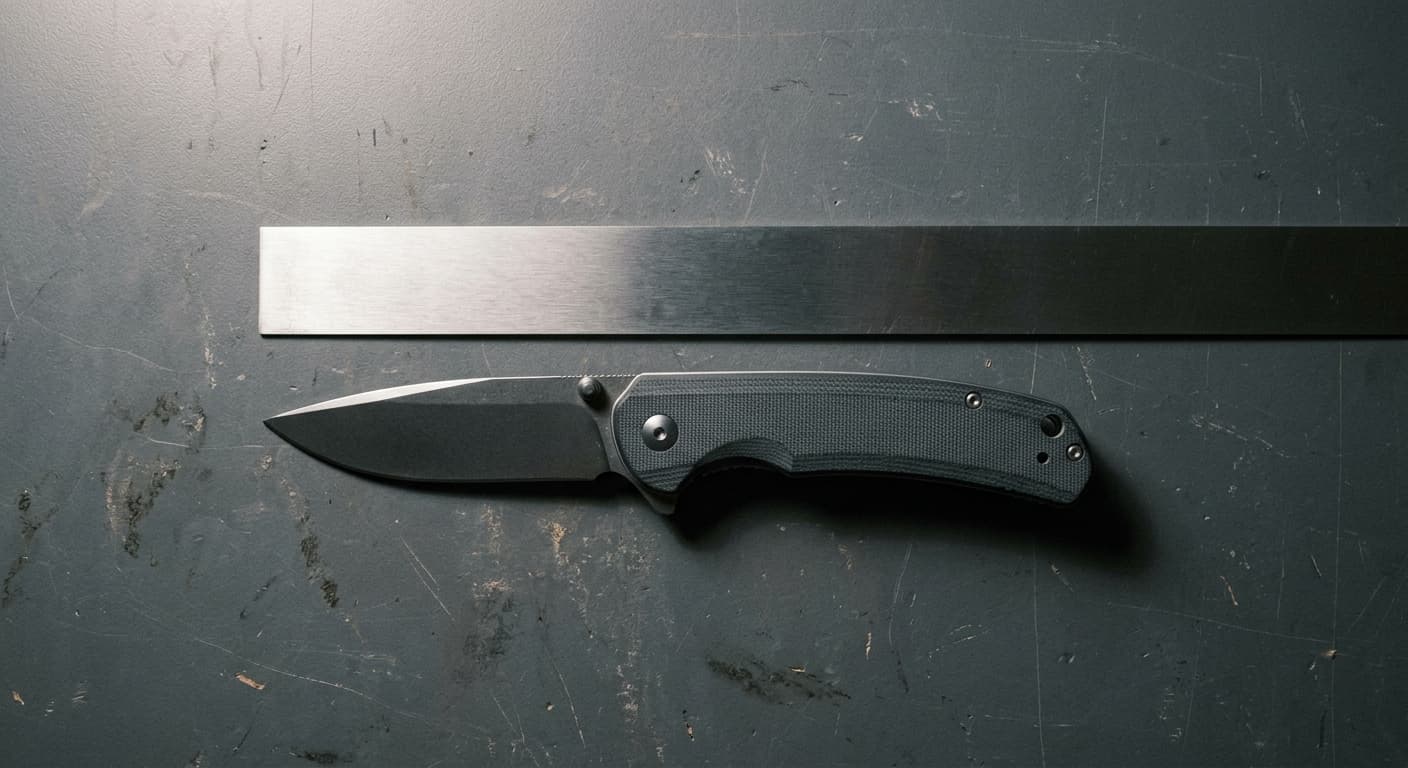
Colorado bans concealed carry of a "knife," but the criminal definition of that term is narrower than it sounds. Colo. Rev. Stat. § 18-12-101(1)(q) defines "knife," for the whole weapons article, as a dagger, dirk, knife, or stiletto with a blade over three and a half inches, or any other dangerous instrument capable of inflicting cutting, stabbing, or tearing wounds, and it excludes a hunting or fishing knife carried for sports use, which a defendant raises as an affirmative defense. Colo. Rev. Stat. § 18-12-105 makes it a class 1 misdemeanor to knowingly and unlawfully carry a knife, as that term is defined, concealed on or about the person, unless the person is in their own dwelling, business, or controlled property, or traveling in a private vehicle for lawful protection. Colorado's concealed handgun permit covers only a handgun, not a knife. Open carry of a knife is not restricted at all. A separate, stricter rule applies on school, college, and university grounds, where carrying a non-firearm deadly weapon, including a knife used or intended for use as a weapon, is a felony.
Jurisdiction scope: This page covers Colorado state law only, principally Colo. Rev. Stat. §§ 18-12-101, 18-12-102, 18-12-105, 18-12-105.5, and 22-33-102. It does not cover Colorado's concealed handgun permit statute in detail, or local municipal ordinances, which Colorado does not preempt for knives.
Is it legal to carry a knife openly in Colorado?
Yes, outside the restricted places covered below. Colorado's weapons chapter, Title 18, Article 12, has no general restriction on open carry of a knife of any type or length; its restriction on open carry is the place-based school, college, and university grounds felony described later on this page.
Concealed carry: Colorado's definition of "knife" sets its own 3.5-inch line
Colo. Rev. Stat. § 18-12-105(1)(a) states: "A person commits a class 1 misdemeanor if the person knowingly and unlawfully... carries a knife concealed on or about his or her person." The offense turns entirely on what "knife" means, and that term is defined for the whole of Title 18, Article 12 by § 18-12-101(1)(q): "any dagger, dirk, knife, or stiletto with a blade over three and one-half inches in length, or any other dangerous instrument capable of inflicting cutting, stabbing, or tearing wounds," but the definition excludes "a hunting or fishing knife carried for sports use," which a defendant raises as an affirmative defense rather than the state having to disprove as an element.
In practice, that means an ordinary pocketknife with a blade of 3.5 inches or less, carried concealed for no other purpose, falls outside this offense's definition of "knife" altogether, subject to the residual "any other dangerous instrument" clause, which can still reach a shorter item if it is genuinely capable of inflicting a cutting, stabbing, or tearing wound. A dagger, dirk, or stiletto-type blade over 3.5 inches, or any longer general-purpose knife, is squarely covered.
Subsection (2) then removes most everyday carry of a covered knife from the offense. It is not a crime under this section if the person was:
- In their own dwelling or place of business, or on property they own or control, at the time of carrying.
- In a private automobile or other private means of conveyance, carrying a weapon for the lawful protection of themselves, another person, or property while traveling.
- Holding a valid concealed-weapon permit issued under the now-repealed § 18-12-105.1, or, if the weapon was a handgun, a valid concealed handgun permit or temporary emergency permit. A current concealed handgun permit therefore does not exempt concealed carry of a knife.
- A peace officer carrying in conformance with their employing agency's policy, or specific federal probation or pretrial services officers on duty in Colorado.
Ballistic knives are banned outright
Separately from the general concealed-carry rule, Colo. Rev. Stat. § 18-12-101(1)(b) defines a "ballistic knife" as "any knife that has a blade that is forcefully projected from the handle by means of a spring-loaded device or explosive charge." Section 18-12-102(2) classifies a ballistic knife as an "illegal weapon," alongside a blackjack, gas gun, and metallic knuckles, and subsection (4) makes knowing possession of an illegal weapon a class 1 misdemeanor. This offense does not depend on concealment, and it applies regardless of the exceptions listed above for ordinary concealed knife carry, though a peace officer or permit holder acting lawfully has an affirmative defense under subsection (5).
School, college, and university grounds: a stricter felony rule
Colo. Rev. Stat. § 18-12-105.5(1)(a) makes it unlawful to knowingly carry, bring, or possess, without legal authority, a "deadly weapon as defined in section 18-1-901(3)(e) that is not a firearm" on the real estate of a public or private elementary, middle, junior high, high, or vocational school, or a public or private college, university, or seminary. Colorado's general "deadly weapon" definition, in § 18-1-901(3)(e), includes "a knife, bludgeon, or any other weapon, device, instrument, material, or substance, whether animate or inanimate, that, in the manner it is used or intended to be used, is capable of producing death or serious bodily injury," a functional test rather than a fixed blade-length number. Violating this section is a class 6 felony. Exceptions apply to an unloaded weapon that remains inside a motor vehicle on college, university, or seminary grounds (not K-12 grounds), a person's own dwelling, business, or controlled property, carrying in a private vehicle for lawful protection while traveling, school resource officers and peace officers acting under agency policy, possession for a school-approved educational program, authorized school demonstrations or exhibitions, authorized extracurricular activities or athletic teams, and an employee's job duties.
A separate, narrower definition applies only to school suspension and expulsion decisions, not to this criminal offense. Colo. Rev. Stat. § 22-33-102(4), part of the education code's discipline provisions, defines "dangerous weapon" for that administrative purpose as "a fixed-blade knife with a blade that exceeds three inches in length" or "a spring-loaded knife or a pocket knife with a blade exceeding three and one-half inches in length," among other items. That definition governs whether a school can suspend or expel a student under Colo. Rev. Stat. § 22-33-106; it is a different standard from, and does not limit, the functional "deadly weapon" definition that drives the felony charge above.
Does Colorado preempt local knife ordinances?
Colorado has no statute preempting local knife regulation. Title 29 and Title 31, which govern municipal-government and county powers, contain no such provision, so Colorado does not bar cities and counties from adopting their own, stricter knife ordinances the way preemption states such as Arizona and Texas do.
Federal law: what it does and does not reach
Federal law does not ban an individual from owning or carrying a switchblade. The Federal Switchblade Act, 15 U.S.C. §§ 1241 to 1245, instead regulates interstate commerce in switchblade knives, barring their manufacture, sale, transport, or introduction into interstate commerce, and, in 15 U.S.C. § 1245 makes it a federal offense to knowingly possess, manufacture, sell, or import a ballistic knife in or affecting interstate commerce or within federal territorial jurisdiction, a category Colorado independently bans as an illegal weapon as well. Sections 1242 and 1243, the two federal offenses, do not apply to certain knives and people under 15 U.S.C. § 1244. A 2009 amendment, § 1244(5), exempts from those prohibitions any knife with a spring, detent, or other closure-bias mechanism that requires hand, wrist, or arm exertion on the blade itself to overcome the bias and assist opening, which is what keeps modern assisted-opening folding knives legal in interstate commerce. A separate exemption, § 1244(4), covers a person with only one arm possessing or carrying a switchblade with a blade three inches or less. None of this changes what Colorado allows for ordinary carry; state law governs that question within Colorado.
Disclaimer: This article provides general legal information about Colorado's knife laws as of September 2026. It is not legal advice. Consult a lawyer licensed in Colorado for advice about a specific situation. Because Colorado is not a knife-preemption state, a local ordinance may add restrictions beyond the statewide rules described here.
For a state-by-state comparison, see knife laws by state. Colorado's self-defense statutes are covered separately on the Colorado self-defense laws page.
Statutes cited reflect their in-force version as of 2026-09-18. Last updated: 2026-09-18.
Frequently Asked Questions
Is it legal to carry a knife concealed in Colorado?
Not as a general matter, for a covered knife. Colo. Rev. Stat. 18-12-105 makes concealed carry of a 'knife,' defined by 18-12-101(1)(q) as a dagger, dirk, knife, or stiletto with a blade over 3.5 inches, or any other dangerous instrument capable of cutting, stabbing, or tearing wounds, a class 1 misdemeanor, excluding a hunting or fishing knife carried for sports use. Broad exceptions also cover most everyday situations: your own dwelling, business, or controlled property, and a private vehicle while traveling for lawful protection. A Colorado concealed handgun permit does not cover a knife; the permit exception applies to handguns (and to legacy permits issued under the repealed 18-12-105.1).
Does Colorado have a blade-length limit for knives?
Yes, for the concealed-carry offense: Colo. Rev. Stat. 18-12-101(1)(q) defines 'knife' for that offense as a blade over 3.5 inches, plus a residual clause for any other dangerous instrument capable of cutting, stabbing, or tearing wounds. A separate, unrelated 3-inch fixed-blade or 3.5-inch spring-loaded/pocket-knife threshold exists in Colorado's education code, and it governs only school suspension and expulsion decisions, not a criminal charge.
Are ballistic knives illegal in Colorado?
Yes. A ballistic knife, one with a blade forcefully projected from the handle by a spring-loaded device or explosive charge, is classified as an illegal weapon under Colo. Rev. Stat. 18-12-102, and possessing one is a class 1 misdemeanor.
Can you carry a knife on a Colorado school campus?
Carrying a non-firearm deadly weapon, which includes a knife used or intended for use as a weapon, on the grounds of a school, college, or university without legal authority is a class 6 felony under Colo. Rev. Stat. 18-12-105.5, subject to specific exceptions, such as carrying in a private vehicle for lawful protection while traveling. The exception for an unloaded weapon that stays inside a motor vehicle applies only on college, university, or seminary grounds, not K-12 school grounds.
Updates
Corrected the concealed-carry permit exception (a Colorado concealed handgun permit covers handguns, not knives) and clarified the school-grounds exceptions, including that the unloaded-weapon-in-vehicle exception applies only on college, university, or seminary grounds.
Independently fact-checked against the cited primary sources
The Law Behind This Article
This article rests on the statutory provisions below, held in our own legal record and retrieved from the official source. Tap a section to read the operative text.
Colorado Revised Statutes, Title 18: Criminal Code
§ 18-12-105Unlawfully carrying a concealed weapon - unlawful possession of weaponsIn forcecited in 2 of our articles
(1) A person commits a class 1 misdemeanor if the person knowingly and unlawfully: (a) Carries a knife concealed on or about his or her person; or (b) Carries a firearm concealed on or about his or her person; or (c) Without legal authority, carries, brings, or has in the person's possession any explosive, incendiary, or other dangerous device on the property of or within any building in which the chambers, galleries, or offices of the general assembly, or either house thereof, are located, or in which a legislative hearing or meeting is being or is to be conducted, or in which the official office of any member, officer, or employee of the general assembly is located. (d) (Deleted by amendment, L. 93, p.
Official text (excerpt) · last checked 2026-09-23 · Read the full text in our law library · Verify at olls.info
Cited in 6 court opinions in our collectionLatest citing opinion in our collection: 2022
Opinions citing this section in our collection:
- People v. Hook (Supreme Court of Colorado 2004, 91 P.3d 1070)“…y to the misdemeanor crimes of carrying a concealed weapon (C.R.S. § 18-12-105) and reckless endangerment (C.R.S. § 18…”
- Peterson v. Martinez (Court of Appeals for the Tenth Circuit 2013, 707 F.3d 1197)“…place of business, or private automobile in Colorado. See Colo. Rev. Stat. § 18-12-105. Peterson further notes that the Denver…”
- Peterson v. LaCABE (District Court, D. Colorado 2011, 783 F. Supp. 2d 1167)“…ncealed firearm in the State of Colorado without a license. C.R.S. § 18-12-105. The law contains several exceptions, m…”
Identified automatically from the court opinions citing this section — not a ranking of which case controls.
Also relied on in: Colorado Pepper Spray and Stun Gun Laws (2026)
§ 18-12-101Peace officer affirmative defense - definitionsIn forcecited in 2 of our articles
(1) As used in this article 12, unless the context otherwise requires: (a) Adult means any person eighteen years of age or older. (a.2) [Editor's note: Subsection (1)(a.2) is effective July 1, 2026.] Ammunition means an ammunition or cartridge case, primer, bullet, or propellant powder designed for use in a firearm. The term ammunition does not include: (I) A shotgun shot or pellet not designed for use as the single, complete projectile load for one shotgun hull or casing; or (II) An unloaded, nonmetallic shotgun hull or casing that does not have a primer. (b) Ballistic knife means any knife that has a blade that is forcefully projected from the handle by means of a spring-loaded device or explosive charge. (c) Blackjack includes any billy, sand club, sandbag, or other hand-operated striking weapon consisting, at the striking end, of an encased piece of lead or other heavy substance and, at the handle end, a strap or springy shaft that increases the force of impact.
Official text (excerpt) · last checked 2026-07-29 · Read the full text in our law library · Verify at olls.info
Cited in 3 court opinions in our collectionLatest citing opinion in our collection: 2026
Opinions citing this section in our collection:
- Navratil v. Parker (District Court, D. Colorado 1989, 726 F. Supp. 800)“…to permit its peace officers to be armed. See Colo.Rev.Stat. § 18-12-101(2); Colo.Rev.Stat. § 18-12-102(5); Colo…”
- National Association for Gun Rights v. Polis (Court of Appeals for the Tenth Circuit 2026)“…iver . . . once completed, assembled, or converted. C.R.S. § 18-12-101(1)(z) (emphasis added). The first part…”
- United States v. Mach (Court of Appeals for the Tenth Circuit 2012, 477 F. App'x 481)“…long or an overall length of less than twenty-six inches.” Colo. Rev. Stat. § 18-12-101(1)(I). Mach’s Colorado conviction is no…”
Identified automatically from the court opinions citing this section — not a ranking of which case controls.
§ 18-12-105.5Unlawfully carrying a weapon - unlawful possession of weapons - school, college, or university grounds - definitionIn forcecited in 2 of our articles
(1) (a) A person shall not knowingly and unlawfully and without legal authority carry, bring, or have in the person's possession a deadly weapon as defined in section 18-1-901 (3)(e) that is not a firearm in or on the real estate and all improvements erected thereon of any public or private elementary, middle, junior high, high, or vocational school or any public or private college, university, or seminary; except for the purpose of presenting an authorized public demonstration or exhibition pursuant to instruction in conjunction with an organized school or class, for the purpose of carrying out the necessary duties and functions of an employee of an educational institution that require the use of a deadly weapon that is not a firearm, or for the purpose of participation in an authorized extracurricular activity or on an athletic team.
Official text (excerpt) · last checked 2026-07-29 · Read the full text in our law library · Verify at olls.info
Cited in 1 court opinions in our collectionLatest citing opinion in our collection: 1994
Opinions citing this section in our collection:
- United States v. Ornelas (District Court, D. Colorado 1994, 841 F. Supp. 1087)“…ossession of a gun on school property. See Colo. Rev.Stat. § 18-12-105.5. Section 922, like the numerous narcoti…”
Identified automatically from the court opinions citing this section — not a ranking of which case controls.
§ 18-12-102Possessing a dangerous or illegal weapon - affirmative defense - definitionIn forcecited in 3 of our articles
(1) As used in this section, the term dangerous weapon means a firearm silencer, machine gun, rapid-fire device, short shotgun, or short rifle. (2) As used in this section, the term illegal weapon means a blackjack, gas gun, ballistic knife, or metallic knuckles. (3) A person who knowingly possesses a dangerous weapon commits a class 5 felony. (4) A person who knowingly possesses an illegal weapon commits a class 1 misdemeanor. (5) It shall be an affirmative defense to the charge of possessing a dangerous weapon, or to the charge of possessing an illegal weapon, that the person so accused was a peace officer or member of the armed forces of the United States or Colorado National Guard acting in the lawful discharge of his duties, or that said person has a valid permit and license for possession of such weapon.
Official text (excerpt) · last checked 2026-07-29 · Read the full text in our law library · Verify at olls.info
Cited in 4 court opinions in our collectionLatest citing opinion in our collection: 2025
Opinions citing this section in our collection:
- Navratil v. Parker (District Court, D. Colorado 1989, 726 F. Supp. 800)“…o be armed. See Colo.Rev.Stat. § 18-12-101(2); Colo.Rev.Stat. § 18-12-102(5); Colo.Rev.Stat. § 18-12-105(2)(d) &…”
- United States v. Morgan (Court of Appeals for the Tenth Circuit 2025)“…ineguns in 11 Cal. Penal Code § 32625; Colo. Rev. Stat. § 18-12-102; Del. Code Ann. tit. 11, § 1444(a)(5);…”
- United States v. Broomfield (Court of Appeals for the Tenth Circuit 2005, 133 F. App'x 524)“…es an illegal weapon commits a class 1 misdemeanor. Colo. Rev. Stat. § 18-12-102(1)-(4) (emphasis added). The p…”
Identified automatically from the court opinions citing this section — not a ranking of which case controls.
Also relied on in: Knife Laws by State (2026): Carry Rules, Blade Limits, Penalties
§ 18-1-901DefinitionsIn forcecited in 3 of our articles
(1) Definitions set forth in any section of this title apply wherever the same term is used in the same sense in another section of this title unless the definition is specifically limited or the context indicates that it is inapplicable. (2) The terms defined in section 18-1-104 and in section 18-1-501, as well as the terms defined in subsection (3) of this section, are terms which appear in various articles of this code. Other terms which need definition but which are used only in a limited number of sections of this code are defined in the particular section or article in which the terms appear. (3) (a) To aid or to assist includes knowingly to give or lend money or extend credit to be used for, or to make possible or available, or to further the activity thus aided or assisted. (b) Benefit means any gain or advantage to the beneficiary including any gain or advantage to another person pursuant to the desire or consent of the beneficiary. (c) Bodily injury means physical pain, illness, or any impairment of physical or mental condition.
Official text (excerpt) · last checked 2026-07-29 · Read the full text in our law library · Verify at olls.info
Cited in 13 court opinions in our collectionLatest citing opinion in our collection: 2021
Opinions citing this section in our collection:
- City of Florence v. Pepper (Supreme Court of Colorado 2006, 145 P.3d 654)“…uthorized volunteer for purposes of article 10 of title 24, C.R.S. § 18-1-901(8)(4 )(IV.5)(E), C.R.S. (1996) (emphasi…”
- United States v. Melchor-Meceno (Court of Appeals for the Ninth Circuit 2010, 620 F.3d 1180)“…breaks, fractures, or burns of the second or third degree.” C.R.S. § 18-1-901(p). [4] Comparing the guideline lan…”
- United States v. Perez-Vargas (Court of Appeals for the Tenth Circuit 2005, 414 F.3d 1282)“…lness, or any impairment of physical or mental condition.” C.R.S. § 18-1-901(3)(c). Using the statutory defin…”
Identified automatically from the court opinions citing this section — not a ranking of which case controls.
Also relied on in: Colorado Dog Bite Laws: Liability and Victim Rights, Colorado Self-Defense Laws: Stand Your Ground & Make My Day (2026)
Colorado Revised Statutes, Title 22: Education
§ 22-33-102DefinitionsIn force
As used in this article 33, unless the context otherwise requires: (1) Academic year means that portion of the school year during which the public schools are in regular session, beginning about the first week in September and ending about the first week in June of the next year, or that portion of the school year which constitutes the minimum period during which a pupil must be enrolled. (2) Adult means a person who has reached the age of twenty-one years. (3) Board of education means the school board, board of directors, and board of education of a school district. (3.5) Child who is habitually truant means a child who is six years of age on or before August 1 of the year in question and is under seventeen years of age and who has four unexcused absences from public school in any one month or ten unexcused absences from public school during any academic year. Absences due to suspension or expulsion of a child are considered excused absences for purposes of this article 33.
Official text (excerpt) · last checked 2026-07-29 · Read the full text in our law library · Verify at olls.info
§ 22-33-106Grounds for suspension, expulsion, and denial of admissionIn force
(1) The following may be grounds for suspension or expulsion of a child from a public school during a school year: (a) Continued willful disobedience or open and persistent defiance of proper authority; (b) Willful destruction or defacing of school property; (c) Behavior on or off school property that is detrimental to the welfare or safety of other pupils or of school personnel, including behavior that creates a threat of physical harm to the child or to other children; except that, if the child who creates the threat is a child with a disability pursuant to section 22-20-103 (5), the child may not be expelled if the actions creating the threat are a manifestation of the child's disability.
Official text (excerpt) · last checked 2026-07-29 · Read the full text in our law library · Verify at olls.info
Cited in 2 court opinions in our collectionLatest citing opinion in our collection: 2020
Opinions citing this section in our collection:
- O'Hayre v. Board of Educ. Jefferson School Dist. (District Court, D. Colorado 2000, 109 F. Supp. 2d 1284)“…Plaintiffs argue the equity of the situation, as well as Colo.Rev.Stat. § 22-33-106 (setting out criteria for suspension).…”
- C1.G. v. Siegfried (District Court, D. Colorado 2020)“…dy addressed the issue. This language comes directly from Colo. Rev. Stat. § 22-33-106(1)(c). In People in Interest of K.P.,…”
Identified automatically from the court opinions citing this section — not a ranking of which case controls.
United States Code Title 15
§ 1241DefinitionsIn forcecited in 52 of our articles
As used in this chapter— The term “interstate commerce” means commerce between any State, Territory, possession of the United States, or the District of Columbia, and any place outside thereof. The term “switchblade knife” means any knife having a blade which opens automatically— by hand pressure applied to a button or other device in the handle of the knife, or by operation of inertia, gravity, or both.
Official text (excerpt) · last checked 2026-07-28 · Read the full text in our law library · Verify at uscode.house.gov
Cited in 15 court opinions in our collectionLatest citing opinion in our collection: 2014
Opinions citing this section in our collection:
- Stewart A. Taylor, D/B/A Taylor Cutlery Mfg. Co. v. United States of America (Court of Appeals for the Sixth Circuit 1988, 848 F.2d 715)“…Service, are not switchblade knives within the meaning of 15 U.S.C. § 1241 (b) and 19 C.F.R. § 1295 (a)(1). The d…”
- Crowley Cutlery Company v. United States of America and Commissioner of Customs of the United States Customs Service (Court of Appeals for the Seventh Circuit 1988, 849 F.2d 273)“…Illinois for a declaration that the Switchblade Knife Act, 15 U.S.C. §§ 1241 et seq., which forbids th…”
- Edna Fall, as Administratrix of the Estate of Phillip Fall, Deceased v. Esso Standard Oil Company (Court of Appeals for the Fifth Circuit 1962, 297 F.2d 411)“…25 S.Ct. 158 , 49 L.Ed. 363 . Section 1 of the Act, 15 U.S.C.A. § 1241 (b), defines the term “switchblade knif…”
Identified automatically from the court opinions citing this section — not a ranking of which case controls.
Also relied on in: Alabama Knife Laws (2026): What Is Legal to Carry, Alaska Knife Laws (2026): Concealed Carry Rules Explained, Arizona Knife Laws (2026): Carry Rules and Preemption
§ 1244ExceptionsIn forcecited in 52 of our articles
Sections 1242 and 1243 of this title shall not apply to— any common carrier or contract carrier, with respect to any switchblade knife shipped, transported, or delivered for shipment in interstate commerce in the ordinary course of business; the manufacture, sale, transportation, distribution, possession, or introduction into interstate commerce, of switchblade knives pursuant to contract with the Armed Forces; the Armed Forces or any member or employee thereof acting in the performance of his duty; the possession, and transportation upon his person, of any switchblade knife with a blade three inches or less in length by any individual who has only one arm; or a knife that contains a spring, detent, or other mechanism designed to create a bias toward closure of the blade and that requires exertion applied to the blade by hand, wrist, or arm to overcome the bias toward closure to assist in opening the knife.
Official text (excerpt) · last checked 2026-07-28 · Read the full text in our law library · Verify at uscode.house.gov
Also relied on in: Arkansas Knife Laws (2026): Intent-Based Carry Rules, California Knife Laws (2026): Four Blade-Length Rules, Connecticut Knife Laws (2026): Open and Concealed Carry
§ 1245Ballistic knivesIn forcecited in 50 of our articles
Whoever in or affecting interstate commerce, within any Territory or possession of the United States, within Indian country (as defined in section 1151 of title 18), or within the special maritime and territorial jurisdiction of the United States (as defined in section 7 of title 18), knowingly possesses, manufactures, sells, or imports a ballistic knife shall be fined as provided in title 18, or imprisoned not more than ten years, or both. Whoever possesses or uses a ballistic knife in the commission of a Federal crime of violence shall be fined as provided in title 18, or imprisoned not less than five years and not more than ten years, or both. The exceptions provided in paragraphs (1), (2), and (3) of section 1244 of this title with respect to switchblade knives shall apply to ballistic knives under subsection (a) of this section. As used in this section, the term “ballistic knife” means a knife with a detachable blade that is propelled by a spring-operated mechanism.
Official text (excerpt) · last checked 2026-07-28 · Read the full text in our law library · Verify at uscode.house.gov
Cited in 2 court opinions in our collectionLatest citing opinion in our collection: 2008
Opinions citing this section in our collection:
- ALCANTAR (Board of Immigration Appeals 1994, 20 I. & N. Dec. 801)“…ed by an adult, would be felony and crime of violence); cf. 15 U.S.C. § 1245(b) (1988) (use of ballistic knife in co…”
- United States v. Polizzi (District Court, E.D. New York 2008, 549 F. Supp. 2d 308)“…8 Trust in l’estraint of import trade 3 months 15 U.S.C. § 1245 (b) Possession/use of a ballistic knife…”
Identified automatically from the court opinions citing this section — not a ranking of which case controls.
Also relied on in: Delaware Knife Laws (2026): Carry, Switchblades, and Bans, D.C. Knife Laws (2026): Possession and Carry Rules, Florida Knife Laws (2026): Carry, Pocketknives, Schools
Search our full record of US law — 2.1 million sections, every state + federal →
Sources and References
- Colo. Rev. Stat. 18-12-105 - Unlawfully carrying a concealed weapon (a defined 'knife' under 18-12-101(1)(q), class 1 misdemeanor, exceptions)(olls.info).gov
- Colo. Rev. Stat. 18-12-101 - Definitions ((1)(q) 'knife': dagger/dirk/knife/stiletto with a blade over 3.5in, or any other dangerous instrument capable of cutting/stabbing/tearing wounds, excluding a hunting or fishing knife carried for sports use; (1)(b) 'ballistic knife': blade forcefully projected by a spring-loaded device or explosive charge); 18-12-102 illegal-weapon classification, class 1 misdemeanor(olls.info).gov
- Colo. Rev. Stat. 18-12-105.5 - Unlawfully carrying a weapon, school/college/university grounds, class 6 felony(olls.info).gov
- Colo. Rev. Stat. 18-1-901(3)(e) - general deadly weapon definition (functional knife test)(olls.info).gov
- Colo. Rev. Stat. 22-33-102(4), 22-33-106 - dangerous weapon definition for school suspension/expulsion (separate from the criminal offense)(olls.info).gov
- 15 U.S.C. 1241-1245 - Federal Switchblade Act, interstate commerce and importation scope(law.cornell.edu)
- 15 U.S.C. 1244 - exceptions, including the 2009 assisted-opening carve-out and the one-arm exception(law.cornell.edu)