
Alaska
Alaska Knife Laws (2026): Concealed Carry Rules Explained
Independently fact-checked against primary sources (last audited September 18, 2026). · 4 primary sources cited on this page. How we verify our legal content
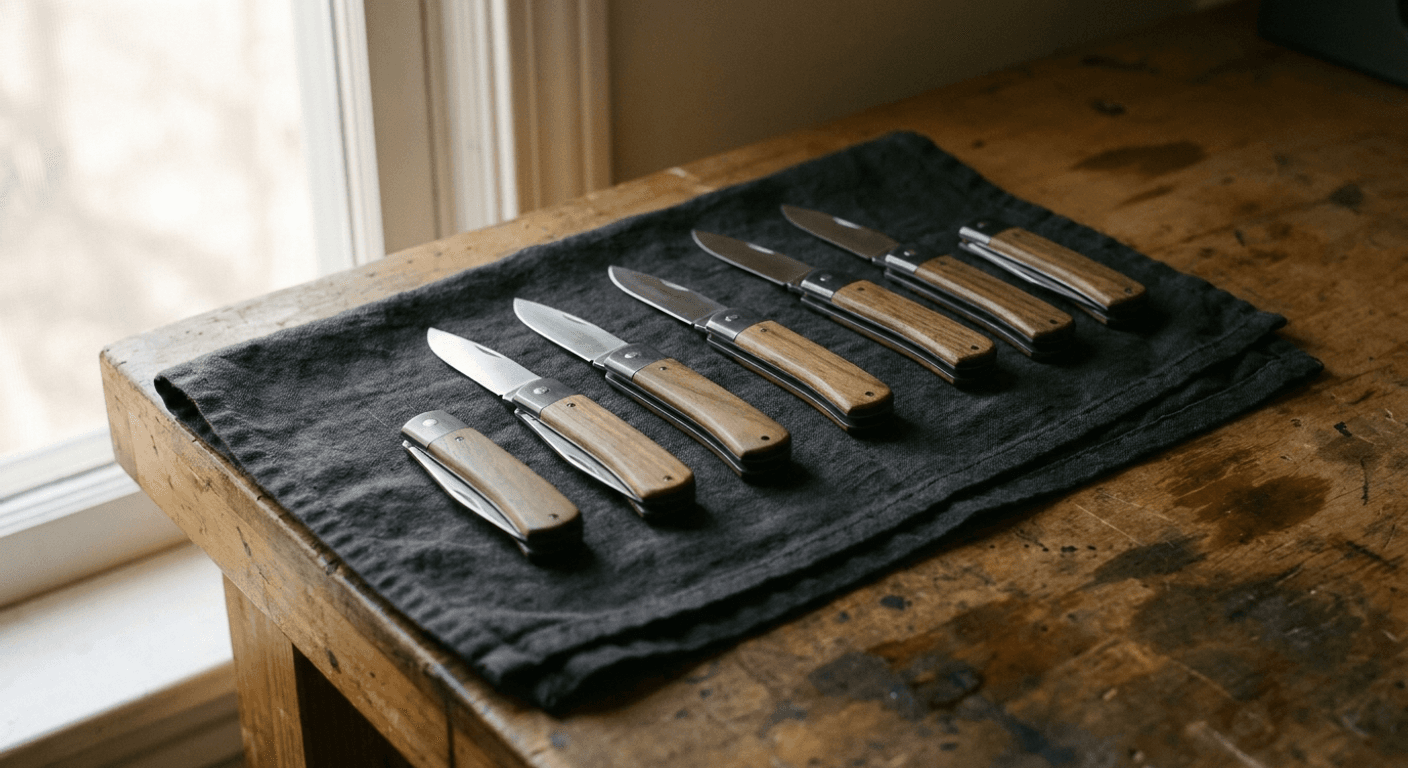
Open carry of a knife is generally lawful in Alaska, subject to place-based restrictions such as the school-property rule discussed below, and its concealed-carry rule for most adults turns on disclosure and location rather than a flat ban. Alaska Stat. § 11.61.220 exempts an "ordinary pocket knife" from its concealed deadly weapon offense entirely, and for other deadly weapons, an adult 21 or older commits an offense by concealing one either by failing to disclose it (or refusing to let an officer secure it) when a peace officer makes contact, or by carrying it concealed inside another person's residence without that resident's express permission. Adults under 21 face a flatter rule: concealed carry of any deadly weapon other than an ordinary pocket knife is an offense outright, with no disclosure element. Alaska also has express statewide knife preemption: municipalities cannot regulate knife possession, sale, or carrying except within four narrow carve-outs.
Jurisdiction scope: This page covers Alaska state law only, principally Alaska Stat. §§ 11.61.210, 11.61.220, 11.81.900, and 29.35.145. It does not cover the details of the four AS 29.35.145(b) municipal carve-outs beyond a summary, or Alaska's parole-conditions statute (AS 33.16.150), which sets a separate 3-inch pocketknife definition that applies only to people on parole.
Is it legal to carry a knife openly in Alaska?
Yes, outside the restricted places discussed below. Alaska Stat. Title 11's general weapons-misconduct offenses for carrying a knife are all framed around concealment, so open carry is not itself an offense. That is not true of the chapter's place-based restrictions: AS 11.61.210(a)(7) bars possessing a deadly weapon, including a knife, on school property and at school-sponsored events regardless of whether it is concealed. That restriction is covered in full below.
Concealed carry: disclosure and residence duties for adults, a flat ban under 21
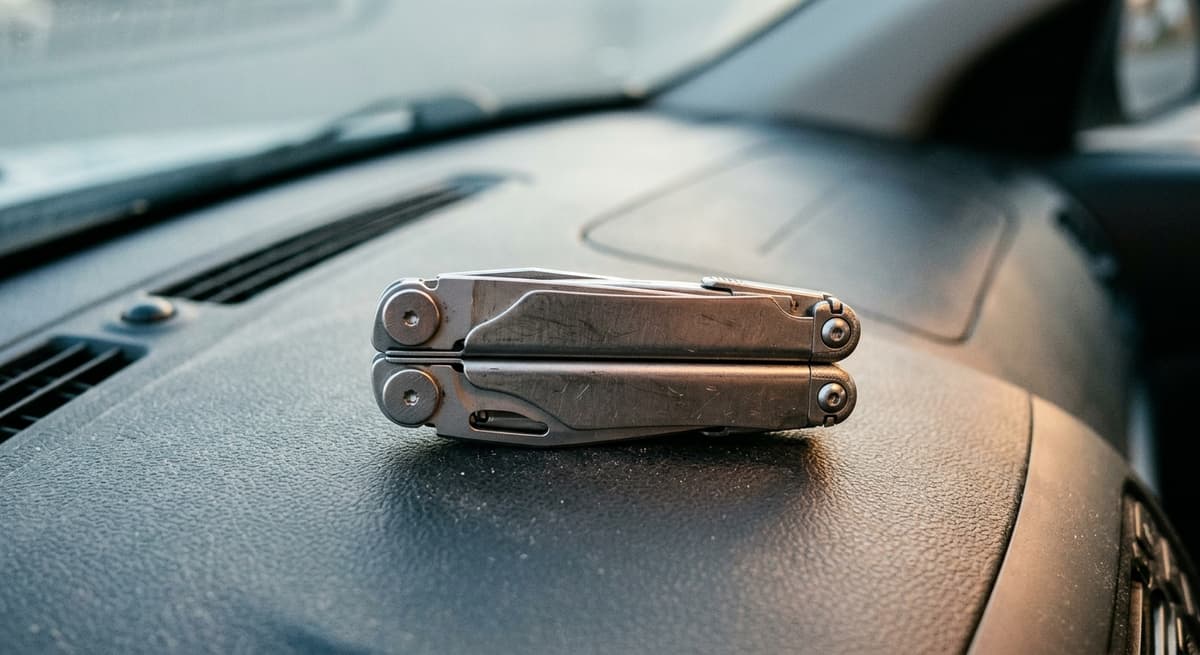
Alaska Stat. § 11.61.220(a)(1) makes it misconduct involving weapons in the fifth degree, a class B misdemeanor, for a person 21 or older to knowingly possess a deadly weapon, "other than an ordinary pocket knife or a defensive weapon," concealed on the person, under either of two branches. Branch (A) applies if, when contacted by a peace officer, the person fails to immediately disclose that possession or fails to let the officer secure the weapon. Branch (B) applies independently of any police contact: it covers a weapon concealed on the person within the residence of another person, unless the person has first obtained the express permission of an adult residing there to bring a concealed deadly weapon into the residence. An ordinary pocket knife is exempt from this offense entirely, but a non-exempt deadly weapon, such as a fixed-blade knife, can become an offense to conceal through either branch.
Alaska Stat. § 11.81.900 defines "deadly weapon" broadly, as "any firearm, or anything designed for and capable of causing death or serious physical injury, including a knife, an axe, a club, metal knuckles, or an explosive." That definition is what pulls ordinary knives into § 11.61.220's coverage, subject to the pocket-knife exemption.
For a person under 21, § 11.61.220(a)(6) removes the disclosure element: concealed carry of any deadly weapon other than an ordinary pocket knife is an offense outright. Two affirmative defenses apply: being in the person's own dwelling or on land the person owns or leases that is appurtenant to the dwelling, or being actually engaged in lawful hunting, fishing, trapping, or another lawful outdoor activity that necessarily involves carrying a weapon for personal protection.
Switchblades, gravity knives, and minors
Alaska's weapons-misconduct chapter does not ban adult possession of a switchblade or gravity knife outright. Instead, two statutes target minors specifically. Alaska Stat. § 11.61.220(a)(3) makes it misconduct involving weapons in the fifth degree for an unemancipated minor under 16 to possess a firearm, switchblade, or gravity knife without a parent's or guardian's consent. Alaska Stat. § 11.61.210(a)(5) separately makes it misconduct involving weapons in the fourth degree, a class A misdemeanor, to sell or transfer a switchblade or gravity knife to a person under 18 without the prior written consent of that person's parent or guardian.
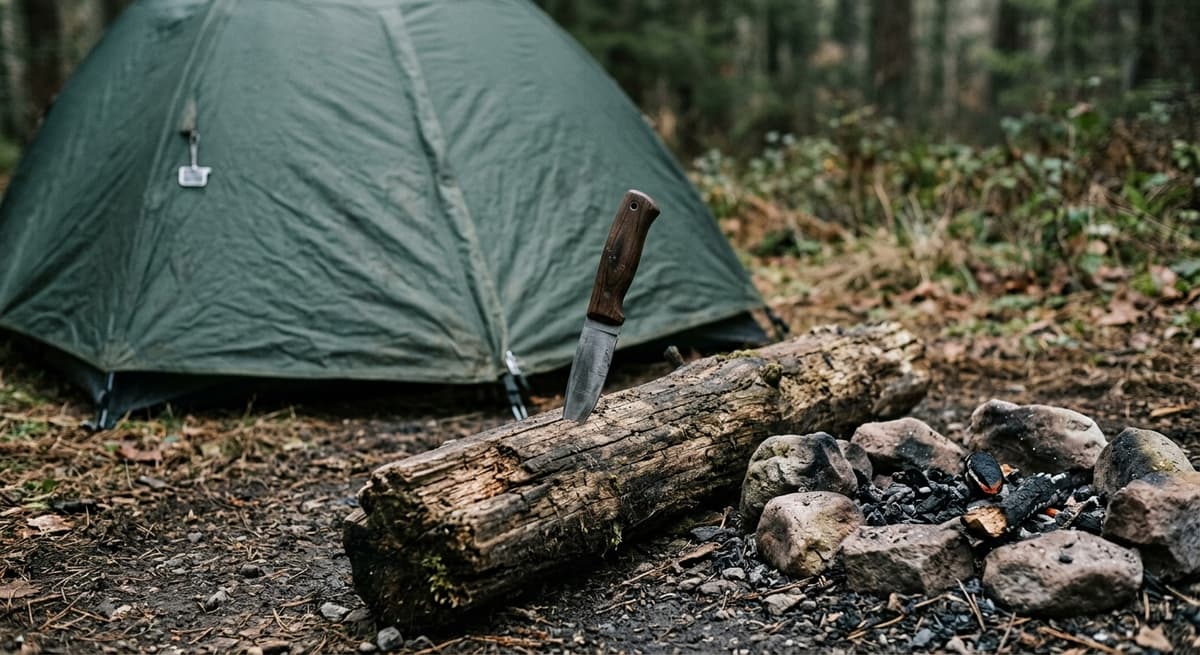
Alaska's own definitions of these terms, in § 11.81.900, carry the same carve-out Congress added to the federal switchblade definition in 2009: a "switchblade" is a knife with a blade that opens automatically by pressure on a button or device in the handle, but the definition expressly does not include a knife with a spring, detent, or other mechanism that requires hand, wrist, or arm exertion on the blade to overcome a closure bias. "Gravity knife" carries the same exclusion for a blade that opens by gravity or centrifugal force.
Restricted places
Alaska Stat. § 11.61.210(a)(7) bars a person other than a student from possessing a deadly weapon, which includes a knife, within the buildings, grounds, or parking lot of a public or private preschool, elementary, junior high, or secondary school, on a school bus, or at a school-sponsored event, without the permission of the school's chief administrative officer. That paragraph carries its own exceptions, all limited to a person 21 or older: such a person may keep a deadly weapon other than a loaded firearm in the trunk of a vehicle, or encased in a closed container in the vehicle, on school property; may possess a defensive weapon; and may carry an unloaded firearm while traversing school premises in a rural area to enter public or private land open to hunting, but only where the school board with jurisdiction has elected to have that exemption apply. Paragraph (a)(8) sets the parallel rule for students, where the administrative officer's permission cannot extend to a firearm at all. Section 11.61.220(a)(4) separately bars a firearm specifically (not a knife) within certain child care facilities, court facilities, and state-funded domestic violence or sexual assault shelters.
Does Alaska preempt local knife ordinances?
Yes. Alaska Stat. § 29.35.145, "Regulation of firearms and knives," reserves the authority to regulate firearms and knives to the state: except as specifically provided by statute, a municipality may not enact or enforce an ordinance regulating the possession, ownership, sale, transfer, use, carrying, transportation, licensing, taxation, or registration of firearms or knives. The section sits in Title 29's municipal-government provisions rather than Title 11's weapons-misconduct chapter, and it applies to both home rule and general law municipalities.
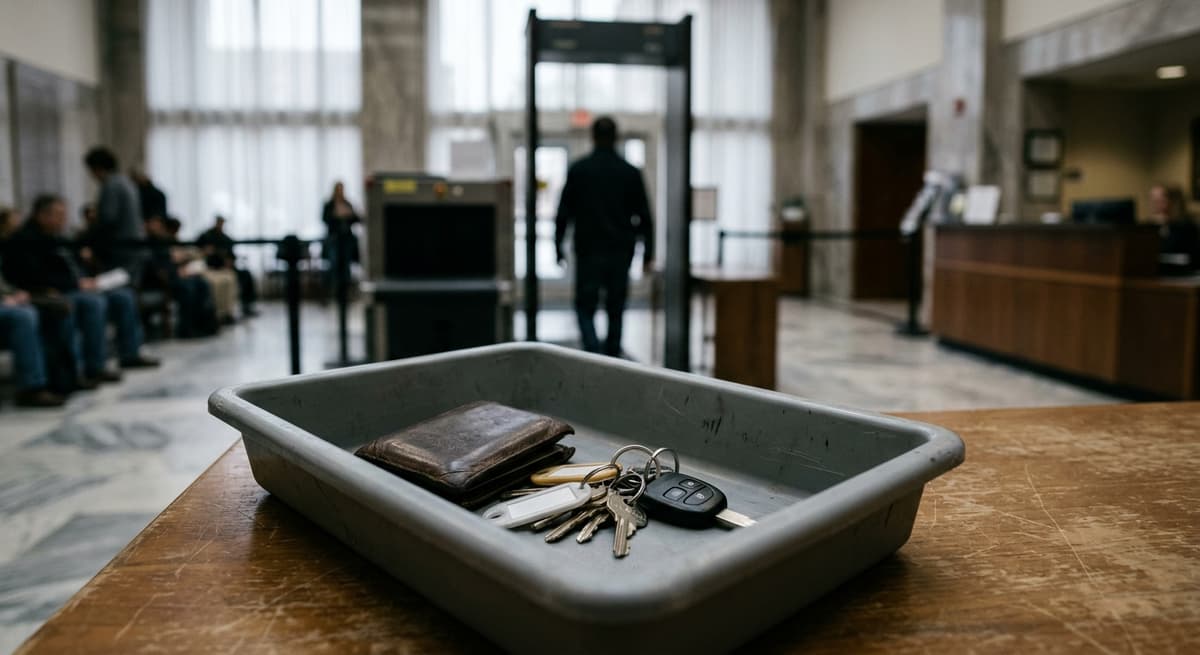
Subsection (b) leaves municipalities four narrow carve-outs: an ordinance that duplicates state law and carries the same penalty; restrictions on discharging a firearm; zoning that governs where firearms or knives may be sold, so long as a knife seller is not treated more restrictively than other businesses in the same zone; and a ban on carrying firearms or knives into the restricted access area of a municipal government building, provided the municipality posts notice of the prohibition at each entrance.
Federal law: what it does and does not reach
Federal law does not ban an individual from owning or carrying a switchblade. The Federal Switchblade Act, 15 U.S.C. §§ 1241 to 1245, instead regulates interstate commerce in switchblade knives, barring their manufacture, sale, transport, or introduction into interstate commerce, and, in 15 U.S.C. § 1245 makes it a federal offense to knowingly possess, manufacture, sell, or import a ballistic knife in or affecting interstate commerce or within federal territorial jurisdiction. Sections 1242 and 1243, the two federal offenses, do not apply to certain knives and people under 15 U.S.C. § 1244. A 2009 amendment, § 1244(5), exempts from those prohibitions any knife with a spring, detent, or other closure-bias mechanism requiring hand, wrist, or arm exertion on the blade itself to assist opening, the same carve-out Alaska's own switchblade and gravity-knife definitions use. A separate exemption, § 1244(4), covers a person with only one arm possessing or carrying a switchblade with a blade three inches or less. None of this changes what Alaska allows for ordinary carry; state law governs that question within Alaska.
Disclaimer: This article provides general legal information about Alaska's knife laws as of September 2026. It is not legal advice. Consult a lawyer licensed in Alaska for advice about a specific situation. Even where a knife is lawful to carry under the statutes discussed here, a peace officer's on-the-spot judgment and local circumstances can still affect an encounter.
For a state-by-state comparison, see knife laws by state. Alaska's self-defense statutes are covered separately on the Alaska self-defense laws page.
Statutes cited reflect their in-force version as of 2026-09-18. Last updated: 2026-09-18.
Frequently Asked Questions
Is it legal to carry a knife in Alaska?
Open carry of a knife is generally lawful; Alaska's weapons-misconduct chapter frames its carry offenses around concealment, though place-based restrictions such as the school-property rule apply regardless of concealment. Concealed carry of an ordinary pocket knife is exempt from the state's concealed deadly weapon offense entirely. Concealing any other deadly weapon is an offense for an adult 21 or older if the person fails to disclose it, or refuses to let an officer secure it, when contacted by a peace officer, or if it is concealed inside another person's residence without that resident's express permission; for someone under 21, concealed carry of a non-exempt deadly weapon is an offense outright.
Are switchblades legal in Alaska?
Alaska has no statute banning adult possession of a switchblade outright. The restrictions that exist target minors: an unemancipated minor under 16 cannot possess a switchblade or gravity knife without parental consent, and selling or transferring one to a person under 18 without written parental consent is a class A misdemeanor.
Can a minor carry a pocket knife in Alaska?
Alaska's minor-specific restriction names only firearms, switchblades, and gravity knives. An ordinary pocket knife is not on that list, and it is also exempted from the general adult concealed-weapon offense.
Does Alaska have statewide knife preemption?
Yes. AS 29.35.145 reserves the regulation of firearms and knives to the state, so a municipality generally cannot enact or enforce an ordinance regulating knife possession, sale, carrying, or registration. Municipalities keep four narrow carve-outs: ordinances that duplicate state law with the same penalty, firearm-discharge restrictions, sale-location zoning that does not single out knife dealers, and posted restricted-access areas of municipal government buildings.
Updates
Clarified that Alaska's school-property exceptions apply only to people 21 or older and that the unloaded-firearm traversing exception is limited to rural schools whose board has opted in, and listed the full under-21 outdoor-activity defense.
Independently fact-checked against the cited primary sources
The Law Behind This Article
This article rests on the statutory provisions below, held in our own legal record and retrieved from the official source. Tap a section to read the operative text.
Alaska Statutes, Title 11. Criminal Law, Chapter 61. Offenses Against Public Order
§ 11.61.220Misconduct involving weapons in the fifth degreeIn forcecited in 2 of our articles
(a) A person commits the crime of misconduct involving weapons in the fifth degree if the person (1) is 21 years of age or older and knowingly possesses a deadly weapon, other than an ordinary pocket knife or a defensive weapon, (A) that is concealed on the person, and, when contacted by a peace officer, the person fails to (i) immediately inform the peace officer of that possession; or (ii) allow the peace officer to secure the deadly weapon, or fails to secure the weapon at the direction of the peace officer, during the duration of the contact; (B) that is concealed on the person within the residence of another person unless the person has first obtained the express permission of an adult residing there to bring a concealed deadly weapon within the residence; (2) knowingly possesses a loaded firearm on the person in any place where intoxicating liquor is sold for consumption on the premises; (3) being an unemancipated minor under 16 years of age, possesses a firearm, switchblade, or gravity knife without the consent of a parent or guardian of the minor; (4) knowingly possesses a firearm (A) within the grounds of or on a parking lot immediately adjacent to an entity, other than a…
Official text (excerpt) · last checked 2026-09-23 · Read the full text in our law library · Verify at akleg.gov
Cited in 25 court opinions in our collectionLatest citing opinion in our collection: 2024
Opinions citing this section in our collection:
- De Nardo v. State (Court of Appeals of Alaska 1991, 819 P.2d 903)“…rd-degree weapons misconduct (carrying a concealed weapon), AS 11.61.220(a)(1). He appeals his conviction, conte…”
- Liddicoat v. State (Court of Appeals of Alaska 2011, 268 P.3d 355)“…commits the crime of fifth-degree weapons misconduct under AS 11.61.220(a)(1)(A)G) if the person: (1) is 21 y…”
- Anchorage v. Richards (Court of Appeals of Alaska 1982, 654 P.2d 797)“…ption that AMC 8.05.070 was in irreconcilable conflict with AS 11.61.220 which prohibits someone from knowingly…”
Identified automatically from the court opinions citing this section — not a ranking of which case controls.
Also relied on in: Alaska Pepper Spray and Stun Gun Laws (2026)
§ 11.61.210Misconduct involving weapons in the fourth degreeIn forcecited in 2 of our articles
(a) A person commits the crime of misconduct involving weapons in the fourth degree if the person (1) possesses on the person, or in the interior of a vehicle in which the person is present, a firearm when the person's physical or mental condition is impaired as a result of the introduction of an intoxicating liquor or a controlled substance into the person's body in circumstances other than described in AS 11.61.200(a)(7); (2) discharges a firearm from, on, or across a highway; (3) discharges a firearm with reckless disregard for a risk of damage to property or a risk of physical injury to a person under circumstances other than those described in AS 11.61.195(a)(3)(A); (4) manufactures, possesses, transports, sells, or transfers metal knuckles; (5) sells or transfers a switchblade or a gravity knife to a person under 18 years of age without the prior written consent of the person's parent or guardian; (6) knowingly sells a firearm or a defensive weapon to a person under 18 years of age; (7) other than a preschool, elementary, junior high, or secondary school student, knowingly possesses a deadly weapon or a defensive weapon, without the permission of the chief administrative…
Official text (excerpt) · last checked 2026-07-31 · Read the full text in our law library · Verify at akleg.gov
Cited in 22 court opinions in our collectionLatest citing opinion in our collection: 2024
Opinions citing this section in our collection:
- Dyer v. State (Court of Appeals of Alaska 1983, 666 P.2d 438)“…ncident, Seimears was charged with two criminal violations: AS 11.61.210(a)(1) (class A misdemeanor; misconduct…”
- Pedersen v. Blythe (Alaska Supreme Court 2012, 292 P.3d 182)“…ce, not participating. . AS 11.61.195(a)(3)(B). . AS 11.61.210(a)(2). . AS 11.41.220(a)(1)(A).…”
- Alfred v. State (Court of Appeals of Alaska 1988, 758 P.2d 130)“…in the second degree for recklessly discharging a firearm. AS 11.61.210(a)(1), (3). Wassillie L. Gregory pled n…”
Identified automatically from the court opinions citing this section — not a ranking of which case controls.
Alaska Statutes, Title 29. Municipal Government, Chapter 35. Municipal Powers and Duties
§ 29.35.145Regulation of firearms and knivesIn forcecited in 2 of our articles
(a) The authority to regulate firearms and knives is reserved to the state, and, except as specifically provided by statute, a municipality may not enact or enforce an ordinance regulating the possession, ownership, sale, transfer, use, carrying, transportation, licensing, taxation, or registration of firearms or knives. (b) Municipalities may enact and enforce ordinances (1) that are identical to state law and that have the same penalty as provided for by state law; (2) restricting the discharge of firearms in any portion of their respective jurisdictions where there is a reasonable likelihood that people, domestic animals, or property will be jeopardized; ordinances enacted or enforced under this paragraph may not abridge the right of the individual guaranteed by art. I, sec.
Official text (excerpt) · last checked 2026-07-31 · Read the full text in our law library · Verify at akleg.gov
Alaska Statutes, Title 11. Criminal Law, Chapter 81. General Provisions
§ 11.81.900DefinitionsIn forcecited in 2 of our articles
(a) For purposes of this title, unless the context requires otherwise, (1) a person acts intentionally with respect to a result described by a provision of law defining an offense when the person's conscious objective is to cause that result; when intentionally causing a particular result is an element of an offense, that intent need not be the person's only objective; (2) a person acts knowingly with respect to conduct or to a circumstance described by a provision of law defining an offense when the person is aware that the conduct is of that nature or that the circumstance exists; when knowledge of the existence of a particular fact is an element of an offense, that knowledge is established if a person is aware of a substantial probability of its existence, unless the person actually believes it does not exist; a person who is unaware of conduct or a circumstance of which the person would have been aware had that person not been intoxicated acts knowingly with respect to that conduct or circumstance; (3) a person acts recklessly with respect to a result or to a circumstance described by a provision of law defining an offense when the person is aware of and consciously disregards…
Official text (excerpt) · last checked 2026-07-31 · Read the full text in our law library · Verify at akleg.gov
Cited in 377 court opinions in our collectionLatest citing opinion in our collection: 2026
Opinions citing this section in our collection:
- Juneby v. State (Court of Appeals of Alaska 1982, 641 P.2d 823)“…ition of “serious physical injury” under the provisions of. AS 11.81.900. 29 In the present cas…”
- Neitzel v. State (Court of Appeals of Alaska 1982, 655 P.2d 325)“…ally” perform an act, such as intentionally shooting a gun. AS 11.81.900 provides in relevant part: (a) f…”
- In the Disciplinary Matter Involving Buckalew (Alaska Supreme Court 1987, 731 P.2d 48)“…t." ABA Standards, Definitions, ABA/BNA at 01:807. Accord AS 11.81.900(a)(1) (defining criminal intent as a co…”
Identified automatically from the court opinions citing this section — not a ranking of which case controls.
Alaska Statutes, Title 33. Probation, Prisons, Pardons, and Prisoners, Chapter 16. Parole Administration
§ 33.16.150Conditions of paroleIn forcecited in 2 of our articles
(a) As a condition of parole, a prisoner released on special medical, discretionary, or mandatory parole (1) shall obey all state, federal, or local laws or ordinances, and any court orders applicable to the parolee; (2) shall make diligent efforts to maintain steady employment or meet family obligations; (3) shall, if involved in education, counseling, training, or treatment, continue in the program unless granted permission from the parole officer assigned to the parolee to discontinue the program; (4) shall report (A) upon release to the parole officer assigned to the parolee; (B) at other times, and in the manner, prescribed by the board or the parole officer assigned to the parolee that accommodate the diligent efforts of the parolee to secure and maintain steady employment or to participate in educational courses or training programs; (5) shall reside at a stated place and not change that residence without notifying, and receiving permission from, the parole officer assigned to the parolee; (6) shall remain within stated geographic limits unless written permission to depart from the stated limits is granted the parolee; (7) may not use, possess, handle, purchase, give,…
Official text (excerpt) · last checked 2026-07-31 · Read the full text in our law library · Verify at akleg.gov
Cited in 17 court opinions in our collectionLatest citing opinion in our collection: 2026
Opinions citing this section in our collection:
- State, Department of Corrections v. Cowles (Alaska Supreme Court 2006, 151 P.3d 353)“…including special conditions such as therapy or treatment. AS 33.16.150. Parole officers may also impose specia…”
- Smith v. State, Department of Corrections (Alaska Supreme Court 1994, 872 P.2d 1218)“…s fourteen standard conditions of parole, inconsistent with AS 33.16.150 which mandates one standard condition,…”
- State v. Staael (Court of Appeals of Alaska 1991, 807 P.2d 513)“…A. general — a single condition statutorily mandated by AS 33.16.150(a) requiring the parolee to refrain fro…”
Identified automatically from the court opinions citing this section — not a ranking of which case controls.
United States Code Title 15
§ 1241DefinitionsIn forcecited in 52 of our articles
As used in this chapter— The term “interstate commerce” means commerce between any State, Territory, possession of the United States, or the District of Columbia, and any place outside thereof. The term “switchblade knife” means any knife having a blade which opens automatically— by hand pressure applied to a button or other device in the handle of the knife, or by operation of inertia, gravity, or both.
Official text (excerpt) · last checked 2026-07-28 · Read the full text in our law library · Verify at uscode.house.gov
Cited in 15 court opinions in our collectionLatest citing opinion in our collection: 2014
Opinions citing this section in our collection:
- Stewart A. Taylor, D/B/A Taylor Cutlery Mfg. Co. v. United States of America (Court of Appeals for the Sixth Circuit 1988, 848 F.2d 715)“…Service, are not switchblade knives within the meaning of 15 U.S.C. § 1241 (b) and 19 C.F.R. § 1295 (a)(1). The d…”
- Crowley Cutlery Company v. United States of America and Commissioner of Customs of the United States Customs Service (Court of Appeals for the Seventh Circuit 1988, 849 F.2d 273)“…Illinois for a declaration that the Switchblade Knife Act, 15 U.S.C. §§ 1241 et seq., which forbids th…”
- Edna Fall, as Administratrix of the Estate of Phillip Fall, Deceased v. Esso Standard Oil Company (Court of Appeals for the Fifth Circuit 1962, 297 F.2d 411)“…25 S.Ct. 158 , 49 L.Ed. 363 . Section 1 of the Act, 15 U.S.C.A. § 1241 (b), defines the term “switchblade knif…”
Identified automatically from the court opinions citing this section — not a ranking of which case controls.
Also relied on in: Knife Laws by State (2026): Carry Rules, Blade Limits, Penalties, Alabama Knife Laws (2026): What Is Legal to Carry, Arizona Knife Laws (2026): Carry Rules and Preemption
§ 1244ExceptionsIn forcecited in 52 of our articles
Sections 1242 and 1243 of this title shall not apply to— any common carrier or contract carrier, with respect to any switchblade knife shipped, transported, or delivered for shipment in interstate commerce in the ordinary course of business; the manufacture, sale, transportation, distribution, possession, or introduction into interstate commerce, of switchblade knives pursuant to contract with the Armed Forces; the Armed Forces or any member or employee thereof acting in the performance of his duty; the possession, and transportation upon his person, of any switchblade knife with a blade three inches or less in length by any individual who has only one arm; or a knife that contains a spring, detent, or other mechanism designed to create a bias toward closure of the blade and that requires exertion applied to the blade by hand, wrist, or arm to overcome the bias toward closure to assist in opening the knife.
Official text (excerpt) · last checked 2026-07-28 · Read the full text in our law library · Verify at uscode.house.gov
Also relied on in: Arkansas Knife Laws (2026): Intent-Based Carry Rules, California Knife Laws (2026): Four Blade-Length Rules, Colorado Knife Laws (2026): Concealed Carry and Exceptions
§ 1245Ballistic knivesIn forcecited in 50 of our articles
Whoever in or affecting interstate commerce, within any Territory or possession of the United States, within Indian country (as defined in section 1151 of title 18), or within the special maritime and territorial jurisdiction of the United States (as defined in section 7 of title 18), knowingly possesses, manufactures, sells, or imports a ballistic knife shall be fined as provided in title 18, or imprisoned not more than ten years, or both. Whoever possesses or uses a ballistic knife in the commission of a Federal crime of violence shall be fined as provided in title 18, or imprisoned not less than five years and not more than ten years, or both. The exceptions provided in paragraphs (1), (2), and (3) of section 1244 of this title with respect to switchblade knives shall apply to ballistic knives under subsection (a) of this section. As used in this section, the term “ballistic knife” means a knife with a detachable blade that is propelled by a spring-operated mechanism.
Official text (excerpt) · last checked 2026-07-28 · Read the full text in our law library · Verify at uscode.house.gov
Cited in 2 court opinions in our collectionLatest citing opinion in our collection: 2008
Opinions citing this section in our collection:
- ALCANTAR (Board of Immigration Appeals 1994, 20 I. & N. Dec. 801)“…ed by an adult, would be felony and crime of violence); cf. 15 U.S.C. § 1245(b) (1988) (use of ballistic knife in co…”
- United States v. Polizzi (District Court, E.D. New York 2008, 549 F. Supp. 2d 308)“…8 Trust in l’estraint of import trade 3 months 15 U.S.C. § 1245 (b) Possession/use of a ballistic knife…”
Identified automatically from the court opinions citing this section — not a ranking of which case controls.
Also relied on in: Connecticut Knife Laws (2026): Open and Concealed Carry, Delaware Knife Laws (2026): Carry, Switchblades, and Bans, D.C. Knife Laws (2026): Possession and Carry Rules
Search our full record of US law — 2.1 million sections, every state + federal →
Sources and References
- Alaska Stat. 11.61.220 - Misconduct involving weapons in the fifth degree (concealed deadly weapon, ordinary pocket knife exempt)(akleg.gov).gov
- Alaska Stat. 11.61.210 - Misconduct involving weapons in the fourth degree (switchblade/gravity knife sale to a minor, school-grounds possession)(akleg.gov).gov
- Alaska Stat. 11.81.900 - Definitions (deadly weapon, switchblade, gravity knife)(akleg.gov).gov
- Alaska Stat. 29.35.145 - Regulation of firearms and knives (statewide knife preemption, four municipal carve-outs at (b))(akleg.gov).gov
- 15 U.S.C. 1241-1245 - Federal Switchblade Act, interstate commerce and importation scope(law.cornell.edu)
- 15 U.S.C. 1244 - exceptions, including the 2009 assisted-opening carve-out and the one-arm exception(law.cornell.edu)