
South Dakota
South Dakota Landlord-Tenant Recording Laws
Independently fact-checked against primary sources (last audited August 15, 2026). · Reviewed by the RecordingLaw editorial team. · Law checked current as of August 15, 2026. · 7 primary sources cited on this page. How we verify our legal content
South Dakota is a one-party consent state under SDCL 23A-35A-20, so any party to a conversation may record it without notifying the other. Tenants can record landlord conversations they participate in, and landlords cannot install hidden cameras inside a tenant-occupied rental unit.
South Dakota's one-party consent law gives tenants the right to record conversations with their landlord without informing them. Under SDCL 23A-35A-20, any party to a conversation can record it. This is particularly valuable in landlord-tenant relationships, where verbal agreements, maintenance promises, and disputed interactions are common.
This guide covers tenant and landlord recording rights, security camera rules for rental properties, entry notification requirements, and how recordings can be used as evidence in South Dakota housing disputes.
Tenant Recording Rights
Recording Conversations With Your Landlord
As a one-party consent state, South Dakota allows you to record any conversation you participate in. In the landlord-tenant context, this means you can record:
- In-person conversations about rent, repairs, lease terms, or any other topic
- Phone calls with your landlord or property manager
- Meetings with landlord representatives about lease renewals or disputes
- Move-in and move-out inspections that you attend
- Conversations about security deposit deductions or refund disputes
You do not need to tell your landlord you are recording. Your participation in the conversation satisfies the consent requirement.
Why Tenants Record Landlord Interactions
Common reasons South Dakota tenants record interactions with landlords include:
- Documenting verbal repair agreements. When a landlord promises to fix something, a recording captures the exact commitment.
- Preserving evidence of harassment. Recordings provide direct proof of landlord harassment, threats, or discriminatory statements.
- Recording illegal entry. If a landlord enters without proper notice, audio or video evidence supports a complaint.
- Protecting against retaliatory conduct. After filing a complaint, recordings can document retaliatory behavior.
- Disputing security deposit deductions. Move-out inspection recordings help establish the condition of the unit.
What Tenants Cannot Record
Tenants cannot:
- Record conversations between the landlord and other people that the tenant is not part of
- Plant a hidden recording device to capture conversations the tenant is not present for
- Record in areas where the landlord or others have a privacy expectation (the landlord's office bathroom, for example)
- Install hidden cameras aimed at common areas in a multi-unit building without authorization
Landlord Recording Rights
Security Cameras in Common Areas
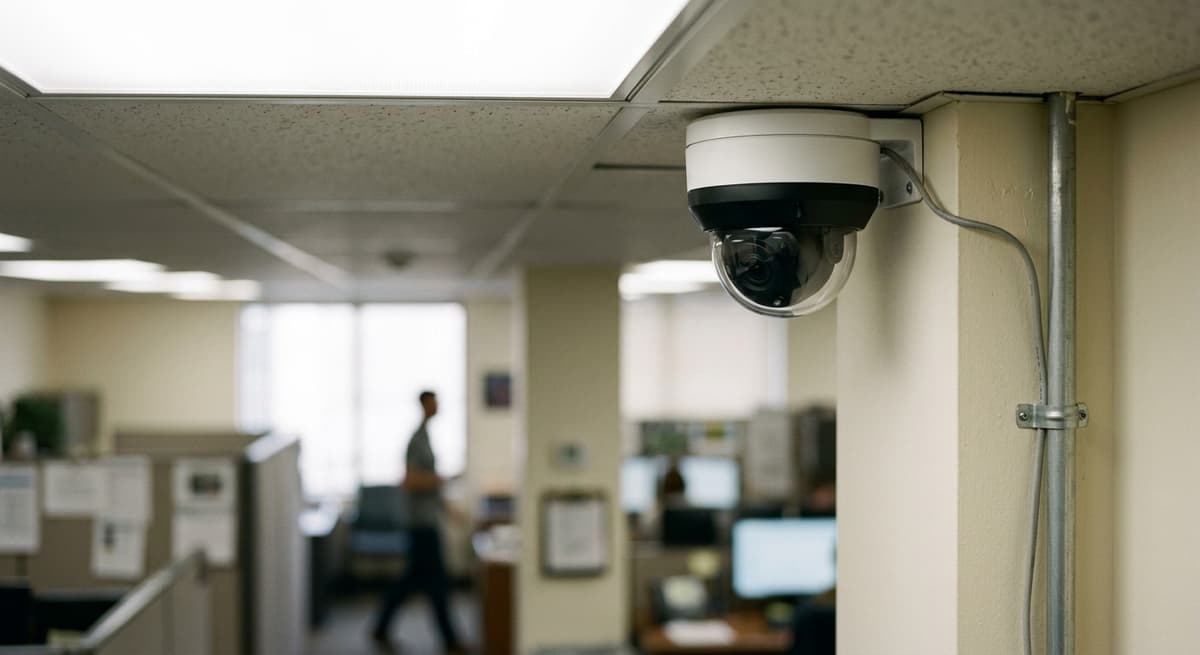
Landlords of multi-unit properties can install security cameras in common areas for safety and security purposes. Permitted locations include:
- Exterior entrances and exits
- Lobbies and reception areas
- Hallways and stairwells
- Parking lots and garages
- Laundry rooms
- Storage areas
- Pool and recreation areas
Cameras Inside Tenant-Occupied Units
Landlords cannot install cameras inside tenant-occupied rental units without the tenant's explicit consent. SDCL 22-21-1 prohibits installing any surveillance device in a private place without the consent of the person entitled to privacy. A tenant's rental unit is a private place.
A landlord who installs a hidden camera inside a tenant's apartment faces:
- Criminal charges under SDCL 22-21-1 (Class 1 misdemeanor, up to 1 year jail, $2,000 fine)
- Potential wiretapping charges under SDCL 23A-35A-20 if the camera records audio (Class 5 felony, up to 5 years prison, $10,000 fine)
- Civil liability for common-law invasion of privacy (intrusion upon seclusion), a tort South Dakota courts recognize independent of any criminal statute
Audio Recording by Landlords
Landlords can record their own conversations with tenants under one-party consent. However, security cameras in common areas that capture audio of tenant conversations the landlord is not part of could raise wiretapping concerns. Many landlords choose video-only surveillance in common areas to avoid this issue.
Entry Notification Requirements
SDCL 43-32-32: Landlord Entry Rules
South Dakota law provides clear rules about when landlords can enter a rental unit. Under SDCL 43-32-32, except in emergencies or when impracticable:
- Landlords must provide reasonable notice of intent to enter
- 24 hours written notice is presumed reasonable unless the lease provides alternate methods
- The notice must specify the date(s) of entry, a time period during normal business hours, and the purpose of the entry
- The notice must include a means for the tenant to request rescheduling
Recording Landlord Entries
Tenants can use security cameras or recording devices to document landlord entries into their rental units. This is valuable for:
- Confirming whether the landlord entered during the specified time period
- Documenting what the landlord did inside the unit
- Providing evidence if the landlord entered without proper notice
- Recording move-in and move-out conditions
A doorbell camera or interior camera that the tenant controls is lawful within the tenant's own unit.
Tenant Security Cameras

Installing Cameras in Your Rental
South Dakota tenants can install security cameras inside their own rental units, including:
- Doorbell cameras on their unit's entrance
- Interior cameras in common living areas
- Window-facing cameras to monitor the exterior
Before installing cameras, tenants should:
- Check the lease for restrictions on camera installation or alterations to the property
- Avoid drilling holes or making permanent modifications without landlord approval
- Ensure cameras are pointed at areas within or immediately adjacent to the tenant's unit
- Not point cameras directly into other tenants' units or private spaces
Audio on Tenant Cameras
The same rules that apply to all security camera audio in South Dakota apply here. If the camera captures your own conversations, one-party consent is satisfied. If it captures conversations between others that you are not part of, the audio component carries legal risk under SDCL 23A-35A-20.
Security Deposits and Recording
Move-In and Move-Out Inspections
Recording move-in and move-out inspections is one of the most practical uses of recording rights in landlord-tenant relationships. A video or audio recording of the inspection creates clear, date-stamped evidence of the unit's condition.
South Dakota law under SDCL 43-32-24 requires landlords to return security deposits within twenty-one days after the tenant moves out and gives proper notice. If the landlord withholds any portion, they must provide an itemized list of damages and estimated costs.
A recording of the move-out inspection can help:
- Prove the condition of the unit at move-out
- Contest inflated or fabricated damage claims
- Document pre-existing damage that the landlord attributes to you
- Support a small claims court case for return of the deposit
Small Claims Court
Recordings are commonly used in South Dakota small claims court for security deposit disputes. To use a recording as evidence:
- Keep the original file unedited
- Note the date, time, and circumstances of the recording
- Bring the device or a reliable copy to court
- Be prepared to authenticate the recording (testify about when and how it was made)
Eviction Proceedings and Recordings
Recordings can be relevant in South Dakota eviction proceedings. Tenants may use recordings to:
- Demonstrate that the landlord failed to maintain habitable conditions
- Show that the eviction is retaliatory
- Prove that the landlord breached the lease
- Document verbal agreements that modify the lease terms
Landlords may use recordings to:
- Document lease violations by tenants
- Preserve evidence of disruptive behavior
- Record conversations about overdue rent or lease breaches
Fair Housing Considerations
Recordings of landlord statements can be powerful evidence in fair housing complaints. The Fair Housing Act prohibits discrimination in housing based on race, color, religion, sex, national origin, familial status, and disability.
If a landlord makes discriminatory statements during a conversation you are part of, your recording can be submitted to:
- The U.S. Department of Housing and Urban Development (HUD)
- South Dakota's Division of Human Rights
- A fair housing attorney
More South Dakota Recording Laws
Audio Recording | Video Recording | Voyeurism & Hidden Cameras | Workplace Recording | Recording Police | Phone Call Recording | Security Cameras | Recording in Public | Landlord-Tenant | Dashcam Laws | Schools | Medical Recording
Back to South Dakota Recording Laws
More South Dakota Recording Topics
More South Dakota Laws
Frequently Asked Questions
Can I record my landlord in South Dakota?
Yes. South Dakota is a one-party consent state under SDCL 23A-35A-20. You can record any conversation you participate in with your landlord, including phone calls, in-person discussions, and inspections. You do not need to inform your landlord that you are recording.
Can my landlord put cameras inside my apartment in South Dakota?
No. SDCL 22-21-1 prohibits installing surveillance devices in private places without consent. Your rental unit is a private place. A landlord who installs a camera inside your apartment without your consent faces criminal charges.
Can my landlord enter without notice in South Dakota?
Only in emergencies. Under SDCL 43-32-32, landlords must provide reasonable notice (24 hours written notice is presumed reasonable) before entering your unit. The notice must specify the date, time, and purpose of entry.
Can I install a security camera in my rental in South Dakota?
Yes. You can install security cameras inside your rental unit. Check your lease for restrictions on mounting hardware or alterations. Point cameras at your own space, not at other tenants' units or common areas without authorization.
Can I use a recording in a security deposit dispute in South Dakota?
Yes. Recordings of move-in and move-out inspections are commonly used in South Dakota small claims court to contest security deposit deductions. The recording must be authentic and relevant. Keep the original file unedited.
Updates
Removed a mismatched case citation (Gantvoort v. Ranschau, a divorce dispute over an attorney's handling of a spouse's secret recordings, where the invasion-of-privacy claim as litigated on appeal did not succeed) that had been cited as authority for a landlord's civil liability for a hidden camera in a tenant's unit, and restated that liability point without attributing it to an unrelated case.
Independently fact-checked against the cited primary sources; governing law re-checked for recent changes
Corrected the security deposit return deadline under SDCL 43-32-24: the statute gives landlords twenty-one days, not two weeks.
Governing law re-checked for recent changes
Reviewed and approved by an editor
The Law Behind This Article
This article rests on the statutory provisions below, held in our own legal record and retrieved from the official source. Tap a section to read the operative text.
South Dakota Codified Laws, Chapter 23A-35A: INTERCEPTION OF WIRE, ELECTRONIC, OR ORAL COMMUNICATIONS
§ 23A-35A-20Overhearing or recording communications, conversations, or jury deliberations by means of eavesdropping device as felony.In forcecited in 17 of our articles
Except as provided in § 23A-35A-21, a person is guilty of a Class 5 felony who is not: (1) A sender or receiver of a communication who intentionally and by means of an eavesdropping device overhears or records a communication, or aids, authorizes, employs, procures, or permits another to overhear or record, without the consent of either a sender or receiver of the communication; (2) A person present during a conversation or discussion who intentionally and by means of an eavesdropping device overhears or records the conversation or discussion, or aids, authorizes, employs, procures, or permits another to overhear or record, without the consent of a party to the conversation or discussion; or (3) A member of a jury who intentionally records or listens to by means of an eavesdropping device the deliberations of the jury or aids, authorizes, employs, procures, or permits another to record or listen.
Official text (excerpt) · last checked 2026-08-31 · Read the full text in our law library · Verify at sdlegislature.gov
Cited in 3 court opinions in our collectionLatest citing opinion in our collection: 2022
Opinions citing this section in our collection:
- State v. Woods (South Dakota Supreme Court 1985, 361 N.W.2d 620)“…ent fails. We next address the State’s argument that SDCL 23A-35A-20(2) exempts one party consent recordings…”
- State v. Braddock (South Dakota Supreme Court 1990, 452 N.W.2d 785)“…nsent recordings without prior court authorization” because SDCL 23A-35A-20 exempts from criminal liability a perso…”
- Gantvoort v. Ranschau (South Dakota Supreme Court 2022, 2022 S.D. 22)“…ff when no noise was detected in the room. 3. SDCL 23A-35A-20(1)–(2), which criminalizes recordings m…”
Identified automatically from the court opinions citing this section — not a ranking of which case controls.
Also relied on in: South Dakota Recording Laws (2026): One-Party Consent Rules, South Dakota Security Camera Laws, South Dakota Audio Recording Laws
South Dakota Codified Laws, Chapter 22-21: INVASIONS OF PRIVACY
§ 22-21-1Eavesdropping--Privacy--Misdemeanor.In forcecited in 14 of our articles
No person may, except as authorized by law: (1) Trespass on property with intent to subject anyone to eavesdropping or other surveillance in a private place; or (2) Install in any private place, without the consent of the person or persons entitled to privacy there, any device for observing, photographing, recording, amplifying, or broadcasting sounds or events in such place, or uses any such unauthorized installation. A person who violates this section is guilty of a Class 1 misdemeanor. Subdivision (2) does not apply to law enforcement officers, or to those acting under the direction of a law enforcement officer, while engaged in the performance of the officer's lawful duties.
Official text (excerpt) · last checked 2026-08-31 · Read the full text in our law library · Verify at sdlegislature.gov
Cited in 3 court opinions in our collectionLatest citing opinion in our collection: 2022
Opinions citing this section in our collection:
- State v. Olson (South Dakota Supreme Court 1981, 305 N.W.2d 852)“…9,1980, appellant was arraigned on four counts of violating SDCL 22-21-1(1) 1 and one count of viol…”
- State v. Reif (South Dakota Supreme Court 1992, 490 N.W.2d 511)“…d to "reasonably satisfy" the court that appellant violated SDCL 22-21-1(1) and that these activities were suffi…”
- Gantvoort v. Ranschau (South Dakota Supreme Court 2022, 2022 S.D. 22)“…Further, placing such a device is a class one misdemeanor. SDCL 22-21-1(2), provides in part that:…”
Identified automatically from the court opinions citing this section — not a ranking of which case controls.
Also relied on in: South Dakota Dashcam Laws, South Dakota Medical Recording Laws, South Dakota Laws on Recording in Public
South Dakota Codified Laws, Chapter 43-32: LEASE OF REAL PROPERTY
§ 43-32-24Return of security deposit after termination of tenancy--Withholding--Itemized accounting--Forfeiture of withholding rights--Punitive damages.In force
Every lessor of residential premises shall, within twenty-one days after the termination of the tenancy and receipt of the tenant's mailing address or delivery instructions, return the security deposit described in § 43-32-6.1 to the tenant or furnish to the tenant a written statement showing the specific reason for withholding the deposit, or any portion of the deposit. The lessor may withhold from the deposit only the amounts reasonably necessary to: (1) Remedy tenant defaults in the payment of: (a) Rent; and (b) Other funds due to the landlord pursuant to an agreement; and (2) Restore the premises to their condition at the commencement of the tenancy, ordinary wear and tear excepted. Within forty-five days after termination of the tenancy, upon request of the lessee, the lessor must provide the lessee with an itemized accounting of any deposit withheld. Any lessor of residential premises who fails to comply with this section forfeits all rights to withhold any portion of the deposit.
Official text (excerpt) · last checked 2026-07-30 · Read the full text in our law library · Verify at sdlegislature.gov
§ 43-32-32Reasonable notice of landlord's intent to enter--Contents.In force
Except in case of an emergency or if it is impracticable to do so, a landlord or landlord's agent shall give the tenant reasonable notice of the landlord's intent to enter and enter only at reasonable times. Twenty-four hours written notice is presumed to be a reasonable notice unless alternate methods of notification or times for entry are mutually agreed upon between the landlord and tenant in the lease. The notice shall specify date or dates of entry, a period of time during normal business hours for entry, and the purpose of intended entry. The notice shall also specify a means for which the tenant may request to reschedule the entry.
Official text (excerpt) · last checked 2026-07-30 · Read the full text in our law library · Verify at sdlegislature.gov
Search our full record of US law — 2.1 million sections, every state + federal →
Sources and References
- SDCL 23A-35A-20 -- Interception of Communications(sdlegislature.gov).gov
- SDCL 22-21-1 -- Hidden Cameras in Private Places(sdlegislature.gov).gov
- SDCL 43-32-32 -- Landlord Entry Notification Requirements(sdlegislature.gov).gov
- SDCL 43-32-24 -- Security Deposit Return Requirements(sdlegislature.gov).gov
- SDCL Chapter 43-32 -- Lease of Real Property(sdlegislature.gov).gov
- Fair Housing Act Overview -- HUD(hud.gov).gov
- South Dakota Consumer Protection -- Landlord-Tenant Statutes(consumer.sd.gov).gov