
South Carolina
South Carolina Laws on Recording Police: Your Rights and Limits (2026)
Independently fact-checked against primary sources (last audited August 15, 2026). · Reviewed by the RecordingLaw editorial team. · Law checked current as of August 15, 2026. · 5 primary sources cited on this page. How we verify our legal content
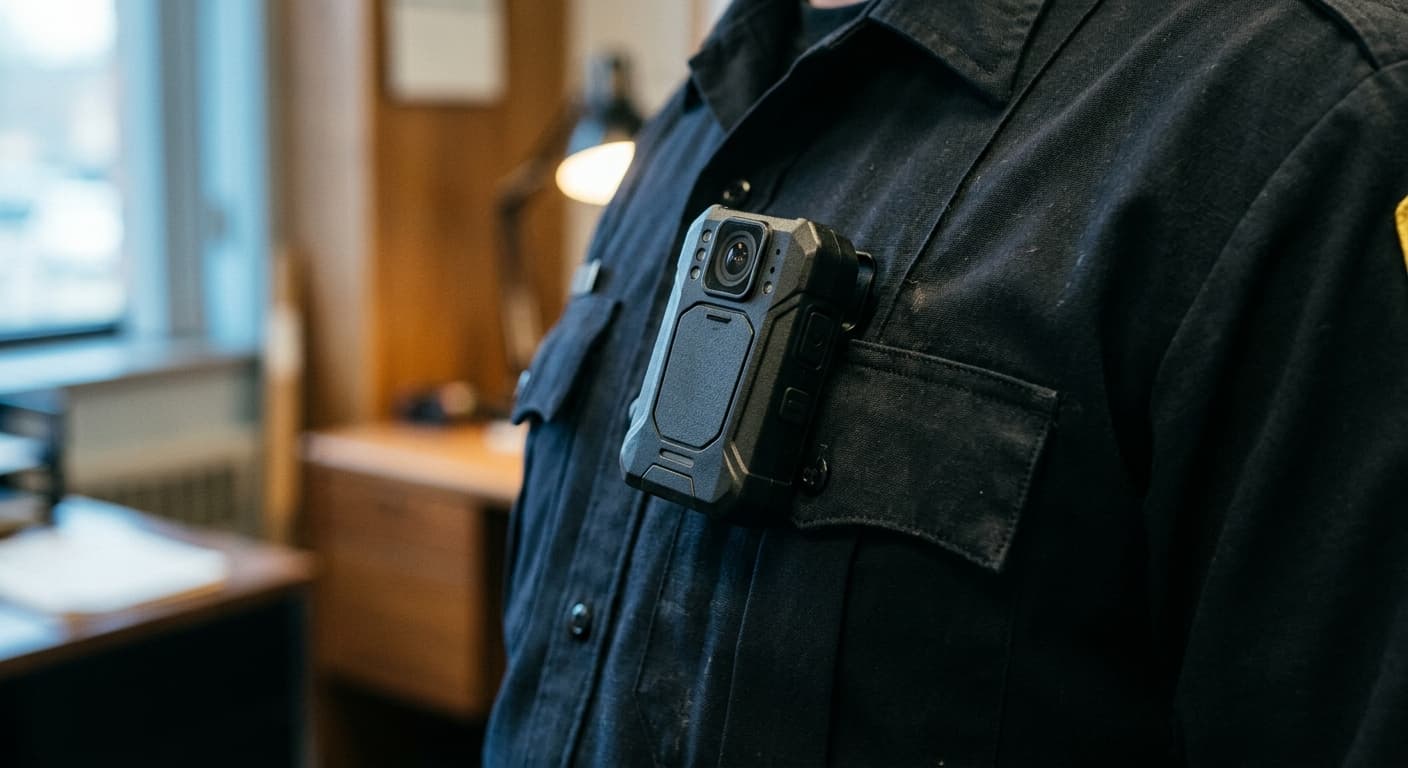
South Carolina residents have the legal right to record police officers on duty in public spaces under the First Amendment, reinforced by S.C. Code Ann. 17-30-30, the state's one-party consent law. You may record without notifying the officer, provided you do not physically interfere with police operations.
Recording interactions with police officers has become one of the most important accountability tools available to the public. In South Carolina, your right to record law enforcement is protected by the First Amendment to the U.S. Constitution and reinforced by the state's one-party consent wiretapping law. This guide explains your rights, the limitations, what the body camera laws require, and what to do if an officer tells you to stop recording.
Your Right to Record Police in South Carolina
Constitutional Foundation
The right to record law enforcement officers performing their duties in public is grounded in the First Amendment. Federal courts across the country have recognized that the First Amendment protects the right to gather information about government officials carrying out their responsibilities in public spaces.
While the U.S. Supreme Court has not directly ruled on the specific question of recording police, every federal circuit court that has addressed the issue has recognized this right. The Department of Justice has also affirmed that recording police activity in public is constitutionally protected.
Fourth Circuit Precedent
South Carolina falls within the jurisdiction of the U.S. Court of Appeals for the Fourth Circuit. The Fourth Circuit addressed a related question in Sharpe v. Winterville Police Dep't, 59 F.4th 674 (4th Cir. 2023): whether a passenger livestreaming his own traffic stop on Facebook Live is protected First Amendment speech. The court held that it is, and let the claim against the town over its alleged no-livestreaming policy proceed. But the court granted the individual officer qualified immunity, holding that in 2018 it was not clearly established that stopping a passenger from livestreaming violated the First Amendment, so the officer was never held personally liable. The majority also drew a line between this passenger-livestreaming scenario and a bystander recording someone else's stop, so Sharpe does not resolve the broader bystander-recording question. The U.S. Supreme Court denied certiorari on December 11, 2023, leaving the qualified-immunity ruling in place.
The Fourth Circuit has not issued a majority holding on whether seizing a recording device after someone films police activity violates the Fourth Amendment. One judge's concurrence in Sharpe argued for applying Fourth Amendment reasonableness analysis to that question, but that view did not carry the panel.
South Carolina State Law
South Carolina's one-party consent law at S.C. Code Ann. 17-30-30 provides additional legal protection for recording police. When you interact directly with a police officer, you are a party to the conversation and can record it without notifying the officer. This applies to:
- Traffic stops where you are the driver or passenger
- Encounters where an officer approaches you on the street
- Questioning during an investigation
- Any direct interaction where you are a participant
For recording police activity you are not directly involved in (such as filming an arrest across the street), the First Amendment provides the legal basis rather than the wiretapping statute. Since you are recording in a public space where there is no reasonable expectation of privacy, the wiretapping law's protections for "oral communications" generally do not apply.
What You Can Record
During Your Own Interactions
You can record every aspect of your interactions with police officers in South Carolina:
- Traffic stops. You can film the entire encounter from inside your vehicle. You do not need to inform the officer you are recording.
- Questioning. If police approach you for questioning, you can record the conversation.
- Arrests. If you are being arrested, your right to record does not disappear, though the officer may physically secure your device during the booking process.
- Home encounters. If police come to your door, you can record the interaction from your property.
- Phone calls. You can record phone conversations with law enforcement under one-party consent.
As a Bystander
When you witness police activity in public, you can record as a bystander:
- Arrests happening on public streets or sidewalks
- Traffic stops visible from public areas
- Police interactions at public events
- Use of force incidents
- Police activity in government buildings open to the public
You can also livestream police encounters on social media platforms. Livestreaming provides real-time documentation and creates a record that cannot be deleted from your device alone.
Limitations on Recording Police
Do Not Interfere
The most important limitation is that you must not physically interfere with police operations while recording. South Carolina law prohibits obstruction of justice and resisting arrest, and these laws apply even when you are exercising your right to record.
Interference includes:
- Physically blocking an officer from performing their duties
- Getting so close that you impede an arrest or investigation
- Touching an officer or their equipment
- Refusing to move when given a lawful order to step back from an active scene
- Crossing police barriers or entering restricted areas to get a better angle
Lawful Orders to Move Back
An officer can issue a lawful order for you to move back from an active scene for safety reasons. This is different from ordering you to stop recording. You must comply with reasonable distance requirements but can continue recording from a lawful distance.
Courts have not established a specific minimum distance, but the general principle is that you should be far enough away that you do not interfere with police operations while still close enough to effectively record the encounter.
Trespassing
You cannot trespass on private property to record police activity. If you are on public property (sidewalk, public park, public right-of-way), you are within your rights. If you enter private property to record, you could face trespassing charges under S.C. Code Ann. 16-11-620.
Secure Areas
Certain areas may be restricted for security or safety reasons:
- Active crime scenes behind police tape
- Court-ordered security perimeters
- Certain areas inside government buildings with posted restrictions
- Military installations within South Carolina
South Carolina Body Camera Laws

The Law Enforcement Body Camera Act
South Carolina enacted the Law Enforcement Body Camera Act (S.C. Code Ann. 23-1-240) in June 2015, making it one of the first states to establish comprehensive body camera regulations. Key provisions include:
Activation requirements. Officers must activate body cameras during law enforcement actions, including traffic stops, arrests, searches, and use of force incidents. Officers should notify individuals that they are being recorded when practical.
Retention and handling. S.C. Code Ann. 23-1-240 does not set specific retention periods or an altering/editing/deleting prohibition in the statute itself. Instead, it directs the Law Enforcement Training Council to develop guidelines covering when cameras must be worn and activated, victim/witness consent for interviews, and the retention, release, and access rules for recorded data, and it requires each agency to adopt its own written policies consistent with those guidelines.
Department policies. Each law enforcement agency that uses body cameras must establish written policies governing their use, storage, and access.
Accessing Body Camera Footage
Body camera footage in South Carolina is explicitly exempt from disclosure under the Freedom of Information Act. S.C. Code Ann. 23-1-240(G)(1) states that data recorded by a body-worn camera "is not a public record subject to disclosure under the Freedom of Information Act." A standard FOIA request will not get you bodycam footage.
Access instead runs through a narrower set of channels under S.C. Code Ann. 23-1-240(G):
- Prosecutors get it automatically. SLED, the Attorney General, and circuit solicitors must receive footage on request for any legitimate criminal justice purpose.
- Discretionary release. The agency, SLED, the Attorney General, or a circuit solicitor may release footage at their own discretion.
- Internal investigations. An agency must receive footage relevant to an internal misconduct or disciplinary investigation.
- Parties to the incident. The subject of the recording, a criminal defendant or civil litigant in a related case, a person whose property was seized or damaged, and their attorneys (or a parent/guardian for a minor), may request and must receive the footage under the South Carolina Rules of Criminal or Civil Procedure or a court order.
If you were involved in an incident and want the footage, the request typically goes through these channels with the help of an attorney, not a general public-records request.
When Officers Fail to Activate Body Cameras
If an officer fails to activate their body camera during an encounter, the failure may be relevant in legal proceedings. Courts may draw adverse inferences from missing footage, particularly when the officer was required by policy to be recording. Defense attorneys routinely request body camera footage and highlight gaps when officers fail to comply with activation requirements.
What to Do If Police Tell You to Stop Recording
Know Your Rights
If a police officer orders you to stop recording in a public space without a lawful basis, you are generally within your rights to continue. However, the situation requires careful judgment:
- Stay calm and polite. Do not escalate the confrontation. Speak clearly and respectfully.
- State your rights. You can calmly say something like: "I believe I have the right to record in a public space. I am not interfering with your duties."
- Comply with reasonable distance orders. If asked to move back, comply. You can continue recording from a greater distance.
- Do not physically resist. If an officer physically takes your device, do not resist. Physical resistance can lead to criminal charges.
- Document everything. Note the officer's name, badge number, department, and the time and location of the encounter.
- File a complaint afterward. Contact the police department's internal affairs division, the South Carolina Law Enforcement Division (SLED), or consult an attorney about potential civil rights claims.
If Your Device Is Seized
If police confiscate your recording device:
- Do not consent to a search. Clearly state that you do not consent to the search of your device.
- Request a receipt. Ask for documentation of what was taken and when.
- Contact an attorney. The Supreme Court held in Riley v. California, 573 U.S. 373 (2014), that police generally need a warrant to search a cell phone. Seizing your device without a warrant may violate the Fourth Amendment.
- File a complaint. Document the seizure and report it to internal affairs or an oversight body.
Legal Remedies
If your right to record was violated, you may have legal remedies including:
- 42 U.S.C. 1983 civil rights lawsuit. If a government actor violated your constitutional rights, you can sue for damages.
- Internal affairs complaint. Most police departments have processes for investigating officer misconduct.
- State tort claims. South Carolina law may provide additional avenues for claims related to unlawful seizure of property.
Recording Police in Specific Situations
During Traffic Stops
You can record a traffic stop from inside your vehicle. Place your phone in a mount or on the dashboard where it can capture the interaction. You do not need to inform the officer that you are recording under South Carolina's one-party consent law.
Tips for recording traffic stops:
- Start recording before the officer reaches your window
- Keep your hands visible and do not make sudden movements to grab your phone
- Do not hold your phone in a way that could be mistaken for a weapon
- If asked for your license and registration, explain that you need to reach for them
- Continue recording throughout the entire encounter
During Protests and Public Demonstrations
South Carolina's history includes significant civil rights protests, and the right to document public demonstrations is firmly protected. You can record:
- Protest marches and rallies on public streets
- Police response to demonstrations
- Arrests of protesters
- Use of force or crowd control measures
Law enforcement may establish controlled areas during large demonstrations, but they cannot prohibit recording from public areas outside those perimeters.
Inside Police Stations
Recording inside police stations is more restricted. While police stations are government buildings, they are not fully open to the public. Lobby areas may be recorded, but recording inside interview rooms, holding areas, or secure sections of the station typically requires permission. If you are being questioned or interviewed, your one-party consent right under S.C. Code Ann. 17-30-30 allows you to record the interaction.
Recording Undercover Officers
Recording undercover officers in public spaces is generally legal, but it raises practical concerns. If you do not know someone is a police officer, you are simply recording a person in a public space. The legality depends on the same factors as any other public recording: you must be in a place you have a right to be, and the recording must not involve areas where privacy is expected.
Pending Legislation: Bill 4675
H.4675, the South Carolina Community Data Protection and Responsible Surveillance Act, was introduced January 13, 2026, and is pending in the House Judiciary Committee. Rather than general police-camera or facial-recognition rules, it targets automated license plate reader (ALPR) and vehicle-surveillance systems specifically, and would:
- Require ALPR data to be stored on state-controlled servers rather than third-party cloud services
- Ban AI systems that identify vehicles by physical characteristics like dents, decals, or custom accessories
- Limit retention of ALPR data to 21 days
- Require a warrant for most law enforcement access to the data, plus access logging and quarterly compliance audits
As of this writing, the bill has not been enacted. Monitor the bill's page on the South Carolina Legislature website for updates.
Accountability and Oversight
Filing Complaints
If you believe a police officer violated your right to record, you can file complaints with:
- The officer's police department through their internal affairs or professional standards division
- South Carolina Law Enforcement Division (SLED) at www.sled.sc.gov for state-level investigations
- The U.S. Department of Justice, Civil Rights Division for potential federal civil rights violations
- The ACLU of South Carolina for assistance with civil rights cases
Civilian Oversight
Some South Carolina municipalities have civilian oversight boards or community review panels that address police conduct complaints. Check with your local government to see what oversight mechanisms are available in your jurisdiction.
South Carolina Recording Law Sub-Topics
Audio Recording | Video Recording | Voyeurism Laws | Workplace Recording | Recording Police | Phone Call Recording | Security Cameras | Recording in Public | Landlord-Tenant | Dashcam Laws | School Recording | Medical Recording
Back to South Carolina Recording Laws
More South Carolina Recording Topics
More South Carolina Laws
Frequently Asked Questions
Can I record police officers in South Carolina?
Yes. The First Amendment protects your right to record law enforcement officers performing their duties in public spaces. Additionally, South Carolina one-party consent law (S.C. Code Ann. 17-30-30) allows you to record your own interactions with police without informing them. You must not physically interfere with police operations while recording.
Can a police officer in South Carolina order me to stop recording?
An officer cannot lawfully order you to stop recording in a public space simply because they do not want to be recorded. However, an officer can order you to move back from an active scene for safety reasons. If an officer orders you to stop recording without a lawful basis, you are within your rights to continue, but complying in the moment and pursuing legal remedies later is often safer.
Can police seize my phone or camera in South Carolina?
Police need a warrant to search the contents of your recording device under Riley v. California (2014); a temporary seizure of the device itself on probable cause is a separate question. If an officer takes your device without a warrant, do not physically resist. Clearly state that you do not consent to a search, request a receipt, and contact an attorney about potential Fourth Amendment violations.
Does South Carolina require police to wear body cameras?
South Carolina enacted the Law Enforcement Body Camera Act (S.C. Code Ann. 23-1-240) in 2015, which establishes requirements for agencies that use body cameras. Officers must activate cameras during law enforcement actions. However, the law does not mandate that every agency adopt body cameras. Individual department policies determine whether body cameras are deployed.
How do I obtain police body camera footage in South Carolina?
Body camera footage is exempt from FOIA disclosure under S.C. Code Ann. 23-1-240(G)(1), so a standard Freedom of Information Act request will not produce it. Access is limited to prosecutors (SLED, the Attorney General, circuit solicitors), the subject of the recording, parties to a related criminal or civil case, and their attorneys, obtained through the South Carolina Rules of Criminal or Civil Procedure, a court order, or the agency's own discretionary release.
Updates
Corrected the body camera footage section: SC law exempts bodycam footage from public FOIA requests (it is not obtainable the way the page described), access instead runs through prosecutors, discretionary agency release, or a court process for involved parties, and the statute does not set the specific retention periods or tampering rule the page stated. Also fixed the trespass citation (16-11-620, not 16-11-610), corrected the description of Sharpe v. Winterville Police Dep't (the officer won qualified immunity; the case is limited to a passenger livestreaming their own stop), and corrected the summary of pending bill H.4675 (it targets license-plate-reader data, not general surveillance or facial recognition).
Independently fact-checked against the cited primary sources; governing law re-checked for recent changes
Governing law re-checked for recent changes
Governing law re-checked for recent changes
Reviewed and approved by an editor
The Law Behind This Article
This article rests on the statutory provisions below, held in our own legal record and retrieved from the official source. Tap a section to read the operative text.
South Carolina Code of Laws, Title 17: CRIMINAL PROCEDURES
§ 17-30-30Interception by employee of Federal Communications Commission, by person acting under color or law, and when party has given prior consentIn forcecited in 16 of our articles
(A) It is lawful under this chapter for an officer, employee, or agent of the Federal Communications Commission, in the normal course of his employment and in discharge of the monitoring responsibilities exercised by the commission in the enforcement of 47 U.S.C. Chapter 5, to intercept a wire, oral, or electronic communication transmitted by radio or to disclose or use the information thereby obtained. (B) It is lawful under this chapter for a person acting under color of law to intercept a wire, oral, or electronic communication, where the person is a party to the communication or one of the parties to the communication has given prior consent to the interception. (C) It is lawful under this chapter for a person not acting under color of law to intercept a wire, oral, or electronic communication where the person is a party to the communication or where one of the parties to the communication has given prior consent to the interception.
Official text (excerpt) · last checked 2026-08-31 · Read the full text in our law library · Verify at scstatehouse.gov
Cited in 1 court opinions in our collectionLatest citing opinion in our collection: 2025
Opinions citing this section in our collection:
- McNeely (District Court, D. South Carolina 2025)“…a showing. The South Carolina statute cited by Plaintiff—S.C. Code § 17-30-30—provides “it is lawful . . . for a per…”
Identified automatically from the court opinions citing this section — not a ranking of which case controls.
United States Code Title 18
§ 2511Interception and disclosure of wire, oral, or electronic communications prohibitedIn forcecited in 418 of our articles
Except as otherwise specifically provided in this chapter any person who— intentionally intercepts, endeavors to intercept, or procures any other person to intercept or endeavor to intercept, any wire, oral, or electronic communication; intentionally uses, endeavors to use, or procures any other person to use or endeavor to use any electronic, mechanical, or other device to intercept any oral communication when— such device is affixed to, or otherwise transmits a signal through, a wire, cable, or other like connection used in wire communication; or such device transmits communications by radio, or interferes with the transmission of such communication; or such person knows, or has reason to know, that such device or any component thereof has been sent through the mail or transported in interstate or foreign commerce; or such use or endeavor to use (A) takes place on the premises of any business or other commercial establishment the operations of which affect interstate or foreign commerce; or (B) obtains or is for the purpose of obtaining information relating to the operations of any business or other commercial establishment the operations of which affect interstate or foreign…
Official text (excerpt) · last checked 2026-08-28 · Read the full text in our law library · Verify at uscode.house.gov
Cited in 2,045 court opinions in our collectionLatest citing opinion in our collection: 2026
In the courts (editorial summary, independently checked):Griggs-Ryan v. Smith (1990) applied the Section 2511(2)(d) prior-consent exception, treating a tenant repeatedly told that all incoming calls were taped as having impliedly consented. United States v. United States District Court (1972) read the then-current Section 2511(3) as conferring no presidential surveillance power.
Opinions citing this section in our collection:
- Mitchell v. Forsyth (Supreme Court of the United States 1985, 472 U.S. 511)✓The Attorney General authorized a warrantless 1970 national security wiretap that caught the plaintiff's calls; the Court held the since-repealed Section 2511(3) disclaimer left the tap lawful under Title III, and that Mitchell had qualified immunity.
- United States v. United States District Court for the Eastern District of Michigan (Supreme Court of the United States 1972, 407 U.S. 297)✓The Attorney General approved warrantless wiretaps on members of a domestic group accused of bombing a CIA office; the Court read Section 2511(3) as a congressional disclaimer conferring no surveillance power, then held the Fourth Amendment required prior judicial approval.
- Forsyth v. Barr (Court of Appeals for the Fifth Circuit 1994, 19 F.3d 1527)✓Dallas police used, in an internal affairs probe of an officer, calls private parties allegedly intercepted illegally; assuming that was unlawful, the Fifth Circuit held Section 2517(1) and (2) allowed the disclosure and use, defeating the Section 2511(1)(c) and (d) claims.
Identified automatically from the court opinions citing this section — not a ranking of which case controls.
United States Code Title 42
§ 1983Civil action for deprivation of rightsIn forcecited in 50 of our articles
Every person who, under color of any statute, ordinance, regulation, custom, or usage, of any State or Territory or the District of Columbia, subjects, or causes to be subjected, any citizen of the United States or other person within the jurisdiction thereof to the deprivation of any rights, privileges, or immunities secured by the Constitution and laws, shall be liable to the party injured in an action at law, suit in equity, or other proper proceeding for redress, except that in any action brought against a judicial officer for an act or omission taken in such officer’s judicial capacity, injunctive relief shall not be granted unless a declaratory decree was violated or declaratory relief was unavailable. For the purposes of this section, any Act of Congress applicable exclusively to the District of Columbia shall be considered to be a statute of the District of Columbia.
Official text (excerpt) · last checked 2026-07-28 · Read the full text in our law library · Verify at uscode.house.gov
Cited in 282,365 court opinions in our collectionLatest citing opinion in our collection: 2026
Opinions citing this section in our collection:
- Ashcroft v. Iqbal (Supreme Court of the United States 2009, 556 U.S. 662)“…its brought against state officials under Rev. Stat. §1979, 42 U. S. C. §1983.” Hartman, 547 U. S., at 254, n. 2. Cf.…”
- Celotex Corp. v. Catrett, Administratrix of the Estate of Catrett (Supreme Court of the United States 1986, 477 U.S. 317)“…policeman as she left. Petitioner brought an action under 42 U. S. C. § 1983 claiming that the refusal of service a…”
- Monell v. New York City Dept. of Social Servs. (Supreme Court of the United States 1978, 436 U.S. 658)“…decided less than two decades ago. Focusing new light on 42 U. S. C. § 1983 , that decision widened access to the f…”
Identified automatically from the court opinions citing this section — not a ranking of which case controls.
Explore the law
This article also draws on these acts and chapters (opening at their first section): South Carolina Code of Laws, Title 17: CRIMINAL PROCEDURES § 17-30-10 (Interception of wire, electronic, or oral communications authorized)
Related law for further reading — not part of this article’s citations.
Search our full record of US law — 2.1 million sections, every state + federal →
Sources and References
- South Carolina Code of Laws, Title 17, Chapter 30 -- Wiretapping(scstatehouse.gov).gov
- South Carolina Law Enforcement Body Camera Act(scstatehouse.gov).gov
- South Carolina Freedom of Information Act(scstatehouse.gov).gov
- South Carolina Law Enforcement Division (SLED)(sled.sc.gov).gov
- U.S. Department of Justice -- Civil Rights Division(justice.gov).gov
- Riley v. California, 573 U.S. 373 (2014)(supreme.justia.com)
- 18 U.S.C. 2511 -- Federal Wiretap Act(law.cornell.edu)
- Riley v. California, 573 U.S. 373 (2014) -- Warrant Required for Cell Phone Search(law.cornell.edu)