
South Carolina
South Carolina Security Camera Laws: Home, Business, and HOA Rules (2026)
Independently fact-checked against primary sources (last audited August 15, 2026). · Reviewed by the RecordingLaw editorial team. · Law checked current as of August 15, 2026. · 5 primary sources cited on this page. How we verify our legal content
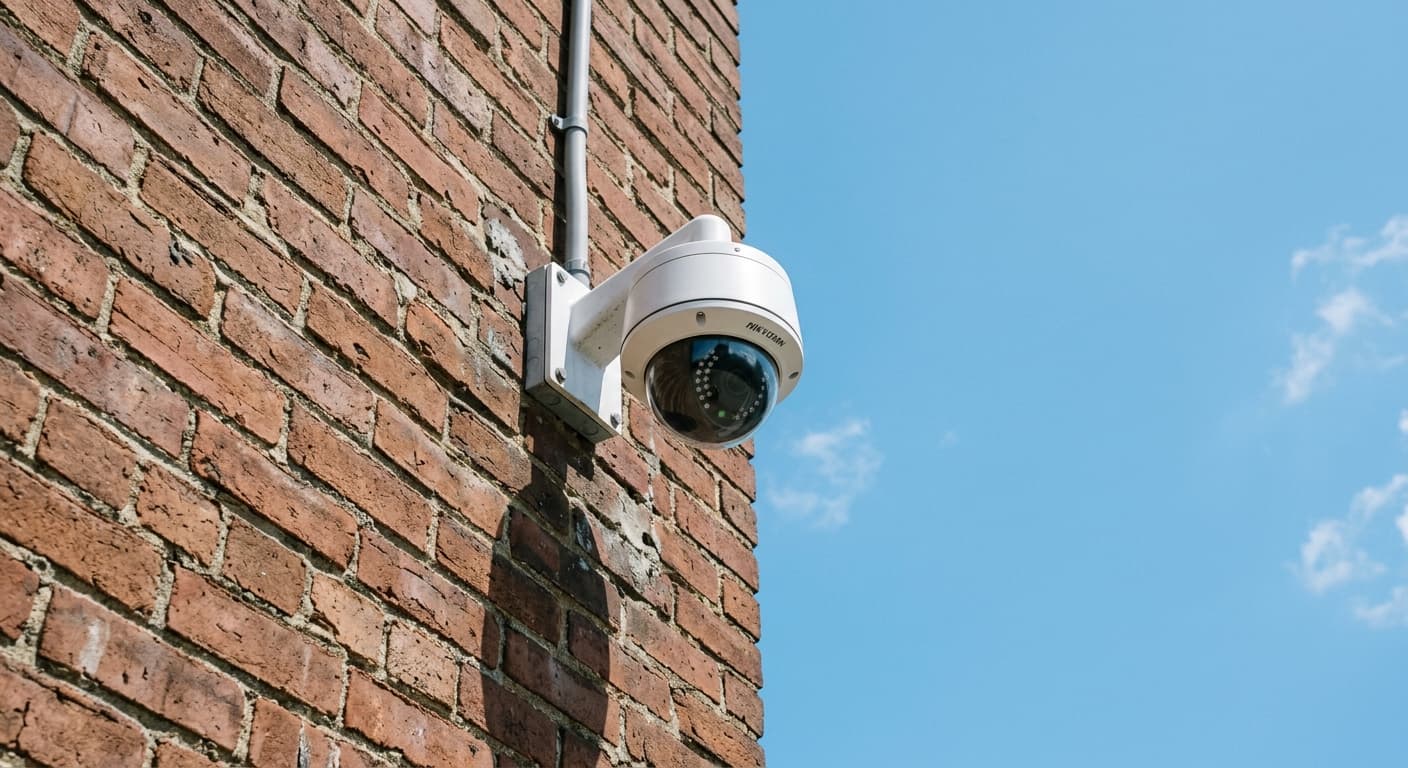
South Carolina has no dedicated security camera statute, but homeowners may install cameras on their own property and in areas visible to the public. S.C. Code Ann. 16-17-470 bars cameras in private spaces, and audio capture falls under the one-party consent rule at S.C. Code Ann. 17-30-30.
Security cameras are a standard part of home and business protection in South Carolina. While the state does not have a single comprehensive security camera statute, several laws interact to define where you can place cameras, what they can capture, and what happens when surveillance crosses the line into illegal territory. This guide covers the rules for residential cameras, business surveillance systems, neighbor disputes, HOA regulations, and the audio recording issues that many camera owners overlook.
Residential Security Camera Laws
General Rules for Home Cameras
South Carolina homeowners have broad rights to install security cameras on their own property. You can place cameras to monitor:
- Your front door, porch, and entryways
- Your driveway and garage area
- Your backyard and garden
- Side yards and property boundaries
- Interior common areas (living room, kitchen, hallways)
- Detached structures (sheds, workshops, barns)
There is no permit or registration required to install residential security cameras in South Carolina. You do not need to notify neighbors or local authorities.
Where You Cannot Place Cameras
Even on your own property, South Carolina law restricts cameras in areas where people have a reasonable expectation of privacy. Under S.C. Code Ann. 16-17-470, you cannot place cameras in:
- Bathrooms used by family members, guests, or tenants
- Bedrooms used by anyone other than yourself (or without the occupant's consent)
- Guest rooms where visitors expect privacy
- Changing areas in or near swimming pools or hot tubs
- Any area where someone would reasonably undress
Installing cameras in these locations violates the voyeurism statute and can result in felony charges carrying up to 5 years in prison.
Cameras Facing Neighbors' Property
One of the most common disputes involving residential security cameras is cameras that capture footage of a neighbor's property. South Carolina law does not explicitly prohibit cameras that incidentally capture a neighbor's yard or driveway, but targeted surveillance of a neighbor's private areas can create legal problems:
- Incidental capture. A camera aimed at your driveway that also captures part of your neighbor's front yard is generally acceptable. The neighbor does not have a reasonable expectation of privacy in areas visible from public vantage points.
- Targeted surveillance. A camera specifically aimed at a neighbor's windows, backyard, or private areas may constitute an invasion of privacy or voyeurism, depending on the circumstances.
- Harassment. If cameras are installed with the intent to harass, intimidate, or monitor a neighbor's activities, the neighbor may seek a restraining order or pursue a civil claim for harassment.
The Audio Recording Problem
Many modern security cameras record audio along with video. This creates an important legal issue under South Carolina's wiretapping law:
Video-only recording does not implicate the wiretapping statute. If your camera captures only video, the one-party consent rule does not apply.
Audio recording is subject to S.C. Code Ann. 17-30-30. If your security camera captures conversations that you are not a party to, the recording may constitute illegal interception. For example:
- A doorbell camera that records conversations between visitors on your porch (while you are not present) captures audio of conversations you are not part of
- An outdoor camera with a microphone that picks up your neighbors' conversations in their yard may violate the wiretapping statute
- An indoor camera that records conversations between your children and their friends captures audio without your participation
Practical recommendation: Consider disabling audio recording on outdoor security cameras to avoid wiretapping issues, or enable audio only when you are actively monitoring and participating in conversations (such as two-way audio on a doorbell camera).
Smart Doorbell Cameras
Ring, Nest, and Other Smart Doorbells
Smart doorbell cameras (Ring, Google Nest, Eufy, Arlo) are extremely popular in South Carolina. These devices raise specific legal questions:
Two-way audio. When you use the two-way talk feature to speak with someone at your door, you are a party to the conversation. Recording this interaction is legal under one-party consent.
Passive audio recording. When the camera records audio of someone on your porch without you actively participating in a conversation, the wiretapping statute may apply. The person at your door may have a conversation with a companion that your camera captures.
Motion-activated recording. Cameras that automatically start recording when motion is detected capture whatever occurs in their field of view. If the camera records conversations you are not part of, audio recording raises legal questions.
Neighborhood sharing programs. Ring's Neighbors app and similar services allow sharing footage with other residents and law enforcement. Sharing footage that contains legally recorded video is generally permissible, but sharing audio recordings of conversations may raise additional concerns.
Best Practices for Smart Doorbells
- Post a visible sign or sticker indicating that video surveillance is in use
- Consider disabling audio recording for passive monitoring
- When using two-way audio, your participation in the conversation satisfies one-party consent
- Review footage before sharing with others or law enforcement to ensure it does not contain illegally recorded audio
- Aim the camera at your own property (door, porch, walkway) rather than the street or neighbors' property
Business Security Camera Laws

Employer Video Surveillance
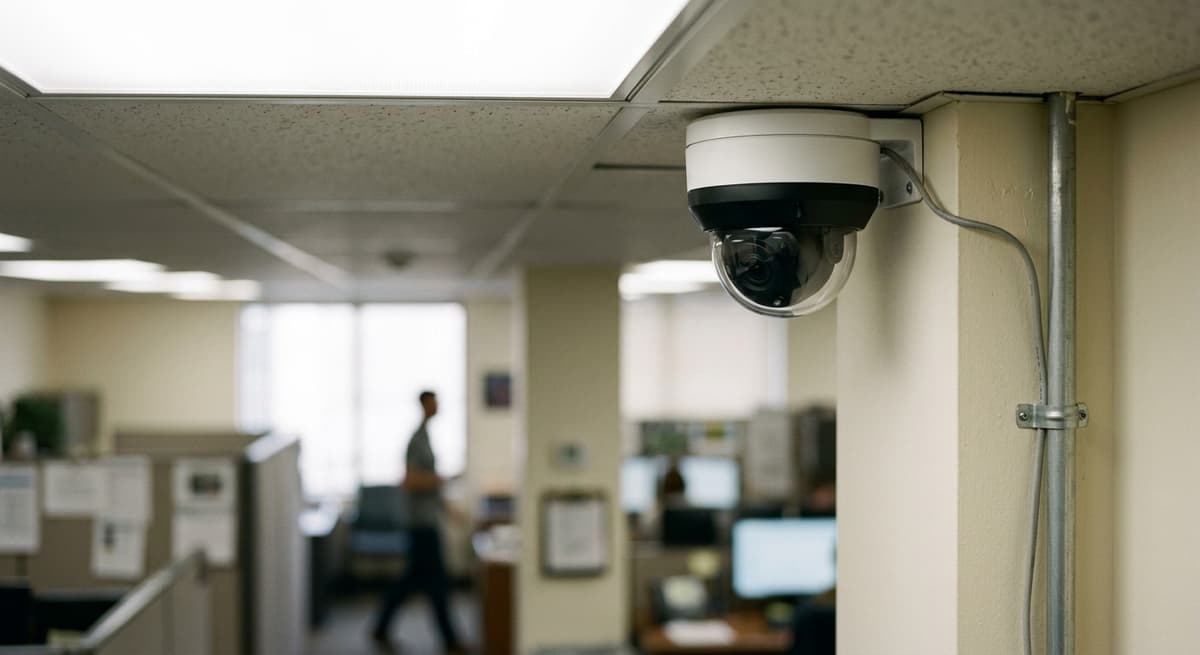
South Carolina businesses can install security cameras in areas where employees and customers do not have a reasonable expectation of privacy:
Permitted locations:
- Sales floors and retail areas
- Cash register and point-of-sale areas
- Warehouses and storage areas
- Hallways, lobbies, and common areas
- Parking lots and building exteriors
- Loading docks and shipping areas
- Break rooms and cafeterias (video only, no audio in conversations you are not part of)
Prohibited locations:
- Employee restrooms and bathrooms
- Locker rooms and changing areas
- Nursing rooms for breastfeeding
- Private offices (for hidden cameras without the occupant's knowledge)
Notice to Employees
South Carolina does not have a specific statute requiring employers to notify employees about video surveillance. However, best practices and guidance from federal agencies recommend:
- Written surveillance policies distributed to all employees
- Signage indicating areas under camera surveillance
- Acknowledgment forms signed by employees
- Clear policies about when and how footage is reviewed
Retail Loss Prevention
Retail businesses commonly use surveillance cameras for loss prevention. South Carolina law permits these cameras in sales areas, storage rooms, and checkout areas. Retailers should ensure cameras are not placed in fitting rooms or customer restrooms, as this would violate the voyeurism statute.
HOA Security Camera Regulations

Can an HOA Restrict Security Cameras?
Homeowners associations in South Carolina can regulate the placement, appearance, and installation of security cameras through their covenants, conditions, and restrictions (CC&Rs). Common HOA regulations include:
- Requirements for camera placement (must not be visible from common areas, specific mounting heights)
- Aesthetic standards (camera color, size, wiring concealment)
- Restrictions on cameras pointed at common areas or other units
- Requirements to register cameras with the HOA
HOA Limitations
HOAs generally cannot prohibit security cameras entirely if the homeowner has a legitimate security purpose. South Carolina courts tend to balance the homeowner's right to protect their property against the community's aesthetic and privacy interests.
If your HOA attempts to prohibit security cameras, consider:
- Reviewing the CC&Rs for specific language about cameras and surveillance
- Attending HOA board meetings to request a reasonable accommodation
- Proposing compromise solutions (less visible camera placement, specific camera models)
- Consulting with an attorney if the HOA's restrictions are unreasonable
Cameras in Condominiums and Townhomes
Condominium and townhome owners face unique considerations:
- Inside your unit: You can install cameras inside your own unit in non-private areas
- On your front door: Doorbell cameras may be subject to HOA architectural guidelines
- Common areas: Only the HOA or property management can install cameras in common areas
- Shared walls: Cameras should not be positioned to capture footage inside neighboring units
Neighbor Disputes Over Security Cameras
Common Complaints
Security camera disputes between neighbors in South Carolina typically involve:
- Cameras aimed directly at a neighbor's windows or private backyard
- Audio recording of conversations in a neighbor's yard
- Cameras used to monitor a neighbor's activities (perceived harassment)
- Bright LED indicator lights or IR illuminators that disturb neighbors at night
- Cameras that capture footage of children playing in a neighbor's yard
Legal Options for Neighbors
If a neighbor's security camera is creating a problem, South Carolina residents have several legal options:
- Direct conversation. Many disputes can be resolved by talking to the neighbor and requesting an adjustment to camera angle or placement.
- HOA complaint. If both properties are in an HOA, file a complaint about the camera's placement or direction.
- Mediation. South Carolina offers mediation services through the court system that can help resolve neighbor disputes without litigation.
- Civil lawsuit. If the camera constitutes an invasion of privacy, targeted harassment, or voyeurism, you can pursue a civil claim for damages and injunctive relief.
- Criminal complaint. If the camera violates the voyeurism statute (aimed at private areas where you undress) or the wiretapping statute (recording your private conversations), contact law enforcement.
Data Storage and Footage Retention
No State Requirements for Residential Cameras
South Carolina does not impose data retention requirements on residential security camera users. You can store footage for as long as you choose, delete it when you want, or set automatic overwrite schedules.
Business Considerations
Businesses should establish written policies for footage retention. While South Carolina does not mandate specific retention periods for most businesses, certain industries may have regulatory requirements:
- Financial institutions may need to retain footage for specific periods under federal banking regulations
- Healthcare facilities should consider HIPAA implications of footage containing patient information
- Government contractors may have specific security requirements for surveillance footage
Cloud Storage and Privacy
If you store security camera footage in the cloud (Ring, Nest, Arlo cloud services), be aware that:
- Law enforcement can request footage from cloud providers through legal process (subpoena, warrant)
- Terms of service may allow the cloud provider to share footage under certain circumstances
- Cloud storage creates copies of footage outside your direct control
- Encryption and strong passwords help protect stored footage
Security Camera Technology and the Law
Night Vision and Infrared
Security cameras with night vision and infrared capabilities are legal in South Carolina. These features help cameras capture useful footage in low-light conditions. There is no specific law restricting the use of infrared or thermal imaging for security purposes on your own property.
Pan-Tilt-Zoom (PTZ) Cameras
PTZ cameras that can be remotely controlled raise additional privacy concerns because they can be redirected to focus on specific areas. While PTZ cameras are not inherently illegal, using one to zoom into a neighbor's windows or private areas could constitute voyeurism.
License Plate Recognition (LPR)
Private license plate recognition cameras are not specifically regulated by South Carolina state law for residential use. However, collecting and storing license plate data raises privacy considerations, and using LPR data to track specific individuals could create liability.
South Carolina Recording Law Sub-Topics
Audio Recording | Video Recording | Voyeurism Laws | Workplace Recording | Recording Police | Phone Call Recording | Security Cameras | Recording in Public | Landlord-Tenant | Dashcam Laws | School Recording | Medical Recording
Back to South Carolina Recording Laws
More South Carolina Recording Topics
See Also
- South Carolina Surveillance Camera Laws covers home, HOA, neighbor, workplace, and landlord camera rules in South Carolina.
More South Carolina Laws
Frequently Asked Questions
Do I need a permit to install security cameras in South Carolina?
No. South Carolina does not require permits, registration, or notification to install security cameras on your own property. You can place cameras to monitor your home, yard, driveway, and other areas you own. Just ensure cameras are not aimed at areas where others have a reasonable expectation of privacy.
Can my neighbor point a security camera at my house in South Carolina?
A neighbor's camera that incidentally captures the exterior of your home from a public vantage point is generally legal. However, a camera specifically aimed at your windows, backyard, or other private areas may constitute an invasion of privacy or voyeurism under S.C. Code Ann. 16-17-470. You can ask the neighbor to redirect the camera, file a complaint with your HOA, or pursue legal action if the situation constitutes harassment or voyeurism.
Do security cameras with audio recording violate South Carolina law?
They can. South Carolina one-party consent law (S.C. Code Ann. 17-30-30) requires that at least one party to a conversation consents to recording. If your security camera captures audio of conversations you are not participating in, it may constitute illegal interception. Consider disabling audio on cameras that passively record, and only enable it when you are actively using two-way talk features.
Can my employer install hidden cameras at work in South Carolina?
Employers can install cameras in common work areas but not in locations where employees have a reasonable expectation of privacy (bathrooms, locker rooms, changing areas). Hidden cameras in these private locations violate S.C. Code Ann. 16-17-470 and can result in felony charges. Employers should also have written surveillance policies and provide notice to employees.
Can an HOA prohibit security cameras in South Carolina?
HOAs can regulate the placement, appearance, and installation of security cameras through their CC&Rs, but they generally cannot prohibit them entirely when a homeowner has a legitimate security purpose. Review your HOA documents for specific rules, and if restrictions seem unreasonable, attend board meetings to request accommodations or consult an attorney.
Updates
Independently fact-checked against the cited primary sources; governing law re-checked for recent changes
Governing law re-checked for recent changes
Governing law re-checked for recent changes
Reviewed and approved by an editor
The Law Behind This Article
This article rests on the statutory provisions below, held in our own legal record and retrieved from the official source. Tap a section to read the operative text.
South Carolina Code of Laws, Title 16: CRIMES AND OFFENSES
§ 16-17-470Eavesdropping, peeping, voyeurismIn forcecited in 9 of our articles
(A) It is unlawful for a person to be an eavesdropper or a peeping tom on or about the premises of another or to go upon the premises of another for the purpose of becoming an eavesdropper or a peeping tom. The term "peeping tom", as used in this section, is defined as a person who peeps through windows, doors, or other like places, on or about the premises of another, for the purpose of spying upon or invading the privacy of the persons spied upon and any other conduct of a similar nature, that tends to invade the privacy of others. The term "peeping tom" also includes any person who employs the use of video or audio equipment for the purposes set forth in this section. A person who violates the provisions of this section is guilty of a misdemeanor and, upon conviction, must be fined not more than five hundred dollars or imprisoned not more than three years, or both.
Official text (excerpt) · last checked 2026-08-31 · Read the full text in our law library · Verify at scstatehouse.gov
Cited in 8 court opinions in our collectionLatest citing opinion in our collection: 2026
In the courts (editorial summary, independently checked):United States v. Anthony Helton (2019) read the section's voyeurism subsection to require knowingly viewing a person without consent, where privacy is expected, for sexual arousal or gratification, and held that conviction a sex offense requiring federal registration. State v. Harris (1987) held peeping tom a crime of moral turpitude.
Opinions citing this section in our collection:
- State v. Holmes (Supreme Court of South Carolina 1995, 320 S.C. 259)✓At a capital murder trial the defense was barred from impeaching a jailhouse witness with his 1984 Peeping Tom conviction; the court held that was error because a section 16-17-470 violation is a crime of moral turpitude, but found the error harmless.
- State v. Harris (Supreme Court of South Carolina 1987, 293 S.C. 75)✓A man tried for assault with intent to commit sexual conduct with a minor was impeached with a prior Peeping Tom conviction; the court held the section 16-17-470 offense is a crime of moral turpitude, so using it to attack his credibility was proper.
- In re Parrott (Supreme Court of South Carolina 2017, 421 S.C. 105)“…ondent was arrested and charged with voyeurism pursuant to S.C. Code Ann. § 16-17-470 (B) (2015) after he used a cell phone t…”
Identified automatically from the court opinions citing this section — not a ranking of which case controls.
Also relied on in: South Carolina Smart Glasses Recording Laws 2026, South Carolina Employee Monitoring Laws: Workplace Surveillance and Social Media (2026)
§ 16-11-610Entry on another's lands for various purposes without permissionIn force
Any person entering upon the lands of another for the purpose of hunting, fishing, trapping, netting; for gathering fruit, wild flowers, cultivated flowers, shrubbery, straw, turf, vegetables or herbs; or for cutting timber on such land, without the consent of the owner or manager, shall be deemed guilty of a misdemeanor and upon conviction shall, for a first offense, be fined not more than two hundred dollars or imprisoned for not more than thirty days, for a second offense, be fined not less than one hundred dollars nor more than two hundred dollars or imprisoned for not more than thirty days and, for a third or subsequent offense, be fined not less than five hundred dollars nor more than one thousand dollars or imprisoned for not more than six months or both. A first or second offense prosecution resulting in a conviction shall be reported by the magistrate or city recorder hearing the case to the communications and records division of the South Carolina Law Enforcement Division which shall keep a record of such conviction so that any law enforcement agency may inquire into whether or not a defendant has a prior record.
Official text (excerpt) · last checked 2026-07-29 · Read the full text in our law library · Verify at scstatehouse.gov
Cited in 1 court opinions in our collectionLatest citing opinion in our collection: 1995
Opinions citing this section in our collection:
- Ott v. Pittman (Court of Appeals of South Carolina 1995, 320 S.C. 72)“…t’s property, that the trespass amounted to a violation of S.C. Code Ann. §§ 16-11-610 (1985) and 50-1-90 (Supp. 1994) and vi…”
Identified automatically from the court opinions citing this section — not a ranking of which case controls.
United States Code Title 18
§ 2511Interception and disclosure of wire, oral, or electronic communications prohibitedIn forcecited in 422 of our articles
Except as otherwise specifically provided in this chapter any person who— intentionally intercepts, endeavors to intercept, or procures any other person to intercept or endeavor to intercept, any wire, oral, or electronic communication; intentionally uses, endeavors to use, or procures any other person to use or endeavor to use any electronic, mechanical, or other device to intercept any oral communication when— such device is affixed to, or otherwise transmits a signal through, a wire, cable, or other like connection used in wire communication; or such device transmits communications by radio, or interferes with the transmission of such communication; or such person knows, or has reason to know, that such device or any component thereof has been sent through the mail or transported in interstate or foreign commerce; or such use or endeavor to use (A) takes place on the premises of any business or other commercial establishment the operations of which affect interstate or foreign commerce; or (B) obtains or is for the purpose of obtaining information relating to the operations of any business or other commercial establishment the operations of which affect interstate or foreign…
Official text (excerpt) · last checked 2026-08-28 · Read the full text in our law library · Verify at uscode.house.gov
Cited in 2,045 court opinions in our collectionLatest citing opinion in our collection: 2026
In the courts (editorial summary, independently checked):Griggs-Ryan v. Smith (1990) applied the Section 2511(2)(d) prior-consent exception, treating a tenant repeatedly told that all incoming calls were taped as having impliedly consented. United States v. United States District Court (1972) read the then-current Section 2511(3) as conferring no presidential surveillance power.
Opinions citing this section in our collection:
- Mitchell v. Forsyth (Supreme Court of the United States 1985, 472 U.S. 511)✓The Attorney General authorized a warrantless 1970 national security wiretap that caught the plaintiff's calls; the Court held the since-repealed Section 2511(3) disclaimer left the tap lawful under Title III, and that Mitchell had qualified immunity.
- United States v. United States District Court for the Eastern District of Michigan (Supreme Court of the United States 1972, 407 U.S. 297)✓The Attorney General approved warrantless wiretaps on members of a domestic group accused of bombing a CIA office; the Court read Section 2511(3) as a congressional disclaimer conferring no surveillance power, then held the Fourth Amendment required prior judicial approval.
- Forsyth v. Barr (Court of Appeals for the Fifth Circuit 1994, 19 F.3d 1527)✓Dallas police used, in an internal affairs probe of an officer, calls private parties allegedly intercepted illegally; assuming that was unlawful, the Fifth Circuit held Section 2517(1) and (2) allowed the disclosure and use, defeating the Section 2511(1)(c) and (d) claims.
Identified automatically from the court opinions citing this section — not a ranking of which case controls.
Also relied on in: Connecticut Recording Laws (2026): Hybrid Consent Rules Explained, Oregon Recording Laws (2026): Hybrid One-Party and All-Party Rules, US Recording Laws by State (2026): All 50 States Explained
Explore the law
This article also draws on these acts and chapters (opening at their first section): South Carolina Code of Laws, Title 17: CRIMINAL PROCEDURES § 17-30-10 (Interception of wire, electronic, or oral communications authorized) · South Carolina Code of Laws, Title 16: CRIMES AND OFFENSES § 16-17-10 (Barratry prohibited)
Related law for further reading — not part of this article’s citations.
Search our full record of US law — 2.1 million sections, every state + federal →
Sources and References
- South Carolina Code of Laws, Title 17, Chapter 30 -- Wiretapping(scstatehouse.gov).gov
- South Carolina Code of Laws, Title 16, Chapter 17 -- Voyeurism(scstatehouse.gov).gov
- South Carolina Residential Landlord and Tenant Act(scstatehouse.gov).gov
- S.C. Code Ann. 16-11-610 -- S.C. Code 16-11-610 - Entry on Another’s Lands (scstatehouse.gov).gov
- FCC Consumer Guide(fcc.gov).gov
- 18 U.S.C. Section 2511 -- Federal Wiretap Act(law.cornell.edu)