
Nevada
Nevada Security Camera Laws: Installation Rules and Privacy Limits (2026)
Independently fact-checked against primary sources (last audited August 15, 2026). · Reviewed by the RecordingLaw editorial team. · Law checked current as of August 8, 2026. · 6 primary sources cited on this page. How we verify our legal content
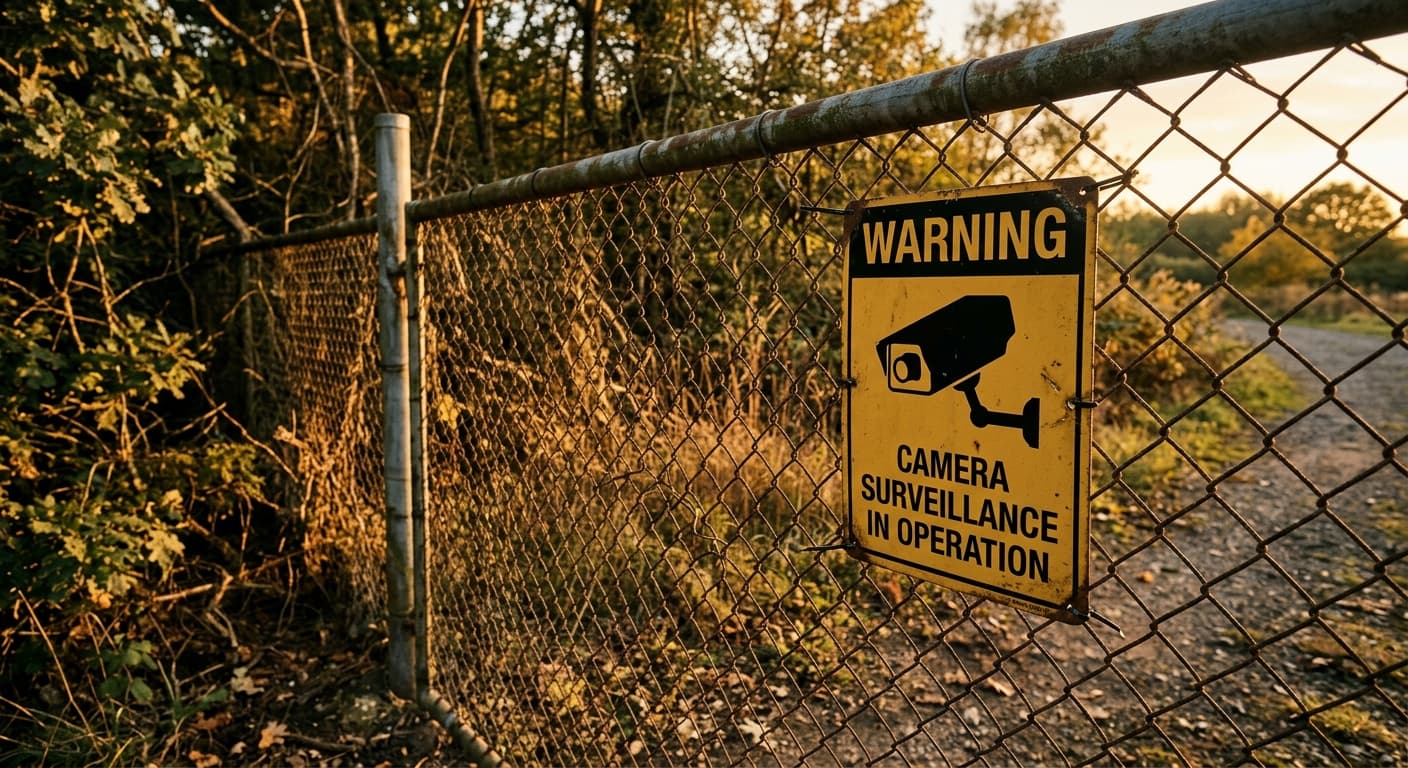
Nevada homeowners may install video-only security cameras on their own property without posting signs. Audio-capable cameras trigger one-party consent under NRS 200.650 for in-person conversations. Cameras are prohibited in bathrooms, locker rooms, and other private areas under NRS 200.604.
Nevada does not have a comprehensive security camera statute. Instead, the legality of security cameras depends on where they are installed, whether they capture audio, and what they are pointed at. Video-only surveillance is broadly legal in public and semi-public spaces. Audio-capable cameras trigger Nevada's split consent framework: one-party consent for in-person conversations under NRS 200.650, and all-party consent for phone or wire communications under NRS 200.620. NRS 200.620's text allows one-party consent or a court order in an emergency, but the Nevada Supreme Court's fractured decision in Lane v. Allstate Ins. Co., 114 Nev. 1176, 969 P.2d 938 (1998), interprets it to require every participant's consent in practice, which is why phone-call audio is treated as all-party.
This guide covers residential and commercial security camera rules, audio recording restrictions, prohibited locations, HOA and neighbor disputes, and special rules for casinos and gaming establishments.
Residential Security Cameras
What Homeowners Can Do
Nevada homeowners have broad rights to install security cameras on their own property. You can place cameras to monitor:
- Your front door, porch, and entryway
- Driveways and garages
- Backyards and side yards
- Interior common areas of your home
- Any area of your property you wish to monitor
There is no state law requiring you to post signs, notify visitors, or register your camera system with any government agency.
Restrictions for Residential Cameras
Even on your own property, security cameras must not:
- Record areas where others have a reasonable expectation of privacy. Pointing a camera into a neighbor's bedroom window, bathroom, or other private area can violate NRS 200.604 and result in voyeurism charges.
- Capture audio of conversations you are not participating in. If your outdoor camera has a microphone that picks up neighbors' private conversations, the audio component may violate NRS 200.650 if you are not a participant in those conversations.
- Be positioned to harass or intimidate. While not addressed by a specific recording statute, a camera deliberately aimed at a neighbor's property to harass them could support a civil harassment claim.
Doorbell Cameras (Ring, Nest, Blink)
Smart doorbell cameras like Ring, Google Nest, and Blink are legal in Nevada. These devices typically record both video and audio of your front door area. The audio component is generally permissible because:
- Visitors who approach your door and speak to you are in a semi-public area with reduced privacy expectations
- When you communicate through the doorbell's two-way talk feature, you are a participant in the conversation (satisfying one-party consent under NRS 200.650)
However, if a doorbell camera captures audio of private conversations between others who are not interacting with you, the recording may raise issues under NRS 200.650.
Nanny Cameras and Indoor Surveillance
Hidden cameras inside your own home are legal for video-only recording of common areas. This includes nanny cameras to monitor childcare providers. However:
- Cameras are prohibited in bathrooms and areas where the nanny or any other person has a privacy expectation
- Audio recording requires compliance with NRS 200.650 (you must be a participant in the conversation, or the conversation must occur in a non-private setting)
- If the nanny makes phone calls, audio captured from those calls may violate NRS 200.620's all-party consent requirement
Commercial Security Cameras
Where Businesses Can Install Cameras
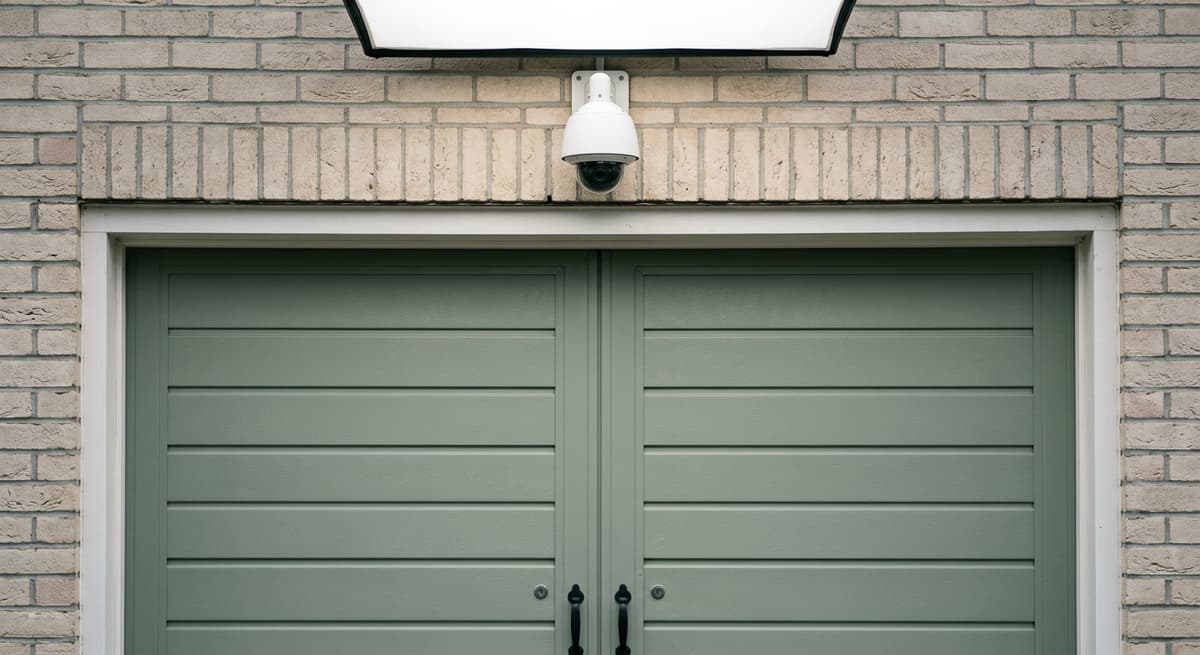
Nevada businesses can install video security cameras in:
- Sales floors and retail areas
- Lobbies, reception areas, and waiting rooms
- Hallways and corridors
- Parking lots and garages
- Warehouse and storage areas
- Loading docks and shipping areas
- Cash register areas and point-of-sale locations
- Building exteriors and perimeters
Where Cameras Are Prohibited
Cameras are strictly prohibited in locations where employees or customers have a reasonable expectation of privacy:
| Prohibited Location | Reason |
|---|---|
| Bathrooms and restrooms | Privacy expectation (NRS 200.604) |
| Locker rooms and changing areas | Privacy expectation (NRS 200.604) |
| Nursing and lactation rooms | Privacy expectation |
| Employee break rooms (context-dependent) | May have privacy expectation |
| Private offices with closed doors (context-dependent) | May have privacy expectation |
Installing a camera in a prohibited location is a gross misdemeanor for a first offense under NRS 200.604 (up to 364 days jail, $2,000 fine) and a Category E felony for subsequent offenses (1 to 4 years prison).
Signage Requirements
Nevada does not have a state law requiring businesses to post "security cameras in use" or "you are being recorded" signs. However, many businesses post signs for several practical reasons:
- Deterrence against theft and vandalism
- Reduced liability through customer notice
- Compliance with insurance requirements
- Best practices recommended by security consultants
Some local jurisdictions may have their own signage ordinances. Check with your city or county for any local requirements.
Audio on Business Security Cameras
Many modern security cameras include microphones for two-way communication or ambient audio recording. When a business security camera records audio:
- In-person conversations in the camera's range: If the business owner or employee is participating in the conversation, one-party consent under NRS 200.650 applies. If the camera records conversations the business is not part of, this may violate NRS 200.650.
- Phone calls captured by the microphone: If the camera's microphone picks up someone's phone call, the audio may violate NRS 200.620's all-party consent requirement for wire communications.
The safest practice for businesses is to disable audio recording on security cameras or clearly notify all people in the area that audio recording is in progress.
Casino Surveillance
Nevada Gaming Control Board Requirements
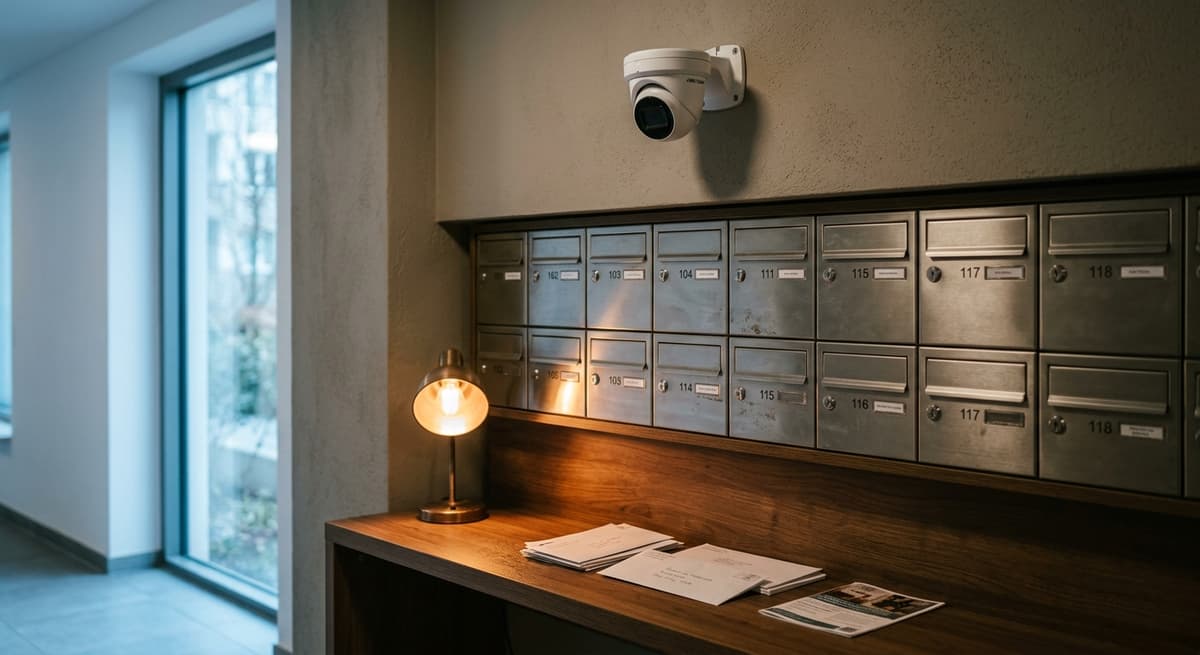
Nevada casinos operate extensive surveillance systems under regulations issued by the Nevada Gaming Control Board (NGCB). NGC Regulation 5 requires casinos to maintain surveillance systems that monitor:
- All gaming tables and gaming devices
- Count rooms and cash handling areas
- Cage and vault areas
- Main entrances and exits
Casino surveillance systems must meet specific technical standards for image quality, coverage, and retention periods. The NGCB can inspect surveillance systems and footage at any time.
Patron Privacy in Casinos
Patrons entering a Nevada casino have no reasonable expectation of privacy regarding video surveillance on the gaming floor, in restaurants, in hallways, and in other public areas. However:
- Hotel room surveillance by the casino is prohibited
- Bathroom and changing area surveillance is prohibited
- Casino surveillance footage of patrons is not public record and is generally kept confidential
Audio Recording in Casinos
Casino surveillance systems that capture audio must comply with Nevada's recording consent laws. Many casinos use video-only systems in gaming areas and reserve audio capability for specific security situations where authorized by management.
HOA and Neighbor Disputes
Common Issues
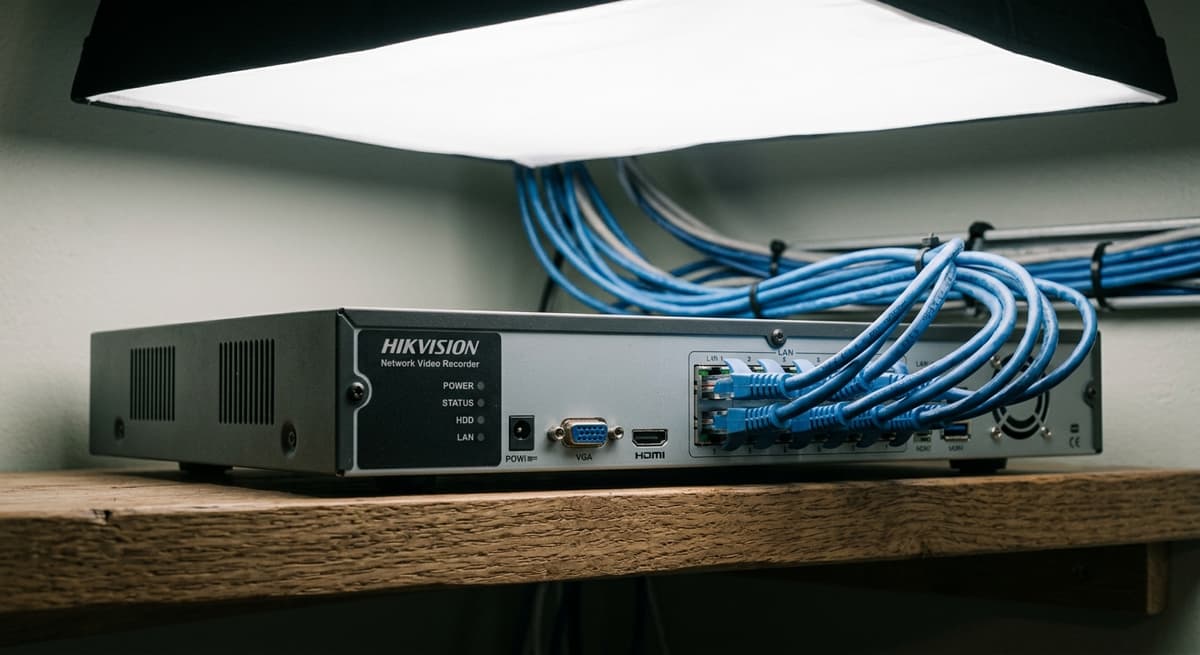
Security camera disputes between neighbors are increasingly common. In Nevada, the most frequent issues include:
- Cameras aimed at neighbor's property: A camera that primarily monitors your own property but incidentally captures some of your neighbor's driveway or yard is generally legal. A camera deliberately aimed to surveil a neighbor's private areas may violate NRS 200.604 or give rise to civil claims.
- Audio capture of neighbor conversations: If your security camera's microphone picks up your neighbor's private conversations, the audio may violate NRS 200.650.
- HOA restrictions: Many homeowners' associations in Nevada have rules about security camera placement, size, and visibility. HOA rules can be more restrictive than state law.
Legal Options for Disputes
If a neighbor's camera is invading your privacy:
- Talk to the neighbor and request a camera repositioning
- Contact your HOA if applicable
- File a police report if the camera is positioned to view private areas in violation of NRS 200.604
- Consult an attorney about civil remedies including injunctions and damages
Security Camera Footage as Evidence
Admissibility in Nevada Courts
Security camera footage is generally admissible as evidence in Nevada courts if:
- The camera was operating lawfully (not in a prohibited location, no illegal audio)
- The footage can be authenticated as genuine and unaltered
- The footage is relevant to the case
- The footage was preserved in its original format
Preservation and Retention
Nevada has no general state law requiring specific retention periods for private security camera footage. However:
- Insurance companies may require minimum retention periods
- If you are involved in a legal dispute, you have a duty to preserve relevant footage once litigation is anticipated
- Law enforcement can request footage and may obtain a court order if you refuse
Smart Home Security Systems
Ring, Nest, Arlo, and Similar Systems
Cloud-connected security systems raise unique considerations in Nevada:
- Footage shared with law enforcement: Some platforms like Ring have partnerships with police departments. In 2024, Ring changed its policies to require a warrant or court order before sharing customer footage with police, but policies vary by platform and may change.
- Cloud storage and data privacy: Footage stored on company servers is subject to the platform's privacy policy and terms of service.
- Two-way audio: When you use a two-way talk feature to speak with someone at your door, you are a participant in the conversation, satisfying NRS 200.650's one-party consent requirement.
License Plate Reader Cameras
Some residential and commercial security systems include license plate recognition (LPR) cameras. Nevada does not have a state law specifically regulating private LPR cameras, and as of 2026 has no dedicated state statute governing government or law enforcement use of automated license plate readers either. Any rules on retention, sharing, or access to government-collected LPR data currently come from individual agency policy rather than a Nevada statute. Check with the specific city, county, or state agency operating a system for its retention and access policy.
Penalties Summary
| Violation | Classification | Penalty |
|---|---|---|
| Camera in bathroom/locker room (first offense) | Gross misdemeanor | Up to 364 days jail, $2,000 fine |
| Camera in bathroom/locker room (subsequent) | Category E felony | 1-4 years prison, $5,000 fine |
| Camera capturing audio without consent (in-person) | Category D felony | 1-4 years prison, $5,000 fine |
| Camera capturing phone call audio | Category D felony | 1-4 years prison, $5,000 fine |
| Camera aimed at private body areas | Gross misdemeanor/felony | Varies by offense number |
More Nevada Recording Laws
Audio Recording | Video Recording | Voyeurism & Hidden Cameras | Workplace Recording | Recording Police | Phone Call Recording | Security Cameras | Recording in Public | Landlord-Tenant | Dashcam Laws | Schools | Medical Recording
More Nevada Recording Topics
See Also
- Nevada Surveillance Camera Laws covers home, HOA, neighbor, workplace, and landlord camera rules in Nevada.
More Nevada Laws
Frequently Asked Questions
Do I need to post signs for security cameras in Nevada?
No. Nevada has no state law requiring homeowners or businesses to post signs for video-only security cameras. Many businesses post signs as a best practice for deterrence and liability, but it is not legally required. Some local jurisdictions or HOAs may have their own signage rules.
Can I put a security camera in my rental property in Nevada?
Landlords can install exterior security cameras and cameras in common areas of multi-unit buildings. Cameras inside a tenant's living space are illegal without the tenant's consent. Hidden cameras in bathrooms, bedrooms, or other private areas violate NRS 200.604 and are a criminal offense.
Are security cameras with audio legal in Nevada?
Video-only cameras are broadly legal in non-private areas. When a camera records audio, Nevada's consent rules apply. In-person conversation audio follows one-party consent under NRS 200.650 (you must be a participant). Phone call audio requires all-party consent under NRS 200.620. The safest approach is to disable audio recording on security cameras.
Can my neighbor point a security camera at my house in Nevada?
A camera that incidentally captures some of your property while primarily monitoring the neighbor's own property is generally legal. A camera deliberately aimed to surveil your private areas (bedroom, bathroom through a window) may violate NRS 200.604. You can ask the neighbor to reposition the camera or consult an attorney about civil remedies.
How long must casino surveillance footage be kept in Nevada?
The Nevada Gaming Control Board sets retention requirements for casino surveillance footage through NGC Regulation 5. Retention periods vary based on the type of footage and the events recorded. Critical incident footage must be retained for longer periods. Specific requirements are set by the NGCB and individual casino policies.
Updates
Removed a fabricated license-plate-reader statute citation (NRS 238.640 does not exist; chapter 238 covers legal notices, not surveillance) and corrected the page to state honestly that Nevada has no state law on government or private license-plate-reader use, and replaced the dead Nevada Gaming Control Board regulation link with a live source.
Independently fact-checked against the cited primary sources
Governing law re-checked for recent changes
Reviewed and approved by an editor
The Law Behind This Article
This article rests on the statutory provisions below, held in our own legal record and retrieved from the official source. Tap a section to read the operative text.
Nevada Revised Statutes, Chapter 200: CRIMES AGAINST THE PERSON
§ 200.604Capturing image of private area of another person; distributing, disclosing, displaying, transmitting or publishing image of private area of another person; penalties; exceptions; confidentiality of image.In forcecited in 12 of our articles
1. Except as otherwise provided in subsection 4, a person shall not knowingly and intentionally capture an image of the private area of another person: (a) Without the consent of the other person; and (b) Under circumstances in which the other person has a reasonable expectation of privacy. 2. Except as otherwise provided in subsection 4, a person shall not distribute, disclose, display, transmit or publish an image that the person knows or has reason to know was made in violation of subsection 1. 3. Unless a greater penalty is provided pursuant to NRS 200.780 or 212.188, a person who violates this section: (a) For a first offense, is guilty of a gross misdemeanor. (b) For a second or subsequent offense, is guilty of a category E felony and shall be punished as provided in NRS 193.130. 4. This section does not prohibit any lawful law enforcement or correctional activity, including, without limitation, capturing, distributing, disclosing, displaying, transmitting or publishing an image for the purpose of investigating or prosecuting a violation of this section.
Official text (excerpt) · last checked 2026-07-29 · Read the full text in our law library · Verify at leg.state.nv.us
Cited in 4 court opinions in our collectionLatest citing opinion in our collection: 2018
Opinions citing this section in our collection:
- Coleman v. State (Nevada Supreme Court 2018, 416 P.3d 238)“…By the Court, PICKERING, J.: NRS 200.604 prohibits a person from knowingly and i…”
- COLEMAN (SOLOMON) VS. STATE (Nevada Supreme Court 2018, 2018 NV 28)“…y the Court, PICKERING, J.: NRS 200.604 prohibits a person from knowingly and…”
- Brian Olsen v. City of Henderson (Court of Appeals for the Ninth Circuit 2016, 648 F. App'x 628)“…amily. Nichols reasonably believed that Olsen had violated Nev. Rev. Stat. § 200.604 by capturing and publishing to his per…”
Identified automatically from the court opinions citing this section — not a ranking of which case controls.
Also relied on in: Nevada Smart Glasses Recording Laws 2026, Nevada Landlord-Tenant Recording Laws: Rights for Renters and Property Owners (2026), Nevada Medical Recording Laws: Patient Rights and Healthcare Privacy (2026)
§ 200.620Interception and attempted interception of wire communication prohibited; exceptions.In forcecited in 18 of our articles
1. Except as otherwise provided in subsection 5 and NRS 179.410 to 179.515, inclusive, 209.419 and 704.195, it is unlawful for any person to intercept or attempt to intercept any wire communication unless: (a) The interception or attempted interception is made with the prior consent of one of the parties to the communication; and (b) An emergency situation exists and it is impractical to obtain a court order as required by NRS 179.410 to 179.515, inclusive, before the interception, in which event the interception is subject to the requirements of subsection 3. If the application for ratification is denied, any use or disclosure of the information so intercepted is unlawful, and the person who made the interception shall notify the sender and the receiver of the communication that: (1) The communication was intercepted; and (2) Upon application to the court, ratification of the interception was denied.
Official text (excerpt) · last checked 2026-08-28 · Read the full text in our law library · Verify at leg.state.nv.us
Cited in 18 court opinions in our collectionLatest citing opinion in our collection: 2025
In the courts (editorial summary, independently checked):Nevada reads NRS 200.620 as an all-party consent rule for phone recording, with a territorial limit. Lane v. Allstate Insurance held a participant who taped his own calls without the other parties' consent violated it; DITECH FINANCIAL, LLC VS. BUCKLES held it does not reach calls recorded from outside Nevada.
Opinions citing this section in our collection:
- Lane v. Allstate Insurance (Nevada Supreme Court 1998, 114 Nev. 1176)✓A former employee secretly taped hundreds of his own phone calls with his ex-employer's staff to build his suit; the court held NRS 200.620 bars recording a call without every party's consent, so the tapes were excluded and the dismissal of his suit was reversed.
- State v. Reyes (Nevada Supreme Court 1991, 107 Nev. 191)✓Police had an interpreter listen on a station extension phone while an informant set up a drug buy; the court held that officers' use of regularly installed telephone equipment in the ordinary course of their duties is not an interception under NRS 200.620.
- ABID VS. ABID (CHILD CUSTODY) (Nevada Supreme Court 2017, 2017 NV 94)“…corded phone conversations in violation of NRS 200.620 to obtain evidence to support tort…”
Identified automatically from the court opinions citing this section — not a ranking of which case controls.
Also relied on in: Nevada Windshield Mounting Laws (2026 Guide), Nevada Audio Recording Laws: Split Consent Rules and Penalties (2026), Nevada Dashcam Laws: Legal Rules for Dashboard Cameras (2026)
§ 200.650Unauthorized, surreptitious intrusion of privacy by listening device prohibited.In forcecited in 19 of our articles
Except as otherwise provided in NRS 179.410 to 179.515, inclusive, and 704.195, a person shall not intrude upon the privacy of other persons by surreptitiously listening to, monitoring or recording, or attempting to listen to, monitor or record, by means of any mechanical, electronic or other listening device, any private conversation engaged in by the other persons, or disclose the existence, content, substance, purport, effect or meaning of any conversation so listened to, monitored or recorded, unless authorized to do so by one of the persons engaging in the conversation.
Official text (excerpt) · last checked 2026-08-26 · Read the full text in our law library · Verify at leg.state.nv.us
Cited in 13 court opinions in our collectionLatest citing opinion in our collection: 2025
In the courts (editorial summary, independently checked):Nevada courts read NRS 200.650 to permit a recording authorized by a participant. Summers v. State (1986) upheld a body-wire recording because the informant taking part in the conversation authorized it. Abid v. Abid (2017) held the section carries no suppression rule, so a custody expert could consider recordings made in violation of it.
Opinions citing this section in our collection:
- Lane v. Allstate Insurance (Nevada Supreme Court 1998, 114 Nev. 1176)✓A former employee secretly taped hundreds of phone calls with company personnel; the court read NRS 200.650 as allowing in-person private conversations to be recorded when one participant authorizes it, and contrasted that in holding NRS 200.620 bars one-party taping of calls.
- Summers v. State (Nevada Supreme Court 1986, 102 Nev. 195)✓Police taped a transmitter to an informant, who recorded his conversation with Summers about the murder guns; the court held such a recording needs no court order so long as the authorization requirement of NRS 200.650 is met, and the informant had authorized it.
- ABID VS. ABID (CHILD CUSTODY) (Nevada Supreme Court 2017, 2017 NV 94)“…to this recording, the father's actions likely violated NRS 200.650, which prohibits the…”
Identified automatically from the court opinions citing this section — not a ranking of which case controls.
Also relied on in: Nevada Recording Laws (2026): Hybrid One-Party/All-Party Consent, Nevada Phone Call Recording Laws: All-Party Consent Required (2026), Nevada Voyeurism and Hidden Camera Laws: NRS 200.604 Penalties (2026)
§ 200.690Penalties.In forcecited in 13 of our articles
1. A person who willfully and knowingly violates NRS 200.620 to 200.650, inclusive: (a) Shall be punished for a category D felony as provided in NRS 193.130. (b) Is liable to a person whose wire or oral communication is intercepted without his or her consent for: (1) Actual damages or liquidated damages of $100 per day of violation but not less than $1,000, whichever is greater; (2) Punitive damages; and (3) His or her costs reasonably incurred in the action, including a reasonable attorney’s fee, Ê all of which may be recovered by civil action. 2. A good faith reliance by a public utility on a written request for interception by one party to a conversation is a complete defense to any civil or criminal action brought against the public utility on account of the interception.
Official text (excerpt) · last checked 2026-07-29 · Read the full text in our law library · Verify at leg.state.nv.us
Cited in 5 court opinions in our collectionLatest citing opinion in our collection: 2023
Opinions citing this section in our collection:
- Lane v. Allstate Insurance (Nevada Supreme Court 1998, 114 Nev. 1176)“…shable as “a category D felony as provided in NRS 193.130.” NRS 200.690(l)(a). In addition, the violator is lia…”
- ABID VS. ABID (CHILD CUSTODY) (Nevada Supreme Court 2017, 2017 NV 94)“…regarding evidence and admissibility. See NRS 200.690(1) (enforcing NRS 200.650 exclusively…”
- DITECH FINANCIAL, LLC VS. BUCKLES (Nevada Supreme Court 2017, 2017 NV 64)“…ons without Buckles's consent.' 1 NRS 200.690(1)(b) provides a private right of actio…”
Identified automatically from the court opinions citing this section — not a ranking of which case controls.
Also relied on in: Nevada School Recording Laws: Rules for Students, Parents, and Teachers (2026), Nevada Video Recording Laws: When Consent Is Required (2026), Nevada Workplace Recording Laws: Employee and Employer Rights (2026)
Nevada Revised Statutes, Chapter 239: PUBLIC RECORDS
§ 239.010Public books and public records open to inspection; confidential information in public books and records; copyrighted books and records; copies to be prepared by governmental entity and provided in electronic format unless other medium requested.In forcecited in 5 of our articles
1. Except as otherwise provided in this section and NRS 1.4683, 1.4687, 1A.110, 3.2203, 41.0397, 41.071, 49.095, 49.293, 62D.420, 62D.440, 62E.516, 62E.620, 62H.025, 62H.030, 62H.170, 62H.220, 62H.320, 75A.100, 75A.150, 76.160, 78.152, 80.113, 81.850, 82.183, 86.246, 86.54615, 87.515, 87.5413, 87A.200, 87A.580, 87A.640, 88.3355, 88.5927, 88.6067, 88A.345, 88A.7345, 89.045, 89.251, 90.703, 90.730, 91.160, 116.757, 116A.270, 116B.880, 118B.026, 119.260, 119.265, 119.267, 119.280, 119A.280, 119A.653, 119A.677, 119B.370, 119B.382, 120A.640, 120A.690, 125.130, 125B.140, 126.141, 126.161, 126.163, 126.730, 127A.160, 127A.230, 127B.370, 127B.750, 127C.420, 127C.870, 127E.120, 128.090, 130.312, 130.712, 136.050, 159.044, 159A.044, 164.041, 172.075, 172.245, 176.01334, 176.01385, 176.015, 176.0625, 176.09129, 176.156, 176A.630, 178.4715, 178.5691, 178.5717, 179.495, 179A.070, 179A.165, 179D.160, 180.600, 200.3771, 200.3772, 200.5095, 200.604, 202.3662, 205.4651, 209.392, 209.3923, 209.3925, 209.419, 209.429, 209.521, 211A.140, 213.010, 213.040, 213.095, 213.131, 217.105, 217.110, 217.464, 217.475, 218A.350, 218F.150, 218G.130, 218G.240, 218G.350, 218G.615, 223.250,…
Official text (excerpt) · last checked 2026-09-03 · Read the full text in our law library · Verify at leg.state.nv.us
Cited in 37 court opinions in our collectionLatest citing opinion in our collection: 2026
In the courts (editorial summary, independently checked):Donrey of Nevada, Inc. v. Bradshaw (1990) held a police investigative report is a public record under NRS 239.010 where no statute declares it confidential, subject to a balancing of interests, and ordered it released. Reno Newspapers, Inc. v. Haley (2010) applied that framework to concealed firearms permit records.
Opinions citing this section in our collection:
- City of Reno v. Reno Gazette-Journal (Nevada Supreme Court 2003, 119 Nev. 55)✓A newspaper sought appraisal and relocation records for Reno's federally funded rail trench project; the court held a federal regulation adopted into Nevada law by NRS 342.105 makes them confidential, placing them within the NRS 239.010 exemption for records confidential by law.
- Reno Newspapers, Inc. v. Haley (Nevada Supreme Court 2010, 126 Nev. 211)✓A newspaper sought records on the suspension of the governor's concealed firearms permit; the court held NRS 202.3662 covers only the application and pre-issuance investigation, so the permittee's name and post-permit records are public under NRS 239.010, subject to redaction.
- Donrey of Nevada, Inc. v. Bradshaw (Nevada Supreme Court 1990, 106 Nev. 630)✓News outlets sought a police report on the dismissal of charges against Joe Conforte; the court held criminal investigative reports are not declared confidential by statute and, weighing open government against privacy and law enforcement, ordered the whole report released.
Identified automatically from the court opinions citing this section — not a ranking of which case controls.
Also relied on in: Nevada Laws on Recording Police: Your Rights Under NRS 171.1233 (2026), Nevada Police Reports: How to Get a Crash Report, Incident Report, or Bodycam Video, Nevada Public Records Act: How to Request Records (2026)
Search our full record of US law — 2.1 million sections, every state + federal →
Sources and References
- NRS 200.604 - Capturing Image of Private Area(leg.state.nv.us).gov
- NRS 200.620 - Interception of Wire Communications(leg.state.nv.us).gov
- NRS 200.650 - Surreptitious Intrusion of Privacy(leg.state.nv.us).gov
- NRS 200.690 - Penalties(leg.state.nv.us).gov
- NGC Regulation 5 - Surveillance Standards for Licensees(gaming.nv.gov).gov
- NRS 239.010 - Public Records(leg.state.nv.us).gov