How to File a Police Report: 911, Online, and In-Person Options
Independently fact-checked against primary sources (last audited August 11, 2026). · Law checked current as of August 11, 2026. · 4 primary sources cited on this page. How we verify our legal content
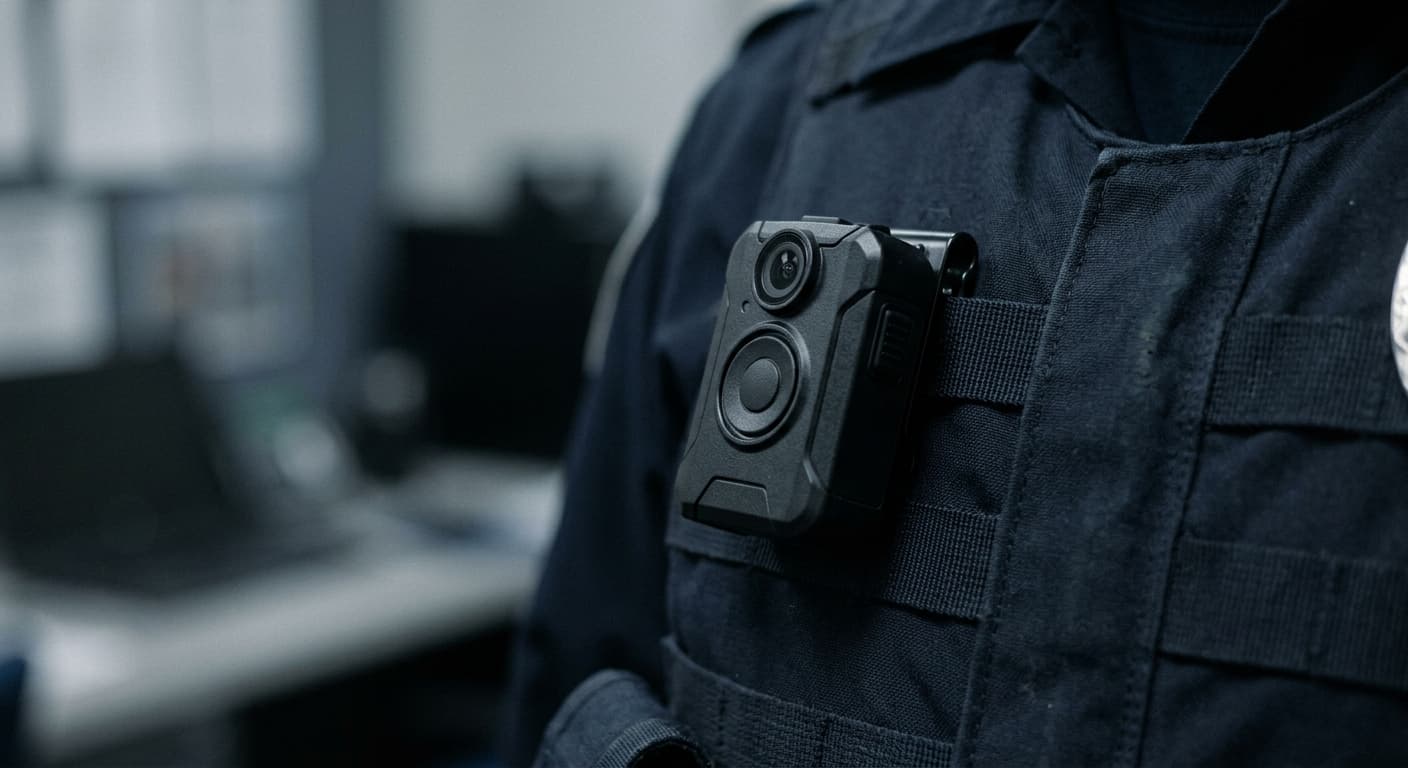
Filing a police report is not one single action. It can mean calling 911 for something happening right now, calling a non-emergency line to report something that already happened, filing online for a minor incident, or, after a crash, filling out a driver's own report because no officer ever responded. Which one applies depends on what happened and, for a crash specifically, whether the law even requires a report at all.
This guide covers when to use which channel, the crash-specific filing thresholds that decide whether a report is legally required, what filing actually accomplishes (and what it does not), and what happens to a report once it is filed.
Information last verified on 2026-08-11. This article has not yet been reviewed by a licensed lawyer.
When to Call 911 vs. a Non-Emergency Line
911 exists for something happening right now: a crime in progress, an injury, a fire, or an immediate threat to someone's safety. Dispatchers prioritize calls by urgency, and a non-emergency situation routed through 911 pulls resources away from an actual emergency elsewhere in the same moment.
For something that has already happened and is no longer an active threat, a completed theft discovered after the fact, vandalism to a parked car, a past harassment incident, a local department's non-emergency line is the right channel. Most local police departments publish a separate non-emergency number for exactly this purpose, and many now also accept certain minor, non-emergency reports through an online form, typically limited to incidents with no suspect in custody, no ongoing danger, and no need for an officer to process a scene. Check the specific department's own website for which incident types qualify online, since the list varies by agency and usually excludes anything involving injury, a weapon, or a known suspect.
Filing a Crash Report: Do You Actually Need To?
This is the question with the most surprising answer for most readers: below a state's own damage or injury threshold, many minor crashes never generate any report at all, by design.

New York requires a driver-filed report, form MV-104, only where a crash meets a specific threshold: someone is injured or killed, or property damage to any one person exceeds $1,000. A separate and narrower duty falls on a different person entirely. Under Vehicle and Traffic Law § 605(b), the operator of an electric scooter or a bicycle involved in a crash on a public highway must report the matter in writing to the commissioner within ten days if any person other than the operator is killed or suffers serious physical injury as defined by Penal Law § 10.00(10). That duty runs to the scooter or bicycle operator, not to a motor-vehicle driver merely because a scooter was involved, and a parent or guardian files it if the operator is a minor who cannot. Below that line, New York expects drivers to simply exchange license, insurance, and registration information at the scene, filed nowhere. Oregon's threshold is different in both amount and timing: a driver involved in a crash meeting the state's own reporting threshold, injury, death, or damage over $2,500, must file the Oregon Traffic Accident and Insurance Report, Form 735-32, with DMV within 72 hours, using the DMV2U online system, mail, fax, or in person. Florida splits the question into two separate duties that are easy to confuse. The driver's duty comes from Fla. Stat. § 316.065(1): notify police immediately when a crash causes injury or death, or damage to any vehicle or other property in an apparent amount of at least $500. What the responding officer then files turns on entirely different triggers with no dollar amount attached. Under Fla. Stat. § 316.066(1)(a), the Florida Traffic Crash Report, Long Form, is required only where the crash resulted in death, personal injury, or a complaint of pain or discomfort, involved leaving the scene or driving under the influence, required a wrecker to remove a vehicle, or involved a commercial motor vehicle. Every other crash on a public roadway gets a short-form report or a driver exchange-of-information form under § 316.066(1)(c), no matter how large the repair bill. So a $700 no-injury Florida crash is still reportable to police by the driver, and still generates only a short form or an exchange form.
Every state sets its own number and its own trigger conditions, so confirm the actual threshold on the relevant state DMV or DPS page before assuming a minor fender-bender needs, or does not need, a formal report.
Filing When No Officer Responds
A crash can meet the threshold and still have no officer show up, a common outcome for a minor collision with no injury when responding units are tied up elsewhere. Several states have a self-report path for exactly this situation. Florida lets a driver file a Driver Self Report of Traffic Crash by mail or email directly with FLHSMV when no officer investigated. New York lets a driver file the MV-104 report directly online through its own portal, reportcrash.dmv.ny.gov, using a NY.gov ID, rather than waiting on an officer-prepared version. Texas is the counterexample, and it matters because the old advice still circulates. Texas eliminated the driver self-report: Senate Bill 312 of the 85th Legislature repealed the driver's-report duty effective September 1, 2017, and TxDOT states that the CR-2 is no longer retained by the department, that it no longer hosts or provides copies of the form, and that any CR-2 or similar local agency form submitted to it will be destroyed under its records retention policy. A Texas driver whose crash was never investigated should request the officer's crash report, form CR-3, if one exists, and otherwise keep the local agency's exchange-of-information form for their own records. There is no state self-report path to fall back on.
If your state's threshold is met but no officer came to the scene, check that state's own DMV or highway safety page for a self-report option before assuming you have no way to create a record of the crash.
What Filing a Police Report Does, and Doesn't, Accomplish
Filing a report creates an official record and, for a criminal matter, can open an investigation. That is genuinely useful: it is often the trigger an insurer needs to open a claim, the paper trail an employer or landlord may ask for, and in some cases the first step toward identifying a suspect.
What filing does not do is just as important to understand going in. Filing a report does not automatically hand you a copy of the finished document; that is usually a separate request, sometimes days or weeks later, once the report has been processed. See Police Reports by State for how to request a copy once one exists, and Are Police Reports Public? for who is actually eligible to see it. Filing does not itself resolve an insurance claim; the insurer still investigates and makes its own coverage and liability determination independent of what the report ultimately says. And filing does not guarantee an arrest, a prosecution, or any particular legal outcome; what happens next depends on the facts, available evidence, and the responding agency's own resources and priorities, none of which the act of filing controls.
Filing a False Report
Every state treats knowingly filing a false police report as a criminal offense, typically classified as a misdemeanor, though the specific classification, penalty, and how the state defines "false" varies. This is separate from an honest mistake or a detail you later realize was wrong; the crime generally requires knowing the report is false at the time it is made, not simply being incorrect about something you genuinely believed. If a detail in an already-filed report turns out to be wrong, the fix is contacting the investigating agency to correct or supplement the report through its own process, not letting an inaccurate report stand and not filing a second, contradictory report on your own.

What Happens After You File
Once a report is filed, it goes through the responding agency's own processing before it becomes a finished document available for others to request. For a crash report specifically, this typically means the officer's field notes or short-form entry gets converted into the state's standard crash-report format and forwarded to a state repository; this commonly takes anywhere from about 10 days to six weeks depending on the state and how the specific crash was investigated. For an incident report, processing time depends on the department and whether the matter remains part of an active investigation, which can affect whether and when the report becomes available to someone outside the case.
A report filed with an officer at the scene is not automatically the same document as the copy you would later request. See How to Read a Police Report for what the finished report actually contains once it is available, and Police Reports by State for how to request a copy in your specific state, including who is eligible for a full versus a redacted version under the federal Driver's Privacy Protection Act, 18 U.S.C. § 2721.
Disclaimer
This article provides general information about filing a police report in the United States. It is not legal advice. Reporting thresholds, forms, and procedures vary by state and change over time; confirm current details with the relevant local department or state agency, or a licensed attorney, before relying on anything here for a specific situation.

Last updated: 2026-08-11. Procedures and thresholds reflect their published status as of August 2026.
Frequently Asked Questions
Should I call 911 or the non-emergency line?
Call 911 only for something happening right now, a crime in progress, an injury, or an immediate danger. Use a local non-emergency line for something that has already happened and is over.
Can I file a police report online?
Many local departments accept online reports for certain minor, non-emergency incidents with no suspect in custody and no ongoing danger. For crashes, several states also let a driver file directly online, for example New York's reportcrash.dmv.ny.gov. Check the specific department or state DMV's site for which incident types qualify.
Do I have to file a report after every car accident?
No. Most states only require a report once a crash crosses a specific damage or injury threshold. New York's threshold is $1,000 in damage or any injury or death; Oregon's is $2,500 in damage or any injury or death. Below the threshold, drivers typically just exchange information at the scene.
What happens if I file a police report and no officer ever came to the crash scene?
Several states let a driver self-file directly with the state DMV or highway safety agency when a crash meets the reporting threshold but no officer responded, for example Florida's Driver Self Report of Traffic Crash or New York's online MV-104 filing option.
Does filing a police report mean I'll get a copy of it right away?
No. Filing starts the record, but the finished report typically needs processing before a copy is available to request, commonly anywhere from about 10 days to six weeks depending on the state and the specific crash.
Is it illegal to file a false police report?
Yes, every state criminalizes knowingly filing a false report, typically as a misdemeanor. This is different from later learning a detail in your report was mistaken; contact the investigating agency to correct an inaccurate report rather than letting it stand.
Updates
Corrected the crash-reporting rules for three states: Texas eliminated the CR-2 driver self-report in 2017, Florida’s $500 figure is the driver’s duty to notify police rather than a trigger for the officer’s Long Form, and New York’s electric scooter and bicycle report is filed by the rider only after a death or serious physical injury.
Independently fact-checked against the cited primary sources; governing law re-checked for recent changes
The Law Behind This Article
This article rests on the statutory provisions below, held in our own legal record and retrieved from the official source. Tap a section to read the operative text.
United States Code Title 18
§ 2721Prohibition on release and use of certain personal information from State motor vehicle recordsIn forcecited in 11 of our articles
A State department of motor vehicles, and any officer, employee, or contractor thereof, shall not knowingly disclose or otherwise make available to any person or entity: personal information, as defined in 18 U.S.C. 2725(3), about any individual obtained by the department in connection with a motor vehicle record, except as provided in subsection (b) of this section; or highly restricted personal information, as defined in 18 U.S.C. 2725(4), about any individual obtained by the department in connection with a motor vehicle record, without the express consent of the person to whom such information applies, except uses permitted in subsections (b)(1), (b)(4), (b)(6), and (b)(9): Provided, That subsection (a)(2) shall not in any way affect the use of organ donation information on an individual’s driver’s license or affect the administration of organ donation initiatives in the States.
Official text (excerpt) · last checked 2026-07-28 · Read the full text in our law library · Verify at uscode.house.gov
Cited in 377 court opinions in our collectionLatest citing opinion in our collection: 2026
In the courts (editorial summary, independently checked):Maracich v. Spears (2013) held an attorney's solicitation of clients is not a permissible purpose under the DPPA litigation exception in 2721(b)(4). Reno v. Condon (2000) upheld the statute's restrictions on disclosing state motor vehicle records as a valid exercise of the commerce power that does not conscript state officers.
Opinions citing this section in our collection:
- Maracich v. Spears (Supreme Court of the United States 2013, 570 U.S. 48)✓Lawyers used South Carolina DMV records to mail over 34,000 car buyers letters recruiting them as clients; the Supreme Court held that sending communications with the predominant purpose of solicitation is not a use exempt under the section 2721(b)(4) litigation exception.
- Reno v. Condon (Supreme Court of the United States 2000, 528 U.S. 141)✓South Carolina, whose law let almost anyone buy DMV records, argued the federal driver-privacy law commandeered the states; the Supreme Court held section 2721 regulates states as owners of databases and upheld it under the Commerce Clause.
- Pichler v. UNITE (Court of Appeals for the Third Circuit 2008)✓Union organizers copied license plates from a company parking lot and pulled the owners' DMV records to make house calls; the Third Circuit held union organizing is not among the permissible uses in section 2721(b), and a parallel lawful purpose does not excuse it.
Identified automatically from the court opinions citing this section — not a ranking of which case controls.
Also relied on in: How to Request Body Cam Footage: State Laws and the Request Process, Police Reports by State: How to Get a Copy, What They Cost, and What's Public, Are Police Reports Public Record? What's Open and What's Not
Search our full record of US law — 2.1 million sections, every state + federal →
Sources and References
- New York DMV, File a Motorist Crash/Accident Report(dmv.ny.gov).gov
- Oregon DMV, Accident and Insurance Report(oregon.gov).gov
- Florida Highway Safety and Motor Vehicles, Traffic Crash Reports(flhsmv.gov).gov
- Texas Department of Transportation, Crash Reports and Records(txdot.gov).gov
- 18 U.S.C. § 2721, Driver's Privacy Protection Act(law.cornell.edu)
- Fla. Stat. § 316.066, Written Reports of Crashes(flsenate.gov)
- Fla. Stat. § 316.065, Crashes; Reports; Penalties(flsenate.gov)
- N.Y. Vehicle and Traffic Law § 605, Reports of Accidents(nysenate.gov)