
Nevada
Nevada Landlord-Tenant Recording Laws: Rights for Renters and Property Owners (2026)
Independently fact-checked against primary sources (last audited August 15, 2026). · Reviewed by the RecordingLaw editorial team. · Law checked current as of August 15, 2026. · 7 primary sources cited on this page. How we verify our legal content
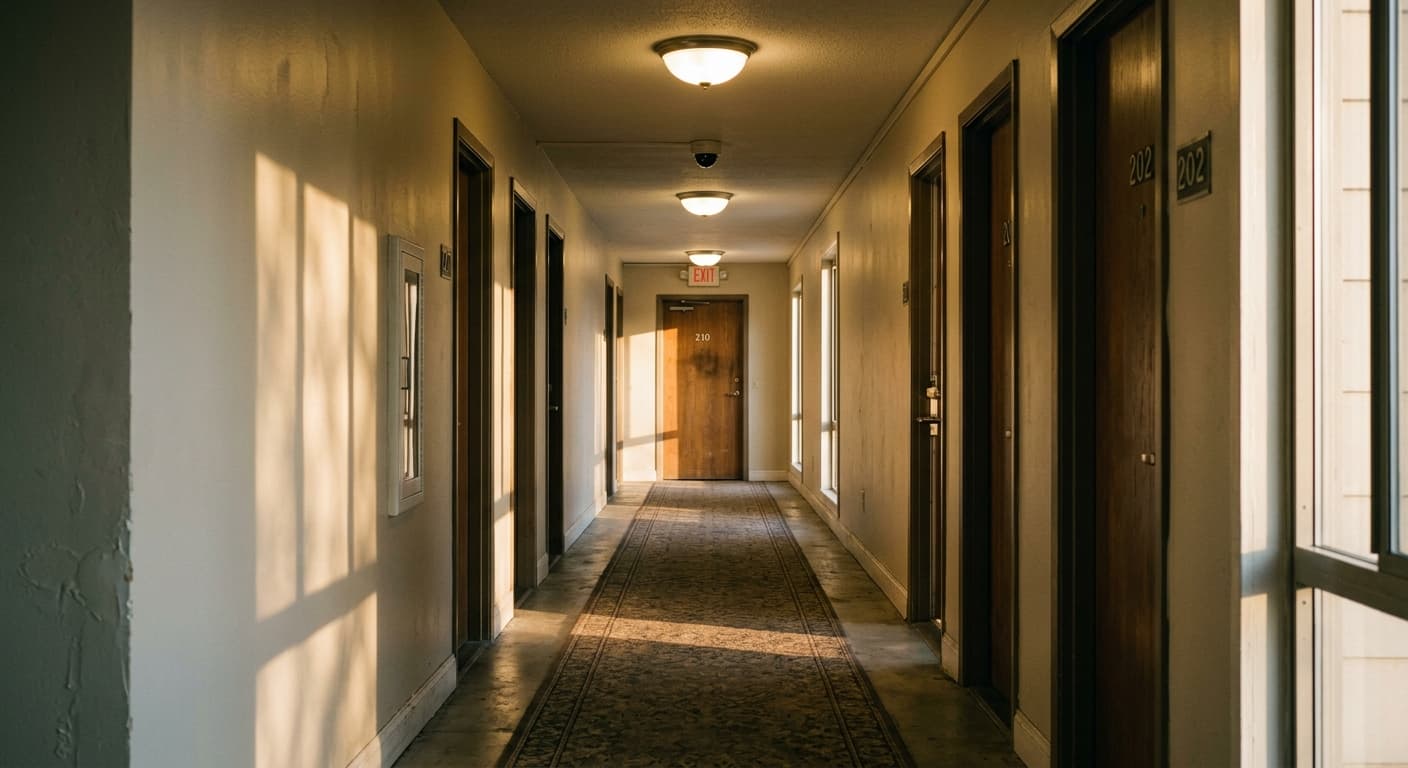
In Nevada, tenants can record in-person conversations with landlords without notice under NRS 200.650, but phone calls require all-party consent under NRS 200.620. Landlords should not install cameras inside a rental unit without the tenant's knowledge and consent; hidden cameras that capture a tenant's private areas violate NRS 200.604.
Landlord-tenant disputes in Nevada often come down to one party's word against the other's. Recording conversations can provide crucial documentation of verbal agreements, maintenance requests, harassment, and lease violations. Under Nevada's split consent recording framework, tenants and landlords can record in-person conversations they participate in without the other party's knowledge under NRS 200.650. Phone calls are different: NRS 200.620 requires every person on the call to consent.
This guide covers tenant recording rights, landlord surveillance rules, hidden camera protections, using recordings as evidence, and how the split consent system applies to common landlord-tenant situations.
Tenant Recording Rights
In-Person Conversations With Your Landlord
Under NRS 200.650, you can record any face-to-face conversation with your landlord that you participate in. This includes:
- Discussions about repairs and maintenance
- Lease renewal and rent increase negotiations
- Move-in and move-out inspections
- Complaints about habitability or safety conditions
- Conversations about security deposits
- Discussions about lease violations or notices
- Any verbal agreements about the property
You do not need to inform your landlord that you are recording. Your participation in the conversation satisfies the one-party consent requirement.
Phone Calls With Your Landlord
Phone calls with your landlord require all-party consent under NRS 200.620. The statute's text authorizes recording with one party's consent or under a court order in an emergency, but the Nevada Supreme Court's fractured decision in Lane v. Allstate Ins. Co., 114 Nev. 1176, 969 P.2d 938 (1998), interprets it to require every participant's consent, which is why phone calls are treated as all-party in practice. You must tell your landlord you are recording and get their agreement before pressing record. This applies to:
- Cell phone calls
- Landline calls
- Video calls through Zoom, FaceTime, or similar platforms
If you need to document a phone conversation with your landlord, announce at the start of the call: "I am recording this call. Is that okay?" If the landlord objects, you must stop recording. If they agree or remain on the call without objecting, you can proceed.
Quick Reference: Recording Landlord Interactions
| Interaction | Can You Record? | Consent Rule |
|---|---|---|
| In-person conversation with landlord | Yes | One-party (NRS 200.650) |
| Phone call with landlord | Only with landlord's consent | All-party (NRS 200.620) |
| Text messages with landlord | Saved automatically by your phone | Written record |
| Video call with landlord | Only with landlord's consent | All-party (NRS 200.620) |
| Move-in/move-out walk-through | Yes (in-person) | One-party (NRS 200.650) |
| Maintenance worker visit | Yes (in-person) | One-party (NRS 200.650) |
Landlord Surveillance Rules
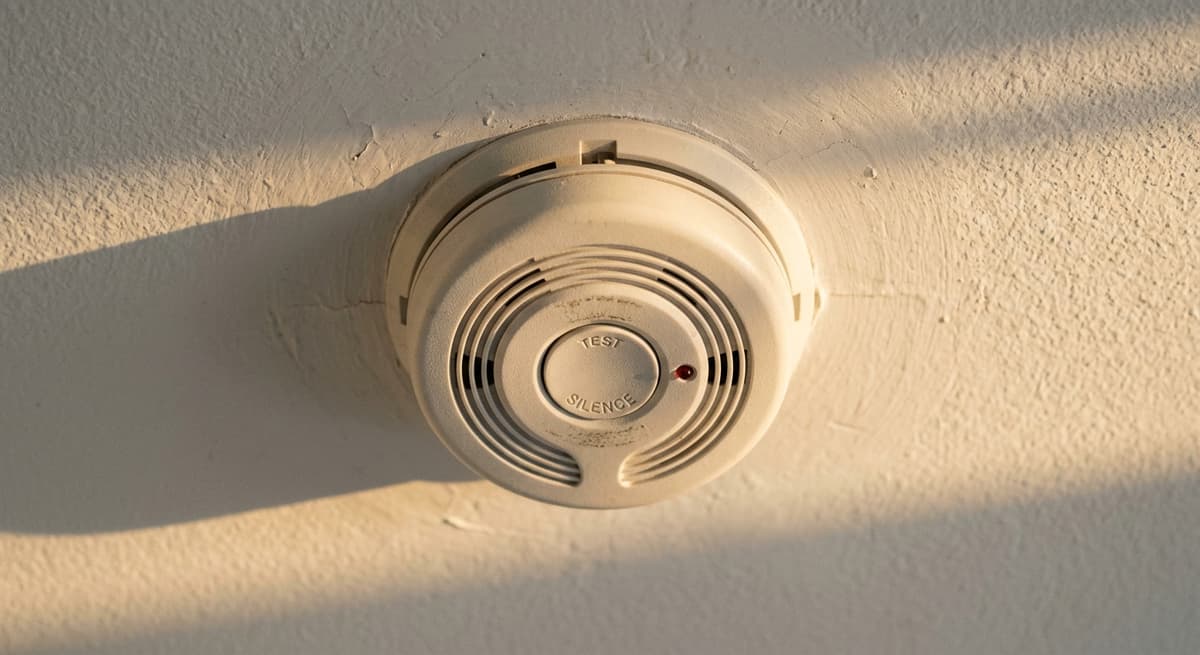
Cameras Inside Rental Units
Landlords should not install cameras inside a tenant's rental unit without the tenant's knowledge and consent. Nevada's voyeurism law, NRS 200.604, makes it a crime to knowingly capture an image of a person's private area (genitals, pubic area, buttocks, or female breast) without consent under circumstances where the person has a reasonable expectation of privacy. A hidden camera that captures a tenant's private area, such as in a bedroom or bathroom, violates this law. A disclosed camera that does not capture private body areas is not automatically illegal under NRS 200.604, but installing any surveillance device inside a tenant's living space without the tenant's knowledge and consent still raises serious privacy and lease concerns.
Hidden cameras in a rental unit can violate multiple Nevada laws:
| Violation | Statute | Penalty |
|---|---|---|
| Camera in bathroom or bedroom | NRS 200.604 | Gross misdemeanor (first offense), Category E felony (repeat) |
| Audio recording without consent | NRS 200.650 | Category D felony |
| Invasion of privacy | Common law | Civil damages |
Landlord Entry Rules Apply to Camera Installation
Installing a camera inside a tenant's unit requires physically entering that unit, and Nevada's landlord-entry statute, NRS 118A.330, governs that separately from NRS 200.604. A landlord may enter a dwelling unit only with the tenant's consent, or after giving at least 24 hours' notice of intent to enter (except in a genuine emergency), and may not abuse the right of access or use it to harass the tenant. A landlord who enters a unit to install a camera, hidden or disclosed, without the tenant's consent and without the required 24-hour notice violates NRS 118A.330 regardless of whether the camera itself ever triggers NRS 200.604. This gives tenants a separate, easier-to-prove claim for an unauthorized camera installation even when the footage never captures a private body area.
Cameras in Common Areas
Landlords of multi-unit buildings can install video-only security cameras in common areas where tenants do not have a reasonable expectation of privacy:
- Building lobbies and entryways
- Hallways and corridors
- Parking lots and garages
- Laundry rooms
- Mail areas
- Building exteriors and grounds
Nevada does not require landlords to post signs for video-only cameras in common areas, although many do as a best practice.
Cameras on Exterior of Rental Properties
For single-family rental properties, landlords can install exterior security cameras that monitor:
- The front door and porch area
- Driveways and walkways
- The yard and property perimeter
However, exterior cameras must not be positioned to see inside the tenant's living spaces through windows. A camera aimed through a window into a bedroom or bathroom violates NRS 200.604.
Audio on Landlord Cameras
If a landlord's security camera captures audio, the split consent rules apply:
- In common areas where the landlord participates in a conversation: One-party consent under NRS 200.650 may apply
- Ambient audio recording of tenant conversations: May violate NRS 200.650 if no party consented
- Capturing tenant phone calls: Violates NRS 200.620's all-party consent requirement
The safest practice for landlords is to use video-only cameras with no audio recording capability.
Hidden Cameras in Rental Properties
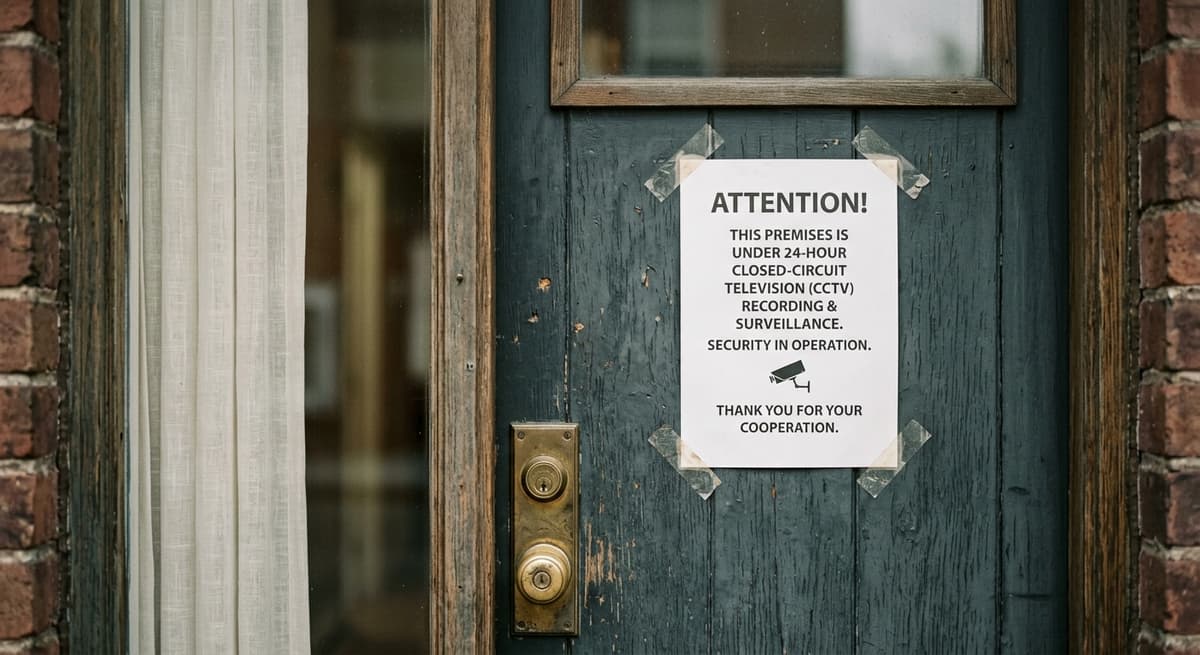
The Growing Problem
Hidden cameras in rental properties, including vacation rentals and short-term stays, have become an increasing concern. Nevada law provides strong protections for tenants and guests.
Under NRS 200.604, it is illegal to capture images of a person's private area without consent when the person has a reasonable expectation of privacy. A tenant or guest in a rental property has a clear privacy expectation in:
- Bedrooms
- Bathrooms
- Dressing areas
- Any interior room with closed doors or curtains
Short-Term Rentals and Vacation Properties
Vacation rental hosts (Airbnb, VRBO, etc.) must disclose any cameras on the property. Platforms like Airbnb require hosts to disclose all recording devices and prohibit cameras in private spaces. Hidden cameras in bedrooms or bathrooms of vacation rentals violate both platform policies and NRS 200.604.
What to Do If You Find a Hidden Camera
If you discover a hidden camera in your Nevada rental:
- Do not touch or move the camera. It is evidence.
- Photograph the camera and its location with your own device.
- Contact local law enforcement and file a police report.
- Document everything: Date, time, location, and how you discovered the device.
- Contact an attorney about civil claims for invasion of privacy and emotional distress.
- Report to the rental platform if it is a short-term rental.
Using Recordings as Evidence in Landlord-Tenant Disputes
Eviction Proceedings
Recordings made under one-party consent (NRS 200.650) can be valuable evidence in eviction cases before a Nevada Justice Court. Tenants can use recordings to show:
- Landlord agreed to repairs that were never completed
- Verbal agreements about rent or lease terms
- Retaliatory behavior by the landlord
- Habitability complaints that the landlord ignored
Landlords can use recordings to document:
- Tenant admissions of lease violations
- Noise complaints and disturbances
- Unauthorized occupants or pets
- Property damage discussions
Habitability Complaints
Under NRS 118A.290, landlords must maintain rental properties in habitable condition. Audio or video recordings documenting uninhabitable conditions, such as pest infestations, broken heating systems, water leaks, or structural hazards, can support a tenant's legal claims.
Security Deposit Disputes
Under NRS 118A.242, landlords must return security deposits within 30 days of lease termination. Recording the move-out walk-through provides documentation of the property's condition at departure. This video or photo evidence can be critical in disputing unfair deposit deductions.
Admissibility Standards
For recordings to be admissible in Nevada courts:
- The recording must be made lawfully (in compliance with NRS 200.650 or NRS 200.620)
- The recording must be authenticated as genuine and unaltered
- The recording must be relevant to the dispute
- The original file should be preserved without editing
Tenant Security Cameras
Your Rights as a Tenant
Tenants generally have the right to install their own security cameras and doorbell cameras within their rental unit and at their front door, subject to lease terms. Considerations include:
- Lease restrictions: Your lease may address modifications to the property, including security camera installation
- Exterior mounting: Drilling holes for exterior cameras may require landlord permission
- Common area recording: Cameras should be directed at your own door and entry, not at neighbors' doors or windows
- Audio recording: Doorbell cameras with audio follow NRS 200.650 for in-person interactions
Ring and Nest Doorbells for Tenants
Many tenants use Ring or Nest doorbell cameras. These devices:
- Typically do not require permanent mounting (battery-powered versions)
- Record video and audio at your front door
- May capture common area hallways in apartment buildings
- Should be directed at your own entry, not aimed at neighbors
Check your lease agreement before installing any camera that requires drilling or permanent modification.
Retaliatory Actions and Recording
Nevada's Anti-Retaliation Protections
Under NRS 118A.510, landlords are prohibited from retaliating against tenants who:
- Complain about habitability violations
- Contact government agencies about code violations
- Exercise their legal rights under Nevada landlord-tenant law
If a landlord retaliates after learning that a tenant has been recording conversations, the tenant may have a retaliation claim. However, this depends on the specific circumstances. The act of recording itself is not a protected activity under the anti-retaliation statute, but recording complaints about habitability or other protected activities may be indirectly protected.
Documenting Retaliation
If you believe your landlord is retaliating against you, continue to document everything through:
- In-person recordings of conversations (legal under NRS 200.650)
- Written communications (emails, texts, letters)
- Photographs and video of property conditions
- Dated notes and logs of interactions
More Nevada Recording Laws
Audio Recording | Video Recording | Voyeurism & Hidden Cameras | Workplace Recording | Recording Police | Phone Call Recording | Security Cameras | Recording in Public | Landlord-Tenant | Dashcam Laws | Schools | Medical Recording
More Nevada Recording Topics
More Nevada Laws
Frequently Asked Questions
Can I record conversations with my landlord in Nevada?
Yes, for in-person conversations. Under NRS 200.650, you can record face-to-face conversations with your landlord without telling them. For phone calls, you need the landlord's consent under NRS 200.620. The safest approach for phone calls is to announce the recording at the start.
Can my landlord put cameras inside my apartment in Nevada?
Generally no, without your knowledge and consent. Hidden cameras that capture your private body areas, such as in a bedroom or bathroom, violate NRS 200.604, and hidden audio recording devices violate NRS 200.650. Landlords can install cameras in common areas of multi-unit buildings, but installing any camera inside your individual unit without your knowledge raises serious privacy and lease concerns even in situations NRS 200.604 does not directly cover.
Can I install a Ring doorbell camera at my rental apartment in Nevada?
Generally yes, subject to your lease terms. Battery-powered doorbell cameras that do not require drilling are easiest to install without landlord permission. Check your lease for any restrictions on modifications. Direct the camera at your own door and entry, not at neighbors' doors.
Can I use a recording of my landlord as evidence in court?
Yes, if the recording was made lawfully. In-person recordings under NRS 200.650 are generally admissible in Nevada courts, including eviction proceedings and small claims cases. The recording must be genuine, unaltered, and relevant. Phone recordings made without consent are inadmissible.
What should I do if I find a hidden camera in my Nevada rental?
Do not touch the camera. Photograph it with your own device to document its location. Contact local law enforcement and file a police report. The landlord has likely violated NRS 200.604, which is a gross misdemeanor for a first offense. Consult an attorney about civil claims for invasion of privacy.
Updates
Replaced a dead Clark County courts citation with a live Nevada Justice Court source, and added Nevada's landlord-entry statute (NRS 118A.330, which requires the tenant's consent or 24 hours' notice) to the hidden-camera discussion, since entering a unit to install a camera is independently regulated by that statute.
Independently fact-checked against the cited primary sources; governing law re-checked for recent changes
Corrected an overbroad claim that any camera inside a rental unit (hidden or visible) violates NRS 200.604; the statute only bans non-consensual capture of a tenant's private body areas, not disclosed cameras generally.
Governing law re-checked for recent changes
Reviewed and approved by an editor
The Law Behind This Article
This article rests on the statutory provisions below, held in our own legal record and retrieved from the official source. Tap a section to read the operative text.
Nevada Revised Statutes, Chapter 200: CRIMES AGAINST THE PERSON
§ 200.650Unauthorized, surreptitious intrusion of privacy by listening device prohibited.In forcecited in 19 of our articles
Except as otherwise provided in NRS 179.410 to 179.515, inclusive, and 704.195, a person shall not intrude upon the privacy of other persons by surreptitiously listening to, monitoring or recording, or attempting to listen to, monitor or record, by means of any mechanical, electronic or other listening device, any private conversation engaged in by the other persons, or disclose the existence, content, substance, purport, effect or meaning of any conversation so listened to, monitored or recorded, unless authorized to do so by one of the persons engaging in the conversation.
Official text (excerpt) · last checked 2026-08-26 · Read the full text in our law library · Verify at leg.state.nv.us
Cited in 13 court opinions in our collectionLatest citing opinion in our collection: 2025
In the courts (editorial summary, independently checked):Nevada courts read NRS 200.650 to permit a recording authorized by a participant. Summers v. State (1986) upheld a body-wire recording because the informant taking part in the conversation authorized it. Abid v. Abid (2017) held the section carries no suppression rule, so a custody expert could consider recordings made in violation of it.
Opinions citing this section in our collection:
- Lane v. Allstate Insurance (Nevada Supreme Court 1998, 114 Nev. 1176)✓A former employee secretly taped hundreds of phone calls with company personnel; the court read NRS 200.650 as allowing in-person private conversations to be recorded when one participant authorizes it, and contrasted that in holding NRS 200.620 bars one-party taping of calls.
- Summers v. State (Nevada Supreme Court 1986, 102 Nev. 195)✓Police taped a transmitter to an informant, who recorded his conversation with Summers about the murder guns; the court held such a recording needs no court order so long as the authorization requirement of NRS 200.650 is met, and the informant had authorized it.
- ABID VS. ABID (CHILD CUSTODY) (Nevada Supreme Court 2017, 2017 NV 94)“…to this recording, the father's actions likely violated NRS 200.650, which prohibits the…”
Identified automatically from the court opinions citing this section — not a ranking of which case controls.
Also relied on in: Nevada Recording Laws (2026): Hybrid One-Party/All-Party Consent, Nevada Windshield Mounting Laws (2026 Guide), Nevada Dashcam Laws: Legal Rules for Dashboard Cameras (2026)
§ 200.604Capturing image of private area of another person; distributing, disclosing, displaying, transmitting or publishing image of private area of another person; penalties; exceptions; confidentiality of image.In forcecited in 12 of our articles
1. Except as otherwise provided in subsection 4, a person shall not knowingly and intentionally capture an image of the private area of another person: (a) Without the consent of the other person; and (b) Under circumstances in which the other person has a reasonable expectation of privacy. 2. Except as otherwise provided in subsection 4, a person shall not distribute, disclose, display, transmit or publish an image that the person knows or has reason to know was made in violation of subsection 1. 3. Unless a greater penalty is provided pursuant to NRS 200.780 or 212.188, a person who violates this section: (a) For a first offense, is guilty of a gross misdemeanor. (b) For a second or subsequent offense, is guilty of a category E felony and shall be punished as provided in NRS 193.130. 4. This section does not prohibit any lawful law enforcement or correctional activity, including, without limitation, capturing, distributing, disclosing, displaying, transmitting or publishing an image for the purpose of investigating or prosecuting a violation of this section.
Official text (excerpt) · last checked 2026-07-29 · Read the full text in our law library · Verify at leg.state.nv.us
Cited in 4 court opinions in our collectionLatest citing opinion in our collection: 2018
Opinions citing this section in our collection:
- Coleman v. State (Nevada Supreme Court 2018, 416 P.3d 238)“…By the Court, PICKERING, J.: NRS 200.604 prohibits a person from knowingly and i…”
- COLEMAN (SOLOMON) VS. STATE (Nevada Supreme Court 2018, 2018 NV 28)“…y the Court, PICKERING, J.: NRS 200.604 prohibits a person from knowingly and…”
- Brian Olsen v. City of Henderson (Court of Appeals for the Ninth Circuit 2016, 648 F. App'x 628)“…amily. Nichols reasonably believed that Olsen had violated Nev. Rev. Stat. § 200.604 by capturing and publishing to his per…”
Identified automatically from the court opinions citing this section — not a ranking of which case controls.
Also relied on in: Nevada Smart Glasses Recording Laws 2026, Nevada Medical Recording Laws: Patient Rights and Healthcare Privacy (2026), Nevada Laws on Recording in Public: Rights and Restrictions (2026)
§ 200.620Interception and attempted interception of wire communication prohibited; exceptions.In forcecited in 18 of our articles
1. Except as otherwise provided in subsection 5 and NRS 179.410 to 179.515, inclusive, 209.419 and 704.195, it is unlawful for any person to intercept or attempt to intercept any wire communication unless: (a) The interception or attempted interception is made with the prior consent of one of the parties to the communication; and (b) An emergency situation exists and it is impractical to obtain a court order as required by NRS 179.410 to 179.515, inclusive, before the interception, in which event the interception is subject to the requirements of subsection 3. If the application for ratification is denied, any use or disclosure of the information so intercepted is unlawful, and the person who made the interception shall notify the sender and the receiver of the communication that: (1) The communication was intercepted; and (2) Upon application to the court, ratification of the interception was denied.
Official text (excerpt) · last checked 2026-08-28 · Read the full text in our law library · Verify at leg.state.nv.us
Cited in 18 court opinions in our collectionLatest citing opinion in our collection: 2025
In the courts (editorial summary, independently checked):Nevada reads NRS 200.620 as an all-party consent rule for phone recording, with a territorial limit. Lane v. Allstate Insurance held a participant who taped his own calls without the other parties' consent violated it; DITECH FINANCIAL, LLC VS. BUCKLES held it does not reach calls recorded from outside Nevada.
Opinions citing this section in our collection:
- Lane v. Allstate Insurance (Nevada Supreme Court 1998, 114 Nev. 1176)✓A former employee secretly taped hundreds of his own phone calls with his ex-employer's staff to build his suit; the court held NRS 200.620 bars recording a call without every party's consent, so the tapes were excluded and the dismissal of his suit was reversed.
- State v. Reyes (Nevada Supreme Court 1991, 107 Nev. 191)✓Police had an interpreter listen on a station extension phone while an informant set up a drug buy; the court held that officers' use of regularly installed telephone equipment in the ordinary course of their duties is not an interception under NRS 200.620.
- ABID VS. ABID (CHILD CUSTODY) (Nevada Supreme Court 2017, 2017 NV 94)“…corded phone conversations in violation of NRS 200.620 to obtain evidence to support tort…”
Identified automatically from the court opinions citing this section — not a ranking of which case controls.
Also relied on in: Nevada Audio Recording Laws: Split Consent Rules and Penalties (2026), Nevada Laws on Recording Police: Your Rights Under NRS 171.1233 (2026), Nevada School Recording Laws: Rules for Students, Parents, and Teachers (2026)
§ 200.690Penalties.In forcecited in 13 of our articles
1. A person who willfully and knowingly violates NRS 200.620 to 200.650, inclusive: (a) Shall be punished for a category D felony as provided in NRS 193.130. (b) Is liable to a person whose wire or oral communication is intercepted without his or her consent for: (1) Actual damages or liquidated damages of $100 per day of violation but not less than $1,000, whichever is greater; (2) Punitive damages; and (3) His or her costs reasonably incurred in the action, including a reasonable attorney’s fee, Ê all of which may be recovered by civil action. 2. A good faith reliance by a public utility on a written request for interception by one party to a conversation is a complete defense to any civil or criminal action brought against the public utility on account of the interception.
Official text (excerpt) · last checked 2026-07-29 · Read the full text in our law library · Verify at leg.state.nv.us
Cited in 5 court opinions in our collectionLatest citing opinion in our collection: 2023
Opinions citing this section in our collection:
- Lane v. Allstate Insurance (Nevada Supreme Court 1998, 114 Nev. 1176)“…shable as “a category D felony as provided in NRS 193.130.” NRS 200.690(l)(a). In addition, the violator is lia…”
- ABID VS. ABID (CHILD CUSTODY) (Nevada Supreme Court 2017, 2017 NV 94)“…regarding evidence and admissibility. See NRS 200.690(1) (enforcing NRS 200.650 exclusively…”
- DITECH FINANCIAL, LLC VS. BUCKLES (Nevada Supreme Court 2017, 2017 NV 64)“…ons without Buckles's consent.' 1 NRS 200.690(1)(b) provides a private right of actio…”
Identified automatically from the court opinions citing this section — not a ranking of which case controls.
Also relied on in: Nevada Phone Call Recording Laws: All-Party Consent Required (2026), Nevada Security Camera Laws: Installation Rules and Privacy Limits (2026), Nevada Video Recording Laws: When Consent Is Required (2026)
Nevada Revised Statutes, Chapter 118A: LANDLORD AND TENANT: DWELLINGS
§ 118A.242Security deposit: Limitation on amount or value; surety bond in lieu of security deposit; duties and liability of landlord; damages; disputing itemized accounting of security deposit; prohibited provisions.In forcecited in 2 of our articles
1. The landlord may not demand or receive a security deposit or a surety bond, or a combination thereof, including the last month’s rent, whose total amount or value exceeds 3 months’ periodic rent. 2. In lieu of paying all or part of the security deposit required by the landlord, a tenant may, if the landlord consents, purchase a surety bond to secure the tenant’s obligation to the landlord under the rental agreement to: (a) Remedy any default of the tenant in the payment of rent. (b) Repair damages to the premises other than normal wear and tear. (c) Clean the dwelling unit. 3. The landlord: (a) Is not required to accept a surety bond purchased by the tenant in lieu of paying all or part of the security deposit; and (b) May not require a tenant to purchase a surety bond in lieu of paying all or part of the security deposit.
Official text (excerpt) · last checked 2026-07-29 · Read the full text in our law library · Verify at leg.state.nv.us
Cited in 2 court opinions in our collectionLatest citing opinion in our collection: 2022
Opinions citing this section in our collection:
- Sabreco, Inc. Vs. Dagger Prop.'S 1, Llc (Nevada Supreme Court 2019)“…that the district court erred by relying on the language of NRS 118A.242 to deny damages related to the security…”
- United States of America v. Velazquez (District Court, D. Nevada 2022)“…y judgment on her FCA claim and 9 claim for violation of NRS § 118A.242 based on Velazquez’s failure to return…”
Identified automatically from the court opinions citing this section — not a ranking of which case controls.
Also relied on in: Nevada Landlord-Tenant Laws (2026): Deposits, Notice, and Tenant Rights
§ 118A.290Habitability of dwelling unit; prohibition against fees or other charges for performance of repairs, maintenance tasks or other work that is duty of landlord.In force
1. The landlord shall at all times during the tenancy maintain the dwelling unit in a habitable condition. A dwelling unit is not habitable if it violates provisions of housing or health codes concerning the health, safety, sanitation or fitness for habitation of the dwelling unit or if it substantially lacks: (a) Effective waterproofing and weather protection of the roof and exterior walls, including windows and doors. (b) Plumbing facilities which conformed to applicable law when installed and which are maintained in good working order. (c) A water supply approved under applicable law, which is: (1) Under the control of the tenant or landlord and is capable of producing hot and cold running water; (2) Furnished to appropriate fixtures; and (3) Connected to a sewage disposal system approved under applicable law and maintained in good working order to the extent that the system can be controlled by the landlord. (d) Adequate heating facilities which conformed to applicable law when installed and are maintained in good working order.
Official text (excerpt) · last checked 2026-07-29 · Read the full text in our law library · Verify at leg.state.nv.us
Cited in 4 court opinions in our collectionLatest citing opinion in our collection: 2023
Opinions citing this section in our collection:
- Horvath v. Burt (Nevada Supreme Court 1982, 98 Nev. 186)“…was prejudiced by the giving of the improper instruction. NRS 118A.290 imposes a duty on landlords to maintain…”
- Bour Enters., Llc v. 4520 Arville C/W 83099 (Nevada Supreme Court 2022)“…landlords and those that own, build, or vend new homes, see NRS 118A.290(1) (regarding residential landlords); R…”
- Kandell v. SUR 702 (District Court, D. Nevada 2023)“…remedies. 14 D. The Court Recommends Plaintiff’s NRS 118A.290 Claims Be Dismissed Without…”
Identified automatically from the court opinions citing this section — not a ranking of which case controls.
§ 118A.510Retaliatory conduct by landlord against tenant prohibited; remedies; exceptions.In force
1. Except as otherwise provided in subsection 3, the landlord may not, in retaliation, terminate a tenancy, refuse to renew a tenancy, increase rent or decrease essential items or services required by the rental agreement or this chapter, or bring or threaten to bring an action for possession if: (a) The tenant has complained in good faith of a violation of a building, housing or health code applicable to the premises and affecting health or safety to a governmental agency charged with the responsibility for the enforcement of that code; (b) The tenant has complained in good faith to the landlord or a law enforcement agency of a violation of this chapter or of a specific statute that imposes a criminal penalty; (c) The tenant has organized or become a member of a tenant’s union or similar organization; (d) A citation has been issued resulting from a complaint described in paragraph (a); (e) The tenant has instituted or defended against a judicial or administrative proceeding or arbitration in which the tenant raised an issue of compliance with the requirements of this chapter respecting the habitability of dwelling units; (f) The tenant has failed or refused…
Official text (excerpt) · last checked 2026-07-29 · Read the full text in our law library · Verify at leg.state.nv.us
Cited in 4 court opinions in our collectionLatest citing opinion in our collection: 2020
Opinions citing this section in our collection:
- Paullin v. Sutton (Nevada Supreme Court 1986, 102 Nev. 421)“…liatory eviction by a residential landlord, in violation of NRS 118A.510. The tenant, Barbara Sutton, contended…”
- Luckett v. Boyd Gaming Corp. C/W 64667/65224 (Nevada Supreme Court 2015)“…ature of the claim and relief sought"); see NRS 118A.510 (noting the requirements for a retaliat…”
- Torres v. Rothstein (District Court, D. Nevada 2020)“…ral of these remedies 12 may be relevant here. See, e.g., Nev. Rev. Stat. § 118A.510 (prohibiting retaliatory conduct). 13…”
Identified automatically from the court opinions citing this section — not a ranking of which case controls.
Search our full record of US law — 2.1 million sections, every state + federal →
Sources and References
- NRS 200.650 - Surreptitious Intrusion of Privacy(leg.state.nv.us).gov
- NRS 200.620 - Interception of Wire Communications(leg.state.nv.us).gov
- NRS 200.604 - Voyeurism(leg.state.nv.us).gov
- NRS 118A.290 - Habitable Condition(leg.state.nv.us).gov
- NRS 118A.242 - Security Deposit(leg.state.nv.us).gov
- NRS 118A.510 - Anti-Retaliation(leg.state.nv.us).gov
- NRS 200.690 - Penalties and Civil Liability for Recording Violations(leg.state.nv.us).gov