
Vermont
Vermont Dashcam Laws
Independently fact-checked against primary sources (last audited August 15, 2026). · Reviewed by the RecordingLaw editorial team. · Law checked current as of August 15, 2026. · 2 primary sources cited on this page. How we verify our legal content
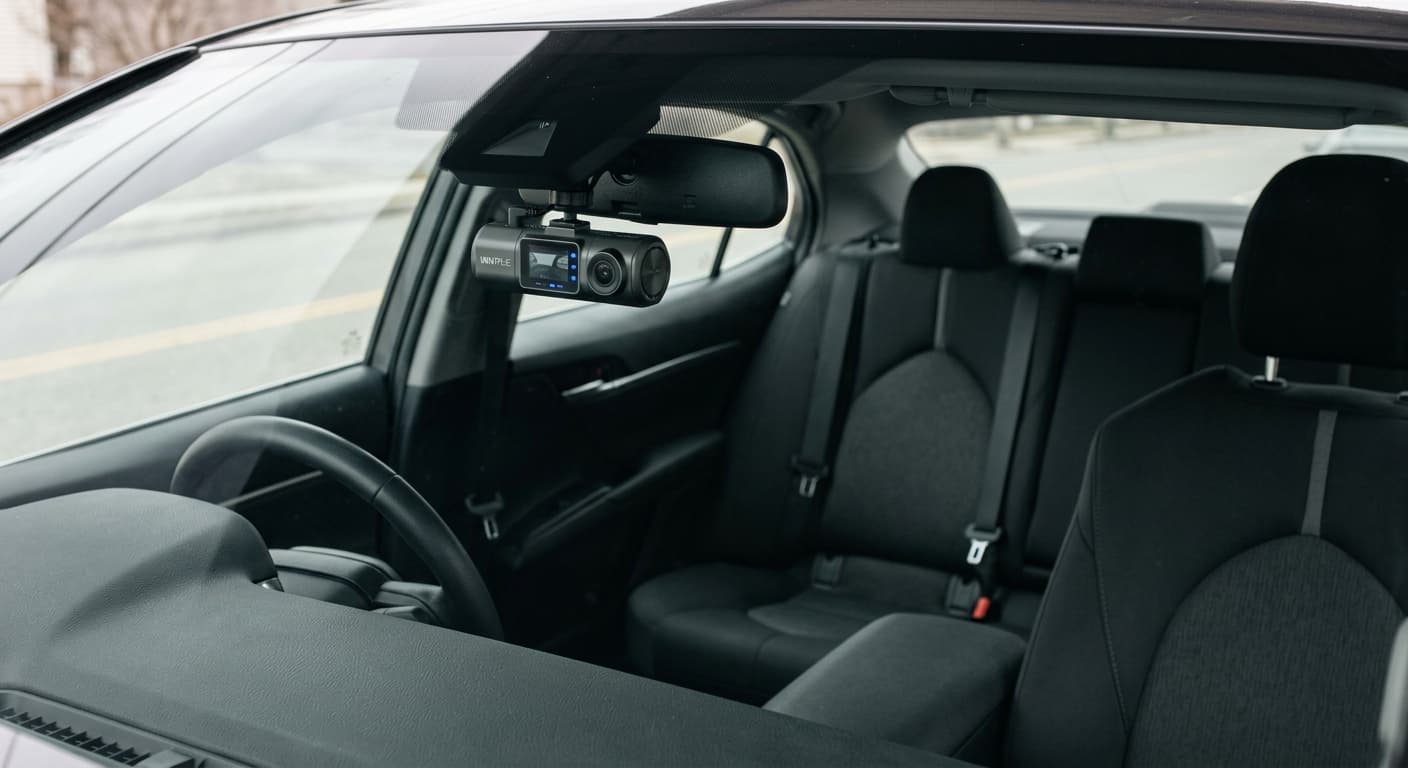
Vermont has no statute prohibiting dashcams. Mount on the dashboard or behind the rearview mirror to avoid windshield obstruction. Audio recording is governed by federal one-party consent under 18 U.S.C. 2511; as the vehicle operator, you consent to the recording.
Dashcams are legal in Vermont. No statute specifically prohibits dashboard cameras. Vermont's windshield obstruction rules require proper mounting, and federal one-party consent governs audio.
This guide covers mounting, audio rules, evidence use, commercial fleet dashcams, and privacy.
Legality and Mounting
Dashcams are legal for personal, commercial, rideshare, and recreational vehicles. Vermont's windshield-obstruction statute, 23 V.S.A. 1125, bars material adhered to or hung over the windshield or the front side windows that materially obstructs the driver's view, with narrow exceptions such as small windshield stickers and rearview-mirror-mounted toll transponders. Mount on the dashboard or behind the rearview mirror to avoid triggering it.
Audio Recording

Federal one-party consent (18 U.S.C. 2511) applies. As the vehicle operator, you consent. Audio of conversations in your car and during traffic stops is legal.
Evidence Use
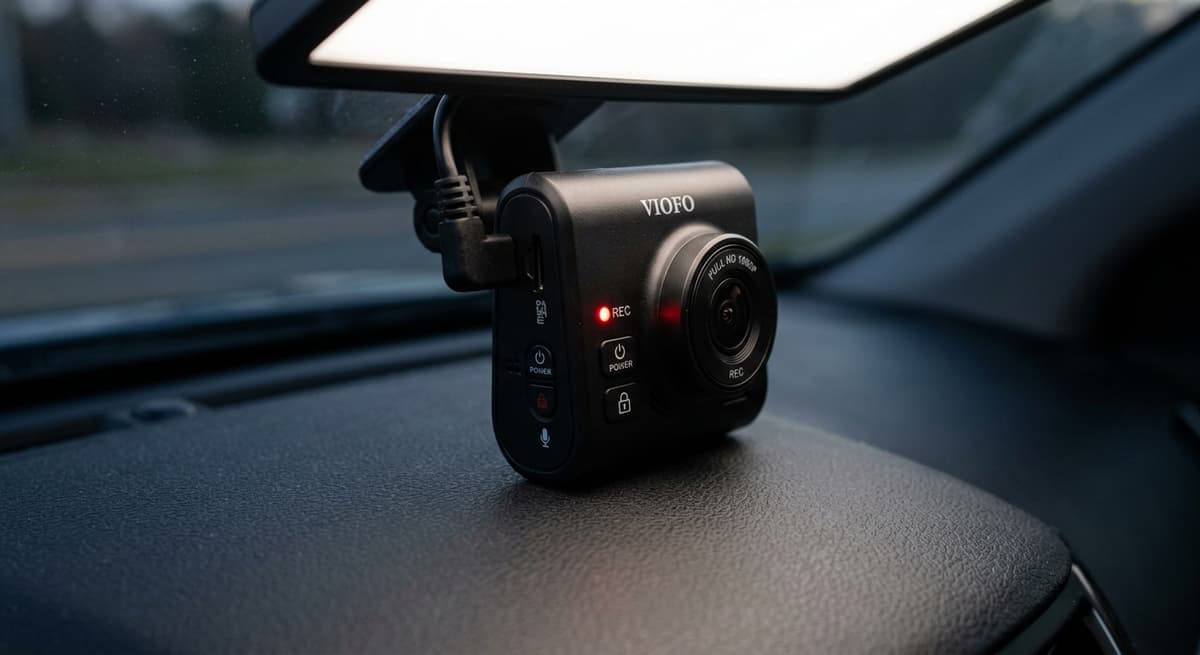
Dashcam footage is admissible in Vermont courts for traffic accidents, DUI cases, hit-and-run identification, insurance claims, and criminal cases. Authenticate and keep unaltered.
Commercial Fleet Dashcams
Employers can install dashcams including cabin-facing cameras. Notify drivers through policies. FMCSA does not prohibit dashcams.
Parking Mode
Video-only parking mode is generally permissible in public parking areas.
More Vermont Recording Laws
Audio Recording | Video Recording | Voyeurism & Hidden Cameras | Workplace Recording | Recording Police | Phone Call Recording | Security Cameras | Recording in Public | Landlord-Tenant | Dashcam Laws | Schools | Medical Recording
Back to Vermont Recording Laws
More Vermont Recording Topics
More Vermont Laws
Frequently Asked Questions
Are dashcams legal in Vermont?
Yes. No Vermont law prohibits dashcams. Mount so it does not obstruct your view.
Where should I mount my dashcam in Vermont?
On the dashboard or behind the rearview mirror to avoid windshield obstruction issues.
Can my dashcam record audio in Vermont?
Yes. Federal one-party consent applies. As the vehicle operator, you consent to the recording.
Can I use dashcam footage as evidence?
Yes. Dashcam footage is regularly admitted in Vermont courts. Keep it authentic and unaltered.
Do Vermont insurers offer dashcam discounts?
Some may. Check with your provider. Dashcam footage speeds up claims processing.
Updates
Added a citation to Vermont's windshield-obstruction statute (23 V.S.A. 1125) backing the dashcam-mounting advice, which was previously stated with no source.
Independently fact-checked against the cited primary sources; governing law re-checked for recent changes
Governing law re-checked for recent changes
Reviewed and approved by an editor
The Law Behind This Article
This article rests on the statutory provisions below, held in our own legal record and retrieved from the official source. Tap a section to read the operative text.
United States Code Title 18
§ 2511Interception and disclosure of wire, oral, or electronic communications prohibitedIn forcecited in 422 of our articles
Except as otherwise specifically provided in this chapter any person who— intentionally intercepts, endeavors to intercept, or procures any other person to intercept or endeavor to intercept, any wire, oral, or electronic communication; intentionally uses, endeavors to use, or procures any other person to use or endeavor to use any electronic, mechanical, or other device to intercept any oral communication when— such device is affixed to, or otherwise transmits a signal through, a wire, cable, or other like connection used in wire communication; or such device transmits communications by radio, or interferes with the transmission of such communication; or such person knows, or has reason to know, that such device or any component thereof has been sent through the mail or transported in interstate or foreign commerce; or such use or endeavor to use (A) takes place on the premises of any business or other commercial establishment the operations of which affect interstate or foreign commerce; or (B) obtains or is for the purpose of obtaining information relating to the operations of any business or other commercial establishment the operations of which affect interstate or foreign…
Official text (excerpt) · last checked 2026-08-28 · Read the full text in our law library · Verify at uscode.house.gov
Cited in 2,045 court opinions in our collectionLatest citing opinion in our collection: 2026
In the courts (editorial summary, independently checked):Griggs-Ryan v. Smith (1990) applied the Section 2511(2)(d) prior-consent exception, treating a tenant repeatedly told that all incoming calls were taped as having impliedly consented. United States v. United States District Court (1972) read the then-current Section 2511(3) as conferring no presidential surveillance power.
Opinions citing this section in our collection:
- Mitchell v. Forsyth (Supreme Court of the United States 1985, 472 U.S. 511)✓The Attorney General authorized a warrantless 1970 national security wiretap that caught the plaintiff's calls; the Court held the since-repealed Section 2511(3) disclaimer left the tap lawful under Title III, and that Mitchell had qualified immunity.
- United States v. United States District Court for the Eastern District of Michigan (Supreme Court of the United States 1972, 407 U.S. 297)✓The Attorney General approved warrantless wiretaps on members of a domestic group accused of bombing a CIA office; the Court read Section 2511(3) as a congressional disclaimer conferring no surveillance power, then held the Fourth Amendment required prior judicial approval.
- Forsyth v. Barr (Court of Appeals for the Fifth Circuit 1994, 19 F.3d 1527)✓Dallas police used, in an internal affairs probe of an officer, calls private parties allegedly intercepted illegally; assuming that was unlawful, the Fifth Circuit held Section 2517(1) and (2) allowed the disclosure and use, defeating the Section 2511(1)(c) and (d) claims.
Identified automatically from the court opinions citing this section — not a ranking of which case controls.
Also relied on in: Connecticut Recording Laws (2026): Hybrid Consent Rules Explained, Oregon Recording Laws (2026): Hybrid One-Party and All-Party Rules, US Recording Laws by State (2026): All 50 States Explained
Search our full record of US law — 2.1 million sections, every state + federal →
Sources and References
- 18 U.S.C. 2511 -- Federal Wiretap Act(law.cornell.edu)
- FMCSA(fmcsa.dot.gov).gov
- Vermont DMV(dmv.vermont.gov).gov