
Maine
Maine Medical Recording Laws: Patient Rights, HIPAA, and Consent (2026)
Independently fact-checked against primary sources (last audited August 15, 2026). · Reviewed by the RecordingLaw editorial team. · Law checked current as of August 15, 2026. · 7 primary sources cited on this page. How we verify our legal content
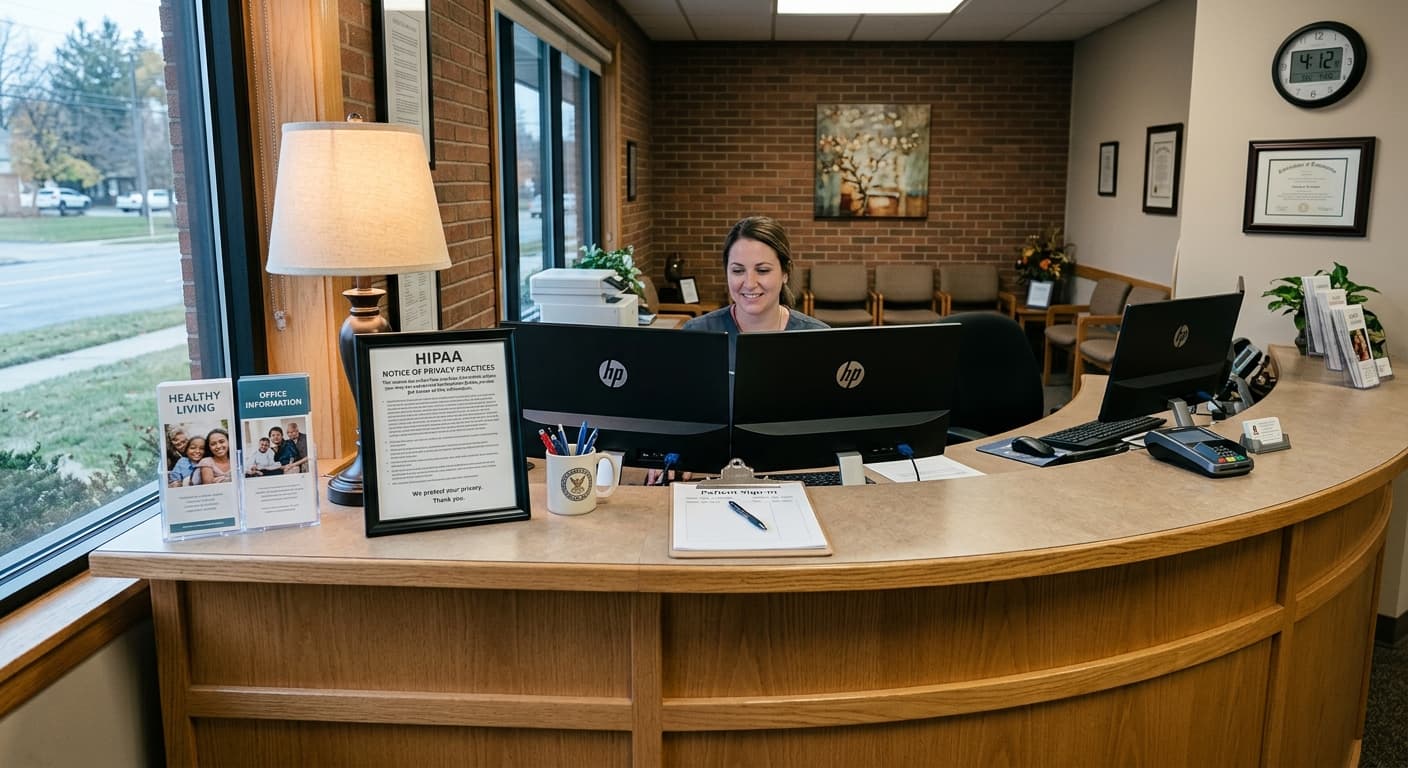
Under Maine's one-party consent law (15 M.R.S. sections 709 and 710), a patient may record a medical appointment without informing the provider. HIPAA does not restrict patients from recording; it governs only how healthcare providers handle protected health information.
Maine follows a one-party consent rule for recording conversations, which means patients can legally record their own medical appointments without notifying the healthcare provider. Under 15 M.R.S. sections 709 and 710, Maine law prohibits the interception of oral or wire communications only when done by a person who is not a sender or receiver of the communication and who lacks prior authority from either party. Because patients are direct participants in their medical conversations, they satisfy the consent requirement by their own participation.
This guide covers patient recording rights in Maine, how HIPAA interacts with patient recording, healthcare facility policies, telehealth rules, mental health recording considerations, and the use of medical recordings as legal evidence. For advice specific to your situation, consult a Maine attorney.
Patient Recording Rights in Maine
Can You Record Your Doctor in Maine?
Yes. Under Maine's wiretapping statute (15 M.R.S. sections 709-710), only the sender or receiver of a communication needs to give prior authority for the recording to be lawful. A patient who is a participant in a medical conversation qualifies as a sender or receiver. No additional notification to the healthcare provider is required.
Violating Maine's wiretapping law is a civil offense that entitles the victim to damages of $100 per day of violation plus attorney fees and litigation costs under 15 M.R.S. section 711. However, a participant recording their own conversation does not trigger this provision, because the consent of at least one party (the recorder) is present.
Why Patients Record Medical Visits
Patients retain only a fraction of the information communicated during medical appointments, particularly when the information involves complex diagnoses, medication regimens, or surgical procedures. Recording provides a reliable way to review the details of what was discussed.
Recordings allow patients to share accurate information with family members or caregivers who were not present at the appointment. For patients managing chronic conditions, recordings create a running record of treatment decisions, changes in medication, and follow-up instructions.
Recordings also serve a documentary purpose. If a disagreement arises about what a provider communicated, the recording provides an objective account that does not depend on either party's memory.
Types of Medical Encounters You Can Record
As a participant in the conversation, Maine's one-party consent law allows patients to record:
- Primary care visits. Discussions about symptoms, diagnoses, and treatment plans.
- Specialist consultations. Detailed explanations of conditions and recommended procedures.
- Informed consent conversations. Discussions about risks, benefits, and alternatives before surgeries or procedures.
- Pharmacy consultations. Instructions about medication dosages, interactions, and side effects.
- Nursing interactions. Discharge instructions, wound care guidance, and medication schedules.
- Physical therapy and rehabilitation sessions. Exercise instructions and recovery milestones.
- Insurance-related conversations. Discussions about coverage, pre-authorization, and billing.
HIPAA and Patient Recording
What HIPAA Does and Does Not Do
The Health Insurance Portability and Accountability Act (HIPAA) is frequently misunderstood in the context of patient recording. A common misconception is that recording a medical appointment "violates HIPAA." This is not accurate.
The HIPAA Privacy Rule regulates how "covered entities" (hospitals, physicians, health plans, and healthcare clearinghouses) collect, store, use, and disclose protected health information (PHI). Patients are not covered entities under HIPAA. The law places no restrictions on what patients do with information about their own care, including recording conversations with their providers.
| Misconception | Reality |
|---|---|
| "Recording your doctor violates HIPAA" | False. HIPAA does not regulate patient behavior. |
| "Patients cannot possess recordings of medical conversations" | False. HIPAA applies to covered entities, not patients. |
| "A doctor can cite HIPAA to prohibit your recording" | Incorrect as a legal matter, though a facility may have its own policy. |
| "Sharing a recording of your medical visit violates HIPAA" | False for the patient. A provider sharing your information without authorization would be the violation. |
HIPAA and Provider Recording
HIPAA creates significant obligations for healthcare providers regarding recordings. If a provider records a patient visit, that recording becomes part of the medical record and falls under HIPAA protections. Patients have the right to access their own health information, including any recordings a provider has made.
Maine's own health care confidentiality statute (22 M.R.S. section 1711-C) reinforces these protections at the state level. The statute requires healthcare practitioners and facilities to develop policies protecting the confidentiality, security, and integrity of health care information. Patients admitted for inpatient care must receive notice of their right to control the disclosure of their health care information.
Healthcare Facility Recording Policies
Can a Hospital or Clinic Prohibit Recording?
Healthcare facilities in Maine can adopt internal policies that restrict or prohibit recording on their premises. These policies function as conditions of service on private property, similar to other conduct rules a business might establish.
A hospital might require patients to ask permission before recording, prohibit recording in certain areas, or restrict photography throughout the facility. These policies are enforceable as conditions of receiving care. A facility that discovers a patient recording in violation of its policy could ask the patient to stop, decline to continue the non-emergency appointment, or request that the patient leave the premises.
Common Facility Recording Policies
Maine healthcare facilities typically address recording in one of several ways:
- No formal policy. Many smaller clinics and physician offices have no written recording policy.
- Blanket prohibition. Some hospitals prohibit all recording by patients and visitors.
- Permission-based policy. The facility allows recording with advance permission from the provider.
- Waiting room restrictions. Recording is permitted in exam rooms but prohibited in common areas where other patients are present.
Best Practices for Patients
Violating a facility recording policy is not a crime under Maine law. One-party consent makes the recording itself legal regardless of the facility's internal rules. However, informing a provider about recording can maintain a productive care relationship. Many physicians respond well to a brief explanation that the recording is for personal reference.
Some healthcare organizations actively encourage patient recording as a tool for better health outcomes and improved adherence to treatment plans. For patients who prefer not to disclose their recording, Maine law does not require them to do so.
Recording Other Patients in Healthcare Settings

Privacy in Waiting Rooms and Common Areas
One-party consent in Maine applies to communications where the person recording is a sender or receiver. Recording other patients' conversations in a waiting room, hallway, or shared treatment area raises different legal concerns.
If a recording device captures conversations between other patients and staff that the recording patient is not part of, those captured conversations may fall outside one-party consent protection. Maine's violation of privacy statute (17-A M.R.S. section 511) separately addresses certain types of surveillance in private places as a Class D crime. The safest approach is to limit recording to the patient's own medical conversations.
Recording Staff and Other Employees
Patients can record their own interactions with any healthcare staff member, including receptionists, nurses, billing personnel, and administrators. These conversations fall within one-party consent because the patient is a direct participant. Recording conversations between staff members that do not involve the patient could violate 15 M.R.S. section 710.
Telehealth Recording in Maine
Patient Recording of Telehealth Visits
Maine's one-party consent law applies to telehealth visits in the same way it applies to in-person appointments. A patient participating in a video or phone-based medical consultation can record the session without informing the provider.
Telehealth providers generally obtain informed consent before delivering services, and provider-side session recording is governed by the practice's own consent process and HIPAA. If a telehealth session is recorded by the provider, separate consent from the patient is required. This provider-side recording consent requirement does not apply to patients making their own recordings under one-party consent.
Many telehealth platforms (Zoom, Doxy.me, MyChart Video) include built-in recording features that notify all participants when recording begins. Using a separate recording method on the patient's device avoids triggering platform notifications, though the legal right to record exists either way under Maine law.
Provider Recording of Telehealth Visits
Maine telehealth regulations explicitly address provider recording. If telehealth services are recorded by the provider, the provider must obtain separate consent from the patient. This requirement goes beyond the general one-party consent rule and reflects Maine's approach to protecting patient privacy in the telehealth context.
Provider recordings of telehealth visits become part of the medical record and are subject to both HIPAA and Maine's health care confidentiality protections under 22 M.R.S. section 1711-C.
Cross-State Telehealth Recording
When a Maine patient receives telehealth services from a provider located in a two-party consent state, the question of which state's law applies becomes more complex. Two-party consent states require all parties to agree to recording. If the provider is in California, Florida, or another two-party consent jurisdiction, the stricter law may apply.
Maine patients receiving telehealth from an out-of-state provider in a two-party consent jurisdiction may want to inform the provider before recording or consult an attorney about which state's law governs the interaction.
Mental Health Recording Considerations
Therapy and Counseling Sessions
Under 15 M.R.S. sections 709-710, Maine's one-party consent law does not create an exception for mental health settings. A patient can legally record a therapy or counseling session they participate in without informing the therapist.
However, Maine provides heightened confidentiality protections for mental health records under 34-B M.R.S. section 1207. This statute restricts mental health department personnel from releasing information that could identify a client, with limited exceptions. The protections apply to provider disclosure of client information, not to a client's own recording of their sessions.
Therapists may have strong professional and clinical objections to being recorded. Recording can alter the therapeutic dynamic, and some practitioners believe it inhibits honest dialogue. While the legal right to record exists, patients considering recording therapy sessions should weigh the potential impact on their treatment.
Psychiatric Facilities
Psychiatric hospitals and inpatient mental health facilities in Maine present additional considerations. These facilities often maintain strict recording policies tied to the safety and privacy of other patients. Patients in psychiatric settings may have limited access to personal electronic devices, and facility rules may prohibit recording in group therapy, common areas, and treatment rooms shared with other patients.
The legal right to record one's own conversations with providers remains intact under one-party consent. Facility policies can restrict the practical ability to record but cannot transform a lawful one-party consent recording into a criminal act under Maine law.
Using Medical Recordings as Evidence
Medical Malpractice Cases
Recordings of medical appointments can provide critical evidence in malpractice claims. A recording can establish:
- What the provider communicated about a diagnosis and when
- Whether adequate informed consent was obtained before a procedure
- The specific instructions given for post-operative care or medication management
- Statements that contradict later claims about what was discussed
- The tone and completeness of the provider's explanation
Maine has a three-year statute of limitations for medical malpractice actions. Recordings made during the relevant treatment period can preserve evidence that might otherwise depend on conflicting memories.
Personal Injury Cases
Medical recordings can also support personal injury claims by documenting:
- A provider's statements about the cause and extent of injuries
- Discussions about medical necessity for specific treatments
- Pre-authorization conversations with insurance representatives
- Billing and coding discussions related to treatment
Admissibility
Medical recordings made lawfully under Maine's one-party consent law are generally admissible in Maine courts. To be admitted as evidence, a recording must meet standard authentication requirements: it must be shown to be genuine, unaltered, and relevant to the case. The probative value of the recording must also outweigh any potential for unfair prejudice.
An attorney experienced in Maine medical malpractice or personal injury litigation can advise on the best approach for introducing recordings as evidence. This is general legal information, not legal advice; consult an attorney for advice specific to your situation.
Maine Recording Laws by Topic
Audio Recording | Video Recording | Voyeurism & Hidden Cameras | Workplace Recording | Recording Police | Phone Call Recording | Security Cameras | Recording in Public | Landlord-Tenant | Dashcam Laws | Schools | Medical Recording
More Maine Recording Topics
More Maine Laws
Frequently Asked Questions
Can I record my doctor in Maine?
Yes. Under Maine's one-party consent law (15 M.R.S. sections 709-710), you can record any medical appointment you attend without informing the healthcare provider. As a sender or receiver of the communication, your participation is sufficient consent under Maine law.
Does HIPAA prevent patients from recording medical appointments in Maine?
No. HIPAA restricts how healthcare providers and insurers handle protected health information. It does not restrict patients from recording their own medical conversations. Patients are not covered entities under HIPAA.
Can a Maine hospital ban me from recording?
A Maine hospital can have an internal policy that restricts recording on its premises and can enforce that policy as a condition of service. However, violating a hospital recording policy is not a crime under Maine law. The recording itself remains legal under one-party consent.
Can I record a telehealth appointment in Maine?
Yes. Maine's one-party consent law applies to telehealth visits just as it applies to in-person appointments. Maine telehealth regulations require providers to obtain separate consent if the provider records the session, but this requirement does not apply to patient-side recording.
Can I use a recording of my doctor as evidence in a malpractice case in Maine?
Recordings made lawfully under one-party consent are generally admissible in Maine courts. A recording can establish what your doctor communicated about risks, diagnoses, and treatment, which is often central to malpractice and informed consent claims. Consult a Maine attorney for advice specific to your case.
Updates
Independently fact-checked against the cited primary sources; governing law re-checked for recent changes
Governing law re-checked for recent changes
Governing law re-checked for recent changes
Cross-spoke accuracy check: medical recording under one-party consent (15 M.R.S. section 712) and HIPAA Privacy Rule (45 C.F.R. Part 164) confirmed current. 22 M.R.S. section 1711-C (Maine confidentiality of health care information) confirmed as applicable parallel state authority.
Reviewed and approved by an editor
The Law Behind This Article
This article rests on the statutory provisions below, held in our own legal record and retrieved from the official source. Tap a section to read the operative text.
Maine Revised Statutes, Title 15: COURT PROCEDURE -- CRIMINAL, Part 2: PROCEEDINGS BEFORE TRIAL, Chapter 102: INTERCEPTION OF WIRE AND ORAL COMMUNICATIONS
§ 710OffensesIn forcecited in 17 of our articles
1. Interception, oral communications prohibited. Any person, other than an employee of a communication common carrier, a law enforcement officer, an investigative officer, another employee of the Department of Corrections authorized to exercise law enforcement powers as described in Title 34‑A, section 3011 or a jail investigative officer or a jail employee acting at the direction of a jail investigative officer, carrying out practices otherwise permitted by this chapter, who intentionally or knowingly intercepts, attempts to intercept or procures any other person to intercept or attempt to intercept any wire or oral communication is guilty of a Class C crime. 2. Editing of tape recordings in judicial proceedings prohibited. Any person who knowingly or intentionally edits, alters or tampers with any tape, transcription or other sound recording, or knows of such editing, altering or tampering, and presents that recording in any judicial proceeding or proceeding under oath, without fully indicating the nature of the changes made and the original state of the recording, is guilty of a Class C crime. 3. Disclosure or use of wire or oral communications prohibited.
Official text (excerpt) · last checked 2026-08-28 · Read the full text in our law library · Verify at legislature.maine.gov
Cited in 5 court opinions in our collectionLatest citing opinion in our collection: 2022
In the courts (editorial summary, independently checked):Williams v. Poulos (1993) affirmed section 710(1) liability for intercepting employee calls and held section 710(3)(A) and (B) require only knowledge the information came through interception. Glenn A. Griffin v. Cristie J. Griffin (2014) allowed a parent's vicarious consent for a young child only on a good faith best-interest belief.
Opinions citing this section in our collection:
- Glenn A. Griffin v. Cristie J. Griffin (Supreme Judicial Court of Maine 2014, 92 A.3d 1144)✓A father recorded his six-year-old daughter's nightly calls with her mother after overhearing abusive remarks; the court held a parent with a good faith, objectively reasonable best-interest belief may vicariously consent under section 709(4)(C), so section 710 was not violated.
- Archer v. Androscoggin County (Superior Court of Maine 2022)✓An attorney sought recordings of another inmate's jail calls under Maine's public records law; the court applied the wiretap chapter that makes interception a crime under section 710 and held a court-appointed defense lawyer is not within the section 712(4) disclosure exception.
- Williams v. Poulos (Court of Appeals for the First Circuit 1993)✓Company owners secretly recorded employee phone calls using alligator clips wired to a VCR, and their lawyers then used the tapes; the First Circuit affirmed liability under section 710, holding subsection 3 requires only knowledge that the material came from an interception.
Identified automatically from the court opinions citing this section — not a ranking of which case controls.
Also relied on in: Maine Dashcam Laws: Mounting Rules, Audio Recording, and Evidence (2026), Maine Landlord-Tenant Recording Laws: Cameras, Audio, and Privacy Rights (2026), Maine Phone Call Recording Laws: Consent Rules for Cell, Landline, and VoIP (2026)
§ 709DefinitionsIn forcecited in 10 of our articles
The following words and phrases as used in this chapter, unless the context otherwise indicates, shall have the following meanings. [PL 1973, c. 561 (NEW).] 1. Communication common carrier. "Communication common carrier" means any telephone or telegraph company. 1-A. Administration of criminal justice. 1-B. Administration of juvenile criminal justice. 1-C. Administration of juvenile justice. "Administration of juvenile justice" has the same meaning as in section 3003, subsection 1‑A. 2. Contents. "Contents," when used with respect to any wire or oral communication, means any information concerning the identity of the parties to such communication or the existence, contents, substance, purport or meaning of that communication. 3. Intercepting device. "Intercepting device" means any device or apparatus which can be used to intercept a wire or oral communication other than: A. Any telephone or telegraph instrument, equipment or facility or any component thereof being used by a communication common carrier in the ordinary course of its business or extension telephones used by a subscriber to telephone service; or [PL 1973, c. 561 (NEW).] B.
Official text (excerpt) · last checked 2026-07-30 · Read the full text in our law library · Verify at legislature.maine.gov
Cited in 8 court opinions in our collectionLatest citing opinion in our collection: 2021
Opinions citing this section in our collection:
- Glenn A. Griffin v. Cristie J. Griffin (Supreme Judicial Court of Maine 2014, 92 A.3d 1144)“…nterception of Wire and Oral Communications Act (the Act), 15 M.R.S. §§ 709-713 (2012),1 and (2) whether the court…”
- State v. Kehling (Supreme Judicial Court of Maine 1991, 601 A.2d 620)“…e Maine’s Interception of Wire and Oral Communications Act, 15 M.R.S.A. §§ 709-713 (Supp.1991). As to the sentence, we…”
- State v. Cyran (Supreme Judicial Court of Maine 1991, 586 A.2d 1238)“…versations. Nevertheless, both Maine’s wiretap regulations, 15 M.R.S.A. §§ 709-712, and the applicable federal provisi…”
Identified automatically from the court opinions citing this section — not a ranking of which case controls.
Also relied on in: Maine Smart Glasses Recording Laws: What You Need to Know, Maine Surveillance Camera Laws (2026 Guide), Maine Recording Laws (2026): One-Party Consent, § 710 and § 511
Maine Revised Statutes, Title 17-A: MAINE CRIMINAL CODE, Part 2: SUBSTANTIVE OFFENSES, Chapter 21: OFFENSES AGAINST PUBLIC ORDER
§ 511Violation of privacyIn forcecited in 15 of our articles
1. A person is guilty of violation of privacy if, except in the execution of a public duty or as authorized by law, that person intentionally: A. Commits a civil trespass on property with the intent to overhear or observe any person in a private place; [PL 1997, c. 467, §1 (AMD).] B. Installs or uses in a private place without the consent of the person or persons entitled to privacy in that place, any device for observing, photographing, recording, amplifying or broadcasting sounds or events in that place; [PL 1997, c. 467, §1 (AMD).] C. Installs or uses outside a private place without the consent of the person or persons entitled to privacy therein any device for observing, photographing, hearing, recording, amplifying or broadcasting images or sounds originating in that place that would not ordinarily be visible, audible or comprehensible outside that place; [PL 2023, c. 227, §1 (AMD).] D.
Official text (excerpt) · last checked 2026-08-31 · Read the full text in our law library · Verify at legislature.maine.gov
Cited in 6 court opinions in our collectionLatest citing opinion in our collection: 2026
In the courts (editorial summary, independently checked):In State of Maine v. Mark W. Strong Sr. (2013) the Maine Supreme Judicial Court read section 511(1)(B) to require an objectively reasonable expectation of being safe from surveillance, and held that people who entered a place solely to engage a prostitute were not persons entitled to privacy there.
Opinions citing this section in our collection:
- State of Maine v. Mark W. Strong Sr. (Supreme Judicial Court of Maine 2013, 60 A.3d 1286)✓A man faced 45 counts of violation of privacy for recording the clients of a Kennebunk prostitute; the Law Court held that people present solely to engage a prostitute were not 'persons entitled to privacy' there, so the indictment failed to charge the offense.
- Friedman v. Public Utilities Commission (Supreme Judicial Court of Maine 2012, 48 A.3d 794)“…statutes: 17-A M.R.S. § 402(1) (2011) (criminal trespass), 17-A M.R.S. § 511 (2011) (criminal violation of privacy),…”
- Cuso Mortgage Corp. v. Gauthier (Superior Court of Maine 2012)“…e counts of criminal invasion of privacy, presumably under 17-A M.R.S. § 511(1)(B), for allegedly filming sexual act…”
Identified automatically from the court opinions citing this section — not a ranking of which case controls.
Also relied on in: Maine Audio Recording Laws: One-Party Consent Rules and Penalties (2026), Maine Laws on Recording in Public: Your Complete Guide (2026), Maine Video Recording Laws: Public Filming, Private Property, and Consent (2026)
Maine Revised Statutes, Title 22: HEALTH AND WELFARE, Part 4: HOSPITALS AND MEDICAL CARE, Chapter 401: GENERAL PROVISIONS
§ 1711-CConfidentiality of health care informationIn forcecited in 3 of our articles
1. Definitions. As used in this section, unless the context otherwise indicates, the following terms have the following meanings. A. "Authorized representative of an individual" or "authorized representative" means an individual's legal guardian; agent pursuant to Title 18‑C, section 5‑803; agent pursuant to Title 18‑C, Article 5, Part 9; or other authorized representative or, after death, that person's personal representative or a person identified in subsection 3‑B. For a minor who has not consented to health care treatment in accordance with the provisions of state law, "authorized representative" means the minor's parent, legal guardian or guardian ad litem. [PL 2017, c. 402, Pt. C, §44 (AMD); PL 2019, c. 417, Pt. B, §14 (AFF).] A-1. "Authorization to disclose" means authorization to disclose health care information in accordance with subsection 3, 3‑A or 3‑B. [PL 1999, c. 512, Pt. A, §5 (NEW); PL 1999, c. 512, Pt. A, §7 (AFF).] A-2. "Aiding and assisting legally protected health care activity" has the same meaning as in Title 14, section 9002, subsection 1. [PL 2023, c. 648, Pt. F, §1 (NEW).] B.
Official text (excerpt) · last checked 2026-07-30 · Read the full text in our law library · Verify at legislature.maine.gov
Cited in 19 court opinions in our collectionLatest citing opinion in our collection: 2026
Opinions citing this section in our collection:
- State of Maine v. Gregory S. Olah (Supreme Judicial Court of Maine 2018, 184 A.3d 360)“…5 See 22 M.R.S. § 1711-C (2017);5 34-B M.R.S. § 1207 (2017)…”
- Estate of Carol A. Kennelly v. Mid Coast Hospital (Supreme Judicial Court of Maine 2020, 2020 ME 115)“…d, and the panel now includes Justice Horton. 2 116-158); 22 M.R.S. § 1711-C (2020),1 or the physician-patient privi…”
- Saunders v. Tisher (Supreme Judicial Court of Maine 2006, 902 A.2d 830)“…edical devices or health care equipment and supplies .... 22 M.R.S. § 1711-C(1)(C) (2005). [¶ 12] The language of…”
Identified automatically from the court opinions citing this section — not a ranking of which case controls.
Also relied on in: Maine Medical Records Retention Laws (2026 Guide), Maine Data Privacy Laws: ISP Privacy & Consumer Rights (2026)
Maine Revised Statutes, Title 34-B: BEHAVIORAL AND DEVELOPMENTAL SERVICES, Chapter 1: GENERAL PROVISIONS
§ 1207Confidentiality of informationIn force
1. Generally. All orders of commitment, medical and administrative records, applications and reports, and facts contained in them, pertaining to any client shall be kept confidential and may not be disclosed by any person, except that: A. A client, a client's legal guardian, if any, or, if the client is a minor, the client's parent or legal guardian may give informed written consent to the disclosure of information; [RR 2019, c. 2, Pt. B, §86 (COR).] B. Information may be disclosed if necessary to carry out the statutory functions of the department; the hospitalization provisions of chapter 3, subchapter 4; the purposes of section 3608; the purposes of Title 5, section 19506; the purposes of United States Public Law 99-319, dealing with the investigatory function of the independent agency designated with advocacy and investigatory functions under United States Public Law 88-164, Title I, Part C or United States Public Law 99-319; the investigation and hearing pursuant to Title 15, section 393, subsection 4‑A; or the provision of mental health services by the Department of Corrections pursuant to Title 34‑A, section 3031, 3069‑A or 3069‑B; [PL 2017, c. 475, Pt.
Official text (excerpt) · last checked 2026-07-30 · Read the full text in our law library · Verify at legislature.maine.gov
Cited in 4 court opinions in our collectionLatest citing opinion in our collection: 2018
Opinions citing this section in our collection:
- State of Maine v. Gregory S. Olah (Supreme Judicial Court of Maine 2018, 184 A.3d 360)“…5 See 22 M.R.S. § 1711-C (2017);5 34-B M.R.S. § 1207 (2017).6 Olah argued in opposit…”
- McCain v. Vanadia (Supreme Judicial Court of Maine 2018, 191 A.3d 1174)“…e.g. , 1 M.R.S. § 402 (2017) ; 34-A M.R.S. § 1216 (2017) ; 34-B M.R.S. § 1207 (2017). • Maine Rule of Evidence 503…”
- Dorothea B. McCain v. John F. Vanadia (Supreme Judicial Court of Maine 2018, 2018 ME 118)“…g., 1 M.R.S. § 402 (2017); 34-A M.R.S. § 1216 (2017); 34-B M.R.S. § 1207 (2017). • Maine Rule of Evid…”
Identified automatically from the court opinions citing this section — not a ranking of which case controls.
Search our full record of US law — 2.1 million sections, every state + federal →
Sources and References
- 15 M.R.S. section 709 -- Definitions (Interception of Communications)(legislature.maine.gov).gov
- 15 M.R.S. section 710 -- Offenses (Interception of Communications)(mainelegislature.org).gov
- 22 M.R.S. section 1711-C -- Confidentiality of Health Care Information(legislature.maine.gov).gov
- 34-B M.R.S. section 1207 -- Confidentiality of Mental Health Information(legislature.maine.gov).gov
- 17-A M.R.S. section 511 -- Violation of Privacy(mainelegislature.org).gov
- HIPAA Privacy Rule(hhs.gov).gov
- Individuals' Right Under HIPAA to Access Health Information(hhs.gov).gov