
Maine
Maine Dashcam Laws: Mounting Rules, Audio Recording, and Evidence (2026)
Independently fact-checked against primary sources (last audited August 15, 2026). · Reviewed by the RecordingLaw editorial team. · Law checked current as of August 7, 2026. · 6 primary sources cited on this page. How we verify our legal content
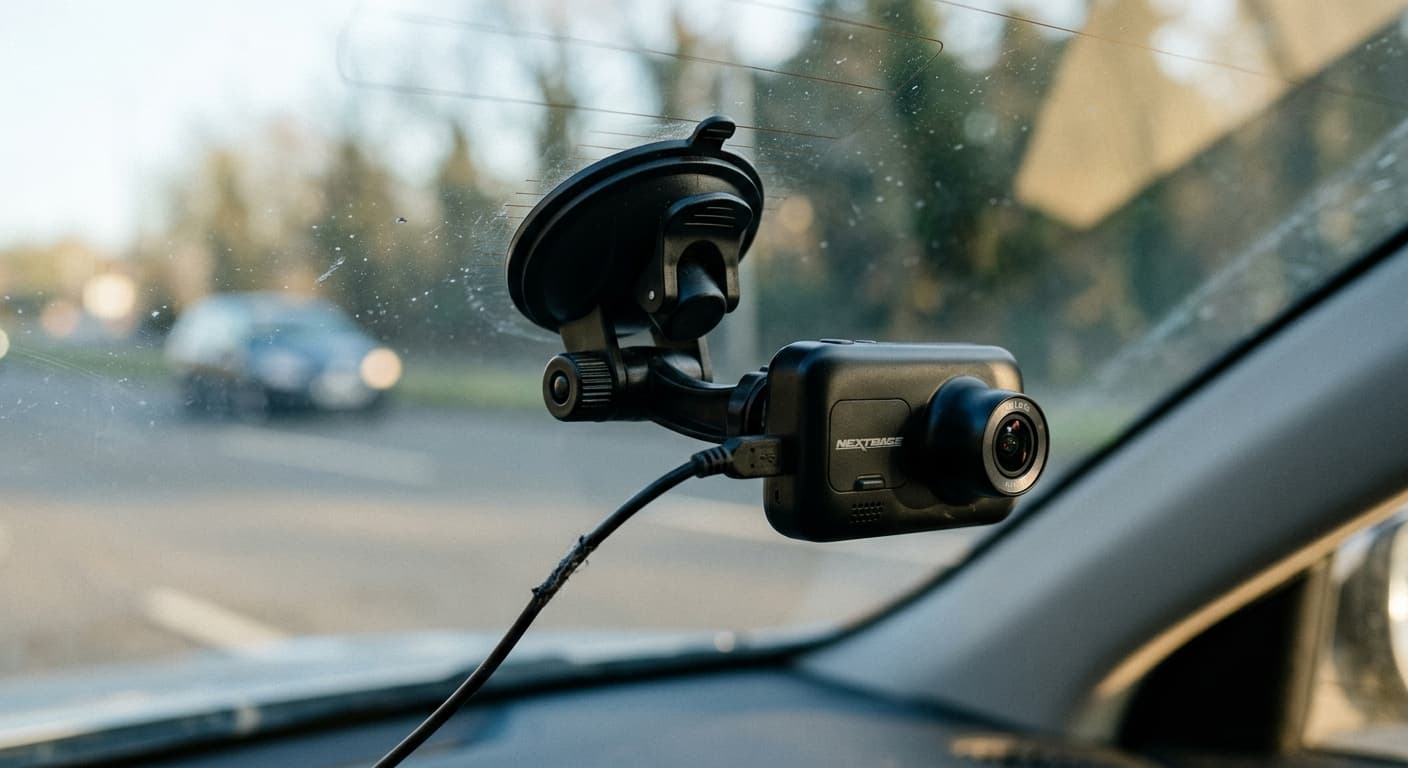
Maine permits dashcam use in any vehicle, and no state statute specifically restricts it. Drivers who record audio inside their vehicle satisfy the one-party consent requirement under 15 M.R.S.A. section 709. Mounting must not obstruct the windshield view under 29-A M.R.S.A. section 2082.
Dashcams are legal and widely used in Maine. The state has no specific statute that addresses dashboard cameras, which means their use is governed by general traffic safety laws, the one-party consent wiretapping statute (15 M.R.S.A. section 710), and federal motor vehicle regulations. Whether you are a daily commuter, a rideshare driver, or a fleet operator, understanding the legal framework for dashcam use in Maine will help you stay on the right side of the law.
Are Dashcams Legal in Maine?
Yes. Maine does not have any law that prohibits the installation or use of dashboard cameras in motor vehicles. You can use a dashcam in your personal vehicle, commercial vehicle, fleet vehicle, or any other motor vehicle on Maine roads.
No Specific Dashcam Statute
Maine has not enacted specific dashcam legislation. This means there are no state-imposed requirements for:
- Registration or notification of dashcam use
- Specific dashcam specifications or capabilities
- Mandatory dashcam usage for any vehicle class
- Restrictions on where dashcam footage can be stored or shared
Because no specific prohibition exists, dashcam use falls under the general legal principle that anything not explicitly prohibited by law is permitted.
Windshield Mounting Rules
Maine law addresses windshield obstructions under 29-A M.R.S.A. section 2082, which prohibits operating a vehicle with an object placed or hung in or on the vehicle, other than required equipment, in a manner that obstructs the driver's view through the windshield or blocks a clear and full view of the road. Mounting a dashcam so it materially blocks that view may result in a traffic violation.
Best practices for mounting your dashcam in Maine:
- Mount the camera behind the rearview mirror where it does not block your line of sight
- Use a compact camera that takes up minimal windshield space
- Ensure the camera does not obstruct any vehicle inspection stickers
- Test your field of vision after installation to confirm you have a clear view in all directions
- Consider a dashboard-mounted or mirror-clip style camera as an alternative to windshield suction mounts
Federal Windshield Standards
The Federal Motor Vehicle Safety Standard (FMVSS) 205, administered by the National Highway Traffic Safety Administration (NHTSA), sets requirements for automotive glazing materials. While FMVSS 205 does not directly address dashcam mounting, it establishes that windshields must allow adequate visibility.
Dashcam Audio Recording and Maine Consent Laws
One-Party Consent for In-Vehicle Audio
Many modern dashcams include built-in microphones that capture conversations inside the vehicle. Maine is a one-party consent state under 15 M.R.S.A. section 710, which criminalizes unauthorized interception, and section 709, which defines "intercept" to exclude the sender or receiver of the communication. As the vehicle owner and operator present for the conversation, your presence in the vehicle satisfies the one-party consent requirement. You do not need to inform passengers that the dashcam is recording audio.
This means you can legally:
- Record conversations with passengers without telling them
- Capture audio during traffic stops with law enforcement
- Record verbal exchanges during road rage incidents or accidents
- Use a dashcam that records audio continuously while driving
When Audio Recording Becomes Problematic
While one-party consent protects you when you are in the vehicle, certain situations raise legal concerns:
- Unattended vehicle recording. If your dashcam continues running while you are not in the vehicle and captures conversations between other people, you are no longer a party to those conversations. This could violate 15 M.R.S.A. section 710.
- Recording in private places. Maine has separate protections for privacy in certain locations under 17-A M.R.S.A. section 511. A parked vehicle in a private garage could raise privacy issues.
- Cross-state calls. If your dashcam records a phone call while driving through a two-party consent state like Massachusetts or New Hampshire, the stricter state's law may apply.
Disabling Audio Recording
If you want to avoid audio recording concerns, most dashcams allow you to disable the microphone through the camera's settings. This lets you capture video footage without recording any conversations.
Using Dashcam Footage as Evidence in Maine
Traffic Accidents and Insurance Claims
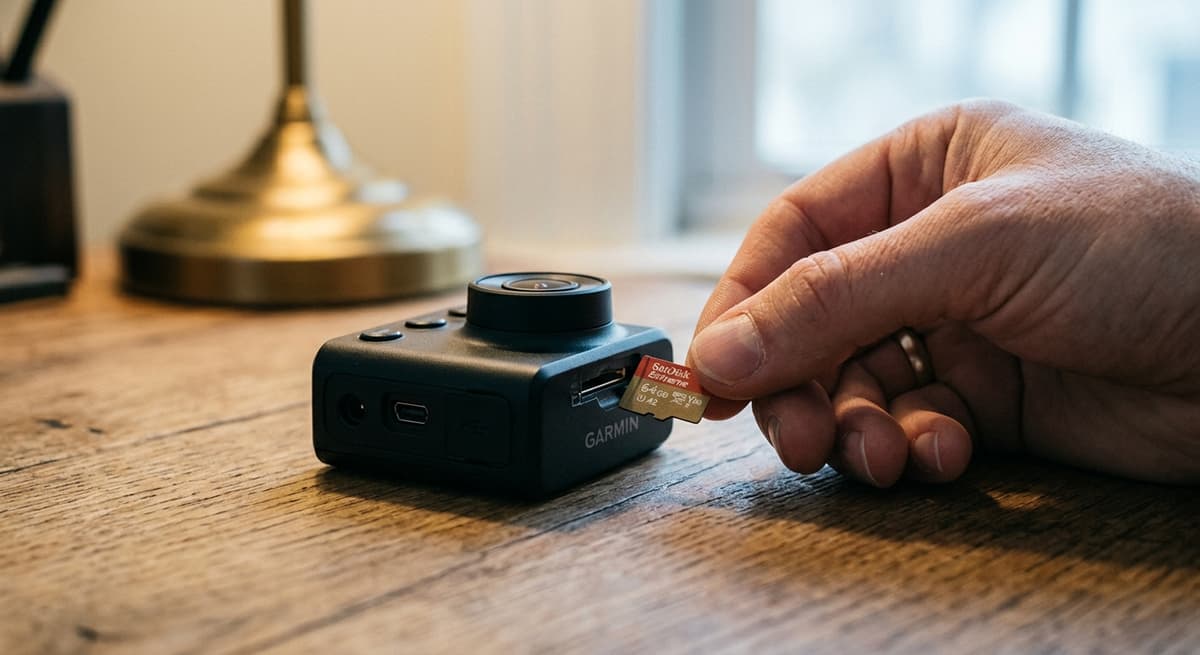
Dashcam footage is valuable evidence in traffic accident cases. Maine follows a modified comparative fault system under 14 M.R.S.A. section 156, which means a plaintiff can recover damages only if their percentage of fault is less than the defendant's; a plaintiff found equally at fault recovers nothing. Clear dashcam footage showing how an accident occurred can be decisive in establishing fault.
How dashcam footage helps in accident claims:
- Shows the sequence of events leading up to the collision
- Captures traffic signals, stop signs, and road conditions
- Records the speed and behavior of other drivers
- Provides a time-stamped, objective record
- Documents weather and visibility conditions, which are particularly important during Maine winters
Admissibility in Maine Courts
For dashcam footage to be admissible in Maine courts, it must meet authentication and relevance standards under the Maine Rules of Evidence. The party offering the footage must demonstrate:
- The recording device was functioning properly at the time
- The footage has not been altered, edited, or tampered with
- The date, time, and location shown are accurate
- The content is relevant to the case at hand
Maine courts have accepted dashcam footage in both civil and criminal proceedings.
Criminal Cases
Law enforcement officers in Maine increasingly rely on dashcam footage from both police cruisers and civilian vehicles. Dashcam footage can serve as evidence in:
- OUI (Operating Under the Influence) prosecutions
- Hit-and-run investigations
- Road rage and assault cases
- Traffic violation disputes
- Insurance fraud investigations
Small Claims Court
In Maine small claims court (cases under $6,000 as of 2026), dashcam footage can help resolve disputes about property damage, minor collisions, and parking lot incidents. The informal nature of small claims proceedings means authentication requirements are typically less strict.
Commercial Dashcam Use in Maine
Fleet Operators and Trucking Companies
Commercial fleet operators in Maine commonly use dashcams for driver safety, accident liability protection, and regulatory compliance. The Federal Motor Carrier Safety Administration (FMCSA) does not mandate or prohibit dashcam use for commercial vehicles.
Benefits for Maine commercial operators:
- Reduced insurance premiums through documented safe driving
- Protection against fraudulent accident claims
- Driver training and coaching using real-world footage
- Compliance documentation for FMCSA audits
- Evidence in workers' compensation disputes
Employee Privacy Considerations
If you operate a fleet in Maine, be aware that while one-party consent permits audio recording when the driver consents, employment law may create additional obligations. Maine has workplace privacy protections that employers should consider. Best practices include:
- Including dashcam use in your company's employee handbook
- Having drivers acknowledge the presence of dashcams in writing
- Clearly stating how footage will be used, stored, and shared
- Limiting access to footage to authorized personnel
- Establishing data retention policies
Rideshare and Taxi Drivers
Rideshare drivers operating in Maine can legally use dashcams. As a rideshare driver, your presence in the vehicle satisfies the one-party consent requirement for audio recording. Some rideshare drivers post a small notice informing passengers about the dashcam. While not legally required in Maine, this practice can help avoid disputes.
Dashcams and Law Enforcement in Maine
Recording During Traffic Stops
You have the right to record police officers during traffic stops in Maine. The First Circuit Court of Appeals, which has jurisdiction over Maine, ruled in Glik v. Cunniffe (2011) that the First Amendment protects the right to record law enforcement officers performing their duties in public.
Your dashcam can continue recording during a traffic stop. You do not need to turn it off or announce that it is recording. For more about your rights when recording police in Maine, see our guide on Maine laws on recording police.
Police Requests for Dashcam Footage
Law enforcement in Maine may request your dashcam footage if you witnessed an accident or crime. You are generally under no legal obligation to provide it voluntarily. However, a court subpoena or search warrant requires compliance.
If you share footage voluntarily:
- Make a copy before handing it over
- Note the officer's name, badge number, and case number
- Ask for documentation of the transfer
- Keep the original footage as a backup
Dashcam Data Storage and Privacy
Maine Data Privacy Considerations
Maine has enacted privacy protections that may be relevant to dashcam users. The state's broadband privacy law (35-A M.R.S. section 9301, Privacy of Broadband Internet Access Service Customer Personal Information) restricts internet service providers from using, disclosing, selling, or permitting access to a customer's personal information without opt-in consent. A proposed Maine Online Data Privacy Act (LD 1822) did not pass into law, so cloud-connected dashcam services are not currently subject to a broader Maine consumer-data-privacy statute beyond section 9301's ISP-specific rules.
Best practices for dashcam data storage:
- Use password-protected or encrypted storage for footage
- Delete footage that is no longer needed
- Be cautious about posting dashcam footage of identifiable people online
- Keep footage in a secure location if it may be needed as evidence
Cloud Storage and GPS Data
Many modern dashcams upload footage to cloud storage and record GPS data. While Maine law does not specifically regulate this practice for personal use, the state's evolving data privacy framework may apply to commercial dashcam services. GPS data from your dashcam could be used in legal proceedings to establish your location at specific times.
Penalties for Improper Dashcam Use in Maine
| Violation | Statute | Penalty |
|---|---|---|
| Windshield obstruction | 29-A M.R.S.A. section 2082 | Traffic citation and fine |
| Recording audio without consent (when not a party) | 15 M.R.S.A. section 710 | Class C crime: up to 5 years prison, $5,000 fine |
| Voyeuristic use of cameras | 17-A M.R.S.A. section 511 | Class D crime: up to 1 year jail, $2,000 fine |
| Selling interception devices | 15 M.R.S.A. section 710 | Class B crime: up to 10 years prison |
Civil liability also applies. Under 15 M.R.S.A. section 711, victims of illegal interception can recover actual damages (or liquidated damages of $100 per day, whichever is greater) and attorney fees. The statute does not provide for punitive damages.
Dashcams and Maine Insurance
How Dashcams Affect Insurance Claims
Maine follows a traditional fault-based insurance system. After an accident, the at-fault driver's insurance pays for damages. Dashcam footage can be critical in determining who caused the accident and securing fair compensation.
Insurance Discounts
Some Maine insurance providers offer discounts for vehicles equipped with dashcams, particularly for commercial fleets. Contact your provider to ask about available premium reductions.
More Maine Recording Laws
Audio Recording | Video Recording | Voyeurism Laws | Workplace Recording | Recording Police | Phone Call Recording | Security Cameras | Recording in Public | Landlord-Tenant Recording | Dashcam Laws | School Recording | Medical Recording
More Maine Recording Topics
More Maine Laws
Frequently Asked Questions
Do I need to tell passengers my dashcam is recording audio in Maine?
No. Maine is a one-party consent state under 15 M.R.S.A. section 710 and section 709. As the vehicle operator, your presence satisfies the consent requirement. You do not need to inform passengers. However, some drivers post a small notice as a courtesy.
Can dashcam footage be used as evidence in Maine courts?
Yes. Dashcam footage is admissible in Maine courts when properly authenticated. The offering party must show the device was working correctly, the footage has not been altered, and the content is relevant to the case. Maine courts accept dashcam footage in both civil and criminal proceedings.
Where should I mount my dashcam to comply with Maine law?
Maine law (29-A M.R.S.A. section 2082) prohibits objects that obstruct your view through the windshield. Mount the camera behind the rearview mirror or in a corner where it does not block your view. Avoid placing it where it obstructs your line of sight or covers your inspection sticker.
Can my dashcam record while my car is parked and I am not in it?
Video recording while parked is generally legal. However, if the dashcam records audio while you are away, it could capture conversations between people without any party consenting, which may violate 15 M.R.S.A. section 710. Consider disabling the microphone for parking mode.
Can a police officer order me to turn off my dashcam during a traffic stop in Maine?
No. The First Circuit Court of Appeals, which covers Maine, has confirmed that the First Amendment protects the right to record law enforcement officers in public. Your dashcam can continue recording during a traffic stop, and you do not need to announce it is running.
Updates
Corrected two miscited statutes (the real windshield-obstruction law is 29-A M.R.S. section 2082, not 1916; the real one-party-consent basis is 15 M.R.S. section 709, not 712), fixed a broken and mismatched ISP-privacy citation (35-A M.R.S. section 9301), removed a claim about an Online Data Privacy Act that did not pass into law, and tightened an imprecise comparative-fault threshold.
Independently fact-checked against the cited primary sources
Corrected a claim that Maine's civil wiretapping remedy (15 M.R.S.A. section 711) includes punitive damages; the statute authorizes only actual/liquidated damages and attorney fees.
Governing law re-checked for recent changes
Cross-spoke accuracy check: corrected the dashcam one-party-consent citation from 15 M.R.S. section 712 (the carrier/law-enforcement exceptions provision, not a consent source) to 15 M.R.S. sections 709 and 710. Note that the First Circuit extended the First Amendment right to record police to secret audio recording in Project Veritas Action Fund v. Rollins, 982 F.3d 813 (1st Cir. 2020) -- relevant when dashcam captures traffic-stop audio.
Reviewed and approved by an editor
The Law Behind This Article
This article rests on the statutory provisions below, held in our own legal record and retrieved from the official source. Tap a section to read the operative text.
Maine Revised Statutes, Title 15: COURT PROCEDURE -- CRIMINAL, Part 2: PROCEEDINGS BEFORE TRIAL, Chapter 102: INTERCEPTION OF WIRE AND ORAL COMMUNICATIONS
§ 710OffensesIn forcecited in 17 of our articles
1. Interception, oral communications prohibited. Any person, other than an employee of a communication common carrier, a law enforcement officer, an investigative officer, another employee of the Department of Corrections authorized to exercise law enforcement powers as described in Title 34‑A, section 3011 or a jail investigative officer or a jail employee acting at the direction of a jail investigative officer, carrying out practices otherwise permitted by this chapter, who intentionally or knowingly intercepts, attempts to intercept or procures any other person to intercept or attempt to intercept any wire or oral communication is guilty of a Class C crime. 2. Editing of tape recordings in judicial proceedings prohibited. Any person who knowingly or intentionally edits, alters or tampers with any tape, transcription or other sound recording, or knows of such editing, altering or tampering, and presents that recording in any judicial proceeding or proceeding under oath, without fully indicating the nature of the changes made and the original state of the recording, is guilty of a Class C crime. 3. Disclosure or use of wire or oral communications prohibited.
Official text (excerpt) · last checked 2026-08-28 · Read the full text in our law library · Verify at legislature.maine.gov
Cited in 5 court opinions in our collectionLatest citing opinion in our collection: 2022
In the courts (editorial summary, independently checked):Williams v. Poulos (1993) affirmed section 710(1) liability for intercepting employee calls and held section 710(3)(A) and (B) require only knowledge the information came through interception. Glenn A. Griffin v. Cristie J. Griffin (2014) allowed a parent's vicarious consent for a young child only on a good faith best-interest belief.
Opinions citing this section in our collection:
- Glenn A. Griffin v. Cristie J. Griffin (Supreme Judicial Court of Maine 2014, 92 A.3d 1144)✓A father recorded his six-year-old daughter's nightly calls with her mother after overhearing abusive remarks; the court held a parent with a good faith, objectively reasonable best-interest belief may vicariously consent under section 709(4)(C), so section 710 was not violated.
- Archer v. Androscoggin County (Superior Court of Maine 2022)✓An attorney sought recordings of another inmate's jail calls under Maine's public records law; the court applied the wiretap chapter that makes interception a crime under section 710 and held a court-appointed defense lawyer is not within the section 712(4) disclosure exception.
- Williams v. Poulos (Court of Appeals for the First Circuit 1993)✓Company owners secretly recorded employee phone calls using alligator clips wired to a VCR, and their lawyers then used the tapes; the First Circuit affirmed liability under section 710, holding subsection 3 requires only knowledge that the material came from an interception.
Identified automatically from the court opinions citing this section — not a ranking of which case controls.
Also relied on in: Maine Landlord-Tenant Recording Laws: Cameras, Audio, and Privacy Rights (2026), Maine Phone Call Recording Laws: Consent Rules for Cell, Landline, and VoIP (2026), Maine Laws on Recording in Public: Your Complete Guide (2026)
§ 709DefinitionsIn forcecited in 10 of our articles
The following words and phrases as used in this chapter, unless the context otherwise indicates, shall have the following meanings. [PL 1973, c. 561 (NEW).] 1. Communication common carrier. "Communication common carrier" means any telephone or telegraph company. 1-A. Administration of criminal justice. 1-B. Administration of juvenile criminal justice. 1-C. Administration of juvenile justice. "Administration of juvenile justice" has the same meaning as in section 3003, subsection 1‑A. 2. Contents. "Contents," when used with respect to any wire or oral communication, means any information concerning the identity of the parties to such communication or the existence, contents, substance, purport or meaning of that communication. 3. Intercepting device. "Intercepting device" means any device or apparatus which can be used to intercept a wire or oral communication other than: A. Any telephone or telegraph instrument, equipment or facility or any component thereof being used by a communication common carrier in the ordinary course of its business or extension telephones used by a subscriber to telephone service; or [PL 1973, c. 561 (NEW).] B.
Official text (excerpt) · last checked 2026-07-30 · Read the full text in our law library · Verify at legislature.maine.gov
Cited in 8 court opinions in our collectionLatest citing opinion in our collection: 2021
Opinions citing this section in our collection:
- Glenn A. Griffin v. Cristie J. Griffin (Supreme Judicial Court of Maine 2014, 92 A.3d 1144)“…nterception of Wire and Oral Communications Act (the Act), 15 M.R.S. §§ 709-713 (2012),1 and (2) whether the court…”
- State v. Kehling (Supreme Judicial Court of Maine 1991, 601 A.2d 620)“…e Maine’s Interception of Wire and Oral Communications Act, 15 M.R.S.A. §§ 709-713 (Supp.1991). As to the sentence, we…”
- State v. Cyran (Supreme Judicial Court of Maine 1991, 586 A.2d 1238)“…versations. Nevertheless, both Maine’s wiretap regulations, 15 M.R.S.A. §§ 709-712, and the applicable federal provisi…”
Identified automatically from the court opinions citing this section — not a ranking of which case controls.
Also relied on in: Maine Smart Glasses Recording Laws: What You Need to Know, Maine Surveillance Camera Laws (2026 Guide), Maine Recording Laws (2026): One-Party Consent, § 710 and § 511
§ 711Civil remedyIn forcecited in 8 of our articles
Any party to a conversation intercepted, disclosed or used in violation of this chapter shall have a civil cause of action against any person who intercepts, discloses or uses such communications and shall be entitled to recover from any such persons: [PL 1973, c. 561 (NEW).] 1. Damages. Actual damages, but not less than liquidated damages, computed at the rate of $100 per day for each day of violation; and 2. Attorney's fee. A reasonable attorney's fee and other litigation disbursements reasonably incurred.
Official text (excerpt) · last checked 2026-07-30 · Read the full text in our law library · Verify at legislature.maine.gov
Cited in 1 court opinions in our collectionLatest citing opinion in our collection: 2009
Opinions citing this section in our collection:
- Simpson v. Cumberland County (Superior Court of Maine 2009)“…additional claims, including: (1) an alleged violation of 15 M.R.S. § 711 - which provides a civil damages remedy…”
Identified automatically from the court opinions citing this section — not a ranking of which case controls.
Also relied on in: Maine Audio Recording Laws: One-Party Consent Rules and Penalties (2026), Maine Security Camera Laws: Home, Business, and HOA Rules (2026), Maine Voyeurism Laws: Hidden Cameras, Penalties, and Defenses (2026)
§ 712ExceptionsIn forcecited in 8 of our articles
1. Switchboard operators, communication common carrier agent. It is not a violation of this chapter for an operator of a switchboard or an officer, employee or agent of any communication common carrier, as defined in this chapter, to intercept, disclose or use that communication in the normal course of employment while engaged in any activity which is a necessary incident to the rendition of service or to the protection of the rights or property of the carrier of the communication, provided that the communication common carriers shall not utilize service for observing or random monitoring, except for mechanical or service quality control checks, nor shall any such officer, employee or agent use or disclose to another the contents as defined in this chapter of the communication so intercepted. 2. Investigative officers.
Official text (excerpt) · last checked 2026-07-30 · Read the full text in our law library · Verify at legislature.maine.gov
Cited in 4 court opinions in our collectionLatest citing opinion in our collection: 2014
Opinions citing this section in our collection:
- State v. Desjardins (Supreme Judicial Court of Maine 1979, 401 A.2d 165)“…nd under the circumstances was subject to the provisions of 15 M.R.S.A. § 712, which specifically proscribe the use o…”
- Glenn A. Griffin v. Cristie J. Griffin (Supreme Judicial Court of Maine 2014, 92 A.3d 1144)“…sent of either party to the call, and that no exception to 15 M.R.S. § 712 applied to allow Glenn to consent vica…”
- State v. Cyran (Supreme Judicial Court of Maine 1991, 586 A.2d 1238)“…federal guidelines apply here, he specifically argues that 15 M.R.S.A. § 712 (Supp.1990) should be interpreted as pr…”
Identified automatically from the court opinions citing this section — not a ranking of which case controls.
Also relied on in: Maine Laws on Recording Police: Your Rights and Limits (2026), Maine Workplace Recording Laws: Employee and Employer Rights (2026), Maine Ring Doorbell Laws: What You Need to Know in 2026
Maine Revised Statutes, Title 29-A: MOTOR VEHICLES AND TRAFFIC, Chapter 17: EQUIPMENT
§ 1916Reflective and tinted glassIn forcecited in 3 of our articles
1. Windows to be unobscured. A person may not operate a motor vehicle required to be registered in this State and an inspection mechanic may not issue a certificate of inspection for a motor vehicle, if: A. A window is composed of, covered by or treated with any material that is reflective; [PL 1993, c. 683, Pt. A, §2 (NEW); PL 1993, c. 683, Pt. B, §5 (AFF).] B. The front windshield is composed of, covered by or treated with a material that reduces the light transmittance through the window more than the original installation window or an original replacement window; [PL 1993, c. 683, Pt. A, §2 (NEW); PL 1993, c. 683, Pt. B, §5 (AFF).] C. A side window or rear window is composed of, covered by or treated with a material that allows a light transmittance of less than 35% net of glass and material; or [PL 2007, c. 186, §1 (AMD).] D. A front windshield, front door window or window at either end of a rear passenger seat does not contain 2-way glass that provides the occupants with a clear view of the road and a person outside the vehicle with a clear view of the occupants and the interior of the vehicle. [PL 1993, c. 683, Pt. A, §2 (NEW); PL 1993, c. 683, Pt. B, §5 (AFF).] 2.
Official text (excerpt) · last checked 2026-09-01 · Read the full text in our law library · Verify at legislature.maine.gov
Also relied on in: Maine Window Tint Laws (2026): Legal VLT Limits, Maine Windshield Mounting Laws (2026 Guide)
Maine Revised Statutes, Title 29-A: MOTOR VEHICLES AND TRAFFIC, Chapter 19: OPERATION
§ 2082WindowsIn forcecited in 2 of our articles
1. Obstructions. A person may not operate a vehicle with a sign, poster, opaque or semitransparent material or substance on the front windshield, side wing or side or rear window that obstructs the operator's clear view of the way or an intersecting way. 2. Objects. A person may not operate a motor vehicle with an object placed or hung in or on the vehicle, other than the required or provided equipment of the vehicle, in a manner that obstructs or interferes with the view of the operator through the windshield or prevents the operator from having a clear and full view of the road and conditions of traffic. 3. Parking or identification stickers. A motor vehicle may display no more than one sticker on its windshield for parking or entry identification. 4. Location of inspection stickers. No portion of a sticker other than an inspection sticker may be more than 4 inches from the bottom edge of the windshield. If the inspection sticker is located in the lower left hand corner of the windshield, the other sticker must be located to the right of it. 5. Exception.
Official text (excerpt) · last checked 2026-09-07 · Read the full text in our law library · Verify at legislature.maine.gov
Search our full record of US law — 2.1 million sections, every state + federal →
Sources and References
- 15 M.R.S.A. section 710 - Interception of Communications (Maine Legislature)(legislature.maine.gov).gov
- 15 M.R.S.A. section 709 - Definitions (One-Party Consent) (Maine Legislature)(legislature.maine.gov).gov
- 29-A M.R.S.A. section 2082 - Windows (Windshield Obstruction) (Maine Legislature)(legislature.maine.gov).gov
- 15 M.R.S.A. section 711 - Civil Remedies (Maine Legislature)(legislature.maine.gov).gov
- National Highway Traffic Safety Administration (NHTSA)(nhtsa.gov).gov
- Federal Motor Carrier Safety Administration (FMCSA)(fmcsa.dot.gov).gov