
Maine
Maine Phone Call Recording Laws: Consent Rules for Cell, Landline, and VoIP (2026)
Independently fact-checked against primary sources (last audited August 15, 2026). · Reviewed by the RecordingLaw editorial team. · Law checked current as of August 15, 2026. · 5 primary sources cited on this page. How we verify our legal content
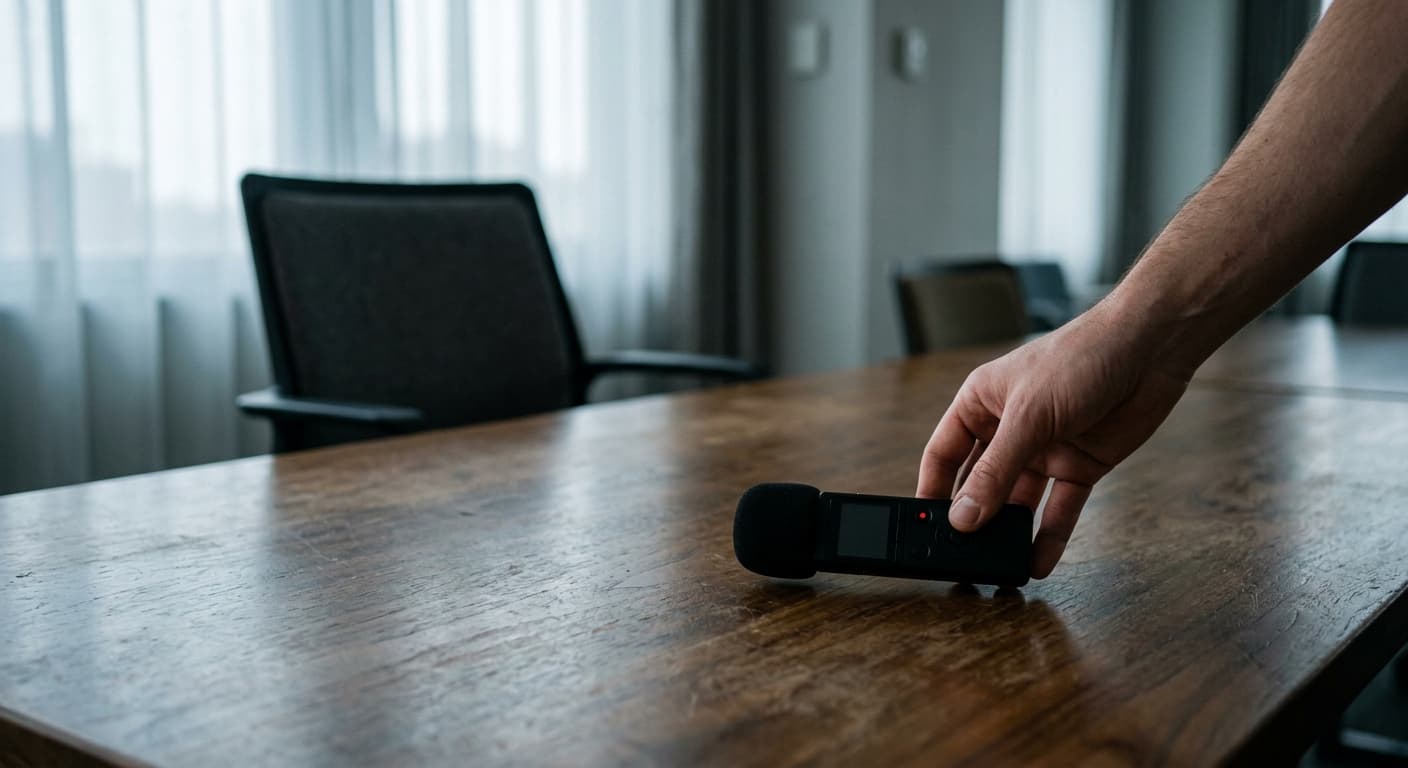
Maine is a one-party consent state because 15 M.R.S.A. section 709 excludes a party to the communication from the definition of "intercept," so you can legally record any phone call you participate in without telling the other party. If you call someone in a two-party consent state such as Massachusetts or New Hampshire, that state's stricter consent rules may apply.
Maine allows you to record your own phone calls under a one-party consent framework. Under 15 M.R.S.A. section 710, unauthorized interception is a crime, but section 709 defines "intercept" to exclude a person who is a party to the communication, so you can legally record any telephone conversation you are a party to without informing or obtaining consent from the other participants. This guide covers the specific statutes governing phone call recording in Maine, criminal and civil penalties for violations, cross-state calling rules, and practical guidance for common recording situations.
Maine One-Party Consent for Phone Calls
The Core Statutes
Maine's phone call recording laws are found in Title 15, Chapter 102 of the Maine Revised Statutes:
- 15 M.R.S.A. section 710 establishes criminal penalties for unauthorized interception of wire and oral communications
- 15 M.R.S.A. section 709 defines "intercept" to exclude a person who is a party to the communication, or who has the prior authority of the sender or receiver, which is the source of Maine's one-party consent rule
- 15 M.R.S.A. section 711 creates a civil cause of action for victims of illegal interception
Under section 709, "intercept" does not include acquiring a communication when you are a party to it or when a party has given prior authority. Because your participation in the phone call means you are not "intercepting" it under the statute's definition, no separate consent from the other party is required.
What One-Party Consent Means for Phone Calls
Under Maine's one-party consent framework:
- You can record any phone call you are part of without telling the other person
- You can use a call recording app, external recorder, or built-in phone features
- A third party can record a call if at least one participant has given that third party consent
- Your own awareness of the recording constitutes sufficient consent
The law draws a clear line: recording calls you participate in is legal; secretly recording calls between other people that you are not part of is illegal.
Types of Phone Calls Covered
Maine's recording law applies to all types of telephone communications:
- Landline calls between traditional telephone connections
- Cell phone calls on mobile networks
- VoIP calls through platforms like Zoom, Microsoft Teams, Google Meet, and Skype
- Video calls that include audio components
- Conference calls where you are a participant
- Customer service calls where you are one of the parties
Criminal Penalties for Illegal Phone Call Recording

Classification
Unauthorized interception of phone calls in Maine is a Class C crime under 15 M.R.S.A. section 710. Penalties include:
- Up to 5 years in prison
- A fine of up to $5,000
Selling Interception Devices
Manufacturing, distributing, possessing, or advertising devices designed for interception is a Class B crime under the same statute, carrying:
- Up to 10 years in prison
- A fine of up to $20,000
Disclosing Intercepted Communications
Intentionally disclosing the contents of phone calls that were intercepted illegally is also a criminal offense under section 710. Sharing or using information obtained through illegal wiretapping carries the same Class C penalties.
Penalty Summary
| Offense | Classification | Maximum Penalty |
|---|---|---|
| Illegal interception of phone calls | Class C crime | 5 years prison, $5,000 fine |
| Disclosing illegally intercepted calls | Class C crime | 5 years prison, $5,000 fine |
| Possessing interception devices | Class C crime | 5 years prison, $5,000 fine |
| Selling interception devices | Class B crime | 10 years prison, $20,000 fine |
Civil Liability for Illegal Phone Call Recording
Statutory Civil Remedies
Under 15 M.R.S.A. section 711, victims of illegal phone call interception can pursue civil remedies including:
- Actual damages, but not less than liquidated damages computed at $100 per day for each day of violation
- Reasonable attorney fees and litigation costs
Section 711 does not provide for punitive damages or injunctive relief.
Statute of Limitations
Civil actions for illegal interception in Maine must be filed within the applicable limitations period. The general statute of limitations for tort actions in Maine is 6 years under 14 M.R.S.A. section 752.
Phone Call Recordings as Evidence in Maine Courts
General Admissibility
Phone call recordings made legally under Maine one-party consent are generally admissible in court. To admit a recording, the offering party must establish:
- Authentication: The recording is genuine and has not been altered
- Relevance: The recording relates to a matter at issue in the case
- Speaker identification: The voices on the recording can be identified
- Completeness: Courts may require the full recording, not just selected portions
Criminal Cases
Illegally obtained phone call recordings are generally inadmissible in criminal proceedings. Courts will suppress recordings made in violation of 15 M.R.S.A. section 710 when a proper motion is filed.
Civil Cases
In civil litigation, Maine courts apply the same authentication and relevance standards. The court retains discretion to exclude evidence when its probative value is substantially outweighed by unfair prejudice.
Family Court Proceedings
Phone call recordings are frequently offered in Maine family law cases, including divorce, custody, and protection order proceedings. Common uses include:
- Documenting verbal agreements about child custody or property
- Proving harassment, threats, or domestic abuse
- Recording conversations about finances during divorce
- Capturing evidence of parental alienation or violations of custody orders
Federal Law and Maine Phone Call Recording
The Federal Wiretap Act
The federal Wiretap Act (18 U.S.C. 2511) follows one-party consent, aligning with Maine's approach. Recordings legal under Maine law satisfy federal requirements. Federal penalties for illegal wiretapping include up to 5 years in prison and fines up to $250,000.
The Stored Communications Act
The federal Stored Communications Act (18 U.S.C. 2701) prohibits unauthorized access to stored voicemail and saved audio files.
Recording Phone Calls Across State Lines
Neighboring States
| State | Consent Requirement | Key Consideration |
|---|---|---|
| New Hampshire | Two-party consent | Must inform and get consent from all parties |
| Massachusetts | Two-party consent | Must inform and get consent from all parties |
| Vermont | One-party consent (case law only, no wiretap statute) | Similar practical outcome to Maine, on a different legal basis |
Because Maine borders two two-party consent states (New Hampshire and Massachusetts), cross-border calls are a significant concern.
Calls to Two-Party Consent States
When calling someone in a two-party consent state, the stricter law may apply. To protect yourself:
- Determine where the other party is located before recording
- If the other party is in a two-party consent state, inform them of the recording
- Get explicit verbal consent at the start of the call
- The safest approach is to always announce recording when crossing state lines
Exemptions Under Maine Law
Law Enforcement Exception
Law enforcement officers in Maine can record phone calls when acting under valid court orders issued pursuant to 15 M.R.S.A. section 713.
Service Provider Exception
Telephone and internet service providers are exempt when acting in the normal course of their duties, including network monitoring for maintenance and quality control.
Emergency Exception
Maine law provides an exception for recording when an emergency situation threatens life or safety, though this exception is narrowly interpreted.
Common Phone Call Recording Scenarios
Can I Record Customer Service Calls?
Yes. As a participant in the call, you have the right to record. When a business plays an automated message stating the call may be recorded, that is the business exercising its consent rights. You have equal rights to record as the other party.
Can I Record Calls With My Lawyer?
Yes. You can record phone calls with your attorney under one-party consent. Attorney-client privilege protects the contents regardless of whether the call is recorded.
Can I Record Calls With Government Agencies?
Yes. You can record phone calls with state and federal government agencies. There is no special exception for government calls.
Can My Employer Record My Work Phone Calls?
Employers in Maine can record business calls when at least one party consents or when there is a legitimate business purpose and employees have been notified. Some employers include recording disclosures in employee handbooks or employment agreements.
AI Recording and Transcription Tools
Legal Status in Maine
Because Maine follows one-party consent, you can use AI transcription services and recording apps for phone calls you participate in, including:
- AI meeting assistants like Otter.ai and Fireflies
- Smartphone call recording apps
- Built-in transcription features in Zoom and Teams
- Wearable AI voice recorders
Practical Considerations
- Review transcripts for accuracy. AI transcription is not perfect, and errors could be problematic if used as evidence.
- Data security matters. Understand where your recordings are stored and who has access.
- Consider notice. While not required, informing the other party about AI recording can maintain professional relationships.
More Maine Recording Laws
Audio Recording | Video Recording | Voyeurism Laws | Workplace Recording | Recording Police | Phone Call Recording | Security Cameras | Recording in Public | Landlord-Tenant Recording | Dashcam Laws | School Recording | Medical Recording
More Maine Recording Topics
More Maine Laws
Frequently Asked Questions
Is it legal to record a phone call in Maine without telling the other person?
Yes. Maine is a one-party consent state under 15 M.R.S.A. sections 710 and 709. As a participant in the call, your own knowledge of the recording is sufficient consent because section 709's definition of "intercept" excludes a party to the communication. You do not need to inform or get permission from the other person.
What are the penalties for illegally recording a phone call in Maine?
Illegal phone call interception is a Class C crime under 15 M.R.S.A. section 710, carrying up to 5 years in prison and a $5,000 fine. Victims can also pursue civil damages under section 711, including actual damages (or liquidated damages of $100 per day, whichever is greater) and attorney fees. Section 711 does not provide for punitive damages.
Can I record a phone call with someone in Massachusetts or New Hampshire from Maine?
Both Massachusetts and New Hampshire are two-party consent states. When calling someone in either state, the stricter law may apply. The safest approach is to inform the other party and get their consent before recording when they are in a two-party consent state.
Can I use a phone call recording as evidence in a Maine court?
Yes, if the recording was made legally under one-party consent. You must authenticate the recording by showing it is genuine, unaltered, and relevant. Illegally obtained recordings are generally inadmissible.
Can I use an app to automatically record all my phone calls in Maine?
Yes. Because Maine follows one-party consent, you can use call recording apps to capture calls you participate in. Your participation satisfies the consent requirement. Be aware that calls to two-party consent states may still require informing the other party.
Updates
Corrected a KeyTakeaway that presented a federal-law limit (recording for a criminal or tortious purpose) as if it were part of Maine's own consent statute, which contains no such limit. Clarified that Vermont's one-party consent rule rests on case law rather than a statute like Maine's. Fixed a changelog entry that had misattributed the one-party rule to the wrong statute section.
Independently fact-checked against the cited primary sources; governing law re-checked for recent changes
Governing law re-checked for recent changes
Corrected the citation for Maine's one-party consent rule: it derives from 15 M.R.S.A. section 709's definition of "intercept" (which excludes a party to the communication), not from section 712, whose four exceptions cover only carriers, law enforcement, and jail officials. Also removed punitive damages and injunctive relief, which section 711 does not authorize, from every restatement of the civil remedies list.
Governing law re-checked for recent changes
Cross-spoke accuracy check: phone call recording under 15 M.R.S. section 709(4) (one-party) confirmed current; this entry originally cited section 712 in error and was corrected August 2026. No stale FCC references found. Interstate-call dual-consent analysis (Maine + stricter neighboring state) confirmed accurate.
Reviewed and approved by an editor
The Law Behind This Article
This article rests on the statutory provisions below, held in our own legal record and retrieved from the official source. Tap a section to read the operative text.
Maine Revised Statutes, Title 15: COURT PROCEDURE -- CRIMINAL, Part 2: PROCEEDINGS BEFORE TRIAL, Chapter 102: INTERCEPTION OF WIRE AND ORAL COMMUNICATIONS
§ 710OffensesIn forcecited in 17 of our articles
1. Interception, oral communications prohibited. Any person, other than an employee of a communication common carrier, a law enforcement officer, an investigative officer, another employee of the Department of Corrections authorized to exercise law enforcement powers as described in Title 34‑A, section 3011 or a jail investigative officer or a jail employee acting at the direction of a jail investigative officer, carrying out practices otherwise permitted by this chapter, who intentionally or knowingly intercepts, attempts to intercept or procures any other person to intercept or attempt to intercept any wire or oral communication is guilty of a Class C crime. 2. Editing of tape recordings in judicial proceedings prohibited. Any person who knowingly or intentionally edits, alters or tampers with any tape, transcription or other sound recording, or knows of such editing, altering or tampering, and presents that recording in any judicial proceeding or proceeding under oath, without fully indicating the nature of the changes made and the original state of the recording, is guilty of a Class C crime. 3. Disclosure or use of wire or oral communications prohibited.
Official text (excerpt) · last checked 2026-08-28 · Read the full text in our law library · Verify at legislature.maine.gov
Cited in 5 court opinions in our collectionLatest citing opinion in our collection: 2022
In the courts (editorial summary, independently checked):Williams v. Poulos (1993) affirmed section 710(1) liability for intercepting employee calls and held section 710(3)(A) and (B) require only knowledge the information came through interception. Glenn A. Griffin v. Cristie J. Griffin (2014) allowed a parent's vicarious consent for a young child only on a good faith best-interest belief.
Opinions citing this section in our collection:
- Glenn A. Griffin v. Cristie J. Griffin (Supreme Judicial Court of Maine 2014, 92 A.3d 1144)✓A father recorded his six-year-old daughter's nightly calls with her mother after overhearing abusive remarks; the court held a parent with a good faith, objectively reasonable best-interest belief may vicariously consent under section 709(4)(C), so section 710 was not violated.
- Archer v. Androscoggin County (Superior Court of Maine 2022)✓An attorney sought recordings of another inmate's jail calls under Maine's public records law; the court applied the wiretap chapter that makes interception a crime under section 710 and held a court-appointed defense lawyer is not within the section 712(4) disclosure exception.
- Williams v. Poulos (Court of Appeals for the First Circuit 1993)✓Company owners secretly recorded employee phone calls using alligator clips wired to a VCR, and their lawyers then used the tapes; the First Circuit affirmed liability under section 710, holding subsection 3 requires only knowledge that the material came from an interception.
Identified automatically from the court opinions citing this section — not a ranking of which case controls.
Also relied on in: Maine Dashcam Laws: Mounting Rules, Audio Recording, and Evidence (2026), Maine Landlord-Tenant Recording Laws: Cameras, Audio, and Privacy Rights (2026), Maine Laws on Recording in Public: Your Complete Guide (2026)
§ 709DefinitionsIn forcecited in 10 of our articles
The following words and phrases as used in this chapter, unless the context otherwise indicates, shall have the following meanings. [PL 1973, c. 561 (NEW).] 1. Communication common carrier. "Communication common carrier" means any telephone or telegraph company. 1-A. Administration of criminal justice. 1-B. Administration of juvenile criminal justice. 1-C. Administration of juvenile justice. "Administration of juvenile justice" has the same meaning as in section 3003, subsection 1‑A. 2. Contents. "Contents," when used with respect to any wire or oral communication, means any information concerning the identity of the parties to such communication or the existence, contents, substance, purport or meaning of that communication. 3. Intercepting device. "Intercepting device" means any device or apparatus which can be used to intercept a wire or oral communication other than: A. Any telephone or telegraph instrument, equipment or facility or any component thereof being used by a communication common carrier in the ordinary course of its business or extension telephones used by a subscriber to telephone service; or [PL 1973, c. 561 (NEW).] B.
Official text (excerpt) · last checked 2026-07-30 · Read the full text in our law library · Verify at legislature.maine.gov
Cited in 8 court opinions in our collectionLatest citing opinion in our collection: 2021
Opinions citing this section in our collection:
- Glenn A. Griffin v. Cristie J. Griffin (Supreme Judicial Court of Maine 2014, 92 A.3d 1144)“…nterception of Wire and Oral Communications Act (the Act), 15 M.R.S. §§ 709-713 (2012),1 and (2) whether the court…”
- State v. Kehling (Supreme Judicial Court of Maine 1991, 601 A.2d 620)“…e Maine’s Interception of Wire and Oral Communications Act, 15 M.R.S.A. §§ 709-713 (Supp.1991). As to the sentence, we…”
- State v. Cyran (Supreme Judicial Court of Maine 1991, 586 A.2d 1238)“…versations. Nevertheless, both Maine’s wiretap regulations, 15 M.R.S.A. §§ 709-712, and the applicable federal provisi…”
Identified automatically from the court opinions citing this section — not a ranking of which case controls.
Also relied on in: Maine Smart Glasses Recording Laws: What You Need to Know, Maine Surveillance Camera Laws (2026 Guide), Maine Recording Laws (2026): One-Party Consent, § 710 and § 511
§ 711Civil remedyIn forcecited in 8 of our articles
Any party to a conversation intercepted, disclosed or used in violation of this chapter shall have a civil cause of action against any person who intercepts, discloses or uses such communications and shall be entitled to recover from any such persons: [PL 1973, c. 561 (NEW).] 1. Damages. Actual damages, but not less than liquidated damages, computed at the rate of $100 per day for each day of violation; and 2. Attorney's fee. A reasonable attorney's fee and other litigation disbursements reasonably incurred.
Official text (excerpt) · last checked 2026-07-30 · Read the full text in our law library · Verify at legislature.maine.gov
Cited in 1 court opinions in our collectionLatest citing opinion in our collection: 2009
Opinions citing this section in our collection:
- Simpson v. Cumberland County (Superior Court of Maine 2009)“…additional claims, including: (1) an alleged violation of 15 M.R.S. § 711 - which provides a civil damages remedy…”
Identified automatically from the court opinions citing this section — not a ranking of which case controls.
Also relied on in: Maine Audio Recording Laws: One-Party Consent Rules and Penalties (2026), Maine Security Camera Laws: Home, Business, and HOA Rules (2026)
§ 712ExceptionsIn forcecited in 8 of our articles
1. Switchboard operators, communication common carrier agent. It is not a violation of this chapter for an operator of a switchboard or an officer, employee or agent of any communication common carrier, as defined in this chapter, to intercept, disclose or use that communication in the normal course of employment while engaged in any activity which is a necessary incident to the rendition of service or to the protection of the rights or property of the carrier of the communication, provided that the communication common carriers shall not utilize service for observing or random monitoring, except for mechanical or service quality control checks, nor shall any such officer, employee or agent use or disclose to another the contents as defined in this chapter of the communication so intercepted. 2. Investigative officers.
Official text (excerpt) · last checked 2026-07-30 · Read the full text in our law library · Verify at legislature.maine.gov
Cited in 4 court opinions in our collectionLatest citing opinion in our collection: 2014
Opinions citing this section in our collection:
- State v. Desjardins (Supreme Judicial Court of Maine 1979, 401 A.2d 165)“…nd under the circumstances was subject to the provisions of 15 M.R.S.A. § 712, which specifically proscribe the use o…”
- Glenn A. Griffin v. Cristie J. Griffin (Supreme Judicial Court of Maine 2014, 92 A.3d 1144)“…sent of either party to the call, and that no exception to 15 M.R.S. § 712 applied to allow Glenn to consent vica…”
- State v. Cyran (Supreme Judicial Court of Maine 1991, 586 A.2d 1238)“…federal guidelines apply here, he specifically argues that 15 M.R.S.A. § 712 (Supp.1990) should be interpreted as pr…”
Identified automatically from the court opinions citing this section — not a ranking of which case controls.
Also relied on in: Maine Laws on Recording Police: Your Rights and Limits (2026), Maine Workplace Recording Laws: Employee and Employer Rights (2026), Maine Ring Doorbell Laws: What You Need to Know in 2026
§ 713EvidenceIn force
The contents of an interception are not admissible in court, except that: [PL 2011, c. 507, §7 (RPR).] 1. Contents obtained under the laws of another jurisdiction. The contents of an interception of any oral communication or wire communication that has been legally obtained under the laws of another jurisdiction in which the interception occurred are admissible in the courts of this State, subject to the Maine Rules of Evidence; and 2. Contents obtained under this chapter. The contents of an interception of any oral communication or wire communication that has been legally obtained pursuant to section 712, subsection 2 or 3 are admissible in the courts of this State, subject to the Maine Rules of Evidence, if related to the administration of criminal justice as defined in Title 16, section 703, subsection 1 for the purposes of the Criminal History Record Information Act or as defined in Title 16, section 803, subsection 2 for the purposes of the Intelligence and Investigative Record Information Act; the administration of juvenile justice; or the statutory functions of a state agency.
Official text (excerpt) · last checked 2026-07-30 · Read the full text in our law library · Verify at legislature.maine.gov
Cited in 3 court opinions in our collectionLatest citing opinion in our collection: 2014
Opinions citing this section in our collection:
- Glenn A. Griffin v. Cristie J. Griffin (Supreme Judicial Court of Maine 2014, 92 A.3d 1144)“…ecordings were therefore inadmissible at trial pursuant to 15 M.R.S. § 713 and that the court erred when it denied…”
- State v. Kehling (Supreme Judicial Court of Maine 1991, 601 A.2d 620)“…g was played to the jury at his trial. By state law, 15 M.R.S.A. § 713, the contents of an “intercepted” wire…”
- State of Maine v. Simpson (Superior Court of Maine 2002)“…ress based on a lack of probable cause to arrest.* 2. Does 15 M.R.S.A. § 713 require the suppression of any tape-rec…”
Identified automatically from the court opinions citing this section — not a ranking of which case controls.
United States Code Title 18
§ 2511Interception and disclosure of wire, oral, or electronic communications prohibitedIn forcecited in 422 of our articles
Except as otherwise specifically provided in this chapter any person who— intentionally intercepts, endeavors to intercept, or procures any other person to intercept or endeavor to intercept, any wire, oral, or electronic communication; intentionally uses, endeavors to use, or procures any other person to use or endeavor to use any electronic, mechanical, or other device to intercept any oral communication when— such device is affixed to, or otherwise transmits a signal through, a wire, cable, or other like connection used in wire communication; or such device transmits communications by radio, or interferes with the transmission of such communication; or such person knows, or has reason to know, that such device or any component thereof has been sent through the mail or transported in interstate or foreign commerce; or such use or endeavor to use (A) takes place on the premises of any business or other commercial establishment the operations of which affect interstate or foreign commerce; or (B) obtains or is for the purpose of obtaining information relating to the operations of any business or other commercial establishment the operations of which affect interstate or foreign…
Official text (excerpt) · last checked 2026-08-28 · Read the full text in our law library · Verify at uscode.house.gov
Cited in 2,045 court opinions in our collectionLatest citing opinion in our collection: 2026
In the courts (editorial summary, independently checked):Griggs-Ryan v. Smith (1990) applied the Section 2511(2)(d) prior-consent exception, treating a tenant repeatedly told that all incoming calls were taped as having impliedly consented. United States v. United States District Court (1972) read the then-current Section 2511(3) as conferring no presidential surveillance power.
Opinions citing this section in our collection:
- Mitchell v. Forsyth (Supreme Court of the United States 1985, 472 U.S. 511)✓The Attorney General authorized a warrantless 1970 national security wiretap that caught the plaintiff's calls; the Court held the since-repealed Section 2511(3) disclaimer left the tap lawful under Title III, and that Mitchell had qualified immunity.
- United States v. United States District Court for the Eastern District of Michigan (Supreme Court of the United States 1972, 407 U.S. 297)✓The Attorney General approved warrantless wiretaps on members of a domestic group accused of bombing a CIA office; the Court read Section 2511(3) as a congressional disclaimer conferring no surveillance power, then held the Fourth Amendment required prior judicial approval.
- Forsyth v. Barr (Court of Appeals for the Fifth Circuit 1994, 19 F.3d 1527)✓Dallas police used, in an internal affairs probe of an officer, calls private parties allegedly intercepted illegally; assuming that was unlawful, the Fifth Circuit held Section 2517(1) and (2) allowed the disclosure and use, defeating the Section 2511(1)(c) and (d) claims.
Identified automatically from the court opinions citing this section — not a ranking of which case controls.
Also relied on in: Connecticut Recording Laws (2026): Hybrid Consent Rules Explained, Oregon Recording Laws (2026): Hybrid One-Party and All-Party Rules, US Recording Laws by State (2026): All 50 States Explained
§ 2701Unlawful access to stored communicationsIn forcecited in 19 of our articles
Except as provided in subsection (c) of this section whoever— intentionally accesses without authorization a facility through which an electronic communication service is provided; or intentionally exceeds an authorization to access that facility; and thereby obtains, alters, or prevents authorized access to a wire or electronic communication while it is in electronic storage in such system shall be punished as provided in subsection (b) of this section. The punishment for an offense under subsection (a) of this section is— if the offense is committed for purposes of commercial advantage, malicious destruction or damage, or private commercial gain, or in furtherance of any criminal or tortious act in violation of the Constitution or laws of the United States or any State— a fine under this title or imprisonment for not more than 5 years, or both, in the case of a first offense under this subparagraph; and a fine under this title or imprisonment for not more than 10 years, or both, for any subsequent offense under this subparagraph; and in any other case— a fine under this title or imprisonment for not more than 1 year or both, in the case of a first offense under this paragraph;…
Official text (excerpt) · last checked 2026-07-28 · Read the full text in our law library · Verify at uscode.house.gov
Cited in 724 court opinions in our collectionLatest citing opinion in our collection: 2026
Opinions citing this section in our collection:
- United States v. Warshak (Court of Appeals for the Sixth Circuit 2010, 631 F.3d 266)“…ied in good faith on the Stored Communications Act (“SCA”), 18 U.S.C. §§ 2701 et seq., a statute that allows the gove…”
- Guest v. Leis (Court of Appeals for the Sixth Circuit 2001, 255 F.3d 325)“…7 *340 In their brief, plaintiffs mention in passing 18 U.S.C. § 2701 , which prohibits intentional unlawful…”
- City of Ontario v. Quon (Supreme Court of the United States 2010, 560 U.S. 746)“…Raising claims under Rev. Stat. §1979, 42 U. S. C. §1983; 18 U. S. C. §2701 et seq., popularly known as the Stored…”
Identified automatically from the court opinions citing this section — not a ranking of which case controls.
Also relied on in: Hawaii Audio Recording Laws: One-Party Consent Rules and Penalties, Idaho Audio Recording Laws: One-Party Consent Rules and Penalties (2026), Iowa Audio Recording Laws: One-Party Consent Rules and Penalties (2026)
Search our full record of US law — 2.1 million sections, every state + federal →
Sources and References
- 15 M.R.S.A. section 710 - Interception of Communications (Maine Legislature)(legislature.maine.gov).gov
- 15 M.R.S.A. section 712 - Exceptions (Communication Carriers & Investigative Officers) (Maine Legislature)(legislature.maine.gov).gov
- 15 M.R.S.A. section 711 - Civil Remedies (Maine Legislature)(legislature.maine.gov).gov
- 18 U.S.C. 2511 - Federal Wiretap Act(law.cornell.edu)
- 15 M.R.S.A. section 713 - Court Orders for Interception (Maine Legislature)(legislature.maine.gov).gov
- 15 M.R.S.A. section 709 - Definitions (One-Party Consent) (Maine Legislature)(legislature.maine.gov).gov