Kansas Medical Recording Laws: Patient Rights, HIPAA, and Consent (2026)

Kansas is a one-party consent state, which means patients can legally record their own medical appointments without notifying the healthcare provider. Under K.S.A. 21-6101, Kansas law prohibits the interception or recording of private conversations only when done without the consent of at least one party. Because a patient is a participant in their own medical conversation, recording it satisfies the one-party consent requirement.
This guide covers patient recording rights in Kansas, how HIPAA interacts with patient recording, facility policies, telehealth rules, mental health recording considerations, and the use of medical recordings as legal evidence. For advice specific to your situation, consult a Kansas attorney.
Patient Recording Rights in Kansas
Can You Record Your Doctor in Kansas?
Yes. Kansas law permits any participant in a conversation to record it without obtaining consent from other parties. Under K.S.A. 22-2516 and the framework established in K.S.A. 21-6101, a party to a private conversation may waive the right of privacy and consent to electronic interception and recording. A nonconsenting party cannot challenge that recording.
This applies to all types of medical conversations, including discussions with physicians, specialists, nurses, pharmacists, and other healthcare professionals. The patient does not need to announce the recording or obtain verbal or written consent from the provider. Participation in the conversation is sufficient to establish consent under Kansas law.
Why Patients Record Medical Visits
Medical research consistently shows that patients retain only a fraction of the information communicated during appointments. Complex diagnoses, medication instructions, and treatment plans are difficult to absorb in a single visit.
Recording a medical appointment allows patients to review instructions later, share accurate information with family members or caregivers, and maintain a personal record of what was discussed. For patients managing chronic conditions or facing surgical decisions, recordings provide a reliable reference for treatment timelines and follow-up care.
Recordings also serve a protective function. If a dispute arises about what a provider communicated, the recording provides objective documentation of the conversation.
Types of Medical Encounters You Can Record
As a participant in the conversation, Kansas's one-party consent law allows patients to record:
- Primary care visits. Discussions about symptoms, diagnoses, and treatment plans.
- Specialist consultations. Detailed explanations of conditions and recommended procedures.
- Informed consent conversations. Discussions about risks, benefits, and alternatives before surgeries or procedures.
- Pharmacy consultations. Instructions about medication dosages, interactions, and side effects.
- Nursing interactions. Discharge instructions, wound care guidance, and medication schedules.
- Physical therapy and rehabilitation sessions. Exercise instructions and recovery milestones.
- Insurance-related conversations. Discussions about coverage, pre-authorization, and billing.
HIPAA and Patient Recording
What HIPAA Does and Does Not Do
The Health Insurance Portability and Accountability Act (HIPAA) is frequently misunderstood in the context of medical recording. Many patients have been told that recording a medical appointment "violates HIPAA." This is incorrect.
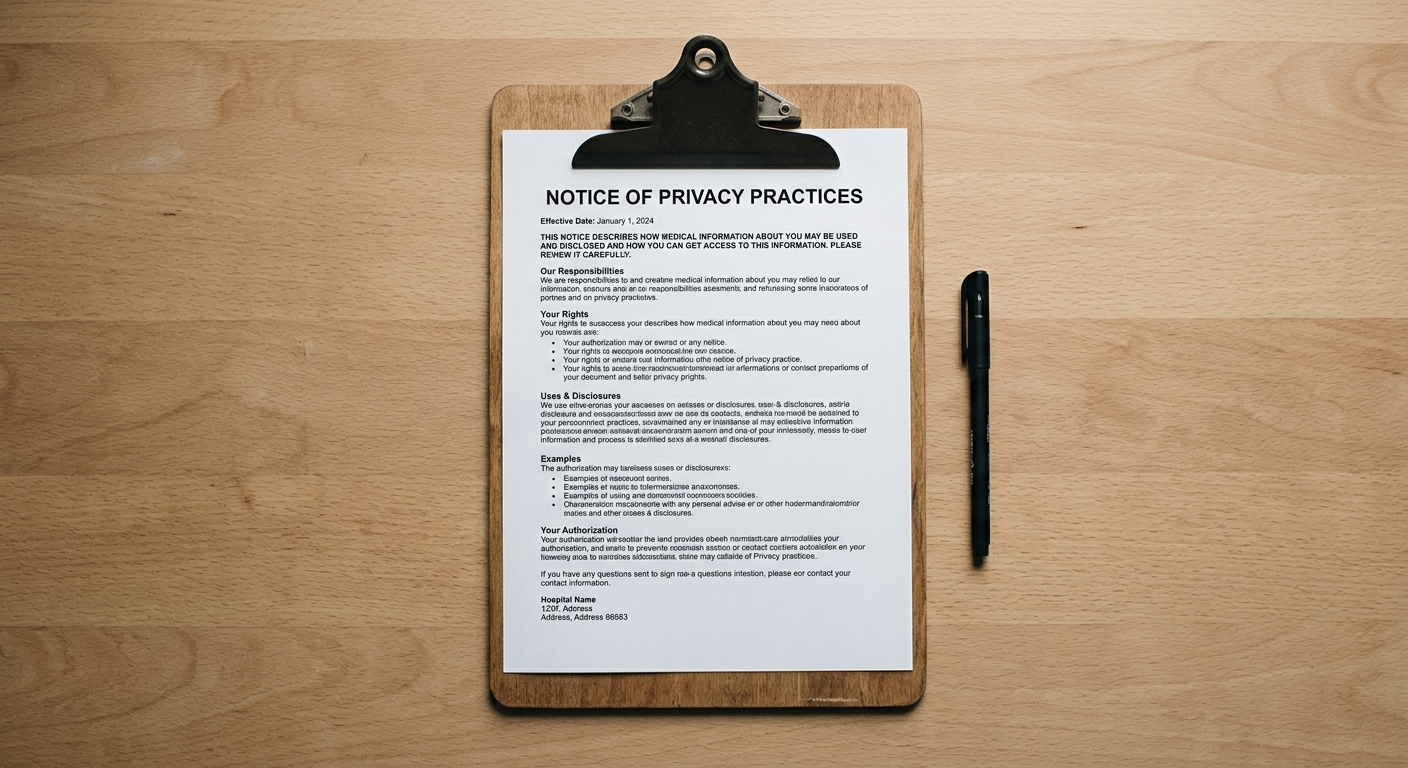
The HIPAA Privacy Rule regulates how "covered entities" (hospitals, physicians, health plans, and healthcare clearinghouses) collect, store, use, and disclose protected health information (PHI). Patients are not covered entities. HIPAA places no restrictions on what patients do with information about their own care, including recording conversations with their providers.
| Misconception | Reality |
|---|---|
| "Recording your doctor violates HIPAA" | False. HIPAA does not regulate patient behavior. |
| "Patients cannot possess recordings of medical conversations" | False. HIPAA applies to covered entities, not patients. |
| "A doctor can cite HIPAA to prohibit your recording" | Incorrect as a legal matter, though a facility may have its own policy. |
| "Sharing a recording of your medical visit violates HIPAA" | False for the patient. A provider sharing your information without authorization would be the violation. |
HIPAA and Provider Recording
While HIPAA does not restrict patients, it creates significant obligations for healthcare providers. If a provider records a patient visit, that recording becomes part of the medical record and falls under HIPAA protections. Patients have the right to access their own health information, including any recordings a provider has made.
Providers must also protect all PHI from unauthorized disclosure. A provider who records a patient visit and fails to secure that recording could face HIPAA enforcement actions from the U.S. Department of Health and Human Services.
Healthcare Facility Recording Policies
Can a Hospital or Clinic Prohibit Recording?
Healthcare facilities in Kansas can adopt internal policies that restrict or prohibit recording on their premises. These policies function similarly to other conduct rules that businesses set for their property. A hospital might require patients to ask permission before recording, prohibit recording in certain areas, or restrict photography throughout the facility.
These policies are enforceable as conditions of receiving services on private property. A facility that discovers a patient recording in violation of its policy could ask the patient to stop, decline to continue the appointment, or in extreme cases, ask the patient to leave (though emergency care obligations remain).
Common Facility Recording Policies
Kansas healthcare facilities typically address recording in one of several ways:
- No formal policy. Many smaller clinics and physician offices have no written recording policy.
- Blanket prohibition. Some hospitals prohibit all recording by patients and visitors.
- Permission-based policy. The facility allows recording with advance permission from the provider.
- Waiting room restrictions. Recording is permitted in exam rooms but prohibited in waiting areas where other patients are present.
Best Practices for Patients
Violating a facility recording policy is not a crime under Kansas law. One-party consent makes the recording itself legal regardless of the facility's rules. However, informing a provider about recording can maintain a positive care relationship. Many physicians respond well to a brief explanation that the recording is for personal reference. Some healthcare organizations actively encourage patient recording as a tool for better health outcomes.
For patients who prefer not to disclose their recording, Kansas law does not require them to do so. The decision is a personal one that balances the patient's information needs against the dynamics of the provider relationship.
Recording Other Patients in Healthcare Settings
Privacy in Waiting Rooms and Common Areas
One-party consent in Kansas applies to conversations in which the person recording is a participant. Recording other patients' conversations in a waiting room, hallway, or shared treatment area raises different legal concerns.
If a patient's recording device captures conversations between other patients and staff that the recording patient is not part of, those captured conversations may fall outside one-party consent protection. Kansas courts have not specifically addressed incidental recording in healthcare waiting rooms, but the safest approach is to limit recording to the patient's own medical conversations.
Recording Staff and Other Employees
Patients can record their own interactions with any healthcare staff member, including receptionists, nurses, billing personnel, and administrators. These conversations fall within one-party consent because the patient is a direct participant. Recording conversations between staff members that do not involve the patient could be considered eavesdropping under K.S.A. 21-6101.
Telehealth Recording in Kansas
Patient Recording of Telehealth Visits
Kansas's one-party consent law applies to telehealth visits in the same way it applies to in-person appointments. A patient participating in a video or phone-based medical consultation can record the session without informing the provider.
The Kansas Telemedicine Act requires that telehealth services comply with the same privacy standards as in-person care under HIPAA and 42 C.F.R. Part 2. The Act does not create separate recording restrictions for telehealth encounters.
Many telehealth platforms (Zoom, Doxy.me, MyChart Video) include built-in recording features that notify all participants when recording begins. Using a separate recording method on the patient's device avoids triggering platform notifications, though the legal right to record exists either way under Kansas law.
Provider Recording of Telehealth Visits
Kansas healthcare providers participating in telehealth visits can also record under one-party consent. However, provider recordings become part of the medical record and are subject to HIPAA protections. Providers must also comply with the informed consent requirements of the Kansas Telemedicine Act, which include disclosing the types of communications used during telehealth sessions.
Cross-State Telehealth Recording
When a Kansas patient receives telehealth services from a provider located in a two-party consent state, the question of which state's law applies becomes more complex. Two-party consent states require all parties to agree to recording. If the provider is in California, Florida, or another two-party consent jurisdiction, the stricter law may apply depending on the circumstances.
Kansas patients receiving telehealth from an out-of-state provider in a two-party consent jurisdiction may want to inform the provider before recording or consult an attorney about which state's law governs the interaction.
Mental Health Recording Considerations
Therapy and Counseling Sessions
Under K.S.A. 21-6101, Kansas's one-party consent law does not create an exception for mental health settings. A patient can legally record a therapy or counseling session they participate in without informing the therapist.

However, Kansas provides additional confidentiality protections for mental health treatment records under K.S.A. 65-5601 through 65-5604. These statutes establish a privilege that prevents treatment personnel at mental health facilities from disclosing confidential communications made during diagnosis or treatment. The privilege belongs to the patient and governs provider disclosure, not patient recording.
Therapists may have strong professional and clinical objections to being recorded. Recording can alter the therapeutic dynamic, and some practitioners believe it inhibits honest dialogue. While the legal right to record exists, patients considering recording therapy sessions should weigh the potential impact on their treatment.
Psychiatric Facilities
Psychiatric hospitals and inpatient mental health facilities in Kansas present additional considerations. These facilities often have strict recording policies tied to the safety and privacy of other patients. Patients in psychiatric settings may have limited access to personal electronic devices, and facility rules may prohibit recording in group therapy, common areas, and treatment rooms shared with other patients.
The legal right to record one's own conversations with providers remains intact under one-party consent. Facility policies can restrict the practical ability to record but cannot make a lawful one-party consent recording into a criminal act under Kansas law.
Using Medical Recordings as Evidence
Medical Malpractice Cases
Recordings of medical appointments can provide critical evidence in malpractice claims. A recording can establish:
- What the provider communicated about a diagnosis and when
- Whether adequate informed consent was obtained before a procedure
- The specific instructions given for post-operative care or medication management
- Statements that contradict later claims about what was discussed
- The tone and manner of the provider's communication
Kansas has a two-year statute of limitations for medical malpractice claims under K.S.A. 60-513. Recordings made during the relevant treatment period can preserve evidence that might otherwise rely on conflicting memories.
Personal Injury Cases
Medical recordings can also support personal injury claims by documenting:
- A provider's statements about the cause and extent of injuries
- Discussions about medical necessity for specific treatments
- Pre-authorization conversations with insurance representatives
- Billing and coding discussions related to treatment
Admissibility
Medical recordings made lawfully under Kansas's one-party consent law are generally admissible in Kansas courts. To be admitted as evidence, a recording must meet standard authentication requirements: it must be shown to be genuine, unaltered, and relevant to the case. The probative value of the recording must also outweigh any potential for unfair prejudice.
Kansas courts follow the Kansas Code of Civil Procedure and the Kansas Rules of Evidence for determining admissibility. An attorney experienced in Kansas medical malpractice or personal injury litigation can advise on the best approach for introducing recordings as evidence.
Kansas Recording Laws by Topic
Audio Recording | Video Recording | Voyeurism & Hidden Cameras | Workplace Recording | Recording Police | Phone Call Recording | Security Cameras | Recording in Public | Landlord-Tenant | Dashcam Laws | Schools | Medical Recording
More Kansas Laws
- Kansas Recording Laws
- Kansas Dog Bite Laws
- [Kansas Data Privacy Laws](/us-laws/data-privacy-laws/kansas-data-privacy-laws)
- Kansas Sexting Laws
- Kansas Lemon Laws
- Kansas Child Support Laws
- Kansas Hit and Run Laws
Sources and References
- K.S.A. 21-6101 -- Breach of Privacy(kslegislature.gov).gov
- K.S.A. 22-2516 -- Interception of Communications(ksrevisor.org).gov
- K.S.A. 65-5601 -- Mental Health Treatment Facility Privilege(ksrevisor.org).gov
- Kansas Telemedicine Act Summary(kslegislature.gov).gov
- HIPAA Privacy Rule(hhs.gov).gov
- Individuals' Right Under HIPAA to Access Health Information(hhs.gov).gov
- 18 U.S.C. 2511 -- Federal Wiretap Act(law.cornell.edu)