
Tennessee
Tennessee Windshield Mounting Laws (2026 Guide)
Independently fact-checked against primary sources (last audited August 17, 2026). · Reviewed by the RecordingLaw editorial team. · Law checked current as of August 17, 2026. · 7 primary sources cited on this page. How we verify our legal content
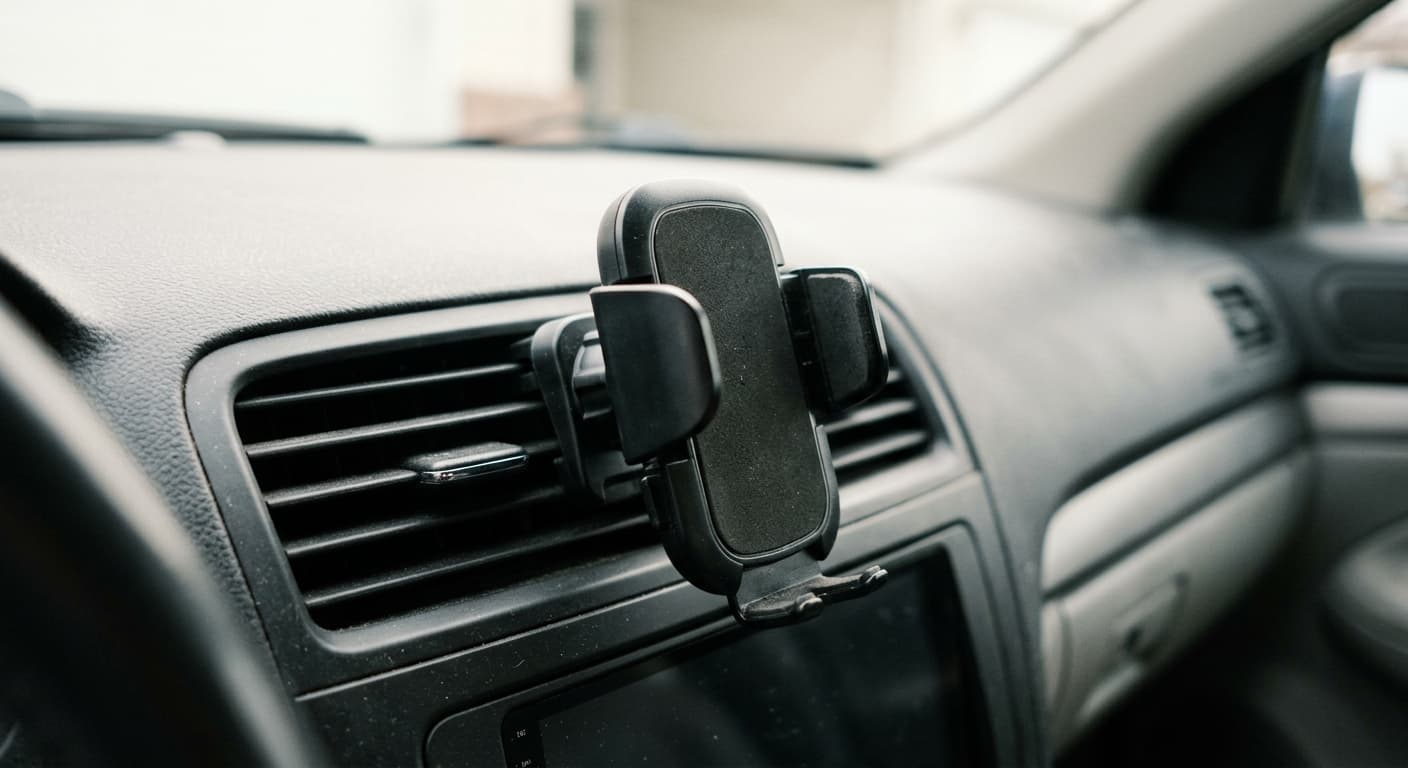
Tennessee allows drivers to mount a phone, GPS, or dashcam on the windshield under T.C.A. section 55-8-199, provided the device does not block the driver's view of the road. Drivers may interact with the mounted device only through a single tap or swipe while in motion, and that tap or swipe cannot activate camera, video, or gaming features.
Tennessee does not have a standalone law that specifically addresses mounting GPS units, smartphones, or dash cameras on a vehicle windshield. Instead, several overlapping statutes matter. The provision that actually addresses mounted devices is T.C.A. section 55-8-199 (the Hands-Free Law). T.C.A. section 55-9-107 (window tinting) limits what may be applied to the glass itself. T.C.A. section 55-8-165 (obstruction of the driver's view or interference with the driver's control) rounds out the picture, though as explained below its text is narrower than its title suggests.
Understanding how these statutes work together is important for any Tennessee driver who uses a GPS navigation device, a phone mount, or a dash cam. This guide covers each relevant law, the penalties for violations, exemptions, and practical tips for staying compliant.
Tennessee's Windshield Obstruction Law (T.C.A. Section 55-8-165)
The core statute governing windshield obstructions in Tennessee is T.C.A. section 55-8-165, titled "Obstruction of driver's view or interference with driver's control."
This law states that no person shall drive a vehicle when it is so loaded, or when there are in the front seat such a number of persons exceeding four, as to obstruct the view of the driver to the front or sides of the vehicle or as to interfere with the driver's control over the driving mechanism of the vehicle.
The statute also provides that no passenger in a vehicle shall ride in a position that interferes with the driver's or operator's view ahead or to the sides, or that interferes with the driver's or operator's control over the driving mechanism.
How This Applies to Windshield Mounts
By its terms, T.C.A. section 55-8-165 covers how a vehicle is loaded, the number of people in the front seat, and where a passenger rides. It says nothing about windshields or about objects affixed to the glass, and this guide cites no Tennessee decision extending it to mounted devices.
The rule that actually governs a mounted phone, GPS unit, or camera is T.C.A. section 55-8-199(b)(2)(A), which permits a device mounted on the windshield, dashboard, or center console only when the mounting does not hinder the driver's view of the road. Tennessee law does not specify exact placement zones (such as a 5-inch or 7-inch square in the lower corner, as some states do); that general standard is the test.
Penalty for Violating T.C.A. Section 55-8-165
A violation of this section is a Class C misdemeanor under Tennessee law. Class C misdemeanors carry a maximum fine of $50 and up to 30 days in jail, though jail time is rare for windshield obstruction violations. Most drivers receive a citation and fine.
Officers have discretion in enforcement. Because section 55-8-165 is written around loading and occupants, it is not the provision that sets the placement rule for a mounted device. Section 55-8-199(b)(2)(A) is.
Tennessee's Hands-Free Law (T.C.A. Section 55-8-199)
Tennessee became a hands-free state on July 1, 2019, when the Hands-Free Law (T.C.A. section 55-8-199) took effect. This law is the most directly relevant statute for drivers who mount phones or GPS devices on their windshields.
What the Hands-Free Law Prohibits
Under T.C.A. section 55-8-199, drivers are prohibited from:
- Holding a wireless telecommunications device or stand-alone electronic device with any part of their body while operating a motor vehicle
- Reaching for a device in a manner that requires the driver to no longer be in a seated driving position
- Writing, sending, or reading any text-based communication while driving
- Watching a video or movie on a wireless telecommunications device or stand-alone electronic device, other than viewing data related to navigation
- Recording or broadcasting video on such a device. Section 55-8-199(b)(1)(E) expressly exempts electronic devices used for the sole purpose of continuously recording or broadcasting video within or outside the vehicle, which is why dash cams are not caught by this ban
What the Hands-Free Law Allows
The law explicitly permits drivers to:
- Use hands-free earpieces, headphones, or wrist-worn devices for voice calls, but only if the driver is 18 or older
- Press a single button to start or end a voice call, again only if the driver is 18 or older
- Use a device that is mounted on the vehicle's windshield, dashboard, or center console in a manner that does not hinder the driver's view of the road
- Activate or deactivate a GPS or navigation feature with one press or swipe while the device is mounted
- Listen to streaming music (audio only, with no video display)
- Use a device while the vehicle is lawfully stopped or parked
The age limit matters. The earpiece and one-button allowances in section 55-8-199(b)(1)(A)(i), and the voice-to-text and GPS-navigation allowances in section 55-8-199(b)(1)(B), are written as exceptions for a person 18 years of age or older. A driver under 18 does not get them.
The Windshield Mount Exception
This is the critical provision for windshield mounts. Tennessee law specifically allows a phone, GPS device, or other electronic device to be mounted on the windshield, as long as two conditions are met:
- The device is mounted on the windshield, dashboard, or center console in a manner that does not hinder the driver's view of the road
- The driver uses one swipe or tap of a finger to activate or deactivate a feature, and that swipe or tap does not activate camera, video, or gaming features or functions for viewing, recording, amusement, or other non-navigational purposes. The statute carves out functions related to transporting persons or property for compensation, which is what lets a rideshare or delivery driver work an app screen
This means suction-cup phone mounts, GPS cradles, and similar accessories are legal in Tennessee when properly positioned. The device must be placed where it does not block the driver's forward or side visibility, and tapping a mounted phone to start a camera or a game is outside the exception.
Hands-Free Law Penalties
Violations of the Hands-Free Law carry the following penalties:
| Violation | Fine |
|---|---|
| First offense | Up to $50 |
| Second offense | Up to $50 |
| Third or subsequent offense | $100 |
| Violation involving a crash | $100 |
| Violation in a school zone | $200 |
| Violation in a work zone | $200 |
Section 55-8-199(c) sets those fines and classifies the offense as a Class C misdemeanor. It does not set license points. Points come from the Department of Safety's schedule of point values, which assigns 3 points to a handheld device violation and 6 points to operating a vehicle while using a cell phone under the age of 18. The one point figure written into the statute itself is in section 55-8-199(c)(4), added by the Eddie Conrad Act: 7 points for a second or subsequent violation by a driver younger than 18.
Accumulating 12 or more points within a 12-month period may trigger a license suspension hearing with the Tennessee Department of Safety and Homeland Security.
Exemptions From the Hands-Free Law
The following individuals and situations are exempt from T.C.A. section 55-8-199:
- Law enforcement officers performing official duties
- Emergency medical technicians, paramedics, and firefighters performing duties
- Campus police and public safety officers
- Utility service employees acting within the scope of employment
- Drivers reporting an emergency to law enforcement or emergency services
- Drivers who are lawfully parked or stopped
The Eddie Conrad Act: Stricter Rules for Teen Drivers
On January 1, 2024, the Eddie Conrad Act (Senate Bill 589) took effect, imposing harsher penalties on drivers under the age of 18 who violate the Hands-Free Law.
The act was named after Eddie Conrad, who was killed in a vehicle crash in July 2020 when a distracted driver rear-ended his vehicle, pushing it into oncoming traffic.
Key Provisions for Minors
Under the Eddie Conrad Act, a second or subsequent violation of the Hands-Free Law by a driver younger than 18 results in seven points added to their driving record. Since accumulating just six points within 12 months can trigger a suspension hearing for minors, a single repeat offense can lead to license suspension for six to 12 months.
For comparison, the Department of Safety's schedule assigns 3 points to an adult driver's handheld device violation. The Eddie Conrad Act does not change penalties for drivers 18 and older.
Tennessee's Window Tint Law (T.C.A. Section 55-9-107)
Tennessee's window tint statute also affects what can be applied to a windshield. Under T.C.A. section 55-9-107:
Windshield Tint Requirements
- It is unlawful to affix, apply, or install any material that reduces the windshield's visible light transmittance (VLT) below 70%
- The statute's only exception is the manufacturer's standard installed shade band, the factory-tinted strip along the top of the glass
- Because that shade band is the sole carve-out, an aftermarket tint strip on the windshield is unlawful even if it sits high on the glass. Tennessee's statute contains no AS-1 line provision
Other Window Requirements
- Front side windows must allow at least 35% VLT. The statute makes it unlawful to apply material with a visible light transmittance of less than 35%, so exactly 35% is compliant
- Rear side windows must allow at least 35% VLT
- Rear windshield must allow at least 35% VLT
- No window may have a mirrored or metallic reflective appearance
Professional Installer Requirements
Professional tint installers in Tennessee must:
- Affix an adhesive label to the lower right corner of the driver's side window identifying the tint applied
- Provide each customer with a signed receipt documenting the work performed
- Ensure the tinting they apply does not violate state law
Medical Exemptions for Window Tint
Tennessee allows medical exemptions for individuals with conditions aggravated by ultraviolet light (such as lupus or severe photosensitivity). To qualify:
- Obtain a written statement from a licensed physician certifying the medical need
- Submit the statement to the Commissioner of Safety
- If approved, the Commissioner issues a certificate or decal specifying the degree of exemption
- Display the certificate or decal in the vehicle at all times
The Department of Safety states that it cannot exempt the windshield, so a medical decal covers the side and rear windows only.
Windshield Condition Requirements
Tennessee law requires all vehicles with windshields to meet basic safety standards under T.C.A. section 55-9-203 and related provisions.
Windshield Wipers
Every motor vehicle with a windshield must be equipped with at least two windshield wipers in good working condition, unless a single wiper blade can clear to within one inch of each side of the windshield. The wipers must be controllable by the driver. A violation is a Class C misdemeanor.
Safety Glass
All windshields and windows in Tennessee must be made of safety glass (laminated or tempered glazing material) that meets federal safety standards under FMVSS 205. Windshields must meet the federal minimum of 70% light transmittance in areas necessary for driving visibility.
Cracked or Damaged Windshields
Tennessee does not have a statute addressing windshield cracks by name. Section 55-8-165 does not fill that gap either: its text reaches how a vehicle is loaded, the number of people in the front seat, and where a passenger rides, not damaged glass. For a private passenger vehicle, no Tennessee provision sets a crack size or location limit.
Commercial motor vehicles are the exception. Under the federal rule at 49 CFR 393.60, which Tennessee Highway Patrol enforces during commercial inspections, damage in the area swept by the wipers is acceptable only if the chip or crack is smaller than three-quarters of an inch in diameter and is not within three inches of another damaged area.
Dash Cam Rules in Tennessee
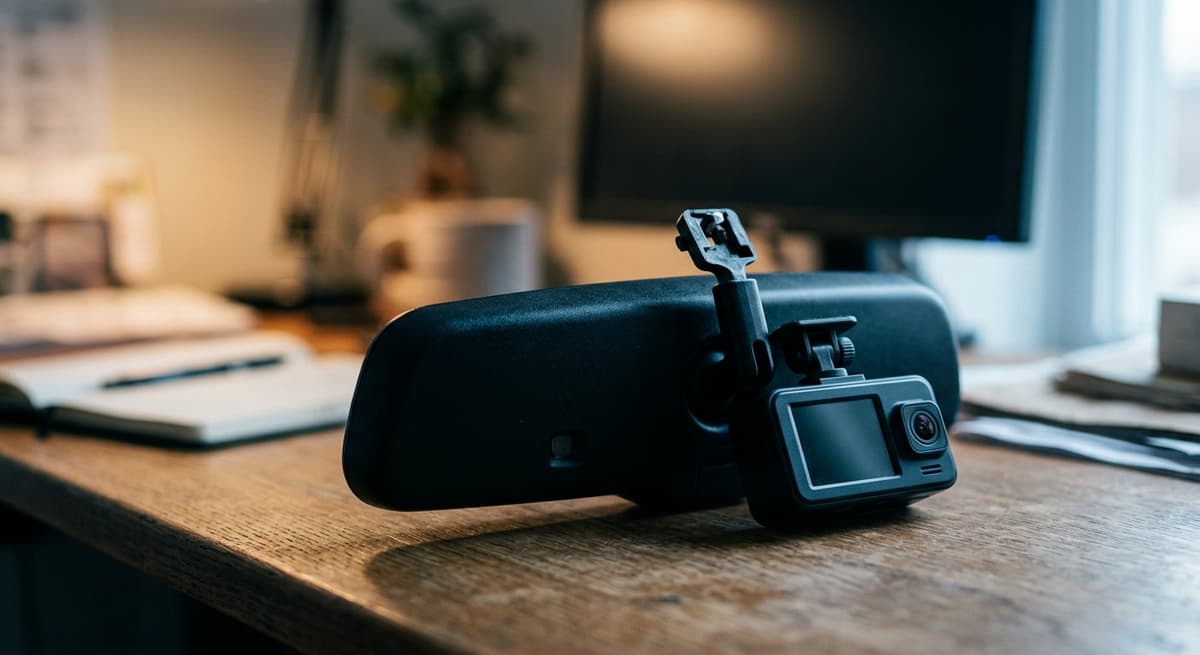
Dash cameras are legal in Tennessee. There is no state law that specifically prohibits installing or using a dashboard camera, and the Hands-Free Law's ban on recording video does not reach one: section 55-8-199(b)(1)(E) exempts electronic devices used for the sole purpose of continuously recording or broadcasting video within or outside the vehicle. The mounting standard still applies, so a windshield-, dashboard-, or console-mounted camera must be positioned so it does not hinder the driver's view of the road.
Recommended Dash Cam Placement
To keep a dash cam from hindering your view of the road:
- Mount the dash cam behind the rearview mirror where it does not block the driver's forward view
- Use a small, compact camera that does not extend significantly below the rearview mirror area
- Consider a dashboard-mounted camera instead of a windshield-mounted unit
- Ensure the camera does not obstruct the windshield wipers' path
Audio Recording Considerations
Tennessee is a one-party consent state for audio recording under T.C.A. section 39-13-601. This means a dash cam that records audio is legal as long as at least one person in the vehicle (typically the driver) consents to the recording. You do not need to inform passengers that audio is being recorded, though informing them is considered good practice.
Commercial Vehicle Windshield Rules
Commercial vehicles operating in Tennessee must comply with both state law and federal regulations under the Federal Motor Carrier Safety Administration (FMCSA).
FMCSA Windshield Requirements (49 CFR 393.60)
Commercial motor vehicles are subject to stricter windshield standards:
- Windshields must be free of cracks, discoloration, or other damage that impairs the driver's field of vision
- No stickers, decals, or mounted devices, including inspection stickers required by law, may be placed in the area swept by the windshield wipers. Required stickers and decals must be placed at the bottom or sides of the windshield, no more than 4.5 inches from the bottom edge, and outside the driver's sight lines
- Electronic logging devices (ELDs) and GPS units must be mounted so they do not obstruct the driver's view
Tennessee Highway Patrol's Commercial Vehicle Enforcement division conducts inspections that include windshield condition checks. Violations can result in the vehicle being placed out of service until the issue is corrected.
Best Practices for Windshield Mounts in Tennessee
Based on Tennessee's overlapping statutes, here are practical guidelines for mounting devices on your windshield legally:
Phone and GPS Mounts
- Mount the device as low as possible on the windshield, near the lower corner on the passenger side, or use a dashboard or center console mount instead
- Choose a compact mount that does not extend far from the windshield surface
- Position the device so it does not block your view of the road, traffic signals, or side mirrors
- Interact with the device only through a single tap or swipe while driving
- Never hold the device in your hand while the vehicle is in motion
Dash Cameras
- Position the camera behind the rearview mirror to minimize obstruction
- Use a small, low-profile camera
- Ensure the camera does not interfere with windshield wiper operation
- Consider a dashboard mount as an alternative to windshield mounting
Toll Transponders and Stickers
Tennessee does not have toll roads, so there is no state requirement for toll transponders or windshield-mounted toll devices. If you travel to neighboring states with toll roads (such as Kentucky or Georgia), you may need a transponder, but within Tennessee, this is not a concern.
Items to Avoid on the Windshield
- Large tablets or screens that cover a significant portion of the windshield
- Multiple mounted devices that collectively block visibility
- Stickers, posters, or non-transparent materials that interfere with the driver's clear view of the road
- Aftermarket tinting anywhere on the windshield that reduces light transmittance below 70%. Only the manufacturer's standard installed shade band is exempt
More Tennessee Laws
If you are looking for information on other Tennessee legal topics, these guides may help:
Frequently Asked Questions
Can I mount my phone on the windshield in Tennessee?
Yes. Tennessee's Hands-Free Law (T.C.A. section 55-8-199) specifically allows drivers to mount a phone or GPS device on the windshield, dashboard, or center console. The mount must not hinder the driver's view of the road, and the driver may only interact with the device using one swipe or tap of a finger, which cannot activate camera, video, or gaming features for viewing, recording, or amusement. Holding the phone in your hand while driving is illegal.
Are dash cameras legal in Tennessee?
Yes. Tennessee does not have a law that bans dash cameras. The Hands-Free Law's video-recording ban expressly exempts devices used for the sole purpose of continuously recording video, and section 55-8-199(b)(2)(A) requires a mounted device to be positioned so it does not hinder the driver's view of the road. The recommended placement is behind the rearview mirror or on the dashboard. Tennessee is also a one-party consent state for audio recording, so a dash cam that records audio is legal as long as the driver consents.
What is the fine for holding a phone while driving in Tennessee?
Under Tennessee's Hands-Free Law, the fine for a first or second offense is up to $50. A third or subsequent offense, or a violation that involves a crash, carries a $100 fine. Violations in school zones or work zones carry a $200 fine. License points are set by the Department of Safety's schedule rather than by the statute, and a handheld device violation is 3 points for an adult. Drivers under 18 face seven points for a second or subsequent offense under the Eddie Conrad Act.
Does Tennessee allow tinted windshields?
Not aftermarket tinting. Under T.C.A. section 55-9-107(a)(1)(B), it is unlawful to affix, apply, or install any material that reduces the windshield's visible light transmittance below 70%, and the only exception the statute names is the manufacturer's standard installed shade band. Tennessee's statute has no AS-1 line provision, and the Department of Safety states that it cannot exempt the windshield, so a medical tint exemption covers the side and rear windows only.
Can I get a ticket for a cracked windshield in Tennessee?
Tennessee does not have a specific cracked windshield statute. Section 55-8-165 does not cover damaged glass either: it addresses how a vehicle is loaded, the number of people in the front seat, and where a passenger rides. The three-quarter-inch chip limit that is often quoted comes from the federal rule at 49 CFR 393.60, which applies to commercial motor vehicles rather than to private passenger cars.
Updates
Corrected the Tennessee tint rules (the statute's only windshield exception is the manufacturer's factory shade band, not an AS-1 line, and side windows are lawful at 35% or more), added the statute's 18-and-over limit on the hands-free allowances and its camera, video and gaming limit on the mounted-device tap, noted the dash cam exemption from the video-recording ban, corrected the license-point figures to the Department of Safety schedule, and removed the unsupported reading of T.C.A. 55-8-165 as a general ban on view-blocking objects.
Repaired the source link for Tennessee's Eddie Conrad Act to the correct bill record.
Independently fact-checked against the cited primary sources; governing law re-checked for recent changes
Corrected an inverted reading of 49 CFR 393.60(e): required stickers and decals are not exempt from the wiper-sweep restriction, they must stay outside the swept area too, with a 4.5-inch placement limit from the bottom of the windshield.
Governing law re-checked for recent changes
Governing law re-checked for recent changes
Reviewed and approved by an editor
The Law Behind This Article
This article rests on the statutory provisions below, held in our own legal record and retrieved from the official source. Tap a section to read the operative text.
Tennessee Code Annotated
§ 55-8-199Prohibited uses of wireless telecommunications devices or stand-alone electronic devices.In forcecited in 2 of our articles
(a) As used in this section: (1) “Stand-alone electronic device” means a portable device other than a wireless telecommunications device that stores audio or video data files to be retrieved on demand by a user; (2) “Utility services” means electric, natural gas, water, wastewater, cable,…
Official text (excerpt) · last checked 2021-05-21 · Read the full text in our law library
Cited in 1 court opinions in our collectionLatest citing opinion in our collection: 2025
Opinions citing this section in our collection:
- STATE OF TENNESSEE v. DANIEL JOSEPH WILLIAMS (Court of Criminal Appeals of Tennessee 2025)“…e and release statute and the hands free device law, T.C.A. § 55-8-199, and roadways laned for traffic law, T.…”
Identified automatically from the court opinions citing this section — not a ranking of which case controls.
Also relied on in: Tennessee Dashcam Laws: Legality, Mounting Rules, and Evidence Use
§ 55-8-165Obstruction of driver's view or interference with driver's control — Penalties.In force
(a) No person shall drive a vehicle when it is so loaded, or when there are in the front seat such a number of persons, exceeding four (4), as to obstruct the view of the driver to the front or sides of the vehicle or as to interfere with the driver's control over the driving mechanism of the…
Official text (excerpt) · last checked 2021-05-21 · Read the full text in our law library
§ 55-9-107Tinted motor vehicle windows.In forcecited in 2 of our articles
(a)(1) It is unlawful for any person to operate, upon a public highway, street or road, any motor vehicle in which any window that has a visible light transmittance equal to, but not less than, that specified in the Federal Motor Vehicle Safety Standard No.…
Official text (excerpt) · last checked 2026-09-01 · Read the full text in our law library
Cited in 13 court opinions in our collectionLatest citing opinion in our collection: 2023
In the courts (editorial summary, independently checked):State of Tennessee v. Shaun Anthony Davidson and Deedra Lynette Kizer (2013) rejected vagueness and overbreadth challenges to the detention provision of section 55-9-107. State of Tennessee v. Joseph Sanford McNair, Jr. (2015) found reasonable suspicion from a windshield an officer could not see through.
Opinions citing this section in our collection:
- State v. Harton (Court of Criminal Appeals of Tennessee 2002, 108 S.W.3d 253)✓An interdiction agent stopped an out-of-state car for following too closely and for tint; the court noted the Tennessee tint law reaches only vehicles registered in the state, so that ground was improper, but held it did not invalidate the following-too-closely stop.
- State v. Jarnigan (Court of Criminal Appeals of Tennessee 1997, 958 S.W.2d 135)✓A driver cited under the tint law was convicted at a bench trial; the court treated the offense as a Class C misdemeanor carrying a jury-trial right and reversed the conviction because the record showed no written jury waiver.
- Young v. State, Department of Safety (Court of Appeals of Tennessee 1995, 911 S.W.2d 729)✓Officers cited the driver of a Kentucky-plated car under the tint law during a stop that led to a cash forfeiture; the court noted the statute does not reach a vehicle not registered in Tennessee and held the tint citation was incidental to a stop valid on other grounds.
Identified automatically from the court opinions citing this section — not a ranking of which case controls.
Also relied on in: Tennessee Window Tint Laws (2026): Legal VLT Limits
§ 55-9-203Windshield must be equipped with wipers — Penalty.In force
(a) Every motor vehicle having a windshield shall be equipped with two (2) windshield wipers for cleaning rain, snow or other moisture from the windshield in order to provide clear vision for the driver, unless one (1) windshield wiper cleans to within one inch (1") of each side of windshield. (b)…
Official text (excerpt) · last checked 2021-05-21 · Read the full text in our law library
Code of Federal Regulations Title 49
§ 393.60Glazing in specified openings.In forcecited in 15 of our articles
(a) Glazing material. Glazing material used in windshields, windows, and doors on a motor vehicle manufactured on or after December 25, 1968, shall at a minimum meet the requirements of Federal Motor Vehicle Safety Standard (FMVSS) No. 205 in effect on the date of manufacture of the motor vehicle. The glazing material shall be marked in accordance with FMVSS No. 205 (49 CFR 571.205, S6). (b) Windshields required. Each bus, truck and truck-tractor shall be equipped with a windshield. Each windshield or portion of a multi-piece windshield shall be mounted using the full periphery of the glazing material. (c) Windshield condition. With the exception of the conditions listed in paragraphs (c)(1), (c)(2), and (c)(3) of this section, each windshield shall be free of discoloration or damage in the area extending upward from the height of the top of the steering wheel (excluding a 51 mm (2 inch) border at the top of the windshield) and extending from a 25 mm (1 inch) border at each side of the windshield or windshield panel.
Official text (excerpt) · last checked 2026-07-28 · Read the full text in our law library · Verify at ecfr.gov
Cited in 3 court opinions in our collectionLatest citing opinion in our collection: 2021
In the courts (editorial summary, independently checked):The 70 percent light transmittance floor of 49 CFR 393.60(d) covers the windshield and the windows immediately right and left of the driver. Grooms Hauling, LLC v. Robinson (2020) applied it through Pennsylvania adoption and rejected racial profiling claims over tint citations; State v. Ford (2021) noted that Kansas adopts it too.
Opinions citing this section in our collection:
- United States of America, Government v. Robert L. Pierre, Defendant (District Court, D. New Hampshire 2015, 2015 DNH 083)“…rallel luminous transmittance of not less than 70 percent.” 49 C.F.R. 393.60(c). Neither the Government nor the defe…”
- GROOMS HAULING, LLC v. ROBINSON (District Court, E.D. Pennsylvania 2020)✓Officers repeatedly cited a Black-owned hauling company whose truck windows passed only 17 to 20 percent of light; treating 49 CFR 393.60's 70 percent transmittance standard as the governing rule, the court granted the officers summary judgment on the profiling claims.
- State v. Ford (Court of Appeals of Kansas 2021)“…Relevant to this appeal are regulations on window tinting (49 C.F.R. § 393.60[d]), medical examiner certificates (49…”
Identified automatically from the court opinions citing this section — not a ranking of which case controls.
Also relied on in: Connecticut Windshield Mounting Laws (2026 Guide), Idaho Windshield Mounting Laws (2026 Guide), Kansas Windshield Mounting Laws (2026 Guide)
§ 571.205Standard No. 205, Glazing materials.In forcecited in 8 of our articles
S1. Scope. This standard specifies requirements for glazing materials for use in motor vehicles and motor vehicle equipment. S2. Purpose. The purpose of this standard is to reduce injuries resulting from impact to glazing surfaces, to ensure a necessary degree of transparency in motor vehicle windows for driver visibility, and to minimize the possibility of occupants being thrown through the vehicle windows in collisions. S3. Application. This standard applies to passenger cars, multipurpose passenger vehicles, trucks designed to carry at least one person, buses, motorcycles, slide-in campers, pickup covers designed to carry persons while in motion and low speed vehicles, and to glazing materials for use in those vehicles. S4. Definitions. Bullet resistant shield means a shield or barrier that is installed completely inside a motor vehicle behind and separate from glazing materials that independently comply with the requirements of this standard. Camper means a structure designed to be mounted in the cargo area of a truck, or attached to an incomplete vehicle with motive power, for the purpose of providing shelter for persons.
Official text (excerpt) · last checked 2026-07-28 · Read the full text in our law library · Verify at ecfr.gov
Cited in 34 court opinions in our collectionLatest citing opinion in our collection: 2024
In the courts (editorial summary, independently checked):O'Hara Ex Rel. H.O. v. General Motors Corp. (2007) held FMVSS 205, 49 CFR 571.205, does not preempt a state design claim seeking advanced side glazing. McCracken v. Ford Motor Co. (2008) read the same standard as mandatory rather than a floor, so a conflicting claim would be preempted, and denied dismissal only on that open question.
Opinions citing this section in our collection:
- O'Hara Ex Rel. H.O. v. General Motors Corp. (Court of Appeals for the Fifth Circuit 2007, 508 F.3d 753)✓A child was partially ejected through a Tahoe's tempered-glass side window in a rollover, and her parents claimed GM should have used advanced glazing; the court held FMVSS 205 is a minimum safety standard that does not preempt their common law claims.
- United States v. Ruel Antonio Wallace (Court of Appeals for the Ninth Circuit 2000, 213 F.3d 1216)“…uirements of Federal Motor Vehicle Safety Standard No. 205 (49 C.F.R. 571.205), including the specified minimum light…”
- McCracken v. Ford Motor Co. (District Court, E.D. Pennsylvania 2008, 588 F. Supp. 2d 635)✓A buyer blaming his thyroid cancer on radiation through his Fords' windshields said Lucite or leaded glass should have been used; treating FMVSS 205 as a mandatory standard, the court refused to dismiss on preemption because the pleadings did not show Lucite was unapproved.
Identified automatically from the court opinions citing this section — not a ranking of which case controls.
Also relied on in: Iowa Windshield Mounting Laws (2026 Guide), California Windshield Mounting Laws (2026 Guide), Rhode Island Windshield Mounting Laws (2026 Guide)
Search our full record of US law — 2.1 million sections, every state + federal →
Sources and References
- Tennessee Code Annotated Section 55-8-165: Obstruction of driver's view or interference with driver's control(law.justia.com)
- Tennessee Code Annotated Section 55-8-199: Prohibited uses of wireless telecommunications devices(law.justia.com)
- Tennessee Code Annotated Section 55-9-107: Tinted motor vehicle windows(law.justia.com)
- Tennessee Code Annotated Section 55-9-203: Windshield must be equipped with wipers(law.justia.com)
- Hands Free Tennessee: Official Tennessee Hands-Free Law Resource(handsfreetn.com)
- Tennessee Highway Safety Office Launches Operation Hands Free(tn.gov).gov
- Tennessee Department of Safety: Distracted Driver Crash Data(tn.gov).gov
- Tennessee Department of Safety: Commercial Vehicle Enforcement(tn.gov).gov
- Tennessee General Assembly: Eddie Conrad Act (SB 589)(wapp.capitol.tn.gov).gov
- FMCSA Windshield Condition Requirements (49 CFR 393.60)(csa.fmcsa.dot.gov).gov
- Federal Motor Vehicle Safety Standard No. 205: Glazing Materials(ecfr.gov).gov
- Tennessee Traffic Fatalities Dashboard(tn.gov).gov
- Tennessee Public Chapter 412 (2019): the Hands-Free Law, enacting T.C.A. 55-8-199(publications.tnsosfiles.com)
- Tennessee Public Chapter 428 (2023): the Eddie Conrad Act, adding T.C.A. 55-8-199(c)(4)(publications.tnsosfiles.com)
- Tennessee Department of Safety: Schedule of Point Values(tn.gov)
- Tennessee Department of Safety: Driver Improvement Points Accumulation(tn.gov)
- Tennessee Department of Safety: How do I obtain a window tint exemption?(safetysupport.tn.gov)