
Hawaii
Hawaii Windshield Mounting Laws (2026 Guide)
Independently fact-checked against primary sources (last audited August 17, 2026). · Reviewed by the RecordingLaw editorial team. · Law checked current as of August 9, 2026. · 3 primary sources cited on this page. How we verify our legal content
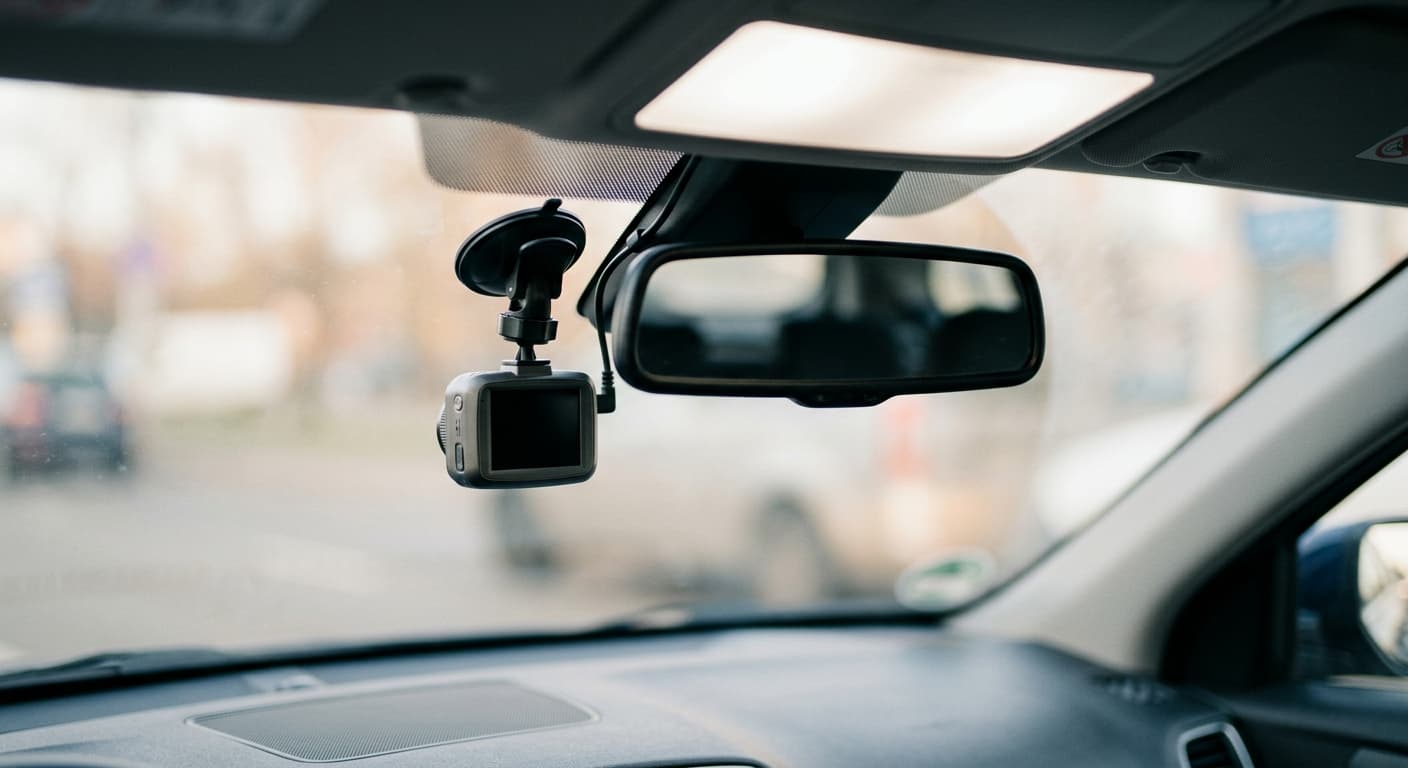
Hawaii does not have a statute that specifically addresses windshield-mounted dashcam, GPS, or phone mounts. HRS 291C-124 is a narrow statute reaching vehicle loading, more than three front-seat passengers, and objects in the driver's lap or immediate area that interfere with the driving mechanism, and it contains no general unobstructed-view clause that reaches a mounted device. What does turn on a mount is Hawaii's statewide hands-free law, HRS 291C-137, which defines using a mobile electronic device as holding it while driving. A phone in a windshield or dashboard mount is not being held, and that is precisely why mounting it keeps in-car phone use lawful in Hawaii.
Hawaii regulates windshield-mounted devices and materials through three statutes that matter here. HRS 291-21.5 governs sun screening devices and nontransparent materials on windshields. HRS 291C-124 addresses obstructions to the driver's view and driving mechanism, though on much narrower terms than its title suggests. HRS 291C-137 is the statewide hands-free law, and it is the provision that actually answers the practical question of whether you can mount and use a phone in the car.
This page covers Hawaii's rules for GPS mounts, phone holders, dashcams, stickers, windshield tinting, and the significant changes introduced by Act 129 in 2025.
Hawaii Windshield Obstruction Law (HRS 291C-124)
HRS 291C-124 is titled "Obstruction to driver's view or driving mechanism," but its operative text is far narrower than the title implies, and reading the title alone is the most common way this statute gets misapplied to mounted devices.
Subsection (a) prohibits driving a vehicle only when it is "so loaded," or when there are more than three persons in the front seat, in a way that obstructs the driver's view to the front or sides or interferes with control over the driving mechanism. Subsection (b) prohibits holding in your lap, or allowing in your immediate area, any person, animal, or object that interferes with control over the driving mechanism. Note that subsection (b) is about the driving mechanism only, not about the view. Subsection (c) governs where passengers may ride.
None of the three prongs reaches a camera or phone cradle attached to the glass. A windshield mount is not vehicle loading, not a front-seat passenger, and does not interfere with the steering, pedals, or shifter. Hawaii has no residual clause of the kind several other states use, requiring that the driver's view through required glass equipment be unobstructed, so there is no general Hawaii prohibition that a mount can be measured against.
Hawaii's windshield-specific rules for materials on the glass are set out separately in HRS 291-21.5, covered below.
Sticker and Decal Placement Zones
HRS 291-21.5 is a sun screening and glazing statute, and its subsection (e) exemptions include specific measurement zones for materials displayed on the windshield.
Subsection (e)(3) exempts signs, stickers, or other materials displayed in two designated areas:
| Zone | Size | Location |
|---|---|---|
| Passenger side | 7-inch square | Lower corner of the windshield farthest from the driver |
| Driver side | 5-inch square | Lower corner of the windshield nearest the driver |
These zones accommodate items such as vehicle registration decals, parking permits, safety inspection stickers, and toll transponders. Note that the exemption is written as "signs, stickers, or other materials," not as decals alone.
Exempted Items
HRS 291-21.5(e) also exempts the following, among others:
- Rearview mirrors
- Adjustable nontransparent sun visors that are mounted forward of the side windows and not attached to the glazing material
- Transparent sun screening film applied along the top edge of the windshield, so long as it does not encroach on the AS-1 portion or extend lower than four inches below the top of the windshield
- Transparent sun screening materials applied to the AS-1 portion of the windshield that meet Federal Motor Vehicle Safety Standard 205
- Window wipers and wiper motors, rear trunk lid handles and hinges, and privacy drapes or blinds inside motor homes
GPS and Phone Mounts
Hawaii has no statute that specifically addresses GPS or phone mount placement on the windshield, unlike states such as Georgia or California that have enacted express device-mount exceptions.
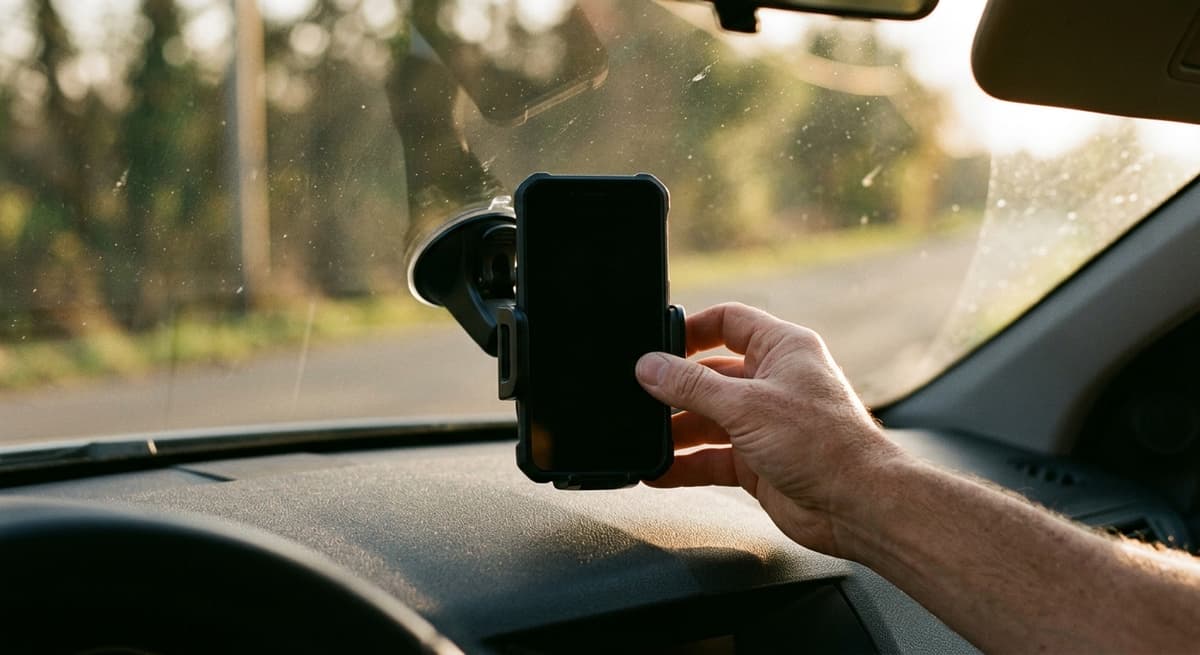
That absence matters less than it sounds, because the prohibition a mount would have to clear does not exist. As explained above, HRS 291C-124 has no general view-obstruction prong that reaches a mounted device, and HRS 291-21.5 regulates glazing material and sun screening devices rather than hardware attached to the glass.
The one statutory geometry Hawaii does offer is the (e)(3) corner squares. Because that exemption covers "signs, stickers, or other materials" rather than decals specifically, a mount kept inside the 7-inch passenger-side square or the 5-inch driver-side square is arguably inside it. No Hawaii court decision or agency rule squarely resolves the question, so treat those squares as a conservative safe harbor rather than a settled allowance. In practice, mounting low on the windshield away from your direct line of sight, or on the dashboard, is the most defensible placement.
Statewide Hands-Free Law (HRS 291C-137)
Hawaii does have a statewide hands-free driving law, and it is the reason mounting a phone matters legally. HRS 291C-137(a) provides that no person shall operate a motor vehicle while using a mobile electronic device.
The definition in subsection (e) is the crux for anyone shopping for a mount: "use" or "using" means holding a mobile electronic device while operating a motor vehicle. A phone sitting in a windshield cradle or dashboard mount is not being held, so using it that way is not the conduct the statute bans. That is the practical answer to why drivers mount their phones in Hawaii.
A few details are worth knowing:
- Fine. Subsection (f) sets a $300 fine, rising to $400 if the violation occurs in a school zone or construction area. Subsection (g) makes it a traffic infraction.
- Drivers under 18. Subsection (c) is stricter for them: no one under eighteen may operate a vehicle while using even a hands-free mobile electronic device, except to make a 911 call. A mount does not cure that.
- Emergency calls. Subsection (b) makes a 911 emergency communication an affirmative defense.
- Exemptions. Subsection (d) exempts emergency responders on duty, certain two-way radio and amateur radio users, and drivers fully stopped with the engine off in a safe location off the roadway.
- County ordinances are superseded. Subsection (h) states that this section supersedes any county ordinance regulating the use or utilization of mobile electronic devices while operating a motor vehicle. Older Honolulu and Maui County handheld-device ordinances are not the operative rule; the state statute is. Drivers do not need to check island-by-island rules for handheld phone use.
Dashcam Mounting Rules
Hawaii does not have a statute specifically addressing dashcams, and HRS 291C-124 does not supply one for the reasons set out above: its view-obstruction prong is limited to vehicle loading and front-seat crowding, and its object prong requires interference with the driving mechanism. A camera clipped to the glass is neither.
A dashcam mounted behind the rearview mirror is still the most sensible placement. That position occupies space already blocked from the driver's primary line of sight and keeps the camera clear of the swept and inspected areas of the windshield.
Hawaii is a one-party consent state for audio recording under HRS 803-42, so a dashcam that records conversations inside the vehicle is legal as long as at least one person in the car is aware of the recording.
Windshield Tinting (HRS 291-21.5)
HRS 291-21.5 is primarily a tinting statute. It prohibits operating or parking a motor vehicle on a public highway if the glazing material does not meet Federal Motor Vehicle Safety Standard 205, or if the vehicle uses sun screening devices that fall outside the law's exemptions.
Current Tinting Requirements
Before Act 129 (2025), Hawaii's tinting rules required:
- Front windshield: Must allow at least 70% visible light transmission (VLT). This is essentially clear glass with no aftermarket tint permitted below the AS-1 line.
- Front side windows (driver and passenger): Must allow at least 35% VLT.
- Rear side windows: Must allow at least 35% VLT for sedans; SUVs, vans, and trucks had more lenient standards.
- Rear windshield: Must allow at least 35% VLT for sedans.
Act 129 (2025) Changes
Act 129 (2025) made the most significant changes to Hawaii's vehicular tinting laws since the statute was first enacted in 1983. The amendment appears in the statute's history note as am L 2025, c 129.
Key changes under Act 129 include the following.
Sedan rear window parity. Subsection (e)(9) now exempts rear windows, including the rear windshield, on sedans as well as vans, minivans, trucks, and buses, along with side windows to the rear of the driver, provided the vehicle has rearview mirrors on both sides. Previously, sedans were held to a stricter standard.
Traffic stop window requirement. New subsection (d) requires all drivers and passengers in vehicles with applied tint to fully roll down their windows when stopped by a law enforcement officer. An exception exists for individuals who cannot do so due to physical disability or mechanical failure, provided the driver communicates or cooperates through other reasonably available means. Failure to comply may be cited as a noncriminal traffic infraction.
Compliance certificate. The installer must issue a certificate to the vehicle owner at the time the sun screening device is installed, certifying that the device complies with law. The certificate must be stored in the vehicle at all times, and its absence at the time of citation is prima facie evidence of installer noncompliance.
Color restrictions. Subsection (b)(2) prohibits mirrored or high reflective finishes that produce a red, yellow, amber, or blue appearance as viewed from outside the vehicle.
Front windshield and front side windows. The 70% VLT expectation for the front windshield, which comes from FMVSS 205, and the 35% VLT standard for front side windows in subsections (e)(7) and (e)(8) were not loosened by Act 129. The changes apply primarily to rear windows on sedans.
No Medical Tint Exemption
Unlike many other states, Hawaii does not offer a medical exemption for darker windshield or window tinting. Drivers with medical conditions requiring protection from sunlight cannot obtain a waiver for non-compliant tinting. This was not changed by Act 129.
Drivers who need sun protection should use removable sun shades on rear windows (where darker tint is now permitted on all vehicle types) or consider vehicles with factory-tinted privacy glass that meets the VLT requirements.
Penalties for Violations
HRS 291-21.5(f) establishes a tiered penalty structure based on who is responsible for the tinting violation.
| Responsible Party | Minimum Fine | Maximum Fine | Additional Requirements |
|---|---|---|---|
| Vehicle owner | $300 | $550 | Per separate offense |
| Tint installer | $700 | $1,200 | Must reinstall compliant tint at no charge or reimburse the vehicle owner |
Violations of chapter 291C for which no other penalty is specified, including HRS 291C-124, are fined under HRS 291C-161(b): not more than $250 for a first violation, $300 for a second committed within one year of the first, and $500 for a third or subsequent violation within that year. These amounts are set by state statute, not by county.
Holding a phone while driving is penalized separately and more heavily. HRS 291C-137(f) sets a flat $300 fine, or $400 in a school zone or construction area.
Under Act 129, failure to roll down tinted windows during a traffic stop may be cited as a noncriminal traffic infraction under HRS 291-21.5(d).
Commercial Vehicles
Commercial vehicles operating in Hawaii must comply with both state windshield laws and Federal Motor Carrier Safety Regulations (49 CFR 393.60). Federal rules prohibit any obstruction that reduces the driver's field of view through required windows.
Commercial drivers should mount electronic logging devices (ELDs) and GPS units on the dashboard rather than the windshield to avoid potential federal violations during Department of Transportation inspections.
Safety Inspection and Windshields
Hawaii requires annual safety inspections for all registered vehicles, and HRS 291-21.5(c) requires that inspection to include a test that the glazing material and any sun screening devices meet the statute's requirements. The windshield is also checked for cracks, chips, and obstructions. A windshield with significant damage or non-compliant tinting will fail the inspection.
Recent Changes
Act 129 (2025) represents the most significant update to Hawaii's windshield and tinting statute in over 40 years. The key takeaways from this change are as follows.
Sedan owners now have the same tinting flexibility as SUV and truck owners for rear windows. All drivers with tinted windows have a new obligation to roll them down during traffic stops. Tint installers face stricter accountability through the compliance certificate requirement.
No changes to windshield device mounting practices were enacted by Act 129; the act's changes were limited to tinting under HRS 291-21.5.
More Hawaii Laws
Frequently Asked Questions
Can I mount a GPS or phone on my windshield in Hawaii?
Yes. Hawaii has no statute that specifically addresses windshield-mounted device placement, and the statute usually cited, HRS 291C-124, does not reach one: its view-obstruction prong applies only to vehicle loading or more than three front-seat passengers, and its object prong requires interference with the driving mechanism. Mounting a phone is in fact how you comply with Hawaii's hands-free law, because HRS 291C-137 defines using a device as holding it. The most defensible placement is low on the windshield away from your line of sight, or on the dashboard.
Does Hawaii have a statewide hands-free law?
Yes. HRS 291C-137(a) prohibits operating a motor vehicle while using a mobile electronic device, and subsection (e) defines use as holding the device while driving. The fine is $300, or $400 in a school zone or construction area. Subsection (h) supersedes any county ordinance on device use while driving, so the same rule applies on every island. Drivers under eighteen face a stricter rule and may not use even a hands-free device except to call 911.
Is it legal to use a dashcam in Hawaii?
Yes. There is no dashcam statute in Hawaii, and HRS 291C-124 does not reach a camera attached to the glass. Mounting behind the rearview mirror is recommended because that space is already outside the driver's primary line of sight. Hawaii is a one-party consent state for audio recording under HRS 803-42.
Where can I place stickers on my windshield in Hawaii?
HRS 291-21.5(e)(3) exempts signs, stickers, or other materials displayed in a 7-inch square in the lower passenger-side corner of the windshield, or in a 5-inch square in the lower driver-side corner. Those two squares are the designated zones.
Does Hawaii offer a medical exemption for darker window tint?
No. Hawaii does not provide a medical exemption for non-compliant window tinting. This was not changed by Act 129 in 2025. Drivers who need sun protection should use removable sun shades or vehicles with factory privacy glass.
What changed with Hawaii Act 129 (2025)?
Act 129 aligned sedan rear window and rear windshield tint rules with those for vans, trucks, and buses, added a requirement that drivers and passengers roll down tinted windows at a traffic stop, required installers to issue a compliance certificate that must be kept in the vehicle, and prohibited mirrored or high reflective finishes producing a red, yellow, amber, or blue appearance.
Updates
Corrected this page to reflect Hawaii’s statewide hands-free law (HRS 291C-137), which supersedes the county ordinances the page had described as the operative rule, and fixed the scope of HRS 291C-124 and the obstruction fine amounts under HRS 291C-161.
Independently fact-checked against the cited primary sources
Updated the HRS 291-21.5(f) penalty table to the fine amounts set by 2025 Act 129 ($300-$550 for the vehicle owner, $700-$1,200 for the installer), replacing the pre-Act figures the table still showed.
Governing law re-checked for recent changes
Corrected the article's treatment of HRS 291C-124: it is a general vehicle-overloading and lap/immediate-area obstruction statute, not Hawaii's governing windshield-mounting law for GPS, phone, or dashcam devices, and does not establish device-mount zones.
Corrected a GPS/phone mounting-advice line that recommended placing a device 'within the 7-inch zone,' which is a sticker-and-decal dimension under HRS 291-21.5, not a device-mount exception; no such exception exists in Hawaii statute.
Governing law re-checked for recent changes
Reviewed and approved by an editor
The Law Behind This Article
This article rests on the statutory provisions below, held in our own legal record and retrieved from the official source. Tap a section to read the operative text.
Hawaii Revised Statutes, Chapter 291: TRAFFIC VIOLATIONS
§ 291-21.5Regulation of motor vehicle sun screening devices; penaltyIn forcecited in 2 of our articles
(a) No person shall operate, permit the operation of, cause to be operated, or park any motor vehicle on a public highway if the glazing material of the motor vehicle: (1) Does not meet the requirements of the Federal Motor Vehicle Safety Standards 205 in effect at the time of its manufacture; or (2) Is used in conjunction with sun screening devices not exempted from this section by subsection (e). (b) No person shall install, mount, adhere, affix, or use any sun screening device or combination of devices in conjunction with the glazing material of a motor vehicle: (1) That does not meet the requirements of the Federal Motor Vehicle Safety Standards 205 in effect at the time of the glazing material's manufacture except as provided in this section; and (2) With mirrored or high reflective finishes that produce a red, yellow, amber, or blue appearances as viewed from the exterior of the motor vehicle. Any person who violates this section shall be liable for the removal of any sun screening device applied contrary to this section.
Official text (excerpt) · last checked 2026-09-01 · Read the full text in our law library · Verify at capitol.hawaii.gov
Also relied on in: Hawaii Window Tint Laws (2026): Legal VLT Limits
Hawaii Revised Statutes, Chapter 291C: [STATEWIDE TRAFFIC CODE]
§ 291C-124Obstruction to driver's view or driving mechanismIn force
(a) No person shall drive a vehicle when it is so loaded, or when there are in the front seat such a number of persons, exceeding three, as to obstruct the view of the driver to the front or sides of the vehicle, or as to interfere with the driver's control over the driving mechanism of the vehicle. (b) While operating a motor vehicle, no person shall hold in the person's lap, or allow to be in the driver's immediate area, any person, animal, or object which interferes with the driver's control over the driving mechanism of the vehicle. (c) No passenger in a vehicle shall ride in such position as to interfere with the driver's view ahead or to the sides, or to interfere with the driver's control over the driving mechanism of the vehicle. [L 1971, c 150, pt of §1; am L 1981, c 11, §1; gen ch 1985]
Official text (excerpt) · last checked 2026-07-30 · Read the full text in our law library · Verify at capitol.hawaii.gov
Hawaii Revised Statutes, Chapter 803: ARRESTS, SEARCHES, SEARCH WARRANTS
§ 803-42Interception, access, and disclosure of wire, oral, or electronic communications, use of pen register, trap and trace device, and mobile tracking device prohibitedIn forcecited in 20 of our articles
(a) Except as otherwise specifically provided in this part, any person who: (1) Intentionally intercepts, endeavors to intercept, or procures any other person to intercept or endeavor to intercept, any wire, oral, or electronic communication; (2) Intentionally uses, endeavors to use, or procures any other person to use or endeavor to use any electronic, mechanical, or other device to intercept any wire, oral, or electronic communication when: (A) Such a device is affixed to, or otherwise transmits a signal through, a wire, cable, or other similar connection used in wire communication; or (B) Such a device transmits communications by radio, or interferes with the transmission of such communication; (3) Intentionally discloses, or endeavors to disclose, to any other person the contents of any wire, oral, or electronic communication, knowing or having reason to know that the information was obtained through the interception of a wire, oral, or electronic communication in violation of this part; (4) Intentionally uses, or endeavors to use, the contents of any wire, oral, or electronic communication, knowing or having reason to know that the information was obtained through the…
Official text (excerpt) · last checked 2026-08-28 · Read the full text in our law library · Verify at capitol.hawaii.gov
Cited in 14 court opinions in our collectionLatest citing opinion in our collection: 2026
In the courts (editorial summary, independently checked):State v. Lo (1983) held HRS 803-42(b)(3) barred police from secretly installing recording devices in a hotel room even though one participant consented, and suppressed the evidence. State v. Lee (1984) held a recorder worn by a consenting participant is not an installation in a private place, so no violation.
Opinions citing this section in our collection:
- State v. Lo (Hawaii Supreme Court 1983, 66 Haw. 653)✓Agents wired a hotel room and recorded a doctor lured there by a cooperating patient; the Hawaii Supreme Court held the statute bars installing a recording device in any private place without the consent of those entitled to privacy, and affirmed suppression.
- State v. Okubo (Hawaii Supreme Court 1984, 67 Haw. 197)✓Police recorded roughly forty bribery conversations using body recorders and phone taps with the participating officers' consent; the Hawaii Supreme Court found the consensual monitoring valid under the statute and the state constitution.
- State v. Lee (Hawaii Supreme Court 1984, 67 Haw. 307)✓An officer posing as a patient wore a recorder into a doctor's private office; the Hawaii Supreme Court held a device worn on a participant's body is not an installation in a private place, so the statute was not violated, distinguishing Lo.
Identified automatically from the court opinions citing this section — not a ranking of which case controls.
Also relied on in: Hawaii Recording Laws (2026): Hybrid Consent State Rules, Hawaii Audio Recording Laws: One-Party Consent Rules and Penalties, Hawaii Smart Glasses Recording Laws (2026)
Code of Federal Regulations Title 49
§ 393.60Glazing in specified openings.In forcecited in 15 of our articles
(a) Glazing material. Glazing material used in windshields, windows, and doors on a motor vehicle manufactured on or after December 25, 1968, shall at a minimum meet the requirements of Federal Motor Vehicle Safety Standard (FMVSS) No. 205 in effect on the date of manufacture of the motor vehicle. The glazing material shall be marked in accordance with FMVSS No. 205 (49 CFR 571.205, S6). (b) Windshields required. Each bus, truck and truck-tractor shall be equipped with a windshield. Each windshield or portion of a multi-piece windshield shall be mounted using the full periphery of the glazing material. (c) Windshield condition. With the exception of the conditions listed in paragraphs (c)(1), (c)(2), and (c)(3) of this section, each windshield shall be free of discoloration or damage in the area extending upward from the height of the top of the steering wheel (excluding a 51 mm (2 inch) border at the top of the windshield) and extending from a 25 mm (1 inch) border at each side of the windshield or windshield panel.
Official text (excerpt) · last checked 2026-07-28 · Read the full text in our law library · Verify at ecfr.gov
Cited in 3 court opinions in our collectionLatest citing opinion in our collection: 2021
In the courts (editorial summary, independently checked):The 70 percent light transmittance floor of 49 CFR 393.60(d) covers the windshield and the windows immediately right and left of the driver. Grooms Hauling, LLC v. Robinson (2020) applied it through Pennsylvania adoption and rejected racial profiling claims over tint citations; State v. Ford (2021) noted that Kansas adopts it too.
Opinions citing this section in our collection:
- United States of America, Government v. Robert L. Pierre, Defendant (District Court, D. New Hampshire 2015, 2015 DNH 083)“…rallel luminous transmittance of not less than 70 percent.” 49 C.F.R. 393.60(c). Neither the Government nor the defe…”
- GROOMS HAULING, LLC v. ROBINSON (District Court, E.D. Pennsylvania 2020)✓Officers repeatedly cited a Black-owned hauling company whose truck windows passed only 17 to 20 percent of light; treating 49 CFR 393.60's 70 percent transmittance standard as the governing rule, the court granted the officers summary judgment on the profiling claims.
- State v. Ford (Court of Appeals of Kansas 2021)“…Relevant to this appeal are regulations on window tinting (49 C.F.R. § 393.60[d]), medical examiner certificates (49…”
Identified automatically from the court opinions citing this section — not a ranking of which case controls.
Also relied on in: Connecticut Windshield Mounting Laws (2026 Guide), Idaho Windshield Mounting Laws (2026 Guide), Kansas Windshield Mounting Laws (2026 Guide)
Search our full record of US law — 2.1 million sections, every state + federal →
Sources and References
- HRS 291-21.5 - Regulation of motor vehicle sun screening devices; penalty(capitol.hawaii.gov).gov
- HRS 291C-124 - Obstruction to driver's view or driving mechanism(law.justia.com)
- Act 129 (2025) - HB 226 text amending HRS 291-21.5(legiscan.com)
- Hawaii News Now - Vehicular tinting laws update(hawaiinewsnow.com)
- HRS 803-42 - Hawaii wiretapping and eavesdropping statute(capitol.hawaii.gov).gov
- Hawaii Department of Transportation - Administrative Rules(hidot.hawaii.gov).gov
- HRS 291C-137 - Mobile electronic devices (Hawaii statewide hands-free law)(capitol.hawaii.gov)
- HRS 291C-124 - Obstruction to driver’s view or driving mechanism(capitol.hawaii.gov)
- HRS 291C-161 - Penalties for chapter 291C violations(capitol.hawaii.gov)