
Kentucky
Kentucky Windshield Mounting Laws (2026 Guide)
Independently fact-checked against primary sources (last audited August 17, 2026). · Reviewed by the RecordingLaw editorial team. · Law checked current as of August 17, 2026. · 6 primary sources cited on this page. How we verify our legal content

Kentucky prohibits attaching any product to a vehicle's windshield under KRS 189.110(2), which means GPS units, phone holders, and dashcams all technically violate state law. Enforcement focuses on whether a device obstructs the driver's forward view, but dashboard or vent-clip mounts eliminate the legal risk entirely.
Kentucky law restricts what you can attach to or place on your vehicle's windshield. The primary statute governing these restrictions is KRS 189.110, which covers windshield obstructions, window tint requirements, and windshield wiper mandates.
Whether you are wondering about mounting a GPS unit, attaching a phone holder, installing a dashcam, or applying window tint film, this guide covers every provision of Kentucky's windshield and window laws as they stand in 2026.
What KRS 189.110 Says About Windshield Obstructions
The core windshield obstruction rule is found in subsection (2) of KRS 189.110. It states that a person shall not operate a motor vehicle on a public highway, road, or street with any sign, sunscreening material, product, or covering attached to or located in or upon the windshield.
There are only three exceptions to this blanket prohibition:
-
A certificate or other paper required to be displayed by law. This exception is written for documents, not devices. It does not cover the registration plate or its insignia: KRS 186.170(1) requires the plate to be displayed conspicuously upon the rear of the vehicle. The clearest Kentucky example of a paper displayed at the windshield is the accessible parking placard, which KRS 189.456(6) directs the driver to hang from the rearview mirror, or place on the dashboard if there is no mirror, while the vehicle is parked in an accessible space.
-
A transparent tint strip at the top of the windshield. Sunscreening material is allowed along a strip at the top of the windshield, provided the material is transparent and does not encroach upon the driver's direct forward viewing area as defined by Federal Motor Vehicle Safety Standard (FMVSS) No. 205. This is commonly called the AS-1 line, which typically extends about five inches down from the top of the windshield.
-
Windshield film with at least 70% visible light transmittance (VLT). This exception was added by SB 46 in 2024 and allows sunscreening material or other product applied to the windshield, when used in conjunction with the safety glazing materials, if it has a light transmittance of not less than 70% and is not red or yellow in color. This is a significant change from earlier law that only permitted tinting in the AS-1 strip.
What This Means for Common Devices
Because KRS 189.110(2) prohibits any "product" attached to or located on the windshield beyond the three exceptions listed above, several common devices fall into a gray area.
GPS navigation units. Suction-cup mounted GPS devices technically violate the statute because they are a "product" attached to the windshield. Kentucky does not have a specific statutory exception for GPS or navigation devices on the windshield, unlike states such as California or Minnesota that explicitly allow devices in certain windshield zones.
Phone mounts. Suction-cup or adhesive phone mounts on the windshield are subject to the same prohibition. The statute does not distinguish between phones used for navigation and phones used for other purposes when it comes to windshield attachment.
Dashcams. Dashboard cameras mounted to the windshield using suction cups or adhesive mounts also fall under the "product attached to the windshield" language in the statute.
Toll transponders. A transponder is an electronic device, not a "certificate or other paper," so it does not fit within the first exception. Read against the statutory text, a transponder attached to the windshield sits in the same position as a GPS unit or a dashcam. Check the issuing toll agency's mounting instructions for a placement that does not attach to the windshield.
Enforcement in Practice
While these devices are technically prohibited on the windshield, enforcement in Kentucky focuses primarily on whether the device obstructs the driver's clear view of the road. Law enforcement officers have discretion in deciding whether to cite a driver for a small GPS unit or dashcam versus a large object that clearly blocks visibility.
A windshield-mounted device does give an officer probable cause to initiate a traffic stop, even if the officer's primary concern is something else. To eliminate legal risk entirely, consider using dashboard mounts, vent-clip mounts, or other alternatives that do not attach to the windshield glass.
Windshield Requirements Under KRS 189.110(1)
Subsection (1) of the statute requires that every motor vehicle operated on public highways, roads, and streets must have a windshield in a fixed and upright position. The windshield must be equipped with safety glazing as required by federal safety-glazing material standards.
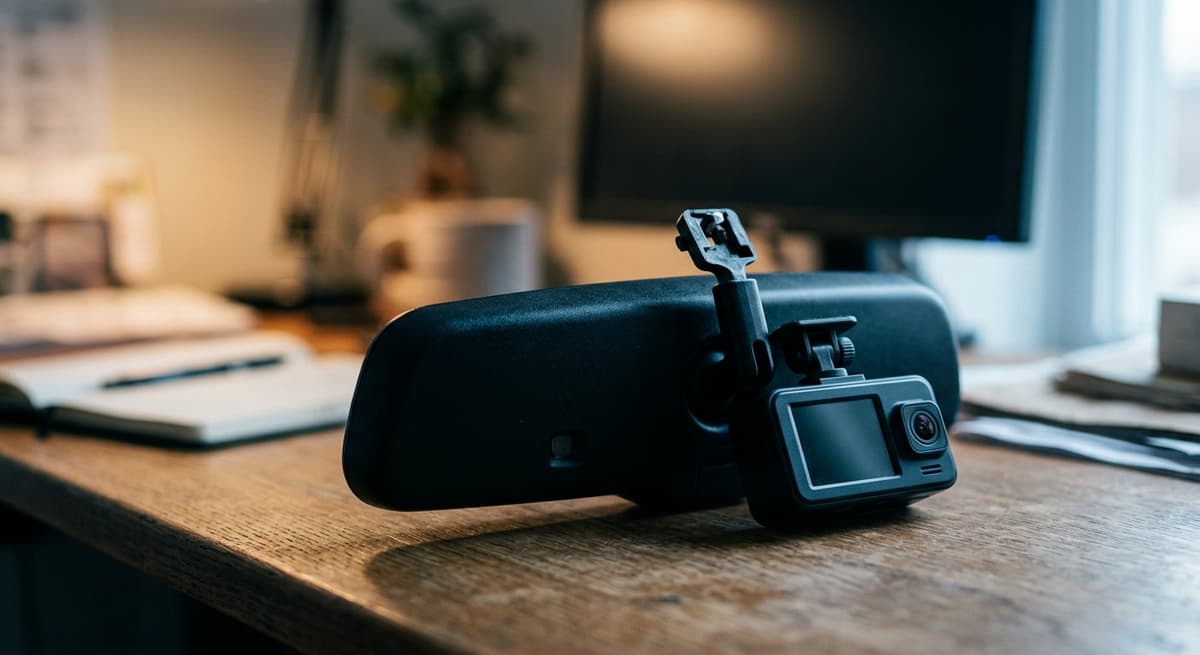
This requirement applies to all motor vehicles except motorcycles and implements of husbandry (farm equipment). If your windshield is cracked, broken, or missing, you can be cited under this provision regardless of whether any devices are mounted on it.
The 2024 Windshield Film Exception (SB 46)
Senate Bill 46 was one of the most significant changes to Kentucky's windshield laws in decades. Sponsored by Senators Greg Elkins and Damon Douglas, the bill passed both chambers unanimously: 35-0 in the Senate on January 29, 2024, and 95-0 in the House on March 26, 2024. Governor Andy Beshear signed it into law on March 29, 2024, and it took effect on July 15, 2024.
What SB 46 Changed
Before SB 46, Kentucky only allowed window tint film in the narrow AS-1 strip at the top of the windshield. The new law added a third exception to KRS 189.110(2), permitting sunscreening film across the entire windshield surface, subject to two conditions:
-
The film must allow at least 70% of visible light to pass through when used in conjunction with the factory safety glazing. This is measured as Visible Light Transmittance (VLT). Because factory windshield glass already blocks some light (typically around 70-80% VLT on its own), the film must be very light to maintain the combined 70% threshold.
-
The film cannot be red or yellow in color. These colors could interfere with the driver's perception of traffic signals and brake lights.
Why This Matters
A 70% VLT windshield film is nearly clear. You will not notice a significant visual difference from the driver's seat. However, even this light film can block a meaningful amount of UV radiation, which protects the driver and interior surfaces from sun damage. It can also reduce glare and slightly lower interior temperatures.
Installer and Labeling Requirements
Kentucky law requires that every installer or seller of sunscreening material provide the vehicle owner with a pressure-sensitive, self-destructive, non-removable vinyl-type film label. This label must be affixed to the inside of the left (driver's side) door jamb. The label must state the trade name of the material and the installer's or seller's business name.
This labeling requirement is important because it serves as proof to law enforcement that the window tint was professionally installed and complies with Kentucky standards. Factory glazing that complies with FMVSS No. 205 does not require an additional label.
Kentucky Window Tint Laws for All Windows
While the windshield rules are the focus of this page, KRS 189.110 also governs tint on all other vehicle windows. Here is a complete breakdown of the legal limits.
Sedans and Passenger Cars
| Window Location | Minimum VLT | Maximum Reflectivity |
|---|---|---|
| Windshield | 70% (film allowed since July 2024) | Not specified |
| Front side windows (adjacent to driver) | 35% | 25% |
| Rear side windows | 18% | 35% |
| Rear window | 18% | 35% |
SUVs, Vans, and Multipurpose Vehicles
| Window Location | Minimum VLT | Maximum Reflectivity |
|---|---|---|
| Windshield | 70% (film allowed since July 2024) | Not specified |
| Front side windows (adjacent to driver) | 35% | 25% |
| Rear side windows | 8% | 35% |
| Rear window | 8% | 35% |
Important Tint Rules to Know
Tolerance. Every VLT and reflectivity measurement is subject to a tolerance of plus or minus three percent (3%). This means a front side window measured at 32% VLT would not be in violation because it falls within the 3% tolerance of the 35% minimum.
Dual mirrors required. If the rear window is composed of, covered by, or treated with any material that makes it nontransparent, the vehicle must be equipped with side mirrors on both sides.
Perforated film. Kentucky allows perforated sunscreening material (sometimes called one-way vision film) on windows. When tested with existing glazing or film, the material must have a total reflectance of visible light of not more than 35% and a light transmittance of no less than 30%.
Color restrictions. Windshield film cannot be red or yellow. The statute does not impose color restrictions on side or rear window tint.
No medical exemptions. Unlike many other states, Kentucky law does not currently provide a medical exemption that allows darker window tint for individuals with light-sensitive medical conditions.
Penalties for Windshield and Window Tint Violations
Violations of KRS 189.110 are classified as follows under KRS 189.990:
Driver operating with an obstructed windshield or illegal tint:
- Fine of not less than $20 and not more than $100 for each offense
- KRS 189.990(1)(a) applies this same $20 to $100 range to each offense; the statute does not set an escalated fine range for a driver's repeat violations
Installer who applies sunscreening materials in violation of KRS 189.110:
- Guilty of a Class B misdemeanor upon conviction
- A Class B misdemeanor in Kentucky carries a maximum jail sentence of 90 days and a fine of up to $250
These are not traffic points offenses, but accumulated fines and a misdemeanor record can have broader consequences for professional installers.
Windshield Wiper Requirements
KRS 189.110(11) requires that the windshield on every motor vehicle be equipped with a device for cleaning rain, snow, or other moisture from the windshield. This device must be constructed so it can be controlled by the operator of the vehicle.
In practical terms, your windshield wipers must be functional and operable from the driver's seat. Driving with broken, missing, or inoperable wipers is a citable offense under this statute, separate from any windshield obstruction violation.
American Flag Display on Rear Windows
KRS 189.110(10) contains a specific provision allowing the display of a representation of the American flag on the rear window of any motor vehicle, including government-owned vehicles. The flag representation must not exceed five inches by eight inches in size and must be placed in a lower corner of the rear window.
This provision ensures that small patriotic decals do not violate the general window obstruction rules.
Kentucky's Current Distracted Driving Law (KRS 189.292)
Understanding Kentucky's distracted driving law is important context for windshield mounting restrictions because the two statutes work together to regulate how drivers interact with electronic devices.
KRS 189.292 currently prohibits drivers from writing, sending, or reading text-based communication on a personal communication device while the vehicle is in motion. This includes text messages, instant messages, and emails.
What Is Currently Allowed for Adult Drivers
- Making and receiving phone calls while holding the phone
- Using a GPS feature on a phone or standalone device
- Using integrated vehicle navigation systems
- Entering a phone number or contact name to initiate a call
What Is Prohibited for All Drivers
- Texting, emailing, or instant messaging while driving
- First offense: $25 fine plus 3 points on driving record
- Subsequent offenses: $50 fine plus 3 points
Stricter Rules for Drivers Under 18
KRS 189.294 prohibits all personal communication device use by drivers under 18 while the vehicle is in motion, regardless of whether the device is hands-free. The only exceptions are for emergency situations and use of a GPS system (though information must be entered while the vehicle is stopped).
Accumulating 7 points results in license suspension for drivers under 18, compared to 12 points for adult drivers.
The Phone-Down Kentucky Act (SB 28): Died in the 2026 Session
Senate Bill 28 of the 2026 Regular Session, officially titled the "Phone-Down Kentucky Act," would have significantly expanded Kentucky's distracted driving restrictions. The bill passed the Kentucky Senate 31-7 on January 20, 2026, and was referred to the House Transportation Committee on March 9, 2026, but received no further action. The 2026 Regular Session adjourned sine die in mid-April 2026 without a House floor vote, so SB 28 died. Kentucky bills do not carry over between annual sessions, so it would need to be refiled in the 2027 session to have another chance at passing.
What SB 28 Would Change
The bill would repeal and reenact KRS 189.292 to prohibit drivers from holding a mobile electronic device in their hand while operating a vehicle. This goes well beyond the current texting ban. Under SB 28, prohibited activities while holding a device would include:
- Texting, typing, or scrolling
- Watching video content or viewing moving images
- Any manual interaction with a handheld device
Exceptions Under SB 28
The bill includes several exceptions:
- Hands-free navigation and voice-based communication
- Emergency calls and reporting accidents or hazards
- Use by first responders during official duties
- Use while the vehicle is lawfully parked or stopped
- Citizens band, amateur, ham, and commercial two-way radios
Penalties Under SB 28
- $100 fine per violation
- No points assessed to the driver's record
- Fines would be distributed to the traumatic brain injury trust fund, Kentucky trauma care system fund, and veterans' program trust fund
Enforcement Timeline SB 28 Proposed (Bill Died, Not in Effect)
SB 28 never reached a House floor vote, so none of the following took effect. This is what the bill would have set up if it had passed:
- Courtesy warnings only (no citations) until October 31, 2026
- The state transportation cabinet must post signage statewide before enforcement begins
- Officers must have a clear and unobstructed visual observation of the violation before initiating a stop
- Officers cannot stop a driver based on surveillance footage alone
- No seizure, search, viewing, or forfeiture of a driver's cell phone is permitted during a stop
Impact on Windshield Mounts
SB 28 died in committee, but if a similar bill is refiled and passes in a future session, mounting a phone on the windshield would present a dual legal issue. The windshield attachment itself would still violate KRS 189.110(2), and holding or manually interacting with the device while driving would violate the new hands-free requirement. However, using a hands-free mount (on the dashboard or vent) with voice commands would be permitted under SB 28's exceptions for hands-free navigation.
How to Stay Compliant in Kentucky
Based on the current law and pending legislation, here are practical steps to stay on the right side of Kentucky's windshield and device laws:
-
Avoid windshield mounts entirely. Use dashboard mounts, vent-clip mounts, or CD-slot mounts for GPS units, phones, and dashcams. This eliminates any KRS 189.110(2) issue.
-
If you use windshield tint, keep it at 70% VLT or above. Make sure the installer provides the required door jamb label. Avoid red or yellow tint film.
-
Check your front side window tint. It must allow at least 35% VLT. This is the most commonly enforced tint violation because officers can easily observe it during a traffic stop.
-
Keep windshield wipers functional. Replace worn blades before they fail.
-
Watch for a refiled Phone-Down Kentucky Act. SB 28 died in the House Transportation Committee when the 2026 session ended without a floor vote. If a similar handheld-device ban is refiled and passes in 2027 or later, prepare to switch to hands-free device use. Get a Bluetooth-enabled vehicle system or a hands-free mount with voice control.
-
Drivers under 18 should not use any device. Even GPS entry must be done while the vehicle is stopped.
More Kentucky Laws
Explore other Kentucky law topics we cover:
Frequently Asked Questions
Can I mount a GPS or phone on my windshield in Kentucky?
Kentucky KRS 189.110(2) prohibits attaching any product to the windshield except certificates required by law and certain tint materials. GPS units and phone mounts technically violate this rule. While enforcement typically focuses on whether the device obstructs the driver's view, you can avoid any legal risk by using a dashboard or vent-clip mount instead.
Are dashcams legal in Kentucky?
Dashcams are not specifically addressed in Kentucky law, but mounting one on the windshield falls under the general prohibition in KRS 189.110(2) against attaching products to the windshield. In practice, small dashcams that do not obstruct the driver's view are rarely cited. Placing the dashcam behind the rearview mirror minimizes both obstruction and legal exposure.
What is the legal windshield tint limit in Kentucky?
Since July 15, 2024, Kentucky allows sunscreening film on the entire windshield as long as it transmits at least 70% of visible light (VLT) and is not red or yellow in color. This was added by Senate Bill 46 (2024 Ky. Acts ch. 17). Previously, tint was only allowed in the AS-1 strip at the top of the windshield.
What are the penalties for illegal window tint in Kentucky?
Drivers with illegal tint face fines of $20 to $100 for each offense under KRS 189.990(1)(a), which does not escalate the fine for a driver's repeat violations. Installers who apply tint that violates KRS 189.110 can be charged with a Class B misdemeanor, which carries up to 90 days in jail and a fine.
Will Kentucky ban handheld phone use while driving?
Not currently. The Phone-Down Kentucky Act (SB 28) passed the Kentucky Senate 31-7 in January 2026 but died in the House Transportation Committee when the 2026 Regular Session adjourned sine die in mid-April 2026 without a House floor vote. Kentucky bills do not carry over between sessions, so it would need to be refiled in 2027 to advance. As drafted, it would have prohibited holding any mobile electronic device while driving, with a $100 fine per violation, while keeping hands-free navigation and voice calls legal.
Updates
Corrected the explanation of the KRS 189.110(2)(a) exception: removed inspection-sticker, registration-decal and toll-transponder examples that do not reflect Kentucky law, and clarified that a toll transponder is not a certificate or paper covered by that exception.
Corrected this page's description of the Phone-Down Kentucky Act (SB 28): it died in a House committee when the 2026 legislative session ended and is not pending, active, or on an enforcement timeline. Also fixed a citation link that was mislabeled as KRS 189.294 but pointed to KRS 189.292.
Independently fact-checked against the cited primary sources; governing law re-checked for recent changes
Governing law re-checked for recent changes
Corrected the tint-violation penalty: KRS 189.990(1)(a) sets a flat $20-$100 fine for each offense by the driver, with no escalated subsequent-offense tier (the escalated Class B misdemeanor penalty applies to installers, a separate provision).
Governing law re-checked for recent changes
Reviewed and approved by an editor
The Law Behind This Article
This article rests on the statutory provisions below, held in our own legal record and retrieved from the official source. Tap a section to read the operative text.
Kentucky Revised Statutes, Chapter 189: TRAFFIC REGULATIONS -- VEHICLE EQUIPMENT AND STORAGE
§ 189.110Unobstructed windshields -- Display of American flag -- Windshield wipersIn forcecited in 3 of our articles
(1) A windshield in a fixed and upright position, that is equipped with safety glazing as required by federal safety-glazing material standards, is required on every motor vehicle which is operated on the public highways, roads, and streets, except on a motorcycle or implement of husbandry. (2) A person shall not operate a motor vehicle on a public highway, road, or street with any sign, sunscreening material, product, or covering attached to, or located in or upon the windshield, except the following: (a) A certificate or other paper required to be displayed by law; (b) Sunscreening material along a strip at the top of the windshield, if the material is transparent and does not encroach upon the driver's direct forward viewing area as defined in Federal Motor Vehicle Safety Standards No. 205 as the AS/1 portion of the windshield; or (c) Sunscreening material or other product or material applied to the windshield, when used in conjunction with the safety glazing materials of the windshield, if it has a light transmittance of not less than seventy percent (70%) and is not red or yellow in color.
Official text (excerpt) · last checked 2026-09-07 · Read the full text in our law library · Verify at apps.legislature.ky.gov
Cited in 6 court opinions in our collectionLatest citing opinion in our collection: 2023
In the courts (editorial summary, independently checked):Garcia v. Commonwealth (2006) held that KRS 189.110 governs sunscreening, tinting, safety glazing and wipers, and that a cracked windshield is not a violation of it, so it could not justify the stop. Fultz v. Commonwealth (2018) held the $100 fine for excessive window tinting under the statute was not subject to indigency waiver.
Opinions citing this section in our collection:
- Garcia v. Commonwealth (Court of Appeals of Kentucky 2006, 185 S.W.3d 658)✓A trooper cited a driver for a cracked windshield under the statute; the court held the statute covers tinting, safety glazing and wipers but says nothing about cracks, so a cracked windshield cannot violate it, and the marijuana had to be suppressed.
- Greer v. Commonwealth (Court of Appeals of Kentucky 2017, 514 S.W.3d 566)✓An officer stopped a car whose windows were dark enough that he could not make out the driver, citing the tint provision; though a grand jury refused to indict on it and the installer testified the tint complied, the court held his trained visual estimate supported the stop.
- Fultz v. Commonwealth (Court of Appeals of Kentucky 2018, 554 S.W.3d 385)“…case, the offense of excessive window tinting is defined by KRS 189.110. At the time of the offense, KRS 189.99…”
Identified automatically from the court opinions citing this section — not a ranking of which case controls.
Also relied on in: Kentucky Window Tint Laws (2026): Legal VLT Limits, Kentucky Dashcam Laws: Legality, Mounting Rules, and Evidence Use
§ 189.990PenaltiesIn forcecited in 2 of our articles
(1) (a) Any person who violates any of the provisions of KRS 189.020 to 189.040, 189.050(1) or (4), 189.060 to 189.080, 189.090(1) to (3), 189.100, 189.110, 189.130 to 189.160, 189.190(2) to (4), 189.195, 189.200, 189.285, 189.290(1) or (2), 189.300 to 189.360, 189.380, 189.400 to 189.430, 189.450 to 189.458, 189.4595 to 189.480, 189.520(1), 189.540, 189.570 to 189.590, except 189.580(1)(b) or (6)(b), 189.345, 189.456(6), and 189.960 shall be fined not less than twenty dollars ($20) nor more than one hundred dollars ($100) for each offense. (b) Any person who violates KRS 189.580(1)(a) shall be fined not less than twenty dollars ($20) nor more than two thousand dollars ($2,000) or imprisoned in the county jail for not more than one (1) year, or both, unless the accident involved death or serious physical injury and the person knew or should have known of the death or serious physical injury, in which case the person shall be guilty of a Class D felony. (c) Any person who violates KRS 189.390(5)(c) shall be fined not less than eleven dollars ($11) nor more than thirty dollars ($30). Neither court costs nor fees shall be taxed against any person violating KRS 189.390(5)(c).
Official text (excerpt) · last checked 2026-07-29 · Read the full text in our law library · Verify at apps.legislature.ky.gov
Cited in 25 court opinions in our collectionLatest citing opinion in our collection: 2026
Opinions citing this section in our collection:
- Commonwealth v. Fox (Kentucky Supreme Court 2001, 48 S.W.3d 24)“…om the statute at that time was the prior language: “KRS 189.990 and 189.993 to the contrary notwithstan…”
- Murphy v. City of Lake Louisvilla (Court of Appeals of Kentucky 1957, 303 S.W.2d 307)“…conviction under said ordinance.” Reference is then made to KRS 189.990, which provides a fine of not less than…”
- Phelps v. Louisville Water Co. (Kentucky Supreme Court 2003, 103 S.W.3d 46)“…ic control (at worst)" is a $100 fine under KRS 189.337 and KRS 189.990(1). While this may be the maximum fine…”
Identified automatically from the court opinions citing this section — not a ranking of which case controls.
Also relied on in: Kentucky Hit and Run Laws: Penalties and What to Do
§ 189.292Use of personal communication device prohibited while operating motor vehicle in motion on traveled portion of roadway -- Exclusions -- Administrative regulationsIn force
(1) As used in this section, "personal communication device" means a device capable of two (2) way audio or text communication that emits an audible signal, vibrates, displays a message, or otherwise summons or delivers communication to the possessor, including but not limited to a paging device and a cellular telephone. (2) Except as provided in subsection (3) of this section, no person shall, while operating a motor vehicle that is in motion on the traveled portion of a roadway, write, send, or read text-based communication using a personal communication device to manually communicate with any person using text-based communication, including but not limited to communications referred to as a text message, instant message, or electronic mail.
Official text (excerpt) · last checked 2026-07-29 · Read the full text in our law library · Verify at apps.legislature.ky.gov
Cited in 3 court opinions in our collectionLatest citing opinion in our collection: 2023
Opinions citing this section in our collection:
- Roger D. Burdette v. Commonwealth of Kentucky (Kentucky Supreme Court 2023)“…Kentucky law generally prohibits texting and driving under KRS 189.292(2).…”
- Tammy Feinauer v. Commonwealth of Kentucky (Court of Appeals of Kentucky 2021)“…30(2). It is also generally illegal to text and drive under KRS 189.292(2). Speeding is also against the law (…”
- Southard v. Belanger (District Court, W.D. Kentucky 2013, 966 F. Supp. 2d 727)“…vice while driving is not prohibited by Kentucky law. See Ky.Rev.Stat. § 189.292(2) (noting that the use of a cell phone…”
Identified automatically from the court opinions citing this section — not a ranking of which case controls.
§ 189.294Use of personal communication device by minor prohibited while operating motor vehicle, motorcycle, or moped in motion on traveled portion of roadway -- Exclusions -- Administrative regulationsIn force
(1) As used in this section, "personal communication device" shall have the same meaning as defined in KRS 189.292. (2) Any person under the age of eighteen (18) who has been issued an instruction permit, intermediate license, or operator's license shall not operate a motor vehicle, motorcycle, or moped that is in motion on the traveled portion of a roadway while using a personal communication device, except to summon medical help or a law enforcement or public safety agency in an emergency situation. (3) Use of a personal communication device does not include a stand-alone global positioning system, a global positioning or navigation system that is physically or electronically integrated into the motor vehicle, or an in-vehicle security, diagnostics, and communications system, but does include manually entering information into the global positioning system feature of a personal communication device. (4) This section shall not apply to the use of a citizens band radio or an amateur radio by a motor vehicle operator.
Official text (excerpt) · last checked 2026-07-29 · Read the full text in our law library · Verify at apps.legislature.ky.gov
Code of Federal Regulations Title 49
§ 571.205Standard No. 205, Glazing materials.In forcecited in 8 of our articles
S1. Scope. This standard specifies requirements for glazing materials for use in motor vehicles and motor vehicle equipment. S2. Purpose. The purpose of this standard is to reduce injuries resulting from impact to glazing surfaces, to ensure a necessary degree of transparency in motor vehicle windows for driver visibility, and to minimize the possibility of occupants being thrown through the vehicle windows in collisions. S3. Application. This standard applies to passenger cars, multipurpose passenger vehicles, trucks designed to carry at least one person, buses, motorcycles, slide-in campers, pickup covers designed to carry persons while in motion and low speed vehicles, and to glazing materials for use in those vehicles. S4. Definitions. Bullet resistant shield means a shield or barrier that is installed completely inside a motor vehicle behind and separate from glazing materials that independently comply with the requirements of this standard. Camper means a structure designed to be mounted in the cargo area of a truck, or attached to an incomplete vehicle with motive power, for the purpose of providing shelter for persons.
Official text (excerpt) · last checked 2026-07-28 · Read the full text in our law library · Verify at ecfr.gov
Cited in 34 court opinions in our collectionLatest citing opinion in our collection: 2024
In the courts (editorial summary, independently checked):O'Hara Ex Rel. H.O. v. General Motors Corp. (2007) held FMVSS 205, 49 CFR 571.205, does not preempt a state design claim seeking advanced side glazing. McCracken v. Ford Motor Co. (2008) read the same standard as mandatory rather than a floor, so a conflicting claim would be preempted, and denied dismissal only on that open question.
Opinions citing this section in our collection:
- O'Hara Ex Rel. H.O. v. General Motors Corp. (Court of Appeals for the Fifth Circuit 2007, 508 F.3d 753)✓A child was partially ejected through a Tahoe's tempered-glass side window in a rollover, and her parents claimed GM should have used advanced glazing; the court held FMVSS 205 is a minimum safety standard that does not preempt their common law claims.
- United States v. Ruel Antonio Wallace (Court of Appeals for the Ninth Circuit 2000, 213 F.3d 1216)“…uirements of Federal Motor Vehicle Safety Standard No. 205 (49 C.F.R. 571.205), including the specified minimum light…”
- McCracken v. Ford Motor Co. (District Court, E.D. Pennsylvania 2008, 588 F. Supp. 2d 635)✓A buyer blaming his thyroid cancer on radiation through his Fords' windshields said Lucite or leaded glass should have been used; treating FMVSS 205 as a mandatory standard, the court refused to dismiss on preemption because the pleadings did not show Lucite was unapproved.
Identified automatically from the court opinions citing this section — not a ranking of which case controls.
Also relied on in: Iowa Windshield Mounting Laws (2026 Guide), California Windshield Mounting Laws (2026 Guide), Rhode Island Windshield Mounting Laws (2026 Guide)
Search our full record of US law — 2.1 million sections, every state + federal →
Sources and References
- KRS 189.110 - Unobstructed windshields, Display of American flag, Windshield wipers(apps.legislature.ky.gov).gov
- SB 46 (2024 Regular Session) - Windshield sunscreening material amendment(apps.legislature.ky.gov).gov
- KRS 189.990 - Penalties for traffic violations(apps.legislature.ky.gov).gov
- KRS 189.292 - Use of personal communication device prohibited while driving(apps.legislature.ky.gov).gov
- SB 28 (2026 Regular Session) - Phone-Down Kentucky Act(apps.legislature.ky.gov).gov
- Federal Motor Vehicle Safety Standard No. 205 - Glazing Materials(ecfr.gov).gov
- KRS 186.170 - Retention of receipt, Display of registration plates, Registration years(apps.legislature.ky.gov)
- KRS 189.456 - Accessible parking placard for person with a disability, Display(apps.legislature.ky.gov)