
New Hampshire
New Hampshire Pepper Spray and Stun Gun Laws (2026)
Independently fact-checked against primary sources (last audited September 23, 2026). · 17 primary sources cited on this page. How we verify our legal content
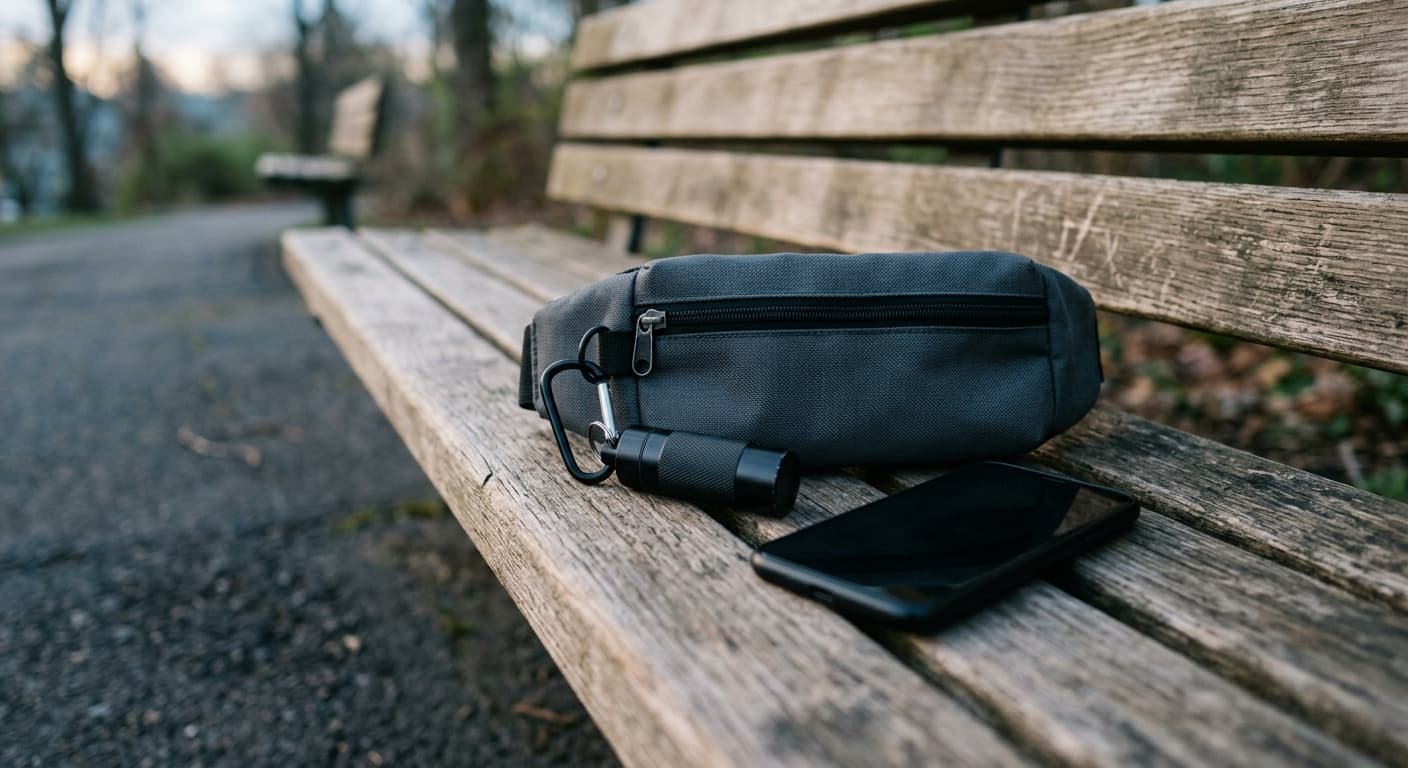
New Hampshire regulates pepper spray and stun guns through the same four-section subdivision of its pistols-and-revolvers chapter, but the two devices are not treated identically. The statute defines both as "self-defense weapons," bans criminal use of either, and restricts sale of one of them to minors, yet its felon-possession ban and its under-18 sale restriction, read on their own terms, name only the electronic device. A separate courthouse-security statute in the same chapter bars any "deadly weapon" from a courtroom, and whether either device qualifies is the same manner-of-use question addressed below, not a settled reach; the practical answer either way is not to bring one into a courthouse.
Jurisdiction scope: This page covers New Hampshire state law, principally RSA 159:3, 159:19 through 159:23, and 159:26. It does not cover any specific town or city ordinance, New Hampshire's pistol-and-revolver carry license statute in detail, or the safe school zones chapter beyond the single cross-reference described below.
Is pepper spray legal to carry in New Hampshire?
Legal to possess and carry, with no age minimum, capacity cap, or purchase restriction stated in the statute itself. RSA 159:20(II) defines an "aerosol self-defense spray weapon" as "any aerosol self-defense spray weapon which is designed to immobilize or incapacitate a person temporarily." Unlike many states, New Hampshire's subdivision does not set a maximum size, a formula requirement, or a minimum purchase age for this device. RSA 159:22's under-18 sale restriction names only the "electronic defense weapon," and RSA 159:21's felon-possession ban likewise names only the "electronic defense weapon." Neither section extends its restriction to the aerosol self-defense spray weapon by its own terms. What New Hampshire law regulates instead is offensive use: RSA 159:23(I) makes it a misdemeanor to use "an electronic defense or aerosol self-defense spray weapon on a law enforcement officer or another person with intent to commit a crime punishable as a misdemeanor," and RSA 159:23(II) raises that to a class B felony if the intended crime is punishable as a felony. RSA 159:23(III) adds a mandatory-consecutive-sentence rule: "Neither the whole nor any part of a sentence of imprisonment imposed for a violation of this section shall be served concurrently with any other term of imprisonment."

Are stun guns legal to carry in New Hampshire?
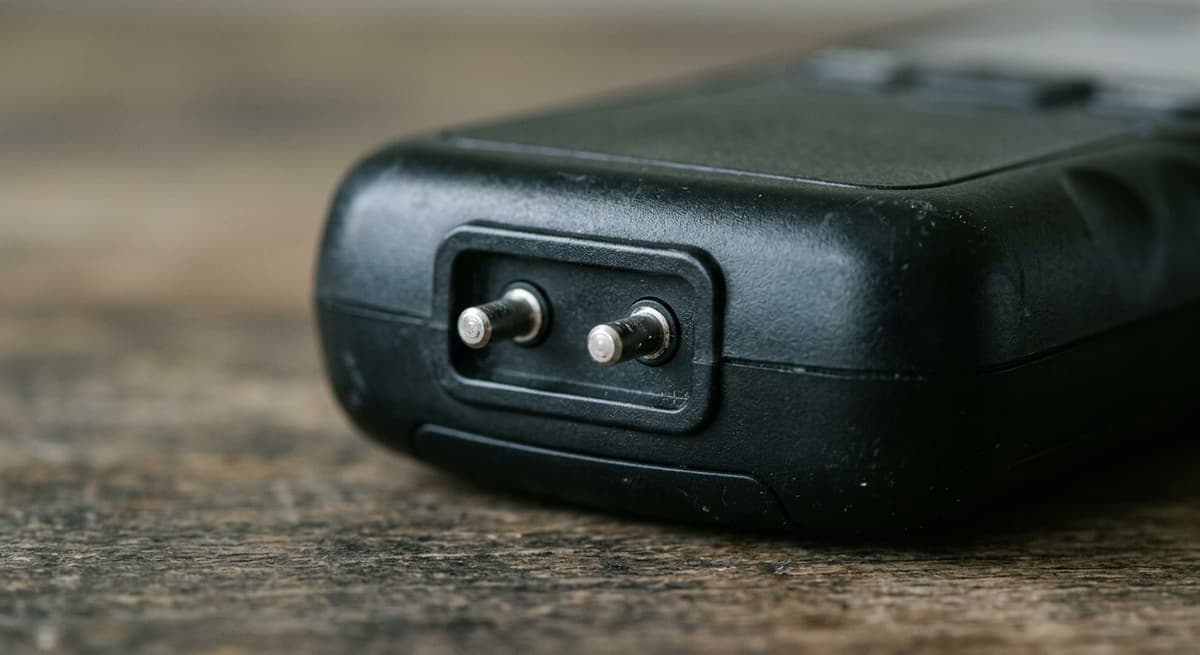
Legal to possess for an adult with no disqualifying felony conviction; New Hampshire calls the device an "electronic defense weapon" and regulates it more closely than pepper spray. RSA 159:20(I) defines it as "an electronically activated non-lethal device which is designed for or capable of producing an electrical charge of sufficient magnitude to immobilize or incapacitate a person temporarily." RSA 159:21 states in full: "Any person who has been convicted of a felony in this or any other state who possesses an electronic defense weapon away from the premises where he resides shall be guilty of a class B felony. Neither the whole nor any part of a sentence of imprisonment imposed for a violation of this section shall be served concurrently with any other term of imprisonment." The ban reaches a felon's possession away from the felon's own residence, not possession at that residence, but its sentencing tail is not lenient: no portion of the sentence may run concurrently with any other prison term. RSA 159:22 separately bars knowingly selling an electronic defense weapon to anyone under 18. That is a violation, and under RSA 625:9, II(b), "a violation does not constitute a crime and conviction of a violation shall not give rise to any disability or legal disadvantage based on conviction of a criminal offense." It carries a fine of up to $1,000 for an individual under RSA 651:2, IV(a), and no term of imprisonment. As with pepper spray, using an electronic defense weapon on a law enforcement officer or another person with intent to commit a crime is a separate offense under RSA 159:23, scaled to a misdemeanor or class B felony depending on the intended underlying crime, with the same bar on concurrent sentencing.

A related felon-weapons statute, RSA 159:3, separately makes it a class B felony for a person to own, possess, or control a list of enumerated weapons, plus "other deadly weapon as defined in RSA 625:11, V," if that person has been convicted of a felony. That predicate is narrower than "any convicted felon": subparagraph (b) limits it to a person convicted of "(1) A felony against the person or property of another; or (2) A felony under RSA 318-B [controlled drugs]; or (3) A felony violation of the laws of any other state... relating to controlled drugs." A person whose only felony conviction is, for example, a non-drug regulatory or tax offense against the state itself falls outside RSA 159:3 entirely, unlike RSA 159:21, which reaches anyone "convicted of a felony in this or any other state" with no such limitation on the predicate. RSA 159:3's enumerated list does not name an electronic defense weapon or aerosol spray weapon by name, so whether either device falls under its "other deadly weapon" catchall depends on the RSA 625:11, V definition: "any firearm, knife or other substance or thing which, in the manner it is used, intended to be used, or threatened to be used, is known to be capable of producing death or serious bodily injury." That is a fact-specific, manner-of-use question the statute's text does not resolve in advance. RSA 159:21's dedicated felon-possession ban for the electronic defense weapon applies regardless of that separate question, and to a broader group of felons than RSA 159:3 reaches.
Where you can't carry either device
RSA 159:19, Courthouse Security, sits in the same chapter as the self-defense-weapons subdivision and reaches "any other deadly weapon as defined in RSA 625:11, V." Whether an electronic defense weapon or aerosol self-defense spray weapon is a "deadly weapon" under that definition is the same fact-specific, manner-of-use question addressed above for RSA 159:3: RSA 625:11, V defines "deadly weapon" as "any firearm, knife or other substance or thing which, in the manner it is used, intended to be used, or threatened to be used, is known to be capable of producing death or serious bodily injury," with "serious bodily injury" defined as "any harm to the body which causes severe, permanent or protracted loss of or impairment to the health or of the function of any part of the body." The statute's text does not resolve that question in advance for either device, so this page does not resolve it either; whichever way it comes out, carrying either device into a courthouse risks a class B felony charge under this section, and the practical answer is not to do it. The full text of RSA 159:19, I: "No person shall knowingly carry a loaded or unloaded pistol, revolver, or firearm or any other deadly weapon as defined in RSA 625:11, V, whether open or concealed or whether licensed or unlicensed, upon the person or within any of the person's possessions owned or within the person's control in a courtroom or area used by a court. Whoever violates the provisions of this paragraph shall be guilty of a class B felony." "Area used by a court" is defined broadly: in a building used only for court purposes, it is the entire building outside the area between the entrance and courthouse security; in a mixed-use building, it covers the courtrooms, jury and deliberation rooms, conference and interview rooms, judge's chambers, other court staff facilities, holding facilities, and the corridors, stairways, waiting areas, and elevators that connect them. Paragraph IV's exceptions cover "marshals, sheriffs, deputy sheriffs, police or other duly appointed or elected law enforcement officers, bailiffs and court security officers, or persons with prior authorization of the court for the purpose of introducing weapons into evidence and as otherwise provided for in RSA 159:5." Court authorization is not general permission to carry a weapon in; it is authorization specifically to bring a weapon in as evidence. The cross-referenced RSA 159:5 adds its own narrow categories, including the regular transportation of firearms as merchandise, members of the armed services or national guard on duty, and authorized military or civil organizations when parading; none of them describes an ordinary visitor carrying pepper spray or a stun gun for personal protection. Paragraph V makes the absence of a required posted notice an affirmative defense.
RSA 193-D:1(I)(d), the definitions section of the state's safe school zones chapter, defines "unlawful possession or sale of a firearm or other dangerous weapon under RSA 159" as one of the "acts of theft, destruction, or violence" that trigger the chapter's school reporting and discipline rules. That definition is possession- and sale-specific, not a catch-all for anything unlawful under RSA 159: RSA 159:21's felon-possession ban and RSA 159:22's under-18 sale ban both fit its words, since both are possession or sale offenses; RSA 159:23's criminal-use offense does not, since using a weapon against someone is neither possessing nor selling it. So conduct already unlawful under RSA 159:21 or RSA 159:22 on school property is reportable under this chapter's definitions section; RSA 159:23 conduct is not reached by this particular definition, whatever else RSA 193-D's broader school-discipline provisions may separately cover.
Local ordinances and preemption
New Hampshire's firearms-preemption statute, RSA 159:26, has two operative sentences in paragraph I plus a savings clause, and they do not all cover the same list. The first sentence gives the state authority "over the sale, purchase, ownership, use, possession, transportation, licensing, permitting, taxation, or other matter pertaining to firearms, firearms components, ammunition, firearms supplies, or knives in the state." The actual local-ordinance prohibition is the second sentence, and its list is narrower, leaving knives out: "Except as otherwise specifically provided by statute, no ordinance or regulation of a political subdivision may regulate the sale, purchase, ownership, use, possession, transportation, licensing, permitting, taxation, or other matter pertaining to firearms, firearms components, ammunition, or firearms supplies in the state." A third sentence preserves local zoning authority over firearms or knives businesses "in the same manner as other businesses." Paragraph II then voids any municipal ordinance "not authorized under paragraph I relative to... firearms, firearm components, ammunition, firearms supplies, or knives." Neither list, in either paragraph, names an electronic defense weapon or an aerosol self-defense spray weapon, so RSA 159:26 does not extend its preemption to either device on its own text.
That is a statement about what this one statute does not preempt, not a statement about what a town or city may affirmatively regulate, and New Hampshire's local-government title answers the second question directly. RSA 31:39, I gives towns bylaw power over an enumerated list of subjects, not a general health-and-welfare grant: it runs from cemeteries and public institutions (a) through noise regulation (n) and local election-finance reporting (o) to, in subparagraph (p), "regulating the retail display and accessibility of martial arts weapons including throwing stars, throwing darts, nunchaku, blow guns, or any other objects designed for use in the martial arts that are capable of being used as lethal or dangerous weapons." Neither an electronic defense weapon nor an aerosol self-defense spray weapon is a martial-arts weapon, and no other subparagraph names a weapon of any kind, so a town ordinance reaching either device would have to rest on the catch-all in subparagraph (l), "making and ordering their prudential affairs," with penalties capped at $1,000 per offense under RSA 31:39, III. Cities draw their ordinance power from a different statute, RSA 47:17, whose paragraph II grants a general "order and police duty" power "to regulate the police of the city; to prevent any riot, noise, disturbance, or disorderly assemblages," a differently shaped grant than the town bylaw list, with penalties also capped at $1,000. Whether a specific town or city has actually adopted an ordinance under either grant is a separate question this page does not check.
Federal law: what it does and does not reach
No federal statute regulates a civilian's purchase or possession of pepper spray or a stun gun. Federal law matters in three places.
Federal buildings. Under 18 U.S.C. § 930(a), whoever knowingly possesses or causes to be present "a firearm or other dangerous weapon in a Federal facility (other than a Federal court facility)" faces a fine, imprisonment of up to 1 year, or both. Subsection (e) sets up to 2 years for a federal court facility, and subsection (b) up to 5 years where the weapon is intended to be used in a crime. Section 930(g)(2) defines the term:
The term "dangerous weapon" means a weapon, device, instrument, material, or substance, animate or inanimate, that is used for, or is readily capable of, causing death or serious bodily injury, except that such term does not include a pocket knife with a blade of less than 2½ inches in length.
The definition names neither device. Whether a particular spray or stun gun is "readily capable of" causing serious bodily injury is a question of fact the statute does not answer. Subsection (d)(3) exempts "the lawful carrying of firearms or other dangerous weapons in a Federal facility incident to hunting or other lawful purposes," and subsection (h) requires notice of the ban to be posted at each public entrance. A "Federal facility" is "a building or part thereof owned or leased by the Federal Government, where Federal employees are regularly present for the purpose of performing their official duties."
Air travel. The Transportation Security Administration's screening rules, which are agency policy rather than statute, bar both devices from carry-on bags. One 4 fl. oz. (118 ml) container of mace or pepper spray is permitted in checked baggage if it has a safety mechanism to prevent accidental discharge, and sprays containing more than 2 percent by mass of tear gas (CS or CN) are prohibited in checked baggage. Tasers, stun guns and other electro-shock weapons may travel in checked baggage only if transported so the device cannot discharge accidentally. Airlines may set stricter rules.
National parks. National Park Service regulations prohibit possessing, carrying or using a "weapon" in a park area except as the regulations provide (36 CFR 2.4(b)(1)). 36 CFR 1.4 defines "weapon" to include an "irritant gas device" and any "weapon the possession of which is prohibited under the laws of the State in which the park area or portion thereof is located."
Disclaimer: This article provides general legal information about New Hampshire's pepper spray and stun gun laws as of September 2026. It is not legal advice. Consult a lawyer licensed in New Hampshire for advice about a specific situation.
For a state-by-state comparison, see pepper spray and stun gun laws by state. New Hampshire's self-defense statutes are covered separately on the New Hampshire self-defense laws page.
Statutes cited reflect their in-force version as of 2026-09-20. Last updated: 2026-09-20.
Frequently Asked Questions
Is there an age minimum to buy pepper spray in New Hampshire?
The statute does not say. RSA 159:22's under-18 sale restriction names only the electronic defense weapon, not the aerosol self-defense spray weapon, so New Hampshire's self-defense weapons subdivision does not set an age floor for purchasing pepper spray on its own text.
Can a convicted felon own pepper spray in New Hampshire?
RSA 159:21's felon-possession ban names only the electronic defense weapon, not the aerosol self-defense spray weapon, so it does not by its own terms bar a felon from possessing pepper spray. RSA 159:3's separate felon-weapons statute reaches only a felon whose prior conviction was for a felony against a person or property of another, or a drug felony, and even then only if pepper spray meets the RSA 625:11, V 'deadly weapon' definition given how it is used, intended to be used, or threatened to be used, a fact-specific question the text does not resolve.
Can you carry pepper spray or a stun gun into a New Hampshire courthouse?
It is risky either way. RSA 159:19 makes it a class B felony to knowingly carry any 'deadly weapon' as RSA 625:11, V defines that term into a courtroom or area used by a court. Whether an electronic defense weapon or aerosol spray weapon meets that definition is a fact-specific question the statute does not resolve in advance, the same question this page addresses for RSA 159:3. There is no general exception for an ordinary visitor: the exceptions cover law enforcement officers, bailiffs, court security officers, a person authorized by the court specifically to introduce a weapon into evidence, and the narrow categories RSA 159:5 separately lists (military and national guard on duty, authorized parading organizations, and the like).
Can New Hampshire towns pass their own pepper spray or stun gun ordinances?
RSA 159:26 preempts local regulation of firearms, firearms components, ammunition, and firearms supplies (and separately reserves state authority, in its first sentence only, over knives too), but neither list names electronic defense weapons or aerosol self-defense spray weapons, so this statute does not extend its preemption to either device. That leaves the question of affirmative authority. Town bylaw power under RSA 31:39, I is an enumerated list, and its only weapons entry, regulating retail display of martial-arts weapons, does not cover either device; a town ordinance would have to rest on the general 'prudential affairs' catch-all, capped at a $1,000 penalty. Cities draw on a differently shaped 'order and police duty' grant in RSA 47:17, II, also capped at $1,000. Whether a specific town or city has actually adopted such an ordinance is a separate question this page does not check.
Is it a crime to use pepper spray or a stun gun on someone in New Hampshire?
Yes. RSA 159:23 makes it a misdemeanor to use either device on a law enforcement officer or another person with intent to commit a misdemeanor-level crime, and a class B felony if the intended crime is a felony, with no part of the sentence eligible to run concurrently with any other prison term.
Updates
Independently fact-checked against the cited primary sources
The Law Behind This Article
This article rests on the statutory provisions below, held in our own legal record and retrieved from the official source. Tap a section to read the operative text.
New Hampshire Revised Statutes Annotated, TITLE XII PUBLIC SAFETY AND WELFARE, CHAPTER 159 PISTOLS AND REVOLVERS
§ 159:19Courthouse Security.In forcecited in 2 of our articles
I. No person shall knowingly carry a loaded or unloaded pistol, revolver, or firearm or any other deadly weapon as defined in RSA 625:11, V, whether open or concealed or whether licensed or unlicensed, upon the person or within any of the person's possessions owned or within the person's control in a courtroom or area used by a court. Whoever violates the provisions of this paragraph shall be guilty of a class B felony. II. Firearms may be secured at the entrance to a courthouse by courthouse security personnel. III. For purposes of paragraph I, "area used by a court" means: (a) In a building dedicated exclusively to court use, the entire building exclusive of the area between the entrance and the courthouse security. (b) In any other building which includes a court facility, courtrooms, jury assembly rooms, deliberation rooms, conference and interview rooms, the judge's chambers, other court staff facilities, holding facilities, and corridors, stairways, waiting areas, and elevators directly connecting these rooms and facilities. IV.
Official text (excerpt) · last checked 2026-07-29 · Read the full text in our law library · Verify at gc.nh.gov
Also relied on in: New Hampshire Knife Laws (2026): Carry, Felons, and Preemption
§ 159:20Self-Defense Weapons Defined.In force
In this subdivision: I. "Electronic defense weapon" means an electronically activated non-lethal device which is designed for or capable of producing an electrical charge of sufficient magnitude to immobilize or incapacitate a person temporarily. II. "Aerosol self-defense spray weapon" means any aerosol self-defense spray weapon which is designed to immobilize or incapacitate a person temporarily.
Official text (excerpt) · last checked 2026-07-29 · Read the full text in our law library · Verify at gc.nh.gov
Cited in 1 court opinions in our collectionLatest citing opinion in our collection: 2013
Opinions citing this section in our collection:
- State v. Tabaldi (Supreme Court of New Hampshire 2013, 165 N.H. 306)“…eapon away from the premises where he resides.” RSA 159:21. RSA 159:20,1 (2002) defines an electronic defense…”
Identified automatically from the court opinions citing this section — not a ranking of which case controls.
§ 159:21Possession by Felons Prohibited.In force
Any person who has been convicted of a felony in this or any other state who possesses an electronic defense weapon away from the premises where he resides shall be guilty of a class B felony. Neither the whole nor any part of a sentence of imprisonment imposed for a violation of this section shall be served concurrently with any other term of imprisonment.
Official text (excerpt) · last checked 2026-07-29 · Read the full text in our law library · Verify at gc.nh.gov
Cited in 1 court opinions in our collectionLatest citing opinion in our collection: 2013
Opinions citing this section in our collection:
- State v. Tabaldi (Supreme Court of New Hampshire 2013, 165 N.H. 306)“…felon in possession of an electronic defense weapon, see RSA 159:21 (2002); and receiving stolen property (…”
Identified automatically from the court opinions citing this section — not a ranking of which case controls.
§ 159:22Restricted Sale.In force
Any person who knowingly sells an electronic defense weapon to a person under 18 years of age shall be guilty of a violation.
Official text (excerpt) · last checked 2026-07-29 · Read the full text in our law library · Verify at gc.nh.gov
§ 159:23Criminal Use of Electronic Defense or Aerosol Self-Defense Spray Weapons.In force
I. Any person who uses an electronic defense or aerosol self-defense spray weapon on a law enforcement officer or another person with intent to commit a crime punishable as a misdemeanor shall be guilty of a misdemeanor. II. Any person who uses an electronic defense or aerosol self-defense spray weapon on a law enforcement officer or another person with intent to commit a crime punishable as a felony shall be guilty of a class B felony. III. Neither the whole nor any part of a sentence of imprisonment imposed for a violation of this section shall be served concurrently with any other term of imprisonment.
Official text (excerpt) · last checked 2026-07-29 · Read the full text in our law library · Verify at gc.nh.gov
§ 159:26Firearms, Ammunition, and Knives; Authority of the State.In forcecited in 2 of our articles
I. To the extent consistent with federal law, the state of New Hampshire shall have authority and jurisdiction over the sale, purchase, ownership, use, possession, transportation, licensing, permitting, taxation, or other matter pertaining to firearms, firearms components, ammunition, firearms supplies, or knives in the state. Except as otherwise specifically provided by statute, no ordinance or regulation of a political subdivision may regulate the sale, purchase, ownership, use, possession, transportation, licensing, permitting, taxation, or other matter pertaining to firearms, firearms components, ammunition, or firearms supplies in the state. Nothing in this section shall be construed as affecting a political subdivision's right to adopt zoning ordinances for the purpose of regulating firearms or knives businesses in the same manner as other businesses or to take any action allowed under RSA 207:59. II.
Official text (excerpt) · last checked 2026-07-29 · Read the full text in our law library · Verify at gc.nh.gov
Cited in 2 court opinions in our collectionLatest citing opinion in our collection: 2024
Opinions citing this section in our collection:
- Monadnock Rod and Gun Club v. Town of Peterborough (Supreme Court of New Hampshire 2024, 2024 N.H. 61)“…ranges to be in enclosed, indoor facilities is preempted by RSA 159:26, I, and RSA chapter 159-B; and (5) sect…”
- State of New Hampshire v. Justin Parr (Supreme Court of New Hampshire 2022)“…ing upon references to federal law in RSA 159:1, as well as RSA 159:26 (2014), the defendant argues that the l…”
Identified automatically from the court opinions citing this section — not a ranking of which case controls.
§ 159:3Convicted Felons.In forcecited in 3 of our articles
I. A person is guilty of a class B felony if he: (a) Owns or has in his possession or under his control, a pistol, revolver, or other firearm, or slungshot, metallic knuckles, billies, stiletto, switchblade knife, sword cane, pistol cane, blackjack, dagger, dirk-knife, or other deadly weapon as defined in RSA 625:11, V; and (b) Has been convicted in either a state or federal court in this or any other state, the District of Columbia, the Commonwealth of Puerto Rico, or any territory or possession of the United States of: (1) A felony against the person or property of another; or (2) A felony under RSA 318-B; or (3) A felony violation of the laws of any other state, the District of Columbia, the United States, the Commonwealth of Puerto Rico or any territory or possession of the United States relating to controlled drugs as defined in RSA 318-B. I-a. A person is guilty of a class B felony if such person completes and signs an application for purchase of a firearm and the person is a convicted felon under the provisions of paragraph I. II. The state shall confiscate to the use of the state the weapon or weapons of persons convicted under this section. III.
Official text (excerpt) · last checked 2026-09-24 · Read the full text in our law library · Verify at gc.nh.gov
Cited in 74 court opinions in our collectionLatest citing opinion in our collection: 2024
Opinions citing this section in our collection:
- State v. Stratton (Supreme Court of New Hampshire 1989, 132 N.H. 451)“…of six counts of being a felon in possession of a firearm, RSA 159:3 (Supp. 1988), and one count of possessi…”
- State v. Gosselin (Supreme Court of New Hampshire 1977, 117 N.H. 115)“…fendant was found guilty of possession of a gun by a felon, RSA 159:3 (Supp. 1975). Subsequently a sentence o…”
- State v. Smith (Supreme Court of New Hampshire 1990, 132 N.H. 756)“…al on a charge of being a felon in possession of a firearm, RSA 159:3 (Supp. 1988), defendant filed a motion…”
Identified automatically from the court opinions citing this section — not a ranking of which case controls.
Also relied on in: New Hampshire Voyeurism Laws
§ 159:5Exceptions.In force
The provisions of RSA 159:3 and 4 shall not apply to marshals, sheriffs, policemen or other duly appointed peace and other law enforcement officers, or bailiffs and court officers responsible for court security; nor to the regular and ordinary transportation of pistols or revolvers as merchandise, nor to members of the armed services of the United States when on duty; nor to the national guard when on duty; nor to organizations by law authorized to purchase or receive such weapons; nor to duly authorized military or civil organizations when parading, or the members thereof when at, or going to or from, their customary places of assembly.
Official text (excerpt) · last checked 2026-07-29 · Read the full text in our law library · Verify at gc.nh.gov
Cited in 3 court opinions in our collectionLatest citing opinion in our collection: 2007
Opinions citing this section in our collection:
- Bleiler v. Chief, Dover Police Department (Supreme Court of New Hampshire 2007, 155 N.H. 693)“…merchandise from this license requirement. See RSA 159:5 (2002). New Hampshire has required some…”
- Kozerski v. Steere (Supreme Court of New Hampshire 1981, 121 N.H. 469)“…A 159:3 even though he was exempt as a police officer under RSA 159:5. The charges were dismissed in Septembe…”
- United States v. Kozerski (District Court, D. New Hampshire 1981, 518 F. Supp. 1082)“…A 159:3 even though he was exempt as a police officer under RSA 159:5. The charges were dismissed in Se…”
Identified automatically from the court opinions citing this section — not a ranking of which case controls.
New Hampshire Revised Statutes Annotated, TITLE XV EDUCATION, CHAPTER 193-D SAFE SCHOOL ZONES
§ 193-D:1Definitions.In force
In this chapter: I. "Act of theft, destruction, or violence" means an act set forth in the following statutes regardless of the age of the perpetrator: (a) Any of the offenses enumerated in RSA 189:13-a, V. (b)(1) Any first or second degree assault under RSA 631. (2) Any simple assault under RSA 631:2-a. (c) Criminal mischief under RSA 634:2. (d) Unlawful possession or sale of a firearm or other dangerous weapon under RSA 159. (e) Arson under RSA 634:1. (f) Burglary under RSA 635. (g) Robbery under RSA 636. (h) Theft under RSA 637. (i) Illegal sale or possession of a controlled drug under RSA 318-B. (j) Criminal threatening under RSA 631:4. II. "Safe school zone" means an area inclusive of any school property or school buses. III. "School" means any public or private elementary, secondary, or secondary vocational-technical school in New Hampshire. It shall not include home schools under RSA 193-A. IV.
Official text (excerpt) · last checked 2026-07-29 · Read the full text in our law library · Verify at gc.nh.gov
Cited in 2 court opinions in our collectionLatest citing opinion in our collection: 2011
Opinions citing this section in our collection:
- Appeal of Keelin B. (Supreme Court of New Hampshire 2011, 162 N.H. 38)“…for an act of theft, destruction, or violence as defined in RSA 193-D:1, or for possession of a pellet or BB gu…”
- State v. McDonald (Supreme Court of New Hampshire 2011, 163 N.H. 115)“…y ... aggravated felonious sexual assault under RSA 632-A.” RSA 193-D:1, 1(c) (2007). However, in the self-defe…”
Identified automatically from the court opinions citing this section — not a ranking of which case controls.
New Hampshire Revised Statutes Annotated, TITLE LXII CRIMINAL CODE, CHAPTER 625 PRELIMINARY
§ 625:11General Definitions.In forcecited in 2 of our articles
The following definitions apply to this code. I. "Conduct" means an action or omission, and its accompanying state of mind, or, a series of acts or omissions. II. "Person", "he", and "actor" include any natural person and, a corporation or an unincorporated association. III. "Element of an offense" means such conduct, or such attendant circumstances, or such a result of conduct as: (a) Is included in the definition of the offense; or (b) Establishes the required kind of culpability; or (c) Negatives an excuse or justification for such conduct; or (d) Negatives a defense under the statute of limitations; or (e) Establishes jurisdiction or venue. IV. "Material element of an offense" means an element that does not relate exclusively to the statute of limitations, jurisdiction, venue or to any other matter similarly unrelated to (1) the harm sought to be prevented by the definition of the offense, or (2) any justification or excuse for the prescribed conduct. V. "Deadly weapon" means any firearm, knife or other substance or thing which, in the manner it is used, intended to be used, or threatened to be used, is known to be capable of producing death or serious bodily injury.
Official text (excerpt) · last checked 2026-07-29 · Read the full text in our law library · Verify at gc.nh.gov
Cited in 100 court opinions in our collectionLatest citing opinion in our collection: 2025
Opinions citing this section in our collection:
- State v. Hull (Supreme Court of New Hampshire 2003, 149 N.H. 706)“…s B felony if the person uses a deadly weapon as defined in RSA 625:11, V. All other reckless conduct is a mis…”
- State v. Kousounadis (Supreme Court of New Hampshire 2009, 159 N.H. 413)“…iminal threatening, see RSA 631:4, I(a), II(a)(2) (2007); RSA 625:11, V (2007), and violation of a protectiv…”
- State v. Goodwin (Supreme Court of New Hampshire 1978, 118 N.H. 862)“…ing was a class A felony rather than class B. RSA 633:1 II; RSA 625:11 VI. The defendant was sentenced to a te…”
Identified automatically from the court opinions citing this section — not a ranking of which case controls.
§ 625:9Classification of Crimes.In forcecited in 17 of our articles
I. The provisions of this section govern the classification of every offense, whether defined within this code or by any other statute. II. Every offense is either a felony, misdemeanor or violation. (a) Felonies and misdemeanors are crimes. (b) A violation does not constitute a crime and conviction of a violation shall not give rise to any disability or legal disadvantage based on conviction of a criminal offense. III. A felony is murder or a crime so designated by statute within or outside this code or a crime defined by statute outside of this code where the maximum penalty provided is imprisonment in excess of one year; provided, however, that a crime defined by statute outside of this code is a felony when committed by a corporation or an unincorporated association if the maximum fine therein provided is more than $200. (a) Felonies other than murder are either class A felonies or class B felonies when committed by an individual. Felonies committed by a corporation or an unincorporated association are unclassified.
Official text (excerpt) · last checked 2026-07-29 · Read the full text in our law library · Verify at gc.nh.gov
Cited in 65 court opinions in our collectionLatest citing opinion in our collection: 2026
Opinions citing this section in our collection:
- State v. Samuel Pennock (Supreme Court of New Hampshire 2015, 168 N.H. 294)“…shall not include incarceration or probation”); see also RSA 625:9, IV(b) (2007) (defining a class B misde…”
- State v. Morrill (Supreme Court of New Hampshire 1983, 123 N.H. 707)“…ed the sum of $500. In 1971, the legislature enacted RSA 625:9, under which every offense defined with…”
- State v. Woods (Supreme Court of New Hampshire 1995, 139 N.H. 399)“…es that his violation is not a “criminal” act because under RSA 625:9, 11(b) (1986), a violation is not a “cr…”
Identified automatically from the court opinions citing this section — not a ranking of which case controls.
Also relied on in: New Hampshire Audio Recording Laws, New Hampshire Dashcam Laws, New Hampshire Landlord-Tenant Recording Laws
New Hampshire Revised Statutes Annotated, TITLE LXII CRIMINAL CODE, CHAPTER 651 SENTENCES
§ 651:2Sentences and Limitations.In forcecited in 19 of our articles
I. A person convicted of a felony or a Class A misdemeanor may be sentenced to imprisonment, probation, conditional or unconditional discharge, or a fine. II. If a sentence of imprisonment is imposed, the court shall fix the maximum thereof which is not to exceed: (a) Fifteen years for a class A felony, (b) Seven years for a class B felony, (c) One year for a class A misdemeanor, (d) Life imprisonment for murder in the second degree, and, in the case of a felony only, a minimum which is not to exceed 1/2 of the maximum, or if the maximum is life imprisonment, such minimum term as the court may order. II-a. A person convicted of murder in the first degree shall be sentenced as provided in RSA 630:1-a. II-b. A person convicted of a second or subsequent offense for the felonious use of a firearm, as provided in RSA 650-A:1, shall, in addition to any punishment provided for the underlying felony, be given a minimum mandatory sentence of 3 years imprisonment.
Official text (excerpt) · last checked 2026-07-29 · Read the full text in our law library · Verify at gc.nh.gov
Cited in 147 court opinions in our collectionLatest citing opinion in our collection: 2025
In the courts (editorial summary, independently checked):State v. Russell (2009) found plain error where the jury was never asked whether the deadly weapon was a firearm, as RSA 651:2, II-g requires, but affirmed the extended term because that evidence was overwhelming. State v. Elbert (1984) held the minimum and maximum term rule of RSA 651:2, II applies only if a defendant is parole eligible.
Opinions citing this section in our collection:
- State v. Kousounadis (Supreme Court of New Hampshire 2009, 159 N.H. 413)“…rder, see RSA 173-B:9, III (2002). He was sentenced under RSA 651:2, II-g (2007). We affirm in part, revers…”
- State v. Russell (Supreme Court of New Hampshire 2009, 159 N.H. 475)✓A jury convicted Russell of armed robbery but was never instructed it had to find the deadly weapon was a firearm; the court called the resulting RSA 651:2, II-g enhanced sentence plain error yet declined to disturb it given overwhelming, undisputed firearm evidence.
- Duquette v. Warden, New Hampshire State Prison (Supreme Court of New Hampshire 2007, 154 N.H. 737)✓A prisoner serving consecutive sexual assault terms argued no statute allowed them; the court found RSA 651:2 silent on consecutive sentences except its firearm provision in II-b, but held trial courts retain common law authority to impose them and rejected a vagueness challenge.
Identified automatically from the court opinions citing this section — not a ranking of which case controls.
Also relied on in: New Hampshire Medical Recording Laws, New Hampshire Phone Call Recording Laws, New Hampshire Laws on Recording Police
Code of Federal Regulations Title 36
§ 1.4What terms do I need to know?In forcecited in 53 of our articles
(a) The following definitions shall apply to this chapter, unless modified by the definitions for a specific part or regulation: Abandonment means the voluntary relinquishment of property with no intent to retain possession. Administrative activities means those activities conducted under the authority of the National Park Service for the purpose of safeguarding persons or property, implementing management plans and policies developed in accordance and consistent with the regulations in this chapter, or repairing or maintaining government facilities. Airboat means a vessel that is supported by the buoyancy of its hull and powered by a propeller or fan above the waterline. This definition should not be construed to mean a “hovercraft,” that is supported by a fan-generated air cushion. Aircraft means a device that is used or intended to be used for human flight in the air, including powerless flight. Archeological resource means material remains of past human life or activities that are of archeological interest and are at least 50 years of age.
Official text (excerpt) · last checked 2026-07-28 · Read the full text in our law library · Verify at ecfr.gov
Cited in 34 court opinions in our collectionLatest citing opinion in our collection: 2026
Opinions citing this section in our collection:
- WildEarth Guardians v. National Park Service (Court of Appeals for the Tenth Circuit 2013, 703 F.3d 1178)“…collect, kill, wound, or attempt to do any of the above.” 36 C.F.R. § 1.4(a). WildEarth argues that because NPS…”
- Nature v. United States (District Court, E.D. California 2017, 250 F. Supp. 3d 634)“…ent, historic, parkway, recreational, or other purposes. 36 C.F.R. § 1.4 . Nature argues that the El Portal Admi…”
- United States v. Knauer (District Court, E.D. New York 2010, 707 F. Supp. 2d 379)“…ng or attempting to take wildlife, except trapping. 36 C.F.R. § 1.4 (a) (in relevant part, reordered for cl…”
Identified automatically from the court opinions citing this section — not a ranking of which case controls.
Also relied on in: Knife Laws by State (2026): Carry Rules, Blade Limits, Penalties, Pepper Spray and Stun Gun Laws by State (2026), Alabama Pepper Spray and Stun Gun Laws (2026)
§ 2.4Weapons, traps and nets.In forcecited in 53 of our articles
(a) None of the provisions in this section or any regulation in this chapter may be enforced to prohibit an individual from possessing a firearm, including an assembled or functional firearm, in any National Park System unit if: (1) The individual is not otherwise prohibited by law from possessing the firearm; and (2) The possession of the firearm is in compliance with the law of the State in which the National Park System unit is located. (b)(1) Except as otherwise provided in this section and parts 7 (special regulations) and 13 (Alaska regulations), the following are prohibited: (i) Possessing a weapon, trap or net (ii) Carrying a weapon, trap or net (iii) Using a weapon, trap or net (2) Weapons, traps or nets may be carried, possessed or used: (i) At designated times and locations in park areas where: (A) The taking of wildlife is authorized by law in accordance with § 2.2 of this chapter; (B) The taking of fish is authorized by law in accordance with § 2.3 of this part. (ii) When used for target practice at designated times and at facilities or locations designed and constructed specifically for this purpose and designated pursuant to special regulations.
Official text (excerpt) · last checked 2026-07-28 · Read the full text in our law library · Verify at ecfr.gov
Cited in 26 court opinions in our collectionLatest citing opinion in our collection: 2024
Opinions citing this section in our collection:
- United States v. Masciandaro (Court of Appeals for the Fourth Circuit 2011, 638 F.3d 458)“…motor vehicle within a national park area, in violation of 36 C.F.R. § 2.4(b). He challenges his con- viction on t…”
- Brady Campaign to Prevent Gun Violence v. Salazar (District Court, District of Columbia 2009, 612 F. Supp. 2d 1)“…eady use.” 48 Fed.Reg. 30,252 (June 30, 1983), codified at 36 C.F.R. § 2.4 (a)(2). A similar regulation applied to…”
- United States v. Otis Lofton, United States of America v. Otis Lofton (Court of Appeals for the Fourth Circuit 2000, 233 F.3d 313)“…l Park Service. See 36 C.F.R. § 1.2 (2000); 36 C.F.R. § 2.4 (2000). Lofton’s conviction was affirm…”
Identified automatically from the court opinions citing this section — not a ranking of which case controls.
Also relied on in: Pennsylvania Pepper Spray and Stun Gun Laws (2026), Alaska Pepper Spray and Stun Gun Laws (2026), Arizona Pepper Spray and Stun Gun Laws (2026)
United States Code Title 18
§ 930Possession of firearms and dangerous weapons in Federal facilitiesIn forcecited in 55 of our articles
Except as provided in subsection (d), whoever knowingly possesses or causes to be present a firearm or other dangerous weapon in a Federal facility (other than a Federal court facility), or attempts to do so, shall be fined under this title or imprisoned not more than 1 year, or both. Whoever, with intent that a firearm or other dangerous weapon be used in the commission of a crime, knowingly possesses or causes to be present such firearm or dangerous weapon in a Federal facility, or attempts to do so, shall be fined under this title or imprisoned not more than 5 years, or both. A person who kills any person in the course of a violation of subsection (a) or (b), or in the course of an attack on a Federal facility involving the use of a firearm or other dangerous weapon, or attempts or conspires to do such an act, shall be punished as provided in sections 1111, 1112, 1113, and 1117.
Official text (excerpt) · last checked 2026-07-28 · Read the full text in our law library · Verify at uscode.house.gov
Cited in 90 court opinions in our collectionLatest citing opinion in our collection: 2026
Opinions citing this section in our collection:
- United States v. Odeh (Court of Appeals for the Second Circuit 2008, 552 F.3d 93)“…f an attack on a U.S. facility in Nairobi, in violation of 18 U.S.C. § 930 (c) (Counts 9-221); murder of U.S. offi…”
- Kawaljeet Tagore v. USA (Court of Appeals for the Fifth Circuit 2013, 735 F.3d 324)“…statutory ban on weapons with blades exceeding 2.5 inches. 18 U.S.C. § 930(a), (g)(2).…”
- Heller v. District of Columbia (Court of Appeals for the D.C. Circuit 2015, 801 F.3d 264)“…universally prohibited from possessing firearms. See, e.g., 18 U.S.C. § 930(a), (g)(1) (unlawful to “knowingly poss…”
Identified automatically from the court opinions citing this section — not a ranking of which case controls.
Also relied on in: Idaho Knife Laws (2026): Carry, Blade Length, Preemption, North Dakota Knife Laws (2026): The 6-Inch Rule and Licensing, Arkansas Pepper Spray and Stun Gun Laws (2026)
Search our full record of US law — 2.1 million sections, every state + federal →
Sources and References
- N.H. RSA 159:20 - Self-Defense Weapons Defined(gc.nh.gov).gov
- N.H. RSA 159:21 - Possession by Felons Prohibited(gc.nh.gov).gov
- N.H. RSA 159:22 - Restricted Sale(gc.nh.gov).gov
- N.H. RSA 159:23 - Criminal Use of Electronic Defense or Aerosol Self-Defense Spray Weapons(gc.nh.gov).gov
- N.H. RSA 159:19 - Courthouse Security(gc.nh.gov).gov
- N.H. RSA 159:26 - Firearms, Ammunition, and Knives; Authority of the State(gc.nh.gov).gov
- N.H. RSA 159:3 - Convicted Felons(gc.nh.gov).gov
- N.H. RSA 625:11 - General Definitions ('deadly weapon')(gc.nh.gov).gov
- N.H. RSA 651:2 - Sentences and Limitations (violation-level fine)(gc.nh.gov).gov
- N.H. RSA 193-D:1 - Safe School Zones, Definitions(gc.nh.gov).gov
- N.H. RSA 159:5 - Exceptions(gc.nh.gov).gov
- N.H. RSA 31:39 - Purpose and Penalties (town bylaw power)(gc.nh.gov).gov
- N.H. RSA 47:17 - Bylaws and Ordinances (city ordinance power)(gc.nh.gov).gov
- 18 U.S.C. § 930 - Possession of firearms and dangerous weapons in Federal facilities(law.cornell.edu)
- Transportation Security Administration - What Can I Bring? Pepper Spray(tsa.gov).gov
- Transportation Security Administration - What Can I Bring? Stun Guns/Shocking Devices(tsa.gov).gov
- 36 CFR 1.4 - National Park Service definitions (weapon)(ecfr.gov).gov
- 36 CFR 2.4 - Weapons, traps and nets(ecfr.gov).gov