
Alabama
Alabama Pepper Spray and Stun Gun Laws (2026)
Independently fact-checked against primary sources (last audited September 23, 2026). · 14 primary sources cited on this page. How we verify our legal content
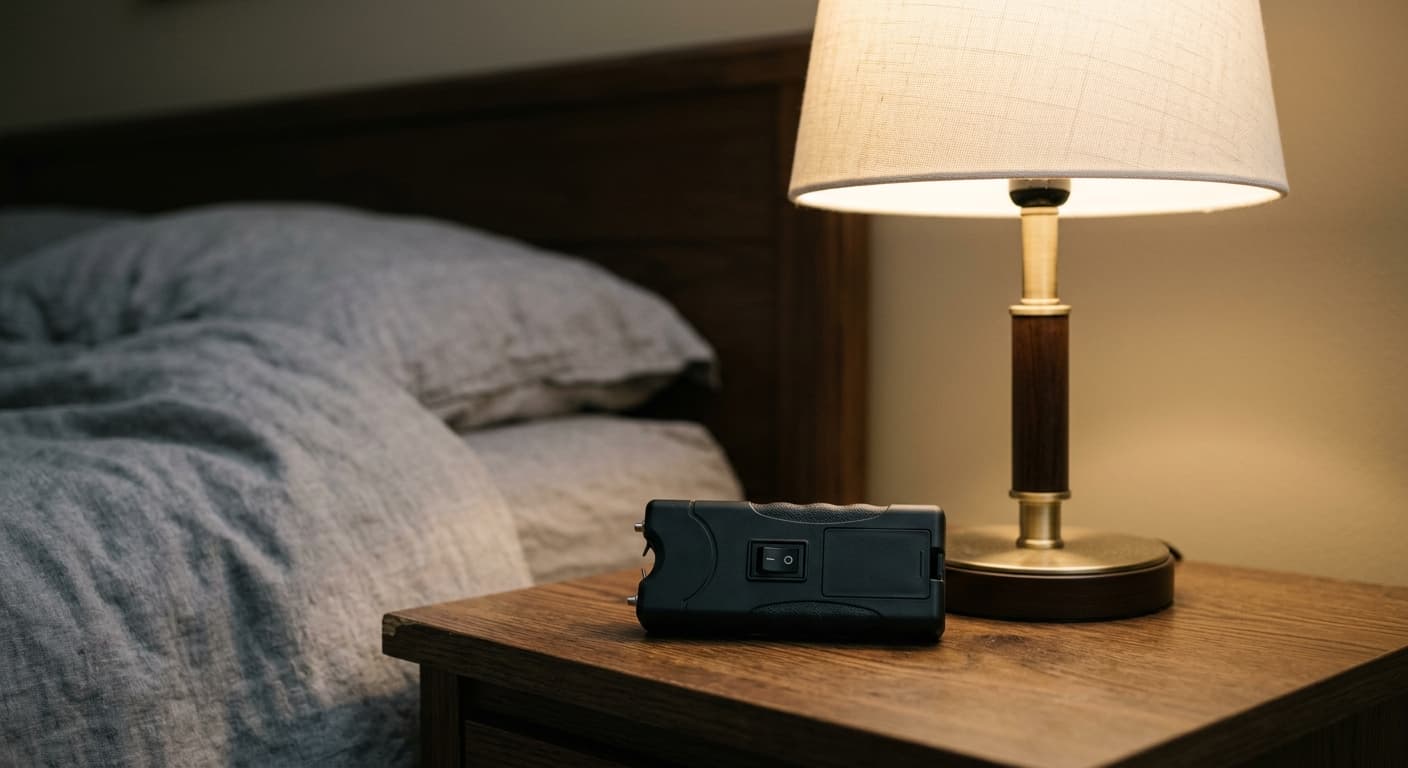
Pepper spray and stun guns are both legal in Alabama for personal self-defense, and state law places no permit, age floor, or purchase restriction on owning or carrying either device. Alabama's weapons statutes do not regulate ordinary possession of a defense spray or an electronic weapon at all; the one state law that names pepper spray, Code of Alabama 1975 § 13A-6-27, criminalizes using one as a weapon against another person during a crime or against a law enforcement officer on duty, not buying, owning, or carrying it. No Alabama statute defines or restricts a stun gun, electric weapon, or taser by name, and no statute preempts a city or county from regulating either device by local ordinance.
Jurisdiction scope: This page covers Alabama state law only, principally Code of Alabama 1975 §§ 13A-6-27, 13A-6-21, 13A-1-2, 13A-11-72, 13A-11-92, 13A-11-61.3, 16-1-24.1, and Title 13A, Article 4 (the state's weapons chapter, §§ 13A-11-50 through 13A-11-98). It does not cover Alabama's concealed-pistol permit statutes in detail.
Is pepper spray legal in Alabama?
Yes. Alabama has no statute that restricts buying, owning, or carrying pepper spray, mace, or any other self-defense chemical spray. The state's weapons chapter, Title 13A, Article 4, contains no age minimum, no capacity or formula limit, no permit requirement, and no felon-specific possession ban for a defense spray; its provisions cover concealed pistols, brass knuckles, and similar items instead.

The only Alabama statute that names pepper spray directly is Code of Alabama 1975 § 13A-6-27, "Use of Pepper Spray, Etc.," and it reaches misuse, not possession: "The crime of criminal use of a defense spray is committed if the perpetrator uses a defense spray including, but not limited to pepper spray, foam and any other self-defense chemical spray against another person in the commission of a crime or against a law enforcement officer while the law enforcement officer is performing his or her official duties." Criminal use of a defense spray under this section is a Class C felony. The statute has not been amended since it was enacted in 1998.
Is a stun gun legal in Alabama?
Yes, and more completely than pepper spray: no Alabama statute defines or restricts a stun gun, electric weapon, or taser at all. Title 13A, Article 4's full list of weapons provisions covers carrying a concealed weapon, carrying a pistol on private property, brass knuckles and slingshots, rifle or shotgun walking canes, selling a pistol or Bowie knife to a minor, dealer licensing, and permits to carry a pistol, among other firearm-focused rules, but none of them mentions an electronic or stun weapon. That silence is consistent with how Alabama treats the device: legal to buy, own, and carry, with no state license and no statutory age floor.
Because no dedicated statute exists, misuse of a stun gun is prosecuted under Alabama's general assault and dangerous-instrument law rather than a device-specific offense. Alabama's dangerous-instrument definition, Code of Alabama 1975 § 13A-1-2(5), covers "any instrument, article, or substance which, under the circumstances in which it is used, attempted to be used, or threatened to be used, is highly capable of causing death or serious physical injury." Assault in the second degree, § 13A-6-21(a)(2)-(3), is committed by causing physical injury to another, with intent, by means of a deadly weapon or a dangerous instrument, or by recklessly causing serious physical injury by the same means, a Class C felony. A stun gun used to injure someone can qualify as a dangerous instrument under that functional test and support this charge, even though it is not itself a regulated weapon under Alabama's weapons chapter. Act 2026-370 amended § 13A-6-21 effective October 1, 2026; the amended text keeps subdivisions (a)(2) and (a)(3) as described above.
Restricted places and penalties
Alabama has no statewide statute barring pepper spray or a stun gun from a specific location by name, the way it restricts firearms in several settings. Two firearm-specific place statutes genuinely do not reach either device: § 13A-11-59, which bars possessing a "firearm" at or near a public demonstration, defines "firearm" in subsection (a)(2) as "[a]ny pistol, rifle, shotgun or firearm of any kind, whether loaded or not"; and § 13A-11-61.2, which bars possessing a "firearm" in a courthouse, jail, psychiatric facility, and similar locations, is written around "firearm" and "pistol" throughout. Neither reaches a chemical spray or an electronic device.

Alabama's school-premises felony, § 13A-11-72(d)(1), is a closer question. Subject to the exceptions in § 13A-11-74, it makes it a Class C felony to knowingly, with intent to do bodily harm, carry or possess a "deadly weapon" on the premises of a school, defined at § 13A-11-72(h)(5) to mean a school composed of grades K-12, including a school bus; § 13A-11-72(e) exempts authorized school security personnel and resource officers, law enforcement officers, and a person with a permit issued under § 13A-11-75. "Deadly weapon" is defined at § 13A-11-72(h)(2): "a firearm or anything manifestly designed, made, or adapted for the purposes of inflicting death or serious physical injury, and the term includes, but is not limited to, a bazooka, hand grenade, missile, or explosive or incendiary device; a pistol, rifle, or shotgun; or a switch-blade knife, gravity knife, stiletto, sword, or dagger; or any club, baton, billy, black-jack, bludgeon, or metal knuckles." That "includes, but is not limited to" language means the list is illustrative, not exhaustive. Pepper spray and a stun gun are absent from the named examples, but the operative test is the open functional clause, whether the device is "manifestly designed, made, or adapted" to inflict death or serious injury, and the statute's text does not resolve that question for either device.
Two other statutes reach "weapons" more broadly than firearms on and around a school or campus. § 13A-11-92(a) lets the governing body of a public two-year or four-year college or university "adopt policies governing the possession of firearms or other weapons on grounds owned or controlled by the institution," language that can reach a stun gun or a chemical spray, even though the statute's mandatory vehicle-carry protection in subsection (b) is written for a firearm only. § 16-1-24.1(a) requires the State Board of Education and every local school board to adopt a discipline plan addressing students or others who bring "illegal drugs, alcohol, or weapons" onto a school campus, and § 16-1-24.1(b)(1) requires a principal to notify law enforcement of a weapons-policy violation, an administrative layer separate from and broader than § 13A-11-72(d)'s own intent-to-harm felony.
No Alabama statute preempts a city or county from regulating pepper spray or a stun gun by local ordinance. Alabama's firearms-preemption statute, § 13A-11-61.3(a), occupies the field only for "firearms, ammunition, and firearm accessories," and § 13A-11-61.3(b)(4) cross-references "the same meaning as in Section 13A-8-1(4)" for "firearm"; the Legislature has not updated that cross-reference since Act 2016-109 renumbered the definitions in § 13A-8-1, so "firearm" now sits at § 13A-8-1(5), "a weapon from which a shot is discharged by gunpowder," one subdivision after the cross-reference points, while § 13A-8-1(4) itself now defines "financial institution." Neither term reaches a chemical spray or an electronic device, so an Alabama municipality remains free to adopt its own ordinance for either.
Penalties that apply directly to these devices in Alabama are narrow: criminal use of a defense spray against a person during a crime, or against an on-duty law enforcement officer, is a Class C felony under § 13A-6-27. There is no equivalent dedicated penalty statute for a stun gun; misuse is charged as assault in the second degree under § 13A-6-21 when the dangerous-instrument or deadly-weapon element is met, a section Act 2026-370 amended effective October 1, 2026.
Federal law: what it does and does not reach
No federal statute regulates a civilian's purchase or possession of pepper spray or a stun gun. Federal law matters in three places.
Federal buildings. Under 18 U.S.C. § 930(a), whoever knowingly possesses or causes to be present "a firearm or other dangerous weapon in a Federal facility (other than a Federal court facility)" faces a fine, imprisonment of up to 1 year, or both. Subsection (e) sets up to 2 years for a federal court facility, and subsection (b) up to 5 years where the weapon is intended to be used in a crime. Section 930(g)(2) defines the term:
The term "dangerous weapon" means a weapon, device, instrument, material, or substance, animate or inanimate, that is used for, or is readily capable of, causing death or serious bodily injury, except that such term does not include a pocket knife with a blade of less than 2½ inches in length.
The definition names neither device. Whether a particular spray or stun gun is "readily capable of" causing serious bodily injury is a question of fact the statute does not answer. Subsection (d)(3) exempts "the lawful carrying of firearms or other dangerous weapons in a Federal facility incident to hunting or other lawful purposes," and subsection (h) requires notice of the ban to be posted at each public entrance. A "Federal facility" is "a building or part thereof owned or leased by the Federal Government, where Federal employees are regularly present for the purpose of performing their official duties."
Air travel. The Transportation Security Administration's screening rules, which are agency policy rather than statute, bar both devices from carry-on bags. One 4 fl. oz. (118 ml) container of mace or pepper spray is permitted in checked baggage if it has a safety mechanism to prevent accidental discharge, and sprays containing more than 2 percent by mass of tear gas (CS or CN) are prohibited in checked baggage. Tasers, stun guns and other electro-shock weapons may travel in checked baggage only if transported so the device cannot discharge accidentally. Airlines may set stricter rules.
National parks. National Park Service regulations prohibit possessing, carrying or using a "weapon" in a park area except as the regulations provide (36 CFR 2.4(b)(1)). 36 CFR 1.4 defines "weapon" to include an "irritant gas device" and any "weapon the possession of which is prohibited under the laws of the State in which the park area or portion thereof is located."
Disclaimer: This article provides general legal information about Alabama's pepper spray and stun gun laws as of September 2026. It is not legal advice. Consult a lawyer licensed in Alabama for advice about a specific situation.
For a state-by-state comparison, see pepper spray and stun gun laws by state. Alabama's self-defense statutes are covered separately on the Alabama self-defense laws page.
Statutes cited reflect their in-force version as of 2026-09-19. Code of Alabama 1975 § 13A-6-21 was amended by Act 2026-370, effective October 1, 2026. Last updated: 2026-10-01.
Frequently Asked Questions
Is pepper spray legal to carry in Alabama?
Yes. Alabama has no statute restricting who can buy, own, or carry pepper spray, and there is no age minimum, permit requirement, or size cap in state law. The only statute naming pepper spray, Code of Alabama 1975 13A-6-27, criminalizes using it against a person during a crime or against an on-duty law enforcement officer, a Class C felony; it does not restrict ordinary carrying.
Is a stun gun legal in Alabama?
Yes. No Alabama statute defines or restricts a stun gun, electric weapon, or taser. The state's weapons chapter (Title 13A, Article 4) has no permit, age, or possession requirement for one. Misusing a stun gun to injure someone can still be prosecuted as assault in the second degree under Alabama's general dangerous-instrument standard.
Do you need a permit to buy pepper spray or a stun gun in Alabama?
No. Alabama does not require a permit or license to purchase, own, or carry either a defense spray or a stun gun.
Can pepper spray or a stun gun be carried on Alabama school grounds?
Alabama's school-weapons felony, 13A-11-72(d), bars knowingly carrying a 'deadly weapon' on school premises with intent to do bodily harm. That term is defined openly, not as a closed list, so whether it reaches pepper spray or a stun gun depends on the underlying functional test, whether the device is manifestly designed to inflict death or serious injury, which the statute's text does not resolve. Separately, 13A-11-92 lets a public college adopt its own policy on 'firearms or other weapons,' and 16-1-24.1 requires K-12 school boards to address 'weapons' generally, both broader than the felony statute's own list.
What happens if you use pepper spray or a stun gun to hurt someone in Alabama?
Using a defense spray against a person during a crime, or against an on-duty law enforcement officer, is a Class C felony under 13A-6-27. Using a stun gun to injure someone can be charged as assault in the second degree under 13A-6-21(a)(2)-(3), also a Class C felony, when the device meets Alabama's 'dangerous instrument' definition at 13A-1-2(5). Act 2026-370 amended 13A-6-21 effective October 1, 2026.
Can an Alabama city or county ban pepper spray or stun guns?
Alabama's firearms-preemption statute, 13A-11-61.3, occupies the field only for firearms, ammunition, and firearm accessories, so nothing in state law stops a city or county from adopting its own ordinance regulating pepper spray or a stun gun.
Updates
Independently fact-checked against the cited primary sources
The Law Behind This Article
This article rests on the statutory provisions below, held in our own legal record and retrieved from the official source. Tap a section to read the operative text.
Code of Alabama 1975, Title 13A: Criminal Code.
§ 13A-1-2Definitions.In forcecited in 2 of our articles
Unless different meanings are expressly specified in subsequent provisions of this title, the following terms shall have the following meanings: (1) BOOBY TRAP. Any concealed or camouflaged device designed to cause bodily injury when triggered by any action of a person making contact with the device. This term includes guns, ammunition, or explosive devices attached to trip wires or other triggering mechanisms, sharpened stakes, nails, spikes, electrical devices, lines or wires with hooks attached, and devices for the production of toxic fumes or gases. (2) BURDEN OF INJECTING THE ISSUE. The term means that the defendant must offer some competent evidence relating to all matters subject to the burden, except that the defendant may rely upon evidence presented by the prosecution in meeting the burden. (3) CLANDESTINE LABORATORY OPERATION. Any of the following: a. Purchase or procurement of chemicals, supplies, equipment, or laboratory location for the unlawful manufacture of controlled substances. b. Transportation or arranging for the transportation of chemicals, supplies, or equipment for the unlawful manufacture of controlled substances. c.
Official text (excerpt) · last checked 2026-07-29 · Read the full text in our law library · Verify at alison.legislature.state.al.us
Cited in 38 court opinions in our collectionLatest citing opinion in our collection: 2024
Opinions citing this section in our collection:
- Harris v. State (Court of Criminal Appeals of Alabama 2003, 873 So. 2d 1171)“…ceptible of producing death or serious injury.' Commentary, Ala.Code 1975, § 13A-1-2(11).[ [3] ] Included in that list are v…”
- Minshew v. State (Court of Criminal Appeals of Alabama 1988, 542 So. 2d 307)“…commit "a crime." A crime is "[a] misdemeanor or a felony." Ala.Code 1975 § 13A-1-2(5). While we recognize that the Comment…”
- Webb v. State (Court of Criminal Appeals of Alabama 1988, 539 So. 2d 343)“…year's duration." Ala. Code (1975), § 14-8-30. Compare Ala. Code §§ 13A-1-2(3) (offense punishable by less than one…”
Identified automatically from the court opinions citing this section — not a ranking of which case controls.
Also relied on in: Alabama Knife Laws (2026): What Is Legal to Carry
§ 13A-11-59Possession of Firearms by Persons Participating In, Attending, Etc., Demonstrations at Public Places.In force
(a) For the purposes of this section, the following words and phrases shall have the meanings respectively ascribed to them in this subsection, except in those instances where the context clearly indicates a different meaning: (1) DEMONSTRATION. Demonstrating, picketing, speechmaking or marching, holding of vigils and all other like forms of conduct which involve the communication or expression of views or grievances engaged in by one or more persons, the conduct of which has the effect, intent or propensity to draw a crowd or onlookers. Such term shall not include casual use of property by visitors or tourists which does not have an intent or propensity to attract a crowd or onlookers. (2) FIREARM. Any pistol, rifle, shotgun or firearm of any kind, whether loaded or not. (3) LAW ENFORCEMENT OFFICER.
Official text (excerpt) · last checked 2026-07-29 · Read the full text in our law library · Verify at alison.legislature.state.al.us
§ 13A-11-61.2Possession of Firearms in Certain Places.In force
(a) In addition to any other place limited or prohibited by state or federal law, a person, including a person with a permit issued under Section 13A-11-75 or recognized under Section 13A-11-85, may not knowingly possess or carry a firearm in any of the following places without the express permission of a person or entity with authority over the premises: (1) Inside the building of a police, sheriff, or highway patrol station. (2) Inside or on the premises of a prison, jail, halfway house, community corrections facility, or other detention facility for those who have been charged with or convicted of a criminal or juvenile offense. (3) Inside a facility that provides inpatient or custodial care of those with psychiatric, mental, or emotional disorders. (4)a. Inside a courthouse, courthouse annex, a building in which a district attorney’s office is located, a building in which a county commission or city council is currently having a regularly scheduled or specially called meeting, or the primary office of any elected official. b. For purposes of this subdivision, “courthouse annex” means either of the following: 1.
Official text (excerpt) · last checked 2026-07-29 · Read the full text in our law library · Verify at alison.legislature.state.al.us
§ 13A-11-61.3Regulation of Firearms, Ammunition, and Firearm Accessories.In force
(a) The purpose of this section is to establish within the Legislature complete control over regulation and policy pertaining to firearms, ammunition, and firearm accessories in order to ensure that such regulation and policy is applied uniformly throughout this state to each person subject to the state’s jurisdiction and to ensure protection of the right to keep and bear arms recognized by the Constitutions of the State of Alabama and the United States. This section is to be liberally construed to accomplish its purpose. (b) For the purposes of this section, the following words shall have the following meanings: (1) AMMUNITION. Fixed cartridge ammunition, shotgun shells, the individual components of fixed cartridge ammunition and shotgun shells, projectiles for muzzle-loading firearms, and any propellant used in firearms or ammunition. (2) EXPRESSLY AUTHORIZED BY A STATUTE OF THIS STATE. The authority of a political subdivision to regulate firearms, ammunition, or firearm accessories that is granted by a duly enacted state law that specifically mentions firearms, a particular type of firearm, ammunition, or a particular type of ammunition. (3) FIREARM ACCESSORY.
Official text (excerpt) · last checked 2026-07-29 · Read the full text in our law library · Verify at alison.legislature.state.al.us
§ 13A-11-72Certain Persons Forbidden to Possess Firearm.In forcecited in 3 of our articles
(a)(1) A person may not own a firearm or have a firearm in his or her possession or under his or her control if any of the following apply: a. The person has been convicted in this state or elsewhere of any kind of felony offense within the previous five years. b. The person has been convicted in this state or elsewhere of three or more felony offenses of any kind at any time; provided the felony offense convictions used to support a charge under this paragraph each arose from a different indictment or complaint or otherwise arose on a different date of charge. c. The person has been convicted in this state or elsewhere of committing or attempting to commit a crime of violence as defined in Section 13A-11-70, misdemeanor offense of domestic violence as defined in subsection (h), or a violent offense as defined in Section 12-25-32. d. The person is subject to a valid protection order for domestic abuse. e. The person is of unsound mind. (2) A violation of this subsection is a Class C felony.
Official text (excerpt) · last checked 2026-09-23 · Read the full text in our law library · Verify at alison.legislature.state.al.us
Cited in 21 court opinions in our collectionLatest citing opinion in our collection: 2024
Opinions citing this section in our collection:
- Ingram v. State (Court of Criminal Appeals of Alabama 1993, 629 So. 2d 800)“…icted of the illegal possession of a pistol in violation of Ala. Code 1975, § 13A-11-72 (a), and was sentenced to five years' i…”
- Ex Parte Johnson (Supreme Court of Alabama 1993, 620 So. 2d 665)“…Cr. App. 1991) affirming his conviction for a violation of Ala. Code 1975, § 13A-11-72 (a). That section prohibits a person wh…”
- Ex parte Madison County Department of Human Resources PETITION FOR WRIT OF MANDAMUS (In re: In the matter of D.W.) (Madison Juvenile Court: JU-21-454.02) (Court of Civil Appeals of Alabama 2024)“…th "certain persons forbidden to possess [a] firearm." See Ala. Code 1975, § 13A-11-72. She testified that she would not cons…”
Identified automatically from the court opinions citing this section — not a ranking of which case controls.
Also relied on in: Alabama Restraining Order Laws (2026): How to Get a Protection from Abuse Order
§ 13A-11-92Adoption If Policies Governing the Possession of Firearms or Other Weapons on Grounds Owned or Controlled by a Two-Year or Four-Year Institution of Higher Education.In force
(a) Notwithstanding any provision of state law to the contrary, the governing body of each two-year or four-year institution of higher education may adopt policies governing the possession of firearms or other weapons on grounds owned or controlled by the institution. The governing body may not adopt a policy in conflict with federal law. (b) A policy adopted under subsection (a) shall allow for individuals not otherwise prohibited from possession of a firearm by state or federal law to possess a firearm and ammunition for that firearm in the individual’s privately owned motor vehicle while parked or operated on the grounds of the institution; provided, that the individual satisfies all of the following conditions: (1) If the firearm is a pistol, the individual is not generally prohibited from possession of a pistol by state or federal law. (2) If the firearm is any firearm legal for use for hunting in Alabama other than a pistol: a. The individual possesses a valid Alabama hunting license. b. The firearm is unloaded at all times on the grounds. c. It is during a season in which hunting is permitted by Alabama law or regulation. d.
Official text (excerpt) · last checked 2026-07-29 · Read the full text in our law library · Verify at alison.legislature.state.al.us
§ 13A-6-21Assault in the Second Degree. (Amended by Act 2026-370)In force
AMENDED BY ACT 2026-370, EFFECTIVE OCTOBER 1, 2026. SEE ACT FOR REVISED LANGUAGE. (a) A person commits the crime of assault in the second degree if the person does any of the following: (1) With intent to cause serious physical injury to another person, he or she causes serious physical injury to any person. (2) With intent to cause physical injury to another person, he or she causes physical injury to any person by means of a deadly weapon or a dangerous instrument. (3) He or she recklessly causes serious physical injury to another person by means of a deadly weapon or a dangerous instrument. (4)a. With intent to prevent a peace officer, as defined in Section 36-21-60, a detention or correctional officer at any municipal or county jail or state penitentiary, emergency medical personnel, a utility worker, or a firefighter from performing a lawful duty, he or she intends to cause physical injury and he or she causes physical injury to any person. b.
Official text (excerpt) · last checked 2026-07-29 · Read the full text in our law library · Verify at alison.legislature.state.al.us
Cited in 32 court opinions in our collectionLatest citing opinion in our collection: 2026
Opinions citing this section in our collection:
- Stewart v. State (Court of Criminal Appeals of Alabama 1981, 405 So. 2d 402)“…degree under any of the alternative categories listed under Ala. Code § 13A-6-21 (Supp. 1977). We, again, disagree with…”
- Ex Parte Cobb (Supreme Court of Alabama 1996, 703 So. 2d 871)“…nally inflicting serious physical injury on another person. Ala. Code 1975, § 13A-6-21(a)(1). This section does not mention th…”
- Brock v. State (Court of Criminal Appeals of Alabama 1989, 555 So. 2d 285)“…d degree assault of officer Bettina Carter, in violation of Ala. Code 1975, § 13A-6-21 . The defendant was found guilty of the…”
Identified automatically from the court opinions citing this section — not a ranking of which case controls.
§ 13A-6-27Use of Pepper Spray, Etc.In force
(a) The crime of criminal use of a defense spray is committed if the perpetrator uses a defense spray including, but not limited to pepper spray, foam and any other self-defense chemical spray against another person in the commission of a crime or against a law enforcement officer while the law enforcement officer is performing his or her official duties. (b) Criminal use of a defense spray is a Class C felony.
Official text (excerpt) · last checked 2026-07-29 · Read the full text in our law library · Verify at alison.legislature.state.al.us
Code of Alabama 1975, Title 16: Education.
§ 16-1-24.1Safe School and Drug-Free School Policy; Treatment of Policy Violators; Promulgation and Distribution of Discipline Policy; Liability Limited for Discipline Actions; Local Boards May Adopt More Stringent Guidelines.In force
(a) The Legislature finds a compelling public interest in ensuring that schools are made safe and drug-free for all students and school employees. The Legislature finds the need for a comprehensive safe school and drug-free school policy to be adopted by the State Board of Education. This policy should establish minimum standards for classes of offenses and prescribe uniform minimum procedures and penalties for those who violate the policies. It is the intent of the Legislature that our schools remain safe and drug-free for all students and school employees. The State Board of Education shall adopt and all local boards of education shall uniformly enforce policies that protect all students and school employees. The State Board of Education shall require local school systems to modify their policies, practices, or procedures so as to ensure a safe school environment free of illegal drugs, alcohol, or weapons. Any rules adopted by the State Board of Education pursuant to this section shall be exempt from Section 41-22-3(3).
Official text (excerpt) · last checked 2026-07-29 · Read the full text in our law library · Verify at alison.legislature.state.al.us
Cited in 4 court opinions in our collectionLatest citing opinion in our collection: 2022
Opinions citing this section in our collection:
- Carroll v. Hammett (Supreme Court of Alabama 1999, 744 So. 2d 906)“…o discretionary-function immunity because, he argues, under Ala. Code 1975, § 16-1-24.1 (b), Hammett was required to notify law…”
- United States v. Lopez (Supreme Court of the United States 1995, 514 U.S. 549)“…pension or expulsion of gun-toting students, see, e. g., Ala. Code § 16-1-24.1 (Supp. 1994); Ind. Code § 20-8.1-5 -4…”
- Hammock Ex Rel. Hammock v. Keys (District Court, S.D. Alabama 2000, 93 F. Supp. 2d 1222)“…urpose is “a compelling public interest.” See Ala. Code § 16-1-24.1 . Suspension and expulsion of a student…”
Identified automatically from the court opinions citing this section — not a ranking of which case controls.
Code of Federal Regulations Title 36
§ 1.4What terms do I need to know?In forcecited in 53 of our articles
(a) The following definitions shall apply to this chapter, unless modified by the definitions for a specific part or regulation: Abandonment means the voluntary relinquishment of property with no intent to retain possession. Administrative activities means those activities conducted under the authority of the National Park Service for the purpose of safeguarding persons or property, implementing management plans and policies developed in accordance and consistent with the regulations in this chapter, or repairing or maintaining government facilities. Airboat means a vessel that is supported by the buoyancy of its hull and powered by a propeller or fan above the waterline. This definition should not be construed to mean a “hovercraft,” that is supported by a fan-generated air cushion. Aircraft means a device that is used or intended to be used for human flight in the air, including powerless flight. Archeological resource means material remains of past human life or activities that are of archeological interest and are at least 50 years of age.
Official text (excerpt) · last checked 2026-07-28 · Read the full text in our law library · Verify at ecfr.gov
Cited in 34 court opinions in our collectionLatest citing opinion in our collection: 2026
Opinions citing this section in our collection:
- WildEarth Guardians v. National Park Service (Court of Appeals for the Tenth Circuit 2013, 703 F.3d 1178)“…collect, kill, wound, or attempt to do any of the above.” 36 C.F.R. § 1.4(a). WildEarth argues that because NPS…”
- Nature v. United States (District Court, E.D. California 2017, 250 F. Supp. 3d 634)“…ent, historic, parkway, recreational, or other purposes. 36 C.F.R. § 1.4 . Nature argues that the El Portal Admi…”
- United States v. Knauer (District Court, E.D. New York 2010, 707 F. Supp. 2d 379)“…ng or attempting to take wildlife, except trapping. 36 C.F.R. § 1.4 (a) (in relevant part, reordered for cl…”
Identified automatically from the court opinions citing this section — not a ranking of which case controls.
Also relied on in: Knife Laws by State (2026): Carry Rules, Blade Limits, Penalties, Pepper Spray and Stun Gun Laws by State (2026), Alaska Pepper Spray and Stun Gun Laws (2026)
§ 2.4Weapons, traps and nets.In forcecited in 53 of our articles
(a) None of the provisions in this section or any regulation in this chapter may be enforced to prohibit an individual from possessing a firearm, including an assembled or functional firearm, in any National Park System unit if: (1) The individual is not otherwise prohibited by law from possessing the firearm; and (2) The possession of the firearm is in compliance with the law of the State in which the National Park System unit is located. (b)(1) Except as otherwise provided in this section and parts 7 (special regulations) and 13 (Alaska regulations), the following are prohibited: (i) Possessing a weapon, trap or net (ii) Carrying a weapon, trap or net (iii) Using a weapon, trap or net (2) Weapons, traps or nets may be carried, possessed or used: (i) At designated times and locations in park areas where: (A) The taking of wildlife is authorized by law in accordance with § 2.2 of this chapter; (B) The taking of fish is authorized by law in accordance with § 2.3 of this part. (ii) When used for target practice at designated times and at facilities or locations designed and constructed specifically for this purpose and designated pursuant to special regulations.
Official text (excerpt) · last checked 2026-07-28 · Read the full text in our law library · Verify at ecfr.gov
Cited in 26 court opinions in our collectionLatest citing opinion in our collection: 2024
Opinions citing this section in our collection:
- United States v. Masciandaro (Court of Appeals for the Fourth Circuit 2011, 638 F.3d 458)“…motor vehicle within a national park area, in violation of 36 C.F.R. § 2.4(b). He challenges his con- viction on t…”
- Brady Campaign to Prevent Gun Violence v. Salazar (District Court, District of Columbia 2009, 612 F. Supp. 2d 1)“…eady use.” 48 Fed.Reg. 30,252 (June 30, 1983), codified at 36 C.F.R. § 2.4 (a)(2). A similar regulation applied to…”
- United States v. Otis Lofton, United States of America v. Otis Lofton (Court of Appeals for the Fourth Circuit 2000, 233 F.3d 313)“…l Park Service. See 36 C.F.R. § 1.2 (2000); 36 C.F.R. § 2.4 (2000). Lofton’s conviction was affirm…”
Identified automatically from the court opinions citing this section — not a ranking of which case controls.
Also relied on in: Pennsylvania Pepper Spray and Stun Gun Laws (2026), Arizona Pepper Spray and Stun Gun Laws (2026), Arkansas Pepper Spray and Stun Gun Laws (2026)
United States Code Title 18
§ 930Possession of firearms and dangerous weapons in Federal facilitiesIn forcecited in 55 of our articles
Except as provided in subsection (d), whoever knowingly possesses or causes to be present a firearm or other dangerous weapon in a Federal facility (other than a Federal court facility), or attempts to do so, shall be fined under this title or imprisoned not more than 1 year, or both. Whoever, with intent that a firearm or other dangerous weapon be used in the commission of a crime, knowingly possesses or causes to be present such firearm or dangerous weapon in a Federal facility, or attempts to do so, shall be fined under this title or imprisoned not more than 5 years, or both. A person who kills any person in the course of a violation of subsection (a) or (b), or in the course of an attack on a Federal facility involving the use of a firearm or other dangerous weapon, or attempts or conspires to do such an act, shall be punished as provided in sections 1111, 1112, 1113, and 1117.
Official text (excerpt) · last checked 2026-07-28 · Read the full text in our law library · Verify at uscode.house.gov
Cited in 90 court opinions in our collectionLatest citing opinion in our collection: 2026
Opinions citing this section in our collection:
- United States v. Odeh (Court of Appeals for the Second Circuit 2008, 552 F.3d 93)“…f an attack on a U.S. facility in Nairobi, in violation of 18 U.S.C. § 930 (c) (Counts 9-221); murder of U.S. offi…”
- Kawaljeet Tagore v. USA (Court of Appeals for the Fifth Circuit 2013, 735 F.3d 324)“…statutory ban on weapons with blades exceeding 2.5 inches. 18 U.S.C. § 930(a), (g)(2).…”
- Heller v. District of Columbia (Court of Appeals for the D.C. Circuit 2015, 801 F.3d 264)“…universally prohibited from possessing firearms. See, e.g., 18 U.S.C. § 930(a), (g)(1) (unlawful to “knowingly poss…”
Identified automatically from the court opinions citing this section — not a ranking of which case controls.
Also relied on in: Idaho Knife Laws (2026): Carry, Blade Length, Preemption, North Dakota Knife Laws (2026): The 6-Inch Rule and Licensing, California Pepper Spray and Stun Gun Laws (2026)
Search our full record of US law — 2.1 million sections, every state + federal →
Sources and References
- Code of Alabama 1975 13A-6-27 - Use of Pepper Spray, Etc. (criminal use of a defense spray, Class C felony)(alison.legislature.state.al.us).gov
- Code of Alabama 1975 Title 13A, Article 4 - Firearms and Weapons (13A-11-50 through 13A-11-98, no stun gun or electronic weapon provision)(alison.legislature.state.al.us).gov
- Code of Alabama 1975 13A-1-2 - Definitions (dangerous instrument, deadly weapon)(alison.legislature.state.al.us).gov
- Code of Alabama 1975 13A-6-21 - Assault in the Second Degree (deadly weapon or dangerous instrument, Class C felony; amended by Act 2026-370 effective October 1, 2026)(alison.legislature.state.al.us).gov
- Code of Alabama 1975 13A-11-72 - Certain Persons Forbidden to Possess Firearm (subsection (d), deadly weapon on school premises, Class C felony; (h)(2) deadly weapon definition)(alison.legislature.state.al.us).gov
- Code of Alabama 1975 13A-11-59 - Possession of Firearms at Demonstrations (firearm defined as pistol/rifle/shotgun only)(alison.legislature.state.al.us).gov
- Code of Alabama 1975 13A-11-61.2 - Possession of Firearms in Certain Places (courthouse, jail, psychiatric facility)(alison.legislature.state.al.us).gov
- Code of Alabama 1975 13A-11-92 - Higher-education institution policies on firearms or other weapons(alison.legislature.state.al.us).gov
- Code of Alabama 1975 16-1-24.1 - Safe School and Drug-Free School Policy (weapons discipline plan)(alison.legislature.state.al.us).gov
- Code of Alabama 1975 13A-11-61.3 - Regulation of Firearms, Ammunition, and Firearm Accessories (state preemption limited to firearms)(alison.legislature.state.al.us).gov
- 18 U.S.C. § 930 - Possession of firearms and dangerous weapons in Federal facilities(law.cornell.edu)
- Transportation Security Administration - What Can I Bring? Pepper Spray(tsa.gov).gov
- Transportation Security Administration - What Can I Bring? Stun Guns/Shocking Devices(tsa.gov).gov
- 36 CFR 1.4 - National Park Service definitions (weapon)(ecfr.gov).gov
- 36 CFR 2.4 - Weapons, traps and nets(ecfr.gov).gov