
New Hampshire
New Hampshire Landlord-Tenant Recording Laws
Independently fact-checked against primary sources (last audited August 22, 2026). · Reviewed by the RecordingLaw editorial team. · Law checked current as of August 22, 2026. · 8 primary sources cited on this page. How we verify our legal content
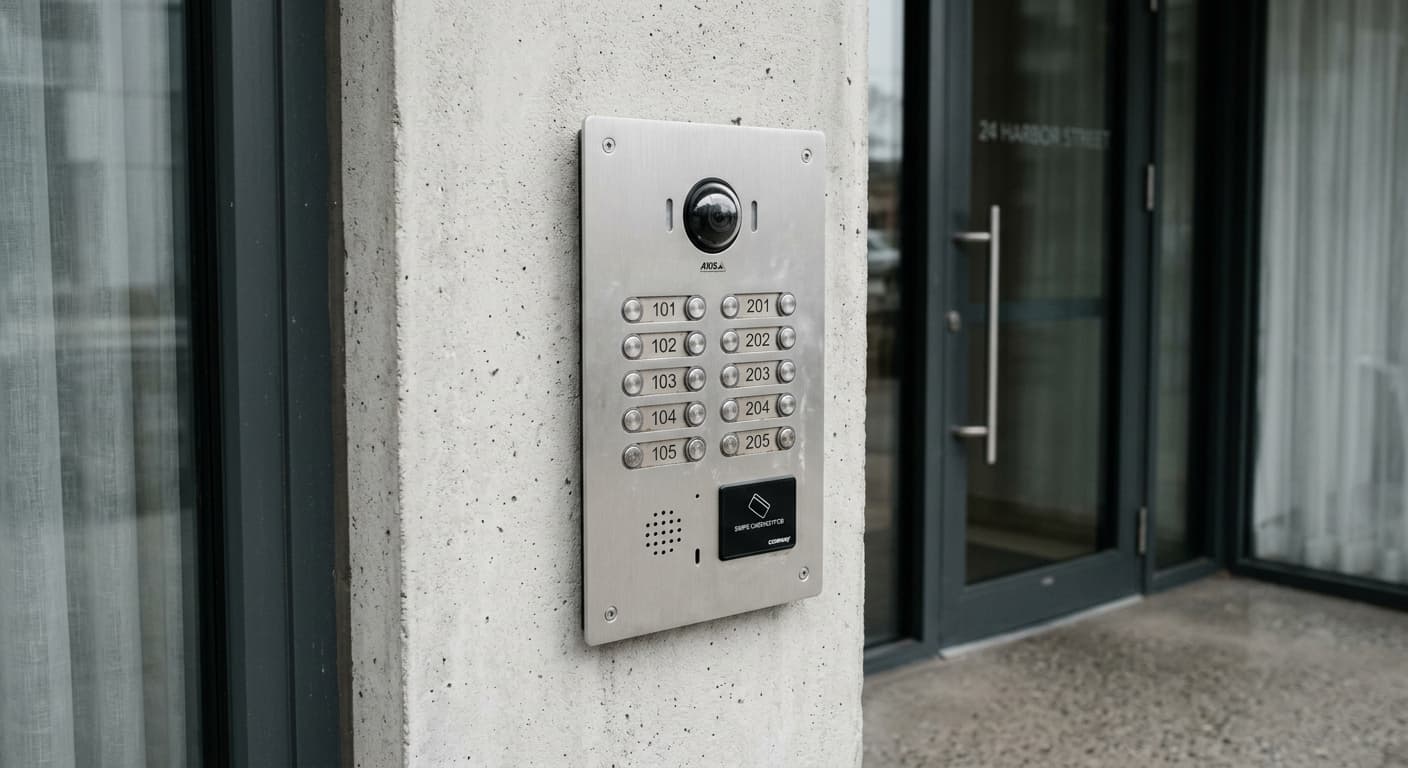
New Hampshire requires all-party consent before recording any conversation, so neither landlords nor tenants may secretly record each other under RSA 570-A:2. Landlords cannot place recording devices inside a rental unit, and hidden cameras in bedrooms or bathrooms violate RSA 644:9.
The landlord-tenant relationship in New Hampshire creates frequent situations where one party wants to record the other, whether to document repair requests, lease violations, disputes over security deposits, or confrontational interactions. However, the Granite State's strict all-party consent wiretapping law applies with full force to landlord-tenant communications, making secret recordings a criminal offense for both parties.
This guide covers the legal rules for recording in landlord-tenant contexts, including conversations, property inspections, security cameras in rental properties, tenant surveillance concerns, and legal alternatives to recording.
All-Party Consent in the Landlord-Tenant Context
The Basic Rule
Under RSA 570-A:2, it is illegal to intercept any telecommunication or oral communication without consent from all parties. This applies equally to landlords and tenants:
- Tenants cannot secretly record conversations with their landlord, property manager, or maintenance workers
- Landlords cannot secretly record conversations with tenants, prospective tenants, or tenant guests
- Phone calls between landlords and tenants cannot be recorded without all-party consent
- In-person conversations during property showings, inspections, or lease discussions require consent from everyone present before recording
The two-tier criminal penalty system applies. A participant who knowingly records their own conversation without consent faces a misdemeanor under RSA 570-A:2, I-a. RSA 570-A:2, I-a does not itself set a penalty class: under RSA 625:9, it defaults to a Class B misdemeanor (no jail, up to a $1,200 fine) unless the State elects Class A treatment before arraignment or a violence element applies, raising the maximum to 1 year in jail and a $2,000 fine under RSA 651:2. A person who willfully intercepts a conversation they are not part of faces a Class B felony under RSA 570-A:2, I (up to 7 years, $4,000 fine per RSA 651:2).
Why Tenants Want to Record
Tenants commonly want to record interactions with landlords for several reasons:
- Documenting repair requests that the landlord verbally promised to address
- Preserving evidence of harassment or intimidation by the landlord
- Recording property condition during move-in and move-out inspections
- Capturing verbal agreements about lease terms, rent adjustments, or deposit returns
- Documenting unsafe conditions that the landlord refuses to address
While these motivations are understandable, secret audio recording is not a legal solution in New Hampshire. The state provides other legal mechanisms to protect tenant rights.
Why Landlords Want to Record
Landlords may also be tempted to record tenant interactions:
- Documenting lease violations such as unauthorized pets, noise complaints, or property damage
- Recording property inspections to preserve evidence of unit condition
- Capturing threatening behavior from difficult tenants
- Preserving evidence for potential eviction proceedings
The same legal restrictions apply. Landlords cannot secretly record tenants.
Security Cameras in Rental Properties
Landlord Camera Placement Rules
Landlord installation of security cameras at rental properties must comply with multiple legal requirements:
Where cameras are permitted:
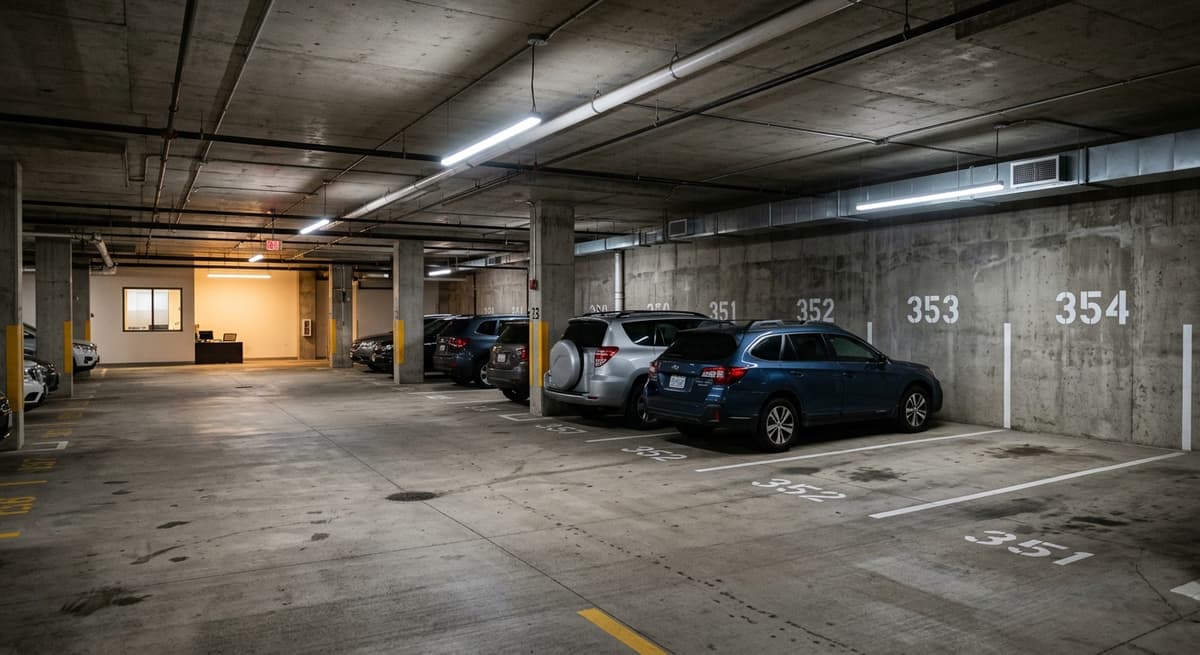
- Common areas of multi-unit buildings such as lobbies, hallways, stairwells, and parking lots (silent video only)
- Building exterior including entrances, exits, and shared outdoor spaces (silent video only)
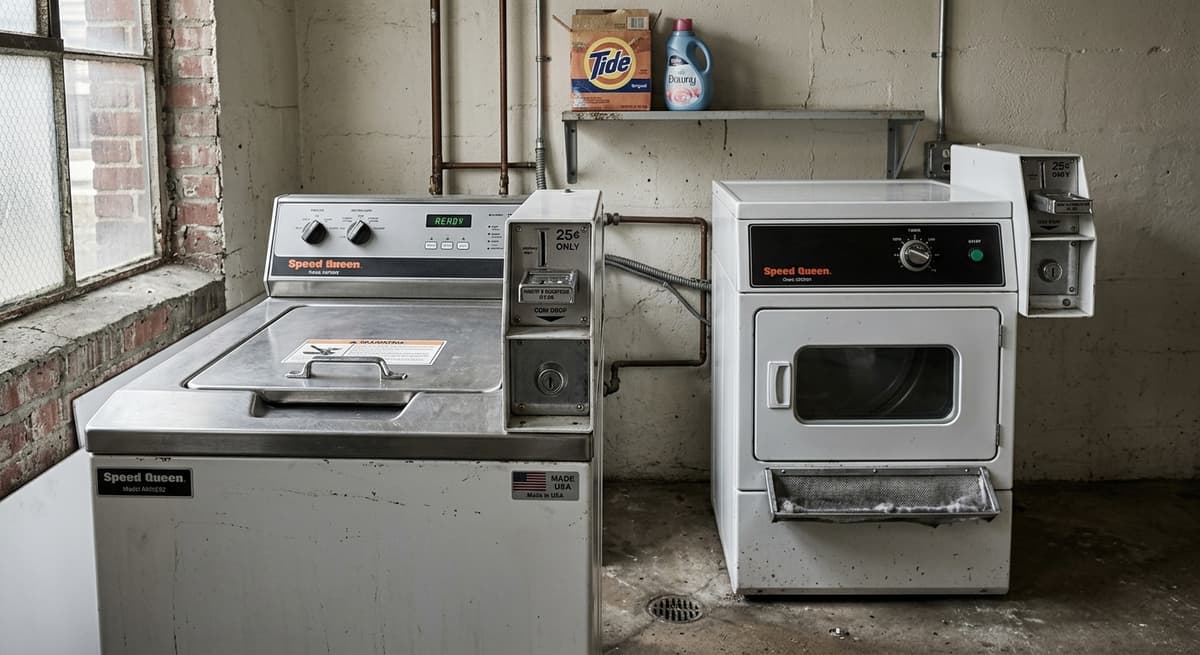
- Laundry rooms and shared spaces that are open to all tenants (silent video only)
Where cameras are prohibited:
- Inside any tenant's rental unit without explicit consent (RSA 644:9 violation)
- Bathrooms, changing areas, and private spaces anywhere in the building (RSA 644:9)
- Aimed at a tenant's windows, balcony, or private outdoor area in a way that monitors their private activities
- Any location where audio is recorded without all-party consent (RSA 570-A:2)
Audio-Enabled Cameras
If a landlord installs security cameras with audio recording capability:
- All-party consent is required from anyone whose conversations are captured
- Posting a sign stating "audio and video recording in progress" may help establish notice but does not constitute consent under New Hampshire law
- Disabling audio on security cameras is the safest legal approach
- Landlords who capture tenant conversations through audio-enabled cameras face potential criminal charges under RSA 570-A:2
Tenant Camera Rights
Tenants in New Hampshire generally have the right to install their own security cameras:
- Inside their rental unit (subject to lease terms about alterations to the property)
- Doorbell cameras at their unit's entrance (subject to landlord approval for exterior modifications)
- Cameras pointed at their own space rather than common areas or other tenants' units
Tenants must follow the same audio recording restrictions. Cameras with microphones that capture hallway conversations or neighbors' private discussions may violate RSA 570-A:2.
Tenant Right to Quiet Enjoyment
RSA 540-A:2 Protections
New Hampshire's landlord-tenant law includes a right to quiet enjoyment under RSA 540-A:2. This statute prohibits landlords from engaging in conduct that interferes with a tenant's peaceful use and enjoyment of their rental property. Landlord surveillance that crosses the line into monitoring a tenant's private activities could constitute a violation of this right.
Prohibited landlord conduct that may relate to recording or surveillance:
- Entering a tenant's unit without proper notice (RSA 540-A:3 requires reasonable notice except in emergencies)
- Harassment or intimidation including constant surveillance
- Interference with privacy through cameras or monitoring devices aimed at the tenant's private spaces
- Retaliation against tenants who complain about surveillance
Tenant Remedies
Tenants who believe their landlord is conducting illegal surveillance or violating their right to quiet enjoyment may:
- File a complaint with local law enforcement if criminal recording violations are suspected
- Send a written demand to the landlord to remove cameras or stop surveillance
- File a complaint with the New Hampshire Attorney General's Consumer Protection Bureau
- Sue the landlord for damages including breach of quiet enjoyment, privacy tort claims, and statutory damages under RSA 570-A:11
- Withhold rent or terminate the lease under RSA 540-A:4 if the landlord fails to remedy the violation after proper notice
Recording Property Inspections
Move-In and Move-Out Inspections
Recording the condition of a rental property during move-in and move-out is important for both parties. In New Hampshire:
- Silent video and photographs of the property condition are legal and strongly recommended
- Audio recording of conversations during the inspection requires consent from all parties
- Written checklists signed by both parties provide the strongest documentation
- Timestamped photographs of every room, fixture, and any pre-existing damage create a clear record
Maintenance and Repair Documentation
When documenting property conditions or needed repairs:
- Take photographs and silent video of the condition without recording conversations
- Send written maintenance requests via email or certified mail to create a paper trail
- Keep copies of all communications including text messages and emails
- Follow up verbal requests in writing with a summary email stating what was discussed
Legal Alternatives to Recording
For Tenants
New Hampshire tenants who need to document landlord issues without violating recording laws should:
- Keep a written log of all interactions including dates, times, locations, and what was discussed
- Send follow-up emails after every verbal conversation summarizing key points
- Take photographs and silent video of property conditions, needed repairs, and unsafe conditions
- Save all text messages and written communications
- Get a witness present for important conversations (inspections, move-out walkthrough, lease discussions)
- File formal written complaints with the landlord, property management company, or relevant government agency
- Consult a tenant rights attorney about your legal options
For Landlords
New Hampshire landlords who need to document tenant issues should:
- Use written notices for all communications about lease violations, rent issues, or property access
- Photograph and silently video property conditions during lawful inspections
- Maintain detailed records of all maintenance requests, repair schedules, and tenant communications
- Use certified mail or email for important notices to create a verifiable delivery record
- Bring a witness to contentious interactions or property inspections
- Follow proper legal procedures for eviction rather than attempting to gather evidence through surveillance
Penalties for Illegal Recording in Landlord-Tenant Disputes
Criminal Penalties
| Offense | Classification | Maximum Penalty |
|---|---|---|
| Secret audio recording of conversation (participant) | Misdemeanor (Class B by default) | None (Class B); up to 1 year, $2,000 if State elects Class A |
| Hidden recording device planted in rental unit | Class B Felony | 7 years, $4,000 |
| Camera in tenant's bathroom or bedroom (RSA 644:9) | Class A Misdemeanor | 1 year, $2,000 |
| Audio-enabled camera without consent | Class B Felony | 7 years, $4,000 |
2024-2025 Court Rulings
In State v. Clark, 2024 N.H. 64 (N.H. Nov. 13, 2024), the New Hampshire Supreme Court held that the suppression remedy under RSA 570-A:6 applies only to felony violations of RSA 570-A:2, I, not to misdemeanor participant recordings under RSA 570-A:2, I-a. In State v. Hersom, No. 2023-0352 (N.H. Jan. 24, 2025), the court held that the State must prove NH jurisdiction and willful mental state before the suppression framework applies.
Civil Damages
Under RSA 570-A:11, a person whose communications are illegally recorded may sue for:
- $100 per day of the violation or $1,000 minimum
- Actual damages if greater than the statutory minimum
- Punitive damages for particularly egregious conduct
- Attorney fees and litigation costs
A landlord who installs an audio-enabled hidden camera in a tenant's unit could face both criminal prosecution and a civil lawsuit with substantial damages.
Filing Complaints and Seeking Help
Tenant Resources
New Hampshire tenants facing illegal surveillance or recording by landlords should contact:
- Local police to report suspected criminal violations of RSA 570-A or RSA 644:9
- NH Legal Assistance for free legal help for low-income tenants
- NH Attorney General Consumer Protection for housing complaints
- NH Housing Finance Authority for housing resources and referrals
- A private attorney specializing in landlord-tenant law
Landlord Resources
Landlords facing difficult tenant situations should:
- Consult a real estate attorney before installing any surveillance equipment
- Contact the NH Apartment Association or similar trade groups for guidance
- Follow proper legal procedures for inspections, notices, and evictions under RSA 540
More New Hampshire Recording Laws
Audio Recording | Video Recording | Voyeurism | Workplace Recording | Recording Police | Phone Call Recording | Security Cameras | Recording in Public | Landlord-Tenant | Dashcam Laws | Schools | Medical Recording
Back to New Hampshire Recording Laws
More New Hampshire Recording Topics
More New Hampshire Laws
Frequently Asked Questions
Can I secretly record my landlord in New Hampshire?
No. New Hampshire is an all-party consent state under RSA 570-A:2. Secretly recording a conversation with your landlord is a criminal offense, either a misdemeanor (if you are a participant) or a Class B felony (if you plant a hidden device). Use written documentation, photographs, and email follow-ups instead.
Can my landlord install cameras inside my apartment in New Hampshire?
No. Landlords cannot install cameras inside a tenant's rental unit without the tenant's explicit consent. Cameras in bathrooms or bedrooms are always prohibited under RSA 644:9. Even with consent, audio-enabled cameras trigger the all-party consent requirement under RSA 570-A:2.
Can my landlord have security cameras in common areas?
Yes. Landlords may install silent video cameras in common areas of multi-unit buildings such as lobbies, hallways, stairwells, and parking lots. Cameras with audio recording capability require all-party consent from anyone whose conversations are captured. Cameras are never permitted in bathrooms or changing areas.
How should I document problems with my rental in New Hampshire?
Take photographs and silent video of property conditions. Send written maintenance requests via email or certified mail. Keep a detailed log of all interactions with dates, times, and what was discussed. Follow up verbal conversations with summary emails. Get a witness present for important inspections. Save all text messages and written communications.
What can I do if my landlord is secretly recording me in New Hampshire?
Report the suspected recording to local law enforcement, as it may violate RSA 570-A:2 (wiretapping) or RSA 644:9 (voyeurism). Contact NH Legal Assistance for free legal help. You may sue for civil damages of $100 per day or $1,000 minimum under RSA 570-A:11. You may also have grounds to terminate your lease under RSA 540-A.
Updates
Corrected the TAKE IT DOWN Act's signing date in the changelog to May 19, 2025.
Independently fact-checked against the cited primary sources; governing law re-checked for recent changes
Governing law re-checked for recent changes
Corrected the RSA 570-A:2, I-a misdemeanor penalty for a participant's secret recording: it defaults to a Class B misdemeanor (no jail, up to $1,200) under RSA 625:9, not a flat 1 year/$2,000, unless the State elects Class A treatment before arraignment.
Governing law re-checked for recent changes
Propagated State v. Clark (2024 N.H. 64, Nov. 13, 2024) and State v. Hersom (No. 2023-0352, Jan. 24, 2025) two-tier suppression framework from parent hub; confirmed RSA 570-A:2, I-a misdemeanor framing; updated federal overlay (NLRB GC Memo 25-07, [TAKE IT DOWN Act](/us-laws/take-it-down-act) May 19 2025); RSA 105-D body cam reference added where applicable.
Reviewed and approved by an editor
The Law Behind This Article
This article rests on the statutory provisions below, held in our own legal record and retrieved from the official source. Tap a section to read the operative text.
New Hampshire Revised Statutes Annotated, TITLE LVIII PUBLIC JUSTICE, CHAPTER 570-A WIRETAPPING AND EAVESDROPPING
§ 570-A:2Interception and Disclosure of Telecommunication or Oral Communications Prohibited.In forcecited in 25 of our articles
I. A person is guilty of a class B felony if, except as otherwise specifically provided in this chapter or without the consent of all parties to the communication, the person: (a) Wilfully intercepts, endeavors to intercept, or procures any other person to intercept or endeavor to intercept, any telecommunication or oral communication; (b) Wilfully uses, endeavors to use, or procures any other person to use or endeavor to use any electronic, mechanical, or other device to intercept any oral communication when: (1) Such device is affixed to, or otherwise transmits a signal through, a wire, cable, or other like connection used in telecommunication, or (2) Such device transmits communications by radio, or interferes with the transmission of such communication, or (3) Such use or endeavor to use (A) takes place on premises of any business or other commercial establishment, or (B) obtains or is for the purpose of obtaining information relating to the operations of any business or other commercial establishment; or (c) Wilfully discloses, or endeavors to disclose, to any other person the contents of any telecommunication or oral communication, knowing or having reason to know that…
Official text (excerpt) · last checked 2026-08-31 · Read the full text in our law library · Verify at gc.nh.gov
Cited in 35 court opinions in our collectionLatest citing opinion in our collection: 2025
In the courts (editorial summary, independently checked):New Hampshire courts read the felony offense in RSA 570-A:2, I as requiring more than intent to record. Fischer v. Hooper (1999) held wilfully means intentional or reckless disregard for the lawfulness of the conduct, so a good faith belief is a defense. State of New Hampshire v. Adam Mueller (2014) reversed on that mens rea.
Opinions citing this section in our collection:
- State v. Kilgus (Supreme Court of New Hampshire 1986, 128 N.H. 577)✓A murder-for-hire middleman agreed to wear a hidden recorder and got the defendant to confirm paying $1,000 to have a man killed; the court held the taping was lawful under RSA 570-A:2, II(d) because one party consented and homicide is an enumerated offense.
- Fischer v. Hooper (Supreme Court of New Hampshire 1999, 143 N.H. 585)✓A father secretly taped his ex-wife's calls with their daughter though a guardian ad litem had said both parents must agree; the court held wilfully in RSA 570-A:2, I requires intentional or reckless disregard for the lawfulness of the conduct, and reversed for a new trial.
- State of New Hampshire v. Adam Mueller (Supreme Court of New Hampshire 2014, 166 N.H. 65)✓A police-accountability activist recorded three phone calls with a police captain and two school officials without telling them; the court held that instructing the jury on purposely rather than the statute's wilfully was plain error and reversed his wiretapping convictions.
Identified automatically from the court opinions citing this section — not a ranking of which case controls.
Also relied on in: New Hampshire Security Camera Laws, New Hampshire Video Recording Laws, New Hampshire Voyeurism Laws
§ 570-A:11Recovery of Civil Damages Authorized.In forcecited in 14 of our articles
Any person whose telecommunication or oral communication is intercepted, disclosed, or used in violation of this chapter shall have a civil cause of action against any person who intercepts, discloses, or uses, or procures any other person to intercept, disclose or use such communications, and be entitled to recover from any such person: (a) actual damages but not less than liquidated damages computed at the rate of $100 a day for each day of violation or $1,000, whichever is higher; (b) punitive damages; and (c) a reasonable attorney's fee and other litigation costs reasonably incurred. Good faith reliance on a court order or on a representation made by the attorney general, deputy attorney general or a county attorney shall constitute a complete defense to any civil or criminal action brought under this chapter.
Official text (excerpt) · last checked 2026-07-29 · Read the full text in our law library · Verify at gc.nh.gov
Cited in 6 court opinions in our collectionLatest citing opinion in our collection: 2021
In the courts (editorial summary, independently checked):Courts have applied RSA 570-A:11 as the chapter's private damages remedy. Desilets v. Wal-Mart Stores (1997) awarded fees and costs under 570-A:11(c) after a jury found statutory damages for secret workplace recording; Lath v. Manchester PD, et al. (2017) entered judgment for the defendant where no interception was shown.
Opinions citing this section in our collection:
- Karen Warrington, individually, and as m/n/f of J.W. v. P John Edward Warrington (District Court, D. New Hampshire 2021, 2021 DNH 070)✓A father secretly recorded a call with his son at a New Hampshire boarding school and later used it in divorce proceedings; the court dismissed the mother's 570-A:11 damages claim because the complaint never alleged he was in New Hampshire when he recorded.
- Sanjeev Lath v. Oak Brook Condominium Owners’ Association, Gerard Dufresne, and Betty Mullen (District Court, D. New Hampshire 2018, 2018 DNH 013)“…upport dogs. Count 9: an eavesdropping claim under RSA 570-A:11 against Mullen, for installing came…”
- Lath v. Manchester PD, et al. (District Court, D. New Hampshire 2017, 2017 DNH 164)✓A condominium owner claimed a neighbor drilled holes in their shared wall and installed listening devices in his unit; on her unrebutted affidavit denying it, the court granted summary judgment against his 570-A:11 eavesdropping claim.
Identified automatically from the court opinions citing this section — not a ranking of which case controls.
Also relied on in: New Hampshire Audio Recording Laws, New Hampshire Dashcam Laws, New Hampshire Medical Recording Laws
New Hampshire Revised Statutes Annotated, TITLE LV PROCEEDINGS IN SPECIAL CASES, CHAPTER 540-A PROHIBITED PRACTICES AND SECURITY DEPOSITS
§ 540-A:2General Prohibition.In force
No landlord shall willfully violate a tenant's right to quiet enjoyment of his tenancy or attempt to circumvent lawful procedures for eviction pursuant to RSA 540. No tenant shall willfully damage the property of the landlord or prevent completion of necessary repairs or willfully deny tenants their right to quiet enjoyment of their tenancies.
Official text (excerpt) · last checked 2026-07-29 · Read the full text in our law library · Verify at gc.nh.gov
Cited in 38 court opinions in our collectionLatest citing opinion in our collection: 2025
Opinions citing this section in our collection:
- Miller v. Slania Enterprises, Inc. (Supreme Court of New Hampshire 2004, 150 N.H. 655)“…procedures for eviction pursuant to RSA chapter 540. See RSA 540-A:2 (1997). No lease or rental agreement, o…”
- Crowley v. Frazier (Supreme Court of New Hampshire 2001, 147 N.H. 387)“…iled to prove sufficient facts to constitute a violation of RSA 540-A:2, and therefore they were not entitled t…”
- Case v. St. Mary's Bank (Supreme Court of New Hampshire 2013, 164 N.H. 649)“…n his claims that the Bank engaged in trespass and violated RSA 540-A:2 (2007), :3 (Supp. 2012), and the New Ha…”
Identified automatically from the court opinions citing this section — not a ranking of which case controls.
New Hampshire Revised Statutes Annotated, TITLE LXII CRIMINAL CODE, CHAPTER 625 PRELIMINARY
§ 625:9Classification of Crimes.In forcecited in 13 of our articles
I. The provisions of this section govern the classification of every offense, whether defined within this code or by any other statute. II. Every offense is either a felony, misdemeanor or violation. (a) Felonies and misdemeanors are crimes. (b) A violation does not constitute a crime and conviction of a violation shall not give rise to any disability or legal disadvantage based on conviction of a criminal offense. III. A felony is murder or a crime so designated by statute within or outside this code or a crime defined by statute outside of this code where the maximum penalty provided is imprisonment in excess of one year; provided, however, that a crime defined by statute outside of this code is a felony when committed by a corporation or an unincorporated association if the maximum fine therein provided is more than $200. (a) Felonies other than murder are either class A felonies or class B felonies when committed by an individual. Felonies committed by a corporation or an unincorporated association are unclassified.
Official text (excerpt) · last checked 2026-07-29 · Read the full text in our law library · Verify at gc.nh.gov
Cited in 65 court opinions in our collectionLatest citing opinion in our collection: 2026
Opinions citing this section in our collection:
- State v. Samuel Pennock (Supreme Court of New Hampshire 2015, 168 N.H. 294)“…shall not include incarceration or probation”); see also RSA 625:9, IV(b) (2007) (defining a class B misde…”
- State v. Morrill (Supreme Court of New Hampshire 1983, 123 N.H. 707)“…ed the sum of $500. In 1971, the legislature enacted RSA 625:9, under which every offense defined with…”
- State v. Woods (Supreme Court of New Hampshire 1995, 139 N.H. 399)“…es that his violation is not a “criminal” act because under RSA 625:9, 11(b) (1986), a violation is not a “cr…”
Identified automatically from the court opinions citing this section — not a ranking of which case controls.
Also relied on in: New Hampshire Laws on Recording Police, New Hampshire Laws on Recording in Public, New Hampshire School Recording Laws
New Hampshire Revised Statutes Annotated, TITLE LXII CRIMINAL CODE, CHAPTER 644 BREACHES OF THE PEACE AND RELATED OFFENSES
§ 644:9Violation of Privacy.In forcecited in 12 of our articles
I. A person is guilty of a class A misdemeanor if such person unlawfully and without the consent of the persons entitled to privacy therein, installs or uses: (a) Any device for the purpose of observing, photographing, recording, amplifying, broadcasting, or in any way transmitting images or sounds of the private body parts of a person including the genitalia, buttocks, or female breasts, or a person's body underneath that person's clothing; or (b) In any private place, any device for the purpose of observing, photographing, recording, amplifying or broadcasting, or in any way transmitting images or sounds in such place; or (c) Outside a private place, any device for the purpose of hearing, recording, amplifying, broadcasting, observing, or in any way transmitting images, location, movement, or sounds originating in such place which would not ordinarily be audible, visible, or comprehensible outside such place. II.
Official text (excerpt) · last checked 2026-08-31 · Read the full text in our law library · Verify at gc.nh.gov
Cited in 4 court opinions in our collectionLatest citing opinion in our collection: 2023
Opinions citing this section in our collection:
- State v. McLellan (Supreme Court of New Hampshire 1999, 144 N.H. 602)“…pposite. Finally, we reject the defendant’s argument that RSA 644:9 (1996) supports his claim that he had a…”
- State of New Hampshire v. Justin M. Lamontagne (Supreme Court of New Hampshire 2023)“…assault and a case involving dissemination of an image. See RSA 644:9- a, II(c). We fail to see such a distin…”
- State v. Richard Lucas (Supreme Court of New Hampshire 2018)“…(1) an intent to commit a violation of privacy pursuant to RSA 644:9, III-a or IV (2016) does not satisfy th…”
Identified automatically from the court opinions citing this section — not a ranking of which case controls.
Also relied on in: New Hampshire Workplace Recording Laws, New Hampshire Drone Laws: RSA 644:23 & Privacy Rules (2026), New Hampshire Employee Monitoring Laws: Workplace Surveillance and Social Media (2026)
New Hampshire Revised Statutes Annotated, TITLE LXII CRIMINAL CODE, CHAPTER 651 SENTENCES
§ 651:2Sentences and Limitations.In forcecited in 14 of our articles
I. A person convicted of a felony or a Class A misdemeanor may be sentenced to imprisonment, probation, conditional or unconditional discharge, or a fine. II. If a sentence of imprisonment is imposed, the court shall fix the maximum thereof which is not to exceed: (a) Fifteen years for a class A felony, (b) Seven years for a class B felony, (c) One year for a class A misdemeanor, (d) Life imprisonment for murder in the second degree, and, in the case of a felony only, a minimum which is not to exceed 1/2 of the maximum, or if the maximum is life imprisonment, such minimum term as the court may order. II-a. A person convicted of murder in the first degree shall be sentenced as provided in RSA 630:1-a. II-b. A person convicted of a second or subsequent offense for the felonious use of a firearm, as provided in RSA 650-A:1, shall, in addition to any punishment provided for the underlying felony, be given a minimum mandatory sentence of 3 years imprisonment.
Official text (excerpt) · last checked 2026-07-29 · Read the full text in our law library · Verify at gc.nh.gov
Cited in 147 court opinions in our collectionLatest citing opinion in our collection: 2025
In the courts (editorial summary, independently checked):State v. Russell (2009) found plain error where the jury was never asked whether the deadly weapon was a firearm, as RSA 651:2, II-g requires, but affirmed the extended term because that evidence was overwhelming. State v. Elbert (1984) held the minimum and maximum term rule of RSA 651:2, II applies only if a defendant is parole eligible.
Opinions citing this section in our collection:
- State v. Kousounadis (Supreme Court of New Hampshire 2009, 159 N.H. 413)“…rder, see RSA 173-B:9, III (2002). He was sentenced under RSA 651:2, II-g (2007). We affirm in part, revers…”
- State v. Russell (Supreme Court of New Hampshire 2009, 159 N.H. 475)✓A jury convicted Russell of armed robbery but was never instructed it had to find the deadly weapon was a firearm; the court called the resulting RSA 651:2, II-g enhanced sentence plain error yet declined to disturb it given overwhelming, undisputed firearm evidence.
- Duquette v. Warden, New Hampshire State Prison (Supreme Court of New Hampshire 2007, 154 N.H. 737)✓A prisoner serving consecutive sexual assault terms argued no statute allowed them; the court found RSA 651:2 silent on consecutive sentences except its firearm provision in II-b, but held trial courts retain common law authority to impose them and rejected a vagueness challenge.
Identified automatically from the court opinions citing this section — not a ranking of which case controls.
Also relied on in: New Hampshire Phone Call Recording Laws, New Hampshire Ring Doorbell Laws: What You Need to Know in 2026, New Hampshire Surveillance Camera Laws (2026 Guide)
Search our full record of US law — 2.1 million sections, every state + federal →
Sources and References
- RSA 570-A:2 - Interception Prohibited(gc.nh.gov).gov
- RSA 644:9 - Violation of Privacy(gc.nh.gov).gov
- RSA 570-A:11 - Civil Damages(gencourt.state.nh.us).gov
- RSA 540-A:2 - Quiet Enjoyment(gc.nh.gov).gov
- RSA 540 - Eviction Procedures(gc.nh.gov).gov
- NH AG Consumer Protection(doj.nh.gov).gov
- RSA 625:9 - Classification of Crimes(gc.nh.gov).gov
- RSA 651:2 - Sentences and Limitations(gc.nh.gov).gov