
West Virginia
West Virginia Knife Laws (2026): Pocketknife Rule, Carry
Independently fact-checked against primary sources (last audited September 24, 2026). · 12 primary sources cited on this page. How we verify our legal content

West Virginia defines a regulated "knife" by a functional test for use as a weapon, not by a blade-length rule, and separately excludes from that definition a pocket knife with a blade of 3.5 inches or less, along with a genuine hunting, fishing, sport, or tool knife. An adult 18 or older who is not otherwise prohibited from possessing a firearm may generally carry a qualifying knife, concealed or open, without a license, subject to a ban on brandishing any weapon in a way that threatens a breach of the peace and to a property owner's right to demand it be relinquished or that the carrier leave. At a school and at a courthouse, that pocketknife exclusion does not apply: § 61-7-2(5) adds back, for those two settings, any knife-definition instrument with a blade of three and one-half inches or less, and since a blade over 3.5 inches already counts as a knife under the base definition, every knife length ends up covered there. Simple possession at school is a felony; simple possession at a courthouse is a misdemeanor and becomes a felony only with intent to commit a crime there. Cities cannot pass their own stricter knife ordinances, except inside municipally owned buildings and municipally owned recreation facilities.
Jurisdiction scope: This page covers West Virginia state law only, principally W. Va. Code §§ 61-7-2, 61-7-4, 61-7-4A, 61-7-7, 61-7-8, 61-7-11, 61-7-11a, 61-7-14, 18A-5-1a, and 8-12-5A. §§ 61-7-4 and 61-7-4A, the formal and provisional concealed-weapon license statutes, are noted only to the extent that they issue solely for pistols and revolvers, never for a knife.
What counts as a regulated "knife" in West Virginia?
West Virginia's carry rules turn on a specific statutory definition rather than a blanket rule for every bladed object. W. Va. Code § 61-7-2(9) opens with a functional test: "knife" "means an instrument, intended to be used or readily adaptable to be used as a weapon, consisting of a sharp-edged or sharp-pointed blade, usually made of steel, attached to a handle which is capable of inflicting cutting, stabbing, or tearing wounds." It then illustrates that test: "The term 'knife' includes, but is not limited to, any dagger, dirk, poniard, or stiletto, with a blade over three and one-half inches in length, any switchblade knife or gravity knife, and any other instrument capable of inflicting cutting, stabbing, or tearing wounds." The same subsection excludes from the term "a pocket knife with a blade three and one-half inches or less in length, a hunting or fishing knife carried for hunting, fishing, sports, or other recreational uses, or a knife designed for use as a tool or household implement," unless the knife "is knowingly used or intended to be used to produce serious bodily injury or death." A short folding pocketknife, or a knife genuinely carried for hunting, fishing, sport, or as a tool, falls outside the regulated category for the general carry rules below, subject to the school and courthouse expansion described next, while a dagger, dirk, poniard, stiletto, switchblade, or gravity knife, or any comparably long fixed or folding blade over 3.5 inches, falls inside it.

This defined "knife" is one of the instrument types that make up West Virginia's broader "deadly weapon" definition, the term that actually drives the carry rules below, under § 61-7-2(5): "'Deadly weapon' means an instrument which is designed to be used to produce serious bodily injury or death or is readily adaptable to such use," including the knife definition above along with several other named instrument types. That same subsection then narrows the pocketknife exclusion for two specific offenses: "For the purposes of §18A-5-1a of this code and §61-7-11a of this code, in addition to the definition of 'knife' set forth in subdivision (9) of this subsection, the term 'deadly weapon' also includes any instrument included within the definition of 'knife' with a blade of three and one-half inches or less in length." § 61-7-11a covers school and courthouse possession, and § 18A-5-1a is the companion school-discipline statute. Inside those two settings, that expansion adds back only an instrument within the knife definition with a blade of three and one-half inches or less, the same range the pocketknife exclusion above carves out; because a blade over 3.5 inches already counts as a knife under the base definition, the practical effect is that every knife length is a "deadly weapon" there.
Can you carry a knife openly or concealed in West Virginia?
Generally yes, for an eligible adult, without a license, but three other statutes qualify that answer, and the position for an ineligible adult is genuinely unclear. West Virginia's former age-based restriction on carrying a concealed deadly weapon, § 61-7-3, titled "Carrying a deadly weapon without provisional license or other authorization by persons under twenty-one years of age," is repealed by 2026 Regular Session HB 4106, the same act that rewrote § 61-7-7. The operative rule today is § 61-7-7(c): "Any person may carry a concealed deadly weapon without a license therefor who is: (1) At least 18 years of age; (2) A United States citizen or legal resident thereof; (3) Not prohibited from possessing a firearm under the provisions of this section; and (4) Not prohibited from possessing a firearm under the provisions of 18 U.S.C. § 922(g) or (n)." The eligibility age in the current statute is 18, not 21.
A separate statute reaches the manner of carrying regardless of eligibility or licensing. § 61-7-11 provides: "It shall be unlawful for any person armed with a firearm or other deadly weapon, whether licensed to carry the same or not, to carry, brandish or use such weapon in a way or manner to cause, or threaten, a breach of the peace." A violation is a misdemeanor, fined $50 to $1,000 or jailed 90 days to one year, or both. The "whether licensed to carry the same or not" language means this offense sits on top of, not instead of, the permitless-carry rule above: an otherwise-eligible adult carrying a qualifying knife openly or concealed can still violate § 61-7-11 by the way they carry it.
A property owner can cut off that carry right on their own premises. § 61-7-14(b) lets "any owner, lessee, or other person charged with the care, custody, and control of real property" prohibit carrying or concealing a firearm or deadly weapon on property under their domain. § 61-7-14(c) backs that with a criminal penalty reaching a knife the same as a firearm: "Any natural person carrying or possessing a firearm or other deadly weapon on the property of another who refuses to temporarily relinquish possession of the firearm or other deadly weapon, upon being requested to do so, or to leave the premises, while in possession of the firearm or other deadly weapon, is guilty of a misdemeanor and, upon conviction thereof, shall be fined not more than $1,000 or confined in jail not more than six months, or both." The same subsection separately reinforces the school ban described below: except for the law-enforcement and school-authorization exemptions listed at § 61-7-11a(b)(2)(A) through (K), no one may possess or carry a firearm or other deadly weapon on the premises of a primary or secondary educational facility without being a law-enforcement officer or having the county school superintendent's express written permission.
A person under 18 faces a flat ban, not a licensing question. § 61-7-8(a) provides that "a person under the age of 18 years who is not married or otherwise emancipated shall not possess or carry concealed or openly any deadly weapon," subject to two provisos, for possessing a firearm on family or permitted premises and for lawfully hunting, that are both written for firearms specifically and do not, on their text, clearly extend to a knife. A violation routes the minor into juvenile jurisdiction under §§ 49-4-701 through 49-4-725. § 61-7-10(b) separately makes it a misdemeanor, fined not more than $5,000 or jailed up to one year, for a person to knowingly sell, rent, give, or lend a deadly weapon other than a firearm to anyone barred from possessing one under the article, including a minor barred by § 61-7-8.
For an adult who does not meet the § 61-7-7(c) test, most commonly because they fall within § 61-7-7(a)'s list of firearm-prohibited categories (a felony conviction, certain domestic-violence findings, involuntary commitment, and similar disqualifications), the position on a covered knife is unsettled rather than a simple "needs a license." A formal state resident concealed-weapon license remains available under § 61-7-4, and a provisional license for a person 18 to 20 remains available under § 61-7-4A, but § 61-7-4(a)(1) provides that "a concealed weapons license may only be issued for pistols and revolvers," and § 61-7-4A(a) says the same of a provisional license: "Provisional licenses may only be issued for pistols or revolvers." Neither license can authorize concealed knife carry. And the concealed-carry offenses tied to a firearm-prohibited person, § 61-7-7(d) and (e), are both written for a person who "carries a concealed firearm," not a deadly weapon generally. Article 7 contains no offense of carrying a concealed deadly weapon other than a firearm without a license, and no license that covers a knife, so a firearm-prohibited adult's concealed knife carry is neither squarely banned nor licensed; § 61-7-11's breach-of-the-peace offense remains available regardless. No West Virginia statute restricts open carry of an eligible adult's knife by blade type or length.
Schools
Section 61-7-11a(b)(1) makes it unlawful to possess a firearm or other deadly weapon on a school bus, on or in the grounds of any primary or secondary educational facility, or at a school-sponsored function taking place in a specific area owned, rented, or leased by the state Department of Education, the Secondary Schools Activities Commission, a county school board, or a local public school. Ordinarily, "deadly weapon" incorporates the § 61-7-2(9) "knife" definition, which excludes a pocketknife with a blade of 3.5 inches or less and a genuine hunting, fishing, sport, or tool knife. That exclusion does not carry over to this offense. § 61-7-2(5) states that "for the purposes of §18A-5-1a of this code and §61-7-11a of this code, in addition to the definition of 'knife' set forth in subdivision (9) of this subsection, the term 'deadly weapon' also includes any instrument included within the definition of 'knife' with a blade of three and one-half inches or less in length." A short pocketknife is a "deadly weapon" for this offense even though the general definition would otherwise exclude it, and because a blade over 3.5 inches already counts as a knife under the base definition, every knife length ends up covered here. The only carve-out that survives here is separate: "the term 'deadly weapon' does not include any item or material owned by the school or county board, intended for curricular use, and used by the student at the time of the alleged offense solely for curricular purposes."

Subsection (b)(2) exempts several categories, including a currently employed law enforcement officer on or off duty, certain probation and parole officers in the performance of their duties, a qualified retired law enforcement officer under federal law, and a person specifically authorized by the board of education to conduct programs with a valid educational purpose, among others; a private school may also adopt a written policy allowing possession. The exemption most likely to matter for an adult who is not a student, employee, or officer is subsection (b)(2)(G): "A person who, as otherwise permitted by the provisions of this article, possesses an unloaded firearm or deadly weapon in a motor vehicle or leaves an unloaded firearm or deadly weapon in a locked motor vehicle." A violation of subsection (b) is a felony under subsection (b)(3), punishable by a state correctional term of not less than two nor more than 10 years, or a fine of not more than $5,000, or both. § 18A-5-1a, the companion school-discipline statute, requires a principal to suspend and a county board to expel a student who violates § 61-7-11a(b).
Courthouses and family courts
Section 61-7-11a also restricts weapons at courts. The same § 61-7-2(5) expansion that reaches school property applies here too: it adds back, for the § 61-7-11a offense generally and not only its school subsection, any knife-definition instrument with a blade of three and one-half inches or less, so a pocket knife with a blade of 3.5 inches or less counts as a "deadly weapon" on court premises the same as it does at a school, and, because a blade over 3.5 inches already counts as a knife under the base definition, every knife length ends up covered here too. Subsection (g) makes it unlawful to possess a firearm or other deadly weapon on the premises of a court of law, including a family court, exempting a law enforcement officer acting in an official capacity and a person exempted by an order of record from a court with jurisdiction over the premises; a violation is a misdemeanor, punishable by a fine of not more than $1,000, confinement in jail for not more than one year, or both. Subsection (h) creates a separate, more serious offense for possessing a firearm or other deadly weapon on court premises "with the intent to commit a crime," a felony punishable by a state correctional term of not less than two nor more than 10 years, or a fine, or both.
Statewide preemption reaches knives, with limited local exceptions
West Virginia's local-government preemption statute, § 8-12-5A, provides that "neither a municipality nor the governing body of any municipality may, by ordinance or otherwise, limit the right of any person to purchase, possess, transfer, own, carry, transport, sell, or store any deadly weapon, firearm, or pepper spray, or any ammunition or ammunition components to be used therewith." Subsection (b) defines "deadly weapon" for this section by cross-reference to § 61-7-2, so the preemption reaches a knife meeting that section's definition the same as it reaches a firearm. The statute carves out two limited categories of local authority: subsection (c)(1) lets a municipality prohibit or regulate carrying or possessing a deadly weapon, firearm, or pepper spray inside a municipally owned or operated building, and subsection (c)(2) lets a municipality prohibit open carry, or carry that is not lawfully concealed, of a deadly weapon, firearm, or pepper spray in a municipally owned recreation facility, though it may not prohibit a valid concealed handgun license holder from securely storing a lawfully possessed firearm out of view while at such a facility. Outside these two carve-outs, a West Virginia municipality cannot adopt a knife ordinance stricter than state law.
Federal law: what it does and does not reach
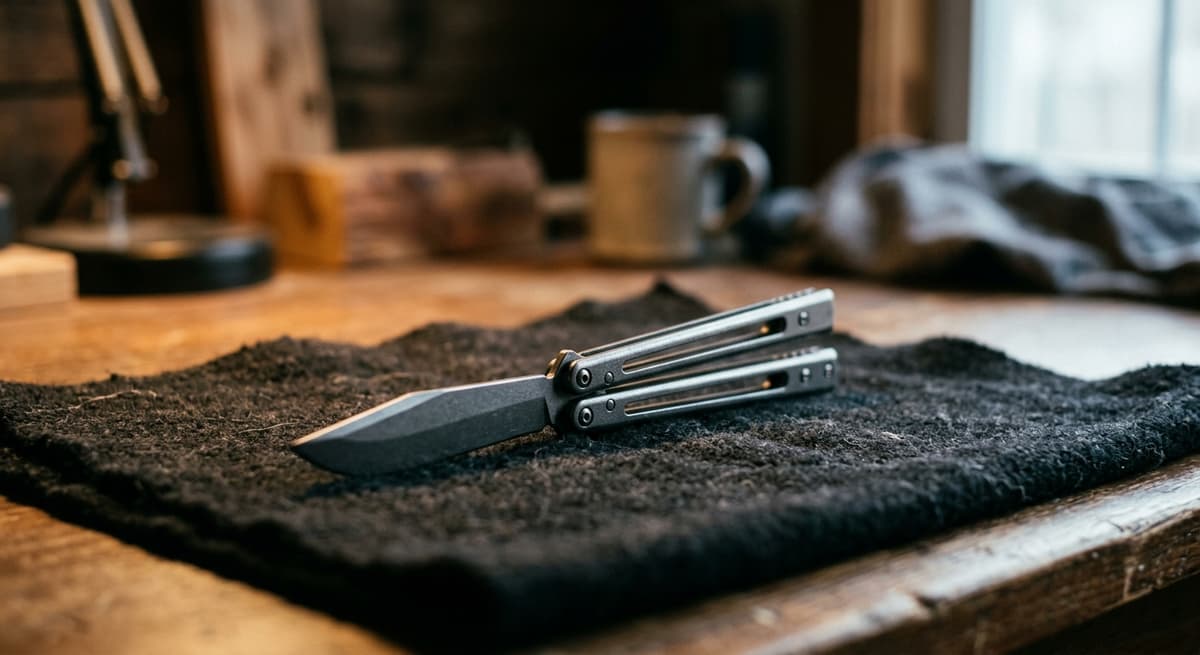
Federal law does not ban an individual from owning or carrying a switchblade. The Federal Switchblade Act, 15 U.S.C. §§ 1241 to 1245, restricts interstate commerce in switchblade knives and, in 15 U.S.C. § 1245, makes it a federal offense to knowingly possess, manufacture, sell, or import a ballistic knife in or affecting interstate commerce or within federal territorial jurisdiction; the operative offense sections, §§ 1242 and 1243, do not apply to certain knives and people, listed as exemptions in 15 U.S.C. § 1244. A 2009 amendment, § 1244(5), exempts a knife with a spring, detent, or other closure-bias mechanism that requires hand, wrist, or arm exertion on the blade itself to overcome the bias and assist opening, the carve-out that keeps modern assisted-opening folding knives legal in interstate commerce. A separate exemption, § 1244(4), covers a person with only one arm possessing or carrying a switchblade with a blade three inches or less.
Disclaimer: This article provides general legal information about West Virginia knife law as of September 2026. It is not legal advice. Consult a lawyer licensed in West Virginia for advice about a specific situation.
For a state-by-state comparison, see knife laws by state. West Virginia's self-defense statutes are covered separately on the West Virginia self-defense laws page.
Statutes cited reflect their in-force version as of 2026-09-18. Last updated: 2026-09-18.
Frequently Asked Questions
Is it legal to carry a switchblade in West Virginia?
Generally yes, for an eligible adult. A switchblade knife falls within W. Va. Code § 61-7-2(9)'s 'knife' definition, part of the broader 'deadly weapon' category, and § 61-7-7(c) allows a person at least 18 years old who is not prohibited from possessing a firearm to carry a concealed deadly weapon, including a switchblade, without a license. Carrying, brandishing, or using it in a way that causes or threatens a breach of the peace is a separate misdemeanor under § 61-7-11 regardless of eligibility, and a switchblade is never permitted on school property or on the premises of a court of law.
What is West Virginia's blade-length limit for knives?
3.5 inches is the key figure outside schools and courthouses, but it is not a hard ceiling. § 61-7-2(9) defines 'knife' first by a functional test for an instrument used or adaptable as a weapon, then illustrates it with a dagger, dirk, poniard, or stiletto with a blade over 3.5 inches, so that figure is an example, not a cap, and a shorter fixed blade meant for use as a weapon can still be reached by the definition's opening test. Separately, a pocket knife with a blade of 3.5 inches or less is excluded from the definition, along with a hunting, fishing, sport, or tool knife, unless knowingly used or intended for serious bodily injury or death. That pocketknife exclusion does not apply on school property, at a school-sponsored function, or on the premises of a court of law: § 61-7-2(5) adds back, for the § 61-7-11a offense covering both settings, any knife-definition instrument with a blade of three and one-half inches or less, so a pocketknife under 3.5 inches is still banned in both places, and because a blade over 3.5 inches already counts as a knife under the base definition, every knife length ends up covered there.
Do you need a permit to carry a knife concealed in West Virginia?
No, for an eligible adult. § 61-7-7(c) allows permitless concealed carry of a deadly weapon, including a qualifying knife, for a person at least 18 years old who is a U.S. citizen or legal resident and not otherwise prohibited from possessing a firearm. The former under-21 license requirement in § 61-7-3 is repealed. West Virginia's concealed-weapon licenses, formal and provisional, issue only for pistols and revolvers, never for a knife, so an adult who is prohibited from possessing a firearm under § 61-7-7(a) has no clear licensing path to carry a knife concealed; article 7 contains no offense of carrying a concealed deadly weapon other than a firearm without a license either, leaving that person's position unsettled. A person under 18 may not carry a deadly weapon concealed or openly at all, under § 61-7-8.
Can a knife be brought onto West Virginia school property?
No, and the state's usual 3.5-inch pocketknife exclusion does not help here. § 61-7-2(5) expands 'deadly weapon' for the § 61-7-11a offense, which governs both school and courthouse possession, to add back any knife-definition instrument with a blade of three and one-half inches or less, so an ordinary pocketknife is banned on school grounds the same as a switchblade; because a blade over 3.5 inches already counts as a knife under the base definition, every knife length ends up banned there, and the same expansion bans it on court premises too. A school-grounds violation is a felony under § 61-7-11a(b)(3), punishable by two to 10 years in a state correctional facility. The exemptions are narrow: law enforcement, certain probation and parole officers, a person authorized by the board of education, and a person who keeps an unloaded firearm or deadly weapon in a motor vehicle or a locked motor vehicle, among a short list of others.
Does West Virginia preempt local knife ordinances?
Mostly yes. § 8-12-5A bars a municipality from limiting the right to purchase, possess, carry, transport, sell, or store a deadly weapon, a term that includes a qualifying knife by cross-reference to § 61-7-2, except that a municipality may still regulate deadly weapons inside municipally owned buildings and restrict open carry in a municipally owned recreation facility.
Updates
Independently fact-checked against the cited primary sources
Independently fact-checked against the cited primary sources
The Law Behind This Article
This article rests on the statutory provisions below, held in our own legal record and retrieved from the official source. Tap a section to read the operative text.
West Virginia Code
§ 61-7-7Persons prohibited from possessing firearms; classifications; right of nonprohibited persons over 18 years of age to carry concealed deadly weapons; offenses and penalties; reinstatement of rights to possess; offenses; penalties.In forcecited in 4 of our articles
(a) Except as provided in this section, no person shall possess a firearm, as such is defined in §61-7-2 of this code, who: (1) Has been convicted in any court of a crime punishable by imprisonment for a term exceeding one year; (2) Is habitually addicted to alcohol; (3) Is an unlawful user of or habitually addicted to any controlled substance; (4) Has been adjudicated to be mentally incompetent or who has been involuntarily committed to a mental institution pursuant to the provisions of §27-1-1 et seq.
Official text (excerpt) · last checked 2026-09-24 · Read the full text in our law library · Verify at code.wvlegislature.gov
Cited in 6 court opinions in our collectionLatest citing opinion in our collection: 2025
Opinions citing this section in our collection:
- United States v. Smith (District Court, S.D. West Virginia 2010, 742 F. Supp. 2d 855)“…Va. Code § 61-7-3 , and carrying a firearm in violation of W. Va. Code § 61-7-7 . (Docket 20 at 20-21.) Count Tw…”
- United States v. Juan Castillo-Rivera (Court of Appeals for the Fifth Circuit 2017, 853 F.3d 218)“…es the crime domestic battery, which is 37 West Virginia W. Va. Code § 61-7-7 section twenty-eight,…”
- Mach v. Garland (District Court, E.D. Kentucky 2025)“…18 U.S.C. § 925A ‘Remedy for erroneous denial of firearm’; W. Va. Code § 61-7-7(f); W. Va. Code § 61-7A-5.” Id. Howev…”
Identified automatically from the court opinions citing this section — not a ranking of which case controls.
Also relied on in: Knife Laws by State (2026): Carry Rules, Blade Limits, Penalties, West Virginia Pepper Spray and Stun Gun Laws (2026), West Virginia Restraining Order Laws (2026): How to Get a Protective Order
§ 61-7-2Definitions.In forcecited in 3 of our articles
As used in this article, unless the context otherwise requires: (1) "Antique firearm" means: (A) Any firearm, including, but not limited to, a firearm with a match lock, flintlock, percussion cap, or similar type of ignition system which was manufactured on or before 1898; (B) Any replica of any firearm described in paragraph (A) of this subdivision if such replica is not designed or redesigned to use rimfire or conventional centerfire fixed ammunition which is no longer manufactured in the United States and which is not readily available in the ordinary channels of commercial trade; and (C) Any muzzle-loading rifle, muzzle-loading shotgun, or muzzle-loading pistol, which is designed to use black powder, or black powder substitute, and which cannot use fixed ammunition. For purposes of this subdivision, the term "antique firearm" shall not include any weapon which includes a firearm frame or receiver, any firearm which is converted into a muzzle-loading weapon, or any muzzle-loading weapon which can be readily converted to fire fixed ammunition by replacing the barrel, bolt, breechblock, or any combination thereof.
Official text (excerpt) · last checked 2026-07-30 · Read the full text in our law library · Verify at code.wvlegislature.gov
Cited in 2 court opinions in our collectionLatest citing opinion in our collection: 2018
Opinions citing this section in our collection:
- Wilkerson v. Target Corp. (District Court, S.D. West Virginia 2008, 578 F. Supp. 2d 835)“…and therefore her claim is without merit. See W. Va.Code §§ 61-7-2(3) and 61-7-3(a). (# 35 at 5.) T…”
- Bernard Greer v. State of West Virginia (Court of Appeals for the Fourth Circuit 2018, 710 F. App'x 131)“…W. Va. Code Ann. § 61-7-7(a)(1) (LexisNexis Supp. 2017); W. Va. Code Ann. § 61-7-2(11) (LexisNexis 2014). We have reviewed…”
Identified automatically from the court opinions citing this section — not a ranking of which case controls.
Also relied on in: Pepper Spray and Stun Gun Laws by State (2026)
§ 61-7-11APossessing deadly weapons on premises of educational facilities; reports by school principals; suspension of driver’s license; possessing deadly weapons on premises housing courts of law and family law courts.In forcecited in 2 of our articles
(a) The Legislature finds that the safety and welfare of the citizens of this state are inextricably dependent upon assurances of safety for children attending and persons employed by schools in this state and for persons employed by the judicial department of this state. It is for the purpose of providing assurances of safety that §61-7-11a(b), §61-7-11a(g), and §61-7-11a(h), of this code and §61-7-11a(b)(2)(I) of this code, are enacted as a reasonable regulation of the manner in which citizens may exercise the rights accorded to them pursuant to section 22, article III of the Constitution of the State of West Virginia.
Official text (excerpt) · last checked 2026-07-30 · Read the full text in our law library · Verify at code.wvlegislature.gov
§ 18A-5-1APossessing deadly weapons on premises of educational facilities; possessing a controlled substance on premises of educational facilities; assaults and batteries committed by students upon teachers or other school personnel; temporary suspension, hearing; procedure, notice and formal hearing; extended suspension; sale of narcotic; expulsion; exception; alternative education.In force
(a) A principal shall suspend a student from school or from transportation to or from the school on any school bus if the student, in the determination of the principal after an informal hearing pursuant to subsection (d) of this section, has: (i) Violated the provisions of subsection (b), section fifteen, article two, chapter sixty-one of this code; (ii) violated the provisions of subsection (b), section eleven-a, article seven of said chapter; or (iii) sold a narcotic drug, as defined in section one hundred one, article one, chapter sixty-a of this code, on the premises of an educational facility, at a school-sponsored function or on a school bus. If a student has been suspended pursuant to this subsection, the principal shall, within twenty-four hours, request that the county superintendent recommend to the county board that the student be expelled. Upon such a request by a principal, the county superintendent shall recommend to the county board that the student be expelled. Upon such recommendation, the county board shall conduct a hearing in accordance with subsections (e), (f) and (g) of this section to determine if the student committed the alleged violation.
Official text (excerpt) · last checked 2026-07-30 · Read the full text in our law library · Verify at code.wvlegislature.gov
§ 61-7-11Brandishing deadly weapons; threatening or causing breach of the peace; criminal penalties.In forcecited in 2 of our articles
It shall be unlawful for any person armed with a firearm or other deadly weapon, whether licensed to carry the same or not, to carry, brandish or use such weapon in a way or manner to cause, or threaten, a breach of the peace. Any person violating this section shall be guilty of a misdemeanor, and, upon conviction thereof, shall be fined not less than $50 nor more than $1,000, or shall be confined in the county jail not less than ninety days nor more than one year, or both.
Official text (excerpt) · last checked 2026-07-30 · Read the full text in our law library · Verify at code.wvlegislature.gov
Cited in 7 court opinions in our collectionLatest citing opinion in our collection: 2021
Opinions citing this section in our collection:
- United States v. Smith (District Court, S.D. West Virginia 2010, 742 F. Supp. 2d 855)“…d charged with brandishing a deadly weapon in violation of W. Va. Code § 61-7-11 , carrying a deadly weapon in violation…”
- United States v. Harris (Court of Appeals for the Fourth Circuit 2002)“…3 Harris does cite W. Va. Code§ 61-7-11 (West 2000) and VI. Code Ann. Tit. 14 §…”
- Quigley v. City of Huntington WV (District Court, S.D. West Virginia 2020)“…he constitutionality of W. Va. Const. art. VIII, § 10, and W. Va. Code § 61-7-11. ECF No. 78. The State of West Virgin…”
Identified automatically from the court opinions citing this section — not a ranking of which case controls.
§ 61-7-14Right of certain persons to limit possession of firearms on premises.In forcecited in 4 of our articles
This section may be referred to as "The Business Liability Protection Act". (a) As used in this section: (1) "Parking lot" means any property that is used for parking motor vehicles and is available to customers, employees, or invitees for temporary or long‐term parking or storage of motor vehicles: Provided, That for purposes of this section, parking lot does not include the private parking area at a business located at the primary residence of the property owner. (2) "Motor vehicle" means any privately-owned automobile, truck, minivan, sports utility vehicle, motor home, recreational vehicle, motorcycle, motor scooter, or any other vehicle operated on the roads of this state and, which is required to be registered under state law: Provided, That for purposes of this section, motor vehicle does not mean vehicles owned, rented, or leased by an employer and used by the employee in the course of employment.
Official text (excerpt) · last checked 2026-07-30 · Read the full text in our law library · Verify at code.wvlegislature.gov
Cited in 1 court opinions in our collectionLatest citing opinion in our collection: 2020
Opinions citing this section in our collection:
- The West Virginia Coalition Against Domestic Violence, Inc. v. Morrisey (District Court, S.D. West Virginia 2020)“…ception for domestic violence shelters. See W. Va. Code § 61-7-14(d); Pl.’s Opp’n Mot.…”
Identified automatically from the court opinions citing this section — not a ranking of which case controls.
Also relied on in: West Virginia E-Scooter Laws: Sidewalk, Helmet & Age Rules (2026)
§ 8-12-5ALimitations upon municipalities’ power to restrict the purchase, possession, transfer, ownership, carrying, transport, sale, and storage of certain weapons and ammunition.In forcecited in 3 of our articles
(a) Neither a municipality nor the governing body of any municipality may, by ordinance or otherwise, limit the right of any person to purchase, possess, transfer, own, carry, transport, sell, or store any deadly weapon, firearm, or pepper spray, or any ammunition or ammunition components to be used therewith nor to so regulate the keeping of gunpowder so as to directly or indirectly prohibit the ownership of the ammunition in any manner inconsistent with or in conflict with state law. (b) For the purposes of this section: (1) “Deadly weapon” has the meaning provided in §61-7-2 of this code. (2) “Firearm” has the meaning provided in §61-7-2 of this code. (3) “Municipally owned or operated building” means any building that is used for the business of the municipality, such as a courthouse, city hall, convention center, administrative building, or other similar municipal building used for a municipal purpose permitted by state law: Provided, That “municipally owned or operated building” does not include a building owned by a municipality that is leased to a private entity where the municipality primarily serves as a property owner receiving rental payments.
Official text (excerpt) · last checked 2026-07-30 · Read the full text in our law library · Verify at code.wvlegislature.gov
§ 61-7-8Possession of deadly weapons by minors; prohibitions.In forcecited in 2 of our articles
(a) Notwithstanding any other provision of this article to the contrary, a person under the age of 18 years who is not married or otherwise emancipated shall not possess or carry concealed or openly any deadly weapon: Provided, That a minor may possess a firearm upon premises owned by the minor or his or her family or on the premises of another with the permission of his or her parent or guardian and in the case of property other than his or her own or that of his or her family, with the permission of the owner or lessee of the property: Provided, however, That nothing in this section shall prohibit a minor from possessing a firearm while hunting in a lawful manner or while traveling from a place where he or she may lawfully possess a deadly weapon, to a hunting site, and returning to a place where he or she may lawfully possess the weapon.
Official text (excerpt) · last checked 2026-07-30 · Read the full text in our law library · Verify at code.wvlegislature.gov
Cited in 2 court opinions in our collectionLatest citing opinion in our collection: 2024
Opinions citing this section in our collection:
- Rocky Mountain Gun Owners v. Polis (Court of Appeals for the Tenth Circuit 2024, 121 F.4th 96)“…h Dakota (S.D. Codified Laws § 23-7-44); and West Virginia (W. Va. Code § 61-7-8). Lastly, this jurisdiction curr…”
- Michael Walker v. B. Donahoe (Court of Appeals for the Fourth Circuit 2021, 3 F.4th 676)“…or carry[ing] concealed or openly any deadly weapon.” See W. Va. Code § 61-7-8 (providing exceptions for minors posse…”
Identified automatically from the court opinions citing this section — not a ranking of which case controls.
§ 61-7-10Deadly weapons for sale or hire; sale to prohibited persons; penalties.In forcecited in 2 of our articles
(a) Any person who violates the provisions of subsection (b) of this section is guilty of a misdemeanor and, upon conviction thereof, shall be fined not more than $5,000 or confined in jail for not more than one year, or both fined and confined, except that where the person violating subsection (b) is other than a natural person, the person shall be fined not more than $10,000. (b) A person may not knowingly sell, rent, give or lend, or, where the person is other than a natural person, knowingly permit an employee thereof to knowingly sell, rent, give or lend, any deadly weapon other than a firearm to a person prohibited from possessing a deadly weapon other than a firearm by any provision of this article. (c) A person may not knowingly sell, rent, give or lend, or where the person is other than a natural person, knowingly permit an employee thereof to knowingly sell, rent, give or lend a firearm or ammunition to a person prohibited by any provision of this article or the provisions of 18 U.S.C. §922.
Official text (excerpt) · last checked 2026-07-30 · Read the full text in our law library · Verify at code.wvlegislature.gov
§ 61-7-4License to carry deadly weapons; how obtained.In force
(a)(1) Except as provided in §61-7-4(q) of this code, a legal resident or citizen of West Virginia desiring to obtain a state resident license to carry a concealed deadly weapon shall apply to the sheriff of his or her county for the license, and pay to the sheriff, at the time of application, a fee of $50. A concealed weapons license may only be issued for pistols and revolvers. (2) A legal resident or citizen of another state of the United States desiring to obtain a nonresident state license to carry a concealed deadly weapon shall apply to a sheriff of any county in this state for the license, and pay to the sheriff, at the time of application, a fee of $100. A concealed weapons license may only be issued for pistols and revolvers.
Official text (excerpt) · last checked 2026-07-30 · Read the full text in our law library · Verify at code.wvlegislature.gov
Cited in 2 court opinions in our collectionLatest citing opinion in our collection: 2020
Opinions citing this section in our collection:
- Drake v. Filko (Court of Appeals for the Third Circuit 2013, 724 F.3d 426)“…4 ; Va.Code Ann. § 18.2-308.02; Wash. Rev.Code § 9.41.070; W. Va. Code § 61-7-4 ; Wis. Stat. § 175.60 ; Wyo. Stat. An…”
- United States v. James Mitchell (Court of Appeals for the Fourth Circuit 2020, 963 F.3d 385)“…est Virginia law permits concealed carry with a permit. See W. Va. Code § 61-7-4 (2012). And there was no reason for the…”
Identified automatically from the court opinions citing this section — not a ranking of which case controls.
§ 61-7-4AProvisional license to carry deadly weapons; how obtained.In force
(a) Any person who is at least 18 years of age and less than 21 years of age who desires to obtain a state license to carry a concealed deadly weapon shall apply to the sheriff of his or her county for a provisional license, and pay to the sheriff, at the time of application, a fee of $15. Provisional licenses may only be issued for pistols or revolvers. Each applicant shall file with the sheriff a complete application, as prepared by the Superintendent of the West Virginia State Police, in writing, duly verified, which sets forth only the following licensing requirements: (1) The applicant’s full name, date of birth, a description of the applicant’s physical features, the applicant’s place of birth, the applicant’s country of citizenship and, if the applicant is not a United States citizen, any alien or admission number issued by the United States Bureau of Immigration and Customs Enforcement, and any basis, if applicable, for an exception to the prohibitions of 18 U. S. C.
Official text (excerpt) · last checked 2026-07-30 · Read the full text in our law library · Verify at code.wvlegislature.gov
§ 61-7-3Carrying a deadly weapon without provisional license or other authorization by persons under twenty-one years of age; penalties.In forcecited in 2 of our articles
[Repealed.]
Official text (excerpt) · last checked 2026-07-30 · Read the full text in our law library · Verify at code.wvlegislature.gov
Cited in 4 court opinions in our collectionLatest citing opinion in our collection: 2017
Opinions citing this section in our collection:
- Drake v. Filko (Court of Appeals for the Third Circuit 2013, 724 F.3d 426)“…Va.Code Ann. § 18.2-308; Wash. Rev.Code § 9.41.050(l)(a); W. Va.Code § 61-7-3; Wis. Stat. § 941.23 (2)(d). .…”
- United States v. Shaquille Robinson (Court of Appeals for the Fourth Circuit 2017, 846 F.3d 694)“…arm if they had received a license from the State. See W. Va. Code § 61-7-3 to -4 (2014). And,…”
- United States v. Smith (District Court, S.D. West Virginia 2010, 742 F. Supp. 2d 855)“…Code § 61-7-11 , carrying a deadly weapon in violation of W. Va. Code § 61-7-3 , and carrying a firearm in violation o…”
Identified automatically from the court opinions citing this section — not a ranking of which case controls.
United States Code Title 15
§ 1241DefinitionsIn forcecited in 52 of our articles
As used in this chapter— The term “interstate commerce” means commerce between any State, Territory, possession of the United States, or the District of Columbia, and any place outside thereof. The term “switchblade knife” means any knife having a blade which opens automatically— by hand pressure applied to a button or other device in the handle of the knife, or by operation of inertia, gravity, or both.
Official text (excerpt) · last checked 2026-07-28 · Read the full text in our law library · Verify at uscode.house.gov
Cited in 15 court opinions in our collectionLatest citing opinion in our collection: 2014
Opinions citing this section in our collection:
- Stewart A. Taylor, D/B/A Taylor Cutlery Mfg. Co. v. United States of America (Court of Appeals for the Sixth Circuit 1988, 848 F.2d 715)“…Service, are not switchblade knives within the meaning of 15 U.S.C. § 1241 (b) and 19 C.F.R. § 1295 (a)(1). The d…”
- Crowley Cutlery Company v. United States of America and Commissioner of Customs of the United States Customs Service (Court of Appeals for the Seventh Circuit 1988, 849 F.2d 273)“…Illinois for a declaration that the Switchblade Knife Act, 15 U.S.C. §§ 1241 et seq., which forbids th…”
- Edna Fall, as Administratrix of the Estate of Phillip Fall, Deceased v. Esso Standard Oil Company (Court of Appeals for the Fifth Circuit 1962, 297 F.2d 411)“…25 S.Ct. 158 , 49 L.Ed. 363 . Section 1 of the Act, 15 U.S.C.A. § 1241 (b), defines the term “switchblade knif…”
Identified automatically from the court opinions citing this section — not a ranking of which case controls.
Also relied on in: Alabama Knife Laws (2026): What Is Legal to Carry, Alaska Knife Laws (2026): Concealed Carry Rules Explained, Arizona Knife Laws (2026): Carry Rules and Preemption
§ 1244ExceptionsIn forcecited in 52 of our articles
Sections 1242 and 1243 of this title shall not apply to— any common carrier or contract carrier, with respect to any switchblade knife shipped, transported, or delivered for shipment in interstate commerce in the ordinary course of business; the manufacture, sale, transportation, distribution, possession, or introduction into interstate commerce, of switchblade knives pursuant to contract with the Armed Forces; the Armed Forces or any member or employee thereof acting in the performance of his duty; the possession, and transportation upon his person, of any switchblade knife with a blade three inches or less in length by any individual who has only one arm; or a knife that contains a spring, detent, or other mechanism designed to create a bias toward closure of the blade and that requires exertion applied to the blade by hand, wrist, or arm to overcome the bias toward closure to assist in opening the knife.
Official text (excerpt) · last checked 2026-07-28 · Read the full text in our law library · Verify at uscode.house.gov
Also relied on in: Arkansas Knife Laws (2026): Intent-Based Carry Rules, California Knife Laws (2026): Four Blade-Length Rules, Colorado Knife Laws (2026): Concealed Carry and Exceptions
§ 1245Ballistic knivesIn forcecited in 50 of our articles
Whoever in or affecting interstate commerce, within any Territory or possession of the United States, within Indian country (as defined in section 1151 of title 18), or within the special maritime and territorial jurisdiction of the United States (as defined in section 7 of title 18), knowingly possesses, manufactures, sells, or imports a ballistic knife shall be fined as provided in title 18, or imprisoned not more than ten years, or both. Whoever possesses or uses a ballistic knife in the commission of a Federal crime of violence shall be fined as provided in title 18, or imprisoned not less than five years and not more than ten years, or both. The exceptions provided in paragraphs (1), (2), and (3) of section 1244 of this title with respect to switchblade knives shall apply to ballistic knives under subsection (a) of this section. As used in this section, the term “ballistic knife” means a knife with a detachable blade that is propelled by a spring-operated mechanism.
Official text (excerpt) · last checked 2026-07-28 · Read the full text in our law library · Verify at uscode.house.gov
Cited in 2 court opinions in our collectionLatest citing opinion in our collection: 2008
Opinions citing this section in our collection:
- ALCANTAR (Board of Immigration Appeals 1994, 20 I. & N. Dec. 801)“…ed by an adult, would be felony and crime of violence); cf. 15 U.S.C. § 1245(b) (1988) (use of ballistic knife in co…”
- United States v. Polizzi (District Court, E.D. New York 2008, 549 F. Supp. 2d 308)“…8 Trust in l’estraint of import trade 3 months 15 U.S.C. § 1245 (b) Possession/use of a ballistic knife…”
Identified automatically from the court opinions citing this section — not a ranking of which case controls.
Also relied on in: Connecticut Knife Laws (2026): Open and Concealed Carry, Delaware Knife Laws (2026): Carry, Switchblades, and Bans, D.C. Knife Laws (2026): Possession and Carry Rules
United States Code Title 18
§ 922Unlawful actsIn forcecited in 72 of our articles
It shall be unlawful— for any person— except a licensed importer, licensed manufacturer, or licensed dealer, to engage in the business of importing, manufacturing, or dealing in firearms, or in the course of such business to ship, transport, or receive any firearm in interstate or foreign commerce; or except a licensed importer or licensed manufacturer, to engage in the business of importing or manufacturing ammunition, or in the course of such business, to ship, transport, or receive any ammunition in interstate or foreign commerce; for any importer, manufacturer, dealer, or collector licensed under the provisions of this chapter to ship or transport in interstate or foreign commerce any firearm to any person other than a licensed importer, licensed manufacturer, licensed dealer, or licensed collector, except that— this paragraph and subsection (b)(3) shall not be held to preclude a licensed importer, licensed manufacturer, licensed dealer, or licensed collector from returning a firearm or replacement firearm of the same kind and type to a person from whom it was received; and this paragraph shall not be held to preclude an individual from mailing a firearm owned in compliance…
Official text (excerpt) · last checked 2026-09-16 · Read the full text in our law library · Verify at uscode.house.gov
Cited in 40,024 court opinions in our collectionLatest citing opinion in our collection: 2026
In the courts (editorial summary, independently checked):Section 922(g)(1) bars a felon from possessing a firearm, and the Supreme Court cases in this line turn on sentencing, not on the ban. Taylor v. United States (1990) and Shepard v. United States (2005) held that whether prior convictions enhance a 922(g) sentence under 924(e) is decided from offense elements and limited plea records.
Opinions citing this section in our collection:
- United States v. Booker (Supreme Court of the United States 2004, 543 U.S. 220)“…e Johnson with one crime (say, illegal gun possession, see 18 U. S. C. § 922 (g)) and Jackson with another (say, ban…”
- Almendarez-Torres v. United States (Supreme Court of the United States 1998, 523 U.S. 224)“…cidivism an offense element in such circumstances. But cf. 18 U. S. C. § 922 (g)(1) (prior felony conviction an elem…”
- Taylor v. United States (Supreme Court of the United States 1990, 495 U.S. 575)✓Taylor pleaded guilty to felon-in-possession under 18 U.S.C. § 922(g)(1) and had two Missouri burglary convictions; the Court held that 'burglary' in the § 924(e) enhancement attached to a § 922(g) conviction means generic burglary judged by the prior statute's elements.
Identified automatically from the court opinions citing this section — not a ranking of which case controls.
Also relied on in: Can You Become an ICE Agent with a Criminal Record? (2026 Guide), How Long Does a Felony Stay on Your Record? (2026), Supreme Court Limits the Federal Gun Ban on Marijuana Users (Hemani, 2026)
Search our full record of US law — 2.1 million sections, every state + federal →
Sources and References
- W. Va. Code § 61-7-2 - Definitions(code.wvlegislature.gov).gov
- W. Va. Code § 61-7-3 - Carrying a deadly weapon without provisional license or other authorization by persons under twenty-one years of age (repealed)(code.wvlegislature.gov).gov
- W. Va. Code § 61-7-4 - License to carry deadly weapons; how obtained(code.wvlegislature.gov).gov
- W. Va. Code § 61-7-4A - Provisional license to carry deadly weapons; how obtained(code.wvlegislature.gov).gov
- W. Va. Code § 61-7-7 - Persons prohibited from possessing firearms; right of nonprohibited persons over 18 years of age to carry concealed deadly weapons(code.wvlegislature.gov).gov
- W. Va. Code § 61-7-8 - Possession of deadly weapons by minors; prohibitions(code.wvlegislature.gov).gov
- W. Va. Code § 61-7-10 - Sale, rental, gift or loan of deadly weapons other than firearms to prohibited persons(code.wvlegislature.gov).gov
- W. Va. Code § 61-7-11 - Brandishing deadly weapons; threatening or causing breach of the peace(code.wvlegislature.gov).gov
- W. Va. Code § 61-7-11a - Possessing deadly weapons on premises of educational facilities and courts of law(code.wvlegislature.gov).gov
- W. Va. Code § 61-7-14 - Right of certain persons to limit possession of firearms on premises(code.wvlegislature.gov).gov
- W. Va. Code § 18A-5-1a - Possessing deadly weapons on premises of educational facilities; suspension and expulsion(code.wvlegislature.gov).gov
- W. Va. Code § 8-12-5A - Limitations upon municipalities' power to restrict certain weapons and ammunition(code.wvlegislature.gov).gov
- 15 U.S.C. §§ 1241-1245 - Federal Switchblade Act, interstate commerce and ballistic-knife scope(law.cornell.edu)
- 15 U.S.C. § 1244 - exceptions, including the 2009 assisted-opening carve-out and the one-arm exception(law.cornell.edu)