
New York
New York Knife Laws (2026): Switchblade Ban After the Gravity Knife Repeal
Independently fact-checked against primary sources (last audited September 24, 2026). · 8 primary sources cited on this page. How we verify our legal content
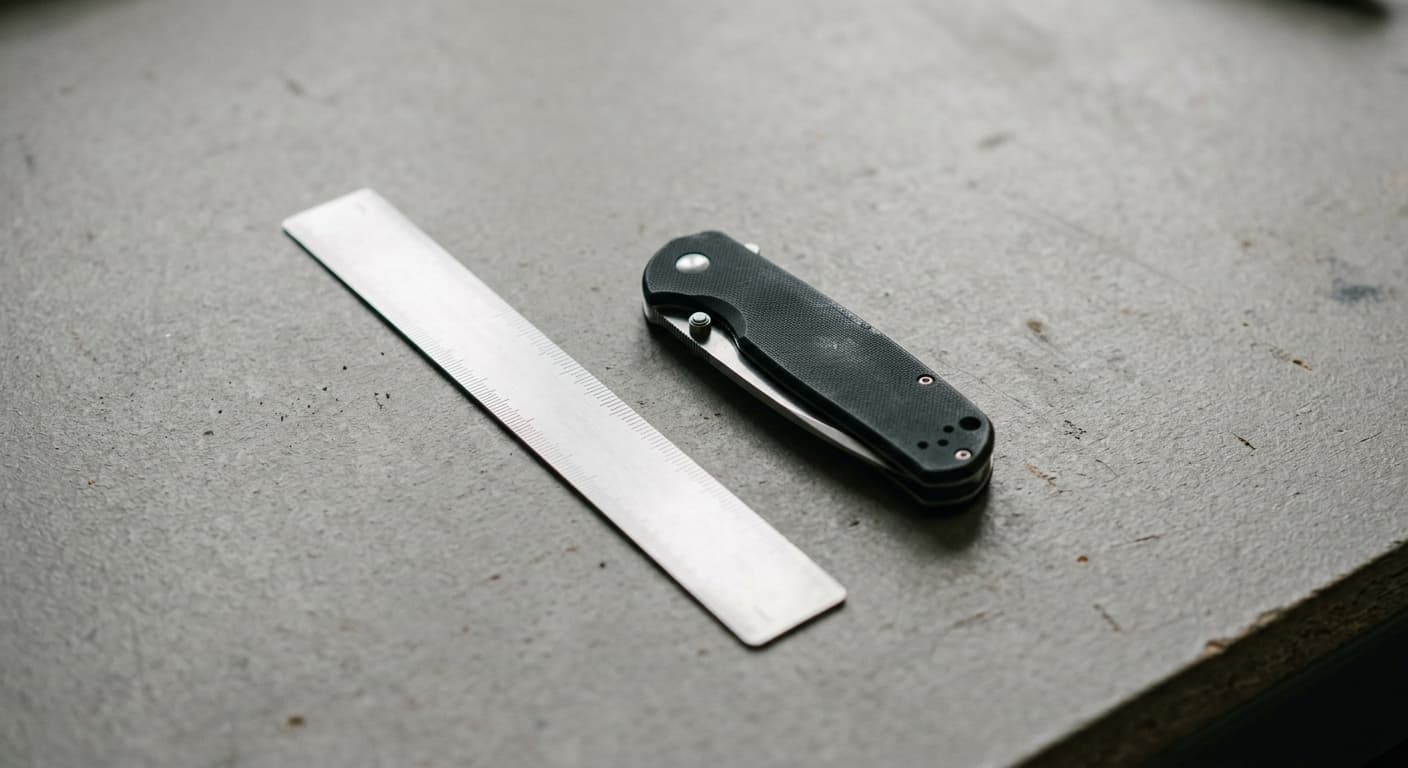
New York runs two separate tracks for knives: a per se possession ban for a named list of items, and a broader intent-based offense for daggers, dirks, stilettos, and other dangerous knives that applies only when the knife is possessed with intent to use it unlawfully. A separate statute bars anyone under 16 from possessing a dangerous knife anywhere in the state, a prior conviction turns either adult offense into a felony, and New York repealed its gravity-knife possession ban in 2019 without touching the separate switchblade ban.
Jurisdiction scope: This page covers New York state law only, principally N.Y. Penal Law §§ 265.00, 265.01, 265.01-a, 265.02, 265.05, 265.10, 265.15, and 265.20. It does not cover New York City's separate municipal knife ordinance, which readers in New York City should check directly.
Two separate offenses for two different knife categories
New York's weapons chapter runs two distinct tracks for knives, and collapsing them into one rule misstates the law. The first track, § 265.01(1), is a strict possession ban for a specific named list: "He or she possesses any firearm, electronic dart gun, electronic stun gun, switchblade knife, pilum ballistic knife, metal knuckle knife, cane sword, billy, blackjack, bludgeon, plastic knuckles, metal knuckles, chuka stick, sand bag, sandclub, wrist-brace type slingshot or slungshot, shuriken, or throwing star." No intent to use the item unlawfully is required; possessing one of these listed items is itself the offense.
The second track, § 265.01(2), reaches a broader list but only conditionally: "He or she possesses any dagger, dangerous knife, dirk, machete, razor, stiletto, imitation pistol, undetectable knife or any other dangerous or deadly instrument or weapon with intent to use the same unlawfully against another." Simple possession of a dagger, dirk, stiletto, machete, razor, or "dangerous knife" is not itself a crime under this provision; the prosecution must show intent to use the item unlawfully against another person. Both offenses, on their own, are class A misdemeanors; a prior conviction changes that, described below.
A prior conviction turns either offense into a felony
§ 265.02(1) provides: "A person is guilty of criminal possession of a weapon in the third degree when: (1) Such person commits the crime of criminal possession of a weapon in the fourth degree as defined in subdivision one, two, three or five of section 265.01, and has been previously convicted of any crime." Criminal possession of a weapon in the third degree is a class D felony. Because subdivisions one and two of § 265.01 are the two knife-possession tracks described above, a person with any prior criminal conviction, not only a weapons or violent-crime conviction, who commits either offense faces a felony rather than a misdemeanor.
What makes a dagger, dirk, or dangerous knife a "weapon"
§ 265.00 does not separately define "dagger," "dirk," "dangerous knife," or "stiletto," even though each appears in § 265.01(2)'s intent-based offense and § 265.05's under-16 possession ban below. New York's Court of Appeals has supplied the governing test rather than leaving the terms to ordinary meaning. In Matter of Jamie D., 59 N.Y.2d 589 (1983), the Court held that "dangerous knife" "connotes a knife which may be characterized as a weapon." Some knives qualify based on their characteristics alone: "a bayonet, a stiletto, or a dagger" comes within the term because those instruments are "primarily intended for use as a weapon." A utilitarian knife, one designed and primarily intended as a tool, can still qualify in either of two other ways: it may have been physically converted into a weapon, or "the circumstances of its possession, although there has been no modification of the implement, may permit a finding that on the occasion of its possession it was essentially a weapon rather than a utensil."
New York's Court of Appeals applied this test in In re Antwaine T., 23 N.Y.3d 512 (2014), a case about whether a juvenile delinquency petition was facially sufficient, not about guilt. The issue was "whether the petition was facially sufficient to charge respondent Antwaine T." with possessing the 14-inch-bladed machete he was found with late at night on a Brooklyn street; the Court held that it was, reasoning that "it would be unreasonable to infer from the statement supporting the petition that respondent was using the machete for cutting plants," and that the officer's description of the machete's size and the time and place it was carried "adequately states circumstances of . . . possession that support the charge that defendant was carrying a weapon." The delinquency adjudication itself later rested on the respondent's own admission and a subsequent probation violation, not on a trial finding under this standard. This is the test that decides whether an ordinary work knife or a machete falls within § 265.01(2)'s "dangerous knife" language or § 265.05's under-16 ban below: not the knife's type alone, but its characteristics together with the circumstances of how it was carried.
The 2019 gravity-knife repeal did not touch the switchblade ban
New York's current § 265.01(1) possession list does not include "gravity knife." The term is still defined at § 265.00(5): "'Gravity knife' means any knife which has a blade which is released from the handle or sheath thereof by the force of gravity or the application of centrifugal force which, when released, is locked in place by means of a button, spring, lever or other device." The definition persists in the statute's definitions section, but the operative possession offense in § 265.01(1) no longer lists gravity knife among its banned items, consistent with New York's 2019 repeal of its statewide gravity-knife possession ban.

That repeal is narrower than it is sometimes described. "Switchblade knife," separately defined at § 265.00(4) as "any knife which has a blade which opens automatically by hand pressure applied to a button, spring or other device in the handle of the knife," remains explicitly listed in § 265.01(1) and remains fully banned. A claim that "New York repealed its knife ban" conflates the narrower gravity-knife repeal with the switchblade ban, which was not repealed and is still in force today.
Other knife-related definitions
§ 265.00 separately defines several related terms. "Pilum ballistic knife" (5-a) "means any knife which has a blade which can be projected from the handle by hand pressure applied to a button, lever, spring or other device in the handle of the knife." "Metal knuckle knife" (5-b) "means a weapon that, when closed, cannot function as a set of plastic knuckles or metal knuckles, nor as a knife and when open, can function as both a set of plastic knuckles or metal knuckles as well as a knife." "Automatic knife" (5-c) "includes a stiletto, a switchblade knife, a cane sword, a pilum ballistic knife, and a metal knuckle knife," a defined umbrella term used in the museum exemption below. "Undetectable knife" (5-d) "means any knife or other instrument, which does not utilize materials that are detectable by a metal detector or magnetometer when set at a standard calibration, that is capable of ready use as a stabbing or cutting weapon and was commercially manufactured to be used as a weapon." "Cane sword" (13) "means a cane or swagger stick having concealed within it a blade that may be used as a sword or stiletto."
The presumption that supplies intent
§ 265.15(4) provides, in full: "The possession by any person of the substance as specified in section 265.04 is presumptive evidence of possessing such substance with intent to use the same unlawfully against the person or property of another if such person is not licensed or otherwise authorized to possess such substance. The possession by any person of any dagger, dirk, stiletto, dangerous knife or any other weapon, instrument, appliance or substance designed, made or adapted for use primarily as a weapon, is presumptive evidence of intent to use the same unlawfully against another." The subdivision's first sentence addresses the substance covered by § 265.04; its second sentence is the one that connects directly to § 265.01(2)'s intent element for knives: simply possessing one of these named knife types can itself supply presumptive evidence of the unlawful intent that offense otherwise requires, shifting the practical burden onto the possessor to rebut the presumption. A separate provision, § 265.15(3), treats the presence of a switchblade knife, pilum ballistic knife, metal knuckle knife, dagger, dirk, or stiletto (along with several firearm-related items) in a non-stolen automobile as presumptive evidence of possession by every occupant of that vehicle, with exceptions if the item is found on one occupant's person, the vehicle is a licensed for-hire vehicle, or the item is a pistol or revolver possessed by a validly licensed occupant.
Manufacturing, transporting, and disposing of the same knives
Separately from possession, New York criminalizes the supply chain for the same listed items. Subdivision 1 of § 265.10 opens with machine guns, assault weapons, large capacity ammunition feeding devices, disguised guns, and rapid-fire modification devices before reaching knives in its third sentence, which provides: "Any person who manufactures or causes to be manufactured any switchblade knife, pilum ballistic knife, metal knuckle knife, undetectable knife, billy, blackjack, bludgeon, plastic knuckles, metal knuckles, throwing star, chuka stick, sandbag, sandclub or slungshot is guilty of a class A misdemeanor." § 265.10(2) applies the same manufacturing-offense structure to transporting or shipping merchandise, but its knife list is not identical: it reaches "any firearm, other than an assault weapon, switchblade knife, pilum ballistic knife, undetectable knife, billy, blackjack, bludgeon, plastic knuckles, metal knuckles, throwing star, chuka stick, sandbag or slungshot," omitting the metal knuckle knife and the sandclub that subdivision 1 names. § 265.10(4) separately covers disposal: "Any person who disposes of any of the weapons, instruments or appliances specified in subdivision one of section 265.01, except a firearm, is guilty of a class A misdemeanor, and he is guilty of a class D felony if he has previously been convicted of any crime." § 265.10(5) covers a narrower disposal offense tied to the age of the recipient rather than the item: "Any person who disposes of any of the weapons, instruments, appliances or substances specified in section 265.05 to any other person under the age of sixteen years is guilty of a class A misdemeanor." Because § 265.00(6) defines "dispose of" broadly, to include giving, giving away, leasing, loaning, keeping for sale, offering, offering for sale, selling, and transferring, this is New York's rule against giving or selling a § 265.05 dangerous knife (or the section's other listed items) to anyone under 16, distinct from and narrower than subdivision 4's general disposal offense. This matters to the museum exemption described below, which by its own text lifts only § 265.01(1) and § 265.15(4), not § 265.10.
Anyone under 16: a dangerous knife is banned everywhere, not just at school
§ 265.05 provides: "It shall be unlawful for any person under the age of sixteen to possess any air-gun, spring-gun or other instrument or weapon in which the propelling force is a spring or air, or any gun or any instrument or weapon in or upon which any loaded or blank cartridges may be used, or any loaded or blank cartridges or ammunition therefor, or any dangerous knife; provided that the possession of rifle or shotgun or ammunition therefor by the holder of a hunting license or permit issued pursuant to article eleven of the environmental conservation law and used in accordance with said law shall not be governed by this section." A person who violates this section is adjudged a juvenile delinquent rather than convicted of a crime. This ban applies anywhere in New York State, not only on school property, and "dangerous knife" carries the same Matter of Jamie D. test described above. New York's Court of Appeals applied § 265.05 to a 15-year-old carrying a machete on a Brooklyn street in In re Antwaine T.; the same conduct was also charged, in the alternative, under § 265.01(2)'s adult intent-based offense. The other side of that same age line is a separate crime: § 265.10(5) makes it a class A misdemeanor for anyone to dispose of, meaning give, give away, lease, loan, offer, or sell, a dangerous knife or any other item specified in § 265.05 to a person under 16, regardless of whether the person disposing of it has any prior conviction.
School grounds: a separate firearm-only statute, on top of the under-16 ban
§ 265.01-a bans knowingly possessing "a rifle, shotgun, or firearm" in or upon a building or grounds used for educational purposes by a school, college, or university, or on a school bus, without the educational institution's written authorization, a class E felony. This statute's text is limited to a rifle, shotgun, or firearm; it does not mention a knife of any type, and New York has no separate state statute making knife possession on school grounds specifically, as opposed to statewide, a distinct offense. That does not mean knife possession by a student is unregulated: § 265.05's under-16 dangerous-knife ban, described above, applies on school grounds exactly as it applies anywhere else in the state, and it was a school-adjacent arrest, a 15-year-old with a machete, that produced the controlling Court of Appeals decision construing it.
Narrow exemptions: corrections officials and a knife museum
§ 265.20(2) exempts a warden, superintendent, headkeeper, or deputy of a state prison, penitentiary, workhouse, or county jail from the possession bans for, among other items, a switchblade knife or pilum ballistic knife, when possessed in that official capacity. A separate exemption, at § 265.20(d), provides: "Subdivision one of section 265.01 and subdivision four of section 265.15 of this article shall not apply to possession or ownership of automatic knives by any cutlery and knife museum established pursuant to section two hundred sixteen-c of the education law or by any director, officer, employee, or agent thereof when he or she is in possession of an automatic knife and acting in furtherance of the business of such museum." Because "automatic knife" is defined to include a stiletto, switchblade knife, cane sword, pilum ballistic knife, and metal knuckle knife, this exemption reaches both the strict § 265.01(1) possession ban and the § 265.15(4) presumption, but only for a qualifying cutlery and knife museum and its personnel acting within the museum's business, and it does not extend to § 265.10's manufacture, transport, or disposal offenses.
New York City: a separate local ordinance
New York City has its own knife rules under the New York City Administrative Code, in addition to the state law described on this page. City rules can be stricter than the statewide rules above; a reader in New York City should check the current New York City Administrative Code directly.
Federal law: what it does and does not reach
Federal law does not ban an individual from owning or carrying a switchblade nationwide; it restricts interstate commerce in them. The Federal Switchblade Act, 15 U.S.C. §§ 1241 to 1245, bars manufacturing for, or introducing, transporting, or distributing in, interstate commerce, and, in 15 U.S.C. § 1245, makes it a federal offense to knowingly possess, manufacture, sell, or import a ballistic knife in or affecting interstate commerce or within federal territorial jurisdiction. The two switchblade offense sections, §§ 1242 and 1243, do not apply to certain knives and people; § 1244, captioned "Exceptions," lists them. A 2009 amendment, § 1244(5), exempts any knife with a spring, detent, or other closure-bias mechanism that requires hand, wrist, or arm exertion on the blade itself to overcome the bias and assist opening, the carve-out that keeps modern assisted-opening folding knives legal in interstate commerce. A separate exemption, § 1244(4), covers a person with only one arm possessing or carrying a switchblade with a blade three inches or less. New York's own switchblade possession ban, § 265.01(1), is a state offense independent of these federal interstate-commerce provisions.
Disclaimer: This article provides general legal information about New York's knife laws as of September 2026. It is not legal advice. Consult a lawyer licensed in New York for advice about a specific situation. New York City and other municipalities may impose additional local knife restrictions not covered on this page.
For a state-by-state comparison, see knife laws by state. New York's self-defense statutes are covered separately on the New York self-defense laws page.
Statutes cited reflect their in-force version as of 2026-09-18. Last updated: 2026-09-18.
Frequently Asked Questions
Did New York repeal its gravity knife ban?
Yes. Gravity knife no longer appears on the current § 265.01(1) possession list, though the term remains defined at § 265.00(5). This repeal did not affect the separate switchblade knife ban, which remains listed in § 265.01(1) and fully in force.
Are switchblades illegal in New York?
Yes. § 265.01(1) bans possessing a switchblade knife outright, a class A misdemeanor, regardless of intent to use it unlawfully. This ban was not affected by the 2019 gravity-knife repeal, and manufacturing, transporting, or disposing of a switchblade is a separate class A misdemeanor under § 265.10.
Is it illegal to carry a pocket knife in New York?
An ordinary pocket knife is not on § 265.01(1)'s strict possession list. It can still fall under § 265.01(2), which bans possessing a dagger, dangerous knife, dirk, machete, razor, or stiletto, among other items, with intent to use it unlawfully against another. New York's Court of Appeals has held that whether a utilitarian knife counts as a 'dangerous knife' depends on the circumstances of its possession, not just its type, so an ordinary work knife carried for an ordinary purpose is unlikely to qualify, while the same knife carried in a way that suggests it was being used as a weapon can.
Can a minor carry a knife in New York?
Not a dangerous knife. § 265.05 bans anyone under 16 from possessing 'any dangerous knife' anywhere in New York State, not only at school, regardless of intent to use it unlawfully. New York's Court of Appeals has held that a petition charging a 15-year-old with carrying a 14-inch-bladed machete was facially sufficient under this statute, using the same 'weapon rather than utensil' test that applies to adults under § 265.01(2). Violation makes the minor a juvenile delinquent rather than a criminal defendant. Separately, § 265.10(5) makes it a class A misdemeanor for anyone to give, sell, or otherwise dispose of a dangerous knife to a person under 16.
Does a prior conviction turn a New York knife charge into a felony?
Yes. Under § 265.02(1), a person who commits the offense in § 265.01(1) or § 265.01(2) after any prior criminal conviction, not only a weapons or violent-crime conviction, is guilty of criminal possession of a weapon in the third degree, a class D felony, instead of the underlying class A misdemeanor.
Can you bring a knife onto New York school grounds?
New York's state school-grounds weapon statute, § 265.01-a, restricts only a rifle, shotgun, or firearm without written authorization from the educational institution; it does not mention a knife specifically. Separately, anyone under 16 is banned from possessing a dangerous knife anywhere in the state, including on school grounds, under § 265.05. A school's own policy may also restrict knives further.
Does New York City have stricter knife laws than the rest of the state?
New York City has its own knife rules under the New York City Administrative Code, separate from and in addition to state law. This page covers only New York state law; a reader in New York City should check the current city Administrative Code directly, since city rules can be stricter.
Updates
Independently fact-checked against the cited primary sources
Independently fact-checked against the cited primary sources
The Law Behind This Article
This article rests on the statutory provisions below, held in our own legal record and retrieved from the official source. Tap a section to read the operative text.
New York Penal Law
§ 265.01Criminal possession of a weapon in the fourth degreeIn forcecited in 3 of our articles
Criminal possession of a weapon in the fourth degree. A person is guilty of criminal possession of a weapon in the fourth degree when: (1) He or she possesses any firearm, electronic dart gun, electronic stun gun, switchblade knife, pilum ballistic knife, metal knuckle knife, cane sword, billy, blackjack, bludgeon, plastic knuckles, metal knuckles, chuka stick, sand bag, sandclub, wrist-brace type slingshot or slungshot, shuriken, or throwing star; (2) He or she possesses any dagger, dangerous knife, dirk, machete, razor, stiletto, imitation pistol, undetectable knife or any other dangerous or deadly instrument or weapon with intent to use the same unlawfully against another; or (3); or (4) He possesses a rifle, shotgun, antique firearm, black powder rifle, black powder shotgun, or any muzzle-loading firearm, and has been convicted of a felony or serious offense; or (5) He possesses any dangerous or deadly weapon and is not a citizen of the United States; or (6) He is a person who has been certified not suitable to possess a rifle or shotgun, as defined in subdivision sixteen of section 265.00, and refuses to yield possession of such rifle or shotgun upon the demand of a…
Official text (excerpt) · last checked 2026-09-24 · Read the full text in our law library · Verify at legislation.nysenate.gov
Cited in 835 court opinions in our collectionLatest citing opinion in our collection: 2026
Opinions citing this section in our collection:
- The People v. Alexis Ocasio (New York Court of Appeals 2016, 28 N.Y.3d 178)“…criminal possession of a weapon in the fourth degree (see Penal Law § 265.01 [1]). The accusatory instrument alleged…”
- People v. Cahill (New York Court of Appeals 2003, 2 N.Y.3d 14)“…and criminal possession of a weapon in the fourth degree (Penal Law § 265.01). As a result of the arrest and indictm…”
- People v. Longshore (New York Court of Appeals 1995, 86 N.Y.2d 851)“…ts of criminal possession of a weapon in the fourth degree (Penal Law § 265.01 [4] [possession of a rifle or shotgun b…”
Identified automatically from the court opinions citing this section — not a ranking of which case controls.
Also relied on in: Knife Laws by State (2026): Carry Rules, Blade Limits, Penalties, New York Pepper Spray and Stun Gun Laws (2026)
§ 265.00DefinitionsIn forcecited in 3 of our articles
Definitions. As used in this article and in article four hundred, the following terms shall mean and include: * 1. "Machine-gun" means a weapon of any description, irrespective of size, by whatever name known, loaded or unloaded, from which a number of shots or bullets may be rapidly or automatically discharged from a magazine with one continuous pull of the trigger and includes a sub-machine gun. * NB Effective until August 25, 2026 * 1. "Machine-gun" means a weapon of any description, irrespective of size, by whatever name known, loaded or unloaded, from which a number of shots or bullets may be rapidly or automatically discharged from a magazine with one continuous pull of the trigger and includes a sub-machine gun, and also includes any convertible pistol that is equipped with a pistol converter. * NB Effective August 25, 2026 2. "Firearm silencer" means any instrument, attachment, weapon or appliance for causing the firing of any gun, revolver, pistol or other firearms to be silent, or intended to lessen or muffle the noise of the firing of any gun, revolver, pistol or other firearms. 3.
Official text (excerpt) · last checked 2026-07-29 · Read the full text in our law library · Verify at legislation.nysenate.gov
Cited in 298 court opinions in our collectionLatest citing opinion in our collection: 2026
Opinions citing this section in our collection:
- People v. Brannon (New York Court of Appeals 2011, 16 N.Y.3d 596)“…y dissent in People v Fernandez, for the reasons below. Penal Law § 265.00 (5) defines a gravity knife as: “any kn…”
- Maio v. Kralik (Appellate Division of the Supreme Court of the State of New York 2009, 70 A.D.3d 1)“…uns do not qualify as “firearms” as that term is defined in Penal Law § 265.00 (3). Therefore, according to the plaint…”
- People v. Wilson (Appellate Division of the Supreme Court of the State of New York 1998, 252 A.D.2d 241)“…more expansive definition of “loaded firearm” set forth in Penal Law § 265.00 (15), i.e., “any firearm loaded with am…”
Identified automatically from the court opinions citing this section — not a ranking of which case controls.
Also relied on in: Pepper Spray and Stun Gun Laws by State (2026)
§ 265.02Criminal possession of a weapon in the third degreeIn force
Criminal possession of a weapon in the third degree. A person is guilty of criminal possession of a weapon in the third degree when: (1) Such person commits the crime of criminal possession of a weapon in the fourth degree as defined in subdivision one, two, three or five of section 265.01, and has been previously convicted of any crime; or (2) Such person possesses any explosive or incendiary bomb, bombshell, firearm silencer, machine-gun or any other firearm or weapon simulating a machine-gun and which is adaptable for such use; or (3) Such person knowingly possesses a machine-gun, firearm, rifle or shotgun which has been defaced for the purpose of concealment or prevention of the detection of a crime or misrepresenting the identity of such machine-gun, firearm, rifle or shotgun; or (5) (i) Such person possesses three or more firearms; or (ii) such person possesses a firearm and has been previously convicted of a felony or a class A misdemeanor defined in this chapter within the five years immediately preceding the commission of the offense and such possession did not take place in the person's home or place of business; or (6) Such person knowingly possesses any disguised…
Official text (excerpt) · last checked 2026-07-29 · Read the full text in our law library · Verify at legislation.nysenate.gov
Cited in 1,146 court opinions in our collectionLatest citing opinion in our collection: 2026
Opinions citing this section in our collection:
- People v. Sinistaj (New York Court of Appeals 1986, 67 N.Y.2d 236)“…2 criminal possession of a weapon in the third degree under Penal Law § 265.02 (4) (possession of a loaded firearm out…”
- People v. Muhammad (New York Court of Appeals 2011, 17 N.Y.3d 532)“…that the defendant possessed a loaded firearm (see former Penal Law § 265.02 [4]). 1 On appeal in Tucker , t…”
- People v. Bryant (New York Court of Appeals 1998, 92 N.Y.2d 216)“…crime, or misrepresentation of the identity of the weapon (Penal Law § 265.02 [3]). 2 Each of the de…”
Identified automatically from the court opinions citing this section — not a ranking of which case controls.
§ 265.05Unlawful possession of weapons by persons under sixteenIn force
Unlawful possession of weapons by persons under sixteen. It shall be unlawful for any person under the age of sixteen to possess any air-gun, spring-gun or other instrument or weapon in which the propelling force is a spring or air, or any gun or any instrument or weapon in or upon which any loaded or blank cartridges may be used, or any loaded or blank cartridges or ammunition therefor, or any dangerous knife; provided that the possession of rifle or shotgun or ammunition therefor by the holder of a hunting license or permit issued pursuant to article eleven of the environmental conservation law and used in accordance with said law shall not be governed by this section. A person who violates the provisions of this section shall be adjudged a juvenile delinquent.
Official text (excerpt) · last checked 2026-07-29 · Read the full text in our law library · Verify at legislation.nysenate.gov
Cited in 95 court opinions in our collectionLatest citing opinion in our collection: 2024
Opinions citing this section in our collection:
- In re Antwaine T. (New York Court of Appeals 2014, 23 N.Y.3d 512)“…icient to charge respondent Antwaine T. with a violation of Penal Law § 265.05, which proscribes a juvenile’s possessi…”
- Herdzik v. Chojnacki (Appellate Division of the Supreme Court of the State of New York 2009, 68 A.D.3d 1639)“…violated Penal Law § 265.10 (5) and that their son violated Penal Law § 265.05. Plaintiff further alleged that defenda…”
- Danielle A. v. Christopher P. (New York Supreme Court 2004, 3 Misc. 3d 357)“…es a carbon dioxide cartridge is an “air-gun” as defined in Penal Law § 265.05 and under Administrative Code of the Ci…”
Identified automatically from the court opinions citing this section — not a ranking of which case controls.
§ 265.10Manufacture, transport, disposition and defacement of weapons and dangerous instruments and appliancesIn force
Manufacture, transport, disposition and defacement of weapons and dangerous instruments and appliances. * 1. Any person who manufactures or causes to be manufactured any machine-gun, assault weapon, large capacity ammunition feeding device or disguised gun is guilty of a class D felony. Any person who manufactures or causes to be manufactured any rapid-fire modification device is guilty of a class E felony. Any person who manufactures or causes to be manufactured any switchblade knife, pilum ballistic knife, metal knuckle knife, undetectable knife, billy, blackjack, bludgeon, plastic knuckles, metal knuckles, throwing star, chuka stick, sandbag, sandclub or slungshot is guilty of a class A misdemeanor. * NB Effective until August 25, 2026 * 1. Any person who manufactures or causes to be manufactured any machine-gun, ghost gun, unfinished frame or receiver, firearm silencer, major component of a firearm, assault weapon, large capacity ammunition feeding device or disguised gun is guilty of a class D felony. Any person who manufactures or causes to be manufactured any rapid-fire modification device is guilty of a class E felony.
Official text (excerpt) · last checked 2026-07-29 · Read the full text in our law library · Verify at legislation.nysenate.gov
Cited in 16 court opinions in our collectionLatest citing opinion in our collection: 2026
Opinions citing this section in our collection:
- Earsing v. Nelson (Appellate Division of the Supreme Court of the State of New York 1995, 212 A.D.2d 66)“…ument, a private cause of action may fairly be implied from Penal Law § 265.10 (5), which prohibits *71 the sale of a…”
- Herdzik v. Chojnacki (Appellate Division of the Supreme Court of the State of New York 2009, 68 A.D.3d 1639)“…injuries. Plaintiff alleged that defendant parents violated Penal Law § 265.10 (5) and that their son violated Penal L…”
- People v. Widger (Appellate Division of the Supreme Court of the State of New York 1987, 126 A.D.2d 962)“…t’s house as they constituted evidence of uncharged crimes (Penal Law § 265.10 [6]; § 265.15 [5]). The People contend…”
Identified automatically from the court opinions citing this section — not a ranking of which case controls.
§ 265.15Presumptions of possession, unlawful intent and defacementIn force
Presumptions of possession, unlawful intent and defacement. 1. The presence in any room, dwelling, structure or vehicle of any machine-gun is presumptive evidence of its unlawful possession by all persons occupying the place where such machine-gun is found. 2. The presence in any stolen vehicle of any weapon, instrument, appliance or substance specified in sections 265.01, 265.02, 265.03, 265.04 and 265.05 is presumptive evidence of its possession by all persons occupying such vehicle at the time such weapon, instrument, appliance or substance is found. 3.
Official text (excerpt) · last checked 2026-07-29 · Read the full text in our law library · Verify at legislation.nysenate.gov
Cited in 358 court opinions in our collectionLatest citing opinion in our collection: 2026
Opinions citing this section in our collection:
- People v. Wesley (New York Court of Appeals 1989, 73 N.Y.2d 351)“…enal Law § 10.00 [8]) was aided by a statutory presumption (Penal Law § 265.15 [3]) while, in this case, constructive…”
- People v. Millan (New York Court of Appeals 1987, 69 N.Y.2d 514)“…ly on the basis of the statutory presumption of possession (Penal Law § 265.15 [3]) 1 arising from the fact that the…”
- In re Darnell C. (Appellate Division of the Supreme Court of the State of New York 2009, 66 A.D.3d 771)“…perly applied the so-called “automobile presumption” (see Penal Law § 265.15 [3]; Matter of Jonathan V., 55 AD3d…”
Identified automatically from the court opinions citing this section — not a ranking of which case controls.
§ 265.20ExemptionsIn forcecited in 2 of our articles
Exemptions. a. Paragraph (h) of subdivision twenty-two of section 265.00 and sections 265.01, 265.01-a, 265.01-b, 265.01-c, 265.02, 265.03, 265.04, 265.05, 265.10, 265.11, 265.12, 265.13, 265.15, 265.36, 265.37, 265.50, 265.55 and 270.05 shall not apply to: 1. Possession of any of the weapons, instruments, appliances or substances specified in sections 265.01, 265.01-c, 265.02, 265.03, 265.04, 265.05, 265.50, 265.55 and 270.05 by the following: (a) Persons in the military service of the state of New York when duly authorized by regulations issued by the adjutant general to possess the same. (b) Police officers as defined in subdivision thirty-four of section 1.20 of the criminal procedure law. (c) Peace officers as defined by section 2.10 of the criminal procedure law. (d) Persons in the military or other service of the United States, in pursuit of official duty or when duly authorized by federal law, regulation or order to possess the same.
Official text (excerpt) · last checked 2026-07-29 · Read the full text in our law library · Verify at legislation.nysenate.gov
Cited in 116 court opinions in our collectionLatest citing opinion in our collection: 2026
Opinions citing this section in our collection:
- The People v. Alexis Ocasio (New York Court of Appeals 2016, 28 N.Y.3d 178)“…730 [App Dept, Super Ct 1995]). As the People point out, Penal Law § 265.20 (b) also lends support to their positio…”
- People v. Marrero (New York Court of Appeals 1987, 69 N.Y.2d 382)“…s entitled, pursuant to the interplay of CPL 2.10, 1.20 and Penal Law § 265.20, to carry a handgun without a permit as…”
- Chwick v. Mulvey (Appellate Division of the Supreme Court of the State of New York 2010, 81 A.D.3d 161)“…n oversimplification of the scope of the amended ordinance. Penal Law § 265.20 (a) (3) provides that a firearm may be…”
Identified automatically from the court opinions citing this section — not a ranking of which case controls.
§ 265.01-aCriminal possession of a weapon on school groundsIn force
Criminal possession of a weapon on school grounds. A person is guilty of criminal possession of a weapon on school grounds when he or she knowingly has in his or her possession a rifle, shotgun, or firearm in or upon a building or grounds, used for educational purposes, of any school, college, or university, except the forestry lands, wherever located, owned, maintained or held in trust for the benefit of the New York State College of Forestry at Syracuse University, now known as the State University of New York college of environmental science and forestry, or upon a school bus as defined in section one hundred forty-two of the vehicle and traffic law, without the written authorization of such educational institution; provided, however no school, as defined in subdivision ten of section eleven hundred twenty-five of the education law, shall issue such written authorization to any teacher, school administrator, or other person employed at the school who is not primarily employed as a school resource officer, police officer, peace officer, or security guard who has been issued a special armed guard registration card as defined in section eighty-nine-f of the general business law,…
Official text (excerpt) · last checked 2026-07-29 · Read the full text in our law library · Verify at legislation.nysenate.gov
Cited in 1 court opinions in our collectionLatest citing opinion in our collection: 2013
Opinions citing this section in our collection:
- People v. Wright (New York Supreme Court 2013, 42 Misc. 3d 428)“…ount 1), criminal possession of a weapon on school grounds (Penal Law § 265.01-a) (count 2), criminal possession of a fi…”
Identified automatically from the court opinions citing this section — not a ranking of which case controls.
United States Code Title 15
§ 1241DefinitionsIn forcecited in 52 of our articles
As used in this chapter— The term “interstate commerce” means commerce between any State, Territory, possession of the United States, or the District of Columbia, and any place outside thereof. The term “switchblade knife” means any knife having a blade which opens automatically— by hand pressure applied to a button or other device in the handle of the knife, or by operation of inertia, gravity, or both.
Official text (excerpt) · last checked 2026-07-28 · Read the full text in our law library · Verify at uscode.house.gov
Cited in 15 court opinions in our collectionLatest citing opinion in our collection: 2014
Opinions citing this section in our collection:
- Stewart A. Taylor, D/B/A Taylor Cutlery Mfg. Co. v. United States of America (Court of Appeals for the Sixth Circuit 1988, 848 F.2d 715)“…Service, are not switchblade knives within the meaning of 15 U.S.C. § 1241 (b) and 19 C.F.R. § 1295 (a)(1). The d…”
- Crowley Cutlery Company v. United States of America and Commissioner of Customs of the United States Customs Service (Court of Appeals for the Seventh Circuit 1988, 849 F.2d 273)“…Illinois for a declaration that the Switchblade Knife Act, 15 U.S.C. §§ 1241 et seq., which forbids th…”
- Edna Fall, as Administratrix of the Estate of Phillip Fall, Deceased v. Esso Standard Oil Company (Court of Appeals for the Fifth Circuit 1962, 297 F.2d 411)“…25 S.Ct. 158 , 49 L.Ed. 363 . Section 1 of the Act, 15 U.S.C.A. § 1241 (b), defines the term “switchblade knif…”
Identified automatically from the court opinions citing this section — not a ranking of which case controls.
Also relied on in: Alabama Knife Laws (2026): What Is Legal to Carry, Alaska Knife Laws (2026): Concealed Carry Rules Explained, Arizona Knife Laws (2026): Carry Rules and Preemption
§ 1244ExceptionsIn forcecited in 52 of our articles
Sections 1242 and 1243 of this title shall not apply to— any common carrier or contract carrier, with respect to any switchblade knife shipped, transported, or delivered for shipment in interstate commerce in the ordinary course of business; the manufacture, sale, transportation, distribution, possession, or introduction into interstate commerce, of switchblade knives pursuant to contract with the Armed Forces; the Armed Forces or any member or employee thereof acting in the performance of his duty; the possession, and transportation upon his person, of any switchblade knife with a blade three inches or less in length by any individual who has only one arm; or a knife that contains a spring, detent, or other mechanism designed to create a bias toward closure of the blade and that requires exertion applied to the blade by hand, wrist, or arm to overcome the bias toward closure to assist in opening the knife.
Official text (excerpt) · last checked 2026-07-28 · Read the full text in our law library · Verify at uscode.house.gov
Also relied on in: Arkansas Knife Laws (2026): Intent-Based Carry Rules, California Knife Laws (2026): Four Blade-Length Rules, Colorado Knife Laws (2026): Concealed Carry and Exceptions
§ 1245Ballistic knivesIn forcecited in 50 of our articles
Whoever in or affecting interstate commerce, within any Territory or possession of the United States, within Indian country (as defined in section 1151 of title 18), or within the special maritime and territorial jurisdiction of the United States (as defined in section 7 of title 18), knowingly possesses, manufactures, sells, or imports a ballistic knife shall be fined as provided in title 18, or imprisoned not more than ten years, or both. Whoever possesses or uses a ballistic knife in the commission of a Federal crime of violence shall be fined as provided in title 18, or imprisoned not less than five years and not more than ten years, or both. The exceptions provided in paragraphs (1), (2), and (3) of section 1244 of this title with respect to switchblade knives shall apply to ballistic knives under subsection (a) of this section. As used in this section, the term “ballistic knife” means a knife with a detachable blade that is propelled by a spring-operated mechanism.
Official text (excerpt) · last checked 2026-07-28 · Read the full text in our law library · Verify at uscode.house.gov
Cited in 2 court opinions in our collectionLatest citing opinion in our collection: 2008
Opinions citing this section in our collection:
- ALCANTAR (Board of Immigration Appeals 1994, 20 I. & N. Dec. 801)“…ed by an adult, would be felony and crime of violence); cf. 15 U.S.C. § 1245(b) (1988) (use of ballistic knife in co…”
- United States v. Polizzi (District Court, E.D. New York 2008, 549 F. Supp. 2d 308)“…8 Trust in l’estraint of import trade 3 months 15 U.S.C. § 1245 (b) Possession/use of a ballistic knife…”
Identified automatically from the court opinions citing this section — not a ranking of which case controls.
Also relied on in: Connecticut Knife Laws (2026): Open and Concealed Carry, Delaware Knife Laws (2026): Carry, Switchblades, and Bans, D.C. Knife Laws (2026): Possession and Carry Rules
Search our full record of US law — 2.1 million sections, every state + federal →
Sources and References
- N.Y. Penal Law 265.00 - Definitions (switchblade, gravity, pilum ballistic, metal knuckle, automatic, undetectable knife)(nysenate.gov).gov
- N.Y. Penal Law 265.01 - Criminal possession of a weapon in the fourth degree(nysenate.gov).gov
- N.Y. Penal Law 265.01-a - Criminal possession of a weapon on school grounds(nysenate.gov).gov
- N.Y. Penal Law 265.02 - Criminal possession of a weapon in the third degree(nysenate.gov).gov
- N.Y. Penal Law 265.05 - Unlawful possession of weapons by persons under sixteen(nysenate.gov).gov
- N.Y. Penal Law 265.10 - Manufacture, transport, disposition and defacement of weapons(nysenate.gov).gov
- N.Y. Penal Law 265.15 - Presumptions of possession, unlawful intent and defacement(nysenate.gov).gov
- N.Y. Penal Law 265.20 - Exemptions(nysenate.gov).gov
- Matter of Jamie D., 59 N.Y.2d 589 (1983) - the test for a 'dangerous knife' as one characterized as a weapon by nature or circumstances(courtlistener.com)
- In re Antwaine T., 23 N.Y.3d 512 (2014) - applying the Jamie D. test to a minor's machete(courtlistener.com)
- 15 U.S.C. 1241-1245 - Federal Switchblade Act, interstate commerce and ballistic-knife scope(law.cornell.edu)
- 15 U.S.C. 1244 - exceptions, including the 2009 assisted-opening carve-out and the one-arm exception(law.cornell.edu)